Why Are Microled Monitors Considered Next Gen
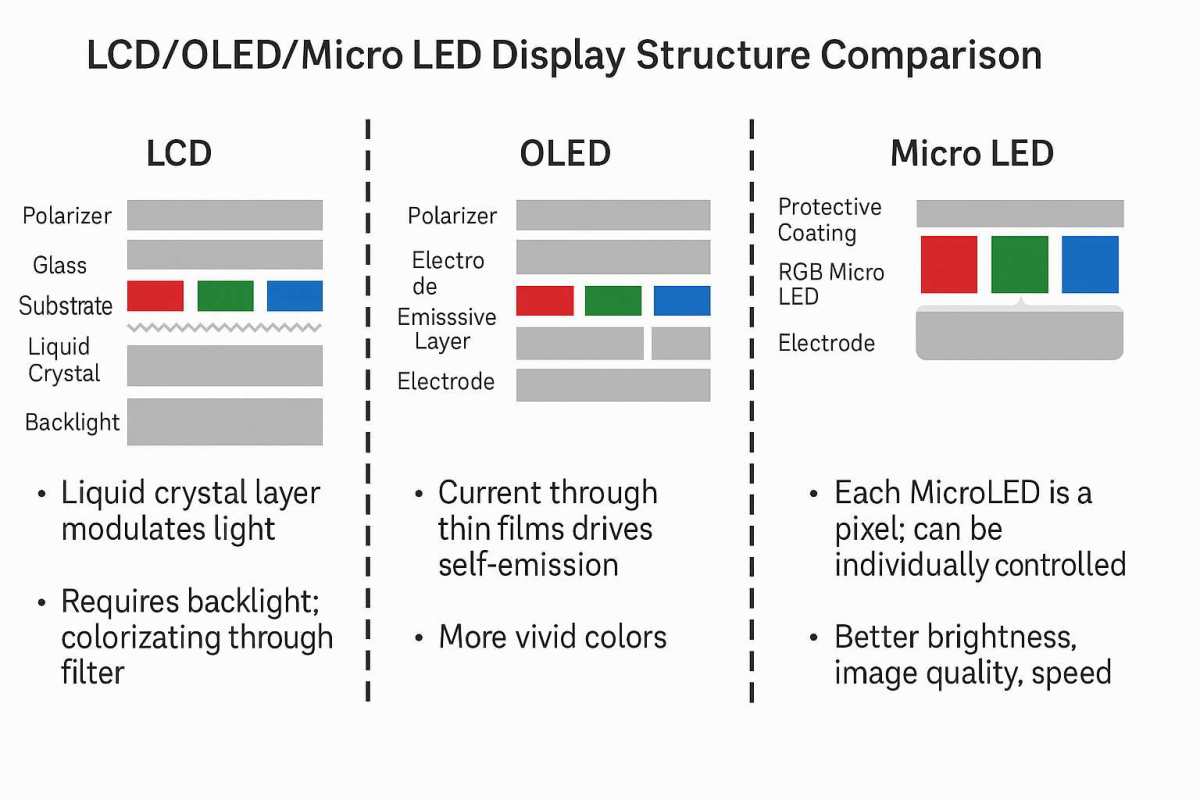
If you've been shopping for a high-end display lately, you've probably heard someone drop the term MicroLED and act like it's the future of everything. So why are microled monitors considered next gen? The short answer: they combine the best traits of OLED and LCD while ditching most of their weaknesses.
But the real story is more complicated than the marketing suggests.
MicroLED panels can hit peak brightness levels above 2,000 nits, dwarf what OLED manages, and they do it without any risk of burn-in. The catch? As of 2026, you can't walk into a store and buy a 27-inch MicroLED desktop monitor.
What you can buy are massive modular displays aimed at professional and luxury markets, often costing more than a car. Let's break down what makes this technology genuinely next-gen, and whether it matters for you right now.

Image source: Wikimedia Commons / Santasgift (CC BY-SA)
The Real Answer: It's About Beating OLED at Its Own Game
MicroLED is considered next-gen because it's the first display technology that delivers self-emissive pixel-level control (like OLED) using inorganic materials that don't degrade over time. That's the core engineering leap. Every other consumer display technology makes a compromise somewhere.
OLED gets perfect blacks but suffers burn-in and brightness limits. LCD gets bright but can't match contrast without local dimming zones. MicroLED sidesteps both problems.
The technology uses millions of microscopic gallium nitride (GaN) LED chips, each one a self-emissive pixel. There's no backlight, no organic compound, and no quantum dot layer. Each pixel produces its own light independently.
When a pixel needs to be black, it turns off completely. When it needs to be blindingly bright, it pushes out thousands of nits without breaking down.
Manufacturer specifications from Samsung Display and Sony Professional confirm that MicroLED panels are rated for 100,000+ hours of operation before reaching 50% brightness. That's roughly three to five times the lifespan rating of typical OLED panels. For professional environments where displays run 12 to 24 hours a day, that longevity difference is significant.
But here's the part the marketing glosses over. The "monitor" form factor you're imagining, a 27-inch or 32-inch desk display, doesn't exist in MicroLED yet. What exists are modular panels ranging from 75 inches to 292 inches, designed for wall installation or custom rigging.
Samsung's The Wall and Sony's Crystal LED are the two most prominent examples, and both target commercial installations first, consumers second.
How MicroLED Actually Works (And Why the Engineering Matters)
Understanding why MicroLED earns the "next-gen" label requires a quick look at what's happening inside the panel. Traditional LCD screens use a backlight (usually a large LED array behind the panel) and liquid crystals to control which light passes through. Even with advanced full-array local dimming (FALD), you're still dealing with zones of light, not individual pixels.
That's why LCDs can exhibit blooming around bright objects on dark backgrounds.
OLED fixed the blooming problem by making each pixel self-emissive. Every pixel generates its own light and can turn off completely for true black. The tradeoff?
OLED uses organic compounds that degrade with use. Blue subpixels age faster than red or green, leading to color shift and burn-in over time. Peak brightness is also limited because pushing organic materials harder accelerates their decay.
MicroLED takes the self-emissive approach but swaps organic compounds for inorganic gallium nitride. GaN is the same material family used in high-performance LED lighting and automotive headlights. It's extremely efficient, very bright, and doesn't degrade the way organic materials do.
Each MicroLED chip is roughly 10 to 50 micrometers in size, small enough to serve as an individual subpixel in a display.
The manufacturing process is where things get difficult. Producing a 4K MicroLED display requires placing roughly 25 million individual LED chips (three per pixel for red, green, blue) onto a substrate with near-perfect accuracy. This is called mass transfer, and it's one of the biggest production bottlenecks.
Current industry estimates suggest yield rates between 50% and 70% for large panels, which directly drives up cost.
Once assembled, each MicroLED pixel is driven by its own thin-film transistor (TFT) backplane, similar to how OLED and LCD panels work. The difference is that the light source itself is inorganic, more efficient, and far more durable. This is what enables the combination of extreme brightness, perfect blacks, and zero burn-in risk that no other single technology currently offers.
MicroLED vs. OLED vs. Mini-LED: The Comparison That Actually Matters
This is where most people want to land, and rightfully so. The "next-gen" label only makes sense when you stack MicroLED against what's actually available to buy today. The two main competitors are OLED (the current king of image quality) and Mini-LED (the current king of brightness in LCD).
Image source: Bing (Web (fair-use with source credit))
The Specs That Tell the Story
Here's how the three technologies compare on the metrics that actually matter for real-world use:
| Specification | MicroLED | OLED (LG WOLED) | Mini-LED LCD (FALD) |
|---|---|---|---|
| Peak Brightness | 2,000–5,000 nits | 800–1,500 nits | 1,000–3,000 nits |
| Black Level | True zero (pixel off) | True zero (pixel off) | Near-zero (zone dimming) |
| Contrast Ratio | Effectively infinite | Effectively infinite | 100,000:1–1,000,000:1 |
| Burn-in Risk | None | Yes (organic degradation) | None (backlight-based) |
| Lifespan (to 50% brightness) | 100,000+ hours | 30,000–60,000 hours | 50,000–100,000 hours |
| Color Gamut | 99%+ BT.2020 | 80–90% BT.2020 | 85–95% BT.2020 |
| Response Time | Sub-microsecond | ~0.1 ms | 2–8 ms |
| Power Efficiency | High | Moderate | Moderate to Low |
| Available Sizes (2026) | 75"–292" (modular) | 42"–97" | 27"–85"+ |
| Price Range | $30K–$400K+ | $800–$25K | $400–$10K |
The numbers tell a clear story. MicroLED wins on almost every performance metric. The problem is availability and price.
You can buy a superb 32-inch 4K OLED monitor for around $1,000 today. The smallest MicroLED configuration from Samsung starts around $30,000 and goes up from there.
Where Each Technology Wins
MicroLED wins when you need:
- Zero burn-in risk for 24/7 operation
- Extreme brightness for HDR or ambient-light environments
- Modular scalability (add panels to grow the display)
- Maximum lifespan with minimal degradation
- Large-format seamless displays (no bezels between modules)
OLED wins when you need:
- A consumer-available desktop monitor form factor
- Excellent image quality at reasonable prices
- Fast response times for gaming
- Wide viewing angles
- True blacks without the cost premium of MicroLED
Mini-LED LCD wins when you need:
- High brightness without OLED's burn-in risk
- Good HDR performance at mid-range prices
- Standard monitor sizes (27", 32", 43")
- A balance of performance and affordability
The honest assessment is this: MicroLED is the best display technology on paper, but OLED is the best display technology you can actually buy for personal use right now. Mini-LED sits in the middle as a practical compromise. If you're choosing a monitor today for gaming, content creation, or professional work, OLED or Mini-LED are your realistic options.
MicroLED is a technology to watch, not a technology to buy, unless you have a very specific professional need and a very large budget.
What MicroLED Gets Right That No Other Display Can Match
Let's give credit where it's due. There are genuine advantages to MicroLED that no other technology can replicate, and these are what justify the "next-gen" label.
Zero burn-in, period. This is the big one. OLED manufacturers have made impressive progress mitigating burn-in through pixel shifting, ABL (automatic brightness limiting), and improved organic materials. But the fundamental vulnerability remains.
Organic compounds degrade unevenly. Static elements like channel logos, taskbars, or HUD elements in games will eventually leave a ghost image. MicroLED's inorganic GaN chips don't have this problem.
You could run a static image 24/7 for years and the panel would age uniformly.
Extreme brightness without compromise. MicroLED can sustain peak brightness levels that would destroy an OLED panel over time. Samsung's The Wall is rated for 2,000 nits sustained, with prototype demonstrations reaching 5,000 nits. For HDR content, this means specular highlights (sun reflections, explosions, light sources) look genuinely realistic.
For commercial signage in bright retail environments, it means the display remains visible even under direct sunlight.
Modular scalability. This is unique to MicroLED. Samsung's The Wall and Sony's Crystal LED use modular panels that tile together with nearly invisible seams. You can start with a 110-inch configuration and add modules to reach 146, 219, or even 292 inches.
No other display technology offers this kind of flexible scaling. For corporate lobbies, broadcast studios, and luxury home theaters, it's a genuine differentiator.
Power efficiency at scale. Because GaN LEDs are inherently efficient and there's no backlight wasting light, MicroLED consumes less power per nit of output than LCD. At large sizes, this efficiency gap becomes meaningful. A 200-inch MicroLED wall draws less power than you might expect compared to an equivalent LCD video wall.
Wide operating temperature range. Inorganic LEDs function reliably across a broader temperature range than organic materials. This makes MicroLED suitable for outdoor installations, automotive displays, and industrial environments where OLED and LCD might struggle.
The Honest Truth: Where MicroLED Still Falls Short
For all its technical brilliance, MicroLED has real problems that prevent it from being a practical choice for most people. Anyone telling you it's the obvious next step is leaving these out.
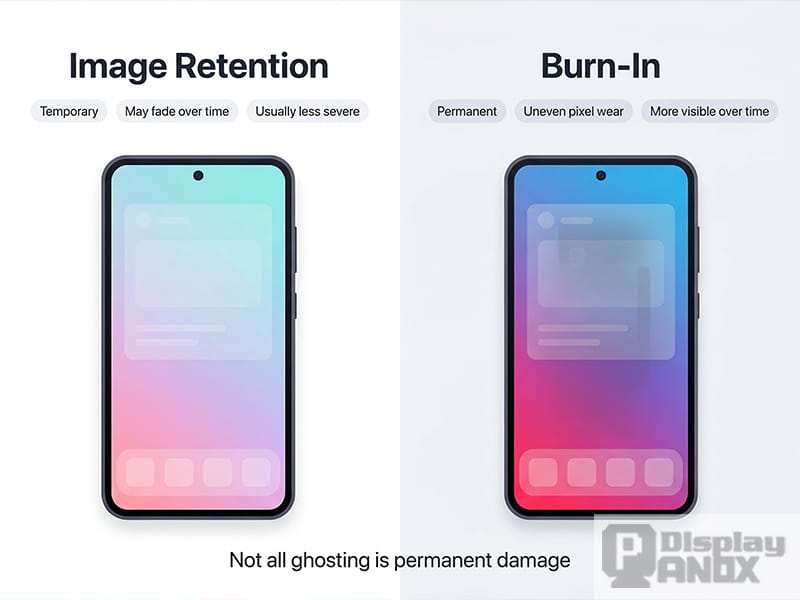
Image source: Bing (Web (fair-use with source credit))
The price is absurd for consumers. A Samsung The Wall configuration starts around $30,000 for the smallest setup and can exceed $400,000 for large installations. Sony's Crystal LED commands similar premiums. These are not consumer products.
They're commercial and luxury items. Until manufacturing yields improve dramatically and production scales up, MicroLED won't compete on price with OLED or LCD.
No true desktop monitor exists. As of 2026, there is no 27-inch, 32-inch, or 40-inch MicroLED monitor you can mount on a desk. The smallest practical MicroLED configurations start at 75 inches, and even those are rare. The pixel pitch technology hasn't yet scaled down to the sub-0.2mm levels needed for a high-PPI desktop display at normal viewing distances.
Industry roadmaps suggest smaller form factors may arrive in the late 2020s, but nothing is shipping now.
Manufacturing yield is still a problem. Placing 25 million microscopic LED chips onto a single 4K substrate with near-zero defects is extraordinarily difficult. Current yield rates mean a significant percentage of panels have dead pixels or uniformity issues. Repair processes exist (laser removal and replacement of individual chips), but they add cost and complexity.
This yield problem is the primary reason prices remain so high.
Installation is not plug-and-play. MicroLED modular displays require professional installation. Panels need to be mounted, aligned, calibrated, and connected to processing hardware. This isn't something you unbox and plug into your PC.
For commercial installations, this is expected. For a consumer, it's a significant barrier.
Color calibration across modules is challenging. When you tile multiple MicroLED panels together, each module needs to match the others in color, brightness, and uniformity. Factory calibration helps, but variations between production batches can create visible seams. Professional calibration after installation is almost always required for critical applications.
The "next-gen" label is partly marketing. Much of the MicroLED buzz comes from CES demonstrations and manufacturer announcements. Samsung, Sony, and several Chinese panel makers (including BOE) have shown impressive prototypes. But the gap between a polished CES demo and a shippable consumer product is enormous.
Some of the most impressive MicroLED displays shown at trade shows have never reached commercial production.
The bottom line: MicroLED is genuinely superior technology, but it's not yet a practical alternative for anyone who isn't outfitting a corporate headquarters, a broadcast facility, or a seven-figure home theater. The "next-gen" label is earned on the engineering side. On the consumer availability side, it's still a generation away.
Who Should Actually Buy MicroLED (And Who Should Wait)
Let's be direct. If you're a consumer looking for a personal monitor, MicroLED isn't for you yet. The technology makes sense today for a narrow set of professional and commercial applications where the specific advantages justify the extreme cost.
Buy MicroLED now if you're outfitting:
- A broadcast studio or production facility running displays 16 to 24 hours daily
- A corporate lobby or executive boardroom where a seamless large-format display is a design statement
- A luxury home theater with a dedicated room and a budget above $100,000
- A medical imaging environment where display consistency and longevity directly affect diagnostic accuracy
- A digital signage network in bright retail or outdoor environments where peak visibility matters
- A command center or simulation facility requiring modular, scalable video walls
Wait on MicroLED if you:
- Need a desktop monitor for gaming, coding, or creative work
- Want a TV for general home entertainment
- Have a budget under $50,000
- Need something you can buy off a shelf and set up yourself this week
The practical reality is that OLED and Mini-LED serve 95% of high-end display needs at a fraction of the cost. A professional colorist working on HDR content would be better served by an ASUS ProArt PA32UCG or an LG OLED monitor costing $1,500 to $4,000 than by a $150,000 MicroLED wall. The image quality difference won't justify the price gap for individual work.
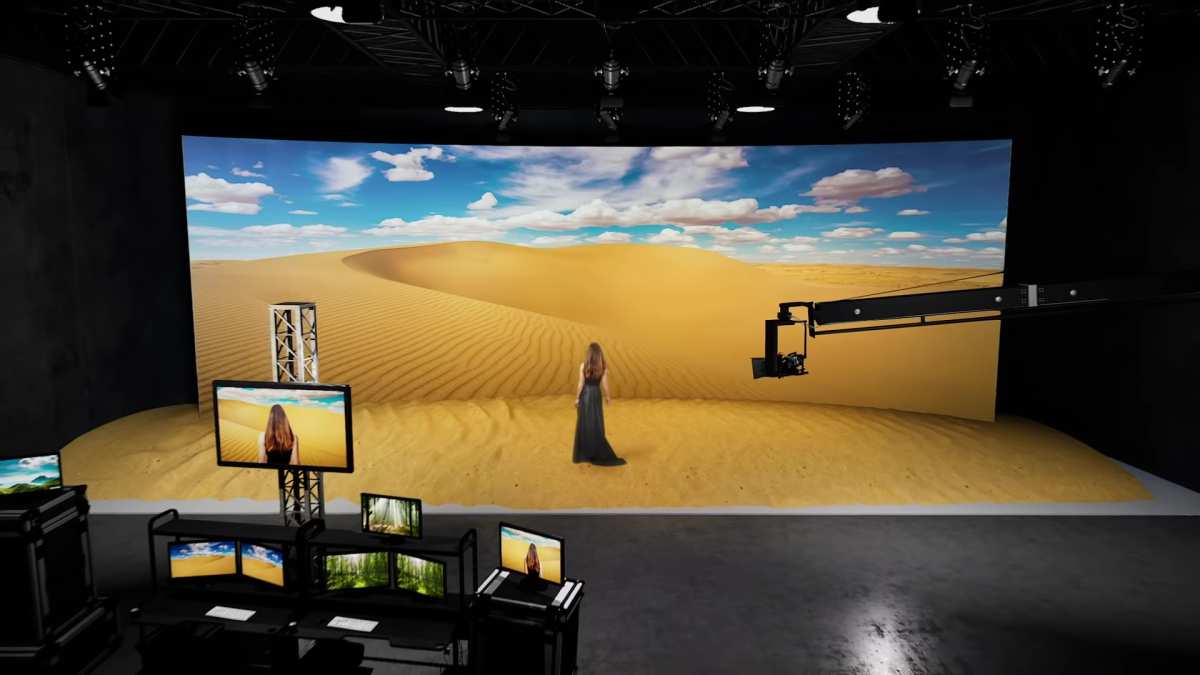
Image source: Bing (Web (fair-use with source credit))
What You'll Pay (And Why It's Not Close to Consumer Pricing Yet)
MicroLED pricing is the single biggest barrier to adoption, and it's not coming down anytime soon. Here's what actual configurations cost as of 2026:
| Product | Configuration | Approximate Price |
|---|---|---|
| Samsung The Wall (110") | 4K, 110-inch modular panel | $150,000–$200,000 |
| Samsung The Wall (146") | 4K, 146-inch modular panel | $250,000–$350,000 |
| Sony Crystal LED (110") | 4K, 110-inch modular system | $180,000–$300,000 |
| Sony Crystal LED (16K) | Large-format custom configuration | $400,000–$800,000+ |
| Smaller custom MicroLED | 75"–99" custom tile configurations | $30,000–$100,000 |
These prices include the panels, processing hardware, and professional installation. They don't include the room modifications often needed for structural mounting, power, or cooling. For comparison, a top-tier 77-inch LG OLED TV retails around $2,500.
A professional 32-inch 4K OLED monitor costs roughly $2,000 to $3,500.
The cost problem traces back to manufacturing. Mass transfer yield rates remain between 50% and 70% for large panels. Every dead pixel requires laser repair or panel replacement.
The GaN LED chips themselves are expensive to produce at the microscopic sizes required for high-PPI displays. And the entire production ecosystem is still low-volume, which means no economies of scale.
Industry analysts project that MicroLED costs could drop 50% to 70% over the next five to seven years as manufacturing matures. But even optimistic projections don't place MicroLED desktop monitors below $5,000 before 2029 or 2030. Consumer-grade MicroLED TVs in the 55" to 65" range might appear in the $5,000 to $10,000 bracket by the late 2020s, based on Samsung's public roadmap disclosures.
What Most People Should Buy Instead Right Now
If you're reading this because you want the best display you can actually buy today, here's the honest recommendation.
For gaming and general use: Get an OLED monitor. The LG 27GR95QE (27", 1440p, 240Hz) or the ASUS ROG Swift PG27AQN deliver outstanding image quality with true blacks, near-instant response times, and no burn-in concerns for typical consumer use patterns. Prices range from $800 to $1,500.
For professional color work: A Mini-LED monitor like the Apple Pro Display XDR or the ASUS ProArt PA32UCG gives you high brightness, good HDR, and solid color accuracy without OLED's burn-in risk for static UI elements. Budget $1,500 to $5,000.
For large-format home entertainment: A 77-inch or 83-inch LG OLED TV delivers phenomenal picture quality for $2,000 to $5,000. If you need something brighter for a well-lit room, a high-end Mini-LED TV like the Samsung QN900C offers excellent HDR performance.
For commercial digital signage: Direct-view LED video walls (not MicroLED, but standard SMD or COB LED) remain the most cost-effective solution for large-format commercial displays. They're brighter, cheaper, and more readily available than MicroLED for signage applications.
The key insight is that "next-gen" doesn't automatically mean "best choice for you right now." OLED is mature, affordable, and excellent. Mini-LED is improving rapidly. MicroLED is the future, but it's a future that hasn't arrived for most buyers yet.
When MicroLED Will Actually Be Worth Your Money
The timeline for MicroLED reaching consumer accessibility depends entirely on solving the manufacturing challenges. Here's what the industry roadmap looks like based on manufacturer disclosures and analyst projections.
2026 to 2028: Continued dominance in commercial and luxury segments. Samsung and Sony will expand their modular offerings. Chinese panel makers like BOE and San'an Optoelectronics will enter the market, potentially driving prices down 20% to 30%.
Smaller MicroLED panels (50" to 75") may appear in limited consumer availability at $10,000 to $30,000.
2028 to 2030: Mass transfer technology improvements could push yields above 85%, significantly reducing costs. First true MicroLED desktop monitors in the 27" to 32" range might appear, likely priced between $5,000 and $15,000. Early adopters and professionals will be the primary market.
2030 and beyond: If manufacturing scales successfully, MicroLED could begin competing directly with OLED in the premium consumer market. Prices for 55" to 65" MicroLED TVs could fall below $5,000. Desktop monitors might reach the $2,000 to $3,000 range.
These projections assume no major technical roadblocks. History suggests display technology transitions take longer than expected. OLED was demonstrated in labs in the 1990s but didn't reach mass-market TVs until the mid-2010s.
MicroLED has a similar trajectory ahead of it.
The technology is genuinely superior. The engineering is proven. The remaining challenges are manufacturing and cost, both of which are solvable problems.
But solvable doesn't mean solved, and anyone planning a display purchase today should buy what's available and excellent, not what's theoretically perfect and years away.
Common Misconceptions About MicroLED (And What People Get Wrong)
There's a lot of hype floating around MicroLED, and some of it deserves correction.
"MicroLED is just a fancier LED video wall." No. Traditional LED video walls use surface-mount LEDs with pixel pitches of 1mm to 4mm, visible at close range. MicroLED achieves sub-0.5mm pixel pitches, enabling high-resolution displays viewable at normal monitor distances.
The manufacturing precision and pixel density are in completely different categories.
"MicroLED will replace OLED within a few years." Unlikely. OLED continues to improve and get cheaper. LG Display's WOLED panels are more efficient with each generation.
Samsung Display's QD-OLED has addressed many early color volume concerns. OLED has a massive head start in manufacturing scale and cost optimization. MicroLED will coexist with OLED, not replace it, for the foreseeable future.
"MicroLED has no downsides." Beyond the cost and availability issues, MicroLED faces challenges with color uniformity across modular panels, heat dissipation at sustained peak brightness, and the complexity of pixel-level repair. It's not a perfect technology. It's a technology with different tradeoffs.
"You can buy a MicroLED monitor today." You cannot buy a MicroLED desktop monitor from any major manufacturer. What you can buy are large-format modular displays. The products marketed as "MicroLED" in consumer channels are often Mini-LED-backlit LCDs with marketing names that borrow the term.
Always check the actual panel technology before assuming.
"MicroLED is the same as Mini-LED." These are fundamentally different technologies. Mini-LED is an LCD backlighting technique using thousands of small LED zones. MicroLED is a self-emissive display where each pixel is its own LED.
The naming similarity causes constant confusion, but the technologies share nothing beyond both using LEDs.
"Burn-in is completely impossible on MicroLED." The inorganic LED chips themselves don't burn in the way OLED materials do. However, driver electronics and TFT backplanes can degrade unevenly over very long periods. The risk is dramatically lower than OLED, but claiming absolute zero degradation over a 100,000-hour lifespan would be an overstatement.
The Bottom Line: Is MicroLED Really Next-Gen?
Yes, and no. MicroLED is genuinely next-generation technology from an engineering standpoint. The combination of self-emissive inorganic pixels, extreme brightness, zero burn-in risk, and modular scalability makes it the most complete display technology ever developed.
No other panel type can match all of those attributes simultaneously.
From a consumer standpoint, MicroLED is still a promise rather than a product. The technology hasn't crossed over into the sizes, price points, or form factors that matter for everyday buyers. OLED is the best display tech available to real people today.
Mini-LED is a strong alternative for bright rooms and static professional workloads.
If you're a broadcast engineer, an architect designing a corporate showcase display, or someone outfitting a luxury home theater with an open budget, MicroLED is worth your attention now. If you're anyone else, appreciate the technology from a distance and plan to revisit it in a few years when the prices have a few fewer zeros.
Frequently Asked Questions
Can I buy a MicroLED monitor today?
Not in a desktop form factor. You can purchase large-format modular MicroLED displays from Samsung's The Wall line and Sony's Crystal LED series, but these start at 75 inches and cost $30,000 or more. No manufacturer currently sells a 27-inch or 32-inch MicroLED desktop monitor.
Is MicroLED better than OLED?
On paper, MicroLED outperforms OLED in brightness, lifespan, and burn-in resistance. In practical terms for consumers today, OLED offers better value, wider availability, and more appropriate sizes for desktop use. The technologies will likely coexist for years.
Does MicroLED have burn-in?
No. MicroLED uses inorganic gallium nitride LED chips rather than organic compounds, so it doesn't suffer from the burn-in or image retention that affects OLED panels. The chips age uniformly rather than degrading unevenly like organic materials.
How long do MicroLED displays last?
Manufacturer specifications indicate a lifespan of 100,000+ hours before reaching 50% brightness. That's roughly three to five times longer than typical OLED panels and comparable to or exceeding high-end LCD displays with LED backlights.
When will MicroLED monitors be affordable?
Based on current manufacturing trends, MicroLED desktop monitors could appear in the $5,000 to $15,000 range by 2028 to 2030. Consumer TV-sized MicroLED panels might reach $5,000 to $10,000 by the same timeframe. Mass-market pricing likely remains beyond 2030.
What's the difference between MicroLED and Mini-LED?
MicroLED is self-emissive, meaning each pixel produces its own light independently. Mini-LED is an LCD technology that uses thousands of small LED zones as a backlight behind liquid crystals. The naming is confusing, but they are fundamentally different technologies at different levels of sophistication.
Is MicroLED worth it for professional video editing?
For most color professionals, a high-end OLED or Mini-LED monitor provides sufficient accuracy and performance at a fraction of the cost. MicroLED becomes worthwhile for environments requiring 24/7 operation, extreme brightness, or large-format displays where OLED and LCD alternatives fall short.

Similar Posts