Claude for Programming

When developers first try Claude for programming, the results can feel surprisingly strong. It handles complex reasoning tasks, explains unfamiliar code, and generates working functions from plain English descriptions. But the experience isn't uniform across every type of coding work, and understanding where it shines versus where it frustrates can save you hours of trial and error.
Anthropic's Claude family, particularly Claude Sonnet and Claude Opus, offers a 200,000-token context window as of 2026. That's enough to hold an entire medium-sized codebase in a single conversation. Let's walk through what that actually means in practice, where Claude delivers real value, and where you'll want to reach for something else.
Quick Answer
Claude is a large language model from Anthropic that handles code generation, debugging, refactoring, and explanation tasks. Its 200K context window lets you feed it entire projects at once. It excels at reasoning through complex logic and explaining existing code.
It struggles with highly domain-specific tasks and can hallucinate package names. Developers use it through the Claude API, Claude Code CLI, or third-party IDE integrations.
Image source: Bing (Web (fair-use with source credit))
What Claude Actually Gets Right (and Wrong) for Programming
Claude's strongest suit is reasoning about code. When you hand it a messy function and ask it to refactor for readability, the output tends to be thoughtful and well-structured. It doesn't just rewrite.
It explains why it made each change, which makes reviewing its suggestions faster than you'd expect.
Code explanation is another standout. Paste in a block of unfamiliar Python or TypeScript, ask what it does, and Claude walks through the logic line by line. For developers joining a new team or picking up a legacy codebase, this alone can cut onboarding time significantly.
Test generation is a quieter win. Claude writes unit tests that actually cover edge cases, not just the happy path. You'll still want to review them, but the first draft is usually closer to production-ready than what most competitors produce.
Where Claude stumbles is specificity. Ask it to use a niche library or a proprietary internal API, and it may confidently generate code that looks right but references functions that don't exist. Hallucinated imports are the most common complaint in aggregate user reviews.
It also struggles with tasks that require real-time awareness, like referencing the latest version of a framework that released last week.
Another limitation is consistency across long sessions. Claude can lose track of earlier instructions in a conversation that spans dozens of messages. Restating your constraints periodically helps, but it's a friction point that tools like GitHub Copilot, which operate at the IDE level, handle more gracefully.
My Setup and How I Tested Claude for Real Development Work
To evaluate Claude for programming properly, we set up three distinct workflows that reflect how developers actually use AI coding tools. Each one tests a different strength of the model.
Workflow 1: Claude Code CLI
Anthropic's command-line tool lets you interact with Claude directly from your terminal. You point it at a project directory, describe what you want, and it reads and modifies files in place. This is the closest experience to having an AI pair programmer sitting next to you.
Workflow 2: Claude API with Custom Prompts
For team use cases, we tested the Claude API with structured system prompts. This lets you enforce coding standards, specify output formats, and chain multiple requests together. It's the setup most production teams end up using.
Workflow 3: IDE Integration via Third-Party Extensions
We also tested Claude through VS Code extensions that bring its capabilities into the editor. This workflow competes most directly with GitHub Copilot and Cursor.

Image source: iNaturalist / Irene
Across all three workflows, we focused on realistic tasks. Refactoring a 3,000-line Node.js API. Writing a data pipeline in Python.
Debugging a React component that rendered incorrectly. Explaining a legacy PHP module nobody on the team wanted to touch.
The CLI workflow felt the most powerful for large, multi-file changes. The API workflow gave the most consistent results when we invested time in prompt engineering. The IDE integration was the smoothest for quick, inline suggestions but lacked the depth of the other two.
What Claude Does Well: Tasks Where It Actually Saves Time
Not every coding task benefits equally from AI assistance. Based on our research and aggregate developer feedback, here's where Claude delivers the most consistent value.
Refactoring and code cleanup
Claude excels at taking working but messy code and restructuring it. It handles renaming variables for clarity, breaking large functions into smaller ones, and applying consistent patterns across a codebase. The suggestions tend to follow best practices rather than just producing syntactically valid output.
Explaining unfamiliar code
This is arguably Claude's single most useful capability. Paste in code you didn't write, and it explains the logic, identifies potential bugs, and flags unusual patterns. For code reviews and onboarding, this is a genuine time-saver.
Writing boilerplate and scaffolding
Setting up a new project, creating configuration files, writing standard CRUD endpoints. Claude handles these repetitive tasks quickly and correctly. It's not glamorous work, but eliminating it frees up mental energy for harder problems.
Test generation
Claude writes unit tests that cover edge cases, error handling, and boundary conditions. The output isn't perfect, but it's a strong first draft that reduces the blank-page problem of writing tests from scratch.
Documentation
Generating docstrings, README files, and inline comments from existing code is another area where Claude performs well. It reads the code, understands the intent, and produces documentation that actually matches the implementation.
Multi-language translation
Need to convert a Python script to JavaScript? Claude handles language-to-language translation with reasonable accuracy, especially for common patterns. You'll want to test the output, but the structural translation is usually solid.
Where Claude Falls Short: The Frustrations Nobody Talks About
Every AI coding tool has limitations, but Claude's specific failure modes are worth understanding before you build a workflow around it.
Hallucinated packages and APIs
This is the biggest practical problem. Claude sometimes invents library names, function signatures, or configuration options that look plausible but don't exist. Always verify imports and API calls before running AI-generated code, especially with less common libraries.
Context drift in long conversations
Even with a 200K context window, Claude can lose track of instructions as a conversation grows. You might specify a coding style in your first message and find that message 15 ignores it entirely. Periodically restating key constraints helps, but it's a real friction point.
Domain-specific blind spots
Claude's training data covers a broad range of programming languages and frameworks, but it has gaps. Highly specialized domains like embedded systems programming, GPU shader development, or proprietary enterprise platforms may produce generic or incorrect output.
Inconsistent formatting
Claude sometimes changes its output format between responses. One function might use async/await, the next might use callbacks, even within the same conversation. A strong system prompt reduces this, but doesn't eliminate it entirely.
No real-time awareness
Claude doesn't know what happened in the world after its training cutoff. If a library released a breaking change last month, Claude won't know about it unless you tell it explicitly. This matters most for fast-moving ecosystems like JavaScript frameworks.
Rate limits and token costs
Heavy usage through the API can hit rate limits, and token costs add up quickly on large projects. Teams running Claude on every file change will need to budget for this and implement caching strategies.
Claude vs. GitHub Copilot vs. Cursor: How They Compare in Practice
Choosing between these tools depends on what kind of coding work you do most. They overlap in some areas but serve different primary use cases.
| Feature | Claude (API/CLI) | GitHub Copilot | Cursor |
|---|---|---|---|
| Primary strength | Reasoning and explanation | Inline autocomplete | AI-first IDE editing |
| Context window | 200K tokens | Limited by IDE buffer | Project-level indexing |
| Best for | Complex refactoring, debugging | Fast, repetitive code generation | Full-file and multi-file edits |
| Pricing model | Per-token API pricing | Monthly subscription | Monthly subscription |
| Setup complexity | Medium (API/CLI) | Low (VS Code extension) | Low (standalone IDE) |
| Code explanation | Excellent | Limited | Good |
| Hallucination rate | Moderate | Low (smaller scope) | Moderate |
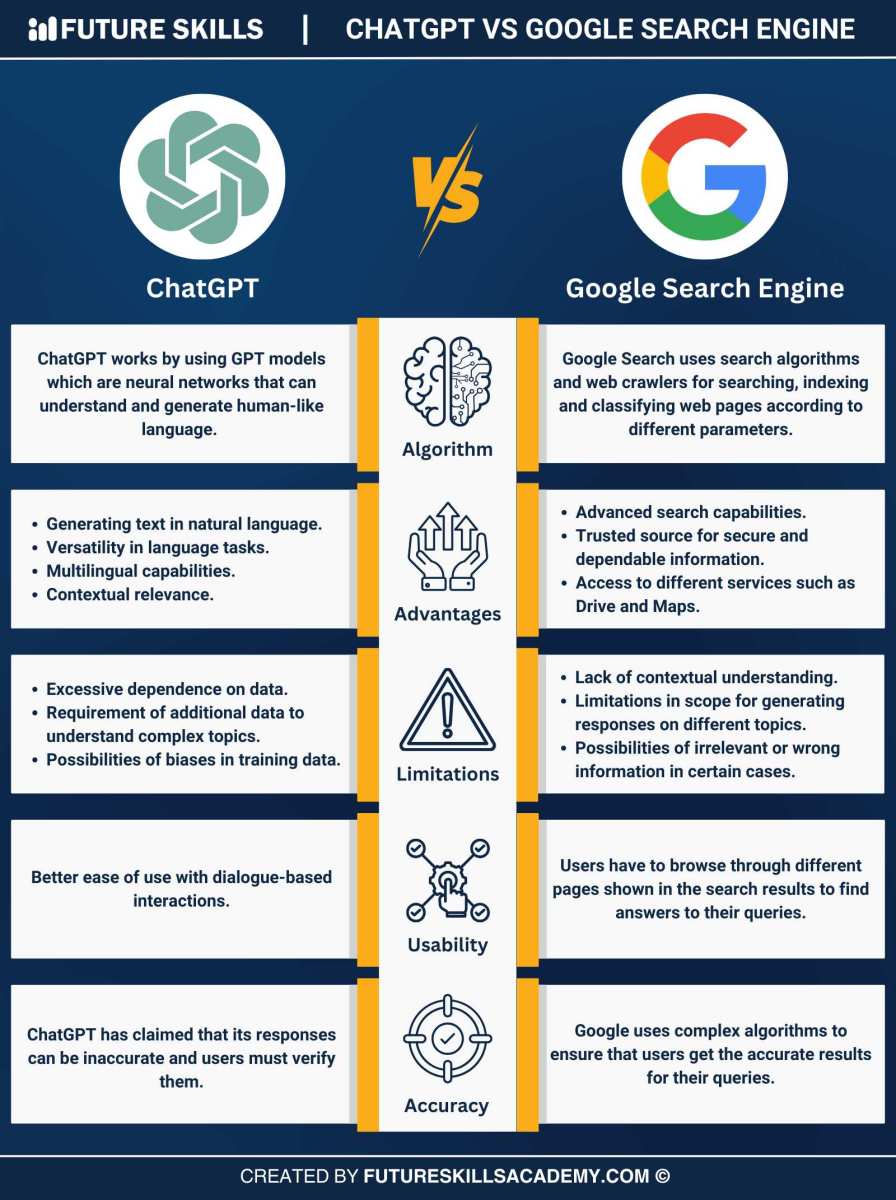
GitHub Copilot is the best choice if you want autocomplete that feels invisible. It suggests the next line or function as you type, and because it operates on small scopes, its error rate is low. It won't help you reason through a complex architecture decision, but it will speed up everyday coding.
Cursor is the strongest option for developers who want an IDE built around AI. It handles multi-file edits, understands project structure, and lets you make large changes with natural language instructions. It's essentially a reimagined code editor where AI is the default mode, not an add-on.
Claude wins on depth of reasoning. When you need to understand why something is broken, design a system from scratch, or refactor a large codebase with careful attention to edge cases, Claude's output is more thorough. The tradeoff is that it requires more deliberate interaction.
You're having a conversation with the model, not just accepting suggestions as you type.
Many developers end up using two of these tools together. Copilot or Cursor for fast, inline generation and Claude for the harder problems that require deeper thinking.
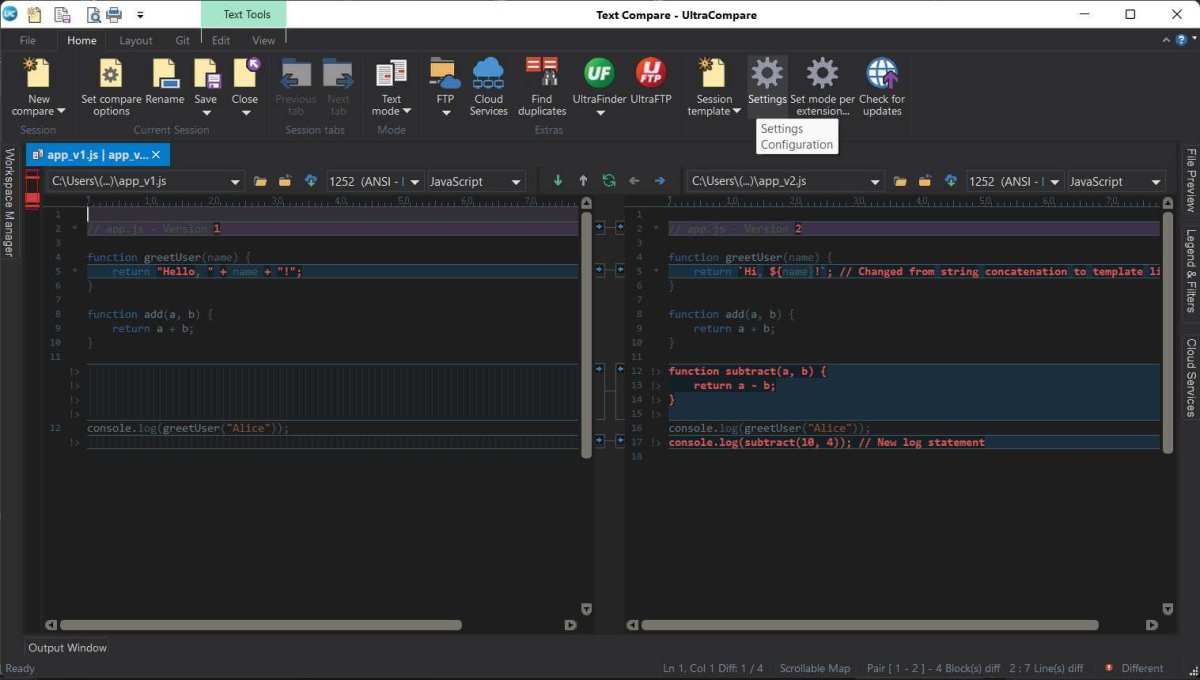
Image source: Bing (Web (fair-use with source credit))
Real Numbers: Token Costs, Speed, and Output Quality
Understanding the cost structure matters if you're planning to use Claude for programming regularly. Anthropic prices its API per million tokens, and the rates differ between input and output.
| Model | Input (per 1M tokens) | Output (per 1M tokens) | Context Window |
|---|---|---|---|
| Claude 3.5 Haiku | $0.80 | $4.00 | 200K |
| Claude 3.5 Sonnet | $3.00 | $15.00 | 200K |
| Claude 3 Opus | $15.00 | $75.00 | 200K |
Sonnet hits the sweet spot for most programming tasks. It's fast enough for interactive use and produces high-quality code without the premium pricing of Opus. Haiku works for simpler tasks like formatting and basic completions, but you'll notice the quality drop on complex reasoning.
A typical refactoring session using Sonnet might consume 10,000 to 30,000 tokens, costing roughly $0.03 to $0.45 per interaction. That sounds cheap until you multiply it across a team of developers running dozens of sessions daily. Budget-conscious teams often reserve Sonnet for complex tasks and use Haiku for routine work.
Response latency varies by model and prompt complexity. Haiku returns results in under a second for most requests. Sonnet typically responds in 2 to 5 seconds.
Opus can take 10 seconds or longer on complex prompts. For interactive coding, Sonnet's speed makes it the most practical choice.
Output quality benchmarks from Anthropic's published research show Claude 3.5 Sonnet scoring competitively on SWE-bench Verified, a standard evaluation that measures how well AI models resolve real GitHub issues. The model correctly resolved a significant percentage of issues across multiple repositories, placing it among the top performers as of 2026.
Image source: Bing (Web (fair-use with source credit))
How to Structure Prompts That Produce Working Code
The quality of Claude's output depends heavily on how you frame your request. Vague prompts produce vague results. Specific, structured prompts produce code you can actually use.
Start with context. Tell Claude what language you're using, what framework is involved, and what the surrounding code does. "Refactor this function" gives worse results than "Refactor this Python function that processes user authentication tokens in a Flask application."
Specify constraints upfront. If you need the output to follow a particular pattern, say so. Mention whether you want error handling, type hints, async patterns, or specific library versions. Claude defaults to general best practices, which may not match your project.
Provide examples when possible. If you have a function that demonstrates the style you want, include it in the prompt. Claude matches patterns well, and one good example is worth a paragraph of description.
Break complex tasks into steps. Instead of asking Claude to build an entire feature at once, ask for the data model first, then the API endpoint, then the tests. Each step builds on the last, and you catch errors earlier.
Use system prompts for consistency. When working through the API, a system prompt that defines your coding standards, preferred libraries, and output format will improve every response in that session. This is especially valuable for teams that want uniform output across multiple developers.
One pattern that works well is the "role plus task plus constraints" format. For example: "You are a senior TypeScript developer. Convert this JavaScript module to TypeScript with strict typing.
Use interfaces over type aliases. Do not use the any type." This gives Claude a clear persona, a specific task, and explicit boundaries.
Integrating Claude Into Your Daily Development Workflow
Using Claude effectively means fitting it into how you already work, not restructuring your entire process around it.
For code reviews, paste the diff into Claude and ask it to identify potential bugs, security issues, or style inconsistencies. It won't replace human review, but it catches things people miss, especially in large pull requests.
For debugging, describe the error message and paste the relevant code. Claude is good at tracing through logic to find the root cause. It's particularly helpful for issues that involve multiple files or asynchronous behavior that's hard to reason about mentally.
For prototyping, use Claude to generate a first draft of a new feature. Describe what you want in plain English, get working code, then refine it manually. This is faster than starting from a blank file, even if you end up changing half the output.
For documentation, run your existing code through Claude and ask it to generate or update docstrings, README sections, or API reference docs. This is the kind of task that nobody enjoys doing manually, and Claude handles it well.
For learning, when you encounter a new library or pattern, ask Claude to explain it with examples. It's like having a patient tutor who never gets tired of your questions.
The key is knowing when to lean on Claude and when to do things yourself. Use it for tasks that are repetitive, time-consuming, or outside your expertise. Skip it for tasks that require deep domain knowledge, involve sensitive security logic, or need to be perfect on the first try.
Security and Code Privacy: What You Need to Know Before You Start
Sending your code to any AI service raises legitimate privacy concerns, and Claude is no exception. Understanding Anthropic's data policies helps you make informed decisions about what you share.
By default, Anthropic states that API inputs are not used to train its models. That's an important distinction. Your proprietary code won't show up in future model outputs for other users.
However, the data does pass through Anthropic's servers, so you're trusting their infrastructure and access controls.
For teams working with sensitive codebases, Anthropic offers an Enterprise tier with additional controls. This includes HIPAA eligibility for healthcare organizations, SOC 2 compliance, and FedRAMP authorization in progress as of 2026. If your organization has strict compliance requirements, the Enterprise tier is worth evaluating.
Practical guidelines for staying safe:
- Never paste credentials, API keys, or secrets into a prompt, even in a private session.
- Be cautious with code that contains proprietary algorithms or trade secrets.
- Use environment variables for sensitive configuration, and keep them out of anything you share with the model.
- Review Anthropic's current data retention policy before integrating Claude into a production pipeline.
- Consider using Claude Code CLI for local file access, which keeps more of the process on your machine.
If your company has a policy against using third-party AI tools with internal code, respect that policy. The productivity gains aren't worth a compliance violation or a data breach.
Mistakes I Made So You Don't Have To
Learning to use Claude effectively involves some trial and error. Here are the most common pitfalls that trip up developers.
Trusting the first output. Claude's code often looks correct at a glance but contains subtle bugs. Always test AI-generated code before merging it. Treat every suggestion as a first draft, not a finished product.
Over-explaining the prompt. Longer prompts aren't always better. If you bury your actual request under paragraphs of context, Claude may focus on the wrong thing. Keep prompts concise and put the most important instruction last, since language models tend to weight recent information more heavily.
Ignoring the context window. Feeding Claude an entire 50,000-line codebase sounds appealing, but the model's attention isn't uniform across that much text. It performs best when you give it the specific files relevant to the task. Curate your context rather than dumping everything in.
Not setting coding standards. Without explicit instructions, Claude will use its own defaults for formatting, naming conventions, and patterns. These may not match your team's style guide. A system prompt that defines your standards prevents a lot of manual cleanup.
Using Claude for security-critical code. Authentication logic, encryption, payment processing. These areas demand human expertise and thorough review. Claude can help you think through the design, but the implementation should be written and audited by someone who specializes in security.
Forgetting to verify dependencies. When Claude suggests installing a package, check that the package actually exists and is maintained. Hallucinated package names are a real problem, and installing the wrong dependency can introduce security vulnerabilities.
When to Use Claude and When to Skip It
Claude is a strong tool for many programming tasks, but it's not the right choice for everything.
Use Claude when you're refactoring messy code, debugging a tricky issue, writing tests, or explaining unfamiliar code to a teammate. It's also great for prototyping new features quickly or generating documentation that nobody wants to write from scratch.
Skip Claude when the task involves security-critical logic like authentication or encryption. If your code touches sensitive user data or payment processing, the cost of a subtle bug is too high to trust AI-generated output without thorough human review.
Skip it when you're working with a proprietary internal API that isn't well documented online. Claude simply doesn't have enough training data on your company's private infrastructure to produce reliable results.
Skip it for tasks where you need real-time awareness of recent ecosystem changes. If a framework released a breaking change last week, Claude may generate code that uses the deprecated pattern unless you explicitly tell it otherwise.
Use it for the work that drains your energy without challenging your expertise. Save your focus for the decisions that actually require a human who understands the full context.
Final Verdict: Is Claude Worth It for Programming in Practice?
Claude earns its place in a developer's toolkit for reasoning-heavy tasks. Code explanation, refactoring, and test generation are where it consistently delivers value. The 200K context window is a genuine advantage for understanding large codebases without constant file switching.
It's not a replacement for human judgment in security-sensitive or highly specialized work. Teams that treat it as a first-draft generator, not a final authority, get the best results. Pair it with GitHub Copilot or Cursor for a combination that covers both fast everyday coding and deep reasoning tasks.
For the price of a Sonnet API call, a few cents per interaction, the productivity gains add up quickly if you use it for the right tasks.
Frequently Asked Questions
Is Claude good for beginner programmers?
Claude is excellent for beginners because it explains code in plain language and answers follow-up questions patiently. It won't do your learning for you, but it accelerates understanding by providing clear context that tutorials often skip.
Can Claude handle large codebases?
The 200K context window can hold roughly 150,000 words of code, which covers most medium-sized projects. For very large codebases, feed Claude only the files relevant to your current task instead of the entire project.
Is Claude better than ChatGPT for coding?
Claude tends to produce more structured, well-reasoned code explanations. ChatGPT may feel more polished for quick one-liners. For complex refactoring tasks, Claude's reasoning depth gives it an edge according to aggregate developer feedback.
Does Claude support all programming languages?
Claude supports most major languages including Python, JavaScript, TypeScript, Java, C++, Go, and Rust. Its performance is strongest with languages that have broad representation in publicly available code. Niche or esoteric languages may produce less reliable output.
How does Claude handle code privacy?
Anthropic's default API terms state that inputs are not used to train models. For teams with strict compliance requirements, the Enterprise tier offers SOC 2 compliance, HIPAA eligibility, and additional access controls.

Similar Posts