Is 49 Inch Ultrawide Monitor Too Big

Deciding if a 49-inch ultrawide monitor fits your needs and space is crucial. This guide helps you assess desk real estate, ergonomics, and your primary usage scenarios, like gaming or productivity. We’ll explore if this massive display offers benefits or becomes an unwieldy behemoth for your setup. Is a 49-inch ultrawide monitor too big? This is a question many tech enthusiasts and productivity seekers ponder as they gaze upon these impressive displays. These behemoths promise an immersive experience and a vast canvas for multitasking, but their sheer size can be intimidating. This guide is here to help you navigate the decision-making process. We’ll delve into everything you need to consider, from the physical dimensions and your desk space to your intended use and the practicalities of setup. By the end of this guide, you’ll have a clear understanding of whether a 49-inch ultrawide monitor is the right fit for you, or if it might just be too much. 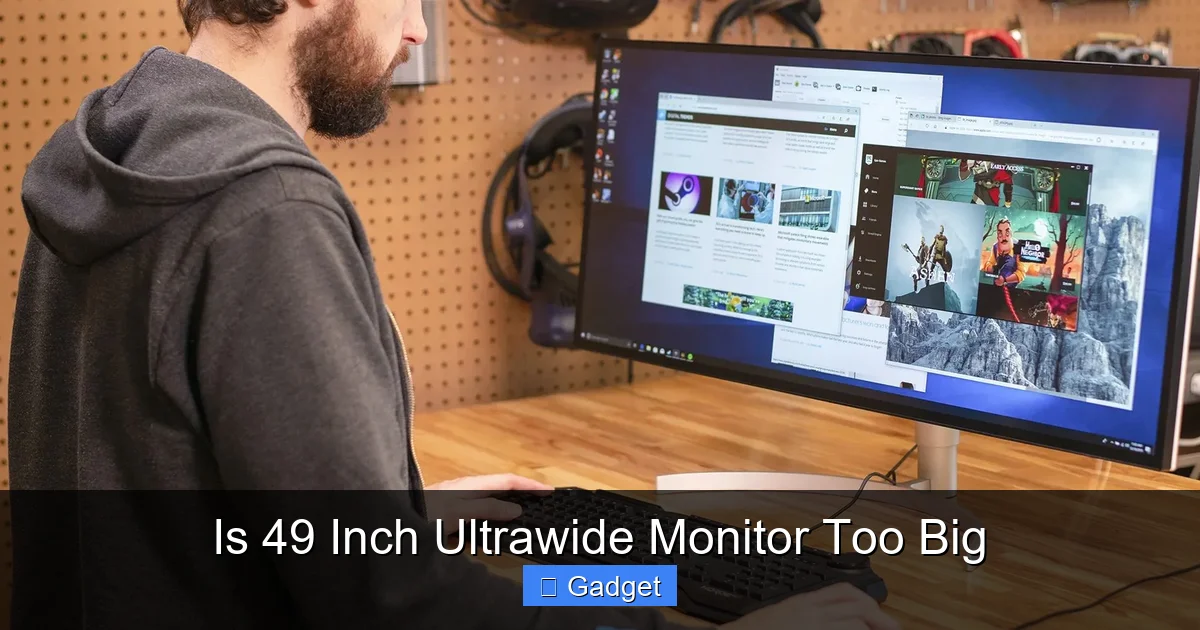 This is, without a doubt, the most critical step. A 49-inch ultrawide monitor has a significant physical presence. It’s not just about the diagonal screen size; it’s about the physical width and depth it occupies.
 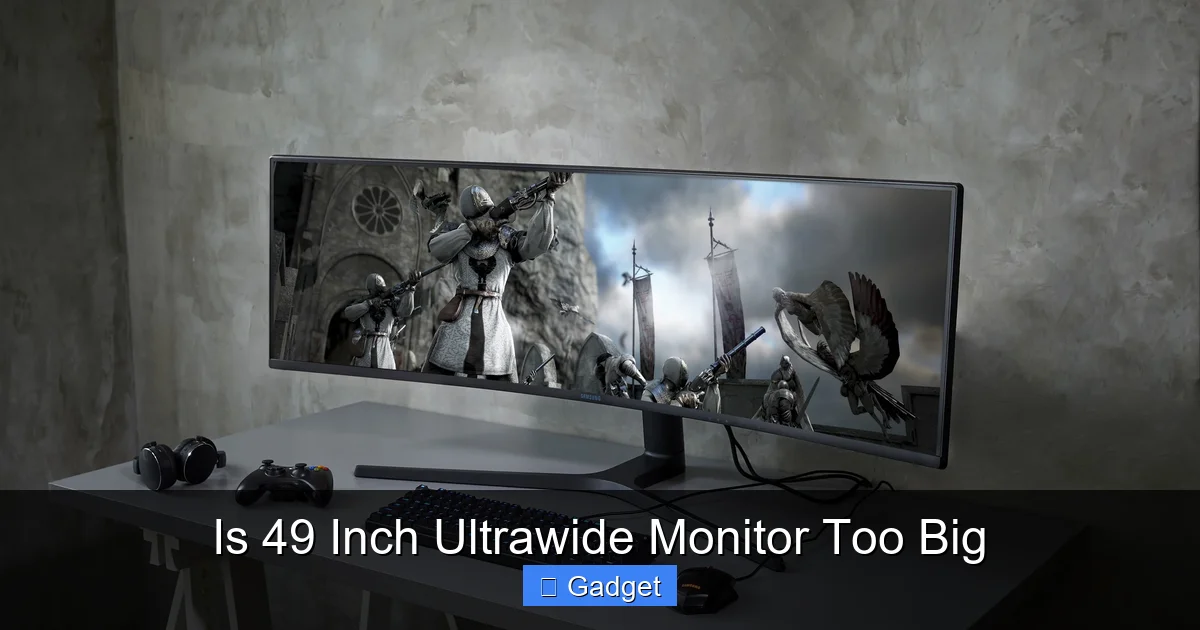 What will you be doing with this colossal screen? Your intended use is a huge factor in determining if it’s “too big” or just right.
 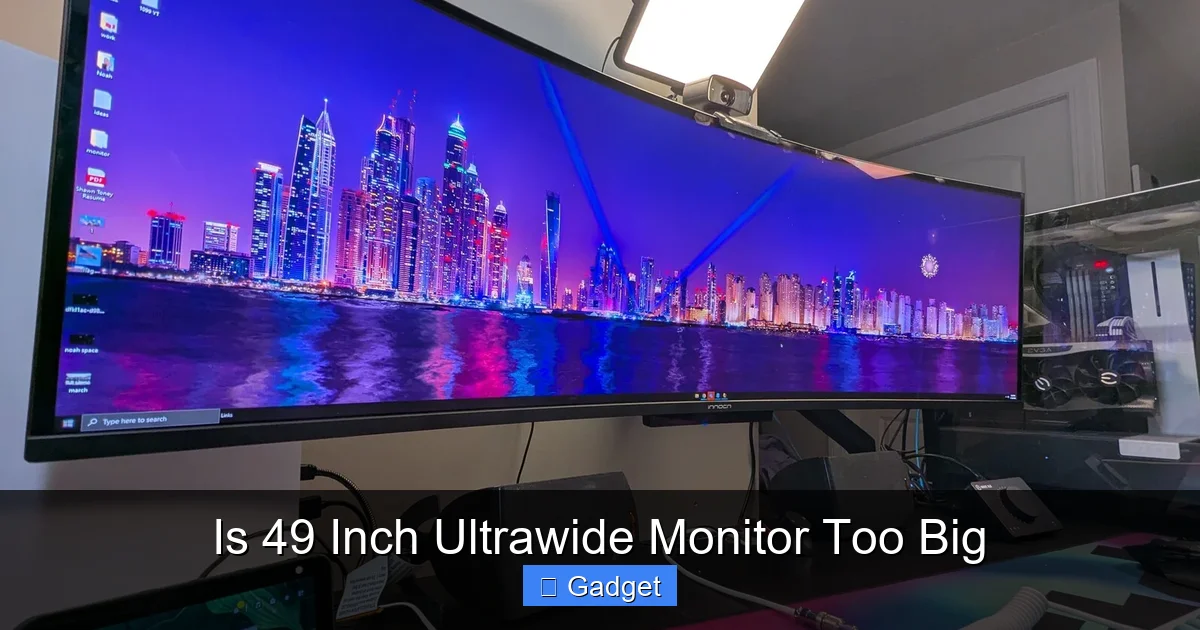 With such a large screen, ergonomics become even more crucial to prevent discomfort and potential strain.
Key Takeaways
- Understand the Physical Footprint: A 49-inch ultrawide monitor isn’t just wide; it’s deep and requires significant desk space both in width and depth.
- Assess Your Desk Size Realistically: Measure your desk thoroughly, considering not just the width but also the depth and any obstructions like monitor arms.
- Consider Your Primary Use Case: What will you mainly use the monitor for? Gaming, professional work, or general multitasking have different needs regarding screen size.
- Ergonomics are Paramount: Proper viewing distance and monitor height are critical for comfort and preventing strain with such a large display.
- Connectivity and Performance Matter: Ensure your computer and graphics card can effectively drive the high resolution and refresh rate of a 49-inch ultrawide.
- Budget and Value Proposition: 49-inch ultrawides are premium devices; consider if the benefits justify the cost for your specific situation.
Understanding the 49-Inch Ultrawide Monitor
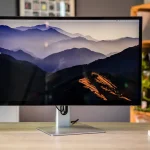
Before we dive into whether it’s “too big,” let’s understand what we’re talking about. A 49-inch ultrawide monitor typically boasts an aspect ratio of 32:9. This means it’s roughly twice as wide as a standard 16:9 monitor of comparable height. The diagonal measurement of 49 inches refers to the screen itself. However, the actual physical dimensions, including the bezel and stand, will be larger. Common resolutions for these monitors are Dual QHD (5120 x 1440 pixels), which is essentially two 2560 x 1440 monitors placed side-by-side. This provides an enormous amount of horizontal screen real estate.Step 1: Measure Your Desk Space – The Ultimate Reality Check
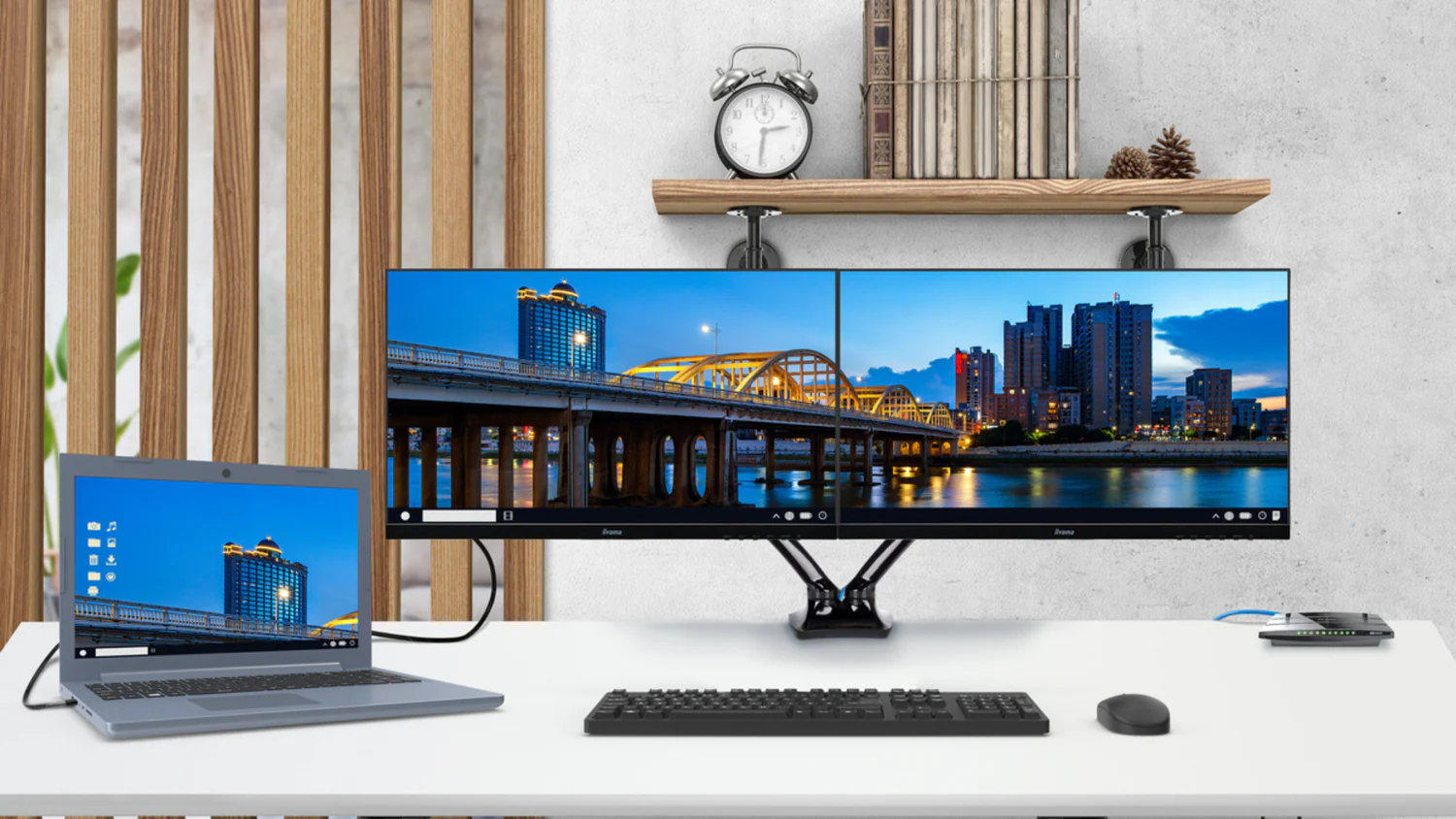
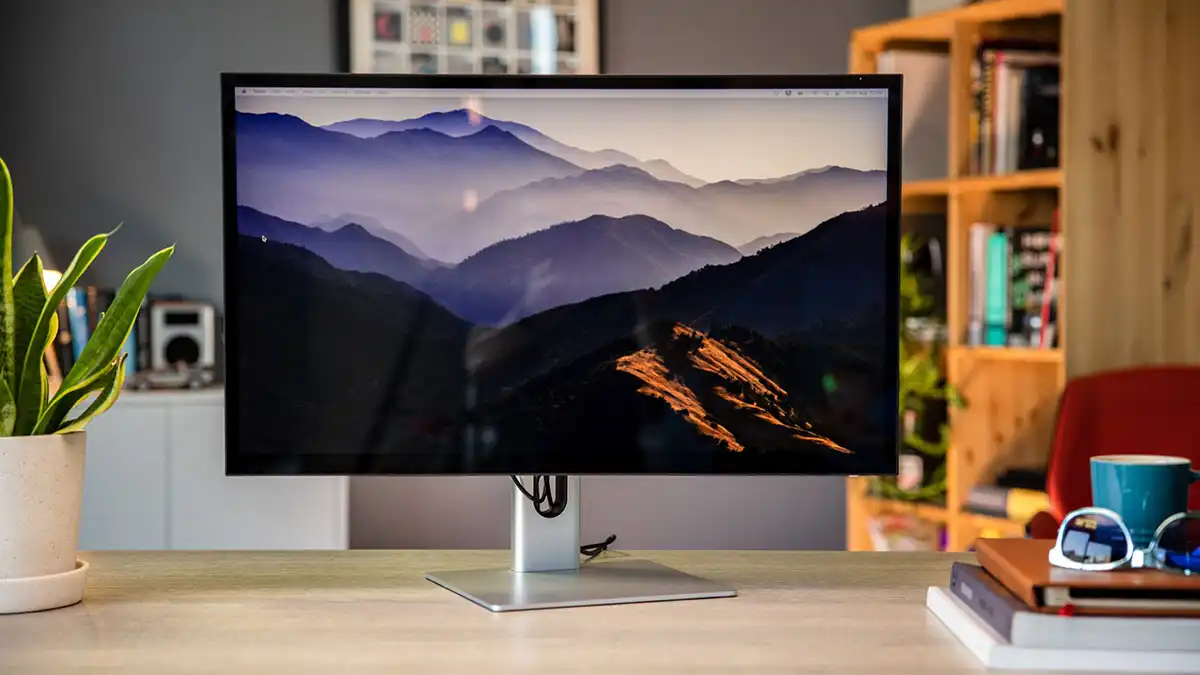
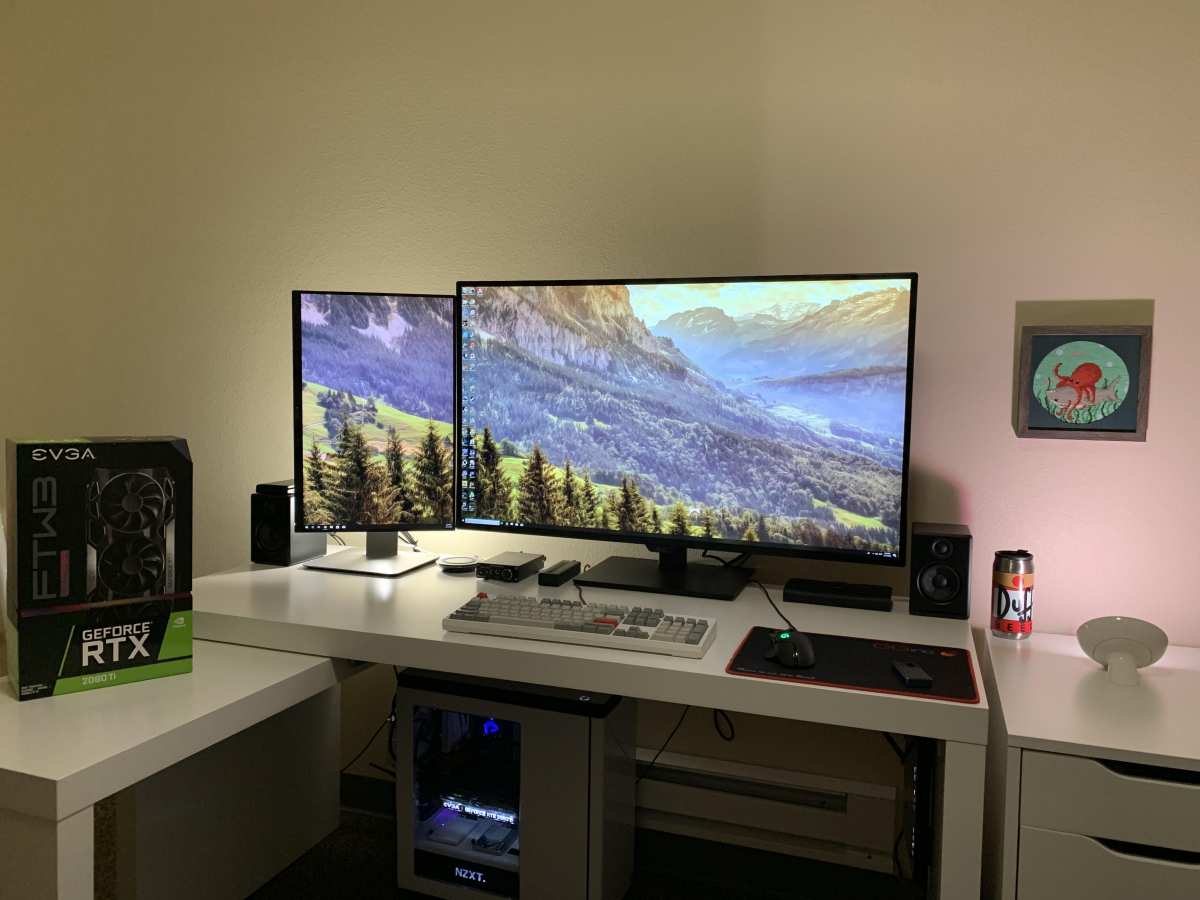
Visual guide about Is 49 Inch Ultrawide Monitor Too Big
Image source: robots.net
H3: Width Considerations
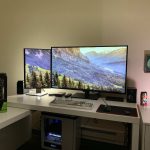
Most 49-inch ultrawide monitors are around 47-48 inches wide (120-122 cm). This measurement usually includes the bezels. You need to ensure your desk has at least this much clear width available. If your desk has a hutch, shelves, or is situated in a tight corner, this width might become a limiting factor. * **Practical Tip:** Use painter’s tape or a large cardboard box cut to the approximate dimensions of the monitor to visualize its footprint on your desk. This is far more effective than just imagining it. * **Example:** If your desk is only 45 inches wide, a 49-inch ultrawide monitor simply won’t fit without overhang, which is neither practical nor aesthetically pleasing.H3: Depth Considerations
Don’t forget the depth! The monitor itself might be relatively slim, but the stand can add considerable depth. Many stands have a larger footprint to provide stability for such a wide screen. You need to account for the distance from the back of the desk to the front edge. * **Practical Tip:** Measure the depth of the monitor stand. Also, consider your keyboard and mouse placement. You need enough space to comfortably use your peripherals in front of the monitor. * **Example:** If your desk is only 20 inches deep, and the monitor stand requires 10 inches of depth, you’ll only have 10 inches left for your keyboard and mouse, which is highly impractical.H3: Monitor Arm Necessity
Many users opt for a monitor arm with 49-inch ultrawide monitors. Monitor arms can help save desk space by clamping to the back of the desk and allowing you to position the monitor precisely. However, monitor arms also have their own space requirements and weight limitations. Ensure the arm you choose is rated for the monitor’s weight and can extend far enough. * **Practical Tip:** Check the specifications of potential monitor arms for their reach and weight capacity. Some arms require a certain amount of space behind the desk to swing out. * **Example:** If you have a very thick or sturdy desk edge, ensure the monitor arm’s clamp can securely attach.Step 2: Evaluate Your Primary Use Case
Visual guide about Is 49 Inch Ultrawide Monitor Too Big
Image source: newsshooter.com
H3: Gaming Immersion
For gamers, a 49-inch ultrawide monitor can offer unparalleled immersion. The expansive field of view in supported games can draw you into the action like never before. The 32:9 aspect ratio can provide a significant competitive advantage in some titles by allowing you to see more of the game world. * **Consideration:** Not all games support 32:9 resolutions natively. You might encounter black bars on the sides or stretching. Check game compatibility for the ultrawide experience you desire. * **Example:** Driving simulators and flight simulators often shine on ultrawide monitors, while some fast-paced shooters might require tweaking settings.H3: Productivity and Multitasking
This is where 49-inch ultrawides truly shine for many users. Imagine having multiple applications open side-by-side without any bezels or window-switching. You can have an email client, a spreadsheet, a web browser, and a chat application all visible simultaneously. This can dramatically boost workflow efficiency. * **Consideration:** The sheer expanse can be overwhelming initially. You’ll need to develop new habits for managing windows and organizing your workspace. Software like Windows Snap Layouts or specialized window management tools can be invaluable. * **Example:** A content creator can have their editing software, reference material, and communication tools open all at once, streamlining their creative process. If you’re using your ultrawide for creative work, you might also want to explore whether ultrawide monitors are good for photo editing or if they’re necessary for video editing.H3: Media Consumption
Watching movies and TV shows designed for a cinematic 21:9 aspect ratio (or even wider) is a fantastic experience on a 49-inch ultrawide. You’ll get a more immersive, theater-like view. However, many standard TV shows and movies are still 16:9, which means you’ll have letterboxing (black bars on the top and bottom) or the option to zoom in and crop the image. * **Consideration:** For content that isn’t ultrawide, the experience might be less ideal than on a standard monitor. * **Example:** A 21:9 movie will fill the screen beautifully, but a standard 16:9 sitcom will have noticeable black bars.Step 3: Assess Ergonomics and Viewing Distance
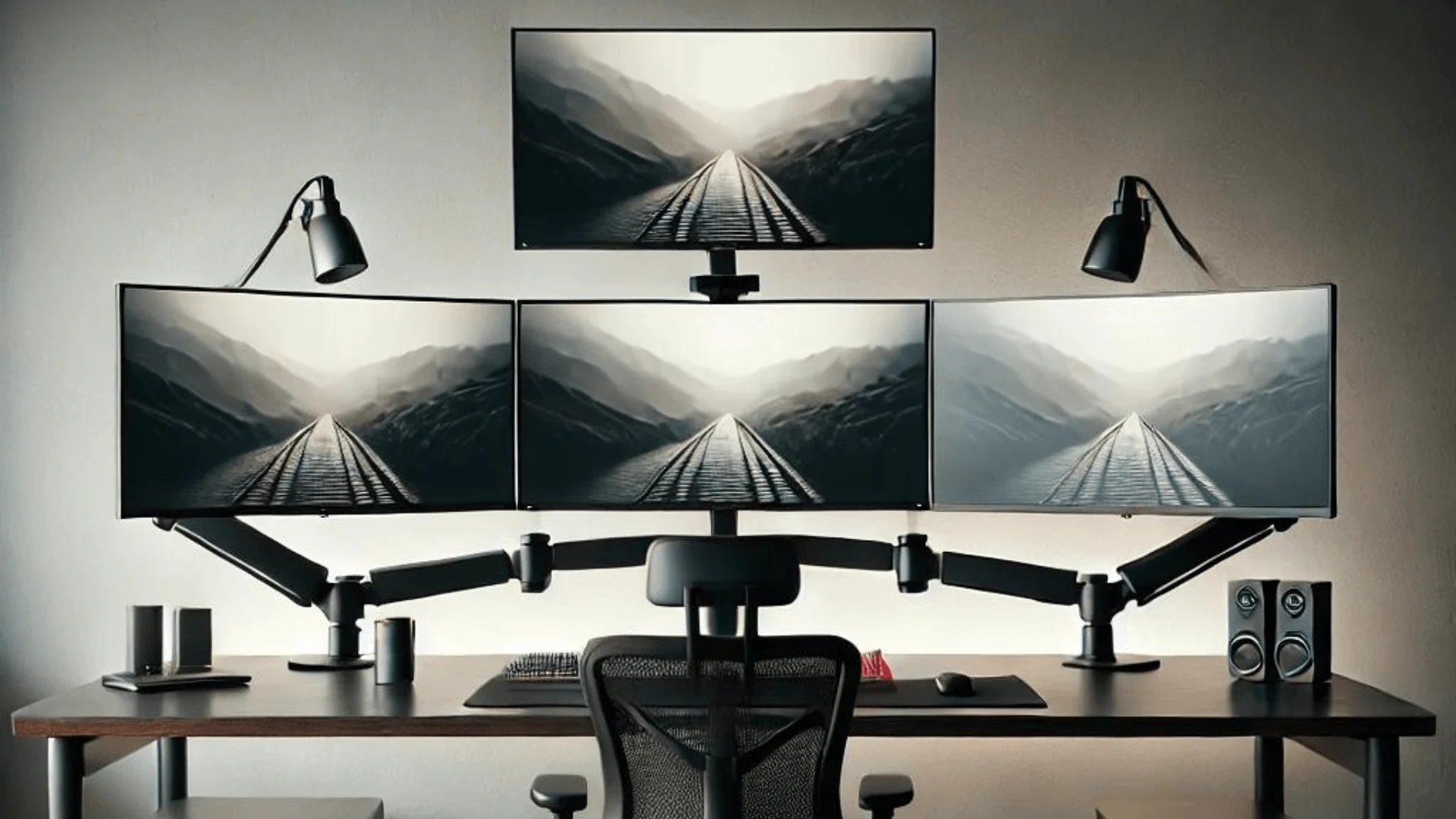
Visual guide about Is 49 Inch Ultrawide Monitor Too Big
Image source: techpowerup.com
H3: The Optimal Viewing Distance
For a comfortable viewing experience, you generally want to be positioned so that the entire screen is within your peripheral vision without excessive head turning. For a 49-inch ultrawide, this often means sitting a bit further back than you might with a standard monitor. * **Practical Tip:** A good rule of thumb is to sit so that the screen occupies about 30-40 degrees of your field of view. For a 49-inch ultrawide, this might translate to sitting 2.5 to 4 feet (0.75 to 1.2 meters) away from the screen. * **Example:** If you sit too close, you’ll be constantly moving your head from side to side, which can lead to neck strain. If you sit too far, the text and details might become too small to comfortably read.H3: Monitor Height and Angle
Ensuring the monitor is at the correct height and angle is vital. The top of the screen should ideally be at or slightly below your eye level. * **Practical Tip:** Use a monitor stand or an adjustable monitor arm to achieve the perfect height. You may need to tilt the monitor slightly to ensure the entire screen is viewed comfortably. * **Example:** If the monitor is too high, you’ll be looking up, causing neck strain. If it’s too low, you’ll be looking down, which can also be uncomfortable.Step 4: Consider Your PC’s Capabilities
A 49-inch ultrawide monitor, especially one with a high refresh rate and resolution like 5120 x 1440, demands a capable PC.H3: Graphics Card (GPU) Power
Driving a resolution of 5120 x 1440 pixels at high refresh rates (e.g., 120Hz or 144Hz) requires a powerful graphics card. If you plan to game or run graphically intensive applications, your GPU needs to be up to the task. * **Recommendation:** For 1440p ultrawide gaming, mid-range to high-end GPUs are generally recommended. Check benchmarks for your specific games and desired settings. * **Example:** An older or entry-level GPU might struggle to push smooth frame rates at this resolution, leading to a laggy and unenjoyable experience.H3: Connectivity Options
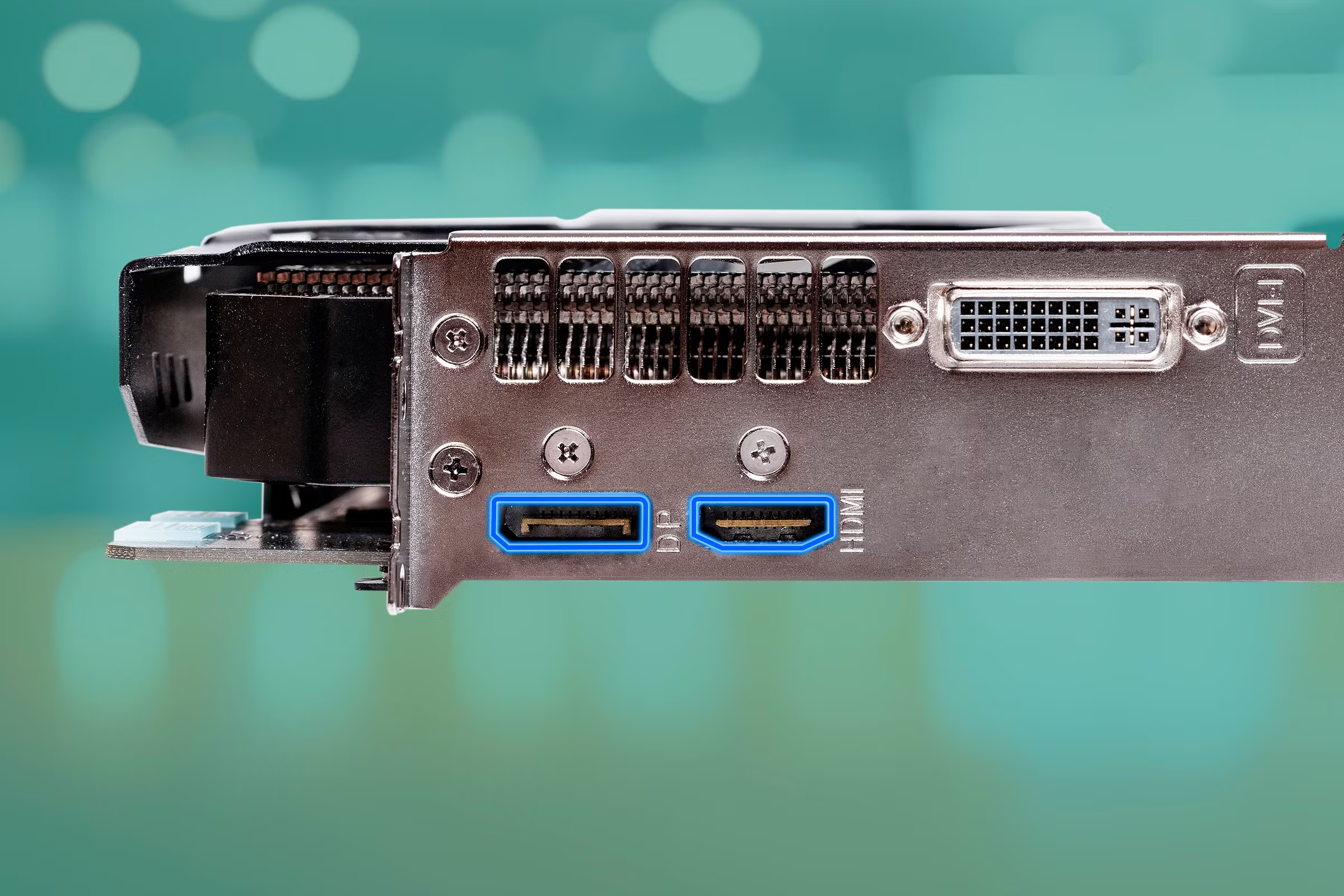
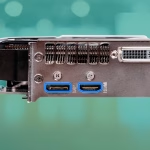
Ensure your PC has the necessary ports and bandwidth to support the monitor. DisplayPort is often preferred for higher resolutions and refresh rates. * **Check:** Verify that your graphics card has at least one DisplayPort 1.4 or HDMI 2.0 (or newer) port capable of handling the monitor’s maximum resolution and refresh rate. * **Example:** Trying to run a 120Hz 5120×1440 monitor through an older HDMI port might limit you to a much lower refresh rate. For gamers considering a 49-inch ultrawide, it’s also worth checking out what is the best monitor size for gaming to ensure you’re making the right choice.Step 5: Budget and Value Proposition
49-inch ultrawide monitors are premium products. They typically come with a premium price tag.H3: Cost vs. Benefit
Are the benefits you’ll receive from the increased screen real estate worth the investment? For some, the productivity gains or gaming immersion are invaluable. For others, a dual-monitor setup might offer similar benefits at a lower cost. * **Think About:** How much is your time worth? If the ultrawide significantly improves your workflow and saves you hours, the cost might be justified. * **Example:** A professional graphic designer might find the expansive canvas essential for their work, making the investment a business necessity. A casual user might find it an expensive luxury.Troubleshooting Common Issues
Even with careful planning, you might encounter a few hiccups.H3: Text is Too Small
If text appears too small, it’s likely a viewing distance or scaling issue. * **Solution:** Adjust your seating distance. Alternatively, use your operating system’s scaling features (e.g., 125% or 150% scaling in Windows) to make text and UI elements larger. Be aware that some older applications might not scale perfectly.H3: Screen Burn-In or Ghosting
While less common with modern IPS panels, some older or OLED panels can be susceptible to burn-in (permanent image retention) or ghosting (temporary image persistence). * **Solution:** Use screen savers, enable dynamic wallpapers, and avoid leaving static images on screen for extended periods. Many monitors also have built-in pixel refresh or screen cleaning cycles.H3: Limited Game Support
As mentioned, not all games natively support 32:9. * **Solution:** Look for third-party patches or mods that enable ultrawide support for specific games. In some cases, you might need to accept black bars or use GPU scaling options to stretch the image.Conclusion: Is a 49-Inch Ultrawide Monitor Too Big for You?
Ultimately, the question of whether a 49-inch ultrawide monitor is “too big” is highly personal. There’s no single right answer. If you have ample desk space, a powerful PC, and a clear use case that will benefit from the expansive screen real estate – be it for immersive gaming, enhanced productivity, or an unparalleled multitasking experience – then a 49-inch ultrawide could be a game-changer. It can transform your workspace and entertainment setup. However, if desk space is limited, your PC is not top-of-the-line, or your primary use doesn’t truly leverage such a wide display, then it might indeed be too big. It could become an expensive piece of hardware that takes up valuable real estate without providing proportional benefits. **The key is realistic assessment.** Measure your desk, understand your usage habits, consider your budget, and acknowledge the ergonomic requirements. By doing so, you can make an informed decision that leads to a more productive and enjoyable computing experience, rather than a desk-bound behemoth. Before making your final decision, you may also want to read our detailed guide on how much desk space an ultrawide monitor needs to ensure a perfect fit.
Similar Posts