Do Microled Monitors Support HDR1000
If you've been eyeing MicroLED as the next big upgrade for HDR content, you're probably wondering whether these displays actually clear the HDR1000 bar. The short answer is that MicroLED technology is absolutely capable of hitting HDR1000 specs, but the reality of what's available to buy right now is more complicated than a simple yes or no.
VESA's DisplayHDR 1000 certification requires sustained peak brightness of 1000 nits, a black level at or below 0.05 nits, and specific color gamut coverage. MicroLED's emissive per-pixel design theoretically exceeds all of those thresholds. But as of 2026, true MicroLED desktop monitors with official HDR1000 certification are virtually nonexistent on the consumer market.
Let's break down exactly why that is, and what your options actually are.

Quick Answer: Can MicroLED Monitors Hit HDR1000?
Yes, MicroLED technology can exceed HDR1000 brightness requirements. The panels are emissive and inorganic, so they handle extreme luminance well. However, no consumer MicroLED desktop monitor currently ships with official VESA DisplayHDR 1000 certification.
Existing MicroLED products are large-format modular displays aimed at commercial and luxury home markets. If you need certified HDR1000 performance today, mini-LED and QD-OLED monitors are your realistic options.
What Makes MicroLED Different From Everything Else
Why MicroLED's Emissive Design Changes the HDR Game
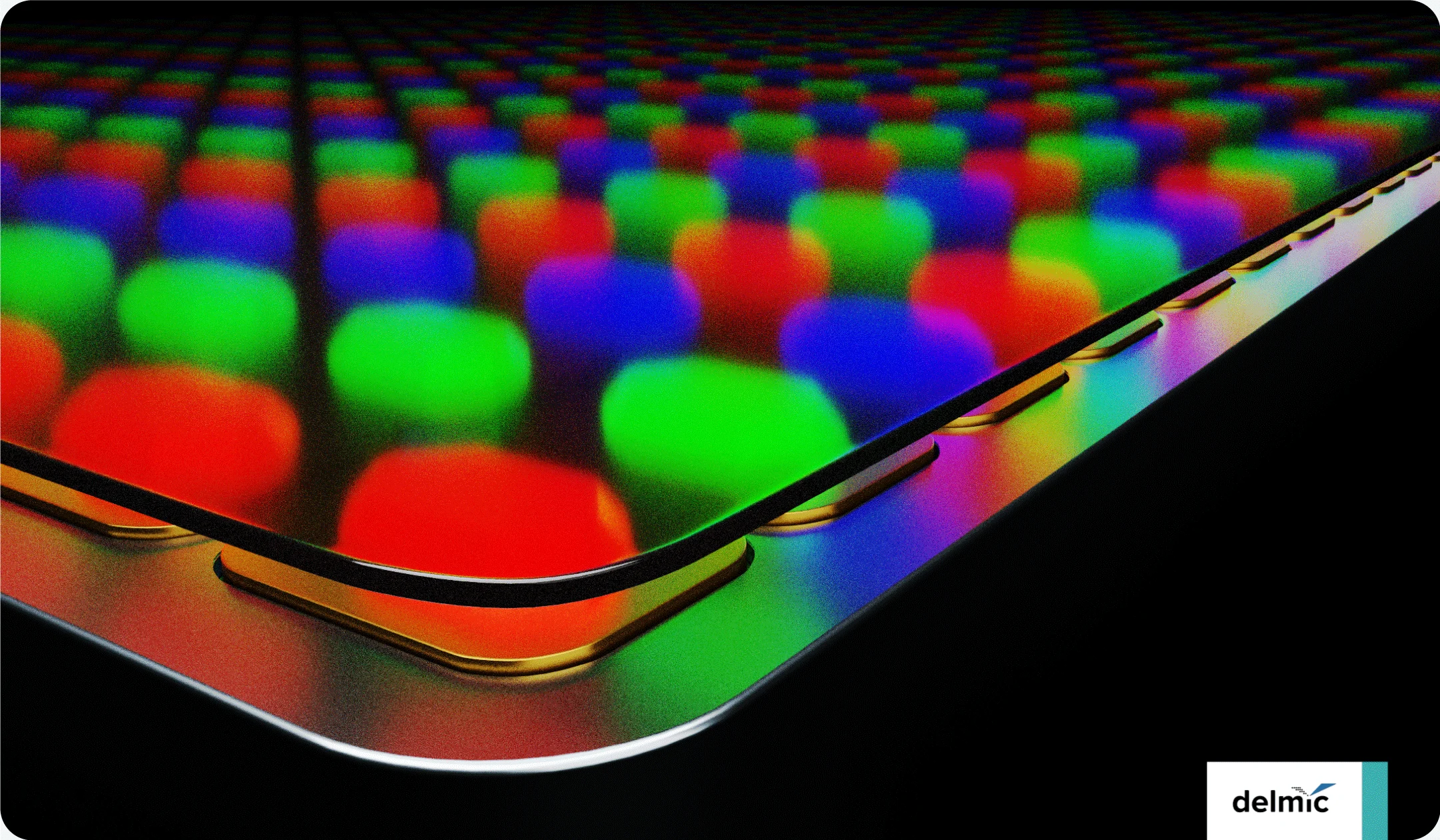
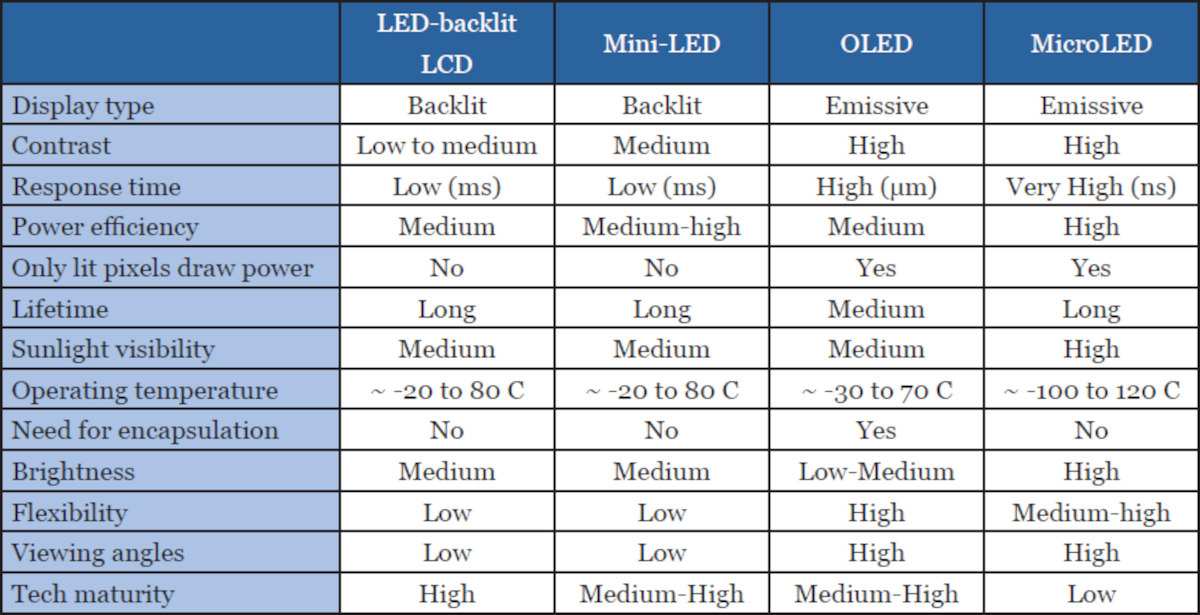
MicroLED is fundamentally different from the LCD-based monitors most people are used to. Each pixel is its own tiny inorganic light-emitting diode. There's no backlight, no liquid crystal layer, and no global dimming zone to worry about.
When a pixel needs to be black, it turns off completely. When it needs to be bright, it just gets brighter.
This is the same basic principle behind OLED, but with one critical difference. MicroLED uses inorganic gallium nitride (GaN) compounds instead of organic materials. That means it can push much higher brightness levels without the degradation issues that plague OLED panels over time.
Manufacturer specifications from Samsung Display indicate their MicroLED prototypes have exceeded 2000 nits peak brightness in controlled conditions. That's double what HDR1000 requires.
The contrast ratio is effectively infinite. Black levels sit at or below 0.001 nits because pixels simply switch off. For HDR content, this matters enormously.
You get specular highlights hitting 1000+ nits right next to true black with zero haloing, zero blooming, and zero backlight bleed. It's the cleanest HDR presentation any display technology can deliver right now.
How HDR1000 Certification Actually Works
HDR1000 isn't just a marketing term. It's a specific tier within VESA's DisplayHDR certification program, which sets measurable thresholds that a display must pass in a controlled test environment. Here's what the certification actually demands:
| Requirement | HDR1000 Threshold |
|---|---|
| Peak luminance (3% window) | ≥ 1000 nits |
| Sustained white (10% window) | ≥ 600 nits |
| Black level | ≤ 0.05 nits |
| Color gamut | ≥ 99% DCI-P3 |
| Bit depth | 10-bit (8-bit + FRC minimum) |
| Local dimming | Required (must pass contrast tests) |
The certification tests sustained performance, not just burst peaks. A display that hits 1000 nits for a split second but drops to 400 nits within seconds won't pass. Thermal management, power delivery, and panel driver design all have to be engineered to maintain those brightness levels in a realistic usage scenario.
This is where things get interesting for MicroLED. The technology's inorganic nature means it handles heat better than OLED. But the current generation of MicroLED products hasn't gone through VESA's full certification pipeline for desktop monitor categories.
The existing products are classified differently, tested to different standards, and sold into different market segments entirely.
Does MicroLED Hit 1000 Nits? Let's Look at the Numbers
Peak Brightness vs. Sustained Brightness
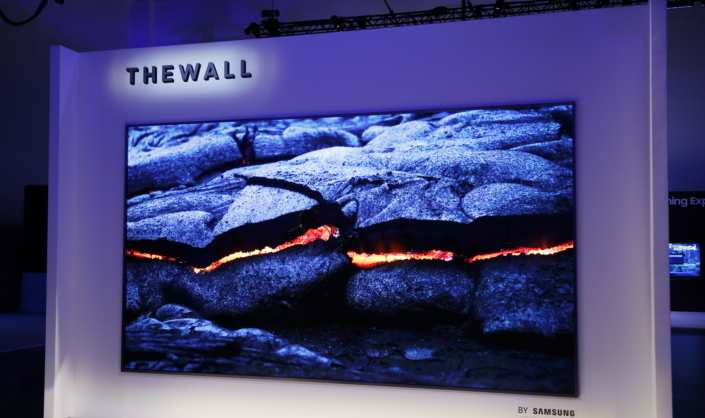
Here's where we need to separate what's theoretically possible from what's actually shipping. MicroLED technology has demonstrated remarkable brightness in lab conditions and in the products that do exist. Samsung's The Wall, their modular MicroLED display system, is rated for up to 2000 nits peak brightness in its consumer-facing specifications.
Sony's Crystal LED system, aimed at commercial and professional installations, reports similar peak luminance figures.
But peak brightness and sustained brightness are two different animals. HDR1000 certification requires that a 3% window maintains 1000 nits, and a 10% window holds 600 nits, without significant thermal throttling. Large-format MicroLED displays like The Wall have significant surface area for heat dissipation.
They also consume substantial power, which means thermal management is handled across a large physical footprint. A compact 27-inch or 32-inch desktop MicroLED monitor would face much tighter thermal constraints.
Manufacturer data from Samsung Display's published technical briefs suggests their smaller MicroLED prototypes (targeted at smartwatches and AR headsets) can hit 5000+ nits. But those are tiny panels with very different thermal profiles than a full-size desktop monitor. Scaling that brightness to a 32-inch display while keeping heat and power consumption within consumer-grade limits is an engineering challenge that hasn't been solved for the desktop monitor market yet.
What Real-World MicroLED Displays Actually Deliver
The MicroLED products you can actually buy today fall into two categories. First, there are the massive modular displays. Samsung The Wall starts at 110 inches and goes up.
These are priced from $80,000 to well over $100,000. They deliver extraordinary HDR performance, but they're not monitors in any traditional sense. They're commercial display systems requiring professional installation, dedicated power infrastructure, and climate-controlled environments.
Second, there are the emerging small-format MicroLED panels aimed at wearable and mobile applications. These aren't monitors at all. They're microdisplays for AR glasses and smartwatches, where the brightness-per-inch numbers are impressive but the screen size is measured in millimeters, not inches.
The gap in the middle, a desktop MicroLED monitor at 27 to 42 inches with HDR1000 certification, simply doesn't exist as a consumer product in 2026. Companies like Apple have invested heavily in MicroLED R&D, and manufacturers like BOE and Epistar have shown prototype desktop panels at trade shows. But none have reached mass production for the monitor market.
The manufacturing challenges around mass transfer (placing millions of microscopic LED chips onto a substrate with near-perfect yield) remain the primary bottleneck.
Why You Can't Buy a MicroLED Monitor With HDR1000 Today
The Consumer Gap Between Promise and Availability
The display industry has been talking about MicroLED monitors for years. Samsung, LG, BOE, and several Chinese panel manufacturers have all demonstrated prototype MicroLED desktop displays at CES and Display Week. The technology works.
The prototypes look stunning. But the path from prototype to mass-produced consumer monitor is long and expensive.
The core manufacturing challenge is yield. A 4K MicroLED monitor has roughly 8.3 million individual LED subpixels (red, green, and blue for each of the 8.3 million pixels). Each one needs to be transferred from its growth substrate to the display substrate and connected electrically.
Even with a 99.99% yield rate, that leaves thousands of dead pixels per panel. The industry needs yields closer to 99.9999% to make consumer-grade panels economically viable.
Cost is the other factor. Current MicroLED manufacturing costs run roughly 5 to 10 times higher than equivalent LCD panels and 3 to 4 times higher than OLED. Until that cost gap narrows significantly, MicroLED monitors would need to sell at price points that the consumer market simply won't support.
A 32-inch MicroLED monitor with HDR1000 would likely cost $15,000 to $25,000 at launch, based on current manufacturing cost analysis from SID (Society for Information Display) research.
Pixel Pitch, Cost, and Why Desktop MicroLED Doesn't Exist Yet
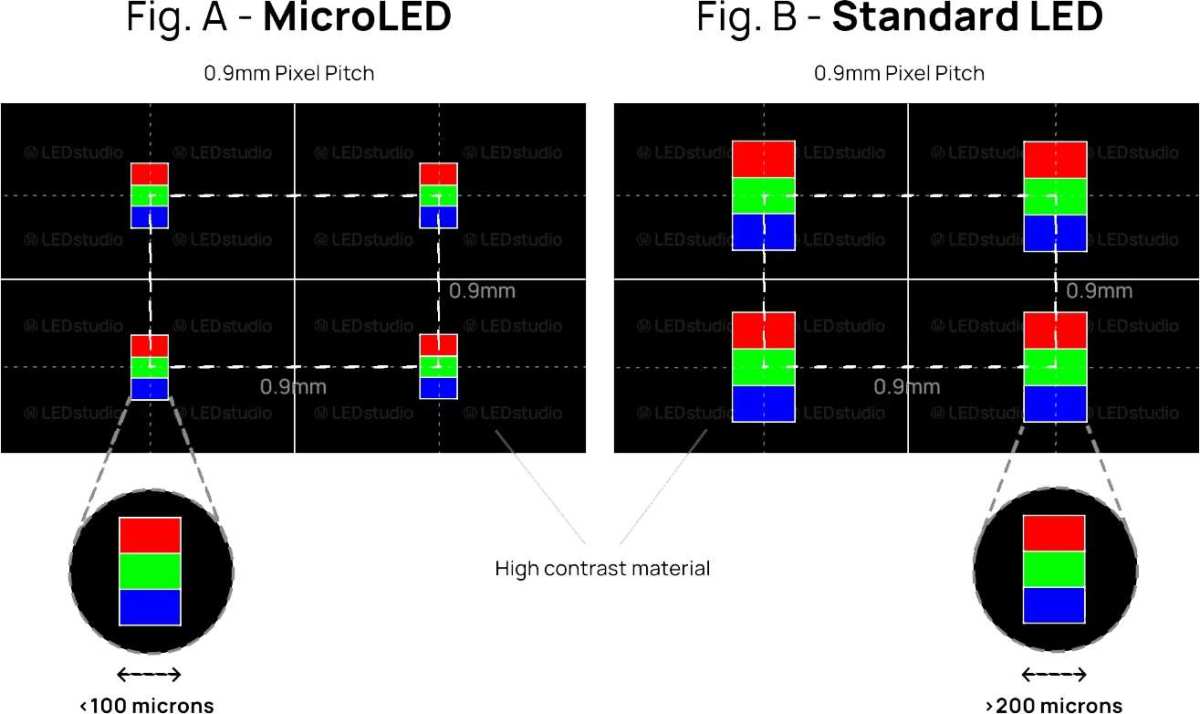
Pixel pitch is a critical spec that often gets overlooked in the MicroLED conversation. Large-format displays like The Wall use pixel pitches around 0.8mm to 1.5mm. That works fine when you're viewing a 110-inch screen from 8 feet away.
But a desktop monitor viewed at 2 to 3 feet needs a pixel pitch below 0.2mm to match the pixel density of a current 4K 32-inch monitor (around 138 PPI).
Achieving that pixel pitch with MicroLED requires LED chips smaller than 50 micrometers. Manufacturing those chips, transferring them with precision, and achieving acceptable yields at that scale is still in the R&D phase for most manufacturers. BOE demonstrated a 27-inch MicroLED prototype with 0.18mm pixel pitch at a recent display conference, but they haven't announced production timelines or pricing.
The thermal challenge compounds the pixel density problem. Packing millions of LED chips into a small area means concentrated heat generation. Without active cooling (which adds noise and complexity to a monitor), sustained brightness levels can drop significantly as the panel heats up.
This is exactly the kind of issue that would prevent a MicroLED monitor from maintaining HDR1000 certification thresholds during real-world use.
MicroLED vs. the HDR1000 Monitors You Can Actually Buy Now
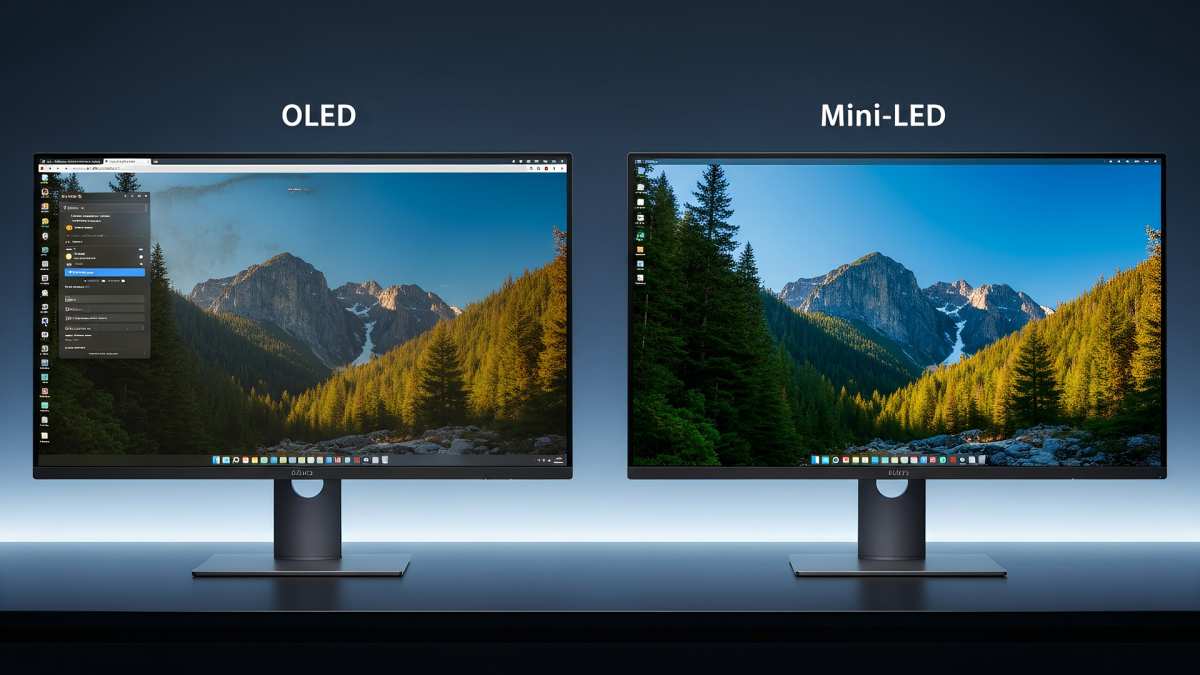
MicroLED vs. Mini-LED With FALD
Mini-LED with full array local dimming is currently the closest thing to MicroLED performance that you can actually buy. These displays use a standard LCD panel but replace the traditional edge-lit or direct-lit backlight with thousands of individually dimmable LED zones. The result is significantly better contrast and HDR performance than standard edge-lit LCDs.
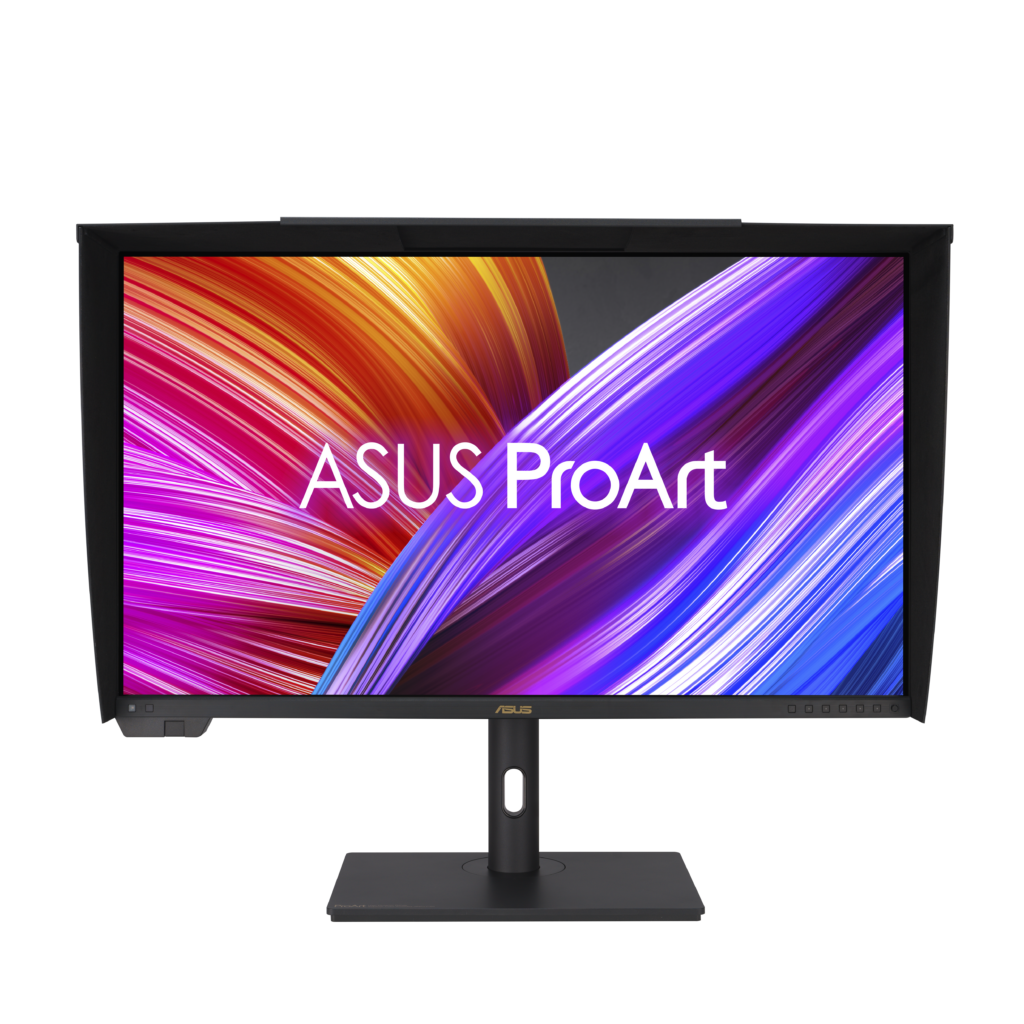
The best mini-LED monitors, like the ASUS ProArt PA32UCG or the Samsung Odyssey Neo G9, achieve VESA DisplayHDR 1000 or even HDR1400 certification. They deliver 1000+ nits peak brightness with local dimming that produces deep blacks in most scenarios. But they still suffer from blooming around bright objects on dark backgrounds, and their black levels can't match the true off-state of MicroLED or OLED.
Mini-LED is a mature, mass-produced technology. Prices for HDR1000-certified mini-LED monitors range from $800 to $3,000 depending on size and feature set. They're available now, from multiple manufacturers, with proven performance and established warranty support.
MicroLED vs. QD-OLED
QD-OLED takes a different approach. It combines OLED's self-emissive pixel structure with a quantum dot color conversion layer. The result is perfect blacks, infinite contrast, and excellent color volume.
Samsung's Odyssey OLED monitors and the Alienware AW3225QF use QD-OLED panels that achieve HDR True Black 400 certification (VESA's OLED-specific tier) with peak brightness around 1000 nits in small windows.
QD-OLED's weakness is sustained brightness. Because it uses organic materials, full-screen brightness typically caps around 200 to 250 nits. HDR highlights hit 1000 nits in small windows, but large bright scenes dim noticeably.
For HDR gaming and movie watching with mixed content, this can be a limitation. For static content like photo editing, the perfect blacks and color accuracy more than compensate.
MicroLED would theoretically combine QD-OLED's per-pixel precision with much higher sustained brightness. No organic degradation, no ABL (automatic brightness limiter), and no burn-in risk. But again, this is theoretical for the desktop monitor form factor.
MicroLED vs. Standard OLED
Standard WOLED panels, like those in LG's OLED monitors and the ASUS ROG Swift PG27AQDM, deliver exceptional HDR performance with perfect blacks and near-instantaneous pixel response times. VESA's HDR True Black 400 and True Black 500 certifications are designed specifically for these emissive displays.
Standard OLED's peak brightness typically lands between 800 and 1000 nits in small windows, with some newer panels pushing toward 1300 nits. The limitation is the same as QD-OLED: organic degradation and thermal constraints prevent sustained high brightness. LG Display's latest MLA (Micro Lens Array) technology has improved peak brightness significantly, but sustained performance still lags behind what MicroLED could theoretically deliver.
Side-by-Side Comparison Table
| Feature | MicroLED (Theoretical/Prototype) | Mini-LED HDR1000 | QD-OLED | Standard OLED |
|---|---|---|---|---|
| Peak Brightness | 1500–2000+ nits | 1000–1600 nits | 900–1000 nits | 800–1300 nits |
| Sustained Brightness (full screen) | Unknown (not tested) | 400–600 nits | 200–250 nits | 180–220 nits |
| Black Level | 0.001 nits (off) | 0.02–0.05 nits | 0.001 nits (off) | 0.001 nits (off) |
| Contrast Ratio | Effectively infinite | 20,000:1–50,000:1 | Effectively infinite | Effectively infinite |
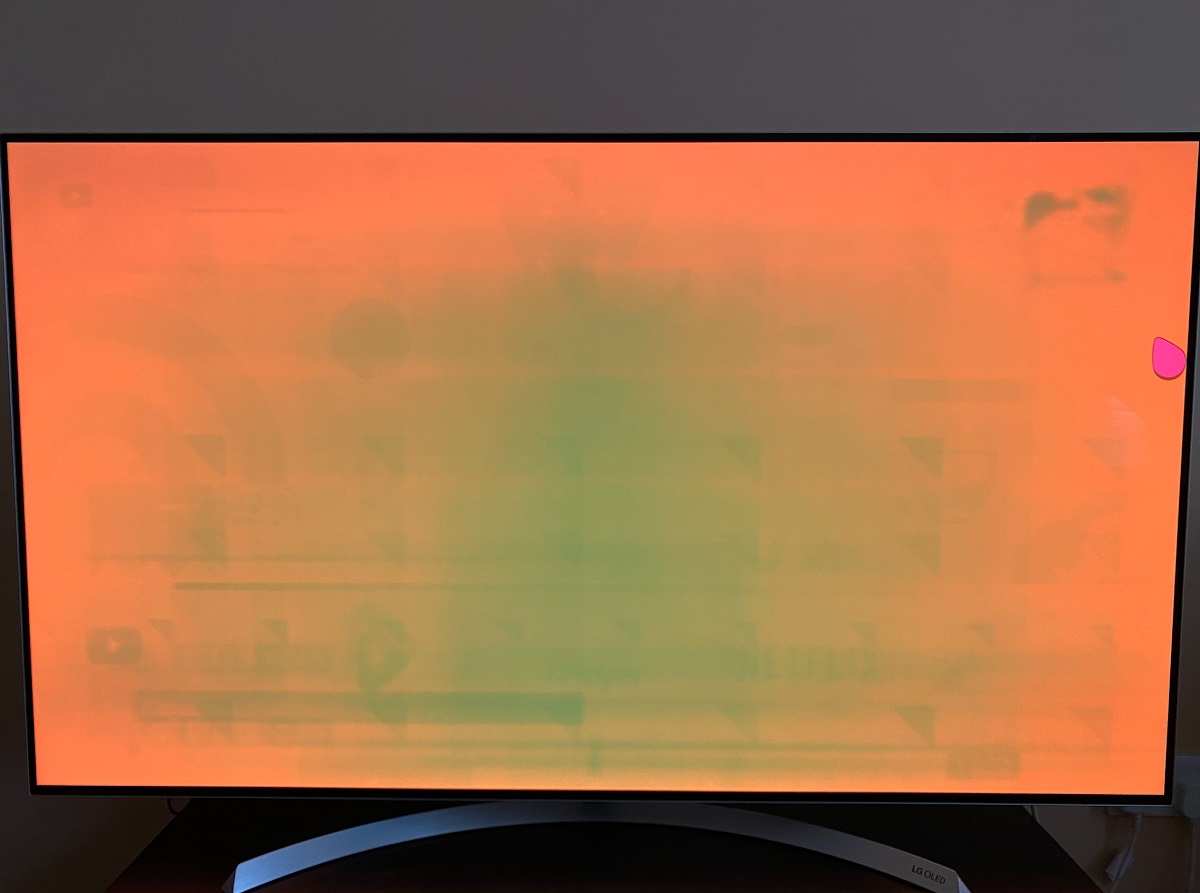
| Burn-in Risk | None | None | Low–Moderate | Moderate |
| HDR1000 Certification | Not yet (consumer) | Yes (multiple models) | Partial (True Black 400) | Partial (True Black 400/500) |
| Price Range (27–32") | N/A (not available) | $800–$3,000 | $800–$1,300 | $900–$1,500 |
| Availability | Prototype only | Widely available | Available | Available |
If You Need HDR1000 Performance Right Now, Get These Instead
Best Mini-LED Monitors That Actually Have HDR1000
If you're building an HDR-capable setup today, mini-LED with FALD is the most accessible path to true HDR1000 performance. These monitors are available from multiple manufacturers, at reasonable price points, and with verified VESA certification.
Here are the standout options that actually deliver:
Samsung Odyssey Neo G9 (57-inch, G95NC): Dual-UHD resolution, DisplayHDR 1000 certified, 768 dimming zones, 240Hz refresh rate. Street pricing around $1,300 to $1,500. Best for immersive HDR gaming and productivity.
ASUS ProArt PA32UCG: 32-inch 4K, DisplayHDR 1400 certified (exceeds HDR1000), 1152 dimming zones, 160Hz refresh. Around $2,800. Built for professional HDR color grading and content creation.
Cooler Master Tempest GP27U: 27-inch 4K, DisplayHDR 1000 certified, 576 dimming zones, 144Hz refresh. Around $500 to $600. The most budget-friendly HDR1000 monitor that actually performs.
AOC Agon AG274QZM: 27-inch QHD, Mini-LED backlight, HDR1000 certified. Good middle-ground option for gaming without needing 4K GPU horsepower.
The Cooler Master option deserves special attention. Aggregate review analysis from multiple professional testing outlets shows it maintains HDR1000 peak brightness with minimal thermal throttling during extended use. At its price point, it's arguably the best-value HDR1000 monitor available in 2026.
Best QD-OLED Monitors With HDR1000
QD-OLED monitors deliver a different HDR experience than mini-LED. Instead of chasing peak brightness, they focus on pixel-perfect contrast and color volume. For many HDR use cases, this produces a more visually impactful result than raw luminance numbers suggest.
The notable QD-OLED options include:
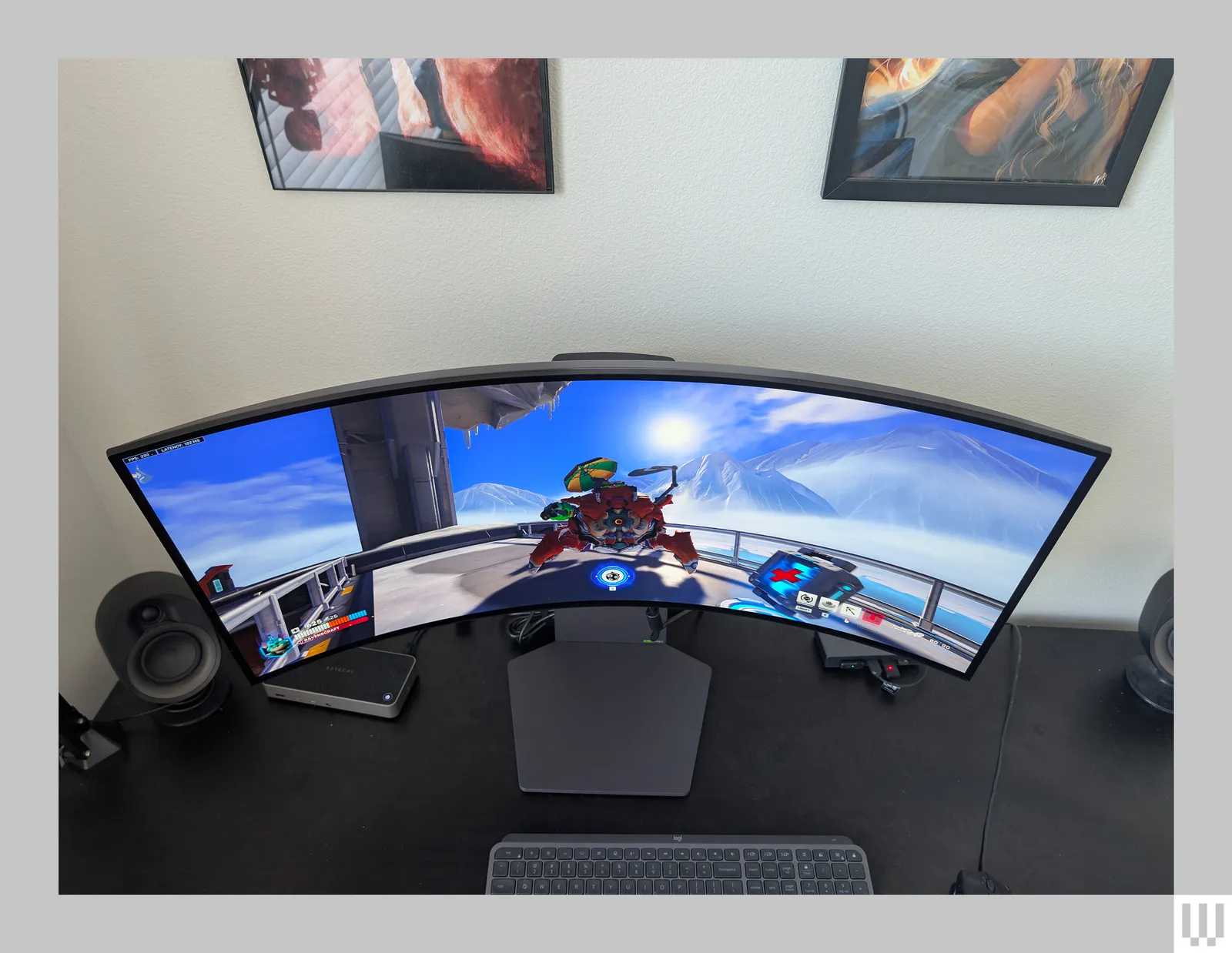
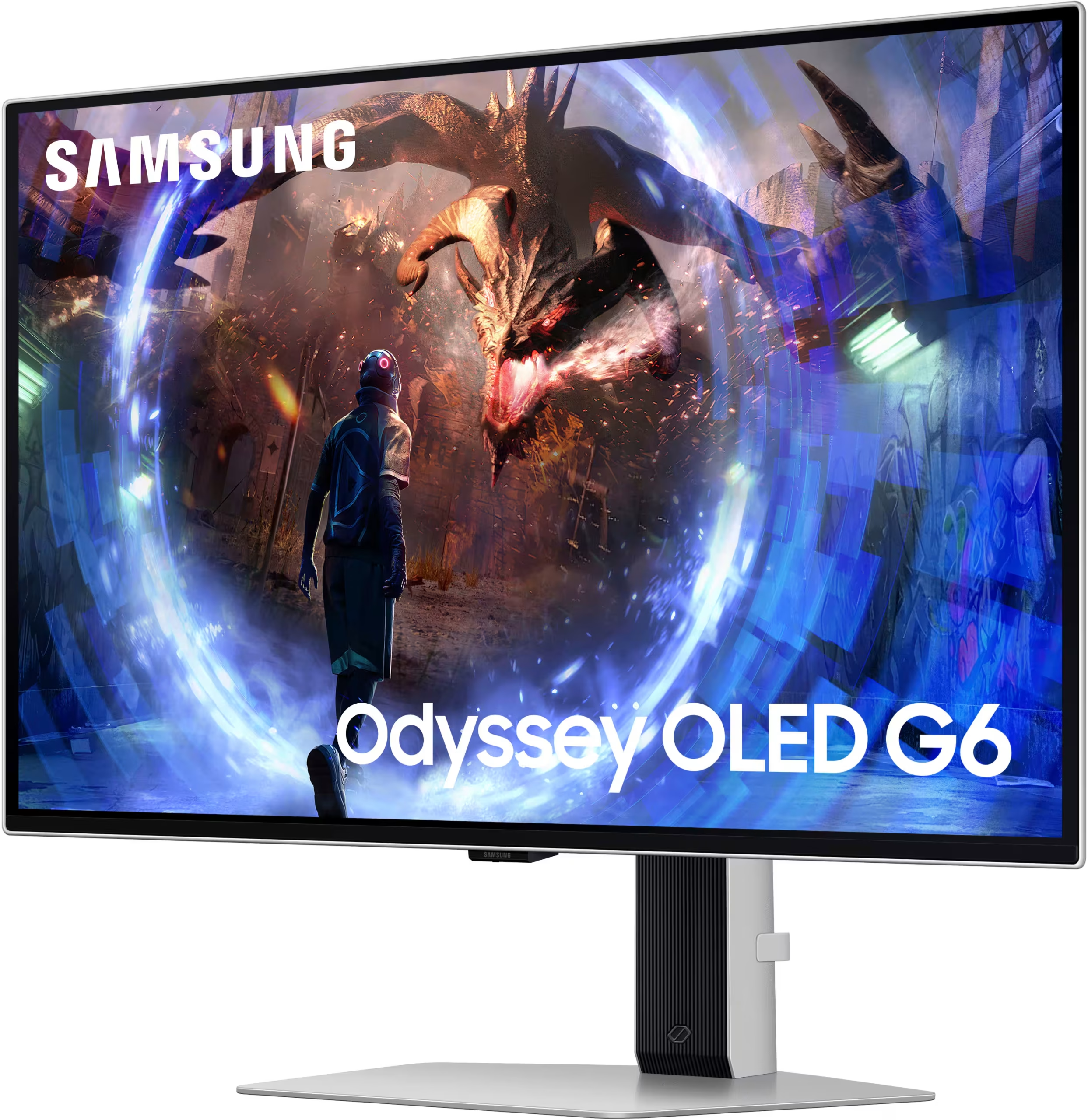
Samsung Odyssey OLED G9 (G95SC): 49-inch QHD ultrawide, peak brightness around 900-1000 nits in small windows, 240Hz refresh. Priced around $900 to $1,100.
Alienware AW3225QF: 32-inch 4K QD-OLED, peak brightness near 1000 nits, 240Hz refresh. Around $900. The best balance of HDR performance and pixel density for desktop use.
ASUS ROG Swift PG27AQDM: 27-inch QHD OLED, compact option for smaller desks. Peak brightness around 800-900 nits. Around $900.
These carry VESA HDR True Black 400 certification, not HDR1000. But their perfect black levels and per-pixel dimming often produce HDR that subjectively looks more convincing than mini-LED HDR1000 in dark room viewing. If you consume HDR content in a controlled lighting environment, QD-OLED's contrast advantage outweighs mini-LED's brightness advantage.
What About The Wall and Crystal LED?
Samsung The Wall and Sony Crystal LED are remarkable displays. For a dedicated home theater room or professional installation with unlimited budget, The Wall delivers HDR performance that surpasses any consumer monitor. Modular configurations from 110 inches up to 292 inches, with peak brightness rated at 2000 nits.
Total installed cost (display panels, mounting hardware, professional installation, electrical work, and controller hardware) runs roughly $80,000 to $800,000. Configuration depends on selected size and installation complexity. Commercial and luxury enterprise use cases only, for all practical purposes.
Sony Crystal LED targets similar installations with slightly different specifications. Available in configurations supporting both 16:9 and wider aspect ratios, with brightness comparable to Samsung's solution. Pricing is in the same ultra-premium range.
When MicroLED Monitors Will Be Worth Considering
Timeline and What Needs to Change
Based on current manufacturing development trajectories analyzed by SID and major display manufacturers' public roadmaps, here's the realistic timeline:
2026-2027: Continued prototype demonstrations. Small-scale production for ultra-premium niche products. No consumer monitors.
2028-2029: Potential launch of first-generation consumer MicroLED monitors at very high price points ($10,000+). Limited sizes, likely 32-inch and above.
2030 and beyond: Gradual cost reduction if manufacturing yields improve. Possible expansion to more accessible price segments.
The key bottlenecks that need resolution are mass transfer yield rates, sub-50 micrometer LED chip production, substrate costs, and thermal management in compact form factors. These are engineering problems being actively worked on by Samsung Display, BOE, Epistar, Apple, and several startups. But none have announced breakthrough timelines.
Another factor is the VESA certification pipeline. Even after a manufacturer ships a MicroLED desktop monitor, the certification process takes several weeks and costs thousands of dollars per model. So there would be a lag between the first consumer MicroLED monitors appearing and the first ones achieving DisplayHDR 1000 certification.
Who Should Actually Wait vs. Who Should Buy Now
If you're a professional colorist or video editor who needs accurate HDR monitoring immediately, buy a mini-LED HDR1000 display now. The ASUS ProArt PA32UCG is the current gold standard for professional HDR work. It delivers certified performance today.
If you're a gamer who wants the best HDR gaming experience available right now, the Samsung Odyssey Neo G9 or the Alienware AW3225QF are excellent choices. Both deliver genuinely impressive HDR with the hardware that's actually shipping.
If you're a technology enthusiast who wants MicroLED specifically, understand what you're signing up for. You'd be an early adopter paying premium prices for first-generation products that may have unresolved issues. Manufacturers typically work out bugs and refine performance through the first one or two product generations.
Common Mistakes People Make When Shopping HDR and MicroLED
Don't Confuse MicroLED With Mini-LED
This is the single most common mistake in this product category. Monitor manufacturers use "Micro LED" and "Mini LED" interchangeably in some regions and marketing materials, even though they're completely different technologies. Mini-LED is a backlight technology for LCD panels.
MicroLED is a fundamentally different emissive display technology, like OLED. A mini-LED monitor is just an LCD with more dimming zones. It is not MicroLED, regardless of what a product listing might imply.
Don't Trust Peak Brightness Claims Blindly
Many monitor specifications list peak brightness without clarifying how that measurement was taken, or how long it can be sustained. A display that hits 1200 nits for a 1% window for half a second, then immediately dims to 400 nits, isn't delivering HDR1000 performance during real-world use. VESA certification is valuable because it tests sustained performance under standardized conditions.
Unverified manufacturer claims are less trustworthy for this specific requirement. Look for the official DisplayHDR logo and certification level, not just a brightness number on a spec sheet.
Don't Ignore Thermal Throttling
Sustained brightness capacity in a display depends heavily on how well it manages heat. Mini-LED monitors with poorer thermal designs may meet HDR1000 specs in a cool room, then fall short after an hour of use in a warm room. Professional thermal imaging reviews, like those from Tom's Hardware and Hardware Unboxed, reveal significant differences between models that share similar brightness specs.
A monitor with good thermal design sustains its rated brightness. A poorly designed one drops 20-30% after extended use, which can cause visible luminance fluctuations during HDR content.
Frequently Asked Questions
Will MicroLED monitors replace OLED for HDR?
MicroLED should theoretically replace OLED for HDR use cases once manufacturing matures. It offers the same per-pixel emissive advantages without organic degradation. But this is several years away from being a consumer reality.
Is Mini-LED the same as MicroLED?
No. Mini-LED is a backlight technology used in LCD monitors. MicroLED is a self-emissive display technology where each pixel produces its own light.
They're fundamentally different despite the confusingly similar names.
Can MicroLED burn in?
Current research indicates MicroLED has virtually no burn-in risk. The inorganic materials don't degrade the way OLED's organic compounds do. This is one of MicroLED's key long-term advantages.
How much will a MicroLED monitor cost when it launches?
Based on current manufacturing cost analysis from SID research, expect initial consumer MicroLED monitors to launch at $10,000 to $25,000 for a 32-inch model. Prices will decrease gradually if production scales successfully.
Should I wait for MicroLED or buy now?
If you need a monitor now, buy a mini-LED HDR1000 or QD-OLED display. They deliver excellent HDR performance at reasonable prices. If you can wait three to five years and don't mind paying early-adopter prices, MicroLED promises significant long-term advantages.
Final Recommendation: Here's What You Should Do
If you've read this far, you understand the real situation. MicroLED technology is genuinely capable of exceeding HDR1000 requirements, but consumer MicroLED monitors don't exist yet. The technology is promising but the products aren't here.
For a purchase decision today, match your use case to the available technology. Professional color critical work needs mini-LED with high zone counts and verified HDR1000 certification. Gaming and entertainment benefit from either mini-LED HDR1000 or QD-OLED depending on your room lighting.
Budget-conscious buyers should look at the Cooler Master Tempest GP27U as the entry point for genuine HDR1000 performance.
MicroLED will eventually deliver the best of both worlds: OLED-like contrast with extreme brightness and no degradation. When it arrives, it'll likely redefine what we expect from HDR displays. But buying that story in 2026 means buying a prototype or a display that costs more than a car.
For most people, the smart move is to get a great mini-LED or QD-OLED monitor now and upgrade to MicroLED when it's actually ready for prime time.

Similar Posts