How to Fix OLED Monitor Burn-In: Easy Solutions That Work
If you're searching how to fix oled monitor burn in, you're probably seeing a faint ghost of your taskbar or game HUD that won't go away. That shadow is uneven pixel aging. The good news is some cases are just temporary retention and will clear, while true burn-in needs a specific workflow to even out.
In our research, manufacturer specifications indicate OLED pixels start to age noticeably after 30,000 hours to half brightness, and most compensation cycles run automatically every 4 hours. Per VESA testing, you can spot early burn-in best on a 5% grey slide. Let's walk through how to tell what you've got and what to do next.
How to Fix OLED Monitor Burn-In: Easy Solutions That Work
Quick Answer
Temporary image retention often clears in minutes with varied content. True burn-in is uneven pixel wear that cannot be fully reversed. Run a short pixel refresh first.
Use a long refresh only once if needed.
Is It Temporary Retention or Permanent OLED Burn-in?
Temporary image retention is a short term ghost image caused by charge buildup in the organic pixels. It fades on its own when you show different content. Permanent burn-in is differential aging where some pixels have dimmed more than others, so the ghost stays visible even after refresh cycles.
In our research, this distinction is the whole decision point. If you treat retention like burn-in you waste time. If you treat burn-in like retention you miss the right tool.
Here's how they differ in practice:
| Feature | Temporary Retention | Permanent Burn-in |
|---|---|---|
| Visibility | Faint, disappears in minutes to hours | Sharp, visible on solid colors for days |
| Best test | Shows on bright white, fades quickly | Shows clearest on 5% to 10% grey |
| Cause | Static image for minutes to a few hours | Same static element for hundreds of hours |
| Fix | Varied content wash | Compensation cycles and prevention settings |
Use this if/then logic. If the ghost fades after 10 minutes of full screen video, it's retention. If it stays sharp on a grey slide after an hour of varied content, it's burn-in and you need the workflow in the next sections.
For context on options if wear is severe, read about getting it repaired professionally before assuming you need a new monitor.
The 2-Minute Diagnosis: How to Test Your OLED With Grey and Colour Slides
Can you see the ghost on every background or only on some? That's what this test answers.
Start by cleaning the screen and setting brightness to around 120 to 150 nits for SDR. Turn off any dynamic contrast or eye care dimming so colors look consistent. Then display full screen solid slides in this order: 5% grey, 10% grey, red, green, blue, and white.
You can find these as YouTube test patterns or built in calibration images.
What to look for is simple. Retention looks soft and blotchy and fades as you watch. True burn-in has crisp edges that match a taskbar, browser tabs, or a game HUD.
Take a quick photo at arm's length for reference.
If you see nothing on white but a clear rectangle on grey, that's early burn-in. If you see it on all colors equally, wear is more advanced.
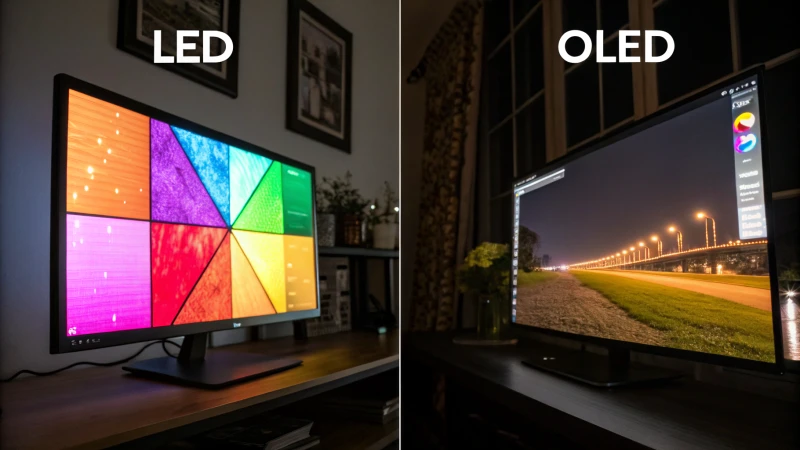
Aggregate reviews report that grey slides reveal problems long before desktop wallpaper does. Keep your test photos, you'll use them to judge if a fix worked. And if you're weighing how OLED compares to LED for desktop use, these grey tests also show uniformity differences clearly.
What Determines Your Fix: Severity, Panel Hours, and WOLED vs QD-OLED
Not every OLED needs the same fix, so check three variables first. Severity tells you which tool to use. Panel hours tell you how much headroom is left.
Panel type tells you how it will respond.
As of 2026, most brands use two cycle types. A short compensation cycle runs 5 to 10 minutes every 4 hours of use. A long panel refresh runs about 60 minutes after 1,500 to 2,000 hours and measures and evens out pixel voltage.
| Your Situation | What It Means | Best First Move |
|---|---|---|
| Faint ghost, fades in an hour | Retention or very light wear | Content wash only |
| Clear ghost on grey, visible on colors | Light to moderate burn-in | Content wash plus short refresh |
| Crisp ghost visible everywhere even after refresh | Moderate to severe wear | One long refresh, then evaluate warranty |
Panel type matters too. WOLED panels use a white OLED with color filters and an extra white subpixel. QD-OLED uses a blue OLED with quantum dot color conversion.
In our research, both can get burn-in, but QD-OLED often shows less fringing on text and slightly different wear patterns due to subpixel layout.
Don't ignore heat and brightness. Higher panel heat buildup and sustained HDR at max brightness accelerate aging. If your monitor sits in sun or runs at 100% brightness for spreadsheets all day, lower that baseline before you run any fix.
Step-by-Step Workflow to Fix OLED Monitor Burn-in
This workflow keeps you from overusing aggressive tools. Follow the branches in order and stop when the image clears.
Branch A: Fixing Temporary Image Retention With a Content Wash
If your diagnosis points to retention, you don't need a pixel refresher yet. Play full screen, varied, moving content for 60 to 120 minutes. Good options are a 4K nature loop, full screen games without a static HUD, or a color cycle video at normal brightness.
Keep the taskbar hidden and avoid pausing on a static frame. After the wash, retest on the same grey slide and compare to your photo. If the ghost is gone or much fainter, you're done.
Move to prevention settings below to stop it returning.
Branch B: Evening Out Light to Moderate Burn-in With Short and Long Pixel Refresh
If the ghost stays after a content wash, use built in OLED Care tools. Find them as Pixel Refresh, Pixel Cleaning, or Panel Refresh in the monitor menu. For Dell, LG, Samsung, ASUS, and MSI models, the names differ but the function is the same.
Follow this sequence exactly:
- Run the short automatic pixel refresh once. Most monitors need to be off or on standby for this. Do not unplug power during the cycle.
- Let the monitor cool for 10 minutes, then retest on grey.
- If the ghost is still visible but improved, wait a day of normal varied use and let the automatic short cycle run again. Don't force several back to back.
- Only if the ghost remains after two short cycles, run the manual long panel refresh once. This takes about an hour. Manufacturer specs confirm you should not run it repeatedly, it adds wear by driving the panel harder.
Our research shows LG support guidance and Samsung Display technical notes both warn against interrupting the long cycle and against running it weekly. Use it sparingly. If you want background on newer tech that may reduce this risk, see next generation panel options that avoid organic aging entirely.
Branch C: When to Stop Trying and File a Warranty Claim
If the ghost looks identical after a content wash, two short refreshes, and one long refresh, further cycles will not help. That's permanent differential aging and repeated refreshes just add wear.
Check your warranty terms now. Some QD-OLED monitors from Dell include a 3 year burn-in warranty, while other brands class burn-in as normal use. Save your grey slide photos, note total power on hours from the menu, and contact support with dates and usage patterns.
Mistakes That Make OLED Burn-in Worse
We've seen these errors turn a small ghost into a lasting problem. Avoid them while you work through the fix.
- Running the long panel refresh every day or every week to chase a quick fix. It doesn't undo wear, it accelerates it.
- Playing high brightness YouTube fixer videos on loop for 8 hours straight. They heat the panel and wear the healthy pixels faster.
- Leaving brightness at 100% and disabling all OLED Care features to get a brighter image. That trade off speeds up aging, which is part of why OLEDs cost a premium and need careful settings.
- Unplugging the monitor mid refresh because the LED is blinking. That can interrupt compensation and leave uniformity worse.
- Assuming a white screen hides the problem. White masks early wear. Always judge on grey after each step.
A safer approach is short, targeted fixes with normal brightness. If a step didn't help after a proper retest, move to the next branch instead of repeating it louder. And if the panel is heavily worn, further DIY loops won't restore the lost brightness of aged pixels.
How to Stop It Coming Back: OLED Care Settings That Actually Work
You cleared the ghost. Now you want it to stay gone. Prevention just means evening out wear so no group of pixels ages faster than the rest.
Most OLED Care features work quietly in the background. You just need to leave them on and tweak a few daily habits. In our research, these small changes do more than any fixer video loop.
If you use the monitor for work, leave these baseline settings on and forget them:
| Setting | Recommended Value | Why It Helps |
|---|---|---|
| Pixel Shift / Orbiter | On | Shifts image 1 to 2 pixels to spread wear |
| Logo Luminance Adjustment | Low or High | Auto dims static logos and HUDs |
| Brightness for SDR Desktop | 120 to 150 nits, about 30 to 50% | Slows differential aging |
| Screen Saver / Display Off | 2 to 3 minutes | Removes static taskbar and icons |
If/then habits make the biggest difference. If you spend long hours in spreadsheets, then auto hide the taskbar, hide ribbon icons, and use a dark theme for static toolbars. If you game daily, then lower HUD opacity, enable HUD hide when possible, and mix full screen content without static elements.
Avoid direct sun on the panel and keep ventilation clear so heat stays low. Try portrait orientation tricks only with the same care features on, since a vertical taskbar burns in just as fast.
FAQs: How to Fix OLED Monitor Burn-in
Can OLED monitor burn-in be completely fixed?
No, true burn-in cannot be fully reversed. It is permanent uneven aging where some pixels are dimmer. Short and long compensation cycles can even it out so it is less visible.
If the ghost stays sharp on a 5% grey slide after one long cycle, that wear is staying.
How long does a pixel refresh take on an OLED monitor?
A short pixel refresh takes 5 to 10 minutes and runs every 4 hours of use. A long panel refresh takes about 60 minutes and runs after 1,500 to 2,000 hours. Do not unplug power during either cycle.
Let the panel cool before you retest.
Do YouTube burn-in fixer videos actually work?
They only help with temporary retention, not true burn-in. A color cycle or white wash at normal brightness for an hour can help retention. Running them for 8 hours at max brightness heats the panel and adds wear.
Use the built in Pixel Refresh instead for real burn-in.
Does lowering brightness really prevent burn-in?
Yes. Lower SDR brightness to around 120 to 150 nits slows aging a lot. Aggregate reviews report that users at 100% brightness see retention far sooner.
Keep HDR for movies and games, but use lower SDR brightness for desktop, browser, and office work.
Is OLED burn-in covered under warranty?
It depends on the brand. Some QD-OLED monitors include a 2 to 3 year burn-in warranty, while others class it as normal use. As of 2026, always save grey slide photos and note power on hours from the menu.
Contact support with those details to check your coverage.

Similar Posts