Are Microled Monitors Still in Development
Yes. As of 2026, microLED monitors for consumers remain in development. Mass production challenges persist.
You cannot buy an affordable desktop-sized microLED monitor today. Some commercial modular systems exist. But pricing exceeds $50,000.
Consumer-grade products are still years away.
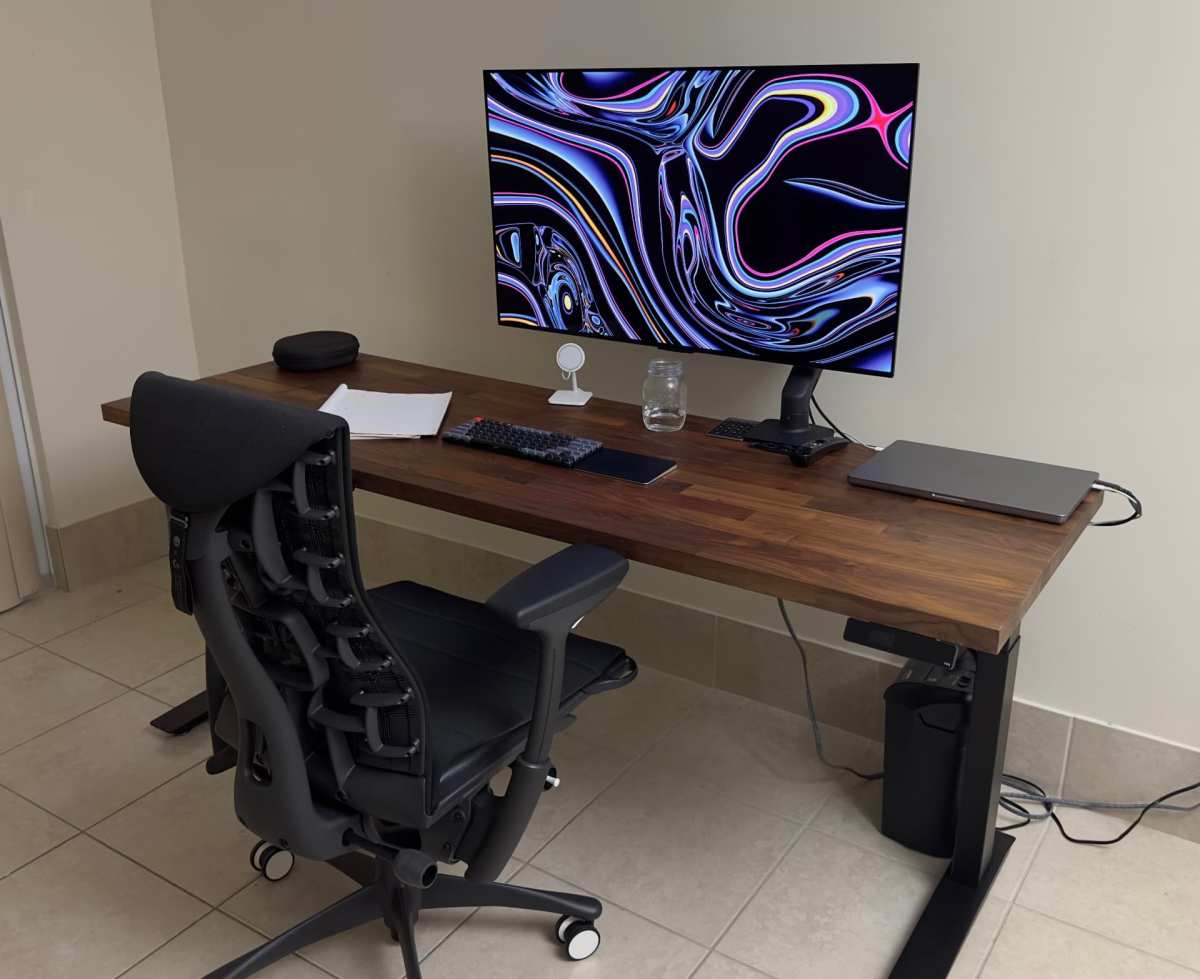
Image source: Bing (Web (fair-use with source credit))
Why This Question Matters Before You Spend Any Money
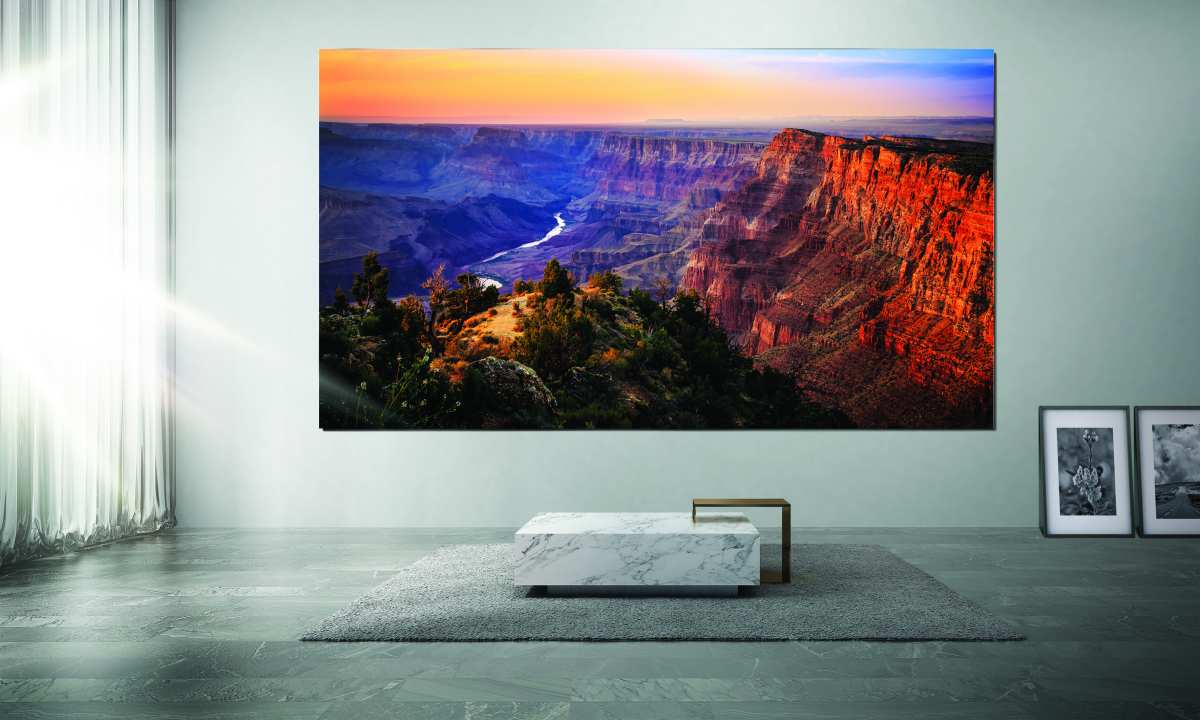
Here's the thing. You've probably seen the CES videos. Massive, impossibly thin, wall-sized displays with perfect blacks and eye-searing brightness.
That's microLED, and it looks like the future of displays.
But there's a big difference between seeing a prototype on a trade show floor and actually being able to buy one for your desk or living room. If you're deciding between dropping $3,000 on a high-end OLED monitor right now or waiting for microLED to arrive, you need to know what's real and what's still locked in a lab.
The short answer is that microLED development is very much alive, but it hasn't crossed the chasm from "impressive prototype" to "product you can actually buy at a reasonable price." Let's break down exactly where things stand.
How MicroLED Actually Works (And Why It's Different From Everything Else)
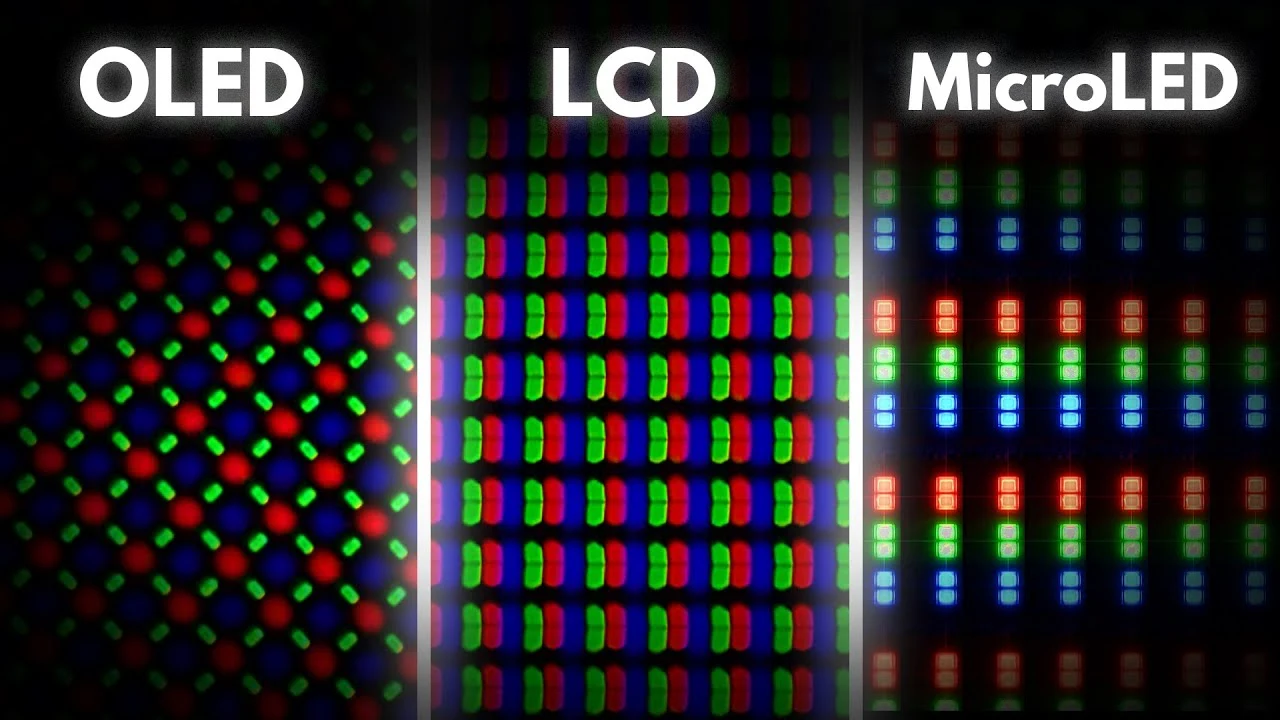
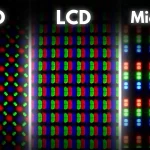
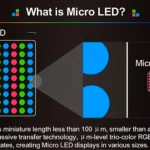
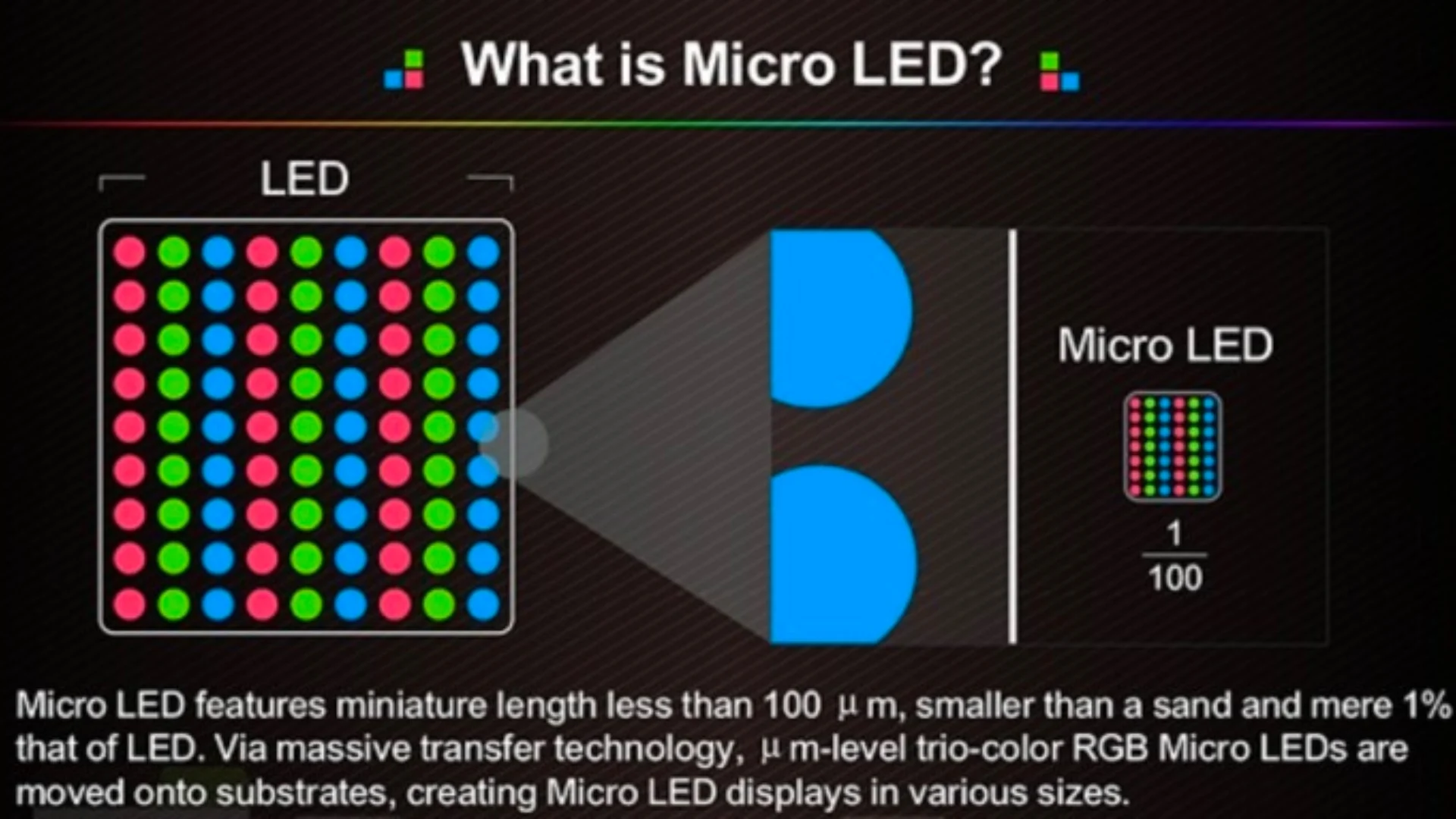
MicroLED is a self-emissive display technology. Each pixel produces its own light, just like OLED. But here's the critical difference.
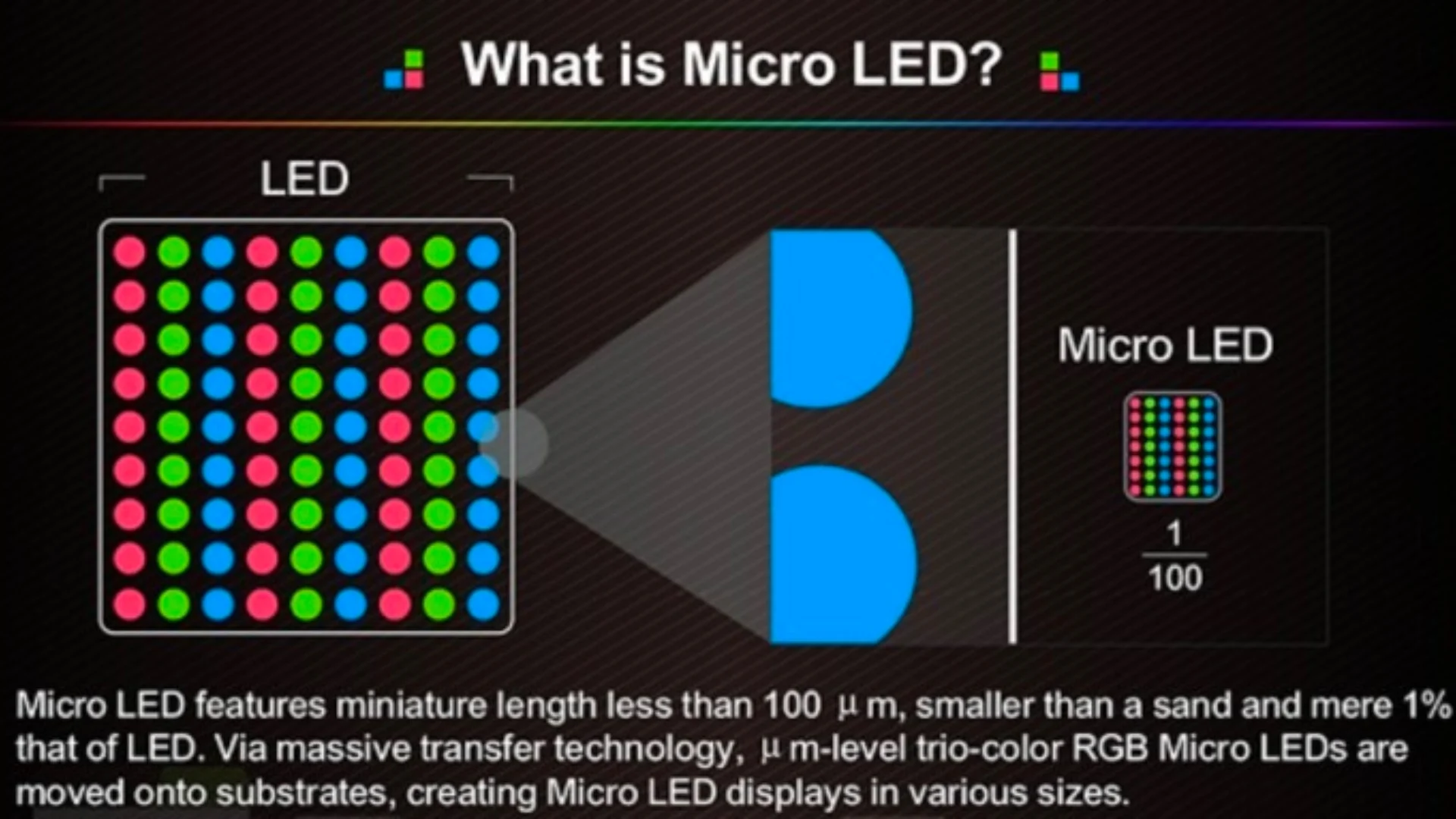
OLED uses organic compounds that degrade over time. MicroLED uses inorganic gallium nitride (GaN) or gallium arsenide (GaAs) LEDs, the same basic technology you'd find in a light bulb, just shrunk down to under 50 micrometers across.
This matters for three big reasons.
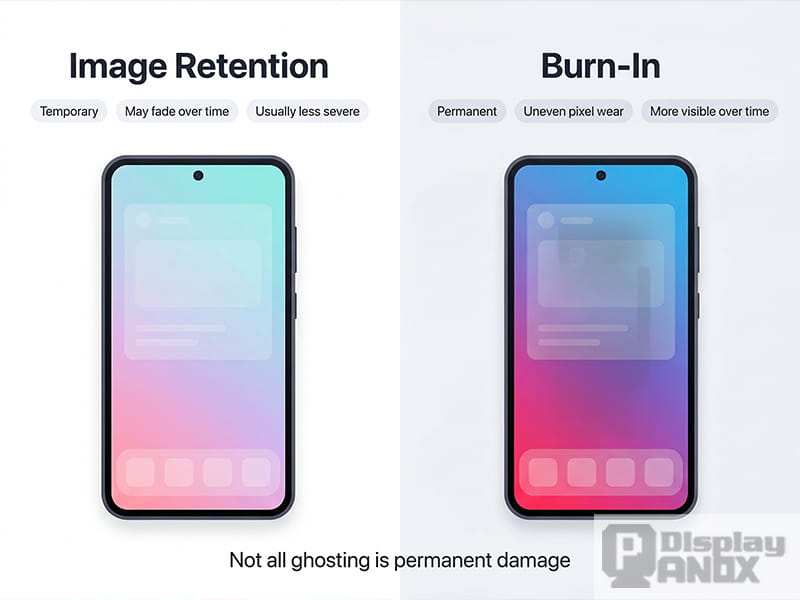
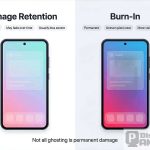
Zero burn-in. Since the LEDs aren't organic, they don't suffer from the permanent image retention that plagues OLED panels. Leave a static image on screen for a year, and you won't see a ghost of it when you switch content.
Extreme brightness. MicroLED panels can hit peak brightness levels of 2,000 to 5,000 nits in manufacturer specifications. Compare that to roughly 1,000 to 1,500 nits for the best OLEDs. That's a massive advantage for HDR content and bright room viewing.
Theoretical lifespan of 100,000 hours. That's based on material properties of inorganic LEDs. Your OLED monitor won't last anywhere close to that. In practice, real-world longevity data doesn't exist yet because nobody has been using consumer microLED monitors long-term.
The catch? We're talking about placing millions of individual LED chips onto a display backplane with near-perfect accuracy. For a 4K display, that's roughly 25 million chips.
Each one needs to work, and they all need to match in color and brightness. That's where everything falls apart, literally and figuratively.
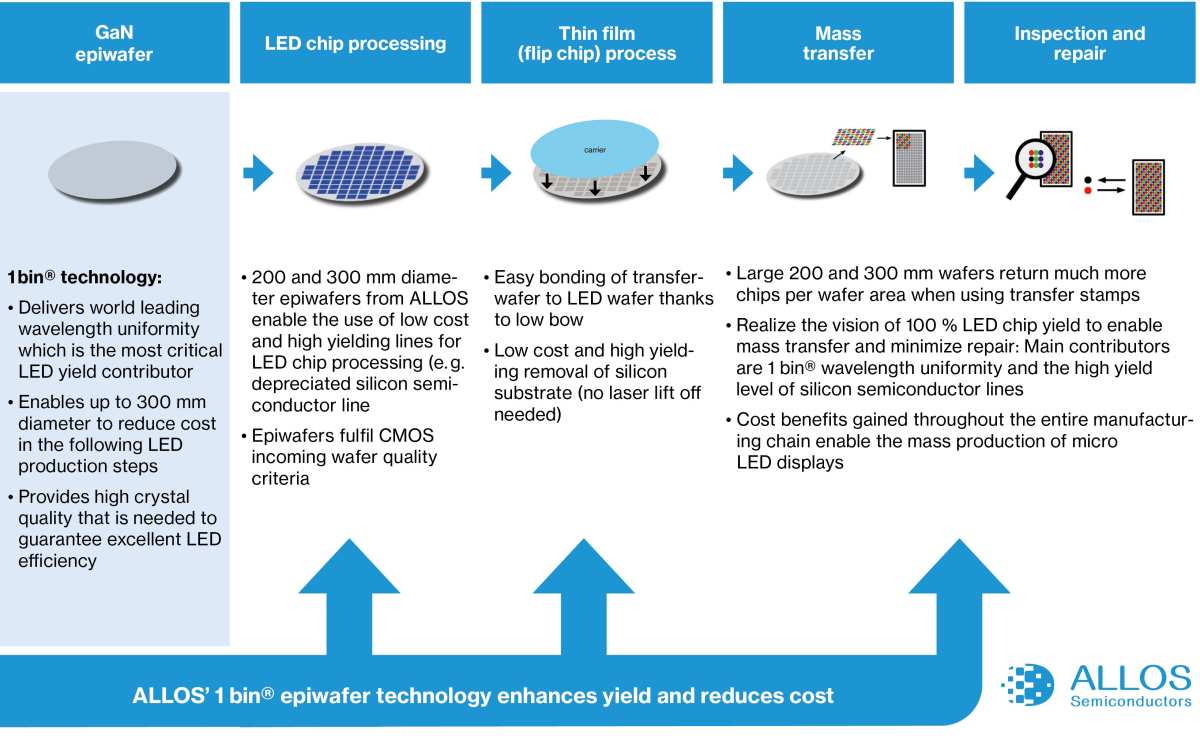
Image source: Bing (Web (fair-use with source credit))
The Manufacturing Bottlenecks That Keep MicroLED From Your Desk
There are three specific problems that have kept microLED out of your hands. Every company working on this technology is fighting the same battles.
Mass transfer yield. This is the big one. You need to pick up millions of microLED chips, each smaller than a human hair, and place them exactly where they go on the display backplane. Current industry estimates suggest yield rates between 70 and 90 percent for this process.
For a viable consumer product, you need 99.999% yield. The gap between where we are and where we need to be is enormous.
Manufacturing cost. Even if yield improves, the process itself is expensive. Epitaxial growth (growing the LED crystals), chip fabrication, mass transfer, inspection, repair, every step adds cost. Current estimates put large-format microLED panels at 5 to 10 times the cost of equivalent OLED panels.
A 4K microLED monitor at today's costs would run somewhere in the five figures.
Red LED efficiency. Blue and green microLED chips are reasonably efficient. Red microLED chips, typically made from gallium arsenide, are significantly less efficient and degrade faster. This creates a color balance problem that gets worse over time.
Some companies are exploring color conversion, using quantum dots to turn blue light into red, but that adds complexity.
Here's a quick breakdown of where each major player stands on these challenges.
| Company | Focus Area | Current Status |
|---|---|---|
| Samsung Display | Large-format modular displays | Shipping commercial products; consumer monitors not announced |
| Apple | Smartwatch microdisplays | Reported development ongoing; no product shipped as of 2026 |
| PlayNitride | MicroLED chip supply | Supplying partners; yield improvements ongoing |
| BOE | Display panels | Showing prototypes; no consumer monitors available |
| Sony | Commercial Crystal LED | Shipping for enterprise/broadcast; consumer pricing not viable |
The pattern is clear. Everyone can make it work in small quantities at high cost. Nobody has cracked the code for affordable, high-volume production at consumer scale.
What's Actually Shipping Right Now vs. What's Still a Prototype
This is where people get confused. You'll see headlines saying "Samsung announces microLED" or "Apple could launch microLED." Then you go to buy one, and… nothing. So let's separate reality from hype.
Samsung The Wall and Sony Crystal LED: Available Today, But Not for You
Samsung's "The Wall" is a real product. You can buy it. It starts at around $100,000 for a 110-inch configuration and goes up from there.
Sony's Crystal LED system is similarly available for commercial installations, broadcast studios, and luxury home theaters.
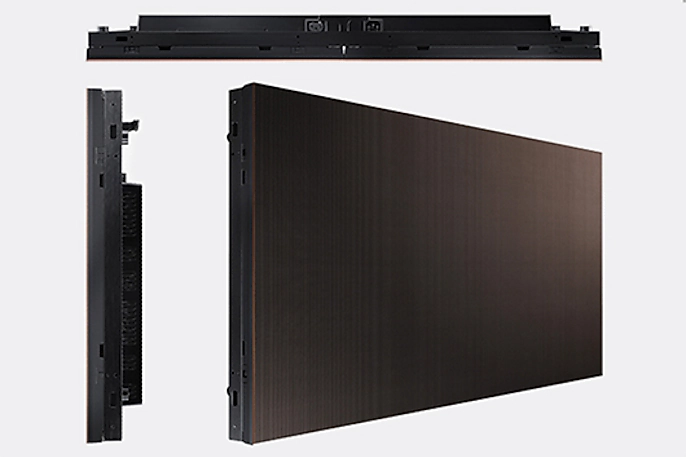
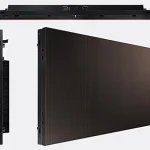
These use a modular approach. Multiple smaller panels tile together to form a larger display. The pixel pitch is relatively large, typically 0.8 to 1.5 millimeters, which is fine when you're viewing a massive screen from several feet away.
This is not a desktop monitor technology. It's a replacement for video walls and large-format installations.

Image source: Wikimedia Commons / Santasgift (CC BY-SA)
Apple's MicroLED Efforts and the Smartwatch Gambit
Apple has invested heavily in microLED development, with hundreds of patents on file. The widely expected first consumer product is an Apple Watch Ultra with a microLED display. Analysts have been predicting this for several years.
As of 2026, it hasn't materialized.
Reports suggest Apple has been working with suppliers to develop microLED at microdisplay scale, screens under an inch diagonally. This is actually the near-term application most experts consider viable. The smaller the display, the fewer chips you need, the easier the yield problem becomes.
But Apple hasn't confirmed any timeline, and the last reports suggested the project faced delays due to manufacturing challenges. We're in a waiting pattern.
CES Prototypes: Why Announced Doesn't Mean Available
Every year at CES, companies show off microLED displays in various forms. Wall-sized screens, transparent displays, flexible panels. These are proof-of-concept demonstrations.
They show the technology works. They don't show that the company can manufacture thousands of units per month at a price anyone can afford.
It's similar to how automakers show concept cars. That wild electric SUV on the turntable might influence a production model in three years, but you can't buy it tomorrow. Treat microLED trade show appearances the same way.
MicroLED vs. OLED vs. Mini-LED: What You're Really Choosing Between
If you're buying a monitor today, you're choosing between LCD variants and OLED. Mini-LED and microLED get mentioned in the same breath constantly, so let's clear up the confusion first.
Mini-LED is not microLED. Mini-LED is just a backlighting technology for LCD panels. It uses smaller LEDs behind the LCD layer to enable more precise local dimming zones. You're still looking at an LCD screen with a backlight.
It's better than old LCD technology. It's not in the same category as self-emissive displays.
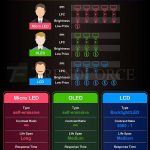
Here's how the three technologies actually compare for someone buying a display in 2026.
| Feature | Mini-LED LCD | OLED | MicroLED |
|---|---|---|---|
| Self-emissive | No (backlit LCD) | Yes (organic compounds) | Yes (inorganic LEDs) |
| Burn-in risk | None | Yes, over time | None |
| Peak brightness | 1,000-2,000 nits | 1,000-1,500 nits | 2,000-5,000 nits |
| Black levels | Good (local dimming) | Perfect | Perfect |
| Color gamut | 85-95% DCI-P3 | 95-99% DCI-P3 | 90%+ Rec. 2020 potential |
| Response time | Milliseconds | ~0.1ms | Nanosecond |
| Lifespan concern | Backlight dims slowly | Organic degradation | Minimal (theoretical) |
| Consumer price range | $300-$2,000 | $800-$4,000 | Not yet available |
| Available to buy now? | Yes | Yes | Commercial only, $50K+ |
The Real-World Impact
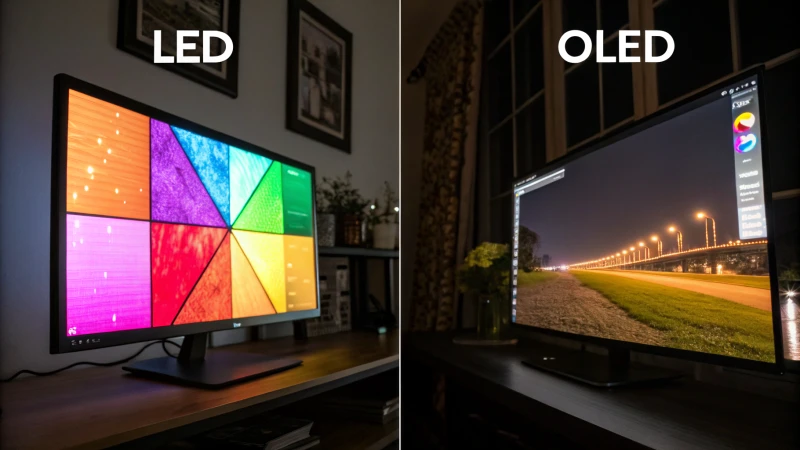
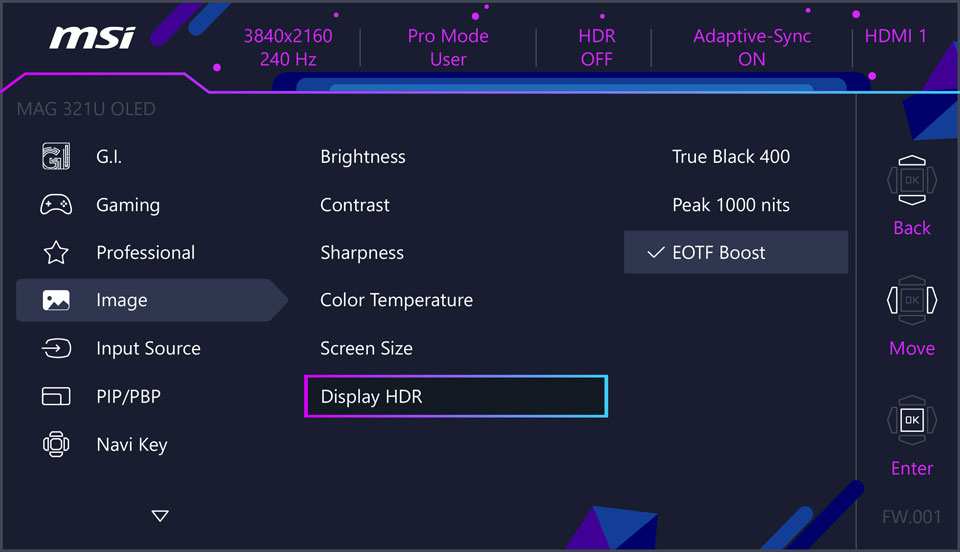
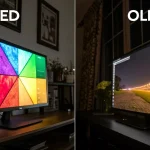
For your actual use case, OLED delivers 95 percent of what microLED promises right now, at a price you can actually pay. The burn-in concern with OLED is real but often overstated for typical monitor use with varied content. Modern OLED panels have mitigation strategies, and most users won't encounter meaningful burn-in within a reasonable ownership period.
MicroLED's advantages over OLED are real but mostly matter for extreme use cases. If you're running a command center with static elements on screen 24/7, microLED's zero burn-in matters. If you're a medical imaging professional who needs extreme brightness for diagnostic accuracy, microLED's HDR capability matters.
For everyone else? OLED is the premium choice today.
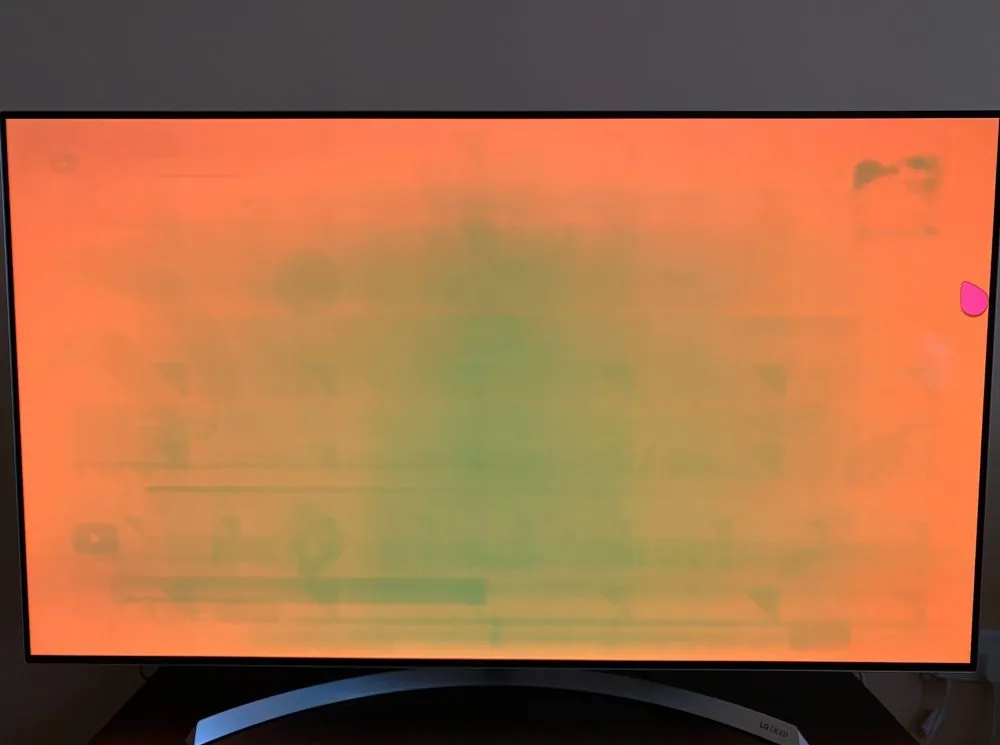
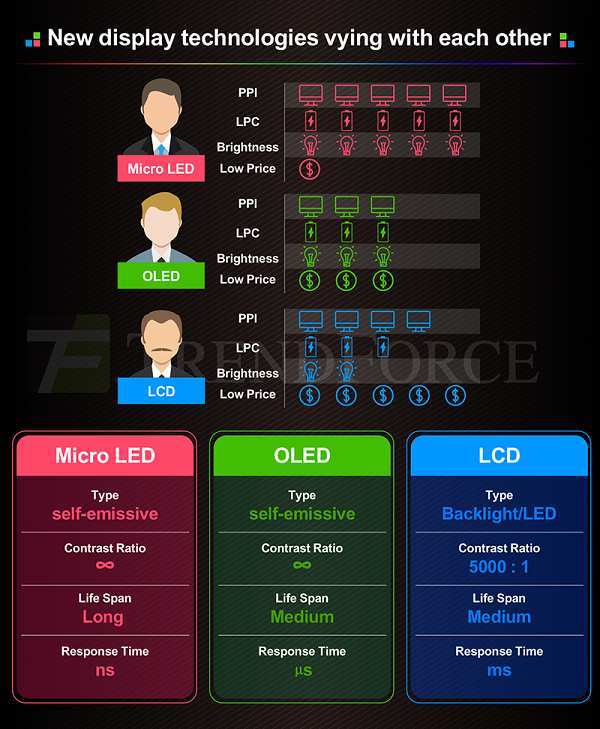
Image source: Bing (Web (fair-use with source credit))
Mini-LED sits in the middle. It's a solid choice if you want good HDR performance without OLED's burn-in risk. Just understand you're buying a better LCD, not a next-generation display technology.
The backlight is still there. Blooming and haloing around bright objects on dark backgrounds are still present, even if reduced compared to basic LCDs.
Frequently Asked Questions
When will microLED monitors be available to buy?
Nobody knows for certain. The most realistic estimates for consumer-grade desktop monitors put availability somewhere between 2027 and 2030, with early products likely priced well above $5,000. Smartwatches may see microLED first, potentially sooner, since the smaller display size makes manufacturing more feasible.
Is microLED better than OLED?
On paper, yes. MicroLED matches OLED's perfect black levels and self-emissive contrast while offering higher peak brightness, no burn-in risk, and a longer theoretical lifespan. In practice, OLED is excellent enough that the difference may not matter for most users, especially since microLED isn't available yet.
Why is microLED so expensive to manufacture?
The mass transfer process is the primary bottleneck. Placing millions of microscopic LED chips onto a display substrate with near-zero defect rates is extraordinarily difficult. Yield rates haven't reached the threshold needed for cost-effective production at consumer scale.
Is mini-LED the same as microLED?
No. Mini-LED is an LCD backlighting technology using smaller LEDs for better local dimming. MicroLED is a completely different self-emissive technology where each pixel is its own LED.
They sound similar but work very differently.
Should I wait for microLED or buy an OLED monitor now?
For most people, buying a quality OLED monitor now is the practical choice. MicroLED at consumer pricing is years away, and current OLED panels deliver excellent performance. If you need a display today, OLED is the premium option.
If you can wait and the timing works out, microLED could be worth it down the line.
What is the lifespan of a microLED display?
Manufacturer specifications and theoretical models suggest over 100,000 hours of use before significant degradation. Since inorganic LEDs don't degrade the way organic OLED materials do. No real-world long-term data exists yet because consumer microLED displays haven't been in use long enough to verify those projections.
The Bottom Line: What I'd Do With My Own Money
If I needed a monitor this week, I'd buy a quality OLED or a good mini-LED LCD depending on my burn-in risk tolerance. The performance is excellent, the prices are reasonable, and the products are actually available to purchase today.
If you're wondering whether microLED is worth waiting for, here's my honest take. The technology is real. The problems are engineering problems, not physics problems.
That means they will get solved eventually. But "eventually" could mean three years or it could mean ten. No one, not even the companies developing it, knows exactly when the cost and yield barriers will break.
Don't plan your purchasing decisions around microLED arriving next year. It won't, not at consumer scale. But also don't assume it's vaporware.
It's coming in some form, likely starting with small-format devices like smartwatches before scaling up to monitors and TVs.
For now, take the display you can buy today. Enjoy it. And keep an eye on microLED as a future upgrade, not a current one.
The Real Timeline: When Can You Actually Buy a MicroLED Monitor?
Let's get specific. Vague promises of "soon" aren't helpful, so here's what we know based on manufacturer roadmaps, patent filings, and supply chain reports.
Pessimistic Case: 2028 or Later for Consumer Monitors
If mass transfer yield improvements continue at the current pace, consumer-grade microLED monitors won't hit the market until 2028 at the earliest. And even then, expect pricing that makes today's premium OLED monitors look like bargains. Early products will likely be small, think 27-inch panels, priced above $5,000.
The fundamental issue is that moving from 90 percent yield to 99.999% yield isn't a linear improvement. It requires breakthroughs in inspection, repair, and transfer speed that haven't happened yet. Every percentage point of improvement gets harder than the last.
Optimistic Case: 2026 for Early Adopter Pricing
Some analysts point to Samsung Display's aggressive investment timeline and suggest we could see limited consumer products by late 2026 or early 2027. Apple's reported work on smartwatch-scale microdisplays could materialize sooner, since smaller displays require fewer chips and are easier to produce at acceptable yield rates.
But "limited" is the key word here. We're talking about small production runs at very high prices. Not a product you'd find on a shelf at your local electronics store.
What Determines the Timeline
Three factors will decide when microLED reaches consumers.
Yield breakthroughs. If a company cracks the mass transfer problem and achieves the defect rates needed for consumer pricing, everything accelerates. This is the single biggest variable.
Red LED efficiency. Solving the red microLED efficiency problem would remove a major technical barrier. Some research groups are exploring nanowire structures and alternative materials, but nothing is production-ready.
Investment scale. Samsung, Apple, BOE, and TCL are collectively pouring billions into microLED development. That money buys talent, equipment, and faster iteration. But even with heavy investment, physics and manufacturing physics don't care about budgets.
Should You Wait or Buy OLED/Mini-LED Now?
This is the question that actually matters for your wallet. Let's break it down honestly.
Buy Now If…
You need a monitor this year. Your current display is failing or inadequate. You do professional color work and can't afford to wait on unproven technology.
You're buying for a specific project or deadline.
In these cases, a quality OLED monitor like a 32-inch 4K panel from LG Display-based manufacturers will serve you well for years. Mini-LED is also a solid choice if you're concerned about burn-in for static-content workloads.
Wait If…
You're not in a rush. You're building a long-term setup and want the best possible technology. You're specifically interested in microLED's advantages, extreme brightness, no burn-in, and modular design.
You have the budget to pay early-adopter pricing when products do arrive.
Waiting makes sense if your current setup is functional and you're willing to gamble on microLED arriving within your ownership window. Just understand that "within a few years" is the most honest estimate anyone can give.
The Honest Decision Framework
Here's how I'd think about it. If you're buying a monitor for the next three to five years of use, buy the best available technology today. OLED is mature, performant, and will remain competitive for years.
If you're planning a five-to-ten-year horizon and can afford to upgrade later, keeping an eye on microLED developments is reasonable.
The worst move would be to buy a cheap monitor now as a "placeholder" while waiting for microLED. You'll spend more money overall and be frustrated daily with the compromise. Buy what you need now.
Upgrade when microLED actually arrives at a price you're willing to pay.
Risks of Buying Into MicroLED Early (Or Being Too Skeptical)
There are risks in both directions, and most people only think about one side.
Early adopter risks. If you buy a first-generation microLED product, you're paying premium prices for immature technology. Color calibration tools may not be optimized for microLED's unique characteristics. Long-term reliability data won't exist.
Repair options will be limited and expensive. And the price will drop significantly if manufacturing improves on schedule.
Waiting risks. On the flip side, if you dismiss microLED entirely, you might miss a genuine leap in display technology. OLED is great, but it has real limitations. Burn-in, organic degradation, and brightness ceilings are inherent to the technology.
MicroLED solves all of those problems. When it does arrive at consumer scale, it could make current OLED monitors look dated quickly.
The balanced approach is to stay informed without making purchasing decisions based on promises. Follow the actual product announcements, not the concept videos. Pay attention to shipping dates and real reviews, not press releases.
Expert Tips: What Insiders Watch For
If you want to track microLED progress yourself, here are the signals that actually matter.
Patent filings. Companies don't patent things they're not seriously developing. Tracking USPTO and international patent databases for microLED-related filings from Samsung, Apple, and others gives you a sense of where R&D investment is going.
Supply chain orders. When companies like PlayNitride or Epistar expand production capacity, it's a sign that major manufacturers are preparing for higher-volume output. Equipment orders for mass transfer systems are particularly telling.
SID Display Week presentations. The Society for Information Display's annual symposium is where technical details get published. Not marketing fluff, actual peer-reviewed research on yield improvements, new transfer methods, and efficiency gains.
Hiring patterns. When a company starts hiring aggressively for microLED manufacturing roles, they're moving from research to production planning. Job postings are often more honest than press releases.
The bottom line on microLED monitors in 2026 is this. The technology is real and progressing. It's not vaporware.
But it's also not coming to your desk next year. Make your buying decisions based on today's available options, and treat microLED as a future upgrade path, not a current one.
Frequently Asked Questions
When will microLED monitors be affordable?
Based on current manufacturing cost trajectories, consumer-affordable microLED monitors likely won't arrive before 2028 to 2030. "Affordable" here means under $2,000 for a quality display. Early products will target the premium market with pricing well above that threshold.
Is microLED better than OLED for gaming?
On paper, microLED offers nanosecond response times, higher peak brightness for HDR highlights, and zero burn-in risk during long gaming sessions. In practice, current OLED panels already deliver excellent gaming performance. The advantages won't matter until microLED is actually available to compare side by side.
Can I pre-order a microLED monitor today?
No. Some companies offer waitlists or notification sign-ups for future products, but no consumer microLED monitor is available for pre-order at standard retail pricing. Any company claiming otherwise is selling either a commercial product at commercial prices or making promises they can't keep.
What size will the first consumer microLED monitors be?
Most analysts expect initial consumer products to be in the 27-inch to 32-inch range, similar to current premium desktop monitor sizes. Smaller displays require fewer chips and are easier to manufacture at acceptable yields. Larger sizes will follow as manufacturing matures.
The Bottom Line
MicroLED monitors are real, they work, and they are coming eventually. But "eventually" is the operative word. The technology solves genuine problems with current display solutions, OLED burn-in being the most notable.
The manufacturing challenges preventing widespread adoption are substantial but not insurmountable.
As of 2026, your best move is to buy the display technology that serves your needs today with full confidence that it will perform excellently for years. Keep microLED on your radar as a meaningful upgrade opportunity in the latter half of this decade. When consumer products genuinely arrive with real reviews and real pricing to evaluate, that's when it's worth reconsidering your setup.
The future of displays is microLED. The present belongs to OLED and mini-LED. Know which one you actually need right now, and you'll make a decision you're happy with.

Similar Posts