ChatGPT Tasks Explained
Image source: Bing (Web (fair-use with source credit))
Let's be honest. You've probably opened ChatGPT, stared at that blinking cursor, and wondered if you're using it right. ChatGPT tasks explained isn't just a search query.
It's what people type when they suspect the tool could do more but they're not sure where to start or what's realistic.
The good news is that ChatGPT handles far more than casual questions. It drafts, analyzes, codes, summarizes, translates, brainstormes, and automates real work when given clear instructions. As of 2026, OpenAI's platform supports over 128,000 tokens of context and custom GPTs created by users for specific workflows.
This guide walks through exactly what tasks you can hand off, how to frame them, where the limits hit, and which prompting techniques actually move the needle.
Quick Answer
ChatGPT performs specific tasks when given clear, structured prompts. Common task types include writing, research, coding, business productivity, and creative brainstorming. Success depends on prompt quality, context provided, and choosing the right model for the task.
Not every task suits ChatGPT. Knowing which category your goal falls into makes the difference between weak output and genuinely useful results.
What "Doing Tasks With ChatGPT" Actually Means
It's not magic. It's structured delegation.
Let's clear something up. ChatGPT doesn't "do work" the way a human assistant does. It predicts text patterns based on your input.
The task you give it is only as clear as the instructions you provide.
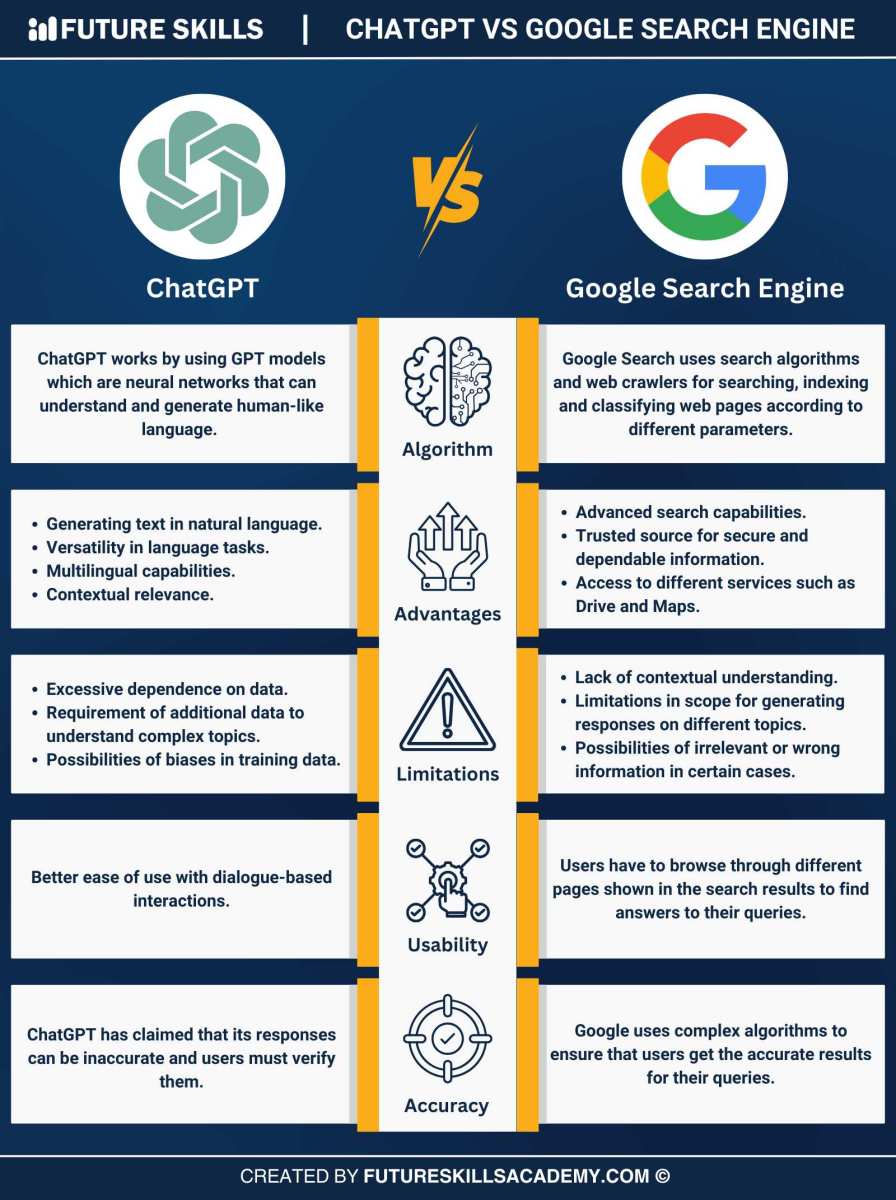
Here's the shift most people need to make. You're not asking a search engine a question. You're briefing a fast, literal-minded collaborator who has no memory of your last conversation unless you enable the memory feature.
The three layers of any ChatGPT task
Every task you throw at ChatGPT sits on three layers.
- The goal: What you actually want. A draft email. A Python script. A summary of a 40-page PDF.
- The context: What ChatGPT needs to know about audience, tone, format, constraints, and background.
- The structure: How you frame the prompt itself, including role assignment, step-by-step instructions, and output format requests.
Stack all three and your output quality jumps dramatically. Skip one and you'll get something generic, off-target, or flat-out wrong.
The task categories at a glance
Not every job fits ChatGPT. But the ones that do fall into predictable buckets.
| Task Category | Example Tasks | Difficulty to Prompt | Output Quality |
|---|---|---|---|
| Writing & Content | Emails, blog posts, proposals | Easy to moderate | High with editing |
| Research & Analysis | Summarizing, comparing, extracting data | Moderate | Strong, verify sources |
| Coding | Debugging, writing functions, explaining code | Moderate to high | Functional, test always |
| Business Productivity | Meeting notes, job descriptions, planning | Easy | Solid first drafts |
| Creative Brainstorming | Naming, ideation, outlining | Easy | Broad, needs curation |
Match your goal to the right category and you set yourself up for useful output before you even type the first word.
Why Your Results Depend on How You Prompt
The blunt truth about vague prompts
Here's what most people type: "Write me a blog post about marketing."
Here's what ChatGPT hears: "Write something, about marketing, in whatever tone and length you default to, for an audience I haven't specified, with no particular goal in mind."
That's not a task. That's a coin flip.
The single biggest factor in whether ChatGPT delivers something useful is prompt specificity. This isn't controversial. It's how large language models work at a mechanical level.
The four elements of a strong task prompt
Based on documented prompting best practices and OpenAI's own guidance, effective task prompts include four things.
- Role or persona: "Act as a senior copywriter with B2B SaaS experience."
- Context information: "The audience is mid-career marketing managers at tech companies with 50 to 200 employees."
- Clear deliverable: "Write a 600-word email announcing a new analytics feature."
- Format and tone constraints: "Use conversational but professional tone. Include one CTA. No jargon."
Combine even two of these and your output improves. Combine all four and ChatGPT stops feeling like a toy.
Role-based prompting works because it narrows the model's prediction space
When you assign ChatGPT a role, you're essentially telling the model which training data patterns to weight more heavily. "Act as a data analyst" pulls the response toward analytical language structures. "Act as a kindergartener" doesn't work as well because the model has far less training data calibrated to that specific persona, but you get the principle.
OpenAI documented this in their prompt engineering guide. Few-shot prompting, where you give examples of what you want before asking for the deliverable, further improves consistency.
A real prompt transformation
Vague: "Help me with my resume."
Specific: "Act as an experienced HR recruiter in the tech industry. I'm a junior software developer with three years of experience in Python and cloud infrastructure. Rewrite my resume bullet point 'Helped with cloud migration' into three achievement-focused bullets with measurable impact.
Keep each under two lines. Use active verbs."
The difference isn't just preference. It's structural. The second prompt gives the model constraints, domain framing, output format, input data, and length limits.
That's a brief. The first is a wish.

Image source: Wikimedia Commons / DeppGPT: Der Postillon API (GPT 3.5): OpenAI Screenshot: PantheraLeo1359531 😺 (talk)
The Task Categories: What ChatGPT Can and Can't Do Well
Writing tasks: where ChatGPT shines brightest
Writing is the most common use case and the one where most people start. Email drafts, blog posts, social media copy, cover letters, proposals, product descriptions, ad scripts. ChatGPT handles all of these with reasonable quality even from basic prompts.
The catch is voice. Default ChatGPT writing sounds competent but generic. It trends toward safe language, balanced paragraphs, and a certain "AI polish" that experienced readers notice.
You steer output toward a specific voice through tone instructions and by feeding it examples of your preferred style.
For long-form content, ChatGPT drafts the structure and first pass. You handle the editing, fact-checking, and final polish. That's the realistic workflow.
Research and analysis tasks: useful but verify everything
ChatGPT can summarize articles, extract key points from uploaded documents, compare concepts, and organize research. It genuinely accelerates these workflows.
Here's the critical caveat. It hallucinates. It invents sources, fabricates statistics, and presents confident-sounding nonsense with equal fluency.
This is a documented limitation of current large language models.
For research tasks, always verify claims against primary sources. Use ChatGPT to structure your thinking and summarize what you've already read, not as a standalone fact-checker.
Coding tasks: powerful with guardrails
ChatGPT writes functional code in most common languages. It's particularly strong with Python, JavaScript, SQL, and well-documented frameworks. It debugging is often faster than searching Stack Overflow for common errors.
The risk is subtle bugs that work syntactically but fail logically. Code written by ChatGPT looks right. It sometimes is right.
It sometimes just looks that way.
Always test ChatGPT-generated code in a safe environment before deploying it. Never run untested code against production data or sensitive systems.
Writing and Content Creation Tasks
Email drafting
ChatGPT drafts emails quickly. Provide the recipient, purpose, key points, tone, and any constraints like length or formality. It returns something you edit rather than something you send as-is.
For cold outreach, feed it your recipient's industry and value proposition. For internal emails, tell it your relationship with the reader and what you need from them.
Long-form writing
Blog posts, white papers, case studies, and reports all start well in ChatGPT. The model handles structure, transitions, and section generation effectively.
Two things it struggles with. It introduces hallucinations throughout the drafts, so don't assume facts. It also loses coherence past about 1,500 words in a single conversation turn.
Break long projects into sections rather than asking for a full 3,000-word article at once.
Social media and marketing copy
This is a natural strength. Short-form copy, engaging hooks, multiple variations, and platform-specific formats all come quickly.
Feed ChatGPT your brand voice guidelines or examples of copy you like. It matches patterns well when given direction.
Research, Analysis, and Summarization Tasks
Document summarization
ChatGPT Plus users can upload PDFs, spreadsheets, and images directly. The model extracts key points, summarizes sections, and answers questions about the content.
This works well for dense material. Research papers, contracts, reports, and meeting transcripts become significantly more manageable after ChatGPT processing.
Verify important details. Summarization selectively drops information. Critical points that matter to your specific use case can slip through.
Comparison and extraction tasks
Ask ChatGPT to compare two concepts, extract data points from a document, or organize information into a table. These structured tasks play to the model's strengths.
The output tends to be clean, well-formatted, and immediately useful. It saves manual effort even when you review and adjust the result.
What ChatGPT shouldn't handle in research
Avoid relying on ChatGPT for tasks requiring factual precision. Academic citations, statistical claims, legal interpretation, and medical information all need human verification against authoritative sources.
ChatGPT pre-training data has a knowledge cutoff. It won't reliably reflect recent events, updated regulations, or newresearch published after its training window.
Coding and Technical Tasks
Code generation and debugging
ChatGPT writes functional code in most common languages. Python, JavaScript, SQL, shell scripts, it handles them all. It's particularly useful for boilerplate, utility functions, and well-documented framework patterns.
For debugging, paste the error message along with your code. ChatGPT identifies common issues quickly: syntax errors, off-by-one mistakes, type mismatches, and logic gaps.
Testing and deployment
ChatGPT helps write test cases, covering common scenarios and some edge cases. But it is not good at edge case coverage. Run generated tests through a proper suite.
Patch any gaps. Then test again.
Never deploy untested code to production. Loop in human review for any code touching financial transactions, user data, or access permissions.
When to skip ChatGPT for coding
You can't leave frontend implementation and testing to the model. ChatGPT handles boilerplate and logic. But responsive design, browser compatibility, and accessibility take hands-on verification.
ChatGPT also has trouble with large codebases in a single session. Break big projects into modular prompts. Build, test, and consolidate piece by piece.
Image source: Bing (Web (fair-use with source credit))
Image source: Bing (Web (fair-use with source credit))

Similar Posts