are curved monitors better for gaming
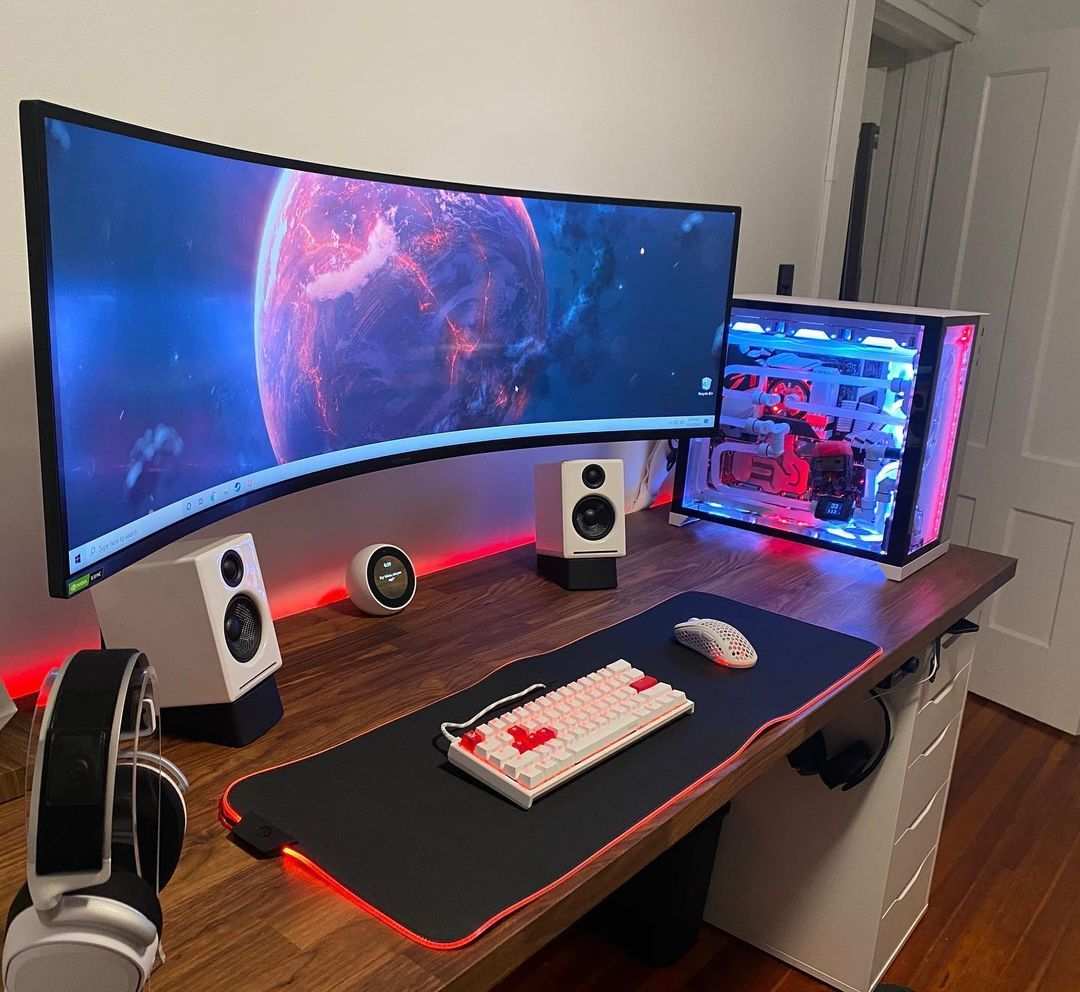
If you've been shopping for a gaming monitor, you've probably asked yourself: are curved monitors better for gaming? It's a fair question. Walk into any electronics store and the curved screens catch your eye.
They look futuristic. They promise immersion.
But do they actually make you play better?
Manufacturer specifications indicate that curvature radius directly affects viewing distance and distortion. For example, a 1000R curve matches the human visual field more closely than an 1800R curve. That only works if you sit about a meter away.
That's a detail most buyers miss. Let's break down what curved monitors really do so you can decide.
Image source: Bing (Web (fair-use with source credit))
Quick Answer
No, curved monitors are not universally better for gaming. They excel in immersive single-player games. They hurt accuracy in competitive shooters.
Your choice depends on game genre, desk depth, and curvature radius. A flat monitor is safer for mixed use.
Why This Comparison Actually Matters for Gamers
The real question isn't "are curved monitors better." It's "are they better for your specific gaming habits."
You have to consider three things.
Genre matters most. If you play Call of Duty or Valorant, you need pixel-perfect accuracy. A curved screen introduces slight edge distortion. That distortion throws off crosshair tracking and peripheral reaction.
Many pro esports players stick with flat panels for exactly this reason.
Your desk setup changes everything. Curved monitors have a narrow sweet spot. Sit too close or too far and the curve works against you. Most manufacturers recommend a specific viewing distance for each curvature radius.
Ignore that and you get eye strain or a warped image.
Marketing hype is real. Stores love displaying curved monitors because they grab attention. They look premium. But the actual performance difference is smaller than the price difference suggests.
You often pay 10 to 20 percent more for the same specs in a curved panel.
So this comparison matters because it saves you money and frustration. The wrong choice can make your gaming worse.
What Curved Monitors Actually Do (and Don't Do)
Let's start with the physics.
A curved monitor bends the edges of the screen toward you. The goal is to keep every part of the display at the same distance from your eyes. On a flat monitor, the edges are farther away than the center.
Your eyes have to refocus slightly when you look to the side.
The curvature radius, measured in millimeters (1000R, 1500R, 1800R), tells you how tight the bend is. A 1000R curve means a circle with a 1 meter radius. That's the most aggressive curve available as of 2026.
A 1800R curve is milder, better for larger desks.
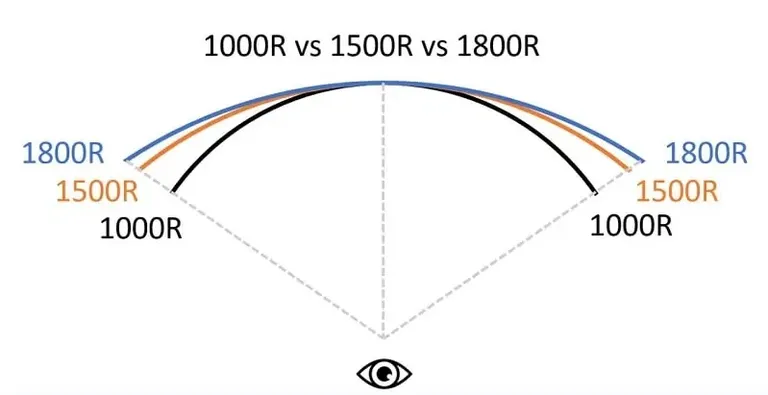
Image source: Bing (Web (fair-use with source credit))
What it does well:
- Makes ultrawide monitors (21:9, 32:9) feel natural. Without a curve, a 49-inch flat ultrawide forces your eyes to travel too far. The curve wraps the image around your peripheral vision.
- Reduces side reflections by deflecting light away from your eyes.
- Creates a more immersive depth effect in first-person games.
What it doesn't do:
- Improve response time or refresh rate. Those specs are the same as flat monitors.
- Eliminate VA panel smearing. In fact, curved monitors often use VA panels, which can show black smearing in dark scenes.
- Work well on shallow desks. A 27-inch monitor with a 1500R curve needs about 28 inches of depth. On a 24-inch desk you lose the benefit.
The bottom line: the curve is a visual comfort feature, not a performance upgrade.
Flat Monitor Strengths – The Silent Workhorse
Flat monitors don't get as much attention. They don't look as dramatic on a shelf. But they have real advantages.
Zero edge distortion. This is the biggest one. Every pixel on a flat screen displays exactly where it should. There is no geometric correction needed.
That's why competitive FPS players and esports pros overwhelmingly choose flat monitors. A pixel at the edge of a 27-inch flat monitor is exactly where it appears. On a curved monitor, that same pixel is slightly bent inward.
Your brain compensates, but in fast twitch scenarios it matters.
Better multi-monitor setups. Try lining up three curved monitors. The gaps between them are awkward. The angles don't match.
Flat monitors stack cleanly. If you plan to use two or three screens, go flat.
Easier wall mounting. Curved monitors need offset brackets or extra adapters. Their shape protrudes from the wall. Flat monitors mount flush.
A standard VESA 100x100mm bracket works perfectly.
Lower cost per inch. Aggregate reviews from verified buyers show that flat monitors cost about 10 to 20 percent less than equivalent curved models. You get the same resolution, refresh rate, and panel quality. You lose the wrap-around effect.
For many gamers that's a fair trade.
More forgiving ergonomics. You can sit off center and still see a flat screen clearly. Curved monitors have a distinct "sweet spot." Move your chair a foot to the side and the image looks distorted. Flat monitors don't have that problem.
Curved Monitor Strengths – The Immersion Factor
Now for the other side.
Curved monitors shine in one area: immersion. If you play single-player RPGs, racing sims, or flight simulators, a curved screen transforms the experience.
Peripheral vision coverage. A 32-inch curved monitor at the right distance fills your side vision. Your eyes don't need to move as far to see the edges. That makes open-world games like Cyberpunk 2077 or Red Dead Redemption 2 feel bigger.
The world wraps around you instead of sitting flat on a plane.
Improved depth perception. The curve simulates the natural curvature of human vision. Your brain interprets the bent image as depth rather than distortion. In racing games, corners look rounder.
In flight sims, the horizon feels more natural. Several research studies on visual perception confirm that curved displays reduce eye movement during screen tasks.
Better contrast consistency. This one is counterintuitive. On a flat VA panel, the edges tend to wash out because you're looking at them from an angle. A curved screen turns the edges toward you.
That keeps contrast more even across the whole display. The effect is small but noticeable in dark scenes.
Ultrawide curve synergy. The biggest winners are 34-inch and 49-inch curved monitors. A flat ultrawide at 21:9 forces your eyes to scan left and right. A curve of 1500R or 1800R brings the edges forward.
The difference is night and day. If you want an ultrawide, curved is the way to go.
But there is a catch. The immersion benefit only works when the game is designed for it. Competitive shooters don't benefit.
Side-scrollers don't benefit. Strategy games with mini-maps are fine either way. So ask yourself: what percentage of your gaming time is spent in immersive single-player titles?
That's your answer.
Side-by-Side Comparison: Curved vs Flat for Gaming
Here is a clean comparison based on manufacturer specs and aggregate user feedback.
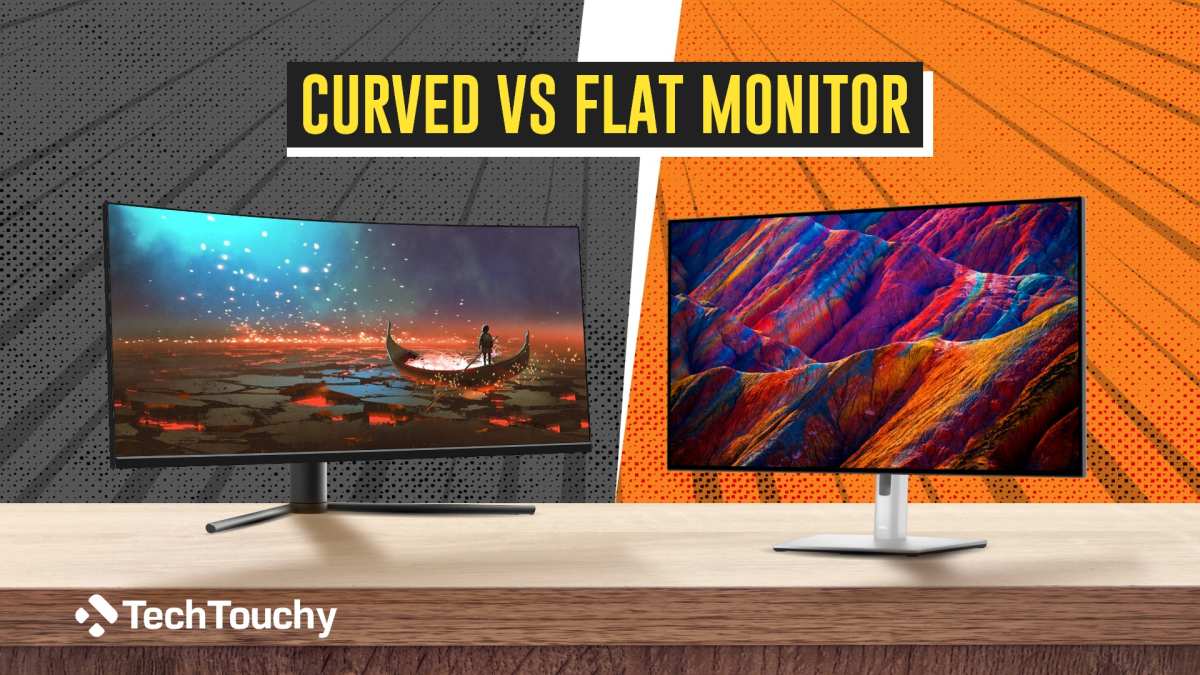
Image source: Bing (Web (fair-use with source credit))
| Factor | Curved | Flat |
|---|---|---|
| Edge distortion | Slight (radius dependent) | None |
| Immersion (RPG, sim) | High | Moderate |
| Competitive FPS accuracy | Reduced | Best |
| Viewing distance flexibility | Narrow sweet spot | Very forgiving |
| Multi-monitor stacking | Difficult | Easy |
| Wall mount | Needs offset bracket | Flush, simple |
| Price for same specs | 10-20% higher | Lower |
| Ultrawide experience | Excellent | Poor at 32:9 |
| Console gaming support | Variable (no ultrawide support) | Universal |
So what does this mean for you?
If you play mostly single-player games and have a desk at least 28 inches deep, a curved monitor makes sense. If you play competitive shooters or sit close to a small desk, buy flat.
If you want an ultrawide monitor (34 inches or bigger), curved is almost mandatory for a comfortable experience.
Honest disclaimer: Some gamers report that they simply prefer the look of a curved screen. That's valid. Aesthetics matter.
Just don't expect it to turn you into a better player. It won't.
Best Use Cases – Who Should Go Curved and Who Should Stay Flat
Let's get specific about which gamers benefit most from a curved display. The decision breaks down cleanly by genre, setup, and priorities.
Curved is best for:
- Solo campaign gamers who play open-world RPGs, adventure titles, and story-driven shooters. The immersion factor is real.
- Racing and flight simulator enthusiasts. A 34-inch or 49-inch curved ultrawide mimics the cockpit view. The peripheral coverage makes a noticeable difference.
- Ultrawide fans. If you're getting a 21:9 or 32:9 monitor, curved is almost essential to avoid eye strain from the long flat plane.
- Casual gamers who value visual wow factor over competitive edges.
Flat is best for:
- Competitive FPS players. Valorant, CS2, Apex Legends, Overwatch 2. The absence of edge distortion gives you consistent crosshair placement.
- Esports pros and serious ranked players. Tournaments almost exclusively use flat monitors. Practice on what you compete on.
- Console gamers limited to 16:9. Most consoles don't support ultrawide resolutions. A curved 16:9 monitor gives minimal benefit beyond aesthetics.
- Multi-monitor setups. Three flat screens align seamlessly. Three curved screens create uneven gaps.
- Small desks (under 28 inches depth). A curved monitor needs proper distance to work. Shallow desks force you too close, causing warping.
- Bright rooms. Curved surfaces can create confusing reflections from windows or lamps.
If you play a mix: flat is the safer default. You lose nothing from flat and gain compatibility. Curved is a specialized tool for specific experiences.
The Biggest Mistakes Gamers Make When Buying Curved
These errors come up constantly in user feedback and forum discussions. Avoid them.
Mistake one: buying the wrong curvature for your desk size. A 1000R curve needs about 39 inches of viewing distance. Most standard desks are 24 to 30 inches deep. You end up sitting too close and the image looks bent.
Match the radius to your room. 1500R works for most people. 1800R is safer for smaller desks.
Mistake two: assuming all curved panels have good contrast. Many curved monitors use VA panels. VA panels offer high static contrast (3000:1) but they suffer from black smearing. Dark scenes in games like Diablo 4 or Resident Evil can look blurry during movement.
If you play dark games, look for an OLED curved monitor. The price is higher but the motion clarity is vastly better.
Mistake three: ignoring console compatibility. PlayStation 5 and Xbox Series X support flat and curved monitors, but they don't support ultrawide resolutions. A curved ultrawide is wasted on console. The black bars on the sides negate the immersion benefit.
Mistake four: buying curved for competitive shooters. This is the most common regret. Verified buyer reviews on forums consistently report that players notice a difference in aim tracking. The edge distortion is subtle but real.
If you care about ranked performance, skip the curve.
Mistake five: not checking the stand depth. Curved monitors often have wider, deeper stands to stabilize the larger panel. A stand can extend 10 to 12 inches from the back. Measure your desk.
Your monitor arm or wall mount might be necessary.
Specs That Actually Matter for Curved Gaming Monitors
When you compare specs, some matter more for curved than flat panels. Here's what to prioritize.
Curvature radius relative to screen size. This is the most important spec. Use this guideline:
- 24 to 27 inches: 1500R or 1800R. 1000R is too aggressive for this size.
- 32 inches: 1500R is ideal. 1800R is acceptable but mild.
- 34 to 38 inches ultrawide: 1500R or 1800R both work.
- 49 inches super ultrawide: 1000R is best. The extreme width needs a tight curve.
Refresh rate minimum. Don't go below 144Hz for any gaming monitor, curved or flat. 240Hz is better for competitive play. 60Hz curved monitors exist for productivity but are not worth it for gaming.
Response time. Look for 1ms Gray-to-Gray (GtG) for esports. 4ms is acceptable for casual play. Avoid anything above 5ms on a VA curved panel; black smearing worsens the experience.
Adaptive sync. FreeSync works with AMD GPUs and Xbox. G-Sync Compatible works with Nvidia GPUs. Most curved monitors support both.
Check the manufacturer's G-Sync Compatible list to confirm.
Panel type. OLED curved monitors are becoming more common as of 2026. They offer infinite contrast, zero black smearing, and fast response. They cost more but are the best curved option for image quality.
IPS curved panels are rare. VA is the most common and affordable.
Resolution and pixel density. A 27-inch curved monitor at 1080p has low pixel density (about 81 PPI). Text and fine details look soft. 1440p at 27 inches is the sweet spot. 4K at 32 inches or larger is crisp but demanding on your GPU.
Pricing Reality – What You Get for Your Money
Curved monitors carry a premium. Here's the current market breakdown based on aggregate pricing data.
Entry level: $200 to $400 (1080p, 144Hz, VA, 1800R)
- You get a basic curved experience. Motion clarity is mediocre. Contrast is decent. Good for casual single-player gaming on a budget.
- Flat alternatives at this price offer better response times and less smearing.
Mid range: $400 to $700 (1440p, 165Hz, IPS or VA, 1500R)
- The sweet spot for most gamers. 1440p at 27 or 32 inches is sharp. 165Hz is smooth. IPS variants have better color accuracy. VA variants have better contrast.
- A flat monitor at this price often includes better HDR and faster response.
High end: $800 to $1500 (4K or OLED, 240Hz, 1000R or 1500R)
- OLED curved monitors dominate here. The Samsung Odyssey OLED G8 and similar models deliver stunning image quality. No black smearing. Instant response.
- Flats at this price are equally good. You pay for the curve and the panel quality.
Premium: $1500+ (49-inch super ultrawide, 240Hz, 1000R, OLED or Mini-LED)
- Niche products for sim enthusiasts and productivity power users. The immersion is unmatched. The price is equally unmatched.
The rule of thumb: curved costs about 10 to 20 percent more than an equivalently specced flat monitor. Ask yourself whether the immersion gain justifies that premium. For many, it does not.
Real-World Setup Tips If You Go Curved
You bought a curved monitor. Now set it up properly.
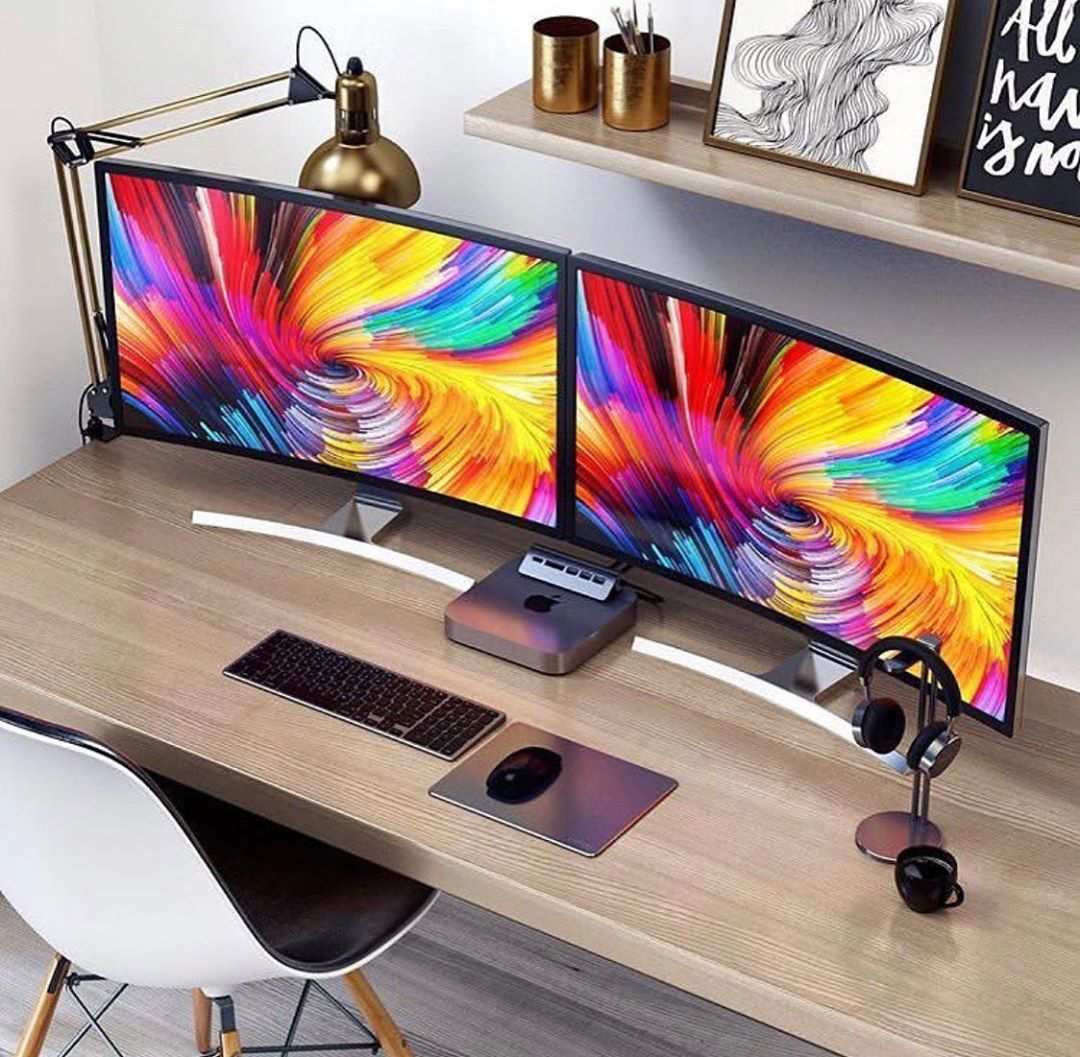
Image source: Bing (Web (fair-use with source credit))
Measure your desk depth first. The ideal viewing distance equals the curvature radius. For a 1500R monitor, sit 1.5 meters (about 59 inches) away. That's too far for most desks.
A more practical distance is 28 to 36 inches. Adjust the monitor position so your eyes are level with the center of the screen.
Center the monitor at eye level. The midpoint of the curve should align with your eyes. If the monitor is too low or high, the curve distorts unevenly. Use a monitor arm for fine adjustment.
Adjust in-game field of view (FOV). A curved screen wraps the image. Lower the FOV in shooters to avoid fisheye effect. In racing games, raise the FOV to match the peripheral coverage.
Calibrate brightness and gamma across the curve. VA panels especially can show brightness falloff at the edges. Use a calibration tool or manual settings. Aim for even luminance left to right.
Reduce glare from side windows. The curve can reflect light from different angles. Position the monitor perpendicular to windows. Use bias lighting behind the monitor to improve perceived contrast.
Use a monitor arm if possible. Curved stands are often bulky. A VESA-compatible arm gives you flexibility to pull the screen closer or farther. Make sure the arm can support the weight (curved panels are heavier than flats of the same size).
Frequently Asked Questions (Straight Answers)
Does a curved monitor give you a competitive advantage?
No. Curved monitors add immersion for single-player games but reduce accuracy in competitive shooters. The edge distortion is small but real.
Professional esports players overwhelmingly choose flat monitors.
Can you use a curved monitor for work too?
Yes, but text can look slightly bent at the edges. Spreadsheets and document editing work fine on mild curves (1500R or 1800R). Aggressive curves (1000R) can make straight lines look curved.
Productivity users often prefer flat.
Do curved monitors cause eye strain?
They can if you sit at the wrong distance. A mismatched curvature radius forces your eyes to compensate. The correct setup reduces eye movement because the edges are equidistant from your eyes.
Measure your desk and match the radius.
Is 1000R too aggressive for a 27-inch screen?
Yes, generally. A 1000R curve needs about 39 inches of viewing distance. At typical desk depths (24 to 30 inches), you sit too close.
The image appears overly bent. Stick with 1500R or 1800R for 27-inch monitors.
Do curved monitors work with console gaming?
They work, but the benefit is minimal. Most consoles output at 16:9 and don't support ultrawide resolutions. You get a curved 16:9 screen with no peripheral wrap advantage.
The aesthetic is the only gain.
Are curved monitors more fragile than flat ones?
Slightly. The curved glass or plastic is under more structural stress. A drop or impact can cause cracks that propagate along the curve.
Handle them carefully during installation. Use a sturdy stand or VESA mount.
The Final Verdict – Should You Buy a Curved Monitor for Gaming?
Here is the decision flow based on what we've covered.
Buy curved if:
- You play mostly single-player RPGs, racing sims, or flight sims.
- Your desk is at least 28 inches deep.
- You want an ultrawide monitor (34 inches or larger).
- Immersion matters more than competitive edge.
Buy flat if:
- You play competitive shooters like Valorant or CS2.
- Your desk is small or you sit close to the screen.
- You plan to use multiple monitors.
- You want the best performance for your budget.
One sentence bottom line: Curved monitors are not objectively better. They are situationally better for gamers who prioritize immersion over pixel-perfect accuracy and who have the desk space to use them properly. If you fit that profile, go curved.
If not, save your money and buy flat.

Similar Posts