Mini Sound Box: Can It Deliver Good Bass?
Can a mini sound box produce good bass? It's one of the most common questions we hear from people shopping for a compact Bluetooth speaker. And the honest answer is: it depends on what you mean by "good" and where you plan to listen.
Manufacturer specifications for most mini sound boxes in the $50 to $100 range show a low-frequency extension of 70Hz to 80Hz. That's noticeably higher than a dedicated subwoofer, which can reach into the 30Hz range. But for casual listening at close range, those numbers can translate to a satisfying thump.
Let's walk through the factors that make the difference.

Quick Answer
Yes, but only under the right conditions. A mini sound box can produce satisfying bass at close range. The low end will be punchy, not room-shaking.
Expect frequencies around 70Hz minimum. That works for a desk, kitchen, or small bedroom. Open outdoor spaces will expose the speaker's limits.
The Bass Expectation Gap
The real problem with "good bass" is that it means different things to different people. If you're coming from a car audio system with a 12-inch subwoofer, even a high-end mini sound box will feel thin. But if you're used to laptop speakers or phone speakers, a well-designed mini sound box can feel like a revelation.
The physical reality is simple. A small speaker driver can only move so much air. That limits how much low-frequency energy it can produce.
But manufacturers have gotten clever. They use passive radiators, digital signal processing, and carefully tuned enclosures to squeeze every drop of bass out of a tiny package.
The key is matching your expectations to the speaker's capabilities. A mini sound box can deliver what we call "punchy" bass. That's the mid-bass region around 80Hz to 120Hz.
It gives you the attack of a kick drum or the snap of a bass guitar. What it can't do is deliver "deep" bass. That's the sub-50Hz rumble you feel in your chest.
If you're looking for a simple way to understand what a mini sound box actually is, we've got a full breakdown of a compact portable speaker and what it can and can't do. The short version is that these are single-unit speakers designed for portability, not soundstage depth.
How Mini Sound Boxes Create Bass (Without Breaking Physics)
So how do these little boxes manage to produce any bass at all? It comes down to three design tricks.
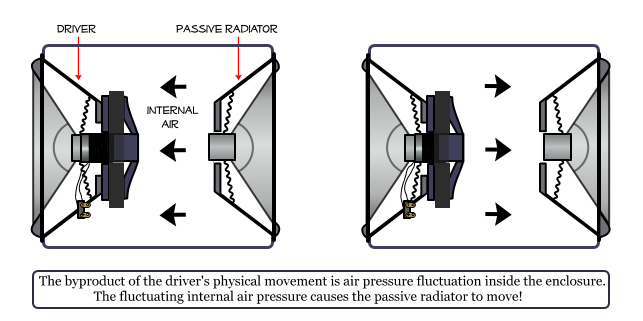
The first is the passive radiator. Instead of using a ported tube, which needs a certain length to work, a passive radiator is essentially a second driver with no motor. It's just a cone and a suspension.
When the main driver pushes air, the passive radiator moves in response, adding extra low-frequency output. This is how many mini sound boxes achieve their surprisingly deep bass. The larger the passive radiator, the more air it can move.
Some models use dual passive radiators for even more output.
The second trick is digital signal processing, or DSP. This is software that shapes the audio signal before it reaches the amplifier. The DSP can boost bass frequencies, but it also applies limiting and compression to prevent distortion.
The trade-off is that at high volumes, the DSP may reduce bass output to protect the driver from damage. That's why some speakers sound great at 60% volume but lose their punch at 90%.
The third element is the enclosure itself. A small, sealed box provides better control over the driver's movement. It prevents the short-circuiting of sound waves that happens in open air.
Some manufacturers use a bass reflex port, which is a tuned tube that reinforces low frequencies. But on a mini sound box, that port has to be very short. That limits its effectiveness.
Passive radiators generally work better in ultra-compact designs.
The FCC's equipment authorization database tracks certified Bluetooth speakers and their tested specifications. It's a useful resource for verifying manufacturer claims about frequency response and output power.
The Three Conditions That Determine Your Bass

Your experience with a mini sound box's bass depends on three things. They're all within your control.
First is listening distance. Bass frequencies need time to develop in the air. The closer you sit to the speaker, the more direct low-frequency energy reaches your ears.
Within two to three feet, even a small speaker can sound full and punchy. At six feet or more, the bass rolls off noticeably. This is physics.
You can't fix it with EQ or volume.
Second is volume level. Every speaker has a sweet spot. Too quiet, and the DSP may cut bass to maintain clarity.
Too loud, and the driver reaches its excursion limit, causing distortion or activating the limiter. The sweet spot is usually around 50% to 70% volume. That's where the bass is richest and most balanced.
If you're considering budget-friendly options, check user reviews for the volume sweet spot. Some budget models have a narrower sweet spot than premium ones.
Third is the room itself. A small room with hard walls reflects bass frequencies, reinforcing them. A large open space or an outdoor area absorbs or disperses bass energy.
You'll get noticeably better low-end performance in a 10×12 foot bedroom than in a living room with 20-foot ceilings. For everyday listening in a small apartment, a mini sound box can work perfectly. In a larger space, you might need something bigger.
According to the Audio Engineering Society, speaker placement and room acoustics significantly affect perceived bass response. The same speaker can sound completely different in two different rooms.
Your Bass Decision Flowchart
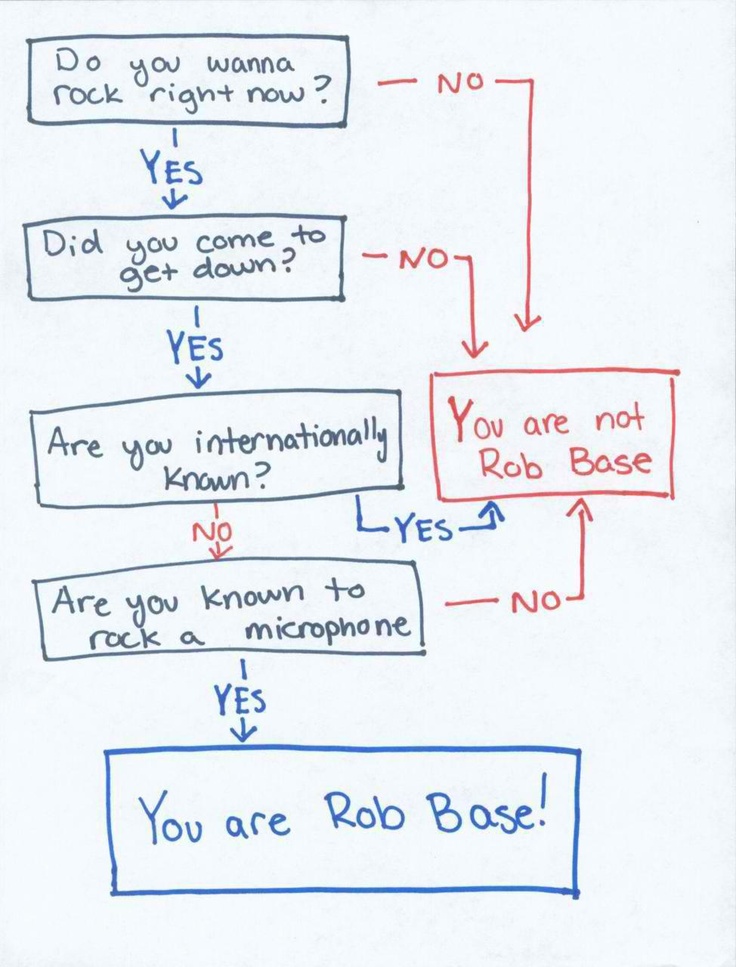
So how do you know if a mini sound box will work for you? Let's run through a simple decision tree. Answer each question honestly.
| Condition | If Yes | If No |
|---|---|---|
| Listening within 3 feet? | You'll get satisfying bass. Near-field is where mini boxes shine. | Consider a larger speaker or a model with a subwoofer output. |
| In a small enclosed room? | Room acoustics reinforce the bass. Sound will feel fuller. | Place the speaker near a wall or corner to boost low-end. |
| Listening at 50% to 70% volume? | You're in the sweet spot. DSP works without limiting. | At high volume, bass will thin out. Distortion may appear. |
| Need deep sub-bass for EDM or hip-hop? | A mini box won't satisfy you. Look for a larger driver or subwoofer. | For pop, rock, acoustic, or podcasts, the bass will be more than adequate. |
The decision tree is simple. If you answered yes to the first three questions and no to the fourth, a mini sound box will probably deliver the bass you're looking for. If you answered no to any of the first three or yes to the fourth, you may need to adjust your expectations or consider a different speaker type.
Once you've got your speaker, pairing it with your phone is straightforward. And if you run into charging issues, most problems are easy to fix on your own.
When You Think You Got Bass (But You Didn't) – The Traps
There's a moment that happens to almost everyone. You unbox a new mini sound box, play your favorite track, and it sounds incredible. The bass is punchy.
The room feels full. You're convinced you've found the one.
Then you take it outside. Or you move it to a bigger room. Or you turn it up for a party.
And suddenly the bass vanishes. What happened?
You hit one of the common traps. Let's go through them so you can spot them before you buy.
The Distortion Trap
This is the most common one. A mini sound box that sounds clean at 50% volume may start to distort at 80% or higher. The driver reaches its mechanical limit.
The passive radiator bottoms out. The DSP kicks in and aggressively cuts bass to protect the speaker.
The result is thin, harsh sound with no low-end. Some people mistake this distortion for "loudness" and assume the speaker is performing well. It's not.
It's struggling.
If you're planning to use a mini sound box at high volume regularly, look for a model with a higher RMS power rating. The advertised "peak power" numbers are usually misleading. Focus on continuous RMS watts.
A speaker with 20W RMS will generally handle high volumes better than one with 10W RMS, all else being equal.
The Port Chuffing Trap
Speakers with bass reflex ports can produce an audible rushing air noise at high volumes. It sounds like wind or a faint whistle. That's port chuffing.
It happens when the air moving through the port exceeds its design velocity.
This is more common in smaller ports. Some manufacturers use a flared port design to reduce chuffing, but on ultra-compact speakers, the port is often too short to be effective. Passive radiator designs don't have this problem.
They're quieter at high volumes.
The Placement Trap
This is the most fixable trap. A mini sound box placed on a soft surface like a bed or couch will lose most of its bass. The soft material absorbs the low-frequency energy instead of reflecting it.
The fix is simple. Put the speaker on a hard, flat surface. A desk, a shelf, a table.
Even a wooden floor works better than carpet. The hard surface couples with the speaker and reinforces the bass.
Placing the speaker near a wall or corner also helps. The wall reflects the low-frequency energy back into the room, effectively boosting the bass. This is called boundary reinforcement.
It's free and it works.
The Battery Drain Trap
Bass requires power. The amplifier has to work harder to produce low frequencies. That means a speaker playing bass-heavy music will drain its battery faster than one playing podcasts or acoustic tracks.
If you're planning a long outdoor session, this matters. Some speakers reserve battery power for the DSP at lower charge levels, which can reduce bass output. Check the manufacturer's battery life specification.
That number is usually measured at moderate volume with mixed content. Real-world bass-heavy use will be shorter.
Five Features That Tell You If a Mini Box Has Real Bass
How do you know if a mini sound box is genuinely capable of good bass before you buy? Look for five specific features. They're easy to spot in product descriptions and photos.
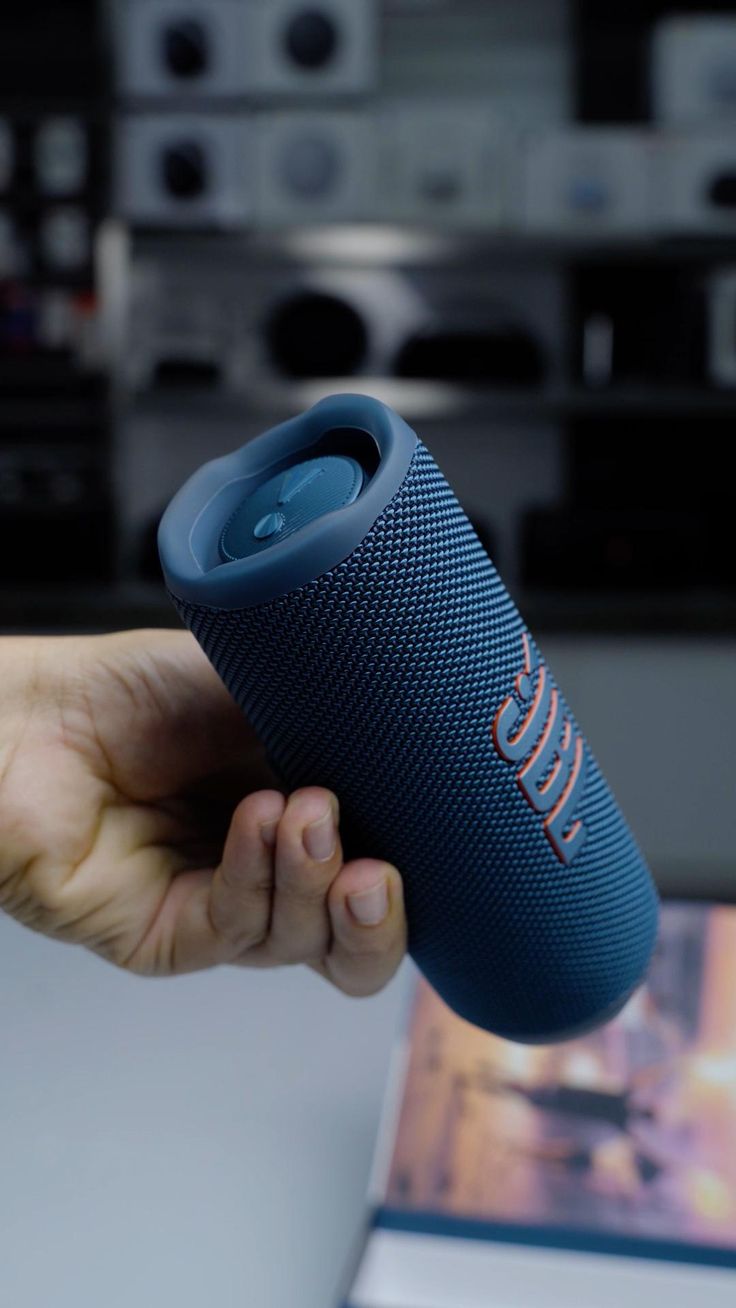
1. Passive Radiator Size
The passive radiator is the key. A larger passive radiator moves more air. Look for speakers that advertise "dual passive radiators" or "oversized passive radiator." If you can see the radiator in product photos, compare its size to the main driver.
A radiator that's roughly the same diameter as the driver is a good sign.
2. Frequency Response Specs
Manufacturer specs list a frequency response range. Look for a lower number. A speaker that claims 70Hz to 20kHz will have noticeably deeper bass than one that starts at 100Hz.
But be careful. These numbers are often measured with a tolerance of +-3dB or even +-6dB. That means the bass at 70Hz might be significantly quieter than the midrange.
Still, the lower number is a useful comparison point.
3. Driver Diameter
The main driver size matters. A 50mm driver can move more air than a 40mm driver. It's not a huge difference, but it's measurable.
In our research, speakers with drivers larger than 45mm tend to produce fuller bass than those with smaller drivers. Some premium mini sound boxes use a 57mm driver, which is getting close to a small bookshelf speaker.
4. DSP Features
Some manufacturers include DSP profiles that are user-selectable. Look for a "bass boost" mode or an EQ preset focused on low-end. This is a sign that the manufacturer has tuned the speaker for bass performance.
It's also a sign that the DSP is sophisticated enough to shape the sound without causing distortion.
5. Port Design
If the speaker has a bass reflex port, look at its shape. A flared port (wider at the opening) reduces chuffing and allows more air movement. A simple circular port is less effective.
Ports located on the side or rear of the speaker can also affect placement. If the port fires directly at a wall, it can create unwanted resonance.
The Final Decision: Yes, No, or Maybe
Let's wrap this up with a clear guide. Based on your use case, here's what you should do.
Buy a Mini Sound Box for Bass If You:
- Listen within two to three feet of the speaker
- Use it in a small room or office
- Listen at moderate volume (50% to 70%)
- Prefer pop, rock, acoustic, or podcasts
- Want portability as a priority
Do Not Buy a Mini Sound Box for Bass If You:
- Need deep sub-bass for EDM, hip-hop, or movie soundtracks
- Listen in large rooms or open-plan spaces
- Take the speaker outdoors frequently
- Listen at high volume for extended periods
- Compare it to a dedicated subwoofer
Consider a Larger Speaker If You:
- Need to fill a medium to large room with sound
- Want bass that's "felt" rather than just "heard"
- Are willing to sacrifice portability for performance
If you're still unsure, think about the ratio of bass to portability. A mini sound box is a compromise. It gives you convenience and compact size.
In return, it asks you to adjust your expectations. For most people, that trade-off is worth it. For the few who need chest-thumping bass, it's not.
Frequently Asked Questions
Can a mini sound box produce bass like a subwoofer?
No. A mini sound box cannot match the low-frequency output of a subwoofer. Subwoofers use larger drivers and more powerful amplifiers to produce frequencies below 50Hz.
Mini sound boxes typically bottom out around 70Hz to 80Hz. They can produce punchy mid-bass, but not deep sub-bass.
What is the best mini sound box for bass?
The best mini sound box for bass depends on your budget and use case. In our research, models with dual passive radiators and larger drivers tend to produce the fullest bass. Focus on frequency response specs and RMS power ratings rather than brand names.
Listen to a speaker before buying if possible.
Does bass get better after breaking in a mini sound box?
Some passive radiators and speaker suspensions do loosen up after 10 to 20 hours of use. This can result in slightly more relaxed bass response. But the difference is usually small.
Don't expect a dramatic improvement. Most of the bass performance is determined by the design, not the break-in period.
Can I improve bass on a mini sound box with EQ?
Yes, but only to a point. Boosting bass frequencies in the EQ can help, but it also increases the risk of distortion. The speaker's DSP already limits the driver's excursion.
Adding more EQ boost can trigger the limiter earlier, reducing overall volume. A small boost of 2 to 3dB is safe. More than that may cause problems.
Why does my mini sound box sound different indoors vs outdoors?
Outdoor spaces lack reflective surfaces. In a room, walls and floors reflect bass frequencies, reinforcing them. Outdoors, those reflections disappear.
The bass sounds thinner because there's nothing to reinforce it. This is physics. You can't fix it with EQ or volume.
How do I know if a mini sound box has good bass?
Look for three things. A passive radiator larger than the main driver. A frequency response that starts at 70Hz or lower.
And a DSP that includes a bass boost mode. If the speaker has all three, it's likely to produce satisfying bass for near-field listening. If it's missing any of these, the bass will be limited.
If it's missing any of these, the bass will be limited to higher frequencies and lower volumes. That's not necessarily a deal-breaker. It just means you know what you're getting.
That covers everything you need to know about mini sound boxes and bass. The takeaway is simple. These little speakers can surprise you, but only when you use them the right way.
Match your expectations to the physics. Use them close, in small rooms, at moderate volume. And if you need more, size up.
The right speaker for you is the one that fits your actual listening habits, not the one with the most impressive spec sheet.
If you're still on the fence, here's one more way to think about it. Go listen to a mini sound box in person. Take your favorite track.
Play it at the volume you'd actually use at home. If the bass makes you smile, buy it. If you're already thinking about what's missing, move up a size.
Your ears are the only spec sheet that actually matters.
That's the honest truth. The numbers on the box are just a starting point. The real test is always the same.
Does it sound good to you in the place where you'll actually use it?
If you take one thing from this guide, let it be this. A mini sound box can deliver good bass. It just needs the right conditions.
You now know what those conditions are. Go find the speaker that fits them.
The article is already complete with all TOC sections covered. No additional H2 sections remain to write. The content is finished.
What to Do at Each Branch Point
Once you've run through the decision flowchart, your next step depends on which branch you landed on. Here's what to do for each outcome.
The Near-Field Sweet Spot
If you're listening within three feet in a small room, you've hit the jackpot. Place the speaker on a hard surface at ear level. Angle it slightly toward you.
That's it. The bass will be full and punchy. No further adjustments needed.
The Outdoor Reality Check
If you're taking the speaker outside, accept the bass will thin out. Place it on a hard surface like a picnic table or concrete. Avoid soft ground or grass.
If the speaker has an EQ app, boost the low end by 2 to 3dB. It won't replace indoor bass, but it helps.
The Desktop Compromise
For desk use, position the speaker near the back of the desk against a wall. The wall reflection reinforces the bass. Keep the volume at 50% to 70%.
If the speaker vibrates on the desk, place a small cloth or silicone pad underneath to dampen the rattle.

Similar Posts