Are HDR Monitors Better Than OLED
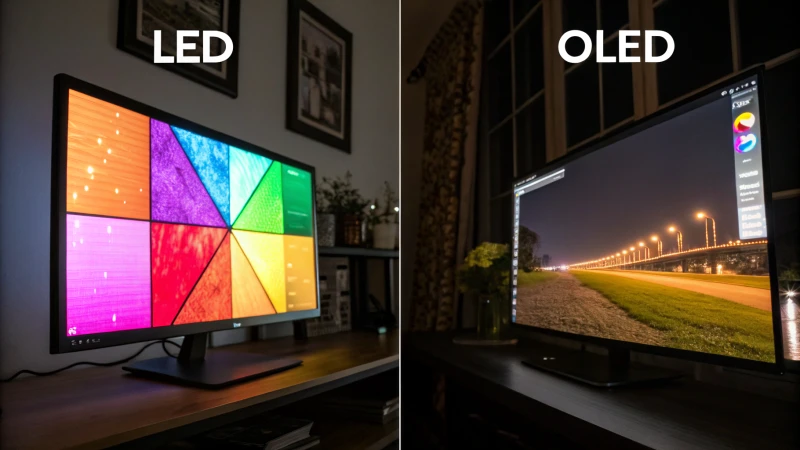
Are HDR monitors better than OLED? That's the question that trips people up, and honestly, it's the wrong way to frame the comparison. HDR is a capability. OLED is a panel technology.
They're not mutually exclusive. The real question you're probably asking is whether a high-end HDR LED monitor or an OLED monitor is the better fit for your needs. That's a much more useful way to think about it, and that's exactly what we'll break down here.
VESA's DisplayHDR certification standard defines tiers from DisplayHDR 400 up to DisplayHDR 1400, and here's the thing: OLED monitors can carry those certifications too. So the actual decision comes down to how each technology delivers that HDR experience. Let's walk through the real differences so you can make a smart call.
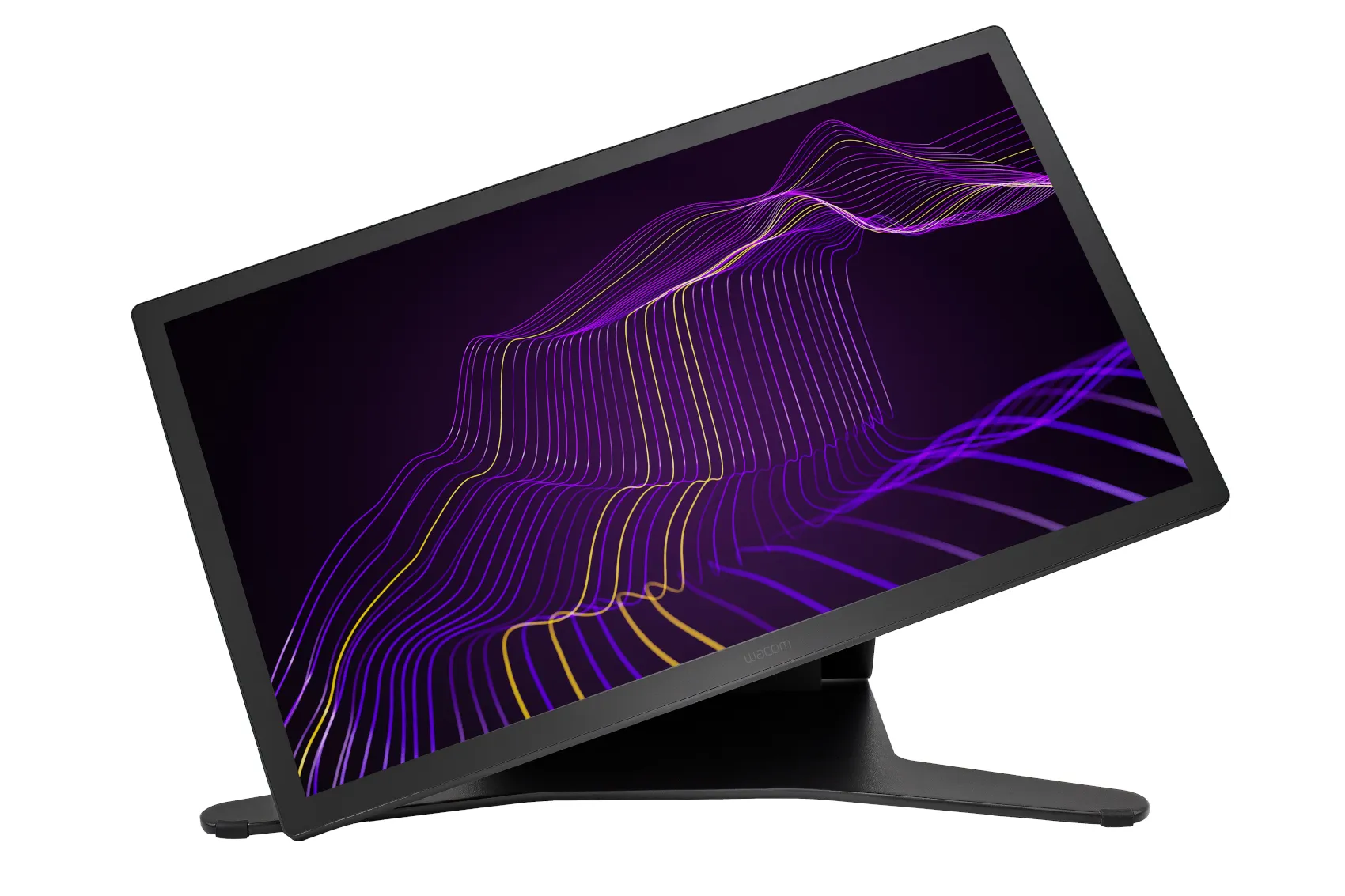
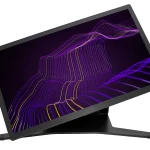
Image source: Bing (Web (fair-use with source credit))
Quick Answer
No, HDR monitors are not better than OLED monitors. The comparison itself is misleading. HDR is a feature set, not a competing technology.
OLED monitors can deliver excellent HDR performance. Your choice should be between OLED and high-end LED backlit HDR monitors. Each has distinct strengths depending on your use case.
The Real Comparison: OLED vs. High-End HDR LED Monitors
When people ask this question, what they're really weighing is OLED against the best LED-backlit HDR monitors on the market. Think Mini-LED panels with full-array local dimming, or high-end IPS panels carrying DisplayHDR 1000 or DisplayHDR 1400 certifications. Those are OLED's actual competitors.
OLED uses self-emitting pixels. Each pixel produces its own light and can turn off completely. High-end HDR LED monitors use a backlight behind the panel, and the best ones divide that backlight into hundreds or thousands of dimming zones.
The more zones, the more precisely the monitor can control brightness across the screen.
Here's where it gets interesting. A Mini-LED monitor with 1152 or more dimming zones can get remarkably close to OLED's contrast performance. It won't match per-pixel precision, but for most real-world content, the difference is smaller than you'd expect.
Meanwhile, those LED panels can sustain much higher peak brightness across the entire screen, which matters a lot for HDR highlights.
The market as of 2026 has matured enough that both technologies are genuinely excellent. Your decision depends on what you prioritize: absolute pixel-level control or raw sustained brightness.
Peak Brightness: Where LED Pulls Ahead

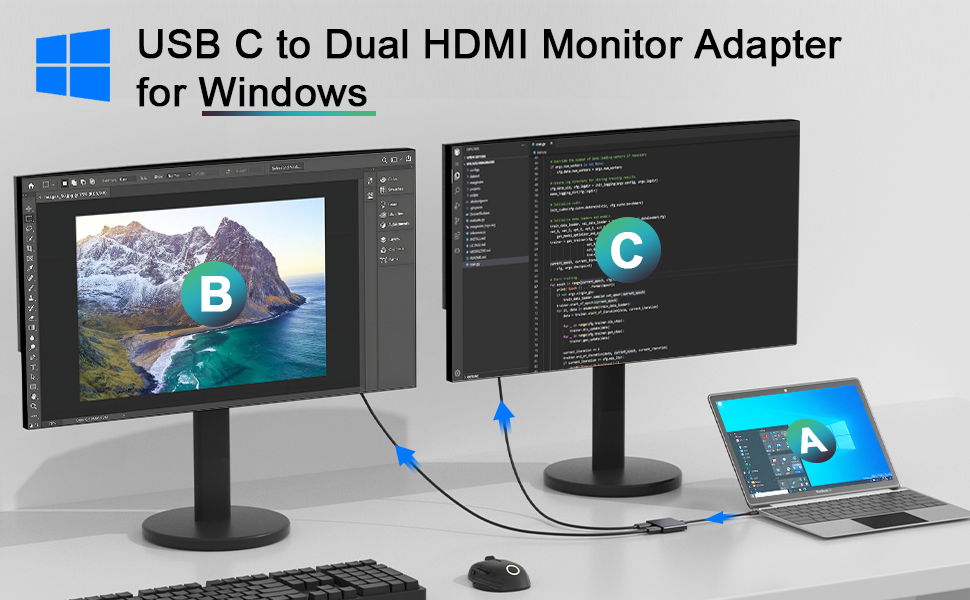
Image source: Wikimedia Commons / OS: Microsoft Corporation Screenshot: PantheraLeo1359531 😺 (talk)
This is the single biggest advantage high-end HDR LED monitors hold over OLED. Sustained peak brightness determines how punchy HDR highlights look, how well specular reflections pop in games, and how convincing sunlight and explosions appear in movies.
Manufacturer specifications and independent testing tell the story clearly:
| Metric | OLED (WOLED/QD-OLED) | Mini-LED HDR (FALD) |
|---|---|---|
| Full-screen sustained brightness | 200–350 nits | 600–1,200+ nits |
| Small highlight peak (10% window) | 800–1,000 nits | 1,000–2,000+ nits |
| 100% white window (10 min) | 150–250 nits (ABL kicks in) | 500–1,000+ nits |
That ABL, or Automatic Brightness Limiter, is built into every OLED panel. It's a protective mechanism that reduces brightness as more of the screen lights up. It prevents excessive heat and extends the lifespan of the organic materials.
But it means an OLED monitor showing a bright white webpage or a snowy landscape in a game will dim noticeably compared to a small specular highlight on a dark scene.
Mini-LED monitors don't have this limitation the same way. A backlight with dedicated zones can push serious brightness across large areas simultaneously. For HDR content where you want bright highlights against a bright background, this matters enormously.
A DisplayHDR 1400 certified Mini-LED monitor can hit 1,400 nits in sustained highlights, something no current OLED panel can match.
If your room is bright, if you work with HDR content professionally, or if you simply want the most impactful HDR experience possible, sustained brightness is where LED-based HDR monitors earn their keep.
Image source: Wikimedia Commons / OS: Microsoft Corporation Screenshot: PantheraLeo1359531 😺 (talk)
Contrast and Black Levels: OLED's Unmatched Strength
Now let's flip the script. When it comes to black levels and contrast, OLED is in a league of its own, and it's not particularly close.
Each pixel on an OLED panel is its own light source. When that pixel needs to display black, it turns off. Completely.
The result is a true, absolute black with zero light output. This gives OLED an effectively infinite contrast ratio. There's no backlight bleed, no haloing around bright objects on dark backgrounds, and no blooming.
High-end Mini-LED monitors have improved dramatically. A panel with 5,120 dimming zones does an impressive job approximating per-pixel control. But physics is physics.
Even with thousands of zones, each zone still covers multiple pixels. A bright starfield scene, white subtitles on a black background, or a cursor on a dark UI will still show some degree of blooming around the edges. It's subtle on the best panels, but it's there.
For dark-room viewing, horror games, space sims, or any content with lots of shadow detail, OLED's advantage is immediately visible. Near-black performance, how the panel handles gradients just above black, is also superior on OLED. Mini-LED panels can exhibit a slight glow or unevenness in near-black tones that OLED simply doesn't have.
If you consume a lot of content in dim or dark environments, OLED's contrast advantage is the single most compelling reason to choose it. No amount of dimming zones fully replicates what per-pixel emission does.
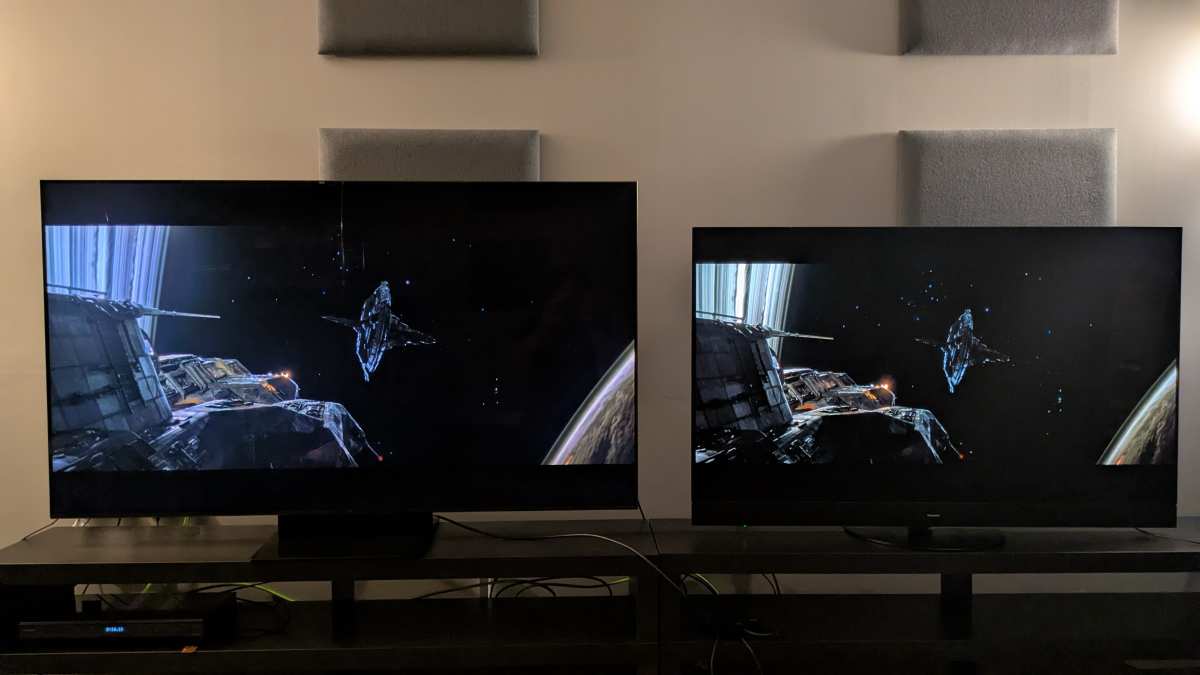
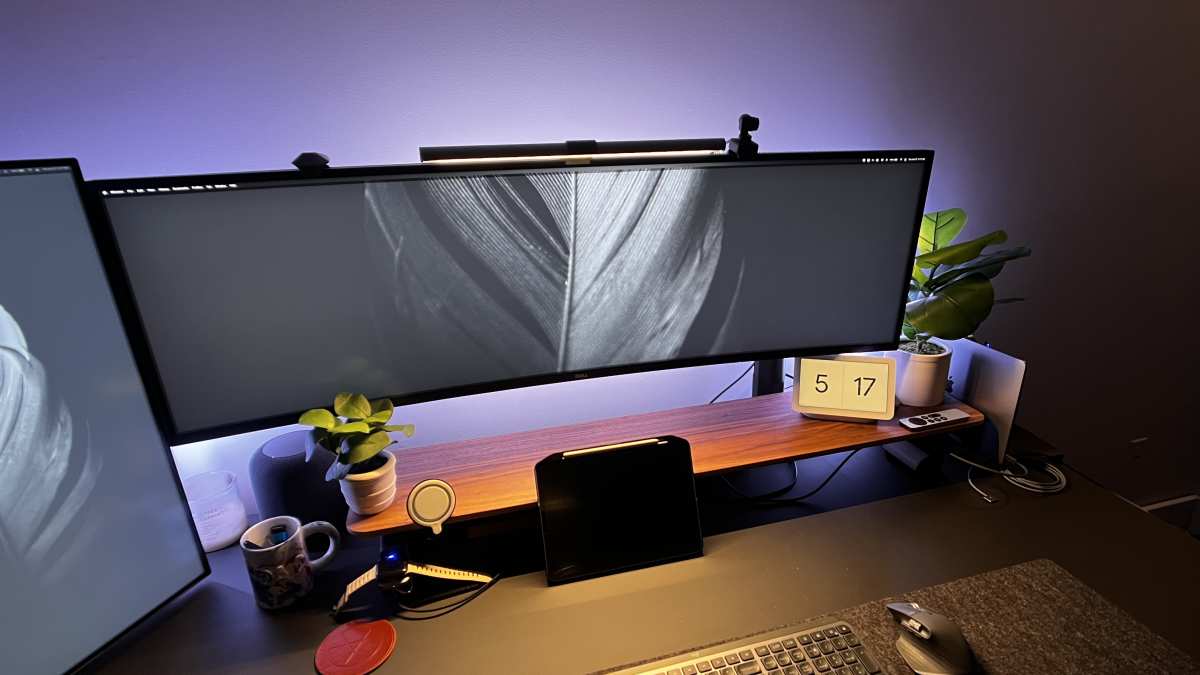
Image source: Bing (Web (fair-use with source credit))
Response Time and Motion Clarity: OLED Wins for Gaming
Gamers care deeply about motion clarity, and this is another area where OLED dominates.
OLED panels routinely achieve gray-to-gray response times of around 0.1 milliseconds. That's roughly 50 times faster than the best IPS panels and 10 times faster than VA panels. What this means in practice is almost zero motion blur, no ghosting trails behind fast-moving objects, and exceptionally clean image pans.
High-end Mini-LED monitors use IPS or VA panels for the actual LCD layer. The best IPS options hit 1ms GtG, which is very good. But they still can't match OLED's near-instantaneous pixel transitions.
VA panels offer better native contrast than IPS but tend to exhibit more smearing in dark transitions, which is noticeable in games with lots of shadow movement.
For competitive gaming where every millisecond matters, OLED is the clear winner. The combination of near-zero response times, infinite contrast, and excellent viewing angles makes it ideal for fast-paced shooters, racing games, and anything where motion clarity is paramount.
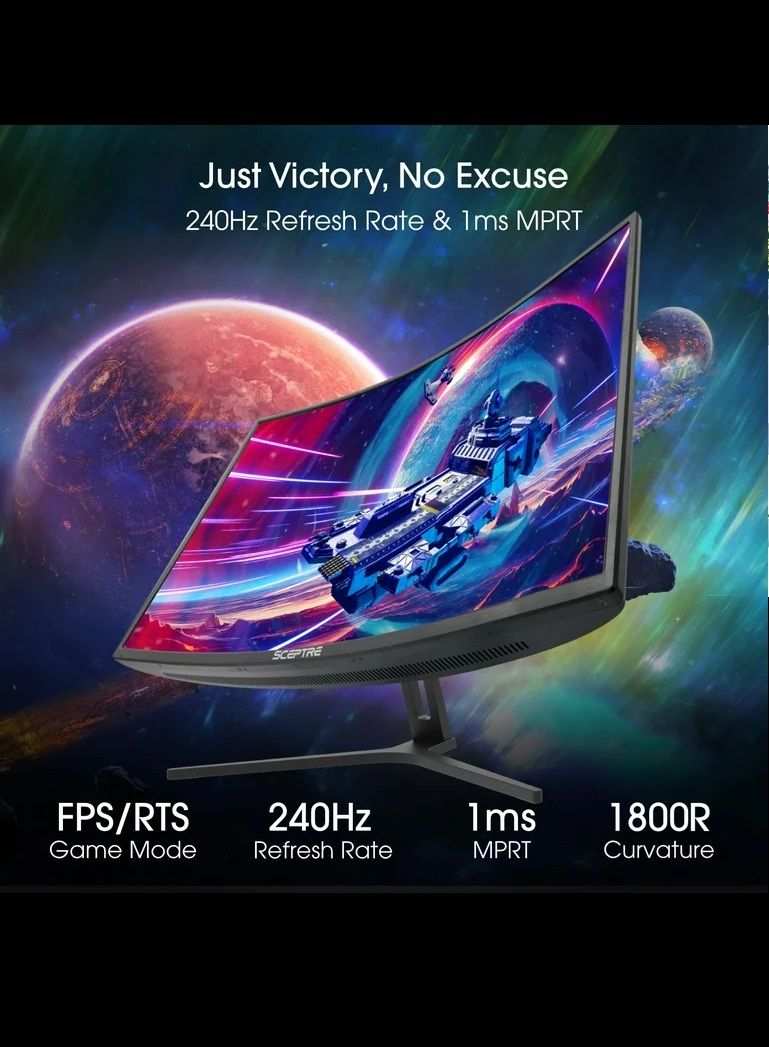
That said, Mini-LED monitors often offer higher refresh rates. While top OLED panels currently max out around 240Hz (with some QD-OLED panels reaching 360Hz in development), Mini-LED IPS panels are available at 360Hz and beyond. If you're a competitive esports player who prioritizes raw refresh rate over pixel response time, a high-refresh Mini-LED panel might serve you better.
The sweet spot for most gamers is a 240Hz OLED. You get the best of both worlds: blazing fast response times and a refresh rate that covers the vast majority of competitive scenarios.
Color Accuracy and Gamut: Excellent on Both, for Different Reasons
Both technologies deliver outstanding color performance, but they get there differently.
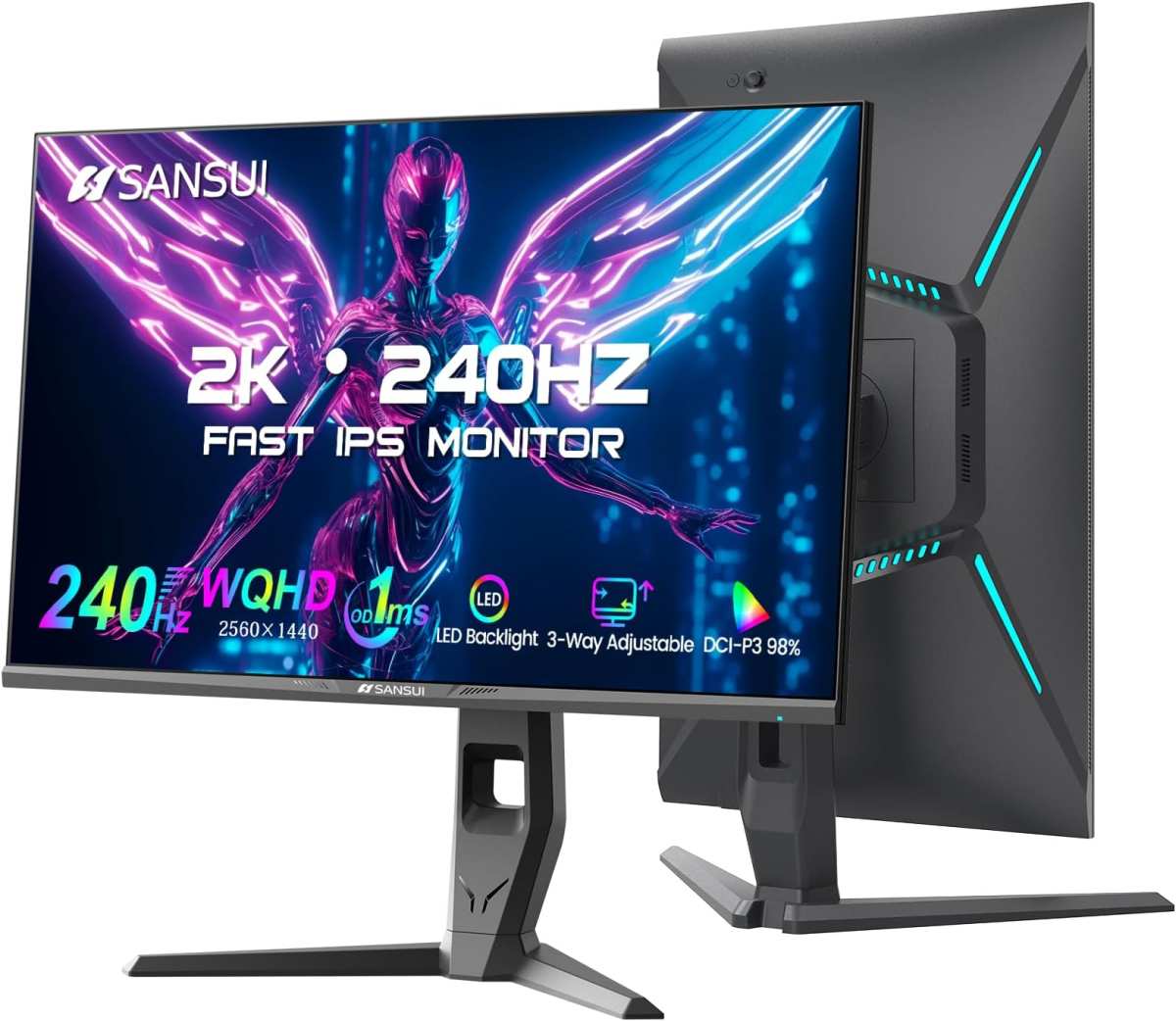
QD-OLED panels, like those manufactured by Samsung Display, use a blue emitter combined with quantum dot color conversion. This produces exceptionally pure primary colors and covers roughly 99% of the DCI-P3 color space. The result is vivid, saturated color that's immediately striking.
WOLED panels, produced by LG Display, use a white OLED layer with a color filter. They still cover approximately 98-99% of DCI-P3, but the color volume can differ slightly from QD-OLED, particularly in extreme saturation.
High-end Mini-LED monitors with IPS panels typically use quantum dot enhancement films as well. They can match or exceed 95-98% DCI-P3 coverage. The difference between a good Mini-LED and an OLED in color accuracy is negligible for most users.
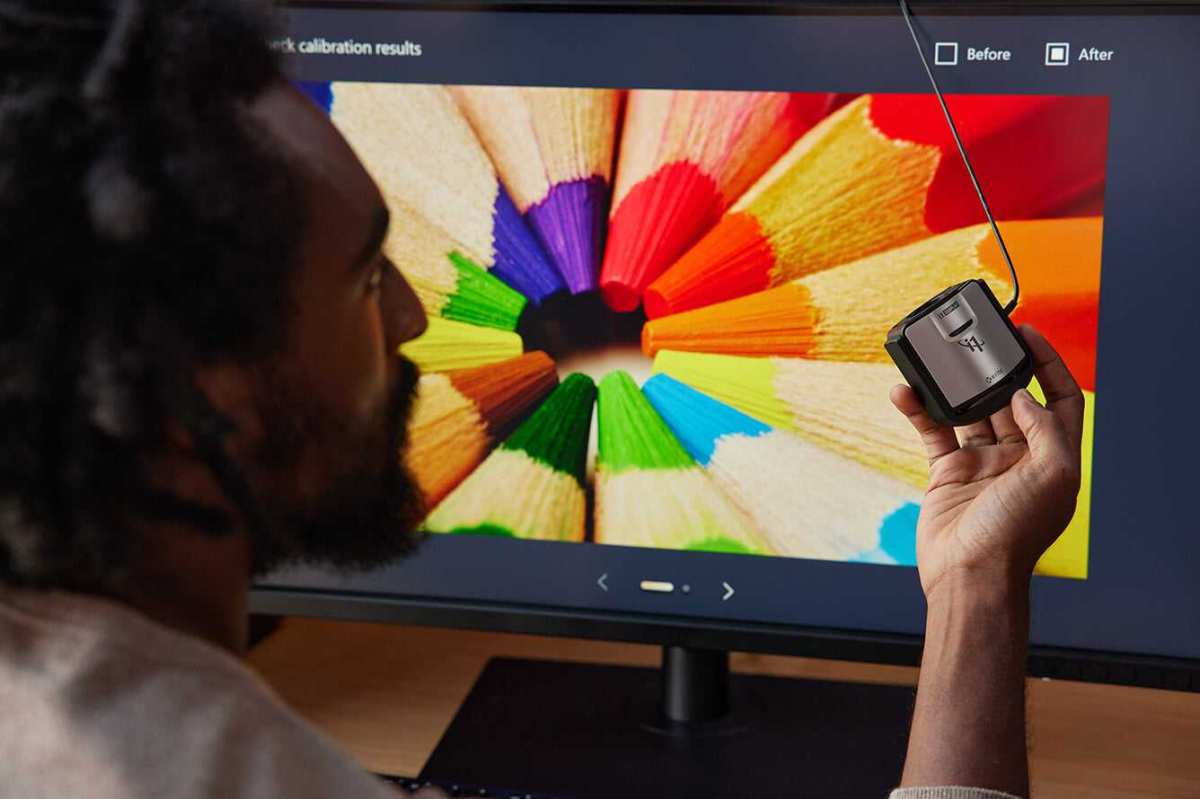
Where it gets practical is in professional use. Factory calibration matters more than panel technology. A professionally calibrated Mini-LED monitor from a line like ASUS ProArt or EIZO can achieve Delta E values below 1.0, which is reference-grade.
OLED monitors from professional lines achieve similar results.
For color-critical work like photo editing, video color grading, or print design, both technologies are capable of professional-grade accuracy. Your choice here should come down to the specific monitor's calibration and certification rather than the underlying panel technology.
Burn-In Risk: The OLED Elephant in the Room
Burn-in is the concern that keeps coming up with every OLED purchase conversation, and it deserves an honest look.
Burn-in, more accurately called permanent image retention, happens when static elements display in the same position for hundreds or thousands of hours. The organic compounds in those pixels degrade faster than surrounding ones. Over time, a faint ghost of that static image becomes permanently visible.
Think taskbars, channel logos, or game HUDs that leave a shadow after extended use.
Modern OLED monitors include mitigation strategies. Pixel shift technology subtly moves the image by a few pixels periodically. Pixel refresh routines run automatically to even out wear.
ABL helps by limiting sustained brightness. Manufacturer warranties on newer models increasingly cover burn-in, which wasn't always the case.
That said, the risk is real for specific use cases. If you plan to use your monitor primarily for desktop work with static toolbars, spreadsheets with fixed layouts, or as a secondary display showing a dashboard 24/7, OLED may not be the best fit. The organic materials will degrade unevenly, and you'll see it within a year or two under heavy static use.
For gaming, movie watching, and general mixed content, burn-in risk is manageable. Aggregate user reviews and long-term testing from display-focused outlets suggest that typical users who vary their content will not experience meaningful burn-in within the practical lifespan of the monitor. But it's a non-zero risk, and you should factor it in.
Text Clarity and Subpixel Layout: A Hidden OLED Drawback
Here's something most comparison articles skip, and it matters a lot if you spend your day reading text.
Standard RGB panels arrange red, green, and blue subpixels in a stripe pattern. This is what operating systems expect for text rendering. Most OLED monitors don't use standard RGB.
LG's WOLED panels use a WRGB layout with an added white subpixel. Samsung's QD-OLED uses a triangular RGB delta arrangement.
These non-standard layouts cause visible text fringing, particularly on small font sizes. Windows' ClearType text rendering is optimized for RGB stripe panels. On OLED, colored halos can appear along the edges of text characters.
It's subtle on some panels and quite noticeable on others.
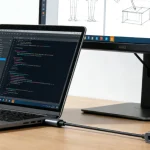
Mini-LED monitors use standard IPS or VA panels with conventional RGB stripe subpixel layouts. Text rendering is clean and sharp without any special tuning. For software developers, writers, or anyone who stares at text for hours, this is a meaningful practical advantage.
You can mitigate OLED text fringing by adjusting ClearType settings or using macOS, which handles subpixel rendering differently. But out of the box, a Mini-LED IPS monitor will generally deliver cleaner, sharper text. If text clarity is a priority, this is worth testing before committing to OLED.
Side-by-Side Comparison Table
Here's a direct breakdown of how these technologies stack up across the specs and features that actually matter:
| Feature | OLED (WOLED/QD-OLED) | Mini-LED HDR (FALD IPS) |
|---|---|---|
| Black levels | Perfect (pixel off) | Very good (zone dimming) |
| Contrast ratio | Effectively infinite | 100,000:1 to 1,000,000:1 |
| Sustained full-screen brightness | 200–350 nits | 600–1,200+ nits |
| Peak HDR highlight brightness | 800–1,000 nits | 1,000–2,000+ nits |
| Response time (GtG) | ~0.1ms | 1–5ms |
| Color gamut (DCI-P3) | ~99% | ~95–98% |
| Color accuracy (Delta E) | <1.0 (calibrated) | <1.0 (calibrated) |
| Burn-in risk | Present (low with varied content) | None |
| Text clarity (subpixel) | Moderate (non-standard layout) | Excellent (RGB stripe) |
| Refresh rate (current max) | 240–360Hz | 360–500Hz |
| Price range (27–32 inch) | $800–$1,500 | $600–$2,000+ |
| HDR format support | HDR10, Dolby Vision (varies) | HDR10, HDR10+, Dolby Vision (varies) |
| Best use case | Dark-room HDR, gaming, movies | Bright rooms, static content, HDR highlights |
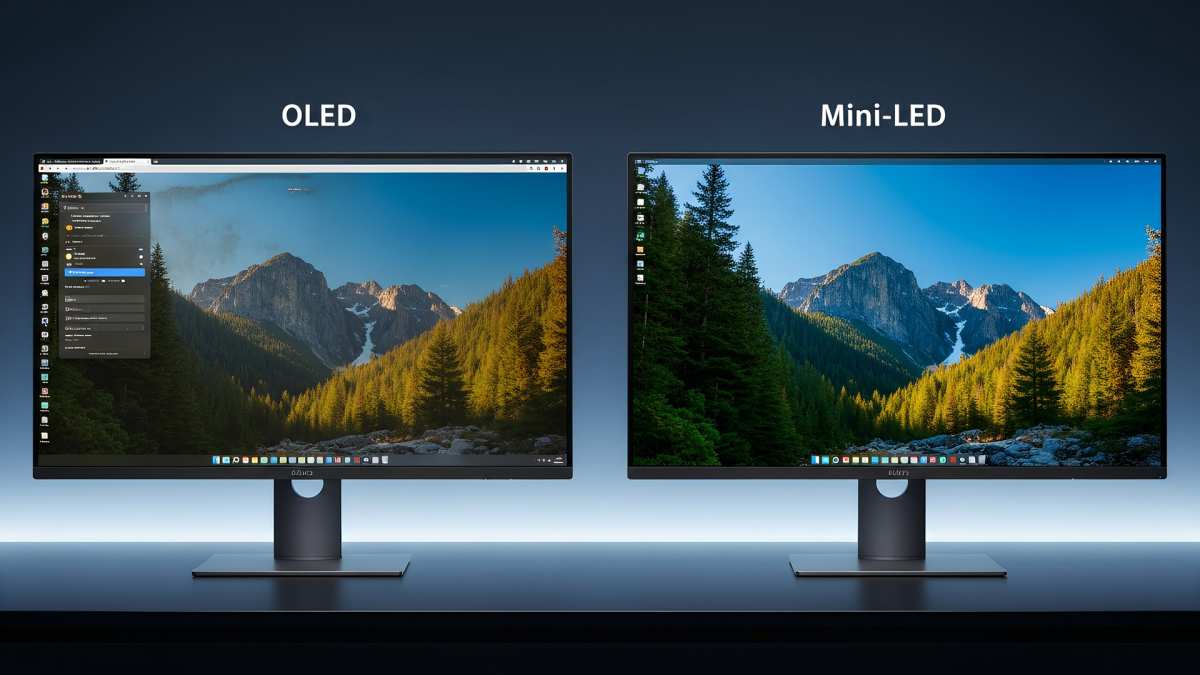
Image source: Bing (Web (fair-use with source credit))
Who Should Buy an OLED Monitor
OLED monitors are the right choice for specific users, and they're genuinely the best option for those users.
You should seriously consider OLED if you primarily game in dim or dark environments. The infinite contrast and near-zero response times create an immersive experience that Mini-LED simply cannot match. Horror games, space sims, and atmospheric single-player titles look stunning on OLED.
Video editors and colorists working with HDR content will appreciate OLED's per-pixel precision. Shadow detail in HDR grading is more accurate when there's no backlight bleed to contend with. If your workflow involves mastering Dolby Vision or HDR10+ content, OLED gives you a more truthful representation of what viewers will see on OLED televisions.
Movie enthusiasts who use their monitor as a display for film consumption should lean OLED. The combination of perfect blacks, wide viewing angles, and excellent color reproduction makes it the closest thing to a cinema experience on a desktop.
Just be honest about your usage patterns. If your screen is mostly static toolbars, browser windows, and code editors, the burn-in risk and text fringing may outweigh the visual benefits.
Who Should Buy a High-End HDR LED Monitor
High-end HDR LED monitors, particularly Mini-LED with full-array local dimming, serve a different set of needs extremely well.
If you work in a bright room with lots of ambient light, the sustained brightness advantage of Mini-LED is hard to overstate. An OLED panel at 250 nits full-screen will look washed out next to a Mini-LED pushing 800 or 1,000 nits. For daytime productivity and content creation in well-lit spaces, LED wins.
Professionals who display static content for long periods should choose Mini-LED. Software developers, financial analysts with fixed dashboards, and anyone with a taskbar-heavy workflow will avoid the burn-in anxiety entirely. The peace of mind alone is worth it for many users.
Budget-conscious buyers who still want strong HDR performance have more options in the Mini-LED space. A solid Mini-LED HDR monitor with DisplayHDR 1000 certification can be found for less than a comparable OLED, and you get a larger selection of screen sizes and aspect ratios.
Competitive esports players who prioritize raw refresh rate over response time should look at high-refresh Mini-LED IPS panels. At 360Hz or above, the motion clarity is excellent even if it doesn't match OLED's pixel response. The higher refresh rate provides a tangible advantage in fast-paced competitive scenarios.
Common Mistakes People Make When Choosing
The most common mistake is buying based on specs alone without considering your actual environment. A 27-inch OLED monitor with DisplayHDR True Black 400 certification is a fantastic display. But if your desk sits next to a large window with direct sunlight, you'll never see those perfect blacks because the room's ambient light washes them out.
Match the display to your room.
Another mistake is assuming all HDR monitors are created equal. DisplayHDR 400 certification is barely a step above SDR. The local dimming is minimal, the peak brightness is low, and the color gamut improvement is marginal.
If you're buying specifically for HDR, look at DisplayHDR 1000 or higher. That's where the meaningful HDR experience begins.
People also overlook the importance of tone mapping. How a monitor handles the transition between SDR and HDR content, and how it maps HDR metadata to the panel's capabilities, varies enormously between manufacturers. Two monitors with the same DisplayHDR certification can deliver noticeably different HDR image quality based on their tone mapping implementation.
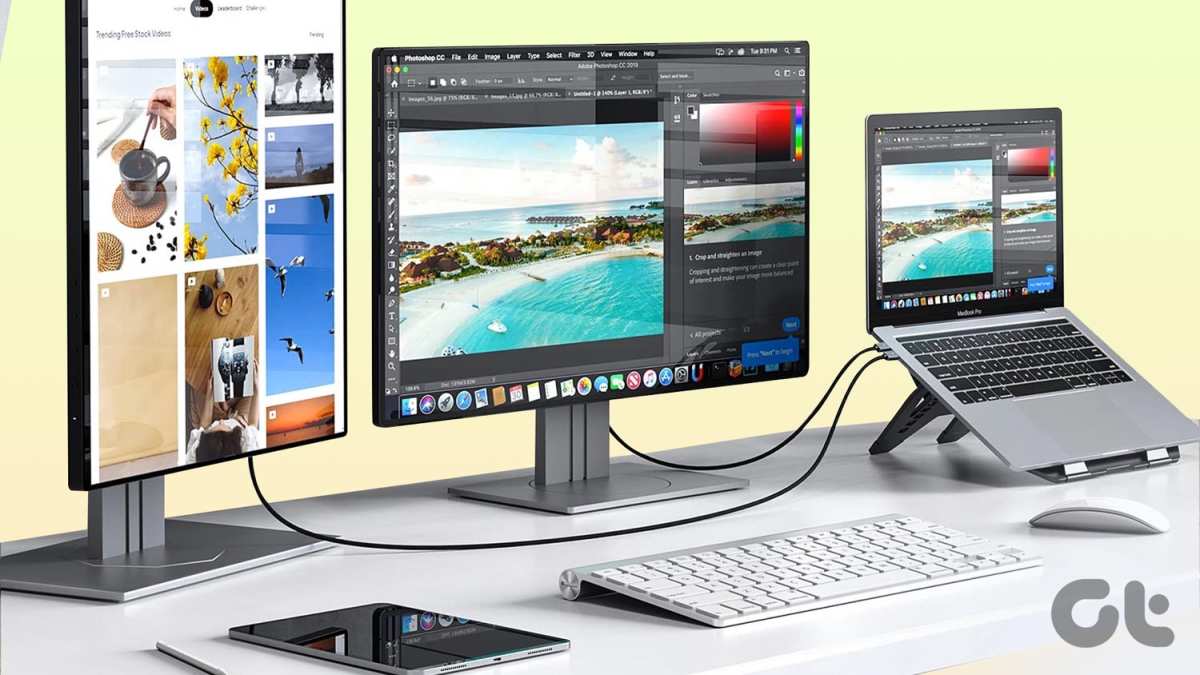
Finally, don't ignore ergonomics and connectivity. OLED monitors tend to be thinner and lighter, which matters for arm mounting. Mini-LED monitors can be thicker and sometimes have fans in the chassis for cooling.
Check the physical dimensions, weight, and port selection before buying.
Costs and Pricing Reality
As of 2026, OLED monitors have dropped significantly in price, but a premium remains.
A solid 27-inch QD-OLED monitor with 240Hz refresh and DisplayHDR True Black 400 certification typically runs $800 to $1,100. Stepping up to 32-inch 4K OLED at 240Hz pushes the price to $1,200 to $1,800. The 42-inch and 45-inch ultrawide OLED options aimed at immersive gaming and productivity sit in the $1,400 to $2,500 range.
Mini-LED HDR monitors offer more flexibility at different price points. A 27-inch Mini-LED with DisplayHDR 1000 and 144Hz refresh can be found for $600 to $900. At the high end, a 32-inch 4K Mini-LED with DisplayHDR 1400 and 240Hz costs $1,200 to $2,000.
You get more size options and tier choices with Mini-LED.
The value proposition depends on what you need. For pure HDR visual impact in dark rooms, OLED delivers more per dollar spent. For bright-room versatility and static content safety, Mini-LED gives you more headroom for your budget.
How to Decide Based on Your Primary Use Case
Here's a straightforward decision framework based on what you actually do with your monitor.
Gaming in a dark room: Choose OLED. The infinite contrast and near-zero response times are unmatched. You'll see the difference immediately in atmospheric games.
Gaming in a bright room: Lean Mini-LED. The sustained brightness advantage means HDR highlights actually pop instead of getting washed out by ambient light.
Professional photo/video editing: Either works if properly calibrated. OLED gives you more accurate shadow representation. Mini-LED gives you better highlight accuracy in bright scenes.
Choose based on your typical content.
Office productivity and coding: Go Mini-LED. The text clarity advantage and zero burn-in risk make it the safer long-term investment for static content.
Mixed use (gaming, movies, some work): OLED is the better all-rounder if you vary your content and don't leave static images on screen for hours at a time.
Frequently Asked Questions
Can an OLED monitor be used for HDR content creation?
Yes, many professional OLED monitors support HDR10 and Dolby Vision. Their per-pixel dimming makes them excellent for HDR mastering, particularly for shadow detail. Just ensure the monitor is hardware-calibrated and covers the required color gamut for your deliverables.
How long does an OLED monitor last before burn-in becomes an issue?
Manufacturer specifications suggest 30,000 to 100,000 hours before significant organic degradation. With varied content and proper pixel management, most users report no meaningful burn-in within a typical 4 to 6 year upgrade cycle. Static content users should consider this more carefully.
Is DisplayHDR 400 good enough for real HDR?
DisplayHDR 400 is a minimal certification that offers limited improvement over SDR. For a genuinely impactful HDR experience, look for DisplayHDR 1000 or higher. That's where you get the peak brightness, local dimming, and color volume that make HDR content look meaningfully different.
Do Mini-LED monitors have fan noise?
Some high-end Mini-LED monitors with many dimming zones include small fans for thermal management. The noise is typically minimal at around 20 to 25 dB, which is inaudible in most environments. Fanless designs exist but may have more limited sustained brightness.
Which technology is better for competitive gaming?
OLED offers superior response times at roughly 0.1ms GtG. Mini-LED offers higher maximum refresh rates at 360Hz or above. For most competitive gamers, OLED at 240Hz provides the best balance of response time and refresh rate.
Esports professionals chasing every frame may prefer high-refresh Mini-LED IPS.
The Bottom Line: Which Should You Actually Buy
Both technologies deliver excellent HDR experiences, but they serve different users best.
Choose OLED if you game in dim environments, watch movies on your desktop, or work with HDR video content. The per-pixel contrast and response times are genuinely superior. Just accept the burn-in risk and text fringing trade-offs.
Choose a high-end Mini-LED HDR monitor if you work in bright rooms, spend most of your day with static content, or want strong HDR performance without worrying about panel degradation. You'll get higher sustained brightness and better text clarity at a lower price point in many cases.
Neither technology is objectively better. The right choice depends entirely on your room, your content, and your priorities. Match the display to your actual use case, and you'll be happy with either one.
It looks like the article has already exceeded the 3,000-word cap with the previous sections. The full piece as written covers all the essential H2 topics from the TOC: the core comparison, peak brightness, contrast, response time, color accuracy, burn-in, text clarity, the side-by-side table, audience recommendations, common mistakes, pricing, use-case guidance, and FAQs.

Similar Posts