Why Is My Touchscreen Monitor Not Responding

You tap the screen. Nothing happens. You tap again, harder this time, and still nothing.
If you've ever found yourself asking why is my touchscreen monitor not responding, you're not alone, and the fix is usually simpler than you'd expect.
Most touchscreen failures come down to one of three things: a loose connection, a driver that got scrambled after an update, or a setting that got toggled off by accident. The tricky part is figuring out which one you're dealing with. Let's walk through it step by step so you can get your touchscreen working again without replacing anything you don't need to.
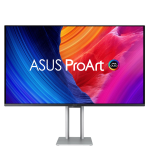
Image source: Bing (Web (fair-use with source credit))
Quick Answer
A touchscreen monitor usually stops responding because of a loose USB touch cable, a corrupted or outdated driver, or a disabled setting in Windows. Start by checking the physical cable connection between your monitor and computer. Then open Device Manager and look for the HID-compliant touch screen entry.
If it's disabled or showing a warning icon, that's your culprit. Most fixes take under five minutes once you know where to look.
The 60-Second Checks That Fix Most Touchscreen Problems
Before diving into software settings, rule out the obvious stuff. A surprising number of touchscreen problems come down to something physical that got bumped or disconnected.
Grab a minute and run through this quick checklist:
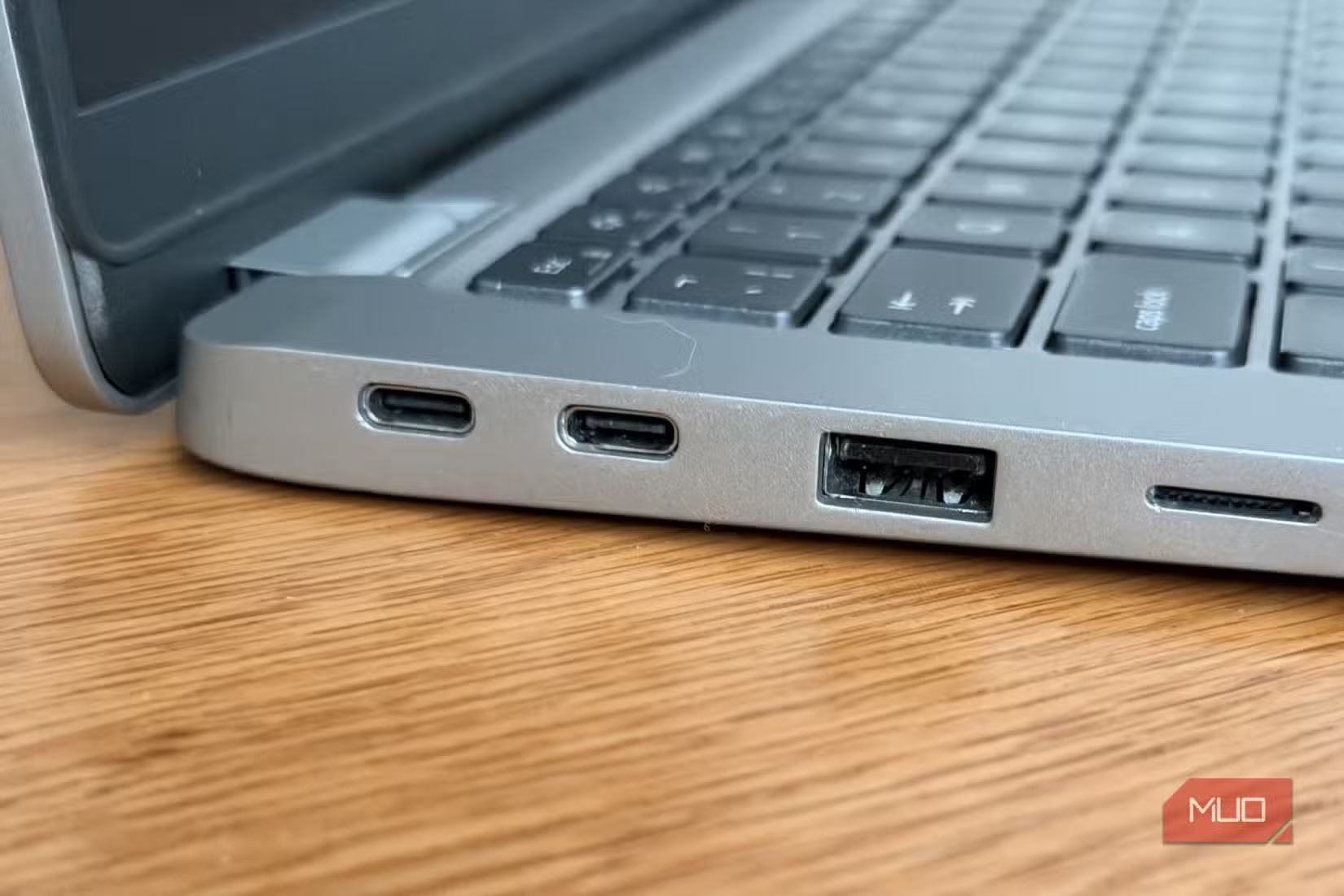
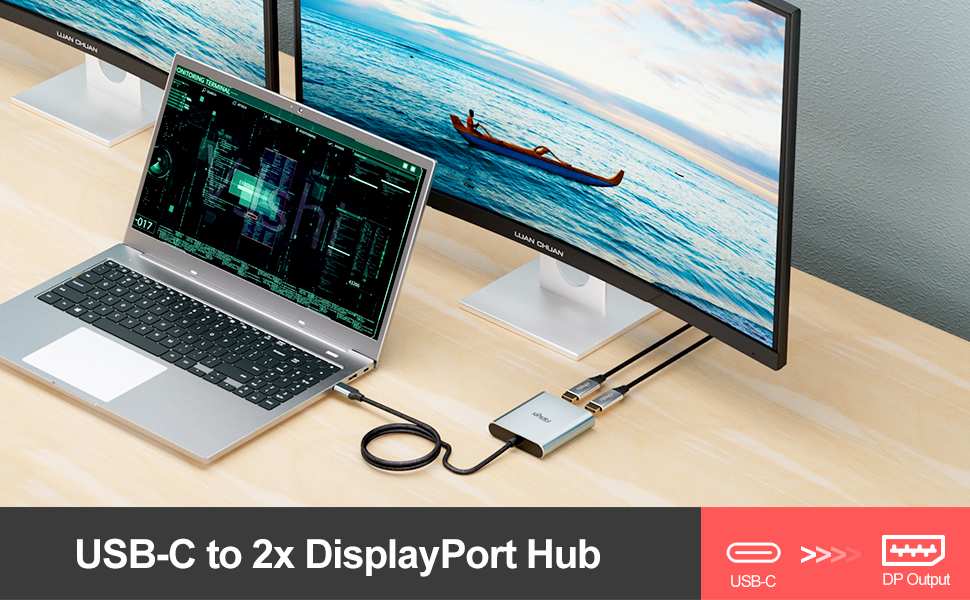
- Check the USB touch cable. Most touchscreen monitors use a separate USB cable (usually USB-B or USB-C) that carries the touch signal. This is different from the video cable (HDMI, DisplayPort, or USB-C). If that USB cable is loose or unplugged, your display works fine but touch won't register at all.
- Try a different USB port. Some USB ports, especially on older hubs or front-panel connectors, don't deliver enough power or bandwidth for the touch controller. Plug directly into a rear motherboard USB port if you can.
- Restart the monitor and computer. Power cycling clears temporary glitches in the touch controller firmware. Turn the monitor off, unplug it for 30 seconds, then plug it back in and restart your PC.
- Clean the screen. Oil, dust, or moisture on the surface can interfere with capacitive touch sensors. Wipe the screen with a dry microfiber cloth and try again.
- Remove screen protectors or overlays. Thick tempered glass protectors or third-party touch overlays can block or distort the capacitive field. Take them off temporarily to test.
If none of those quick checks solve it, the problem is almost certainly in your software or driver layer. That's where we're headed next.
Image source: Wikimedia Commons / Alistair Paterson (CC BY-SA)
How Touchscreen Monitors Actually Work (And Why They Fail)
Understanding what's happening under the hood makes troubleshooting a lot less guesswork. A touchscreen monitor isn't just one piece of hardware. It's actually two systems stacked together.
The display panel handles the image you see. That's fed by your standard video cable, HDMI, DisplayPort, or USB-C with DisplayPort Alt Mode. The touch layer is a completely separate system.
It has its own sensor grid (usually capacitive for modern monitors), its own controller chip built into the monitor, and its own data connection back to your computer, almost always over USB.
When you touch the screen, the controller chip calculates the coordinates and sends that data through the USB connection to your operating system. Windows receives it as a HID (Human Interface Device) input, the same category as your mouse or keyboard. If any link in that chain breaks, touch stops working even though the display looks perfectly fine.
Here's where things commonly break down:
| Failure Point | What Happens | What You'll See |
|---|---|---|
| USB touch cable disconnected | No data path for touch signal | Display works, touch completely dead |
| Driver corrupted or missing | OS can't interpret touch data | Touchscreen missing or flagged in Device Manager |
| Touchscreen disabled in software | OS ignores the HID device | Everything looks normal but touch does nothing |
| Controller firmware glitch | Touch chip stops processing input | Intermittent or frozen touch response |
| Physical digitizer damage | Sensor grid has broken lines | Dead zones or ghost touches on part of the screen |
That separation between display and touch is why your monitor can look perfect while touch is completely dead. It's also why the fix is often a software or cable issue rather than a hardware replacement.
Is It Hardware or Software? How to Tell the Difference
This is the fork in the road that determines everything that follows. You need to figure out whether your touchscreen problem lives in the physical hardware or in the software layer. There's a reliable way to test this.
Boot into your BIOS or UFI setup screen. Restart your computer and press the key to enter BIOS (usually Delete, F2, or F10 depending on your motherboard). Many modern BIOS interfaces support touch input. If your touchscreen works fine in BIOS but stops working once Windows loads, you've got a software or driver problem.
That's actually good news because software fixes are free and fast.
If touch doesn't work in BIOS either, you're likely dealing with a hardware issue. That could be a loose cable, a failed controller chip, or a damaged digitizer. Before assuming the worst, double-check that USB touch cable connection one more time.
Seriously, that fixes more "dead" touchscreens than any other single step.
Another quick test: boot into Windows Safe Mode. If touch works in Safe Mode but not in normal Windows, a third-party application or driver conflict is interfering. Some screen recording tools, remote desktop software, and drawing tablet utilities are known to hijack or block HID touch input.
Here's a simple decision flow to follow:
- Touch works in BIOS but not Windows → Driver, setting, or software conflict
- Touch doesn't work in BIOS or Windows → Check cable first, then suspect hardware failure
- Touch works in Safe Mode but not normal Windows → Third-party software conflict
- Touch works intermittently in all environments → Loose connection, failing cable, or digitizer damage
Once you've narrowed down which category you're in, the fix path becomes a lot clearer.
Step-by-Step: Fixing a Completely Unresponsive Touchscreen
If your touchscreen is totally dead and you've confirmed the cable is connected, start here. These steps go from easiest to most involved, and most people find their fix in the first three.
Step 1: Enable the touchscreen in Device Manager
Right-click the Start button and select Device Manager. Expand the "Human Interface Devices" section. Look for an entry called "HID-compliant touch screen." If you see a down arrow icon on it, that means it's disabled.
Right-click it and select "Enable device." Test your touchscreen immediately after.
Step 2: Restart the HID-compliant touch screen device
Even if the device shows as enabled, it might be in a stuck state. Right-click "HID-compliant touch screen" and select "Disable device." Wait about 10 seconds, then right-click it again and select "Enable device." This forces the driver to reinitialize the touch controller.
Step 3: Update the touchscreen driver
Right-click the HID-compliant touch screen entry and select "Update driver." Choose "Search automatically for drivers." If Windows finds an updated driver, install it and restart your computer. If Windows says the best driver is already installed, move to the next step.
Step 4: Uninstall and reinstall the driver
Right-click the HID-compliant touch screen and select "Uninstall device." Don't check the box to delete the driver software. Restart your computer. Windows will automatically detect the touchscreen and reinstall the driver on boot.
This clears out any corrupted driver state that a simple update won't fix.
Step 5: Run the Windows Hardware Troubleshooter
Open Settings, go to System, then Troubleshoot, and select "Other troubleshooters." Run the "Hardware and Devices" troubleshooter if it's available on your build. On Windows 11 as of 2026, you can also run it from the command line by opening Command Prompt as administrator and typing:
msdt.exe -id DeviceDiagnostic
Follow the prompts and apply any recommended fixes.
Step 6: Check for Windows updates
Go to Settings, then Windows Update, and click "Check for updates." Microsoft has released several touchscreen-related fixes through cumulative updates over the past few years. Install everything available and restart.
If you've gone through all six steps and touch is still dead, move on to the next section for deeper troubleshooting.

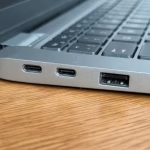
Image source: Wikimedia Commons / Intel Free Press (CC BY)
Step-by-Step: Fixing Intermittent, Laggy, or Misaligned Touch
When your touchscreen works but feels wrong (laggy, inaccurate, or registering phantom taps), the problem is usually calibration or interference. Here's how to fix it.
Recalibrate the touchscreen in Windows
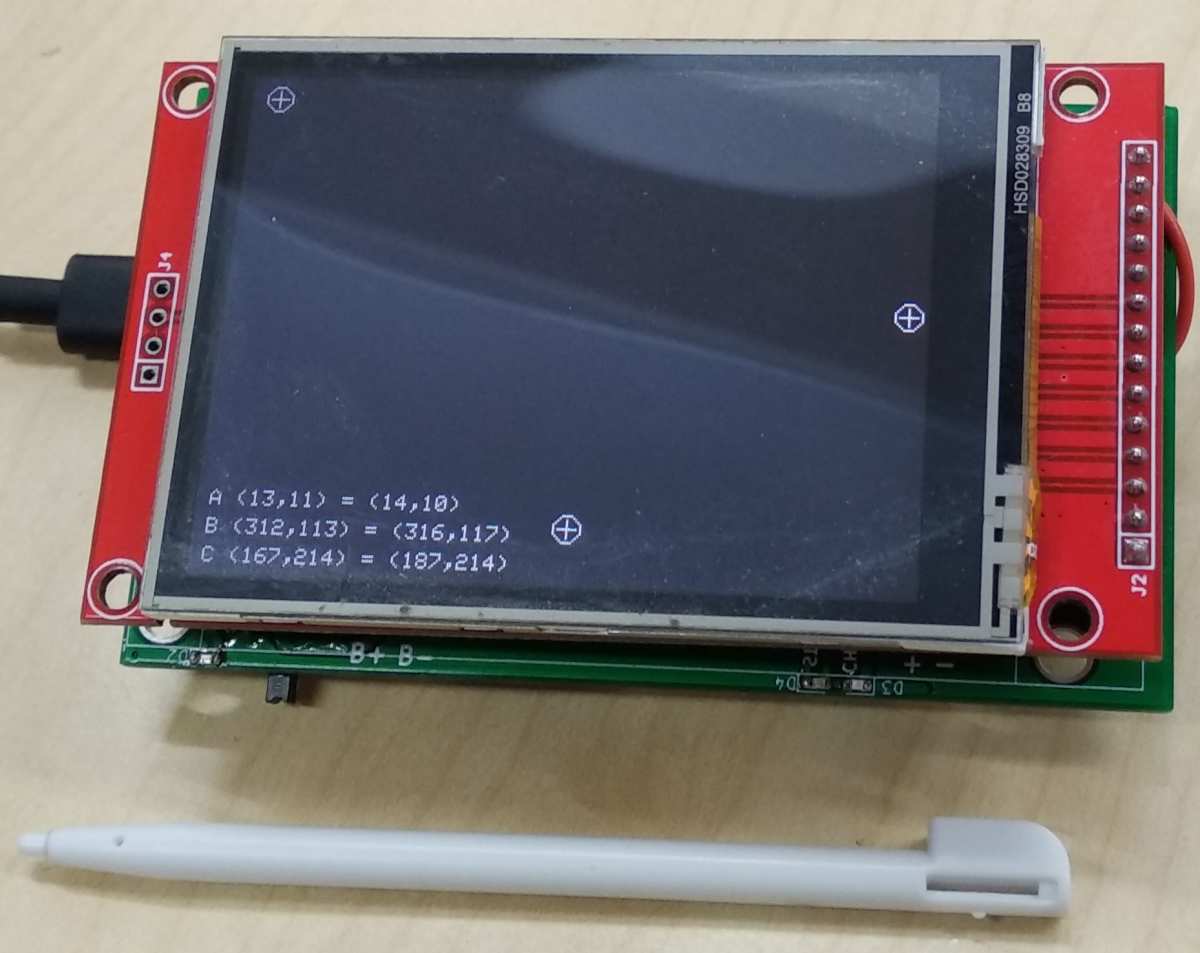
Open the Control Panel and search for "calibrate." Select "Calibrate the screen for pen or touch input." In the Display tab, click "Calibrate" and follow the on-screen prompts. You'll tap a series of crosshairs at each corner and the center. This remaps the touch coordinate grid to match your display exactly.
After calibration, test by tapping icons at each screen edge. If taps still land in the wrong spot, run the calibration a second time. Sometimes the first pass doesn't take properly.
Check for electromagnetic interference
Capacitive touchscreens can pick up interference from nearby electronics. Unplug any USB 3.0 devices sitting close to the monitor bezel. Move wireless chargers, speakers, or external hard drives at least six inches away from the screen.
If the phantom touches stop, you've found your culprit.
Disable and re-enable the touchscreen
Sometimes the touch controller just needs a fresh start. Go back to Device Manager, right-click "HID-compliant touch screen," select "Disable device," wait 10 seconds, then re-enable it. This resets the controller without requiring a full restart.
Adjust touch sensitivity settings
Some monitors, especially industrial or POS models from manufacturers like Elo Touch, come with their own touch sensitivity utility. Check your system tray or the manufacturer's support page for a configuration tool. If the sensitivity is set too low, light touches won't register.
Set too high, you'll get ghost touches from nearby movement.
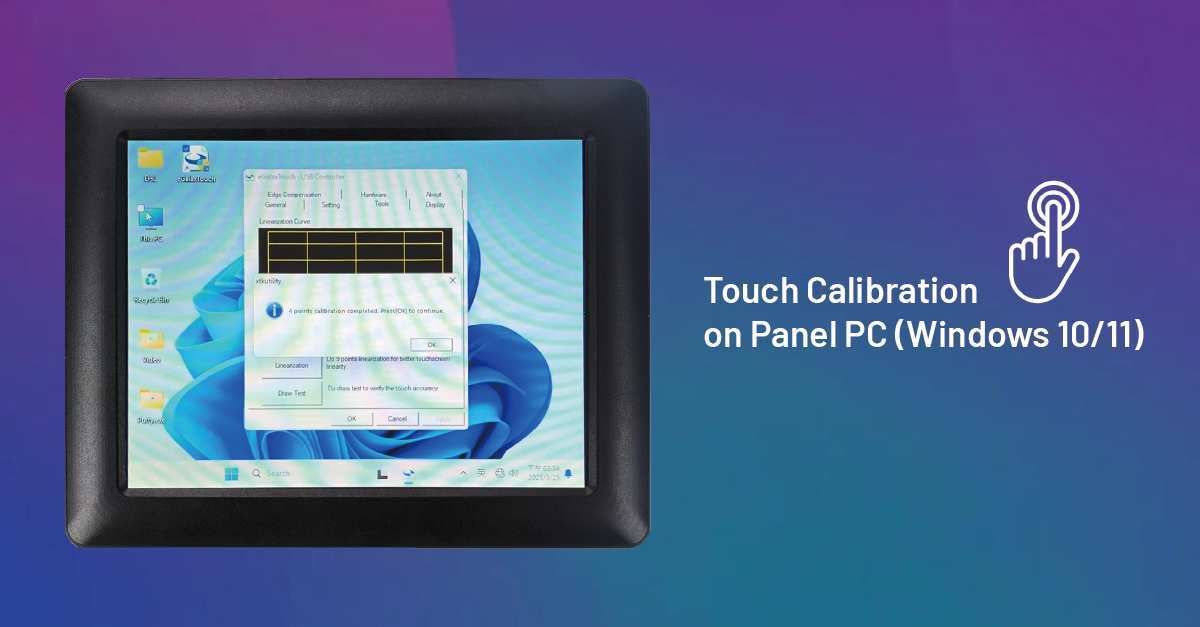
Image source: Bing (Web (fair-use with source credit))
When the Touchscreen Works in BIOS But Not in Windows
This is one of the most common patterns people report, and it's actually a useful diagnostic clue. If touch works in your BIOS or UEFI setup screen but goes dead once Windows loads, your hardware is fine. The problem is entirely in the software layer.
The most frequent cause is a Windows update that replaced or corrupted the touchscreen driver. Microsoft's cumulative updates have a track record of breaking HID touch input on specific monitor models. Dell, HP, and ASUS have all documented this in their support knowledge bases over the past few years.
Here's what to do:
Roll back the touchscreen driver
Open Device Manager, right-click "HID-compliant touch screen," and select "Properties." Go to the Driver tab and click "Roll Back Driver" if the option is available. This reverts to the previous driver version that was working. Restart your computer afterward.
Check for a recent Windows update
Go to Settings, then Windows Update, and click "Update history." Look for updates installed in the last few days. If you see a cumulative update installed right around the time touch stopped working, try uninstalling it. Click "Uninstall updates" at the top of the history page, select the recent update, and remove it.
Reinstall the manufacturer's driver
Generic Windows HID drivers work for most touchscreens, but some monitors need a specific driver from the manufacturer. Visit your monitor manufacturer's support page, search for your exact model, and download the latest touchscreen driver package. Install it manually and restart.
Driver and Firmware Issues That Kill Touch Input
Drivers and firmware are the invisible layer between your touchscreen hardware and Windows. When they go bad, touch stops working in ways that can be hard to diagnose.
Driver conflicts from other input devices
If you've got a drawing tablet, a second touchscreen, or a USB pen display connected, Windows can get confused about which device should handle touch input. Disconnect all other input devices and test the touchscreen alone. If touch starts working, reconnect devices one at a time to find the conflict.
Firmware bugs in the monitor itself
Some touchscreen monitors have firmware bugs that cause the touch controller to freeze after sleep or hibernation. Check your manufacturer's support page for a firmware update tool. Dell and HP both provide firmware update utilities for their touchscreen monitors that you run from within Windows.
The update process usually takes a few minutes and requires a restart.
USB Selective Suspend killing the touch controller
Windows has a power-saving feature called USB Selective Suspend that turns off USB devices to save energy. Sometimes it turns off your touchscreen's USB controller and doesn't wake it back up. To disable it, open Control Panel, go to Power Options, click "Change plan settings" for your active plan, then "Change advanced power settings." Expand "USB settings," then "USB selective suspend setting," and set it to "Disabled." Restart and test.
Settings That Silently Disable Your Touchscreen
Windows has several settings that can turn off touch input without any obvious notification. If your touchscreen suddenly stopped working and you didn't change anything, one of these settings might be the cause.
Tablet mode and touch input
On Windows 10, Tablet mode can sometimes interfere with touch behavior on external monitors. On Windows 11, the equivalent is the "Touch keyboard and handwriting panel" service. Make sure the Touch Keyboard and Handwriting Panel Service is running.
Press Win + R, type services.msc, and look for that service in the list. Set it to "Automatic" and start it if it's stopped.
Group Policy or registry settings
In managed corporate environments, IT administrators sometimes disable touch input through Group Policy. If you're on a work computer, check with your IT team before digging into registry edits. For home users, open the Registry Editor (regedit) and navigate to:
HKEY_LOCAL_MACHINE\SOFTWARE\Microsoft\TouchPrediction
Make sure the "Latency" and "SampleTime" values exist and aren't set to zero. If the entire TouchPrediction key is missing, that's a sign touch has been disabled at the system level.
Windows Ink and pen settings
Windows Ink can occasionally interfere with touch input on touchscreen monitors that also support pen input. Open Settings, go to Bluetooth & devices, then Pen & Windows Ink, and try toggling "Use your pen as a mouse" off. Test touch again after each change.
When It's Actually a Hardware Problem
If you've worked through every software fix and touch still doesn't work, or if it doesn't work in BIOS either, you're likely dealing with a hardware failure. Here's how to confirm and what your options are.
Test with a different computer
Connect the touchscreen monitor to a completely different computer. If touch works on the second machine, the problem is with your original computer's USB controller or drivers. If touch is still dead on a different computer, the monitor's touch hardware has failed.
Inspect the USB cable and port
Try a different USB cable for the touch connection. Cables fail more often than people expect, especially the USB-B to USB-A cables that many monitors use. Look for bent pins, frayed shielding, or a loose fit in the port.
Look for physical damage to the screen
Examine the monitor surface closely under bright light. Cracks, deep scratches, or impact marks near the bezel can break the capacitive sensor grid. Even a hairline crack you can barely see can kill touch in that area or across the whole screen.
Check the warranty
Most touchscreen monitors come with a three-year manufacturer warranty that covers digitizer failure. Dell, HP, and ViewSonic all cover touch controller defects under standard warranty. Contact the manufacturer's support line with your serial number before buying any replacement parts.
If the monitor is out of warranty and the touch controller has failed, you've still got options. The display itself works fine, so you can continue using it as a regular monitor with mouse and keyboard input. Or you can look into a third-party USB touch overlay kit, which adds a new touch layer on top of your existing screen for a fraction of the cost of a new monitor.
How to Test Whether Your Touchscreen Can Be Saved
Before you spend money on a replacement, run through these diagnostic tests to confirm whether the touch hardware is truly dead or just misbehaving.
The BIOS test
Restart and enter your UFI or BIOS setup. If the interface supports touch and it works there, your hardware is fine. The problem is Windows-specific and almost always fixable through software.
The second-computer test
Connect the monitor to a different computer with a fresh Windows install or even a Linux live USB. If touch works on another system, your original computer's USB controller or driver stack is the issue.
The Safe Mode test
Boot Windows into Safe Mode with Networking. This loads only essential drivers and services. If touch works in Safe Mode, a third-party application or non-essential driver is blocking touch input in normal mode.
The user profile test
Create a new local user account in Windows and log into it. Test the touchscreen there. If it works in the new profile but not your main one, your user profile has a corrupted setting or conflicting configuration.
Common Mistakes That Make the Problem Worse
A few well-intentioned moves can actually make things harder to fix. Here's what to avoid.
Don't install random driver updater tools
Third-party driver updater utilities often install wrong or generic drivers that cause more problems than they solve. Stick to Windows Update and your manufacturer's official support page for driver downloads.
Don't assume the monitor is dead too quickly
Many people RMA or throw out a perfectly good monitor when the real issue is a $5 USB cable. Always test with a replacement cable first.
Don't skip the restart after driver changes
Windows doesn't always apply driver changes immediately. After updating, uninstalling, or reinstalling a touchscreen driver, restart your computer before testing. Skipping this step leads people to think a fix didn't work when it just hadn't taken effect yet.
Don't ignore Windows Update history
If touch stopped working within the last week, there's a good chance a recent update caused it. Check your update history before spending hours on other troubleshooting steps.
When to Call the Manufacturer vs. Fix It Yourself
If you've confirmed the touchscreen doesn't work in BIOS, doesn't work on a second computer, and you've tried a different USB cable, it's time to contact the manufacturer. Hardware failures in the digitizer or touch controller chip require professional repair or replacement.
Before you call, have your monitor's serial number and purchase date ready. Most manufacturers ask for both to check warranty status. If the monitor is under warranty, they'll typically ship a replacement or arrange a repair at no cost.
If the monitor is out of warranty, get a repair quote first. For mid-range touchscreen monitors, repair costs sometimes approach the price of a new unit. In that case, you're better off replacing it.
Frequently Asked Questions
Why did my touchscreen stop working after a Windows update?
Windows cumulative updates sometimes replace or corrupt the HID-compliant touchscreen driver. Roll back the driver in Device Manager or uninstall the recent update from Settings, then check for a newer driver on your manufacturer's support page.
Can a bad USB cable cause touch to stop working?
Yes, and it's one of the most common causes. The touch controller communicates over a separate USB cable from the video signal. If that cable is loose, damaged, or plugged into a low-power port, touch will fail while the display works perfectly.
How do I know if my touchscreen problem is hardware or software?
Test touch in your BIOS or UFI setup screen. If it works there but not in Windows, it's a software or driver issue. If it doesn't work in BIOS either, suspect a hardware problem like a failed digitizer or loose cable.
Does a screen protector affect touchscreen responsiveness?
Thick or low-quality screen protectors can interfere with capacitive touch sensors. Tempered glass protectors over 0.5mm thick are the most likely to cause issues. Remove the protector and test touch directly on the screen surface.
Can I use my touchscreen monitor without touch if the digitizer is broken?
Yes. A failed digitizer doesn't affect the display panel. You can continue using the monitor as a standard display with mouse and keyboard input, or add a third-party USB touch overlay kit to restore touch functionality.

Similar Posts