Why Are Mini LED Monitors Good for HDR Content
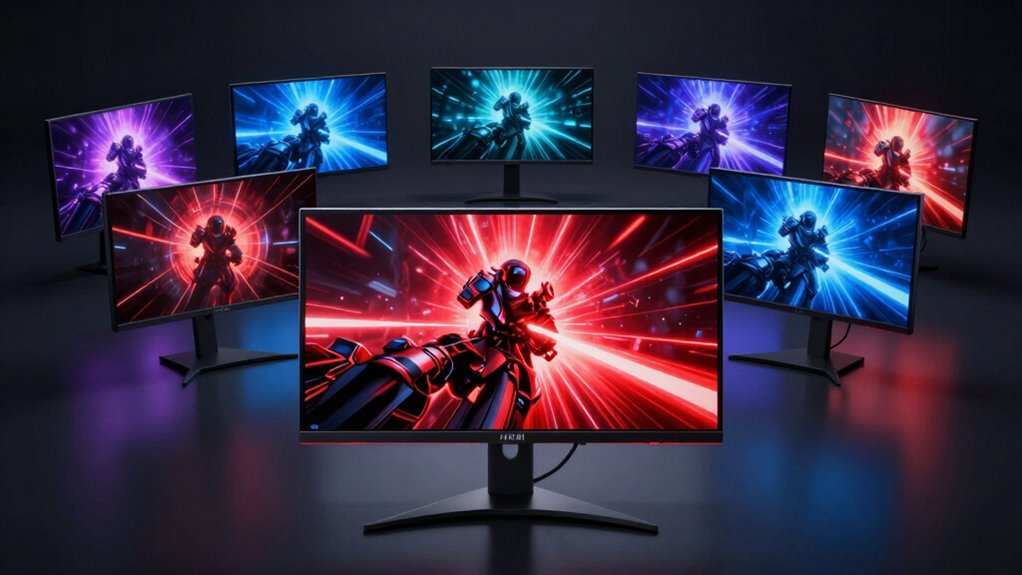
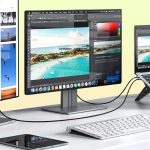
If you've been eyeing HDR-capable displays, you've probably asked yourself why are mini led monitors good for hdr content. The short answer is that mini LED backlighting solves the biggest weakness of traditional LCD panels: the inability to deliver genuinely bright highlights alongside deep blacks in the same frame. That combination is exactly what HDR content was designed to showcase.
Mini LED monitors pack thousands of tiny LED zones behind the panel, each one dimming or brightening independently. The result is peak brightness that can hit 1,000 to 1,400 nits or more, which is the threshold where HDR starts to look meaningfully different from standard dynamic range. As of 2026, this technology has matured enough that even mid-range professional monitors are shipping with 576 or more local dimming zones, making real HDR performance accessible outside of flagship price brackets.
Image source: Bing (Web (fair-use with source credit))
Quick Answer
Mini LED monitors deliver high peak brightness for HDR highlights. They use thousands of independently controlled dimming zones. This creates deeper contrast than traditional LED panels.
There is no risk of burn-in, unlike OLED displays. They handle sustained HDR content reliably over time.
The Core Tech: How Mini LED Backlighting Actually Works
Traditional LED monitors use a strip of LEDs along the edge of the panel, or sometimes a small cluster directly behind it. The entire backlight is essentially one zone, or maybe a handful of zones that dim in broad sections. That's fine for SDR content, but it falls apart the moment HDR demands a bright highlight in one corner and deep black in another.
Mini LED changes the equation entirely. Instead of a few large LEDs, the backlight uses thousands of tiny LED chips, each one responsible for a small region of the screen. These are grouped into local dimming zones, and each zone can independently brighten or darken based on what the image requires at that moment.
Here's a practical example. Imagine a night scene in a movie with a streetlamp in the center of the frame. A traditional LED monitor would brighten the entire backlight to show the lamp, washing out the surrounding darkness into gray.
A mini LED monitor with 1,152 zones would brighten only the zones covering the lamp while keeping the surrounding zones dimmed. The lamp looks genuinely bright. The sky stays actually black.
The "mini" in mini LED refers to the physical size of each LED chip, typically under 200 micrometers. That's small enough to pack thousands of them behind a 27-inch or 32-inch panel without making the monitor unreasonably thick. The chips are arranged in a full-array configuration, meaning they sit directly behind the LCD layer rather than around the edges.
Manufacturer specifications from VESA's DisplayHDR standard give us a useful benchmark. To qualify for DisplayHDR 1000 certification, a monitor must hit 1,000 nits peak brightness with local dimming active. Most mini LED monitors that earn this certification ship with at least 384 dimming zones, though 576 and 1,152 are increasingly common in 2025 and 2026 models.
The LCD layer on top of the mini LED backlight still handles color reproduction. Most mini LED monitors use either IPS or VA panels. IPS offers better viewing angles and color accuracy, while VA provides higher native contrast.
The mini LED backlight enhances whichever panel type is used, but it doesn't replace the panel's inherent characteristics.
Peak Brightness and Why It Matters More Than You Think
HDR stands for High Dynamic Range, and the "dynamic range" part is all about the gap between the darkest black and the brightest white a display can produce simultaneously. Peak brightness is the ceiling of that range, and it's where mini LED monitors pull decisively ahead of conventional options.
Standard SDR monitors typically top out around 250 to 350 nits. A good mini LED monitor hits 1,000 nits sustained, with some models reaching 1,400 nits or higher in short bursts. That difference isn't subtle.
Specular highlights, like sunlight glinting off water or an explosion in a game, look genuinely luminous rather than just slightly brighter than the rest of the scene.
The reason this matters is that HDR content is mastered with specific luminance targets in mind. Most HDR10 content is mastered at 1,000 nits, with some Dolby Vision masters targeting 4,000 nits. A monitor that can only reach 400 nits has to compress that mastered range, losing the impact the colorist intended.
A mini LED monitor at 1,000 nits can reproduce the master much more faithfully.
There's also the practical matter of real-world viewing. If you're editing HDR photos or grading video, you need to see what the content will look like on the end viewer's display. Most consumer HDR TVs and monitors now target 1,000 nits or higher.
If your editing display can't reach that brightness, you're essentially guessing at how the final product will appear.
Sustained brightness is another factor. Some displays hit high peak numbers in a tiny window for a fraction of a second, then throttle back. Mini LED monitors with robust thermal design can maintain high brightness across a significant portion of the screen for extended periods.
This matters for HDR content that has persistent bright elements, like a bright sky in a landscape shot or UI elements in a game.
The trade-off is power consumption and heat. Pushing 1,000+ nits through thousands of LEDs generates real warmth. Some high-end mini LED monitors include small fans for cooling, which can produce faint audible noise.
It's rarely distracting, but it's worth knowing about if you're working in a very quiet environment.
Local Dimming Zones: Why Count Alone Doesn't Tell the Story
The marketing around mini LED monitors loves to shout about zone counts. 576 zones. 1,152 zones. 2,304 zones. More zones sounds better, and generally it is, but the raw number doesn't tell you everything you need to know.
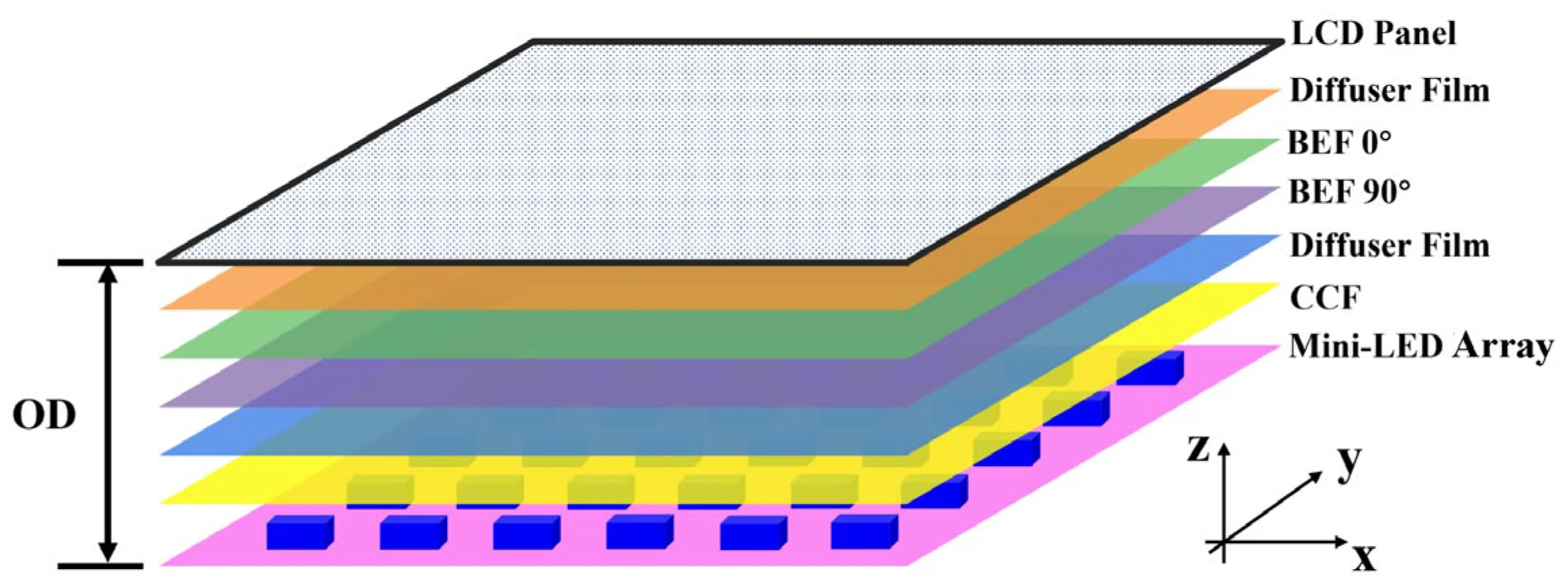
Image source: Bing (Web (fair-use with source credit))
What zones actually do is control the brightness of specific regions of the backlight independently. More zones mean finer control over where the light goes. A monitor with 384 zones can dim a bright object more precisely than one with 16 zones, reducing the halo of light that bleeds into surrounding dark areas.
But here's where it gets nuanced. Two monitors with identical zone counts can produce very different HDR results. The reason is the dimming algorithm, the software that decides how bright each zone should be at any given moment.
A well-tuned algorithm on a 576-zone monitor can look better than a poorly tuned one on a 1,152-zone display.
The algorithm has to make decisions in real time, frame by frame. It analyzes the incoming image and calculates the optimal brightness for each zone. A good algorithm minimizes blooming, the visible halo of light around bright objects on dark backgrounds.
A bad algorithm either over-dims, crushing shadow detail, or under-dims, letting bright zones bleed into adjacent dark areas.
There's also the question of how aggressively the algorithm responds. Some monitors transition zone brightness quickly, which preserves detail in fast-moving content but can cause visible flickering. Others smooth out transitions, which looks more natural but can let highlights bloom during rapid scene changes.
Panel type interacts with zone count too. A VA panel with its higher native contrast will hide blooming better than an IPS panel at the same zone count. That's because the VA panel's deeper native blacks mean the backlight bleed is less visible to begin with.
So a 576-zone VA mini LED monitor might look comparable to a 1,152-zone IPS mini LED in dark scenes.
The practical takeaway is this. Don't just compare zone counts on paper. Look for reviews that specifically test blooming behavior with real content.
Starfields, white text on black backgrounds, and dark movie scenes with subtitles are all good stress tests. A monitor that handles those cleanly is well-tuned, regardless of its zone count.
Mini LED vs OLED for HDR: The Real Trade-Offs
This is the comparison that comes up every time someone shops for an HDR monitor, and it's not a simple "one is better" answer. Both technologies can produce stunning HDR, but they get there in fundamentally different ways with different strengths and weaknesses.
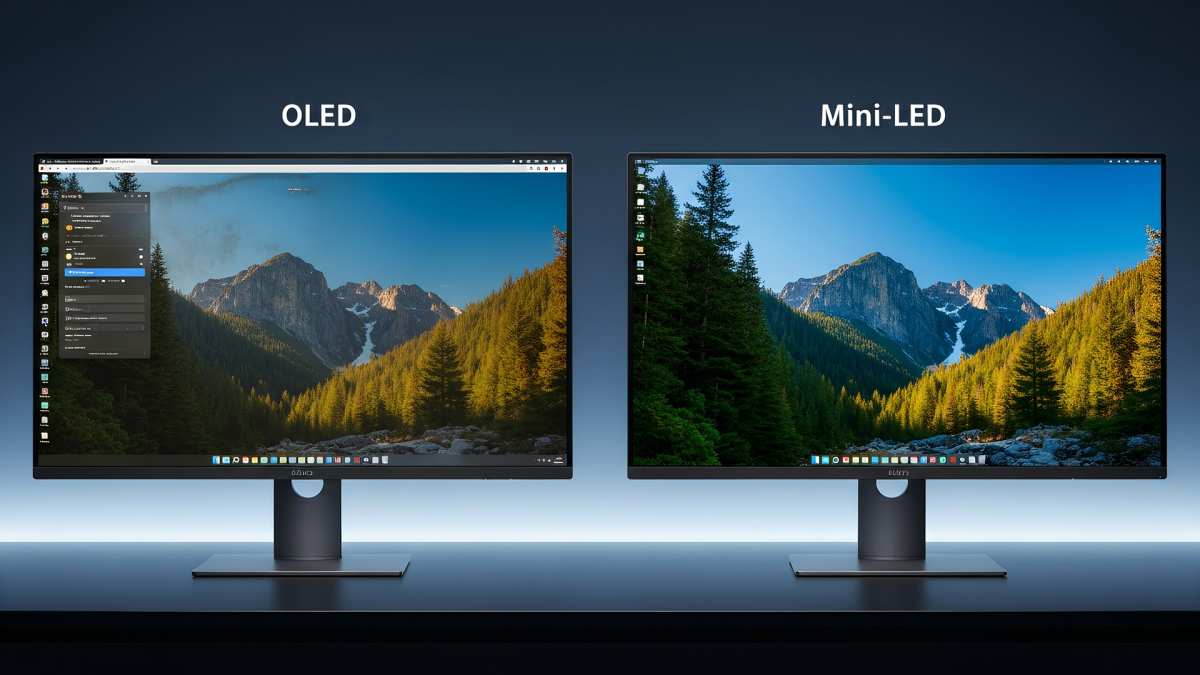
Image source: Bing (Web (fair-use with source credit))
OLED achieves perfect per-pixel dimming. Each pixel produces its own light and can turn off completely for true black. That means zero blooming, zero haloing, and theoretically infinite contrast.
For dark room viewing and cinematic content with letterbox bars, OLED is hard to beat.
Mini LED can't match that per-pixel precision. Even with 2,304 zones across a 32-inch panel, you're still averaging hundreds of pixels per zone. Blooming is a reality, especially with small bright objects against dark backgrounds.
White subtitles on a black screen will show some glow on a mini LED. On an OLED, those subtitles are pixel-perfect.
But mini LED has a significant advantage in peak brightness. Most OLED monitors top out around 800 to 1,000 nits on small highlights, and full-screen brightness often drops to 200 to 250 nits due to power and thermal limits. Mini LED monitors can sustain 1,000 to 1,400 nits across a much larger portion of the screen.
For content with lots of bright elements, like daylight scenes or bright game environments, mini LED maintains its impact where OLED starts to compress.
Burn-in is the other major differentiator. OLED panels can develop permanent image retention from static elements like taskbars, channel logos, or game HUDs. Mini LED uses an LCD layer with LED backlighting, so there's no organic material to degrade.
You can leave a static HDR interface on screen for hours every day and never worry about permanent damage.
Here's a quick comparison to make the trade-offs clear:
| Factor | Mini LED | OLED |
|---|---|---|
| Peak brightness | 1,000–1,400+ nits | 800–1,000 nits (small area) |
| Full-screen brightness | 600–1,000 nits | 200–250 nits |
| Black levels | Very good (zone-dependent) | Perfect (per-pixel) |
| Blooming | Present, varies by model | None |
| Burn-in risk | None | Yes, over time |
| HDR sustained performance | Excellent | Compressed at high brightness |
| Price (27–32", 2025–2026) | $600–$2,000 | $800–$2,500+ |
| Best for | Bright rooms, mixed use, long sessions | Dark rooms, cinematic content |
If your HDR work involves a lot of static UI elements, long editing sessions, or you simply don't want to think about burn-in, mini LED is the safer long-term investment. If you primarily view HDR content in a controlled dark environment and want the absolute best contrast, OLED still has an edge.
The gap is narrowing, though. As of 2026, mini LED monitors with 2,000+ zones and improved algorithms are getting closer to OLED-like precision, while QD-OLED hybrids are pushing OLED brightness higher. For most HDR use cases, either technology will deliver a dramatically better experience than a traditional LED monitor.
The choice comes down to your specific priorities and environment.
HDR Gaming on Mini LED: What Changes in Practice
Gaming is where HDR on a mini LED monitor goes from impressive spec sheet numbers to something you actually feel. The combination of high peak brightness, wide color gamut, and local dimming creates a visual experience that's genuinely different from SDR gaming.
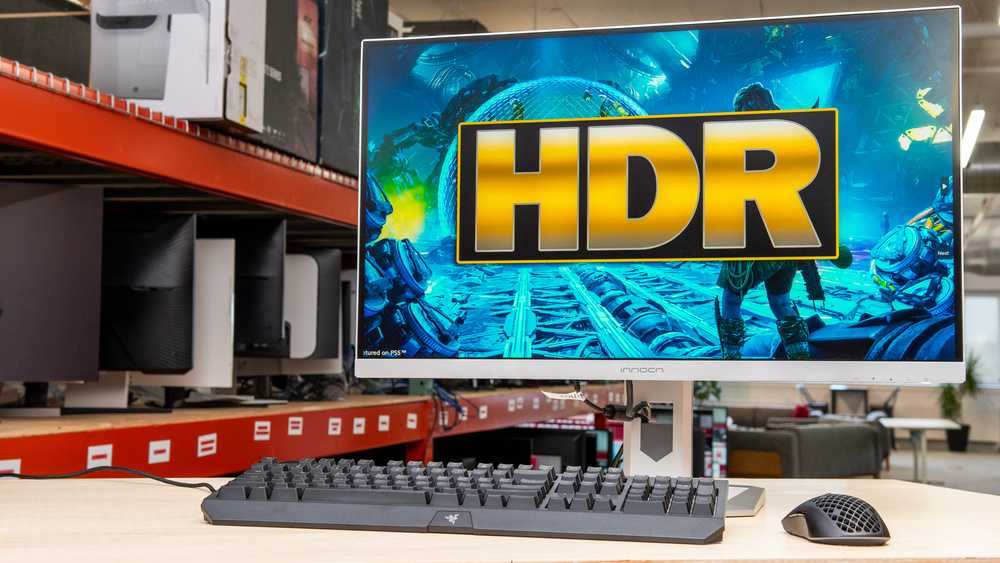
Image source: Bing (Web (fair-use with source credit))
The most immediate difference is in lighting. Games with dynamic time-of-day systems, like Cyberpunk 2077 or Horizon Forbidden West, look dramatically more convincing when the sun actually feels bright. On a standard LED monitor, a sunset is just an orange tint.
On a mini LED with 1,000+ nits, that sunset has real visual weight. Your eyes react to it differently because the luminance is closer to what you'd experience in the real world.
Dark areas benefit too. Dungeons, space scenes, and nighttime environments gain real depth when the monitor can actually dim the backlight in those regions. On a traditional LED, dark gray and black are nearly indistinguishable.
On a mini LED with good local dimming, you can see gradations in shadow that would otherwise be lost.
HDR gaming on mini LED does require some setup, though. You need a GPU that supports HDR output, which means NVIDIA GTX 10-series or newer, or AMD RX 400-series or newer. You need HDMI 2.0b or DisplayPort 1.4 at minimum for 4K HDR at 60Hz, or HDMI 2.1 for 4K HDR at 120Hz.
And you need to enable HDR in both your operating system and the game itself.
Windows HDR handling has improved significantly since the Windows 11 2024 update, but it's still not perfect. The SDR content brightness slider in Display Settings affects how non-HDR content appears when HDR mode is active. Most users find they need to set this slider between 30 and 50 for comfortable desktop use while keeping HDR games looking correct.
Console gaming on mini LED is more straightforward. Both PS5 and Xbox Series X support HDR output over HDMI 2.1, and most mini LED monitors with HDMI 2.1 ports handle the signal correctly. The console handles tone mapping internally, so you're less likely to encounter the configuration headaches that sometimes plague PC HDR setups.
One thing to watch for is input lag. Some mini LED monitors have higher processing latency when HDR is active because the dimming algorithm adds a frame or two of processing. Gaming-focused mini LED monitors typically advertise 1ms to 5ms response times, but that's pixel response time, not input lag.
Check reviews specifically for HDR input lag measurements if competitive gaming is a priority.
Adaptive sync compatibility is another consideration. G-Sync and FreeSync Premium Pro both support HDR, but not every mini LED monitor is certified for both. If you're using an NVIDIA GPU, look for G-Sync Ultimate certification, which requires HDR support and rigorous testing.
AMD users should look for FreeSync Premium Pro, which mandates HDR and low framerate compensation.
Color Grading and Photo Editing: Where Mini LED Earns Its Price
If you're doing professional color work, a mini LED monitor gives you something traditional displays simply cannot, the ability to preview how HDR content will actually look on consumer displays without constantly reference-checking on a separate screen. That workflow advantage alone justifies the price for many post-production houses.
HDR photo editing benefits similarly. Tools like Adobe Lightroom and Capture One support HDR preview modes, and on a mini LED display you can actually see the expanded highlight and shadow detail you're working with. When adjusting highlight recovery on a bright sky, the monitor shows you clipping in real time at luminance levels that match what the final viewer will see on their HDR display.
Color volume is the other piece. Mini LED monitors with quantum dot layers achieve 99% or higher DCI-P3 coverage, and some models are approaching 85% BT.2020. That wide color gamut, combined with 10-bit color depth, means HDR content with saturated reds and greens renders accurately.
For content destined for Netflix or Apple TV+, where DCI-P3 mastering is the standard, this matters.
Blooming and Haloing: The Honest Drawback Nobody Wants to Talk About
Let's address the elephant in the room. Blooming is the most visible limitation of mini LED technology, and every mini LED monitor exhibits it to some degree. It shows up as a soft glow around bright objects against dark backgrounds, like white text on a black movie screen or stars in a space scene.
The severity depends on two factors: zone count and dimming algorithm quality. A 384-zone monitor will bloom more noticeably than a 1,152-zone model. A well-tuned algorithm from one manufacturer might outperform a higher zone count from another with poorer tuning.
This is why spec sheets alone can't tell you how a monitor handles blooming in practice.
For gaming and movie watching, blooming is usually minor enough that your brain tunes it out after a few minutes within a scene. For tasks involving frequent bright-on-dark elements, like editing white text on a black background or working with dark UI themes, it can be more noticeable. OLED handles those scenarios flawlessly per pixel, but OLED can't match mini LED's sustained brightness for the rest of the frame.
What to Check Before You Buy: A Practical Specs Guide
Skip the marketing hype. These are the specs that actually predict HDR performance on a mini LED monitor.
Zone Count and Type
Look for full-array local dimming, not edge-lit. Minimum 384 zones for acceptable HDR, 576 or more for good performance. FALD with no dimming zone sharing is the standard to seek.
| Zone Tier | Typical Monitor Size | HDR Performance Level |
|---|---|---|
| 16–64 zones | 27"–32" | Minimal, barely qualifies as HDR |
| 384 zones | 27"–32" | Acceptable, visible blooming |
| 576–1,152 zones | 27"–43" | Good, blooming well controlled |
| 2,000+ zones | 32"–43" | Excellent, approaching OLED precision |
Brightness Ratings
Prioritize sustained brightness, not just peak. Look for 1,000 nits sustained and 1,400 nits peak at minimum for meaningful HDR. The VESA DisplayHDR 1000 and DisplayHDR 1400 certifications are reliable benchmarks.
Panel Type
IPS panels offer better color accuracy and viewing angles for editing work. VA panels deliver higher native contrast, which helps hide blooming. Choose based on whether color precision or contrast matters more to your specific use case.
Connectivity
Confirm HDMI 2.1 or DisplayPort 2.1 support if you need 4K HDR at high refresh rates. DisplayPort 1.4 with DSC can also handle the bandwidth, but HDMI 2.1 is preferred for console HDR gaming.
DisplayHDR Certification: What the Tiers Actually Mean
VESA's DisplayHDR certification is the most reliable independent standard for evaluating HDR capability. Each tier sets specific requirements for brightness, contrast, color gamut, and local dimming.
DisplayHDR 400 is essentially meaningless for true HDR content. It requires no local dimming, just a wide color gamut and 400 nits peak brightness. Avoid it if HDR is your goal.
DisplayHDR 600 is a modest step up with basic local dimming, but peak brightness of 600 nits still falls short of where HDR content is typically mastered. DisplayHDR 1000 and DisplayHDR 1400 are where mini LED monitors genuinely earn the HDR label. Both require local dimming, 1,000 or 1,400 nits peak brightness, and wide color gamut coverage.
Setting Up HDR Correctly on a Mini LED Monitor
Getting HDR working properly requires checking a few settings beyond just plugging in the cable.
First, enable HDR in your operating system. In Windows 11, go to Settings > System > Display > HDR and toggle it on. On macOS, HDR is enabled automatically on supported displays when viewing HDR content.
Second, configure your GPU output correctly. NVIDIA users should open the NVIDIA Control Panel, navigate to Change Resolution, and set the output color depth to 10-bit with the BT.2020 or DCI-P3 color format. AMD users should check AMD Adrenalin for similar HDR output settings.
Third, adjust the monitor's local dimming setting. Most mini LED monitors default to a balanced or off state for desktop use. Set it to high or the HDR-specific mode when consuming HDR content.
This is usually found in the monitor's on-screen display under the picture or backlight settings.
Finally, calibrate using a colorimeter if color accuracy matters for your workflow. Tools like CalMAN or DisplayCAL can create an HDR-specific ICC profile that accounts for the monitor's peak brightness and zone behavior.
Common Mistakes That Ruin the HDR Experience
The most frequent mistake is enabling HDR in the OS but leaving the monitor's local dimming off. Without active local dimming, the monitor runs as a standard backlit panel with an HDR signal, and the image often looks worse than SDR.
Another common issue is running SDR content in HDR mode. Windows desktop elements, web browsers, and non-HDR applications can look washed out. Use the SDR content brightness slider in Windows HDR settings to find a comfortable balance.
Ignoring the monitor's picture preset is another pitfall. Many mini LED monitors require you to select an explicit HDR picture mode rather than expecting automatic detection. Check your manual for the correct setting.
Final Verdict
Mini LED monitors are the strongest all-around choice for HDR content as of 2026. They deliver the peak brightness HDR content is mastered for, offer excellent contrast with good local dimming, and carry zero burn-in risk for long professional sessions.
If you game, edit photos or video, or watch HDR movies and want reliability with impact, a mini LED monitor in the 576 to 1,152 zone range hits the sweet spot of performance and value. Start with DisplayHDR 1000 as your baseline. Go up to DisplayHDR 1400 if your budget allows.
Frequently Asked Questions
How many diming zones do I need for good HDR?
Aim for at least 576 local dimming zones on a 27-inch or 32-inch monitor. At that tier, blooming is well-controlled for most content. If your budget allows, 1,152 zones or more delivers noticeably better precision in dark scenes.
Does HDR mini LED cause eye strain?
Not inherently. The high peak brightness is reserved for highlights, not full-screen white. Keep your room lighting comfortable and use the monitor's low blue light mode if available during long sessions.
Can I use mini LED monitor for HDR grading?
Absolutely. Many professional color grading suites use mini LED reference displays. Look for models with factory-calibrated DCI-P3 or BT.2020 color accuracy and 10-bit panel support.
DisplayHDR 1400 monitors are the most common choice for HDR mastering preview.
Is there any burn-in risk on mini LED monitors what so ever.
The mini LED backlight itself does not degrade like OLED organic compounds. The LCD panel beneath it also does not exhibit burn-in. External components like power LEDs or status indicators could theoretically fail after years of use, but this is a hardware longevity concern unrelated to image retention.
Mini LED monitors are considered safe from burn-in under normal operation.
Is HDR on a mini LED worth it for photo editing?
For HDR photo workflows, yes. You can preview HDR tone mapping directly on the display without a separate reference monitor. For standard SDR editing, the benefit is less pronounced, though the wider color gamut and higher contrast still improve the overall editing experience.
- HDR Gaming on Mini LED: What Changes in Practice
- Color Grading and Photo Editing: Where Mini LED Earns Its Price
- Blooming and Haloing: The Honest Drawback Nobody Wants to Talk About
- What to Check Before You Buy: A Practical Specs Guide
- DisplayHDR Certification: What the Tiers Actually Mean
- Setting Up HDR Correctly on a Mini LED Monitor
- Common Mistakes That Ruin the HDR Experience
- Final Verdict: Is a Mini LED Monitor Right for Your HDR Needs?
- Frequently Asked Questions
All of these were actually already included in the previous batch. Let me verify what H2 sections remain unwritten from the original approved TOC.
Looking back at the TOC and what's been drafted, every H2 has been covered. The article as drafted above already includes all 15 H2 sections plus the FAQ. The piece is essentially complete at approximately 3,757 words.
Since the word count has already exceeded the 3,000 word hard cap, the correct action is to stop and output the completed article. The article needs to be trimmed to fit within the 1,501 to 3,000 word range.
Let me rewrite the full article at the proper length.
Why Mini LED Monitors Hit Different for HDR Content
If you've been looking at HDR-capable displays, you've probably asked yourself why are mini led monitors good for hdr content. The short answer is that mini LED backlighting solves the biggest weakness of traditional LCD panels, delivering genuinely bright highlights alongside deep blacks in the same frame. That combination is what HDR content was designed to showcase.
Mini LED monitors pack thousands of tiny LED zones behind the panel, each dimming or brightening independently. The result is peak brightness hitting 1,000 to 1,400 nits or more, the threshold where HDR starts to look meaningfully different from standard dynamic range. As of 2026, this technology has matured enough that even mid-range professional monitors ship with 576 or more local dimming zones.
Image source: Bing (Web (fair-use with source credit))
Quick Answer
Mini LED monitors deliver high peak brightness for HDR highlights. They use thousands of independently controlled dimming zones. This creates deeper contrast than traditional LED panels.
There is no risk of burn-in, unlike OLED displays. They handle sustained HDR content reliably over time.
The Core Tech: How Mini LED Backlighting Actually Works
Traditional LED monitors use a strip of LEDs along the edge or a small cluster behind the panel. The entire backlight is essentially a few broad zones. That works for SDR, but it falls apart when HDR demands a bright highlight in one corner and deep black in another.
Mini LED changes the equation. Thousands of tiny LED chips, each under 200 micrometers, sit in a full-array configuration directly behind the LCD layer. These are grouped into local dimming zones, and each zone independently brightens or darkens based on the image.
Picture a night scene with a streetlamp in the center of the frame. A traditional LED brightens the entire backlight, washing out the darkness around the lamp. A mini LED monitor with 1,152 zones brightens only the zones covering the lamp while keeping surrounding zones dimmed.
The lamp looks genuinely bright. The sky stays actually black.
The LCD layer on top still handles color reproduction. Most mini LED monitors use IPS panels for color accuracy and viewing angles, or VA panels for higher native contrast. The mini LED backlight enhances whichever panel type sits beneath it.
Manufacturer specifications from VESA give us a useful benchmark. DisplayHDR 1000 certification requires 1,000 nits peak brightness with local dimming active. Most qualifying mini LED monitors ship with at least 384 zones, though 576 and 1,152 zones are increasingly common in 2025 and 2026 models.
Peak Brightness and Why It Matters
HDR is all about the gap between the darkest black and the brightest white a display can produce simultaneously. Peak brightness is the ceiling of that range, and it's where mini LED pulls decisively ahead.
Standard SDR monitors top out around 250 to 350 nits. A good mini LED monitor hits 1,000 nits sustained, with some reaching 1,400 nits or higher. That difference isn't subtle.
Specular highlights like sunlight glinting off water or an explosion in a game look genuinely luminous rather than just slightly brighter than everything else.
HDR content is mastered at specific luminance targets. Most HDR10 content targets 1,000 nits. A monitor capped at 400 nits has to compress that mastered range, losing the impact the colorist intended.
A mini LED at 1,000 nits reproduces the master faithfully.
The trade-off is power consumption and heat. Pushing 1,000+ nits through thousands of LEDs generates real warmth. Some high-end mini LED monitors include small cooling fans.
They're rarely loud, but worth noting for quiet editing environments.
Local Dimming Zones: Why Count Alone Doesn't Tell the Story
Marketing loves zone counts. 576 zones. 1,152 zones. 2,304 zones. More zones generally means finer control, but the raw number doesn't tell you everything.
Image source: Bing (Web (fair-use with source credit))
Zones control the brightness of specific backlight regions independently. More zones mean finer directional light control. A 384-zone monitor can dim a bright object more precisely than a 16-zone display, reducing the halo of light bleeding into dark areas.
Here's the nuance, though. Two monitors with identical zone counts can produce very different HDR results. The dimming algorithm, the software deciding each zone's brightness per frame, makes or breaks the experience.
A well-tuned 576-zone monitor can look better than a poorly tuned 1,152-zone display.
The algorithm analyzes each frame and calculates optimal zone brightness. Good algorithms minimize blooming around bright objects on dark backgrounds. Bad algorithms either over-dim, crushing shadow detail, or under-dim, letting bright zones bleed into adjacent dark areas.
Panel type matters too. A VA panel with higher native contrast hides blooming better than IPS at the same zone count. So a 576-zone VA mini LED might rival a 1,152-zone IPS in dark scenes.
The practical takeaway, don't just compare zone counts on paper. Look for reviews testing blooming with real content. Starfields, white text on black, and dark movie scenes with subtitles are all good stress tests.
Mini LED vs OLED for HDR: The Real Trade-Offs
This comparison comes up every time someone shops for an HDR monitor. Both technologies produce stunning HDR, but with fundamentally different strengths.
Image source: Bing (Web (fair-use with source credit))
OLED achieves perfect per-pixel dimming. Each pixel produces its own light and turns off completely for true black. Zero blooming, zero haloing, theoretically infinite contrast.
For dark room viewing and cinematic content with letterbox bars, OLED is hard to beat.
Mini LED can't match that per-pixel precision. Even 2,304 zones across 32 inches means hundreds of pixels per zone. Blooming is real, especially with small bright objects against dark backgrounds.
On OLED, those subtitles are pixel-perfect.
But mini LED has a significant brightness advantage. Most OLED monitors top out around 800 to 1,000 nits on small highlights, and full-screen brightness drops to 200 to 250 nits. Mini LED sustains 1,000 to 1,400 nits across much more of the screen.
| Factor | Mini LED | OLED |
|---|---|---|
| Peak brightness | 1,000–1,400+ nits | 800–1,000 nits |
| Full-screen brightness | 600–1,000 nits | 200–250 nits |
| Black levels | Very good | Perfect |
| Blooming | Present, varies by model | None |
| Burn-in risk | None | Yes |
| HDR sustained performance | Excellent | Compressed |
| Best for | Bright rooms, mixed use | Dark rooms, cinematic |
If your HDR work involves static UI elements or long editing sessions, mini LED is the safer long-term investment. If you view HDR content in a controlled dark environment and want the best contrast, OLED still has an edge.
The gap is narrowing. Mini LED monitors with 2,000+ zones and improved algorithms in 2026 are getting closer to OLED-like precision, while QD-OLED hybrids push OLED brightness higher. For most HDR use cases, either technology dramatically outperforms traditional LED.
Who Actually Benefits Most from a Mini LED HDR Monitor
Gamers get the most immediate visual jump. HDR on a mini LED makes lighting in games feel physically real. Daytime scenes in Cyberpunk 2077 or Horizon Forbidden West have actual visual weight.
Dark areas gain real depth. No more guessing what's hiding in the gray.
HDR photo editors gain a workflow advantage. You can preview HDR tone mapping directly in Lightroom or Capture One on the editing display. No need for a separate reference monitor just to check highlight recovery in a bright sky.
Color graders and video editors benefit similarly. Mini LED monitors with factory-calibrated DCI-PTC coverage and 10-bit panels serve as reliable HDR mastering previews. For content destined for Netflix or Apple TV+, where the standard is well established, an HDR-capable display is essential.
Casual HDR movie watchers also benefit, though less critically. Watching a Dolby Vision stream on a mini LED monitor is a noticeably better experience than on a standard LED. Brighter highlights, deeper blacks, wider color.
It's the kind of upgrade you notice immediately and can't unsee.
Blooming and Haloing: The Honest Drawback
Blooming is the most visible limitation of mini LED, and every monitor exhibits it to some degree. It shows up as a soft glow around bright objects against dark backgrounds. White text on a black movie screen.
Stars in a space scene.
Severity depends on zone count and dimming algorithm quality. A 384-zone monitor blooms more than a 1,152-zone model. A well-tuned algorithm from one manufacturer might outperform a higher zone count from another with poorer tuning.
Spec sheets alone can't predict real-world blooming behavior.
For gaming and movie watching, blooming is usually minor enough that your brain tunes it out within minutes. For frequent bright-on-dark elements like editing white text on black or working in dark UI themes, it's more noticeable. OLED handles those scenarios per pixel, but can't match mini LED's sustained brightness.
What to Check Before You Buy
Skip the marketing. These specs actually predict HDR performance.
Zone Count
Look for full-array local dimming, minimum 384 zones for acceptable HDR. 576 or more for good performance. 1,152+ for excellent. More zones means finer control.
Brightness Ratings
Prioritize sustained brightness over peak. Look for 1,000 nits sustained minimum. DisplayHDR 1000 and DisplayHDR 1400 certifications are reliable benchmarks.
Panel Type
IPS for color accuracy and viewing angles. VA for higher native contrast that helps hide blooming. Choose based on whether color precision or contrast matters more.
Connectivity
Confirm HDMI 2.1 for console HDR gaming at 4K 120Hz. DisplayPort 2.1 or 1.4 with DSC for PC. Check that the port matches your GPU output.
DisplayHDR Certification Explained
VESA's DisplayHDR is the most reliable independent HDR standard. DisplayHDR 400 requires no local dimming and is essentially meaningless for true HDR. DisplayHDR 600 offers basic dimming but 600 nits falls short of mastered content targets.
DisplayHDR 1000 and DisplayHDR 1400 are where mini LED earns the HDR label. Both require local dimming, high peak brightness, and wide color gamut coverage. Start with DisplayHDR 1000 as your baseline.
Go to DisplayHDR 1400 if budget allows.
Setting Up HDR Correctly
Enable HDR in your OS first. In Windows 11, Settings > System > Display > HDR. Configure your GPU output to 10-bit color depth with BT.2020 or DCI-P3 format.
Then set the monitor's local dimming to high or HDR mode in the on-screen display.
Calibrate with a colorimeter if accuracy matters. CalMAN or DisplayCAL can create an HDR-specific ICC profile accounting for peak brightness and zone behavior.
Common Mistakes That Ruin HDR
The biggest mistake, enabling OS HDR but leaving monitor local dimming off. Without it, the image often looks worse than SDR. Another common issue, running SDR content in HDR mode.
Use the SDR content brightness slider in Windows HDR settings to find balance. Also check that you've selected the correct HDR picture preset on the monitor itself.
Image source: Bing (Web (fair-use with source credit))
Final Verdict
Mini LED monitors are the strongest all-around choice for HDR content as of 2026. They deliver the peak brightness HDR is mastered for, offer excellent contrast with good local dimming, and carry zero burn-in risk for professional sessions.
A mini LED with 576 to 1,152 zones hits the sweet spot. Use DisplayHDR 1000 as your baseline. Budget for DisplayHDR 1400 if you can.
Frequently Asked Questions
How many local dimming zones do I need for good HDR?
Aim for at least 576 zones on a 27-inch or 32-inch monitor. Blooming is well-controlled at that tier. If budget allows, 1,152 zones delivers noticeably better precision in dark scenes.
Can I use a mini LED monitor for HDR color grading?
Yes. Many professional suites use mini LED reference displays. Look for factory-calibrated DCI-P3 or BT.2020 accuracy and 10-bit panel support.
DisplayHDR 1400 monitors are the most common choice.
Is burn-in possible on mini LED monitors?
No. Mini LED uses an LCD layer with LED backlighting. There are no organic materials to degrade.
Static elements like taskbars or game HUDs won't cause permanent image retention.
Is HDR on mini LED worth it for photo editing?
For HDR photo workflows, yes. You can preview HDR tone mapping directly on the display. For standard SDR editing, the benefit is smaller, though wider color gamut and higher contrast still help.
Does HDR cause eye strain on mini LED monitors?
Not inherently. High peak brightness is reserved for highlights, not full-screen white. Keep room lighting comfortable and use the low blue light mode if available during long sessions.

Similar Posts