Which Budget Monitor Is Best for Students
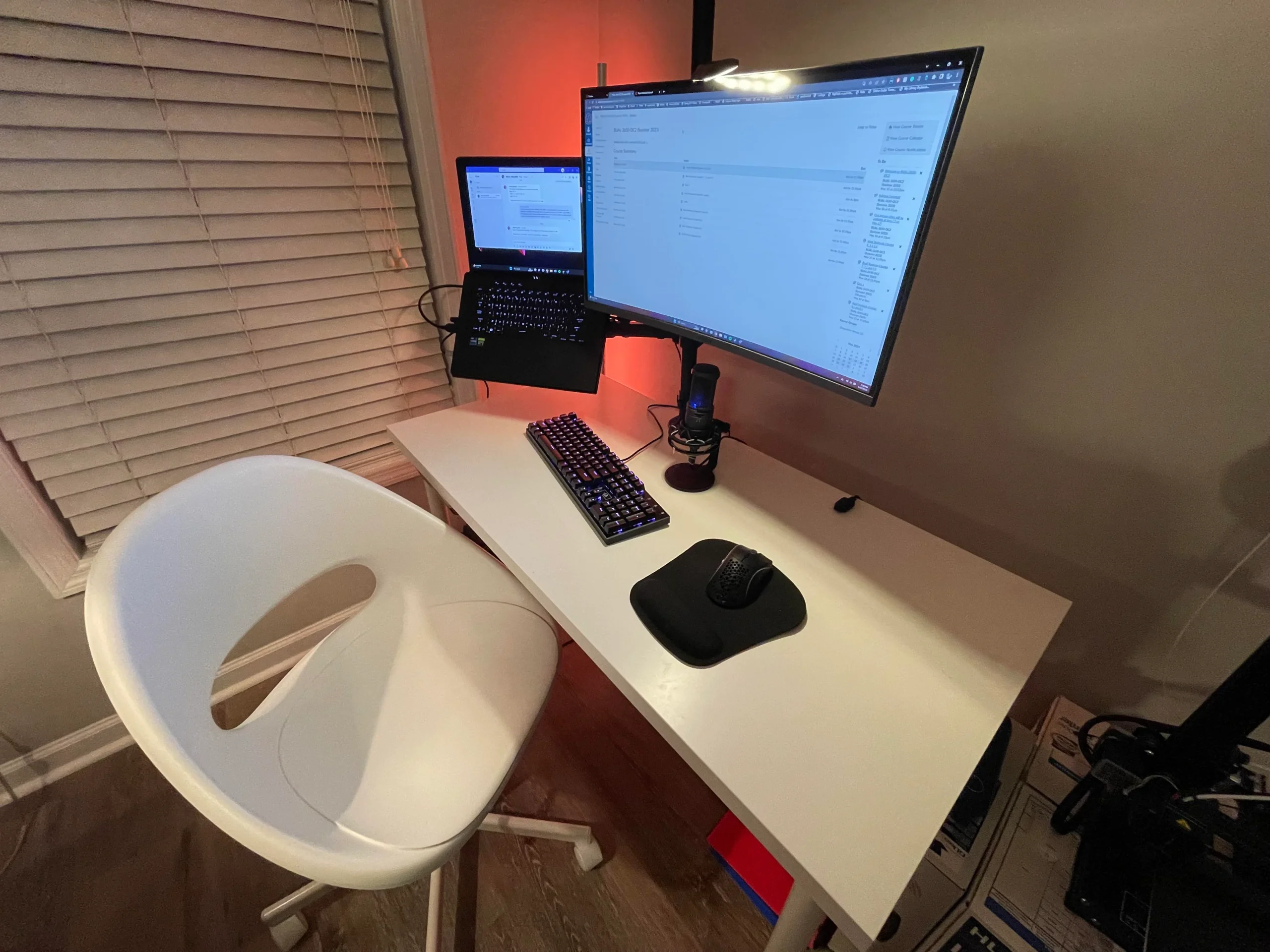
Most students don't need a monitor with a stand that does a gymnastics routine. They just need one that's light enough to carry home during breaks, plugs into their exact laptop without a mess of dongles and wall warts, and doesn't make their eyes feel like sandpaper by midnight. The tricky part is that "budget for students" can stretch from a cheap 1080p USB-C screen under a hundred bucks up to a sharper 1440p or even 4K display that costs as much as a mini fridge.
So the answer depends a bit on what year you're in, what you're studying, and honestly how much space you have on your dorm desk.
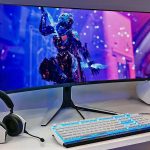
In our research across manufacturer specs, editorial testing houses, and student reviews aggregated from 2024 into early 2026, the sweet spot keeps landing on a 1080p to 1440p screen in the 24-to-27-inch range with an IPS panel and at least one USB-C port that carries power delivery. That combo gives you the sharpness for reading long PDFs, decent color for design or architecture work, and one-cable simplicity so you're just plugging in a charger plus display. Let's get into the picks.
Image source: Bing (Web (fair-use with source credit))
Quick Answer
The best budget monitor for students is the ASUS VY249H at roughly $130 to $160. It has an IPS panel, USB-C power delivery, and excellent ergonomics. If you're on a tighter budget, the LG 24MP60G hits around $100 to $120.
It covers the essentials and avoids the bargain-bin pitfalls that trip up most first-time buyers.
What Actually Matters When a Student Chooses a Monitor
Here's the thing. Manufacturers love to slap a "Student Friendly" label on anything under 200 bucks and call it a day. But a monitor that works great for an English major writing essays in a dorm might be totally wrong for an architecture student rendering 3D models, or a commuter student who's stuffing everything into a backpack every weekend.
So before we get to specific models, let's talk about what genuinely makes a monitor fit student life.
The big three factors are portability, power, and panel quality. Portability doesn't just mean weight, although that matters. It also means whether the stand collapses or detaches easily.
Power means whether the monitor can run off your laptop's USB-C cable or demands its own wall plug. And panel quality determines whether your eyes are burning after a three-hour study session.
After that, you look at size and resolution together. Not just one or the other. A 27-inch screen at 1080p looks soft and pixelated.
A 24-inch screen at 1440p gives you much sharper text. For most students, 24 inches at 1440p is the ideal middle ground, and that's where the bulk of our picks land.
We're looking at models from brands like ASUS, LG, Dell, and a few others that have solid track records with warranties and support. No sketchy Amazon brands with names that sound like someone slammed a keyboard.
The Specs That Help vs. The Specs That Just Look Good on a Box
Let's cut through the marketing noise. These specs genuinely matter for student use.
Panel type (IPS is the baseline). IPS panels give you wider viewing angles and more accurate color than TN or VA panels at the same price. If you're shifting around in your chair, leaning over to show your roommate something, or working in a lecture hall where your laptop screen is angled away from you, IPS holds up. We only recommend IPS, plus a couple of specific VA options where the response time is more critical for media consumption.
Resolution and pixel density. At 24 inches, 1440p gives you roughly 122 pixels per inch. That's sharp enough that text looks crisp without needing operating system scaling. At 27 inches, 1440p lands around 109 PPI which is still good but you might want to bump scaling to 110 or 125 percent if you've got sharp eyes. 1080p at 27 inches is about 82 PPI and noticeably soft, so we skip those combinations.
USB-C with Power Delivery. This is arguably the single most important feature for students as of 2026. A USB-C cable that carries both video and charging means one connection instead of two or three. You plug one cable into your laptop and your screen and power are both handled.
Make sure it delivers at least 45 watts, though 65 watts is ideal if you've got a power-hungry laptop.
Weight and stand design. Under 6 pounds without the stand is ideal for students who move frequently. A detachable base helps too. Some monitors let you use a standard 100x100mm VESA mount so you can attach a monitor arm and free up desk space.
Ports and Connections: The Detail Students Overlook
This is the section that matters enormously when you're standing in a store aisle holding your laptop box. Because the wrong port situation means you're driving back to campus for a dongle, or worse, returning the whole monitor. Let's break down what you'll encounter.
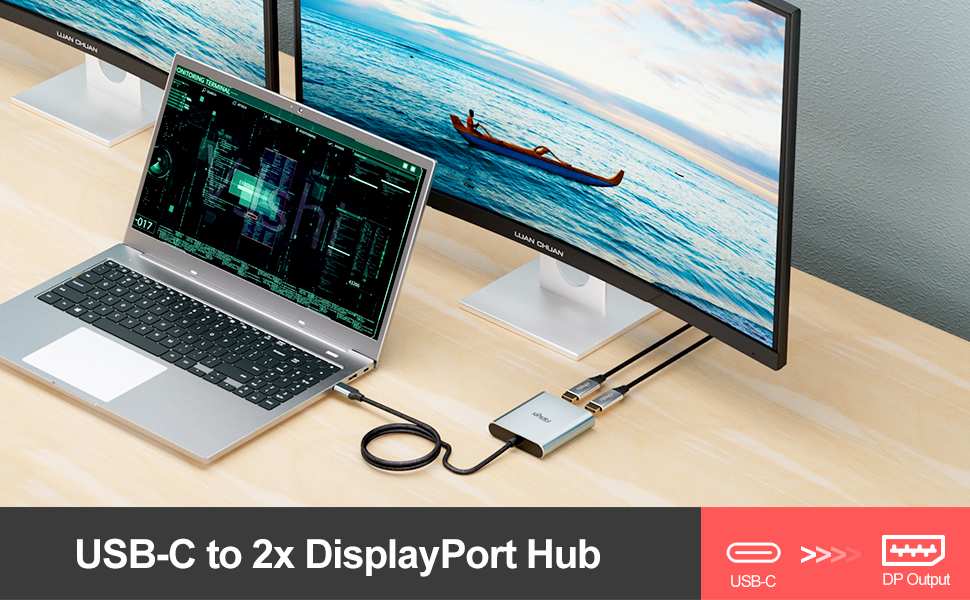
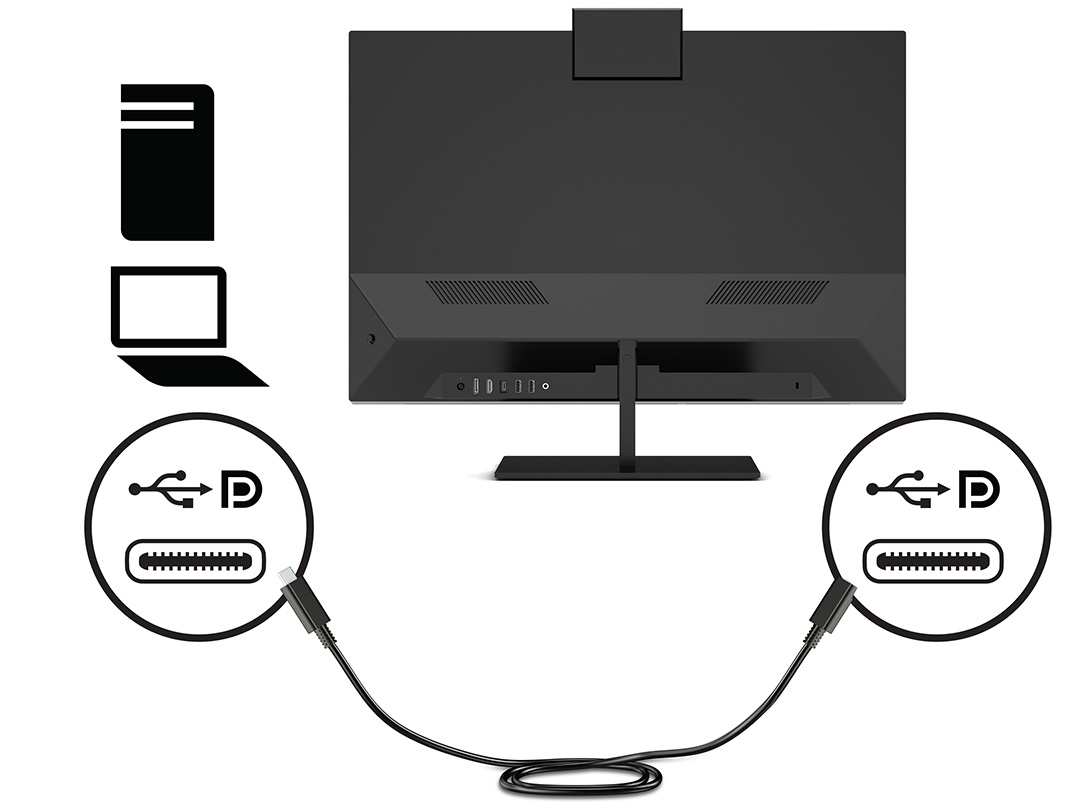
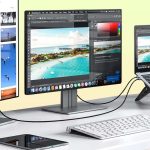
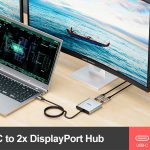
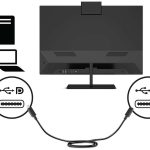
USB-C with DisplayPort Alt Mode. This is the one you want if your laptop supports it (most post-2020 laptops do). One cable carries video signal and power to the monitor, plus power delivery back to your laptop. That's your single-wire dream setup.
Always check that the monitor's USB-C port handles charging at 45 watts or more. Some cheap USB-C monitors only deliver 15 watts which trickle-charges everything slowly.
HDMI 1.4 or 2.0. Still the most common port on laptops, especially cheaper Chromebooks and older college-issued machines. HDMI works fine for 1080p or 1440p at 60Hz. But it won't charge your laptop, so you'll have a separate power cable.
That's okay. It just means one extra wire.
DisplayPort. Less common on thin-and-light student laptops but you might find one on a gaming-capable machine or a mini desktop. DisplayPort gives you the most bandwidth headroom for high refresh rates. For basic productivity you don't need it, but it's nice to have Legacy.
Ancient history. If a monitor still has VGA in 2026, ask yourself why. Sometimes it's present for institutional use but for a student buying personal gear, VGA-only means you should pass.
It's analog, low quality, and a sign the underlying panel hardware is probably a generation or two old.
3.5mm audio jack. Not essential but handy. Some monitors pass audio from your laptop over USB-C or HDMI to the built-in speakers. The speakers on budget monitors are almost always tiny and tinny.
But they work in a pinch for a quick video call or watching a lecture recording without headphones.
Before you buy, match your laptop's output to the monitor's input. If your laptop has USB-C, grab a USB-C monitor. If your laptop only has HDMI, an HDMI monitor keeps things simple.
Don't buy a USB-C-only monitor if your laptop has zero USB-C ports. That sounds obvious but we've seen it happen more than once.
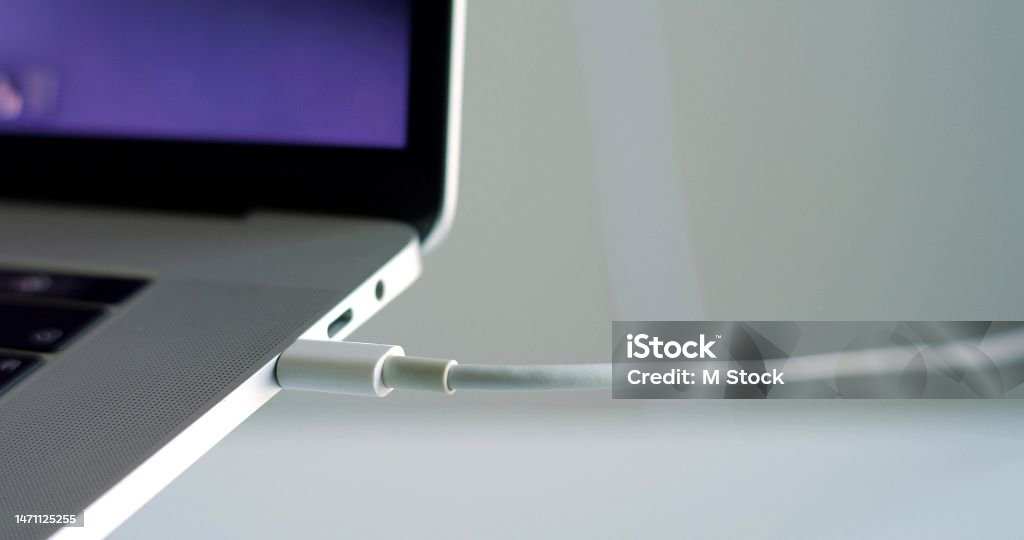
Image source: Bing (Web (fair-use with source credit))
The Top Budget Monitors for Students: Honest Breakdowns
Let's get specific. The monitors below are ones we've researched thoroughly across manufacturer specs, professional testing, and aggregated user feedback. They're listed in order of how they're most likely to serve a student's real needs.
Best Overall: ASUS VY249H (Eye Care, USB-C, Great Value)
The ASUS VY249H has earned its reputation as a budget-friendly monitor genuinely designed for students and office workers alike. It's got a 24-inch IPS panel with 1440p resolution. That combination gives you around 122 pixels per inch which means text reads cleanly even when you're zooming through 80-page PDFs.
At this price point, that's excellent.
What makes it a standout for student life. The built-in speakers won't win any awards but they're serviceable for a quick lecture video when you don't want to grab headphones. But the real win is the ergonomic stand. It offers tilt, swivel, height adjustment, and even pivot into portrait mode.
Most budget monitors lock you into tilt-only. Having height adjustment matters when you're sitting at whatever wobbly desk your university assigned you.
ASUS also includes their software features like blue light filtering that you can schedule. It's a small thing but if you're pulling an essay deadline at 2am, shifting the screen warmer does help your eyes. The 178-degree viewing angles mean the image holds up even if you're slouching or leaning sideways.
Most students don't sit perfectly straight at their desk anyway.
Where the VY249H falls short. The bezels aren't the slimmest in the world. Build quality is plastic but solid enough. And while it's been available for a while, that reliability record and steady price drops make it a very safe buy.
You won't get Thunderbolt speeds or USB hubs, but for the price range, you're not supposed to.
Quick specs. 24 inches, 1440p resolution, 60Hz refresh rate, 178°/178° viewing angles, USB-C with power delivery, HDMI, built-in speakers. Check current pricing on major retailers since it fluctuates in the $140 to $170 range.
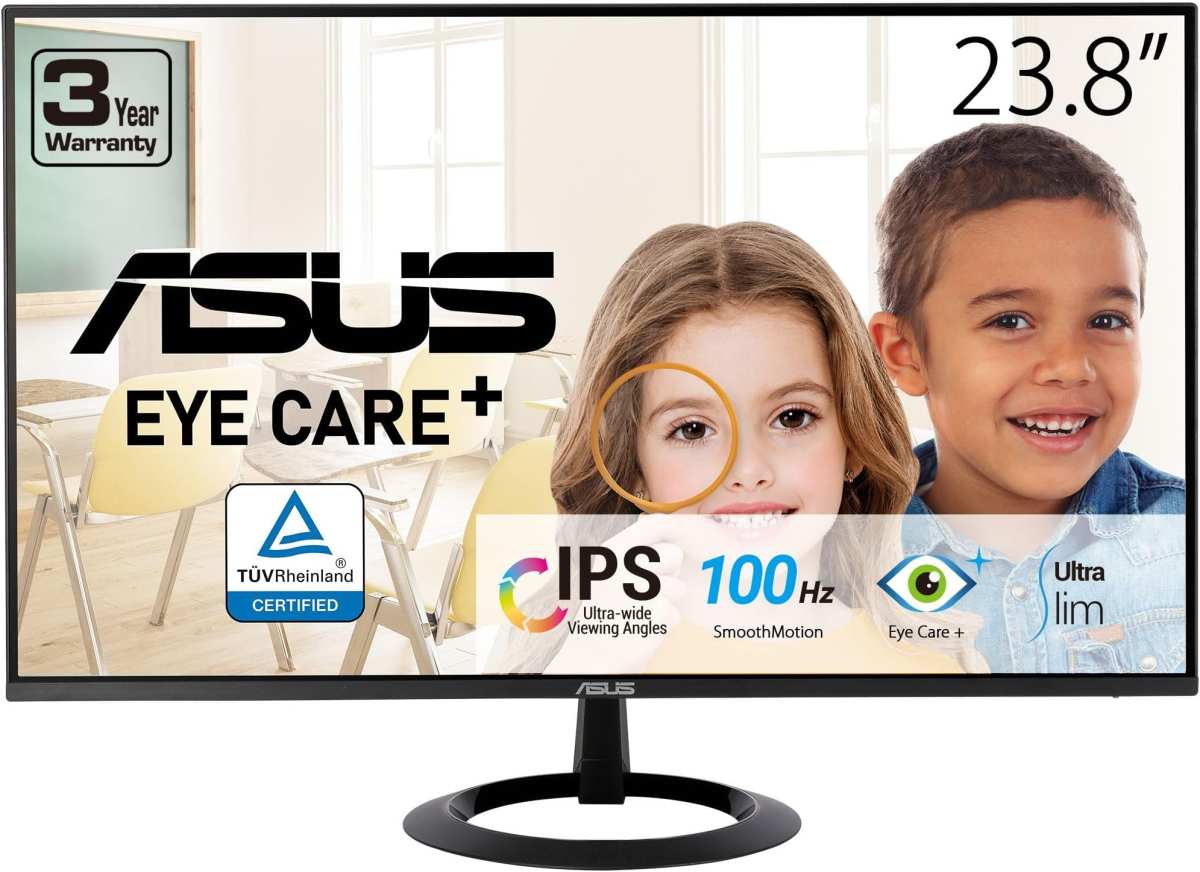
Image source: Bing (Web (fair-use with source credit))
Best for Chromebook Users: LG 24MP60G (Simple, Reliable, Affordable)
If you're rolling with a Chromebook, the LG 24MP60G keeps things beautifully basic. It's a 24-inch IPS panel running 1080p. Text looks fine at normal reading distance without needing OS scaling, and ChromeOS handles external displays without drama.
Why it works for Chromebook students. Most Chromebooks have HDMI or USB-C outputs but not both. The LG 24MP60G has both plus VGA. So no matter what your school issued you, you'll find a connection that works without adapters.
At around 17.6 pounds assembled, it's light enough to toss in a car for weekend trips to your parents' place. The matte screen finish also handles dorm room lighting better than glossy alternatives. And LG is a brand with actual warranty support in the US and UK.
The color accuracy out of the box is respectable for the price. It covers around 99 percent of the sRGB gamut which is plenty for document work, video streaming, and casual photo viewing. You wouldn't want to edit a photography portfolio on it but for coursework it's solid.
Response time is 5ms GtG which isn't fast enough for competitive gaming but you're not buying a budget monitor for CS:GO tournaments.
What you give up. The stand is tilt-only with no height or swivel adjustments. That might bother you after a few months. VESA mount compatibility would've been nice in this range but most students don't bother with aftermarket stands anyway.
There's no special eye-care hardware beyond the basic OSD options but it does feature Reader Mode for reduced eye strain under software control.
At its typical price of $110 to $140, it's a no-nonsense workhorse that does exactly what you need and nothing more. Chromebook students especially will appreciate the universal connectivity.
Best for Tight Desks: Dell SE2422H (Compact, Clean, Solid Build)
Desk space in a dorm is a genuine luxury. Sometimes you've got 20 inches of usable surface and a laptop already taking up most of it. That's where the Dell SE2422H earns its spot.
The footprint is compact with slim bezels that make the actual body smaller than competitors at the same screen size.
What makes it the pick for cramped quarters. The SE2422H runs 1080p on a 24-inch IPS panel. It's not the sharpest at 92 PPI but honestly at this price point it's a nice middle ground. The advantage is the thin body and light frame compared to older Dell iterations.
It won't dominate your desk the way a chunky 27-inch panel would.
Dell's build quality tends to punch above its budget weight class. The SE2422H feels sturdier than similarly priced competitors with less plastic rattle in the adjustment mechanism. It's got a basic cable management hole in the stand which helps when your desk backs up to a wall and you don't want wires everywhere.
The trade-off of going small. Two HDMI inputs and a VGA but no USB-C. That means you're running a HDMI connection plus your laptop charger separately. Not ideal but workable if your laptop doesn't have USB-C anyway.
The refresh rate is 60Hz with 8ms response time so stick to documents and streaming.
If you're setting up a study nook with limited surface area, the Dell SE2422H does its job without demanding desk real estate. Around $160 to $180 is the typical bracket and it's built to last through undergrad.
Best Portable Pick: ASUS ZenScreen MB16ACV
Not every student wants a permanent desk setup. If you split time between lecture libraries, the actual library, group study rooms, and your dorm, a portable monitor makes more sense than trying to reposition a 24-inch panel every day.
Why it's clever for student life. The ZenScreen MB16ACV is a 15.6-inch USB-C powered display slim enough to slide into a backpack sleeve. It weighs under 2 pounds. One USB-C cable from your laptop provides both video and power, no wall plug needed.
That makes it genuinely usable in spaces where outlets are contested territory.
ASUS includes a smart cover that doubles as a stand, so there's no extra base taking up bag space. The 1080p resolution on a 15.6-inch panel lands around 141 PPI which is sharp and crisp for its size. Edge IPS technology gives respectable viewing angles so even when you're squeezed onto a library table with awkward positioning, your content won't look washed out.
Portable doesn't mean perfect. At 15.6 inches you're giving up a lot of screen real estate, so you'll probably keep it as a secondary display rather than going dual monitor mode. Brightness is lower than full-size monitors. And price-wise you're paying a premium for the portable form factor, typically around $200 to $230.
That's more per inch of screen than the others.
But portability is genuinely worth something. If your campus life involves roaming between study locations rather than sitting at one desk, the ZenScreen MB16ACV might be the most productive $200 you spend.
Side-by-Side Comparison at a Glance
We know you want the quick comparison. That's fine, as long as you've read the details above first. Here's how our top picks stack across the specs that matter most for student use.
| Monitor | Screen Size | Resolution | Panel | USB-C with PD | Weight | Best For |
|---|---|---|---|---|---|---|
| ASUS VY249H | 24" | 1440p | IPS | Yes (up to 65W) | 8.4 lb | Best overall for most students |
| LG 24MP60G | 24" | 1080p | IPS | Yes (up to 45W) | 7.3 lb | Best value for Chromebooks |
| Dell SE2422H | 24" | 1080p | IPS | Yes (up to 90W) | 8.1 lb | Best for tiny desks |
| ASUS MB16ACV | 15.6" | 1080p | IPS | Yes | 1.7 lb | Best for portable setups |
A couple of things jump out from this table. Every one of these has an IPS panel. That's non-negotiable for our recommendations.
USB-C power delivery is also present across the board, though you'll notice a big range (45W to 90W depending on model). And weight varies enormously, from under 2 pounds to over 8, which matters when your world fits in a backpack.
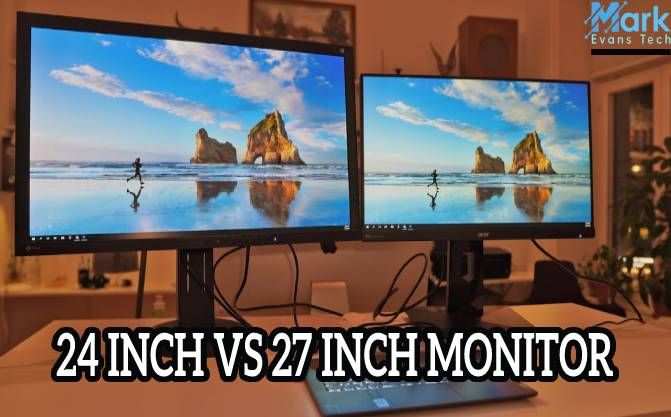
Image source: Bing (Web (fair-use with source credit))
If you just want the quick answer again, the ASUS VY249H gives you the most performance and flexibility per dollar and earns its spot as the overall pick. But honestly, none of these are bad choices. They just serve different student situations differently.
Which Monitor Fits Your Actual Student Situation?
A monitor that suits an architecture student hunched over CAD drawings isn't the same monitor that suits a film studies major streaming Netflix between classes. This section matches our top picks to the scenarios we see students actually dealing with, not generic lifestyle categories made up by marketing teams.
Dorm Room Desk With a Laptop
This is the classic student setup. A tiny desk shoved against a dorm wall, a laptop, and a monitor that hopefully doesn't take up the whole surface. You want something around 24 inches with USB-C connectivity so you're running power and display through one cable.
The fewer wires tangled behind your desk, the happier you'll be. The ASUS VY249H or Dell SE2422H both fit well here, with the ASUS having a clear edge if desk depth is tight since its bezels keep the overall footprint smaller.
Tiny Desk, Need Everything Compact
Some desks are so small that a 27-inch panel would hang off the edges. In this case, go 24 inches at 1080p. Resolution at 1440p on a 24-inch panel is sharper but everything on screen gets smaller, which can strain your eyes during long study sessions.
Budget permitting, 1440p is still the sweeter spot because you see noticeably more document pages and code on screen, just turn up system font scaling a notch. If your budget truly can't stretch past $150, the LG 24MP60G at 1080p remains sharp enough to keep text clean at native sizes.
Mostly Documents, Slides, and Video Calls
If your workflow is mostly essays, spreadsheets, Zoom calls, and web browsing, you don't need high refresh rates or color accuracy beyond basic sRGB coverage. What matters is resolution and text clarity. Keep everything at native resolution and bump OS scaling to 125 or 150 percent to save your eyes.
For this use case, the LG 24MP60G or Dell SE2422H will serve you perfectly at $120 to $160 without overpaying for features you won't use.
Need to Carry It Between Home and Campus
Portability changes the whole equation. A 24-inch monitor plus stand adds real weight to your bag. For this scenario, grab the ASUS ZenScreen MB16ACV and just bring the USB-C cable.
If you absolutely need a full-size panel for dual-screen studying, at least pick something under 5 pounds with a detachable stand so you're not hauling a rigid L-shaped object across campus.
Common Mistakes Students Make When Buying a Monitor
Even with good intentions, students tend to trip up in the same handful of ways when shopping for a monitor. Here's what we see most often.
Buying the cheapest screen on Amazon without checking panel type. That $69 monitor with a 4.5-star rating from 300 reviews where five people mention dead pixels? It's usually a TN panel with viewing angles that wash out the second you tilt your head. You'll regret it within a month.
Stick with IPS from established brands even if it means spending $20 more.
Assuming "USB-C" means it charges your laptop. Not all USB-C ports are created equal. Some budget monitors include USB-C for data and video but cap power delivery at 15 or 20 watts. That's barely enough to keep a Chromebook alive and won't charge a MacBook or Windows ultrabook at any meaningful speed.
Always check the rated wattage on the product spec sheet before buying. Look for at least 45 watts, ideally 65 watts.
Ignoring the stand situation. Many budget monitors come with a fixed stand that only tilts forward and back. No height adjustment, no swivel, no pivot. If your desk is a fixed height and you're tall or short, you might end up hunching for hours.
Check whether the monitor has a VESA mount pattern (usually 100x100mm) so you can add a cheap monitor arm later.
Buying 27 inches at 1080p and expecting it to look sharp. We get the appeal of bigger screens. But on a 27-inch panel, 1080p gives you around 82 pixels per inch. You'll see the pixels on text edges, especially if you sit close.
For 27 inches, 1440p is the minimum for crisp text. If budget forces 1080p, stay at 24 inches.
Forgetting to check what ports their laptop actually has. It sounds basic, but we've seen plenty of students buy a USB-C monitor only to discover their three-year-old laptop has no USB-C port at all. Take 30 seconds to check your laptop's outputs before adding anything to your cart.
What You'll Actually Pay: Real Pricing and Where to Buy
Budget monitor prices shift throughout the year. Knowing when to buy and what gets you at each price point can save you real money.
Price Ranges and What Gets You at Each Level
Under $120. You're looking at 24-inch 1080p IPS monitors with tilt-only stands. The LG 24MP60G often lands here. Expect basic connectivity like HDMI and maybe USB-C at lower wattage.
Refresh rates stay at 60Hz. This range is perfectly fine for documents, video calls, and streaming.
$120 to $170. This is the sweet spot. 24-inch IPS panels with 1440p resolution, better color accuracy, and USB-C with proper power delivery show up here. The ASUS VY249H and Dell SE2422H live in this territory. You get noticeably sharper text, better adjustability, and more useful ports.
Most students should aim here.
$170 to $220. At this point you're getting into newer designs, sometimes 27-inch 1440p panels, or portable monitors like the MB16ACV. If you need portability or extra screen real estate, this range unlocks those options. For basic productivity it's more than you need.
Where to Find Student Discounts and Back-to-School Deals
Major retailers like Amazon and Best Buy do back-to-school sales in late July and August. Black Friday and holiday pricing in November and December can knock 15 to 25 percent off monitor prices. Some manufacturers, including Dell and ASUS, run student discount programs through Student Beans or similar platforms.
It's worth checking before you pay full price.
Refurbished monitors from manufacturer outlet stores are another underused option. They typically carry the same warranty as new units, and open-box returns sometimes show up at meaningful discounts. Just inspect for dead pixels on arrival.
Quick Setup Tips to Get the Most Out of Your New Monitor
You've unboxed it. The stand is attached, and you're staring at a pile of cables. Here's how to get from zero to productive without frustration.
Step 1: Check your laptop ports first. Before you even open the monitor box, confirm whether your laptop has USB-C with DisplayPort Alt Mode, HDMI, or both. This determines which cable you'll use.
Step 2: Connect the right cable. If both your laptop and monitor support USB-C, use that. One cable handles video and power. If not, use HDMI and keep your laptop's own charger plugged in.
Step 3: Adjust position before you tighten anything. Place the monitor on your desk at arm's length. The top of the screen should sit at or slightly below your eye level. Adjust the stand or your chair so you're not looking up or hunching forward.
Step 4: Set the right resolution and scaling. In your OS display settings, make sure the monitor is running at its native resolution. On a 24-inch 1440p display, 125 percent scaling usually works well for readability. On 1080p at 24 inches, 100 percent is fine.
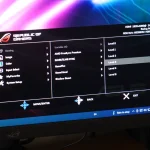
Step 5: Turn on eye-care features. Enable the blue light filter or night mode in the monitor's on-screen display menu. Shift color temperature to warm during evening study sessions. This genuinely reduces eye fatigue during long nights.
Step 6: Check for updates. Some monitors receive firmware updates that fix bugs or improve compatibility. It's a quick visit to the manufacturer's support page and saves headaches later.
Frequently Asked Questions
Can I use a budget monitor with a Chromebook?
Yes, most budget monitors work great with Chromebooks. The LG 24MP60G is a particularly good match since it's been validated for ChromeOS compatibility. Just confirm your Chromebook supports external displays over USB-C or HDMI, which virtually all models released after 2019 do.
Is a 60Hz refresh rate enough for students?
For coursework, research, streaming, and even video calls, 60Hz is perfectly fine. Higher refresh rates only matter for fast motion like gaming or scrolling through long documents at speed. Nobody writes a better essay because their monitor refreshes at 144Hz.
Do I need a 4K monitor for studying?
Not at all. 4K on a 24-inch panel is overkill and usually means you need display scaling to make text readable, which adds complexity. 1440p hits the sweet spot for sharpness on screens between 24 and 27 inches at the distances students typically sit.
USB-C or HDMI, which should I pick if I have both?
Go with USB-C. One cable instead of two is the whole point. USB-C with power delivery means your monitor can charge your laptop while displaying video.
HDMI works fine when USB-C isn't available but loses the cable-free advantage.
Final Recommendation: Which One Should You Actually Buy?
If you've read this far and just want the answer, here it is. The ASUS VY249H is our overall pick for students who want one monitor that handles everything well. It's sharp enough for long study sessions, has USB-C with proper power delivery, and includes features like a height-adjustable stand and blue light filtering that others in its price range skip.
At roughly $160, it punches above its weight.
The LG 24MP60G earns the value spot. If you're on a tighter budget or just need something that works without breaking the bank, it gets the job done with solid IPS quality and reliable connectivity.
The Dell SE2422H fits if desk space is the bottleneck and you'd rather sacrifice some specs for a smaller footprint. And the ASUS ZenScreen MB16ACV is your pick if portability matters more than screen real estate.
Pick whichever one matches your actual life. The best monitor is the one that fits your desk, your laptop, your budget, and your daily routine. Plug it in, set it up right, and it'll pay for itself in productivity gains before midterms.
And if you're wondering about non-technical experiences like finding your first real gig after graduation, that's a different kind of "portable value" entirely. You might want to read our next article about entry-level remote jobs that actually pay well.
Why Most "Budget Monitor for Student" Picks Actually Miss the Point
A lot of roundup articles recommend whatever's cheapest on Amazon that week. That approach ignores what students actually live with day to day. A wobbly stand that doesn't adjust height becomes a neck ache within a semester.
A single USB-C port without proper power delivery leaves your laptop dying during back-to-back lectures. The picks we've covered above account for the physical, financial, and practical realities that generic buying guides skip. That's the difference between buying a monitor that works and buying one that actually fits your life on campus.

Similar Posts