How Do Mini LED Monitors Compare to Micro LED
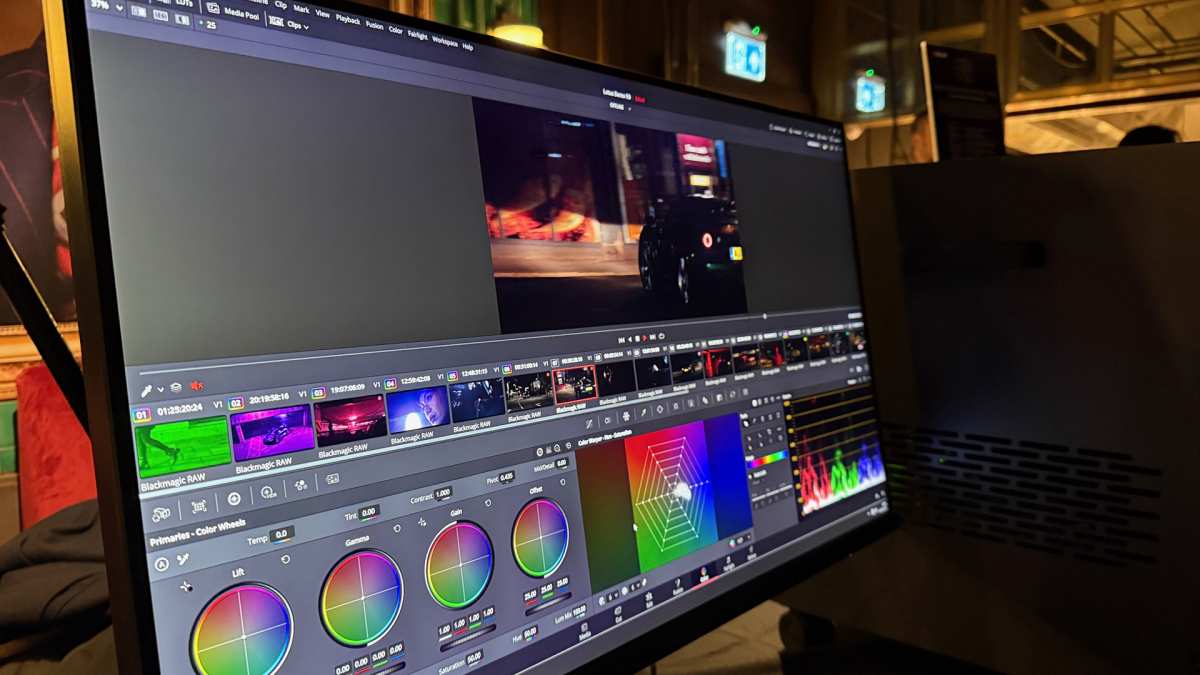
When you're figuring out how do mini led monitors compare to micro led, the short answer is that these are fundamentally different technologies trying to solve the same problem. One is a sophisticated backlighting system for existing LCD panels. The other is a completely new type of self-emissive display that could eventually replace everything we use today.
The confusion makes sense. Manufacturers love slapping "LED" on everything, and the naming difference between Mini LED and MicroLED is literally just one letter. But under the hood, they don't share much DNA.
As of 2026, Mini LED monitors are sitting on shelves right now at prices most serious creators and gamers can swallow. MicroLED exists mostly in commercial installations, ultra-premium living rooms, and R&D labs. Let's break down what that actually means for you.
Quick Answer
Mini LED monitors use thousands of tiny LEDs to backlight an LCD panel. MicroLED is a self-emissive technology where each pixel generates its own light. Mini LED delivers excellent HDR and brightness at consumer-friendly prices.
MicroLED offers theoretically perfect picture quality but remains expensive and scarce in monitor sizes. For most people right now, Mini LED is the practical pick.
The Core Difference Most People Miss
Here's the single thing that trips everyone up. Mini LED is not a display technology. It's a backlighting technology.
The actual display in a "Mini LED monitor" is still a liquid crystal panel, an LCD. All those tiny LEDs are sitting behind the LCD, shining through it.
MicroLED? That's the real deal. Each microscopic LED acts as its own pixel.
No liquid crystal layer. No color filter stack. Light comes directly from the source, just like OLED, except it uses inorganic semiconductors instead of organic compounds.
Think of it this way: Mini LED is a really, really good flashlight shining through a stained glass window. MicroLED is millions of tiny, independent light bulbs arranged in a grid, each one doing its own job.
That architectural difference drives literally everything else: contrast, thickness, repairability, cost, burn-in risk, and what you can actually buy right now in a monitor form factor.
| Feature | Mini LED | MicroLED |
|---|---|---|
| Display type | LCD with LED backlight | Self-emissive inorganic LED |
| Pixel light source | Backlight + liquid crystal | Individual LED per pixel |
| Burn-in risk | None (LCD layer) | None (inorganic) |
| Typical monitor availability | Widely available 2024–2026 | Extremely limited |
| Starting price (monitor size) | $500–$1,500 | $10,000+ (large format) |
Mini LED Monitors: What You're Actually Getting
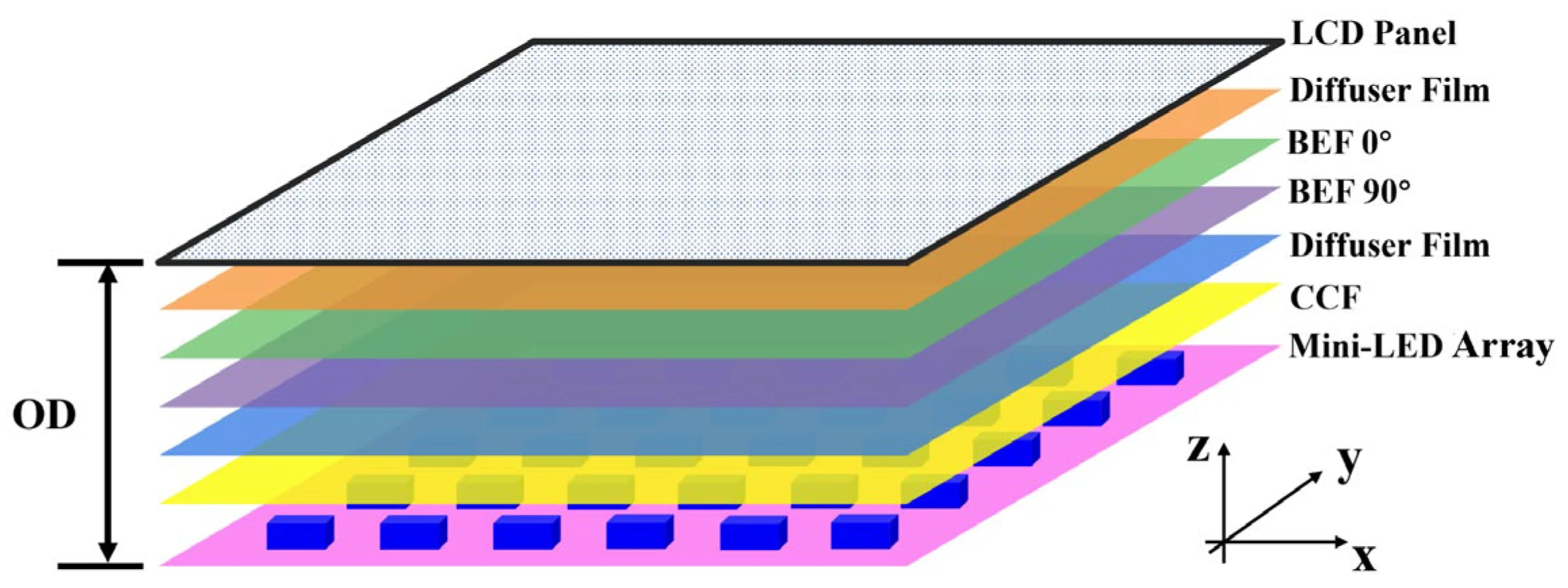
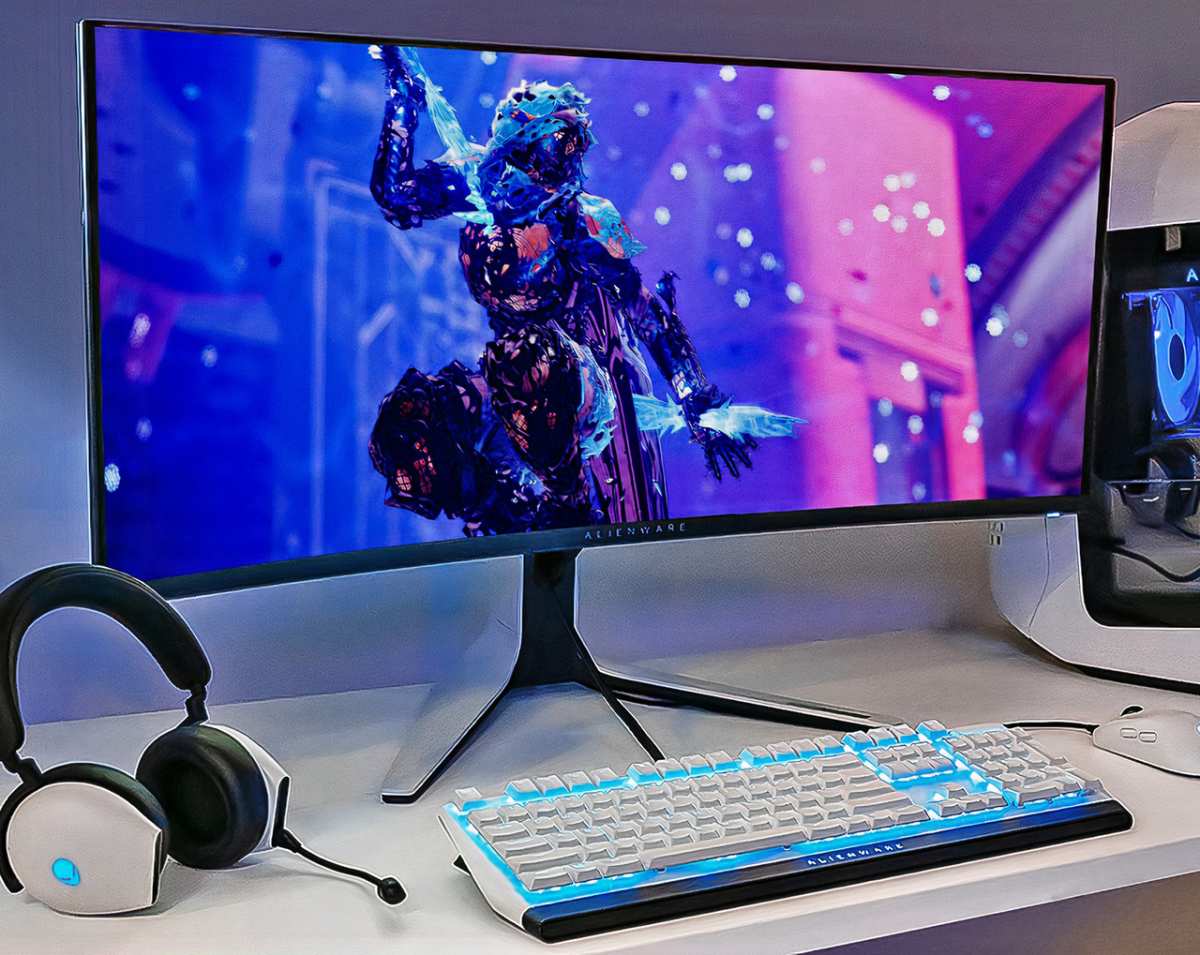
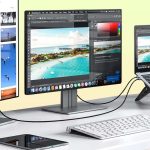
Image source: Bing (Web (fair-use with source credit))
Let's get specific about what's inside a Mini LED monitor, because marketing doesn't help here.
A Mini LED backlight uses tens of thousands of LED chips, each roughly 100 to 200 micrometers in diameter, arranged in a grid behind the LCD layer. These chips are grouped into independently controlled dimming zones. A good Mini LED monitor in 2026 might have anywhere from 384 to over 2,000 of those zones.
More zones means the display can dim specific areas of the screen independently. Bright sunset behind a dark building? The sky pops while the building stays properly dark.
That's where Mini LED earns its HDR stripes.
The LCD layer on top is usually an IPS or VA panel. The quality of that panel matters hugely. A Mini LED backlight paired with a mediocre LCD panel still looks mediocre in some scenarios.
The backlight doesn't fix inherent panel weaknesses like slow response times or narrow viewing angles.
Manufacturer specs for current Mini LED monitors tell the story: peak brightness of 1,000 to 2,000 nits, contrast ratios around 100,000:1 (effective, not native), and color gamut covering 95 to 99% of DCI-P3. Those are genuinely impressive numbers for a display that won't require a second mortgage.
What Mini LED doesn't do is eliminate blooming entirely. When a bright object sits against a dark background, that halo effect can still appear because the zones, while small, aren't pixel-precise. Better firmware and more zones reduce it, but physics doesn't disappear.
MicroLED: The Technology Everyone Talks About But Few Own
MicroLED is what display engineers actually dream about. The concept is elegant: take an LED so small (under 50 micrometers, often 20 to 30 micrometers) that you can use one as a single pixel, or even as a single subpixel in an RGB arrangement. Millions of these microscopic LEDs, mounted on a backplane, create an image directly.
No liquid crystal. No backlight. No color filter.
The theoretical benefits are massive. Black levels are perfect because pixels turn completely off. Peak brightness can exceed 5,000 nits.
There's zero burn-in risk because the LEDs are inorganic. Response times are sub-millisecond. Color gamuts easily cover Rec. 2020.
Manufacturer demonstrations and research publications from SID symposia confirm all of this. Samsung's Crystal LED and various prototype MicroLED panels from BOE and LG Display have demonstrated these capabilities in controlled settings.
But here's the brutal reality in 2026: manufacturing is still a nightmare. Picking up individual MicroLED chips measured in micrometers and placing them accurately onto a substrate with near-zero defect rates at consumer-scale densities? That process, called mass transfer, remains expensive and yields drop dramatically as pixel density increases.
This is why MicroLED shows up as modular video walls in commercial installations but basically doesn't exist in standard monitor sizes. The few MicroLED products aimed at consumers, like Samsung's luxury displays, start around $50,000 and go up from there.
There's also the red LED efficiency problem. Red MicroLED chips are less efficient than their blue and green counterparts at very small sizes, which creates color uniformity challenges that engineers are still solving through advanced driver IC and compensation algorithms.
Side-by-Side: Mini LED vs. MicroLED at a Glance
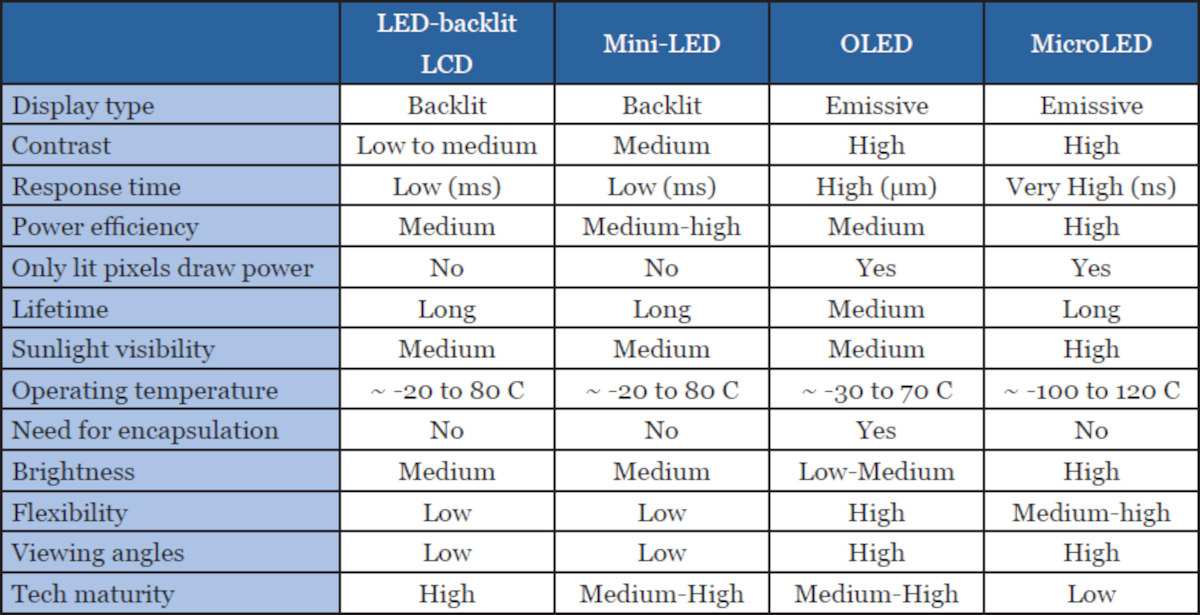
Let's put the two technologies next to each other so you can see exactly where they diverge. This isn't about one being "better" in a vacuum. It about understanding what each one does well and where it stumbles.
| Specification | Mini LED (FALD LCD) | MicroLED |
|---|---|---|
| Black levels | Very good (zone dimming) | Perfect (pixel-off) |
| Peak brightness | 1,000–2,000 nits | 2,000–5,000+ nits |
| Blooming/halo | Present (zone-dependent) | None |
| Response time | 1–5 ms (IPS/VA layer) | Sub-millisecond |
| Panel thickness | 15–30 mm | 5–15 mm |
| Power consumption | Moderate to high | Lower at equivalent brightness |
| Burn-in risk | None | None |
| Manufacturing maturity | High (mass production) | Low to moderate |
| Consumer monitor availability | Strong (2024–2026) | Minimal |
| Starting price (27"–32" class) | $500–$1,500 | Not available in this size |
The takeaway from this table isn't that MicroLED wins on every spec. It does win on most image quality metrics. The takeaway is that Mini LED wins on everything related to actually buying one and putting it on your desk right now.
Picture Quality: Brightness, Contrast, and Real-World HDR
If you care about HDR content, this is where the comparison gets interesting.
Mini LED monitors with 1,000+ dimming zones deliver genuinely impressive HDR. Per VESA DisplayHDR 1400 certification testing, the best Mini LED panels hit sustained peak brightness above 1,000 nits with localized peaks reaching 1,600 to 2,000 nits. That's enough to make highlights in games and movies genuinely pop in a room with normal lighting.
MicroLED goes further. Demonstrated panels at SID Display Week and similar industry events have shown sustained brightness exceeding 2,500 nits with peaks above 5,000 nits. No halo.
No blooming. Just direct, precise light output from each individual pixel.
But here's the practical question: does your content actually use that headroom? Most HDR masters for streaming and Blu-ray target 1,000 to 4,000 nits. Many are mastered at 1,000 nits.
Mini LED covers that range comfortably. MicroLED's extreme brightness advantage matters more for outdoor signage and daylight-viewable applications where ambient light washes out the screen.
For contrast, Mini LED LCD panels achieve effective contrast ratios of roughly 50,000:1 to 100,000:1 depending on zone count and algorithm quality. The panel's native contrast (the LCD layer itself) caps around 1,000:1 to 5,000:1. Local dimming multiplies that dramatically but can't match MicroLED's effectively infinite contrast where pixels go completely dark.
You'll notice blooming on Mini LED in specific scenarios: white subtitles on black backgrounds, star fields in space scenes, cursor movement on dark interfaces. Higher zone counts and aggressive dimming algorithms reduce this noticeably, but it's inherent to the architecture. MicroLED has none of this because each pixel is self-contained.
Where Mini LED Wins (And It's Not Just Price)
Let's be honest about what Mini LED actually gets right, because the marketing around MicroLED can make this technology seem like yesterday's news. It isn't.
Availability tops the list. As of 2026, you can walk into any major electronics retailer or browse online and find dozens of Mini LED monitor options from brands like Samsung, Dell, ASUS, AOC, and Gigabyte. Sizes range from 27-inch to 49-inch ultrawide.
Refresh rates hit 240 Hz and above for gaming. Prices started around $500 for entry-level models and climb to $1,500 for premium 4K HDR panels.
The ecosystem is mature. You get standard DisplayPort and HDMI inputs. Adaptive sync works with NVIDIA and AMD GPUs.
USB-C power delivery up to 90W is common on creator-focused models. All the normal monitor stuff just works.
Mini LED also avoids the red subpixel longevity concern that affects MicroLED at very small chip sizes. Blue and green LEDs have well-documented efficiency and lifespan characteristics. Red LEDs at the micro scale are trickier.
This matters less in large-format MicroLED video walls where pixel pitches are 0.7 mm or larger, but it becomes a real engineering challenge at monitor-scale pixel densities.
Burn-in immunity applies to both technologies since neither uses organic emissive materials. That's a shared advantage over OLED. Neither Mini LED nor MicroLED will retain ghost images from static UI elements over time.
For users running stock tickers, taskbars, or broadcast monitoring on fixed content, both technologies handle that gracefully.
Heat management is more straightforward with Mini LED. The backlight generates warmth, but it diffuses across a larger area. MicroLED concentrates heat at the substrate level where millions of tiny LEDs operate simultaneously, requiring careful thermal design in the backplane and housing.
Where MicroLED Wins (If You Can Actually Get One)
MicroLED's advantages are real, significant, and in some cases unmatched by any existing consumer display technology. The problem is access.
Perfect black levels represent the single biggest visible advantage. Each MicroLED pixel turns off completely in dark areas of the image. There is no backlight bleed through an LCD layer.
There is no zone-based approximation of darkness. A dark scene in a movie or game looks genuinely dark on MicroLED in a way that Mini LED, at any zone count, simply cannot replicate.
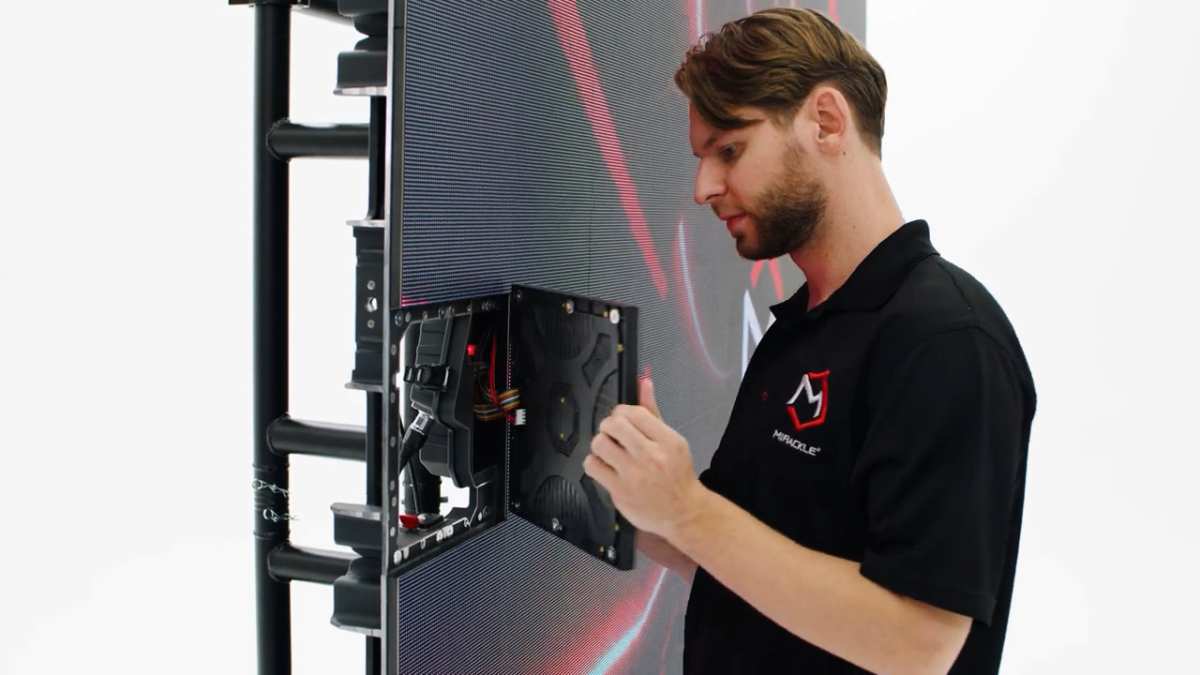
Repairability at the module level is another underappreciated benefit. Commercial MicroLED video walls use modular panel sections. If a section fails, you replace that module rather than the entire display.
Samsung's Crystal LED and similar commercial products use this approach. Mini LED monitors are essentially monolithic units. A backlight issue often means replacing the whole panel.
Scalability without bezel interruption matters for large-format installations. MicroLED panels tile together with extremely narrow seam gaps. The result is enormous displays that feel like one continuous surface.
Mini LED doesn't offer this tiling capability in consumer products. Each monitor has bezels, and multi-monitor arrays always show those grid lines.
Lifespan projections favor MicroLED in manufacturer testing. Inorganic LED chips degrade slower than the organic compounds in OLED and slower than the liquid crystal materials in LCD. Projected lifespans for MicroLED panels exceed 100,000 hours to half-brightness.
Mini LED backlights typically rate around 50,000 to 60,000 hours, limited partly by the LCD layer longevity itself.
The transparent display potential of MicroLED is impossible with Mini LED LCD. Because MicroLED pixels are so small, manufacturers can create panels with significant see-through capability. This opens applications in retail, automotive heads-up displays, and architectural integration that Mini LED simply cannot address.
Who Should Buy a Mini LED Monitor Right Now
For most people reading this comparison, Mini LED makes practical sense today.
If you're a content creator or video editor working in HDR, a Mini LED monitor with 500+ dimming zones and factory-calibrated color accuracy gives you a real, meaningful upgrade over standard LCD. You'll get reliable DCI-P3 coverage, solid HDR reference capability, and a panel that costs between $600 and $1,200 rather than a used car.
Gamers benefit from the combination of high refresh rates and HDR brightness. Mini LED gaming monitors in 2026 offer 240 Hz or faster refresh rates with adaptive sync, low response times, and peak brightness that makes HDR games genuinely striking. The blooming on dark scenes is noticeable only if you're looking for it during normal play.
Most gamers won't find it distracting in fast-paced titles.
Users who work with static content for long hours, traders, programmers, broadcast monitors, get burn-in immunity without paying MicroLED prices. Mini LED handles static UI elements indefinitely with no retention risk.
Budget-conscious buyers who want the best available picture quality without waiting for MicroLED to mature should consider Mini LED the sensible choice. The price-to-performance ratio is genuinely strong. You're getting a display that's better than 95% of what's on the market, available today, with full warranty support and established calibration workflows.
Who Should Wait for MicroLED (Or Look Elsewhere)
MicroLED makes sense for a narrow set of buyers in 2026, but it does exist.
Commercial integrators building large-format video walls, lobby displays, and control room screens have access to MicroLED products today. Companies like Sony (Crystal LED), Samsung, and various commercial AV manufacturers sell these systems starting around $50,000 for modest sizes. If your budget accommodates that and your use case demands seamless tiling with perfect black levels, MicroLED delivers in ways Mini LED cannot.
Ultra-wealthy residential buyers building private theaters or statement living room displays are the other realistic MicroLED demographic. These buyers want the absolute best picture quality regardless of cost, often with custom modular configurations.
For standard monitor sizes at 27 to 32 inches, MicroLED simply isn't available as of 2026. If you're a content creator or gamer wanting a desk-sized MicroLED display, that product doesn't exist yet at any price. You'd need to wait for manufacturing yields and mass transfer economics to improve, which industry analysis suggests could take several more years for pixel densities suitable for desktop viewing distances.
Also consider that MicroLED technology is still evolving rapidly. Any commercial product you buy today will likely look outdated within three to four years as manufacturing improves and prices drop. Mini LED is comparatively mature.
What you buy now represents the technology's stable form.
The OLED Question: Are We Even Comparing the Right Things?
Funny thing happens when people research Mini LED monitors. Many of them eventually ask: "Why not just get OLED?"
It's a fair question. OLED panels deliver perfect black levels, wide viewing angles, and鲜艳 colors without any backlight complexity. Each pixel is self-emissive, just like MicroLED, but using organic compounds instead of inorganic LEDs.
OLED monitors exist today from brands like Alienware, ASUS, and LG.
The case against OLED is burn-in. Static elements like taskbars, channel logos, and HUD elements can cause permanent image retention over time, especially in productivity use cases with fixed layouts. Warranty coverage for burn-in varies by manufacturer.
Some cover it under standard warranties, others explicitly exclude it.
Mini LED eliminates that concern entirely. Zero burn-in risk because the LCD layer doesn't degrade from static content the way organic emitters do. Both Mini LED and MicroLED share this advantage over OLED.
However, OLED's image quality in dark rooms remains superior to Mini LED. The perfect per-pixel black levels without blooming give OLED an edge in cinematic content and atmospheric games. Mini LED closes the gap with aggressive local dimming, but it doesn't match OLED's pixel-precise contrast in dark viewing environments.
For users torn between OLED and Mini LED, consider your content mix. Heavy gaming and media consumption in dim rooms favor OLED's strengths. Productivity, static UI elements, or mixed-use scenarios favor Mini LED's burn-in immunity and sustained brightness.
MicroLED would theoretically combine OLED's perfect black levels with Mini LED's burn-in immunity and higher peak brightness. It's the best of both worlds in concept. But as of 2026, that combination remains theoretical for consumer monitors at sensible prices.
What This Actually Costs in 2024–2025
Mini LED monitor prices have dropped steadily. Entry-level 27-inch 4K Mini LED monitors with 384 dimming zones start around $500. Mid-range options with 1,000+ zones and better calibration sit between $800 and $1,200.
Premium models with 2,000+ zones, wide color gamut, and high refresh rates reach $1,500 to $2,000.
MicroLED pricing is in a different universe. Samsung's 110-inch MicroLED television launched at approximately $150,000. Smaller modules and commercial video wall systems start around $40,000 to $50,000 at modest sizes.
Monitor-sized MicroLED products are not commercially available as standalone units.
The used and refurbished market for Mini LED monitors is developing, offering additional budget options as early adopters upgrade. MicroLED doesn't have a used market for consumers in most regions.
For value seekers, Mini LED presents the clear winner. You obtain HDR-capable display performance with factory calibration support and established warranty coverage. MicroLED's cost structure will likely come down as manufacturing improves, but not within the next few years.
Common Mistakes People Make When Choosing Between Them
The most common mistake is assuming Mini LED and MicroLED are the same technology at different maturity levels. They aren't. Mini LED is a backlight improvement.
MicroLED is a different display category entirely. Treating them as competitors leads to confusion.
Another mistake is obsessing over dimming zone counts without considering firmware quality. A Mini LED monitor with 512 well-tuned zones can outperform a model with 1,000 zones running buggy local dimming algorithms. Manufacturer software engineering matters as much as hardware specs.
Some buyers assume MicroLED will replace Mini LED quickly. Industry analysis and research publications suggest MicroLED won't appear as a consumer product for at least a few more years. Mini LED is not a "wait for something better" situation.
For now, Mini LED represents the current state-of-the-art of high-performance displays that you can purchase.
Ignoring maximum sustained brightness is another oversight. HDR content benefits from sustained peak brightness, not just momentary highlights. Many Mini LED monitors can sustain 1,000+ nits across a significant portion of the screen.
Verify reviews that test sustained performance, not just spec-sheet peak numbers.
Finally, don't overlook after-sales support for high-end display investments. Mini LED monitors come from established monitor brands with standard warranty terms. MicroLED commercial products often require specialized service contracts.
Factor this into purchasing decisions.
My Honest Recommendation Based on Your Situation
If you need a monitor in the next twelve months, buy Mini LED. It's available, it's proven, and it delivers the best price-to-quality ratio on the market for HDR content. You won't regret it.
If you're building a luxury home theater or ultra-premium display wall, and your budget exceeds $50,000, explore MicroLED from commercial integrators. The image quality is genuinely stunning, and no other display matches its combination of brightness, contrast, and longevity.
If you're a content creator or gamer today, Mini LED is the practical choice. Pair it with a good calibrator and DisplayHDR content, and you'll have a setup that satisfies professional needs without the premium cost of future technologies.
Frequently Asked Questions
Can a Mini LED monitor work for color-critical HDR editing?
Yes, many Mini LED monitors are suitable for HDR mastering. Look for models with 1,000+ dimming zones, factory Delta E below 2, and VESA DisplayHDR 1400 certification or higher. These specifications indicate professional-grade accuracy suitable for post-production work.
Will MicroLED monitors drop below ,000 within a few years?
Industry analysis suggests MicroLED will not reach consumer monitor pricing within the near term. Manufacturing challenges with microchip placement and red LED efficiency at small pixel densities limit cost reductions. Continued development is expected, but low-cost products remain several years away.
Does Mini LED cause more eye strain than standard LCD?
Mini LED backlighting operates at high frequencies that shouldn't cause perceptible flicker. Dimming zone transitions may occasionally produce visible artifacts, but this relates to blooming rather than eye strain. Overall, Mini LED panels with certified low blue light standards are no more fatiguing than standard LCD displays.
Is MicroLED actually better than OLED?
Theoretically, yes. MicroLED combines OLED's per-pixel emission with higher peak brightness, no burn-in risk, and potentially longer lifespan. Real-world comparisons are limited because MicroLED consumer monitors don't exist in OLED's size range yet.
Commercial demonstrations confirm the theoretical advantages.
How important is firmware for Mini LED performance?
Extremely important. The local dimming algorithm determines how zones respond to content. Firmware updates can significantly improve blooming behavior and zone response times.
Research a manufacturer's track record for firmware support before purchasing, as this affects long-term performance.

Similar Posts