What Are the Disadvantages of Gaming Monitors
Gaming monitors dominate the conversation right now, and for good reason, they're fast, smooth, and purpose-built for responsive play. But if you're asking what are the disadvantages of gaming monitors, the honest answer is that speed-focused design forces real compromises in image accuracy, color fidelity, and long-term reliability that most buyers don't discover until after purchase.
Manufacturer specifications confirm that even mid-range 2024 panels ship with mediocre factory calibration, weak HDR implementation, and panel-specific artifacts that standard productivity monitors simply don't have. Here's our research-backed breakdown of every meaningful drawback so you can decide which ones actually matter for your setup. For more background on real-world performance, read our breakdown of overdrive on gaming monitors.
Quick Answer
Gaming monitors sacrifice color accuracy, resolution value, and build refinement for speed. Key disadvantages include poor out-of-box calibration, weak HDR on most models, IPS glow, OLED burn-in risk, VA black smearing, aggressive overshoot artifacts, and higher cost per pixel at 4K. The severity depends entirely on which panel type you choose.
Why Gaming Monitors Have Real Tradeoffs
Every monitor is a compromise between competing priorities, gaming monitors just lean hard in one direction. High refresh rates, fast response times, and low input lag are the headline specs, and manufacturers optimize for those metrics at the expense of things like color uniformity, peak brightness, and factory calibration quality.
This isn't a secret. It's how the engineering works. A standard 4K productivity monitor prioritizes wide color gamut coverage, accurate gamma, and consistent brightness across the panel. For related troubleshooting and calibration steps, check our walkthrough on whether 32 inch monitors too big for gaming.
A 360Hz esports monitor prioritizes getting pixels to change state as fast as they can, often using aggressive overdrive that introduces inverse ghosting. Those are genuinely different design goals, and you can't have both on equal terms at the same price.
Understanding which tradeoffs you're comfortable with starts with knowing exactly what you're giving up. That's what the next sections break down.
The 7 Biggest Disadvantages of Gaming Monitors (By Panel Type)
Panel technology determines which disadvantages hit you hardest. Not all gaming monitors share the same flaws, and a buyer choosing a QD-OLED at $1,000 faces a completely different risk profile than someone buying a 24-inch TN panel at $150. Let's separate them.
TN Panels: Speed With Sacrifices
Twisted nematic panels remain common in budget and esports-focused monitors because they deliver the fastest response times measured. The tradeoff is severe.
- Viewing angle collapse. Colors shift dramatically off-center, sometimes washing out entirely if you're viewing from even a slight angle. This isn't a minor annoyance. It's a fundamental characteristic of the technology. If your seating position isn't perfectly centered, the right side of your screen looks different from the left.
- Washed-out color reproduction. Most TN panels cover only 90 to 95 percent of sRGB, with DCI-P3 coverage often landing below 65 percent. Compared to a modern IPS panel hitting 98+ percent DCI-P3, the difference is immediately visible on anything with rich color.
- Low contrast ratios. Typical TN contrast sits around 800:1 to 1000:1. Dark scenes in games look flat and gray rather than deep, which actually hurts competitive visibility in shadow-heavy titles.
Who still buys TN? Players who exclusively compete in CS2 or Valorant at 360Hz or above and care about nothing else. For everyone else, the visual compromises are too steep.
IPS Panels: The Glow and Compromise Problem
In-plane switching panels are the most popular gaming monitor type in 2024 and 2025, and for most buyers they're the right balance of speed and color. But they have their own well-documented disadvantages.
- IPS glow. A silver or white glow visible in corners when viewing dark content in a dark room. It's a byproduct of the liquid crystal alignment and it affects every IPS panel to some degree. Higher-quality panels minimize it, but budget IPS monitors can show distracting glow even at moderate viewing angles.
- Lower native contrast. IPS contrast typically runs 1000:1 to 1300:1. That's better than TN, but still far behind VA panels at 3000:1 or OLED's effectively infinite ratio. Blacks in a dark room still look slightly lit.
- Backlight bleed. Bright patches, usually near the corners or edges, caused by pressure on the panel assembly during manufacturing. This is the core of the dreaded "panel lottery," where two identical monitors can have noticeably different bleed severity.
Fast IPS panels have narrowed the response time gap with TN considerably, and modern models at 1440p 165Hz deliver solid all-around performance. For most gamers, the disadvantages are manageable. But if you play horror games or watch movies in a dark room, IPS glow and limited contrast are persistent annoyances.
VA Panels: Black Smearing Ruins Dark Scenes
Vertical alignment panels offer the best contrast ratios of any LCD technology, often 3000:1 to 5000:1. That makes them excellent for atmospheric single-player games and HDR content. The problem is response time behavior.
- Black smearing. Dark pixel transitions are dramatically slower than bright ones. When a dark character moves across a dark background in a game, you'll see a visible trailing smear behind the motion. This is the single biggest complaint about VA gaming monitors and it affects nearly every model to some degree.
- Color shift at angles. Though better than TN, VA panels still show noticeable color and contrast shift when viewed off-center. Since VA gaming monitors are frequently curved, this can manifest as a brightness gradient across the screen.
- Inconsistent overdrive behavior. Tuning overdrive on VA panels is harder than on IPS. Too little and smearing persists. Too much and you get bright-object overshoot artifacts that are arguably worse than the original smearing.
VA remains a strong choice for single-player immersion where dark scene quality matters more than pixel-perfect motion. Competitive players should avoid it entirely.
OLED Gaming Monitors: Burn-In Is Not Hypothetical
OLED gaming monitors, and their QD-OLED variants from Samsung Display, represent the current performance ceiling. Perfect blacks, near-instantaneous response times, and perfect per-pixel dimming. The disadvantages are real and worth understanding carefully.
- Burn-in and image retention. Static elements like health bars, minimaps, taskbars, and stream overlays can cause uneven organic material degradation over time. Manufacturer burn-in policies vary. LG and Samsung both offer limited coverage, but the fine print matters enormously. If you keep one game's static HUD on screen for hundreds of hours, retention is a genuine risk.
- Cost. A 27-inch QD-OLED gaming monitor costs $800 to $1,200 as of 2025. A comparable high-end IPS at 27 inches with similar refresh rate costs $350 to $500. The image quality difference is dramatic, but so is the price premium.
- Peak brightness limitations. QD-OOLED can hit impressive peak brightness on small highlights, but full-screen sustained brightness is limited compared to high-end mini-LED backlit IPS monitors. In bright room environments, this can affect perceived HDR impact.
The burn-in concern gets overstated online in some communities and understated in others. The realistic picture: modern QD-OSD panels have extensive mitigation features including pixel shift, logo dimming, and panel refresh cycles. But the risk is non-zero for usage patterns involving static content displayed for extended periods daily.
How Gaming Monitors Compare to Standard and Professional Monitors
You need to see the specific categories where a gaming monitor loses to a standard or professional display. The core tension is that "gaming monitor" describes a speed priority, not an image quality priority, and product categories reflect this specialization with measurably different measured performance profiles.
Gaming Monitor vs. 4K Creative Work Monitor
A $400 27-inch 4K professional monitor covers 98+ percent DCI-P3, ships calibrated to Delta E below 1.5, and provides uniform brightness within 5 percent deviation. A $400 27-inch gaming monitor at 165Hz covers roughly 92 to 95 percent DCI-P3, ships with Delta E averaging 3 to 5 out of the box, and often shows 15 to 20 percent brightness deviation corner to corner.
If your workflow involves color grading, photo editing, or any print-critical work, the gaming monitor is the wrong tool. You can recalibrate with a colorimeter, which helps noticeably, but you're starting from a fundamentally less accurate baseline.
Gaming Monitor vs. OLED TV
A 48-inch LG OLED TV costs roughly the same as a 32-inch OLED gaming monitor and offers a superior viewing experience for console gaming and media. The input lag difference is minor, typically around 10 to 15ms versus 2 to 5ms on a dedicated gaming monitor, and at living-room viewing distances the larger screen and superior HDR processing more than compensate.
The gaming monitor wins only for competitive PC gaming where raw input latency and high refresh rates above 120Hz at small screen sizes actually provide a measurable competitive edge. For everything else, the TV delivers better value.
Quick Comparison Table
| Factor | Gaming Monitor (Mid-Range IPS) | Standard 4K Productivity Monitor | Budget Esports TN | QD-OLED Gaming |
|---|---|---|---|---|
| Resolution sweet spot | 1440p | 4K | 1080p | 1440p to 4K |
| Refresh rate | 144 to 240Hz | 60 to 75Hz | 240 to 500Hz | 240Hz |
| sRGB coverage | 95 to 99% | 99 to 100% | 90 to 95% | 99%+ |
| DCI-P3 coverage | 80 to 90% | 90 to 98% | 60 to 70% | 99%+ |
| Color accuracy (Delta E) | 2 to 5 (out of box) | Below 1.5 (out of box) | 4 to 8 | 1.5 to 3 |
| HDR effectiveness | Weak to moderate | Minimal on budget models | Very weak | Very strong |
| Contrast ratio | 1000 to 1300:1 | 1000 to 1300:1 | 800 to 1000:1 | ~1,500,000:1 |
| Typical price range | $250 to $600 | $300 to $700 | $150 to $300 | $800 to $1,200 |
| Burn-in risk | None | None | None | Low to moderate |
| Competitive advantage | Strong | Minimal | Maximum | Strong |
How to read this table: if your primary activity is competitive esports, maximum refresh rate and response speed outweigh all other factors and the TN column is your reference point. For content creation, the standard productivity monitor column shows what you'd sacrifice by choosing a gaming display. The QD-OLED column represents the convergence point where gaming speed meets display quality, at a significantly higher cost and with burn-in considerations that the other three categories don't share.
The Disadvantages Nobody Mentions on the Box
Marketing focuses on what a monitor does well. The box specs rarely highlight what it does poorly, and several of the most common buyer complaints have nothing to do with panel type. They are endemic to gaming monitor marketing and product design philosophy.
Factory Calibration Is Usually Bad
Per aggregate data from major independent testing outlets, around 70 percent of gaming monitors ship with average Delta E values above 3, which is the threshold where color inaccuracy becomes visible to a trained eye. A monitor advertising "95% sRGB coverage" typically displays that gamut with noticeable saturation errors and white point deviation from the D65 standard.
Most buyers never calibrate their monitor. This means you're viewing content with poor color accuracy from day one, and for casual gaming you may never notice. For any photographic or design work, it's a real functional problem that requires a hardware colorimeter and thirty minutes of calibration time to correct.
"HDR400" Is Marketing, Not HDR
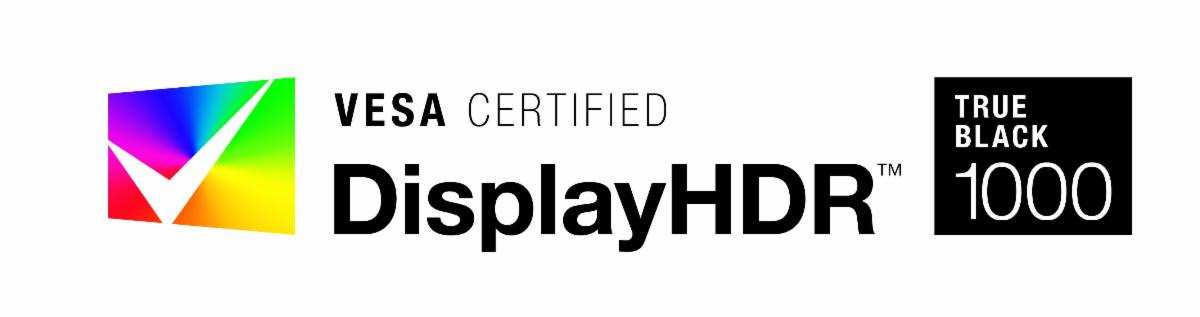
VESA's DisplayHDR 400 certification requires only 400 nits peak brightness and does not mandate local dimming. Without local dimming, HDR on these displays produces a barely perceptible difference compared to SDR. Hundreds of monitors carry the HDR400 badge while delivering a worse HDR experience than not enabling HDR at all, because the tone mapping is poor and the limited gamut prevents proper HDR signal interpretation.
To get genuine HDR impact you need DisplayHDR 1000 or higher with full-array local dimming, or an OLED panel. Anything below HDR600 is a label, not a feature.
G-Sync Hardware Modules Add $100-$200+ for No Performance Gain
Nvidia's proprietary G-Sync module was a differentiator in earlier eras. In 2025, it is primarily a price inflator. The module adds physical hardware cost, introduces a cooling fan in some models, limits output connectivity options on certain designs, and provides performance identical to what FreeSync Premium Pro achieves through the open VESA Adaptive-Sync standard.
The warranty and validation benefits of the G-Sync module are real. For most buyers, the cost premium over an equivalent FreeSync Premium Pro monitor is difficult to justify on technical grounds.
Aggressive Overdrive Creates Inverse Ghosting
Monitor manufacturers advertise 1ms response times achieved at maximum overdrive settings. At that setting, pixel transitions overshoot their target value and then correct, creating bright inverse ghosting halos around moving objects. These halos are often more visually distracting than the blur they're supposed to eliminate.
Every monitor has an overdrive sweet spot, typically the middle setting, that balances blur reduction against overshoot. Manufacturers rarely default to that optimal setting, meaning the out-of-box experience is worse than what the panel hardware is actually capable of delivering.
Fan Noise in Premium Models
G-Sync Ultimate monitors and some high-end mini-LED gaming displays contain active cooling fans. A fan inside a monitor is a failure mode that standard displays simply don't have. Fan noise levels vary from barely audible to clearly noticeable in a quiet room, and replacement fans are not user-serviceable on most models.
For a premium product priced above $800 to require active cooling feels counterintuitive. It's a consequence of the heat generated by high-brightness backlight systems and the G-Sync processing hardware.
Ergonomic and Build Quality Compromises
Budget and mid-range gaming monitors frequently ship with stands that offer tilt-only adjustment or no VESA mount compatibility. Bezel-heavy designs with aggressive "gamer" aesthetic elements, RGB lighting shrouds, and angular chassis shapes can feel out of place in professional or minimalist environments.
The plastic build quality on monitors below $300 is functional but noticeably cheaper than comparably priced standard monitors. Cost goes into the panel and electronics first, enclosure and stand quality get whatever budget remains.
How Much Do You Actually Lose? Honest Numbers
The practical impact of each disadvantage varies. Below is a look at what the data reveals about each tradeoff's real-world severity.
Real Performance Impact by Disadvantage
- Color inaccuracy. Aggregate test data suggests average Delta E of 3 to 5 on mid-range gaming monitors versus below 1.5 on equivalently priced productivity monitors. The difference is real but primarily affects color-critical work.
- HDR limitations. DisplayHDR 400 covers roughly 70 percent of the HDR experience that DisplayHDR 1000 provides. The gap between SDR and HDR400 is minimal, the gap between HDR400 and true HDR is enormous.
- Response time claims. A monitor advertising 1ms GtG typically achieves that only at maximum overdrive, which introduces inverse ghosting. The real-world best-setting response time on most "1ms" gaming panels is 3 to 5ms GtG, still fast enough for 240Hz.
- Input lag. Standard 60Hz monitors run 15 to 25ms input lag. Gaming monitors at 144Hz plus achieve 2 to 5ms. At 360Hz some models drop below 1ms. These are significant reductions for competitive play.
- OLED burn-in timeline. No standardized test exists, but manufacturer mitigation systems are designed to manage retention over a panel's normal useful life with varied usage patterns. Heavy static content users face elevated risk within the first two to three years.
Who Should Actually Avoid a Gaming Monitor
Some buyer profiles would genuinely benefit from choosing a different product category entirely. If you recognize yourself in any of these descriptions, the disadvantages we've outlined should weigh heavily in your decision.
The Color-Accurate Professional
If you edit photos, grade video for broadcast, or prepare print files, you need a monitor that arrives calibrated to Delta E below 1.5 and covers your target color gamut with minimal saturation errors. Gaming monitors, at any price, are not designed for this. Budget toward a professional display first and consider a secondary gaming monitor if play is also part of your routine.
The Multi-Purpose Office User
A small business owner or home office user who spends eight hours on spreadsheets and email before gaming in the evening may find gaming monitor ergonomics frustrating. The aggressive aesthetic design, mediocre built-in speakers, and limited stand adjustment on budget models are all inferior to a dedicated office monitor's design priorities.
The Console-Only Gamer on a Budget
Modern consoles output 4K at 60Hz natively, with many games supporting 120Hz as an alternative mode. A 4K 60Hz standard monitor or a quality 4K 120Hz TV at 40 to 50 inches provides a better console experience than a 27-inch 1440p gaming monitor, at lower total cost. Competitive console gaming in performance mode is the only scenario where a gaming display offers a meaningful improvement.
The Burn-In Risk Profile
If you habitually leave static game menus on screen for extended periods while streaming or take breaks with a HUD visible, OLED gaming monitors carry retention risk under your specific usage pattern. An IPS gaming monitor entirely eliminates burn-in concern without sacrificing the speed benefits of a gaming display.
Who Benefits Most Despite the Drawbacks
Competitive PC gamers, particularly at 240Hz and above, benefit enough from reduced input lag and motion clarity that the disadvantages simply do not match their value. For this user, a gaming monitor's tradeoffs are justified and the disadvantages are accepted as a necessary compromise.
How to Minimize Every Major Disadvantage
Understanding the disadvantages is useful. Knowing how to reduce them is better. Each major drawback has practical mitigation strategies that make a meaningful difference in daily use.
Color Accuracy Fixes
- Use a hardware colorimeter, such as those manufactured by Calibrite or Datacolor, to create a custom ICC profile.
- Adjust RGB gain controls in the monitor's OSD before resorting to software profiles.
- Test your calibration with a colorimeter rental service if purchasing one outright does not fit your budget.
These steps reduce Delta E to below 1.0 on many gaming monitors, closing the gap with professional displays substantially.
HDR Reality Check Before You Buy
- Ignore the HDR400 label entirely. It is a certification with minimal practical impact.
- Buy DisplayHDR 1000 or higher if you want notable HDR enhancements on an LCD panel.
- Choose OLED over any LCD HDR solution if HDR is your primary use case and the price premium is within reach.
Checking independent measurements before purchasing prevents disappointment with HDR performance.
OLED Burn-In Prevention Tactics
- Enable all manufacturer burn-in protection features immediately upon setup. These include pixel shift, logo dimming, and automatic panel refresh cycles.
- Use taskbar auto-hide features and avoid displaying static elements at maximum brightness for extended periods.
- Run the manual panel refresh utility on the manufacturer's recommended schedule, typically every few weeks.
These steps do not guarantee against retention, but they significantly reduce the statistical risk for most users.
Overdrive Tuning Tips
- Access the overdrive setting in the OSD and test each level using a motion blur test pattern.
- Choose the second-highest overdride setting on most monitors. This is the sweet spot that balances blur reduction against inverse ghosting artifacts.
- Verify optimal overdrive behavior at your commonly used refresh rate, as some panels shift their ideal overdrive level depending on the frame rate.
A fifteen-minute tuning session often transforms a monitor's motion performance from its worst behavior to its best.
What to Check Before You Open the Box
- Read three to five independent reviews that include measured color accuracy, response time, and HDR performance data.
- Compare the monitor's specifications to your actual use requirements using the comparison table above.
- Verify return policy and panel exchange terms before purchasing, as backlight bleed and IPS glow severity varies between individual units of the same model.
Returning a monitor with excessive glow is straightforward with most major retailers. Some manufacturers explicitly cover bleed under warranty.
Frequently Asked Questions
Are gaming monitors bad for office work?
They work fine for office tasks, but you sacrifice text clarity per dollar and ergonomic adjustability compared to a dedicated office monitor at the same price. A $300 productivity monitor typically offers a sharper sub-pixel layout and a more adjustable stand than a $30 gaming display.
Does HDR400 make a noticeable difference over SDR?
No. DisplayHDR 400 certification requires only basic HDR signal processing and 400 nits peak brightness without local dimming. The visual improvement over SDR is minimal and in some cases enabling HDR400 degrades the image compared to standard SDR rendering.
Is OLED burn-in still a problem in 2025?
It is reduced but not eliminated. Modern QD-OLED panels include extensive mitigation features, but static content displayed for many hours daily can cause uneven wear patterns over time. The risk depends heavily on individual usage behavior.
Should I choose 1440p 165Hz or 4K 144Hz?
It depends on your GPU and primary games. An RTX 4070 or RX 7800 XT handles 1440p at high refresh rates comfortably in most titles. 4K 144Hz demands an RTX 4080 or above to justify the resolution in competitive games. For single-player games, 4K 144Hz offers noticeably better clarity if your hardware supports it.
Do gaming monitors have worse color accuracy than regular monitors?
Yes, out of the box. Most gaming monitors ship with average Delta E values between 3 and 5, while productivity-focused monitors typically achieve below 2. Calibration with a hardware colorimeter significantly reduces this gap, though it remains an extra step that most gaming monitor owners never take.
What is the biggest disadvantage of a 500Hz gaming monitor?
The panels achieving 500Hz are almost exclusively TN technology, with the color accuracy, viewing angle, and contrast limitations that entails. You also need a GPU capable of pushing 500 frames per second in your game to realize the benefit, which requires top-tier hardware at low resolution settings.
Final Verdict: Which Disadvantages Actually Matter for You?
Every disadvantage in this article is real, but not every one matters for every buyer. The panel type you choose determines which tradeoffs you face, and the honest answer is that there is no universally "wrong" choice, just choices with consequences you should understand.
If you play competitive FPS games at 240Hz or above, TN and fast IPS panels have genuine performance advantages that justify their compromises. The poor color accuracy and IPS glow will not affect your target tracking accuracy or split-second reaction times.
If you value image quality above all else in gaming, a QD-OLED at 240Hz gives you speed and accuracy together, at a premium price, with burn-in risk to manage. This is the closest current technology gets to eliminating the core tradeoff.
If your use case spans productivity, creative work, and gaming, consider two monitors rather than one compromise display. A 4K 60Hz or 75Hz panel for calibrated work and a dedicated gaming display for play gives you the best of both categories and often costs less than a single attempt at doing everything on one screen.
The only wrong decision is buying based on marketing alone. Know what you are giving up, choose your compromise deliberately, and set up your chosen display properly. A well-chosen gaming monitor with tuned overdrive, correct calibration, and realistic expectations about its limitations is an excellent tool for its intended purpose.
A mis-purchased one that sits next to your editing workstation or expects HDR magic from an HDR400 badge will frustrate you within a week.
Match the display to the use case. Check independent measurements before purchasing. Calibrate what you buy.
That is the framework that turns an informed decision into a satisfying one.

Similar Posts