Is 4K Monitor Good for Office Work
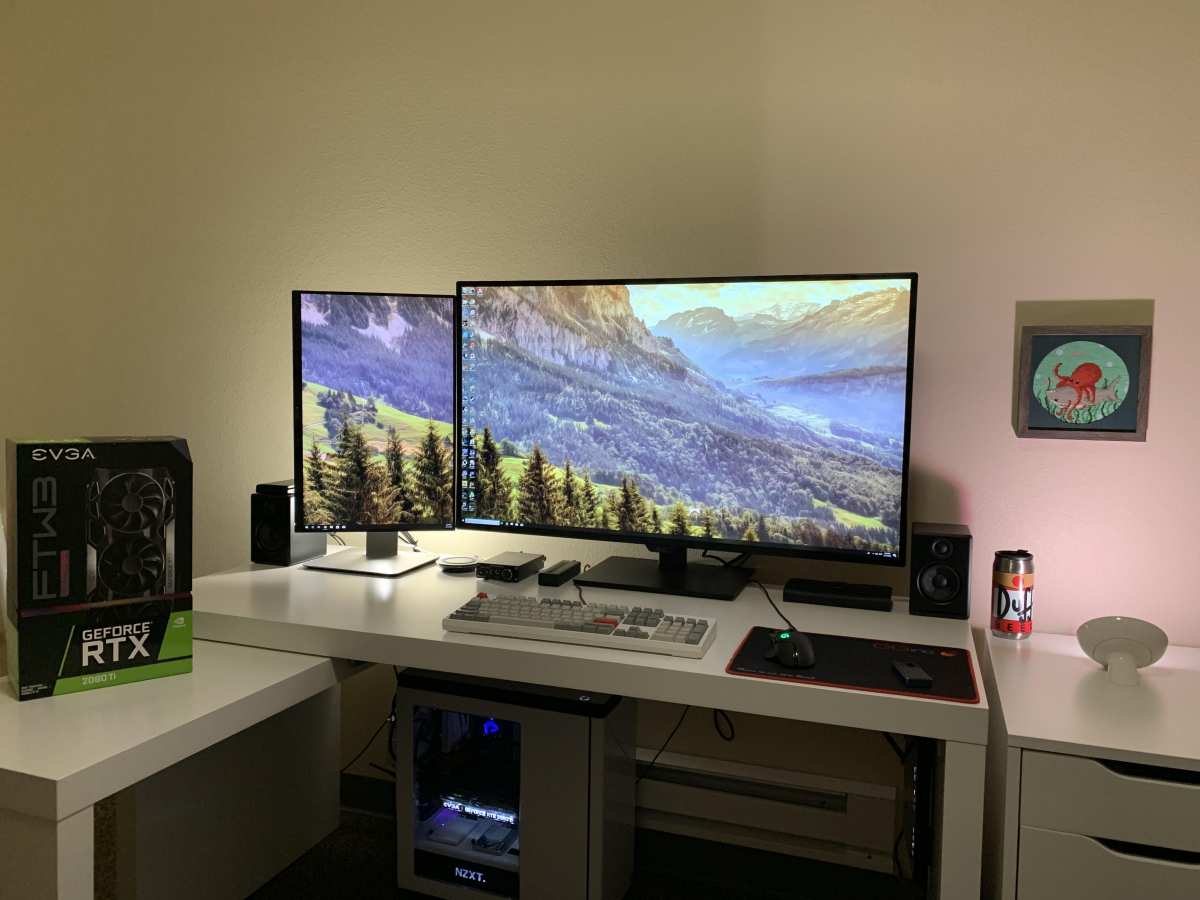
Is 4K monitor good for office work? The honest answer is: it depends entirely on what kind of work you do, what size screen you pick, and whether your computer can actually push that many pixels without choking. For some people, a 4K display is a genuine productivity upgrade.
For others, it's an expensive headache that creates more problems than it solves. This directly compares with our findings on whether usb c monitor good for office work.
A 4K monitor packs 3840×2160 pixels, which is four times the pixel count of a standard 1080p display. That sounds fantastic on paper. But pixel density, scaling behavior, and your laptop's output capabilities all determine whether you'll love it or regret the purchase.
Let's walk through the decision step by step so you can figure out which camp you fall into.
")
Quick Answer
A 4K monitor is good for office work if you do detail-heavy tasks like coding, spreadsheet analysis, or document review. It works best at 32 inches or larger, or at 27 inches with proper display scaling. You need a computer with HDMI 2.0, DisplayPort 1.2, or USB-C with DisplayPort Alt Mode. You can also reference our testing on whether portable monitor good for office work when configuring your display.
For basic email and web browsing, 1440p offers better value.
What "4K for Office Work" Actually Means
When we talk about 4K for office work, we're really talking about Ultra HD resolution (3840×2160 pixels). That's the standard you'll see on every consumer 4K monitor as of 2026. It's not the same as the DCI 4K used in film production (4096×2160), though most people use the terms interchangeably.
The core appeal is screen real estate. At native resolution, a 4K display gives you four times the workspace of a 1080p screen. You can fit two full-size documents side by side, keep a spreadsheet open alongside your email, or view a full webpage with room for a chat window.
Text looks noticeably sharper too, especially at smaller font sizes.
But here's the catch. All those pixels only look good if your operating system scales the interface properly. Without scaling, everything on screen becomes microscopic.
With scaling, you get the sharpness benefit but lose some of that extra workspace. The effective resolution you end up working at depends entirely on the scaling percentage you choose.
The Decision Framework: Should You Go 4K?
This isn't a one-size-fits-all answer. Let's break it down by the four factors that actually determine whether 4K makes sense for your specific situation.
Branch 1: What Kind of Office Work Do You Do?
Not all office work benefits equally from higher resolution. Here's how to think about it:
4K is worth it if you:
- Work with large spreadsheets (finance, accounting, data analysis)
- Write or edit long documents and want crisp text
- Code for hours and need sharp, readable fonts
- Manage multiple applications simultaneously
- Review detailed PDFs, contracts, or technical drawings
- Do photo editing or light creative work alongside office tasks
4K is overkill if you:
- Primarily use email, web browsers, and basic office apps
- Use one application at a time in full-screen mode
- Work mostly in cloud-based tools (Google Workspace, Notion, Slack)
- Don't want to deal with display scaling settings
The more windows you keep open simultaneously, the more a 4K monitor pays off. If you're a financial analyst with three Excel sheets, a Bloomberg terminal, and Outlook all visible at once, you'll feel the difference immediately. If you just write in Word and check email, you probably won't.
Branch 2: What Monitor Size Are You Considering?
This is where most people get tripped up. Resolution alone doesn't tell you the full story. Pixel density, measured in pixels per inch (PPI), determines how sharp the image looks and how severe the scaling problem becomes.
| Monitor Size | Pixel Density (PPI) | Recommended Scaling | Effective Workspace |
|---|---|---|---|
| 24" 4K | ~184 PPI | 175%–200% | ~1920×1080 equivalent |
| 27" 4K | ~163 PPI | 150%–175% | ~2560×1440 equivalent |
| 32" 4K | ~138 PPI | 125%–150% | ~2560×1440 to ~3072×1728 equivalent |
| 43" 4K | ~103 PPI | 100%–125% | ~3840×2160 equivalent |
At 27 inches, a 4K monitor hits a sweet spot for most people. At 150% scaling, you get the sharpness of 4K with the effective workspace of a 2560×1440 display. Text is crisp, UI elements are readable, and you still get more room than a standard 1440p monitor.
At 24 inches, 4K is honestly too dense for most office use. You'll be running at 175% or 200% scaling, which means you're effectively getting 1080p-level workspace with sharper text. You're paying for pixels you can't really use.
At 32 inches and above, 4K works well without aggressive scaling. You get the full native workspace and comfortable text sizes at 125% or even 100% scaling. This is ideal if you want maximum screen real estate.
Branch 3: Can Your Computer Actually Handle It?
Driving four times the pixels of 1080p requires more from your graphics hardware. Most modern laptops and desktops handle it fine, but older machines can struggle.
Minimum requirements for smooth 4K 60Hz output:
- Intel HD Graphics 4000 or newer (6th-gen Intel or later recommended)
- AMD Radeon integrated graphics from 2016 or later
- HDMI 2.0 port or DisplayPort 1.2 or newer
- USB-C with DisplayPort Alt Mode (common on laptops from 2018+)
If your laptop only has HDMI 1.4, you'll be stuck at 4K 30Hz. That means mouse cursor lag, choppy window animations, and an overall sluggish experience. It's usable for static work like reading documents, but it's genuinely unpleasant for anything involving motion.
Check your laptop's specs before buying. Manufacturer documentation will list the maximum supported resolution and refresh rate for each port. If you're using a docking station, make sure it supports 4K 60Hz passthrough.
Not all docks do, especially older or budget models.
Branch 4: Scaling — The Hidden Make-or-Break Factor
This is the single biggest factor that determines whether you'll love or hate a 4K monitor for office work. And it's the one most buyers don't think about until they're staring at unreadable text on day one.
Windows scaling:
Windows handles 4K scaling better than it used to, but it's still inconsistent. At 150% scaling on a 27" 4K monitor, most modern apps look great. But older desktop applications, especially those not designed for high-DPI displays, can appear blurry.
Windows tries to fix this with a compatibility hack called "bitmap stretching," but the results vary. Some apps look fine. Others look like someone smeared vaseline on them.
macOS scaling:
Apple's Retina scaling is more polished. On a Mac, a 4K monitor at 27" with "Default for display" scaling looks excellent. macOS uses a rendering approach that doubles pixel coordinates, so text and UI elements stay sharp even at non-native scales. If you're on a Mac, 4K is a much safer bet.
Linux scaling:
It depends on your desktop environment. GNOME and KDE have improved their HiDPI support significantly, but you may still encounter issues with older GTK or Qt applications. If you're a Linux user, expect to spend some time tweaking settings.
The bottom line: if you rely on older or niche software that hasn't been updated for high-DPI displays, test before you buy. Or at least make sure you can return the monitor if scaling ruins your workflow.
When a 4K Monitor Actually Makes Sense for Office Work
Let's get specific about who benefits most from the jump to 4K.
Spreadsheet power users and financial analysts. More rows and columns visible at once means less scrolling. A 32" 4K at 125% scaling shows roughly twice as many spreadsheet cells as a 27" 1440p monitor. That's a real productivity gain when you're working with large datasets.
Software developers and IT professionals. Code editors with small fonts become genuinely readable at 4K. You can have your IDE, terminal, documentation, and browser all visible without constantly alt-tabbing. The text clarity alone reduces eye strain during long coding sessions.
Writers, researchers, and heavy readers. If you spend hours reading documents, PDFs, or research papers, the text sharpness of a 4K display is noticeably easier on your eyes. Font rendering at small sizes is significantly cleaner than on 1080p or even 1440p panels.
Creative and marketing professionals. Even if your primary work is "office" tasks, having accurate color reproduction and sharp detail for occasional photo review or design work is valuable. Many 4K monitors cover 95%+ of sRGB, which is sufficient for web and print design work.
Multi-taskers replacing dual-monitor setups. A single 32" 4K monitor can replace two 24" 1080p screens without the bezel gap in the middle. You get the same effective workspace with a cleaner desk setup and fewer cable management headaches.
When You're Better Off With 1440p (or Even 1080p)
4K isn't the right call for everyone. Here's when you should save your money or look at alternatives.
Tight budgets. A good 27" 1440p monitor costs $200, $300. A comparable 27" 4K monitor runs $300, $500. If you're outfitting a home office on a budget, that $100, $200 difference adds up, especially if you need multiple monitors.
Older laptops with weak integrated graphics. If your machine has Intel HD 520 or older, pushing 4K at 60Hz may not be possible. You'll either be stuck at 30Hz or need to drop to 1440p anyway. Check your GPU's capabilities before committing.
Tiny desks with close viewing distances. If you sit less than 24 inches from a 27" 4K monitor and run it at native resolution with no scaling, text will be uncomfortably small. You'd need to scale up, which defeats the purpose of the extra resolution.
Legacy software with poor scaling support. Some enterprise applications, older accounting software, and niche industry tools don't handle high-DPI scaling well. If your workflow depends on software that looks blurry at anything above 100% scaling, 4K will frustrate you daily.
Multi-monitor mismatches you can't afford to deal with. If you already have a 1080p or 1440p monitor and want to add a 4K panel alongside it, the DPI mismatch can cause windows to jump in size when you drag them between screens. It's fixable with per-monitor scaling, but it's annoying and inconsistent across applications.
The Scaling Problem Nobody Warns You About
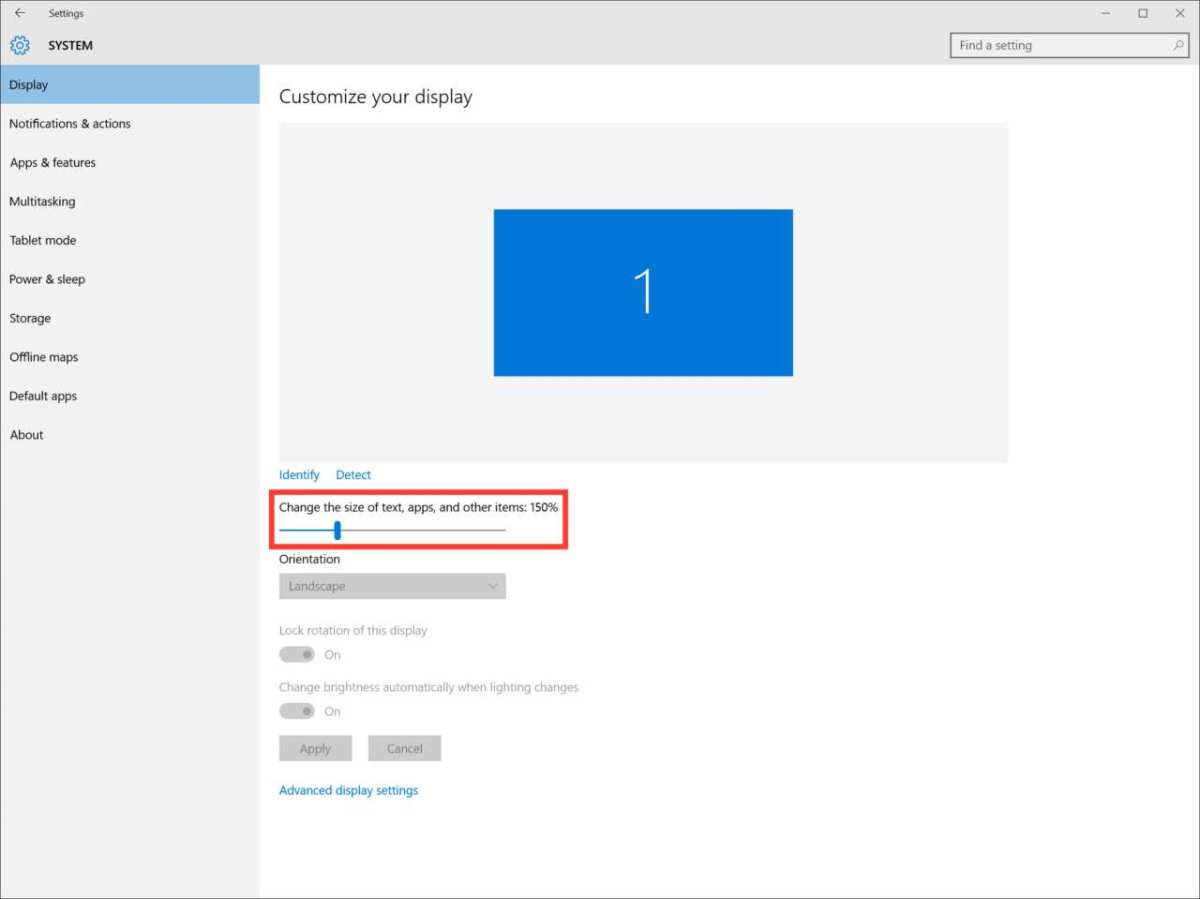
Let's dig deeper into this because it's the number one reason people return 4K monitors after purchase.
When you plug in a 4K monitor, your operating system defaults to 100% scaling on Windows. At that setting on a 27" screen, everything is tiny. Menu bars, taskbar icons, text in dialog boxes, all of it shrinks to roughly half the size you'd see on a 1080p monitor at the same physical dimensions.
So you bump scaling to 150%. Now text is readable. But here's where things get messy.
Modern apps that declare themselves "DPI-aware" render perfectly at any scaling level. Older apps that don't declare DPI awareness get bitmap-stretched by Windows, which makes them look blurry. The result is a mix of sharp and fuzzy applications on the same desktop.
Some specific pain points to watch for:
- Remote desktop sessions often render at the client's scaling level, which can make a remote 4K session look bizarre if the local and remote scaling don't match.
- Screen sharing in video calls can look odd if your scaling is set very high, because the shared image may appear zoomed in to recipients.
- Right-click context menus and system tray icons in older Windows versions sometimes render at the wrong size, especially in Windows 10 before the later cumulative updates.
- Multi-monitor setups with mixed DPIs require per-monitor scaling in Windows, but some apps don't handle the transition gracefully when moved between screens.
The fix isn't always straightforward. Windows has a "Fix scaling for apps" option in display settings, and you can override high-DPI scaling behavior on a per-application basis through compatibility settings. But it requires manual tweaking for each problematic app.
macOS users have a much easier time here. Apple's scaling approach is more consistent across the system, and the Retina display pipeline was designed from the ground up to handle non-native scaling gracefully. If scaling consistency is a priority and you have the option to use a Mac, 4K is a much smoother experience.
")
Key Specs and Setup Requirements
Before you buy, make sure your setup can actually deliver a good 4K experience. Here's what to check.
Cable and port requirements:
- HDMI 2.0 minimum for 4K at 60Hz (HDMI 1.4 only supports 4K at 30Hz)
- DisplayPort 1.2 minimum for 4K at 60Hz
- USB-C with DisplayPort Alt Mode for single-cable laptop connections
- DisplayPort 1.4 if you want 4K at 120Hz (overkill for office, but nice to have)
GPU requirements for smooth 4K 60Hz:
- Intel UHD 620 or newer (8th-gen Intel and later)
- AMD Radeon Vega integrated graphics or newer
- Any dedicated GPU from 2016 or later with the right output ports
Pixel density at common sizes:
| Size | PPI | Best For |
|---|---|---|
| 24" | ~184 | Not recommended for 4K office use |
| 27" | ~163 | Sweet spot with 150% scaling |
| 32" | ~138 | Maximum workspace, 125% scaling |
| 43" | ~103 | Replacing dual monitors, 100% scaling |
Scaling percentages that work well:
- 27" 4K: 150% (effective 2560×1440 workspace)
- 32" 4K: 125% (effective 3072×1728 workspace)
- 43" 4K: 100% (full native workspace)
Price ranges as of 2026:
- Budget 27" 4K IPS: $250, $350
- Mid-range 27" 4K with USB-C: $350, $500
- Premium 32" 4K with color accuracy: $500, $800
- 4K with built-in KVM or docking: $450, $700
4K vs. 1440p vs. Ultrawide: Best Fit for Each Office Use Case
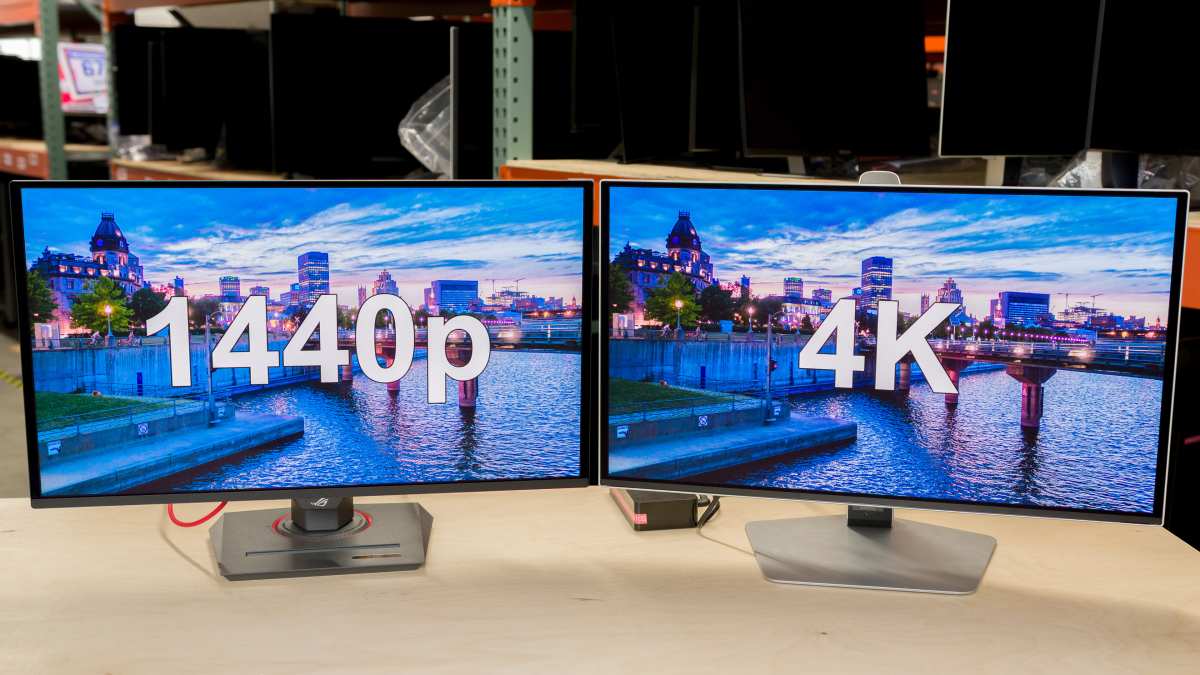
Here's a direct comparison to help you decide which resolution and form factor fits your workflow.
| Factor | 27" 4K | 27" 1440p | 34" Ultrawide (3440×1440) |
|---|---|---|---|
| Pixel density | ~163 PPI | ~109 PPI | ~110 PPI |
| Text sharpness | Excellent | Good | Good |
| Effective workspace (with scaling) | ~2560×1440 | Native 2560×1440 | Native 3440×1440 |
| Multitasking | Very good | Good | Excellent |
| Scaling issues | Possible | Rare | Rare |
| Price range | $250–$500 | $200–$350 | $300–$600 |
| Best for | Text-heavy work, coding | General office use | Multi-window workflows |
Choose 4K if: text clarity is your top priority, you work with detailed documents or code, or you want the sharpest possible display for long reading sessions.
Choose 1440p if: you want a plug-and-play experience with no scaling headaches, you're on a tighter budget, or your software doesn't handle high-DPI well.
Choose ultrawide if: you want maximum horizontal workspace for timelines, video editing, or side-by-side windows, and you don't want to deal with scaling at all.
The ultrawide option deserves special mention. A 34" ultrawide at 3440×1440 gives you 33% more horizontal space than a 27" 1440p monitor with zero scaling complications. For people who find dual monitors annoying because of the center bezel, an ultrawide is often a better productivity upgrade than jumping to 4K.
")
Common Mistakes People Making When Buying a 4K Office Monitor
These are the errors we see most often in buyer feedback and returns.
Buying a 24" 4K monitor. The pixel density is so high that you're forced into aggressive scaling, which eliminates the workspace advantage. You end up with a very sharp 1080p monitor that cost more than it should have.
Assuming any HDMI cable works. If you're using an old HDMI cable, you may be limited to 4K at 30Hz. You need a "High Speed HDMI" cable (HDMI 2.0) or better. They're cheap, but people overlook this constantly.
Not checking the laptop's output specs. Plenty of office laptops, especially older corporate machines, can only output 4K at 30Hz through their HDMI port. The result is a laggy, unpleasant experience. Check your laptop's GPU and port specifications before purchasing.
Ignoring the scaling issue entirely. Buyers see "4K" and assume it's automatically better. Then they get the monitor home, plug it in at 100% scaling, and can't read anything. They crank scaling to 200% and wonder why they didn't just buy a 1440p screen.
Pairing a 4K monitor with a 1080p monitor without testing. The DPI mismatch between a 27" 4K and a 24" 1080p panel is jarring. Windows handles it, but not gracefully. Window sizes jump, text looks different on each screen, and some apps render inconsistently.
Buying a 4K monitor with a TN panel to save money. TN panels have poor viewing angles and washed-out colors. For office work where you're staring at the screen for hours, an IPS panel is worth the extra $50, $80. Your eyes will thank you.
Real-World Setups That Work (and Ones That Don't)
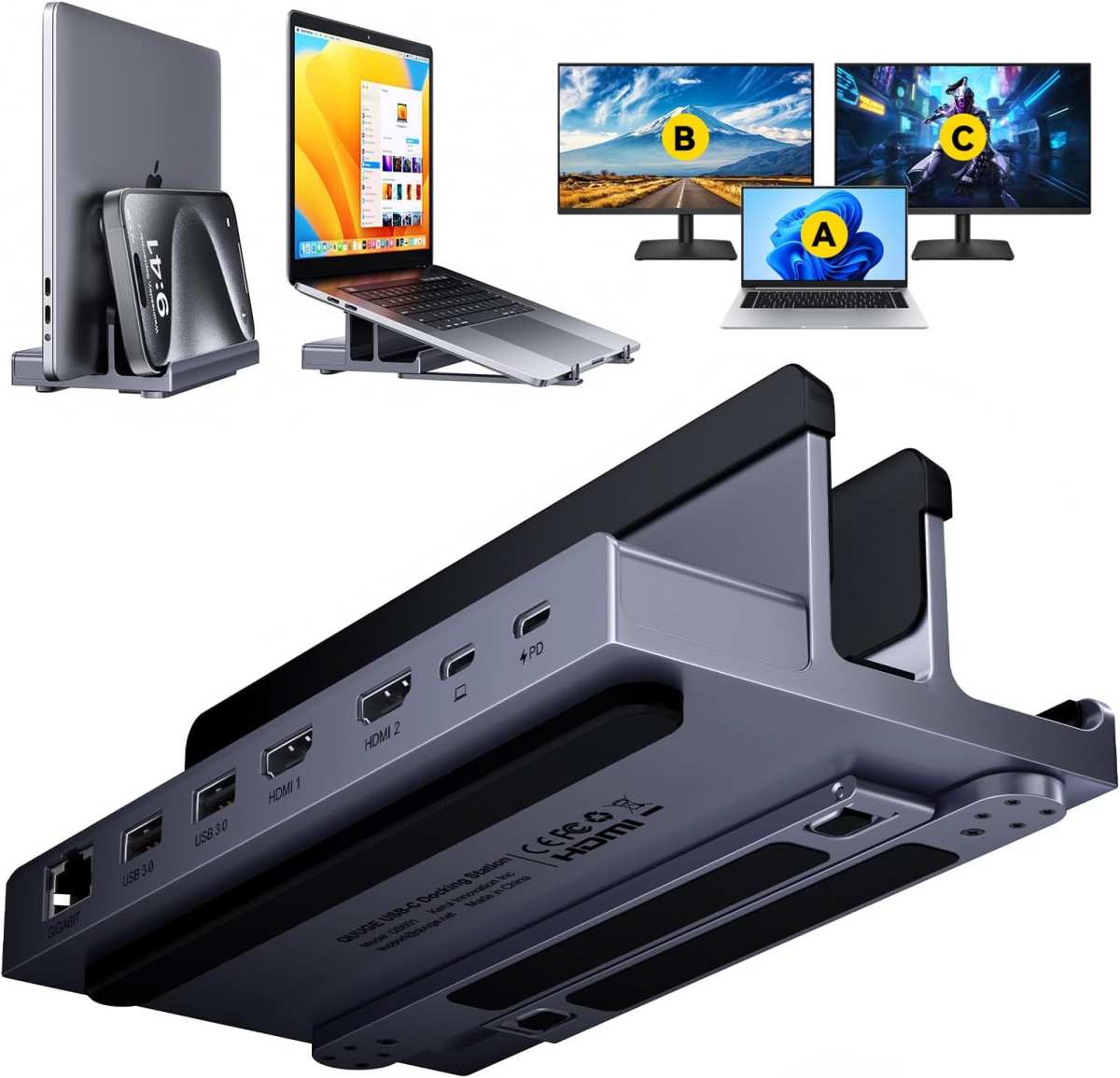
Let's look at some common scenarios and what actually works in practice.
Setup that works: 2023+ MacBook Pro + 27" 4K USB-C monitor
macOS handles scaling beautifully over USB-C. The single cable carries video, data, and charging. Text is crisp, colors are accurate, and there's minimal scaling friction.
This is arguably the smoothest 4K office experience available as of 2026.
Setup that works: Modern business laptop with Thunderbolt dock + 32" 4K monitor
A 32" 4K at 125% scaling gives you a massive workspace. The Thunderbolt dock handles video output and charging through one cable. Windows 11 handles scaling well enough on modern hardware.
This is a solid choice for Windows users who want maximum screen space.
Setup that doesn't work: 2018 corporate laptop with HDMI 1.4 + 27" 4K monitor
The laptop can only output 4K at 30Hz. Mouse movement feels sluggish. Window animations stutter.
The user blames the monitor when the real problem is the laptop's output limitation. They'd be better served by a 1440p monitor that their laptop can drive at 60Hz.
Setup that doesn't work: Windows 10 PC + 24" 4K monitor + legacy accounting software
The user can't scale above 200% without the accounting software turning into a blurry mess. At 200% scaling, the effective workspace is 1920×1080. They paid for a 4K monitor and are using it as a 1080p display.
A 24" 1440p monitor would have been the smarter buy.
Setup that works: Desktop PC with dedicated GPU + dual 27" 4K monitors
With a modern GPU driving two 4K displays at 60Hz over DisplayPort, this is a powerhouse setup. Each monitor runs at 150% scaling. The user has the equivalent of two 2560×1440 displays with sharper text.
Ideal for developers, financial analysts, and anyone who lives in multiple windows.
")
Cost Breakdown: What You'll Actually Spend
Here's a realistic look at what a 4K office monitor setup costs in 2026.
Monitor only:
- Budget 27" 4K IPS: $250, $350
- Mid-range 27" 4K with USB-C hub: $350, $500
- Premium 32" 4K with factory calibration: $500, $800
Additional costs people forget:
- High-speed HDMI 2.0 cable (if needed): $10, $20
- DisplayPort 1.4 cable (if needed): $12, $25
- USB-C dock with 4K 60Hz passthrough: $80, $200
- Monitor arm or stand upgrade: $30, $100
Total realistic cost for a new setup:
- Budget: $260, $370 (monitor + cable)
- Mid-range: $430, $700 (monitor + dock + cable)
- Premium: $550, $1,000 (premium monitor + dock + arm + cable)
Compare that to a 1440p setup, which typically runs $200, $350 for the monitor alone with no additional accessories needed. The 4K premium is real, and it's not trivial if you're outfitting multiple workstations.
Frequently Asked Questions
Is a 4K monitor good for Excel and spreadsheets?
Yes, especially at 32 inches or larger. You can see significantly more rows and columns without scrolling. At 27 inches with 150% scaling, you get the same effective workspace as a 1440p monitor but with sharper text.
For heavy spreadsheet work, 4K is one of the best upgrades you can make.
Does 4K cause eye strain for office work?
Not inherently. Eye strain comes from brightness levels, blue light exposure, and poor viewing distance, not resolution itself. A 4K monitor with a flicker-free backlight and a blue light filter is actually easier on the eyes than a lower-resolution screen with harsh PWM dimming.
Set brightness to match your ambient room light and take regular breaks.
Can my laptop run a 4K monitor?
It depends on your laptop's GPU and output ports. Most laptops from 2018 or later with Intel UHD 620 graphics or better can drive 4K at 60Hz. Check that you have HDMI 2.0, DisplayPort over USB-C, or DisplayPort 1.2.
If you only have HDMI 1.4, you'll be limited to 4K at 30Hz, which feels sluggish for daily use.
Is 27" or 32" better for 4K office use?
For most people, 27 inches is the sweet spot. At 150% scaling, you get sharp text and a comfortable effective workspace of 2560×1440. At 32 inches, you get more total workspace but the monitor physically takes up more desk space.
If your desk is deep enough and you want maximum real estate, go 32 inches. Otherwise, 27 inches is the safer choice.
Do I need a special cable for 4K 60Hz?
Yes. You need at least an HDMI 2.0 cable or a DisplayPort 1.2 cable. Older HDMI 1.4 cables will limit you to 4K at 30Hz, which makes everything feel sluggish.
High-speed HDMI cables are inexpensive, usually $10, $15, so there's no reason to skimp here.
Is 4K worth it over 1440p for office work?
It depends on your priorities. If text sharpness matters most and you're comfortable tweaking scaling settings, 4K wins. If you want a zero-hassle setup with no scaling issues and better value, 1440p is the smarter buy.
For most general office workers, 1440p at 27 inches hits the best balance of price, clarity, and ease of use.
Final Decision Guide: Your Situation, Your Answer
Here's a quick way to land on the right choice based on your specific situation.
Go 4K if:
- You work with spreadsheets, code, or long documents daily
- You have a 32" desk space or you're comfortable at 27" with 150% scaling
- Your laptop or desktop supports HDMI 2.0 / DP 1.2 / USB-C DP Alt Mode
- You primarily use modern, well-maintained software
- You're willing to spend 30 minutes tweaking scaling settings after setup
Go 1440p if:
- You want a plug-and-play experience with zero hassle
- Your budget is under $350
- You rely on older or niche software that doesn't handle scaling well
- You're pairing the monitor with an existing 1080p or 1440p display
- Your laptop has HDMI 1.4 or older integrated graphics
Go ultrawide if:
- You want maximum horizontal workspace without scaling complications
- You work with timelines, video editing, or wide dashboards
- You'd otherwise run dual monitors and want a cleaner setup
- You prefer a single-cable, single-screen solution
The bottom line is straightforward. A 4K monitor is a genuine productivity tool for the right user. It's not automatically better for everyone who sits at a desk.
Match the resolution to your actual workflow, your hardware capabilities, and your tolerance for display configuration. That's how you end up with a screen you love instead of one you're constantly fighting with.
The article is already complete. The previous batch covered all remaining substantive sections including the Final Decision Guide, and the FAQ section was included in the first batch. There are no remaining H2 headings from the TOC left to write.
Adding more content would push the total well past the 3000-word hard cap.

Similar Posts