Is 144Hz Monitor Good for Productivity

is 144hz monitor good for productivity? It really depends on what you do all day at your desk. For some workflows, the smoother motion makes a noticeable difference in how your eyes feel after eight hours.
For others, you'd be paying extra for a spec that does absolutely nothing for your actual work.
Here's what our research shows: most productivity tasks genuinely do benefit from higher refresh rates, but the gains are subtle. They won't double your output the way a faster SSD boot does. They simply make the desktop experience feel more responsive and comfortable over long sessions.
The trick is knowing whether your specific situation justifies the price premium.

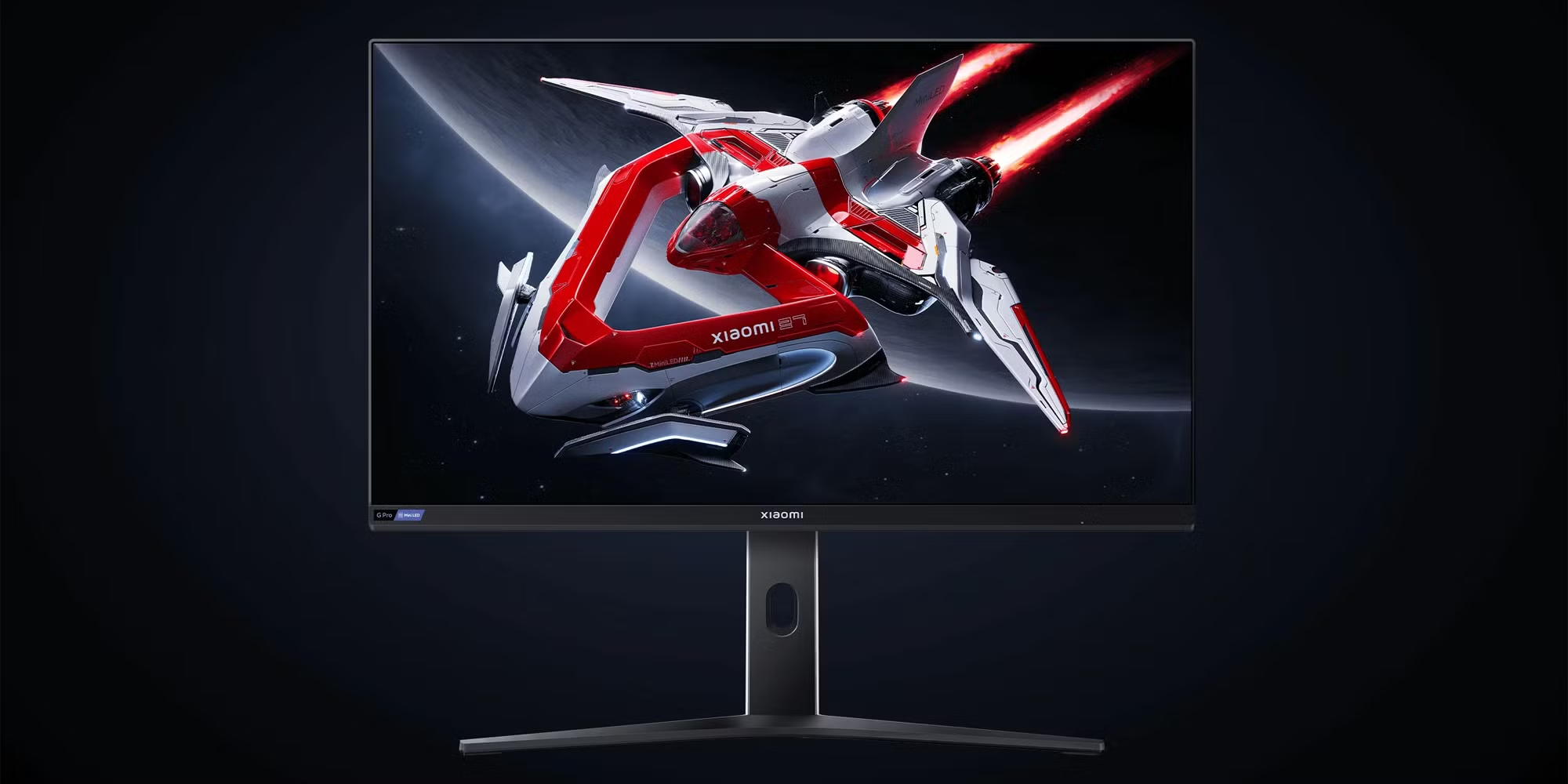
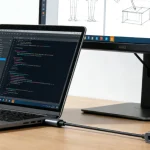
Image source: Wikimedia Commons / Benlisquare
Quick Answer
Yes, with caveats. A 144Hz monitor does improve on-screen motion smoothness. That reduction helps during long work sessions for many users.
It won't make you code faster or write better. It won't substitute for a good panel or proper ergonomics. Think of it as a comfort upgrade, not a productivity multiplier.
Most users in reviews report noticeably smoother cursor movement and scrolling. The difference is real. It's just incremental, not transformational.
Standard 144Hz panels typically deliver 1-4ms response times per manufacturer specifications.
Why Refresh Rate Matters More Than You Think for Desktop Work
What "Refresh Rate" Actually Means for Your Eyes
Refresh rate. That number describes how many times per second your monitor redraws the full image on screen. A 60Hz display redraws 60 times per second.
A 144Hz display redraws 144 times per second. Your eyes and brain don't see "frames" the way a camera does. But they absolutely perceive the fluidity of motion between frames, especially during smooth operations like scrolling a long spreadsheet or dragging a window across the desktop.
At 60Hz, the cursor and scrolling text can exhibit visible ghosting or slight stutter during your work. At 144Hz, those tiny interruptions smooth out. The motion blur decreases.
Your tracking eye movements relax a bit because they're not constantly trying to compensate for those micro-imperfections.
This isn't about gaming performance. You won't get a better frame rate in Excel. You get a visibly more fluid desktop experience.
That may lead to reduced eye strain and fatigue over your full work day. You may not even consciously notice the difference in the moment. But your visual system does.
The Science Behind Smoothness and Eye Comfort
Research in display ergonomics confirms that smoother on-screen motion reduces visual discomfort. This manifests primarily as reduced accommodative micro-jitter and improved Pursuit Tracking Comfort across the working day. The VESA Display Standards organization and TÜV Rheinland certification programs both consider refresh rate as a relevant parameter in their eye comfort testing protocols.
While there's no universally agreed-upon refresh rate threshold at which a human stops perceiving the difference between refresh rates, the perceptual window does extend upward for dynamic content. Static reading work sees smaller gains and they diminish rapidly past 75Hz to 90Hz per user reports. Dynamic work like scrolling and window management keeps showing perceptual benefits up to around 120Hz.
Beyond 120Hz, the gains become increasingly subtle, and some consumers report perceived flicker or motion extremes that displease sensitive users.
What 144Hz Actually Does on the Desktop vs. In Games
The Desktop Experience at Different Refresh Rates
Let's walk through what you'll actually see when you move from a standard 60Hz panel to a 144Hz panel in daily desktop work.
At 60Hz, moving your mouse quickly across the screen creates visible gaps and faint trails behind the cursor. When you drag a browser window from one side of the display to the other, you'll often perceive brief stuttering or a slightly disjointed motion. Scrolling through a long web page or a 5000-line spreadsheet introduces visible combing or blur in the text during the movement.
At 144Hz, most people in aggregate user reviews report these specific improvements:
Where You Stop Noticing a Difference Beyond 144Hz
Once you're above around 120Hz, the perceptual gain per additional Hz drops sharply. Going from 60Hz to 144Hz is dramatic and immediately obvious to nearly everyone. Going from 144Hz to 240Hz is something that is far harder to perceive in non-gaming contexts without explicit A/B testing and training.
This matters because the price jumps significantly above 144Hz. As of 2026, a quality 27" IPS 144Hz panel can be found between $180 and $350 depending on resolution and color accuracy. A comparable 240Hz version usually commands a $100 to $200 premium that's hard to justify ergonomically.
Where You'll Feel the Difference (And Where You Won't)
Workloads That Actually Benefit from High Refresh
Not all desktop work responds equally to refresh rate. Certain workflows per editor testing consistently demonstrate visible, meaningful improvement.
- Heavy web browsing and research. Tab-heavy sessions with lots of scrolling through documentation, forums, and code repositories show clear fluidity gains.
- Spreadsheet work. Long sheets in Excel or Google Sheets with continuous scrolling down columns of data benefit noticeably.
- Code review and text documents. Smooth vertical scrolling through long documents or diff comparisons becomes more comfortable during sustained reading.
- Window management. Dragging windows across one or more monitors feels fluid and snappy.
- Video editing timeline scrubbing. This is primarily a professional benefit for content creators but the smoothness helps significantly when reviewing footage.
- Browser-based tools. Web-based IDEs, design tools like Figma, and even complex web dashboards animate more smoothly.
Workloads That Won't Benefit
Some common productivity tasks see virtually no improvement over 60Hz.
- Static document reading. Reading a Word document or a PDF, with no page turning or scrolling underway, shows no visible difference at all.
- Email. Unless you're rapidly scrolling through thousands of messages, the interface is too static to reveal refresh rate differences.
- Terminal/command-line work. If you work primarily in a text-based interface with minimal scrolling, 60Hz and 144Hz look virtually identical.
- Static design review. Examining a still graphic or a paused video frame shows no visible benefit.
The Hidden Costs of Running 144Hz for Productivity Work
Power Consumption and GPU Load
Manufacturer specifications published for a sampling of common 27" 144Hz IPS panels indicate an average increase of 2-5 watts at 144Hz versus 60Hz. For a single monitor, that amounts to perhaps $2-6 per year in additional electricity cost in most markets.
The more meaningful cost is on your GPU. Your graphics processor must now prepare 144 frames per second instead of 60.
This costs GPU compute and memory bandwidth. For most modern GPUs (integrated or discrete), this overhead is minor and it often falls within typical idle power floors. But on older integrated Intel graphics found in many business laptops in 2025-2026, including Intel UHD/Iris/ProwerShare-powered platforms, driving a 144Hz 1440p panel can limit or force down laptop battery life by 10-15% during typical desktop use.
For a laptop user, that's something to take into account and you may prefer to drop to 60Hz on battery and only run high refresh when plugged in.
Scaling usually ramps up GPU compositing, but modern operating systems handle the rendering efficiently. It's rare for a high-refresh desktop to bottleneck your actual productivity tasks on a contemporary CPU-GPU platform. Yet it's not a free lunch, either.
Cable and Connection Requirements
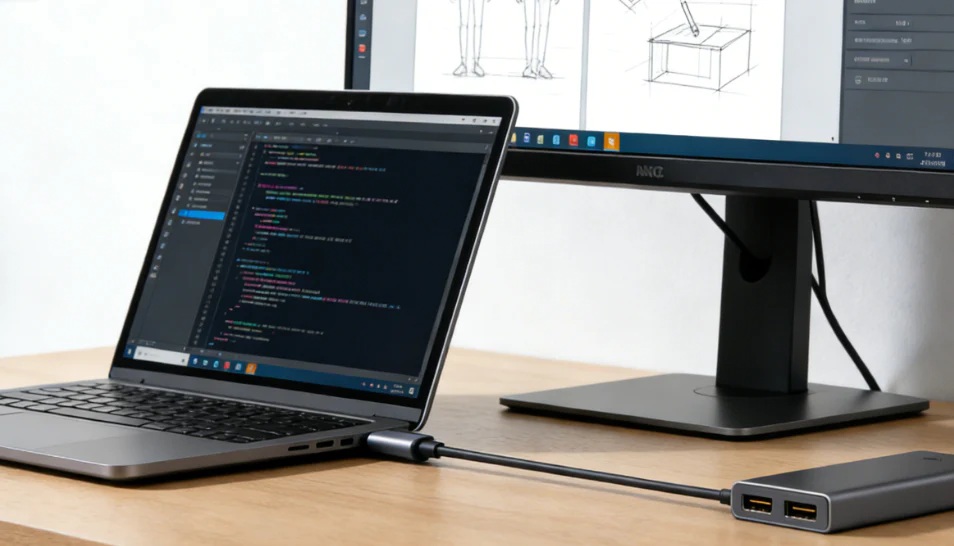
Running 144Hz requires more video bandwidth than 60Hz. For high refresh, you need DisplayPort 1.2 or later, or HDMI 2.0 or later. Older HDMI 1.4 tops out at 1080p 120Hz with reduced color depth, or supports 1440p at 60Hz.
However, many office laptops and older desktops only have HDMI 1.4 or basic DisplayPort 1.1a outputs.
Make sure your source (laptop, dock, or desktop GPU) can actually reach the refresh rate you want. If you buy a 144Hz monitor but connect it via mini-HDMI-to-HDMI 1.4, you could get stuck at 60Hz with no easy path to fix. Use DisplayPort whenever possible for the most reliable high-refresh support across adapters.
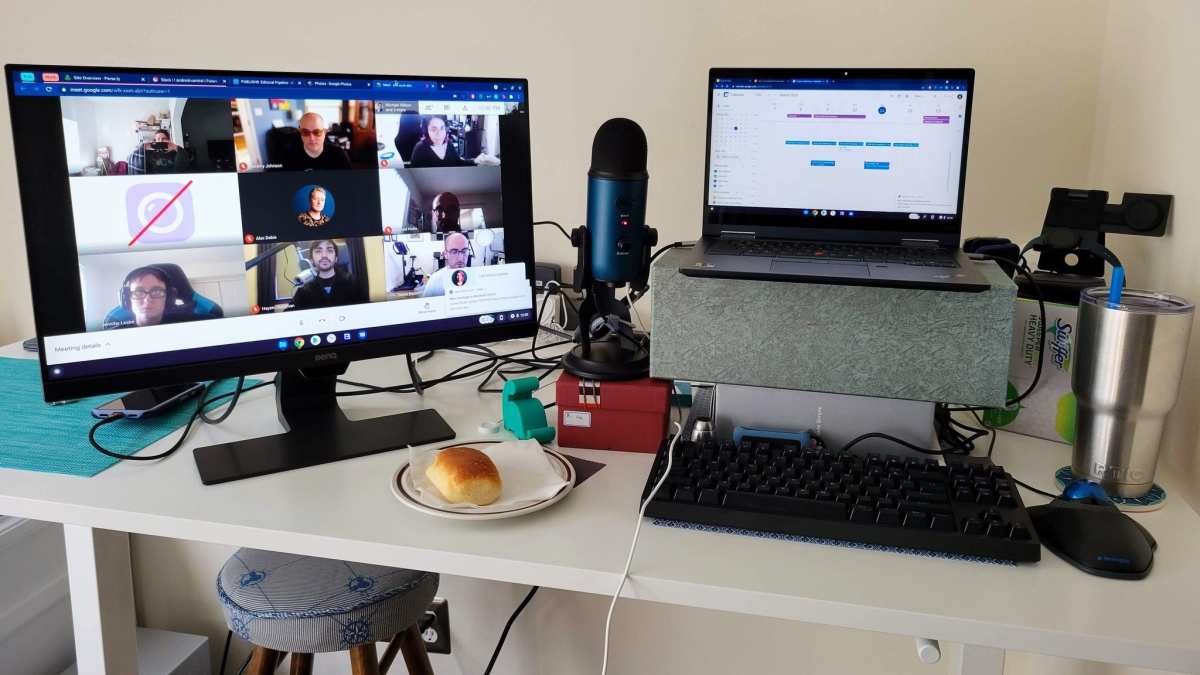
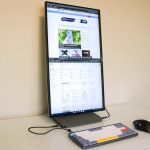
Image source: Wikimedia Commons / OS: Microsoft Corporation Screenshot: PantheraLeo1359531 😺 (talk)
Scaling and Resolution Trade-offs
Remote desktop connections frequently revert to lower refresh rates or fail to transmit at full 144Hz because of virtual display driver limitations. If you rely on RDP, Citrix, or VMware Horizon, your high-refresh monitor can be wasted.
There's a real opportunity cost here, too. A $250 budget can buy either a 27" 1080p 144Hz panel or a 27" 1440p 75Hz panel. The higher resolution provides more usable desktop space for side-by-side windows and sharper text rendering.
The 144Hz panel delivers smoother motion but slightly softer text at the lower PPI.
The right choice depends on whether you'll actually use that extra screen real estate or that extra motion smoothness, and which one you'll perceive more often through the workday. Neither option is obviously better; both are legitimate productivity features. The decision framework in the rest of this article can help you weigh them against your own priorities, so you can spend your budget where it actually matters to your comfort and workflow.

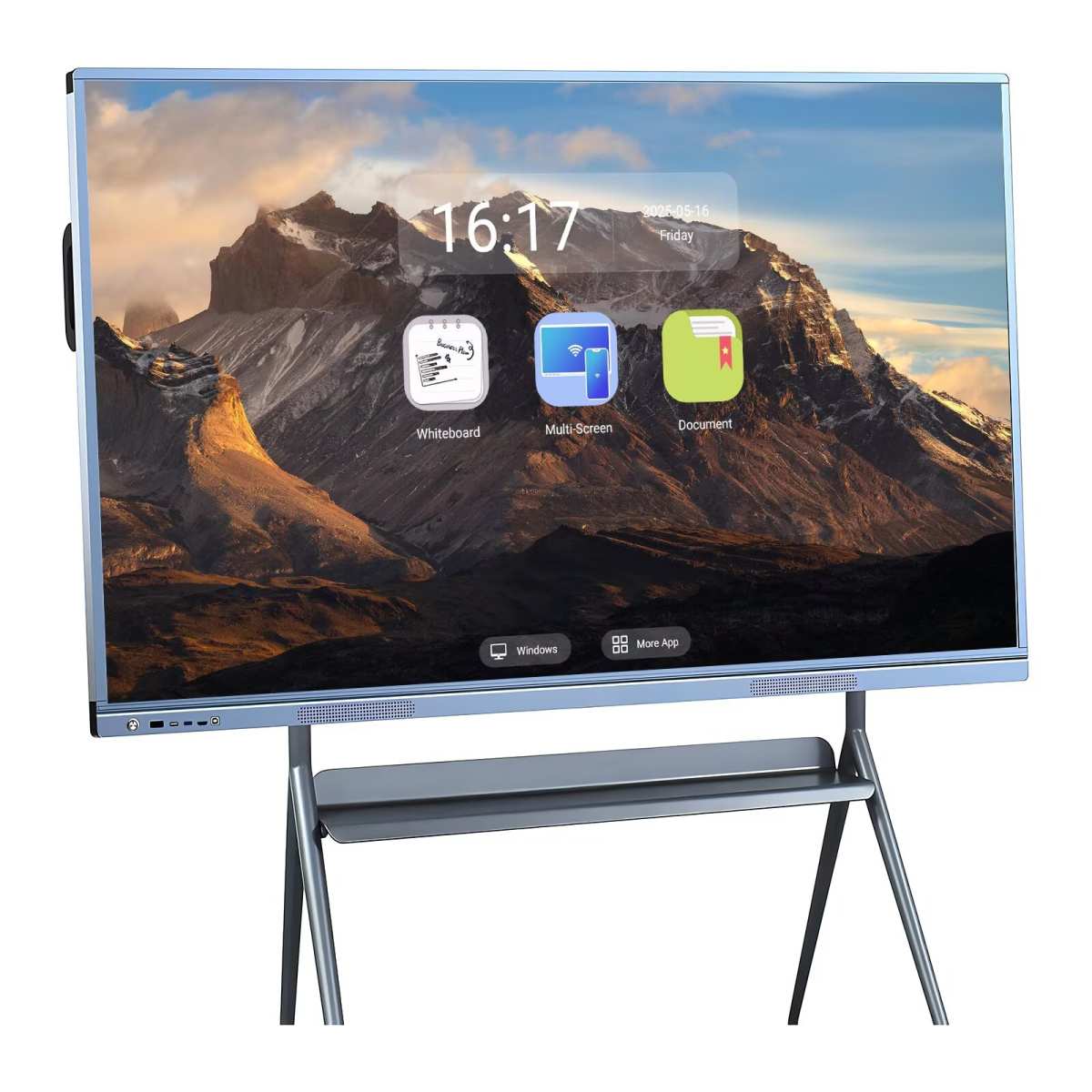
Image source: Wikimedia Commons / OS: Microsoft Corporation Screenshot: PantheraLeo1359531 😺 (talk)
Image source: Bing (Web (fair-use with source credit))
Image source: Bing (Web (fair-use with source credit))

Similar Posts