What Resolution Is Best for Gaming Monitor
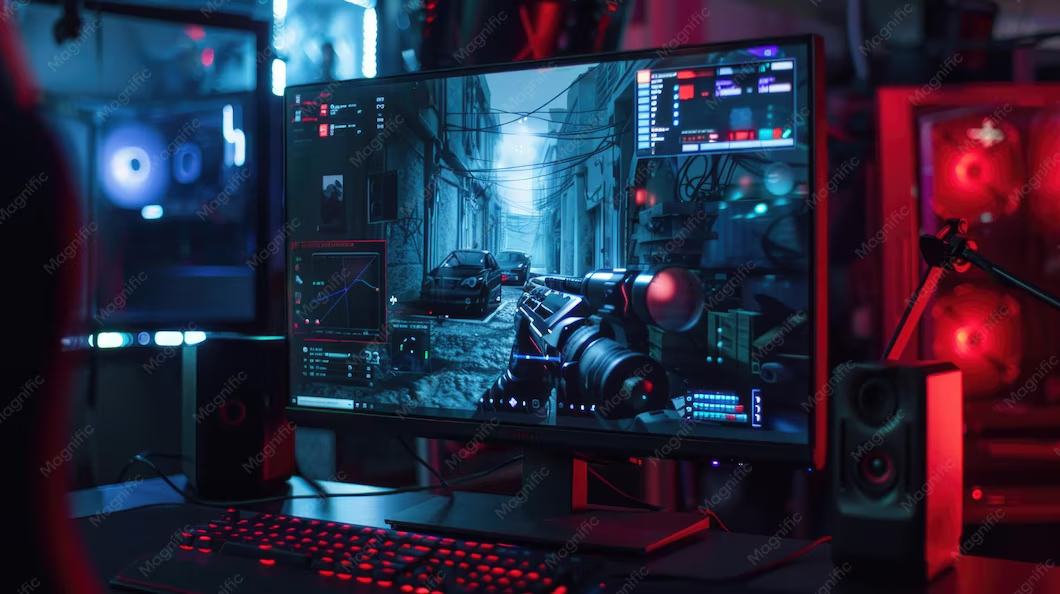
If you've ever stood in front of a wall of gaming monitors and felt completely overwhelmed by the resolution options, you're not alone. Figuring out what resolution is best for gaming monitor setups is one of the most confusing decisions PC gamers face, and getting it wrong means either wasting money or missing out on visuals you'd actually love.
The truth is there's no single "best" resolution. It depends on your graphics card, your screen size, how far you sit from your display, and what kinds of games you play. Let's break it all down so you can make the right call without second-guessing yourself.
Quick Answer
1440p is the best resolution for most gamers in 2024. It offers noticeably sharper visuals than 1080p without crushing your frame rates. Competitive players should consider 1080p at high refresh rates. 4K works best for large screens and high-end hardware.
Why Resolution Is the Most Important Monitor Decision You'll Make
Resolution determines how many pixels your monitor displays, and more pixels means sharper, more detailed images. A 1080p display shows roughly 2 million pixels. A 4K display pushes over 8 million.
That's a massive jump in clarity, but it also means your graphics card has to work four times harder to render each frame.
Here's where most people get tripped up. They assume higher resolution always equals a better experience. It doesn't, not automatically.
If you're playing competitive shooters and your frame rate drops from 240 fps to 90 fps because you jumped to 4K, you've actually made your gaming experience worse. Resolution is always a balancing act against refresh rate, response time, and your GPU's raw power.
The key is matching your resolution to your actual use case, not just buying the highest number you can afford.
How Resolution Actually Affects Your Gaming Experience
What Each Resolution Looks Like in Practice
Let's put real numbers on the table so you understand exactly what we're comparing.
| Resolution | Pixel Count | Typical Screen Size | PPI at Common Size | Best For |
|---|---|---|---|---|
| 1080p (Full HD) | 2.07 million | 24" | ~91.8 PPI | Competitive gaming, budget builds |
| 1440p (QHD) | 3.68 million | 27" | ~108.8 PPI | Most gamers, the sweet spot |
| 4K (UHD) | 8.29 million | 32" | ~137.7 PPI | Cinematic games, high-end rigs |
At 24 inches, 1080p looks perfectly sharp for everyday use and gaming. Move up to 27 inches with the same resolution and things start looking slightly soft because the pixels are spread across a larger area. That's pixel density at work, and it's the real reason screen size and resolution need to be considered together rather than separately.
1440p on a 27-inch panel is where things get really good. Text looks crisp, game worlds have more detail, and you're not pushing your GPU nearly as hard as 4K demands. For most gaming setups in 2024, this combination delivers the best balance of visual quality and performance.
4K is stunning, no question. At 32 inches, everything looks razor-sharp. But you need serious hardware to drive it.
We're talking an NVIDIA RTX 4080 or AMD RX 7900 XTX if you want high frame rates at 4K with settings turned up.
The Pixel Density Problem
Pixel density is measured in pixels per inch, and it's the spec most people ignore when shopping for a monitor. Two monitors can have the same resolution but look completely different if one is 24 inches and the other is 32 inches.
Here's a practical way to think about it. A 27-inch 1080p monitor has about 81.6 PPI. A 27-inch 1440p monitor has about 108.8 PPI.
That 33% increase in pixel density is immediately visible. Text is sharper, edges are smoother, and game textures look more defined.
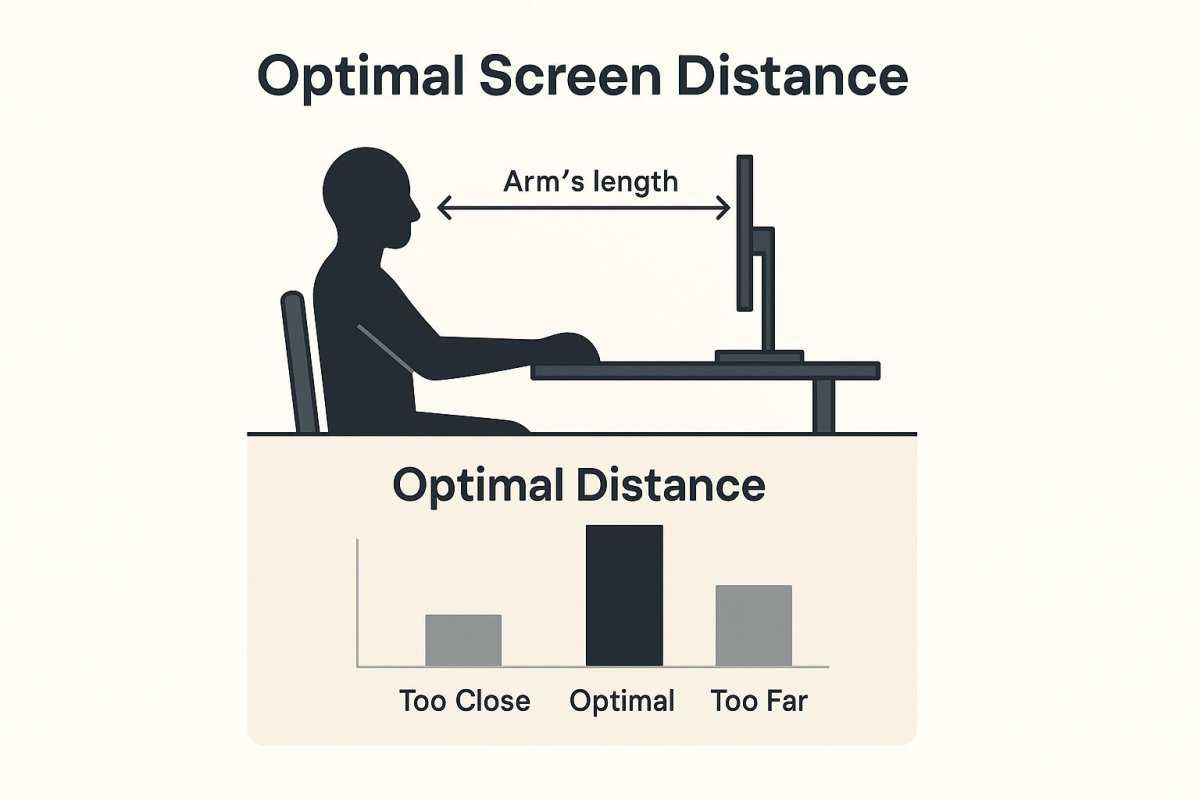
But there's a point of diminishing returns. Once you get above roughly 110 PPI at a typical desk viewing distance of 2 to 3 feet, the visual improvement from adding more pixels becomes harder to notice. That's why 4K on a 27-inch panel (around 163 PPI) gives you marginally better clarity than 1440p, but the difference isn't nearly as dramatic as the jump from 1080p to 1440p.
The practical takeaway: pair your resolution with the right screen size. Don't buy a 32-inch 1080p monitor. Don't buy a 24-inch 4K monitor either.
Match them properly.
Why Your GPU Matters More Than Your Monitor Choice
You could buy the most expensive 4K 240Hz monitor on the market, but if your GPU can't push frames at that resolution, you're wasting your money. Always check what your graphics card can actually handle before deciding on a target resolution.
Here's a rough guide based on current GPU tiers as of 2024:
- GTX 1660 Super / RX 6600: Stick with 1080p. These cards are solid at that resolution but will struggle at 1440p in demanding titles.
- RTX 4060 / RX 7600: 1080p at high refresh rates or entry-level 1440p gaming. You'll hit 60+ fps at 1440p in most titles with some settings adjustments.
- RTX 4070 / RX 7800 XT: This is the 1440p sweet spot tier. Expect high frame rates at 1440p with settings maxed out in most games.
- RTX 4080 / RX 7900 XTX: These cards can handle 4K gaming at high refresh rates. If you want 4K, this is the GPU tier you need.
- RTX 4090: 4K at very high frame rates, or 1440p at 240Hz+ without breaking a sweat.
The bottom line: let your GPU determine your resolution ceiling, then buy the monitor that matches it.
1080p: Still the King of Competitive Gaming
When 1080p Makes Sense
If you play competitive titles like Valorant, Counter-Strike 2, Apex Legends, or Rainbow Six Siege, 1080p at a high refresh rate is still the way to go. The reason is simple. At 1080p, even mid-range GPUs can push 240 to 360 frames per second, which means you can take full advantage of monitors running at 240Hz or 360Hz.
Higher frame rates mean lower input lag and smoother motion clarity. In a competitive shooter, that split-second advantage matters far than whether you can see individual blades of grass in sharper detail. Professional esports players overwhelmingly use 1080p monitors, and it's not because they can't afford better.
1080p monitors are also significantly cheaper. You can get a solid 24-inch 1080p panel with a 240Hz refresh rate for under $200. That leaves more budget for a better GPU, which will actually improve your gaming experience more than a higher resolution would.
The Downsides You Can't Ignore
1080p has real limitations, especially on larger screens. At 27 inches, the pixel density drops to about 81.6 PPI, and things start looking noticeably soft. Text has slightly jagged edges, and fine details in game environments don't pop the way they do at higher resolutions.
If you play a mix of competitive and single-player games, 1080p might leave you wanting more when you sit down with something like Cyberpunk 2077 or Baldur's Gate 3. Those games benefit enormously from the extra sharpness of 1440p or 4K.
There's also the longevity question. As GPUs get more powerful and 1440p becomes the new baseline, 1080p will start feeling like the old 720p does now. If you're buying a monitor you want to keep for five or more years, 1440p is a safer long-term investment.
1440p: The Resolution Most Gamers Should Buy
Why 1440p Hits the Sweet Spot
For the vast majority of gamers, 1440p is the right answer. It delivers a visibly sharper image than 1080p without the extreme hardware demands of 4K. You get roughly 78% more pixels than 1080p, and that difference is immediately noticeable in everything from game worlds to desktop text.
The performance hit going from 1080p to 1440p is manageable. You're looking at roughly a 30 to 40% drop in frame rates depending on the game, which most modern mid-range and upper-mid-range GPUs can absorb without issue. A card like the RTX 4070 or RX 7800 XT will push well over 100 fps at 1440p in most AAA titles with settings on high or ultra.
1440p also pairs perfectly with 27-inch panels. At that size, you get around 108.8 PPI, which is sharp enough that you won't notice individual pixels at a normal desk viewing distance. It's the combination of resolution and screen size that makes this pairing work so well.
The Tradeoffs Worth Knowing About
1440p isn't perfect for everyone. If you're a competitive gamer chasing every possible frame, the drop from 360 fps at 1080p to 180 fps at 1440p might bother you. The difference is real, even if it's smaller than the jump from 60 to 144.
You also need to consider connectivity. Running 1440p at high refresh rates requires DisplayPort 1.4 or HDMI 2.1. Most modern GPUs and monitors support both, but if you're repurposing older hardware, double-check that your cables and ports can handle the bandwidth.
Price is another factor. 1440p monitors cost more than 1080p, typically ranging from $250 to $500 for good models. That's still far less than 4K, but it's a meaningful step up from the budget 1080p tier.
Side-by-Side: How the Three Main Resolutions Actually Compare
Let's put 1080p, 1440p, and 4K head to head so you can see exactly how they stack up across the factors that actually matter.
| Factor | 1080p | 1440p | 4K |
|---|---|---|---|
| Pixel Count | 2.07M | 3.68M | 8.29M |
| Ideal Screen Size | 24" | 27" | 32"+ |
| GPU Demand | Low | Moderate | High |
| Monitor Cost | $100–$250 | $250–$500 | $400–$1,000+ |
| Best Refresh Rate | Up to 500Hz+ | Up to 360Hz | Up to 240Hz+ |
| Competitive Gaming | Excellent | Very Good | Good |
| Visual Fidelity | Good | Very Good | Excellent |
| Future-Proofing | Declining | Strong | Strongest |
| Recommended GPU Tier | Mid-range | Upper mid-range | High-end |
The pattern is clear. 1080p wins on raw performance and affordability. 4K wins on visual quality and future-proofing. 1440p sits comfortably in the middle, offering strong performance without sacrificing too much visual fidelity.

4K: Stunning but Demanding
When 4K Is Actually Worth It
4K gaming is breathtaking when you have the hardware to back it up. At 3840×2160, everything looks incredibly sharp. Text is crisp, textures are detailed, and open-world games feel more immersive because you can see distant objects with real clarity.
The best use case for 4K is single-player, visually rich games. If you're playing Red Dead Redemption 2, Horizon Forbidden West, or Alan Wake 2 and you want them to look as good as possible, 4K delivers an experience that 1440p simply can't match. The difference is especially noticeable on 32-inch and larger panels where the higher pixel density keeps everything looking tight.
Console gamers on PS5 and Xbox Series X should also strongly consider 4K. Both consoles are designed around 4K output, and many console-optimized games look significantly better at native 4K than at the upscaled 1440p that some monitors force on them.
The Real Cost of 4K Gaming (It's Not Just the Monitor)
Here's the part that doesn't get talked about enough. The monitor is only part of the expense. To actually game at 4K with decent frame rates and settings turned up, you need a top-tier GPU.
As of 2024, that means at minimum an RTX 4080 or RX 7900 XTX, both of which cost significantly more than the monitor itself.
You'll also likely need to use upscaling technologies like DLSS or FSR in the most demanding titles. These technologies are good, and in some cases nearly indistinguishable from native rendering, but the fact that you need them at all shows how demanding 4K really is.
There's also the refresh rate tradeoff. While 4K monitors at 144Hz and 240Hz exist, they're expensive. Many 4K gaming monitors top out at 60Hz to 120Hz, which is fine for single-player gaming but limiting if you also play competitive titles.
Best Resolution by Use Case
Competitive and Esports Players
If your primary games are Valorant, CS2, Apex, League of Legends, or Fortnite in competitive mode, go 1080p at the highest refresh rate your budget allows. A 24-inch 1080p panel at 240Hz or 360Hz will give you the lowest input lag and the smoothest motion clarity. Every frame matters when you're playing at a high level, and 1080p lets your GPU push the maximum number of them.
Single-Player and Cinematic Gamers
For story-driven games, RPGs, and open-world adventures, 1440p is the ideal starting point. You get a noticeably sharper, more immersive image without needing a $1,500 GPU. If you have a high-end rig and a 32-inch or larger display, 4K takes the visual experience to another level entirely.
Console Gamers (PS5 and Xbox Series X)
Both the PS5 and Xbox Series X output natively at 4K. A 4K monitor in the 27 to 32-inch range is the best match. If you're on a tighter budget, a 1440p monitor will still look great, but you'll lose some of the console's visual output since it will upscale to 1440p rather than running at native 4K.
Budget Builds Under 0
Stick with 1080p at 24 inches. You can get an excellent 1080p high-refresh monitor for under $200 and put the savings toward a better GPU. A $150 monitor paired with an RTX 4060 will give you a far better gaming experience than a $500 monitor paired with a GPU that can't drive it properly.
High-End Enthusiast Setups
If you're running an RTX 4080 or 4090 and you want the absolute best visual quality, 4K at 144Hz or higher is the way to go. Look for 32-inch 4K panels with DisplayHDR 600 or better for the full experience. This tier is where 4K truly shines and the investment makes sense.
Common Mistakes People Make When Choosing a Resolution
Buying 4K without the GPU to back it up. This is the single most common mistake. A 4K monitor on a mid-range GPU means you'll either play at reduced settings or accept frame rates that defeat the purpose of a gaming monitor.
Ignoring pixel density. A 32-inch 1080p monitor looks terrible. A 24-inch 4K monitor wastes pixels you can't appreciate at that size. Always match resolution to screen size.
Assuming higher resolution is always better. If you play competitive games and your frame rate tanks after upgrading, you've made your experience worse, not better. Resolution is a tool, not a trophy.
Forgetting about connectivity. Not every port can run every resolution at every refresh rate. DisplayPort 1.4 supports 1440p at 144Hz and 4K at 120Hz. HDMI 2.1 supports 4K at 120Hz.
Check your GPU outputs and monitor inputs before you buy.
Overlooking upscaling. Technologies like NVIDIA DLSS, AMD FSR, and Intel XeSS can let you run lower internal resolutions while outputting to a higher-resolution monitor. This means 1440p on a 4K monitor can look surprisingly close to native 4K in supported games, giving you the best of both worlds.
Quick Specs and PPI Reference Guide
Here's a reference table for pixel density across common resolution and screen size combinations:
| 24" | 27" | 32" | 34" Ultrawide | |
|---|---|---|---|---|
| 1080p | 91.8 PPI | 81.6 PPI | 68.8 PPI | 59.4 PPI |
| 1440p | 122.4 PPI | 108.8 PPI | 91.5 PPI | 78.3 PPI |
| 4K | 183.6 PPI | 163.2 PPI | 137.7 PPI | 116.1 PPI |
The sweet spot range for desktop gaming at a typical viewing distance is roughly 90 to 140 PPI. Below 90 PPI, you'll start noticing pixelation. Above 140 PPI, the visual improvement becomes marginal and you're paying more for pixels you can barely distinguish.
Frequently Asked Questions
Is 1440p worth it over 1080p for gaming?
Yes, for most gamers. The jump from 1080p to 1440p is one of the most noticeable visual upgrades you can make. Text is sharper, game worlds have more detail, and the performance hit is manageable on modern mid-range GPUs.
If you have at least an RTX 4060 or RX 7600, 1440p is absolutely worth it.
Can I game at 4K with an RTX 4070?
The RTX 4070 can handle 4K gaming in many titles, but you'll likely need to use DLSS or lower some settings to maintain 60 fps in demanding games. For a smooth 4K experience at high settings without upscaling, you'll want at least an RTX 4080 or RX 7900 XTX.
What resolution is best for a 27-inch gaming monitor?
1440p is the ideal resolution for a 27-inch gaming monitor. It delivers about 1088 PPI, which is sharp enough that you won't see individual pixels at a normal desk distance. 1080p at 27 inches looks noticeably soft, and 4K at 27 inches demands more GPU power than most people need to spend for the marginal visual gain.
Does resolution affect input lag?
Higher resolution can slightly increase input lag because your GPU needs more time to render each frame. The difference is usually small, often just a few milliseconds, but in competitive gaming where every millisecond counts, it's worth considering. This is one reason competitive players often prefer 1080p at very high refresh rates.
Is 4K overkill for a 24-inch monitor?
In most cases, yes. At 24 inches, 4K delivers around 183.6 PPI, which is well past the point of diminishing returns for a typical desk viewing distance. You'd be paying a premium for pixels you can barely distinguish, and your GPU would be working significantly harder for minimal visual benefit. 1080p or 1440p is a much better fit for 24-inch panels.
Should I use DLSS or FSR instead of native resolution?
If your GPU supports DLSS (NVIDIA RTX cards) or FSR (both AMD and NVIDIA), these upscaling technologies are excellent. In many cases, Quality mode DLSS at 4K output from a 1440p internal resolution looks nearly identical to native 4K while delivering significantly higher frame rates. It's a smart way to get the visual benefits of a high-resolution monitor without the full performance cost.
Final Verdict: Which Resolution Should You Actually Buy?
For most gamers reading this, the answer is 1440p at 27 inches with a 144Hz or 165Hz refresh rate. It's the combination that delivers the best balance of sharp visuals, smooth performance, and reasonable cost in 2024.
If you're primarily a competitive gamer, go 1080p at 24 inches with the highest refresh rate you can afford. If you have a high-end GPU and you prioritize visual fidelity above all else, 4K at 32 inches will give you the most stunning picture money can buy.
The worst thing you can do is buy a monitor based on resolution alone. Match it to your GPU, your screen size, your viewing distance, and the types of games you actually play. That's how you end up with a monitor that feels right every single time you sit down to play.
Final Verdict: Which Resolution Should You Actually Buy?
For most gamers reading this, the answer is 1440p at 27 inches with a 144Hz or 165Hz refresh rate. It's the combination that delivers the best balance of sharp visuals, smooth performance, and reasonable cost in 2024.
If you're primarily a competitive gamer, go 1080p at 24 inches with the highest refresh rate you can afford. If you have a high-end GPU and you prioritize visual fidelity above all else, 4K at 32 inches will give you the most stunning picture money can buy.
The worst thing you can do is buy a monitor based on resolution alone. Match it to your GPU, your screen size, your viewing distance, and the types of games you actually play. That's how you end up with a monitor that feels right every single time you sit down to play.

Similar Posts