What Is the Difference Between Microled and QLED Monitor
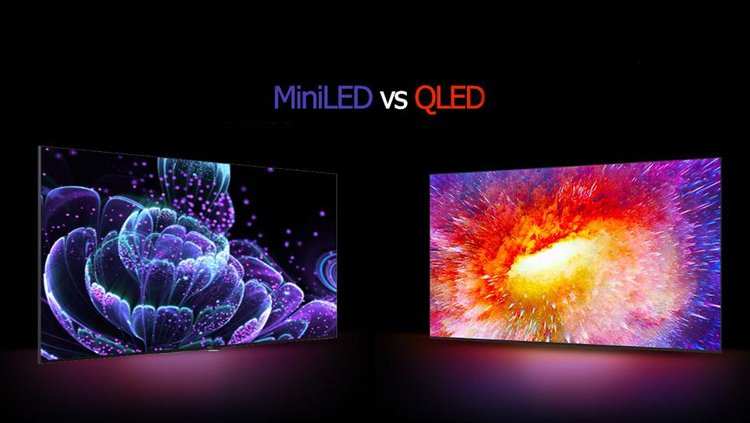
You're staring at two premium monitor specs, both promising stunning HDR and vivid color, and you're not sure which technology actually delivers what you need. That's the core of what is the difference between microled and qled monitor, and it matters more than most comparison articles let on. These aren't just marketing labels.
They represent fundamentally different ways of building a display.
The short version: QLED is an enhanced LCD that still uses a backlight, while MicroLED is emissive, meaning each pixel produces its own light. That single architectural difference cascades into everything you care about, from black levels to burn-in risk to what's actually available for you to buy in 2026. Let's break it down properly.
Image source: Bing (Web (fair-use with source credit))
Why This Comparison Actually Matters
Most monitor comparisons focus on surface-level specs. Refresh rate, resolution, color gamut. Those matter, but they miss the structural difference that determines how a display actually behaves over years of use.
Here's why this comparison deserves real attention. QLED monitors are everywhere right now. You can walk into any electronics retailer or browse any online store and find dozens of options across every price tier.
Samsung, Dell, ASUS, Acer, LG, they all ship QLED models. The technology is mature, the supply chain is stable, and pricing has dropped significantly over the past three years.
MicroLED is a different story entirely. As of 2026, you cannot buy a standard desktop MicroLED monitor from any major manufacturer at a consumer price point. What exists are modular display systems, primarily Samsung's "The Wall" and similar commercial-grade products, priced from tens of thousands to hundreds of thousands of dollars.
These are aimed at luxury home theaters, corporate lobbies, control rooms, and digital signage.
So the comparison isn't really "which should I buy today" in a head-to-head product sense. It's more about understanding where display technology is heading, what each approach does well right now, and whether waiting for MicroLED makes sense for your situation.
The confusion between these two technologies is also genuinely widespread. Part of that is marketing. Samsung's QLED branding sounds premium and adjacent to newer technologies.
Part of it is that "MicroLED" gets conflated with "Mini-LED," which is a completely different thing. Mini-LED is a backlighting approach used in LCD panels, including many QLED displays. MicroLED has no backlight at all.
Understanding this distinction protects you from overpaying for technology that doesn't match your needs, and it helps you evaluate whether the premium products coming down the pipeline are worth the wait.
Quick Answer
MicroLED is an emissive display where each pixel generates its own light. QLED is an LCD display that uses a quantum dot film over an LED backlight. MicroLED offers perfect blacks and zero burn-in risk.
QLED offers wide availability and lower cost. As of 2026, MicroLED monitors are not available at consumer prices. QLED monitors are widely available across all price tiers.
How QLED Monitors Actually Work
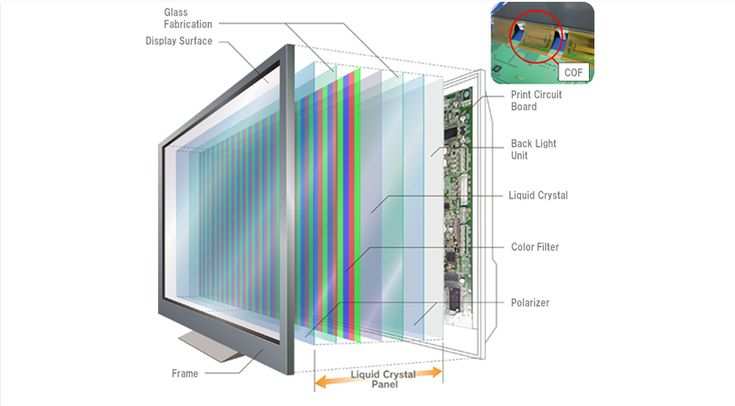
QLED stands for Quantum Dot LED, and despite how it sounds, it's still fundamentally an LCD display. The liquid crystal layer hasn't gone anywhere. What changed is what's behind it.
A standard LED-backlit LCD uses a white LED backlight and color filters to produce red, green, and blue. The problem is that white LEDs don't produce perfectly pure wavelengths, which limits color accuracy and gamut. Quantum dots solve this.
Quantum dots are semiconductor nanocrystals, typically between 2 and 10 nanometers in diameter. When you hit them with a specific wavelength of light, they re-emit light at a very precise wavelength depending on their size. Larger dots emit red.
Smaller dots emit blue. This gives you extremely pure primary colors.
In a QLED monitor, the blue LED backlight excites the quantum dot layer, which then produces precise red and green light alongside the blue. The result is a wider color gamut and higher peak brightness than a standard LED-LCD can achieve.
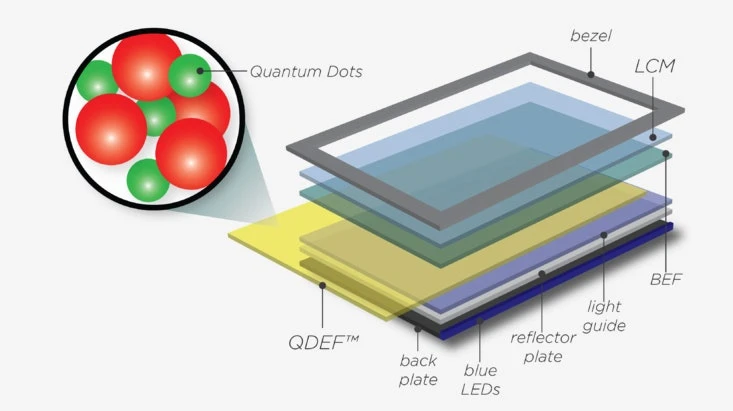
Image source: Bing (Web (fair-use with source credit))
There are a few ways manufacturers implement this. Samsung's QD-OLED approach combines quantum dots with OLED emitters, but that's a separate category. In a standard QLED LCD, the quantum dot layer sits as a film between the backlight and the liquid crystal panel, sometimes called a QD-enhanced film or QDEF.
The backlight itself can be edge-lit (LEDs along the sides of the panel) or direct-lit (LEDs spread across the back). Higher-end QLED monitors use direct-lit backlights with local dimming zones, which improves contrast by allowing different areas of the screen to dim independently.
Here's the critical limitation. Even with excellent local dimming, QLED still has a backlight. When the screen tries to show black in one area while another area is bright, some light bleeds through.
This is called IPS glow or haloing, and it's inherent to any backlit technology. The more local dimming zones, the better it gets, but it never reaches true per-pixel control.
QLED monitors also rely on liquid crystals to modulate light, which introduces response time limitations. Modern QLED panels achieve 1ms to 4ms response times, which is excellent for gaming, but the liquid crystal layer still adds a small amount of latency compared to purely emissive technologies.
The practical takeaway is that QLED gives you very good picture quality, wide availability, and reasonable pricing. It's the safe, proven choice for most people in 2026. But it's an evolution of existing technology, not a revolution.
How MicroLED Monitors Actually Work
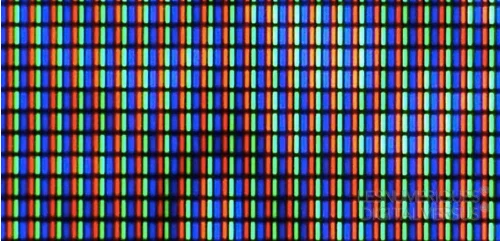
MicroLED is emissive. That's the single most important thing to understand about it. Each pixel is its own tiny LED that produces its own light.
There is no backlight. There is no liquid crystal layer. When a pixel needs to be black, it turns off completely.
The technology uses arrays of microscopic inorganic LEDs, typically based on gallium nitride (GaN) or indium gallium nitride (InGaN) semiconductor structures. Each pixel contains individual red, green, and blue sub-pixel emitters, though some implementations use blue MicroLEDs with quantum dot color conversion layers to produce red and green.

Image source: Bing (Web (fair-use with source credit))
The manufacturing process is fundamentally different from LCD production. MicroLED chips are fabricated on semiconductor wafers, then transferred to a substrate in a process called mass transfer. For a 4K display, that means placing roughly 25 million individual LED chips (8.3 million pixels times three sub-pixels) onto a backplane with extreme precision.
This is where the current challenges live. At pixel pitches below 0.6mm, which you'd need for a desktop monitor viewed at arm's length, the mass transfer yield rates drop significantly. A single dead pixel among 25 million is acceptable in signage but unacceptable in a consumer monitor.
Repairing individual MicroLED pixels is extraordinarily difficult compared to LCD.
The emissive nature of MicroLED gives it several inherent advantages. Black levels are true zero because pixels turn off. HDR performance is exceptional because there's no backlight bleed.
Viewing angles are wide because light isn't passing through liquid crystal layers. Response times are fast because LEDs switch at nanosecond speeds.
MicroLED also uses inorganic materials, which means it doesn't suffer from the organic degradation that causes burn-in on OLED displays. Static elements like taskbars, game HUDs, and channel logos can sit on screen indefinitely without leaving permanent artifacts.
The modular nature of MicroLED is another differentiator. Most MicroLED products are built from individual display tiles that can be tiled together seamlessly. Samsung's "The Wall" uses this approach.
You can theoretically build a display of any size by adding more tiles. This is how MicroLED currently exists in the market, not as single-panel desktop monitors but as modular systems.
Power efficiency is theoretically better than LCD because there's no backlight wasting light through filtering layers. In practice, current MicroLED implementations haven't fully realized this advantage due to driver circuit overhead and thermal management needs.
The bottom line on MicroLED is that it's the most promising display technology for the future. It combines the perfect blacks of OLED with the brightness and longevity of LED, without the burn-in risk. But as of 2026, it's not available as a consumer desktop monitor at any reasonable price.
Side-by-Side: The Real Differences That Affect Your Experience
Now let's put these two technologies against each other on the factors that actually matter when you're using a monitor daily.
Picture Quality and HDR Performance
This is where the emissive vs. transmissive distinction hits hardest. MicroLED can produce true black because individual pixels turn off. QLED with local dimming can get close, but it's still pushing light through layers.
| Factor | MicroLED | QLED |
|---|---|---|
| Black level | 0 nits (pixel off) | 0.02 to 0.05 nits (best local dimming) |
| HDR contrast | Essentially infinite | High but limited by backlight |
| Halo artifacts | None | Present in edge-lit, reduced in FALD |
| Peak brightness | 1,000 to 4,000+ nits (theoretical) | 1,000 to 2,000+ nits (current models) |
For HDR content, MicroLED has a structural advantage that no amount of local dimming zones can fully overcome. If you watch a lot of HDR movies or play HDR games, the difference is visible and meaningful.
Color Accuracy and Gamut
Both technologies can achieve excellent color performance. QLED's quantum dot layer gives it a natural advantage in color purity over standard LED-LCDs, and modern QLED monitors routinely cover 95% to 100% of DCI-P3.
MicroLED's color performance depends on the implementation. Native RGB MicroLED emitters can achieve very wide color gamuts, potentially exceeding DCI-P3 and covering significant portions of Rec. 2020. Blue MicroLED with quantum dot color conversion approaches similar performance.
For professional color work, both can be calibrated to Delta E values below 2, which is the threshold where the human eye can't distinguish errors. The practical difference is that QLED monitors with factory calibration are readily available and affordable, while MicroLED calibration at a professional level requires equipment and expertise that most consumers don't have access to.
Response Time and Motion Clarity
MicroLED pixels switch at speeds measured in nanoseconds. There's no liquid crystal to twist and untwist. This gives MicroLED a fundamental advantage in motion clarity, though the practical difference vs. a good QLED with 1ms response time is hard to perceive for most users.
For competitive gaming, both technologies are more than fast enough. If you're an esports professional chasing every microsecond of advantage, the theoretical edge goes to MicroLED. For everyone else, a good QLED with a 144Hz or 240Hz refresh rate delivers an excellent experience.
Viewing Angles and Uniformity
MicroLED's emissive architecture provides wide viewing angles without color shift or brightness loss. QLED's viewing angles depend on the LCD panel type. IPS-based QLED panels offer good viewing angles, typically 178 degrees, but can exhibit IPS glow in dark scenes.
VA-based QLED panels have better contrast but narrower viewing angles.
Panel uniformity is a different story. QLED panels can suffer from backlight uniformity issues, clouding, and edge bleed. MicroLED tiled systems can show visible seams between tiles, though modern implementations have minimized this significantly.
Burn-In Risk and Long-Term Reliability
This is one of MicroLED's strongest advantages. Because it uses inorganic LEDs, there's no organic material to degrade unevenly. Static elements on screen won't cause burn-in.
QLED LCDs also don't suffer from burn-in in the traditional sense, though some QD-OLED variants do.
For users who display static content for long periods, taskbars, spreadsheets, trading desks, MicroLED eliminates a real concern. QLED LCD is already safe here, but MicroLED makes it permanently safe regardless of implementation.
Long-term brightness degradation is slower in MicroLED than in OLED, and comparable to QLED LCD. Both should maintain usable brightness for 50,000+ hours under normal use.
What the Specs Sheet Won't Tell You
Manufacturer spec sheets highlight peak brightness, color gamut coverage, and response time. Those numbers matter, but they don't capture the real-world differences that emerge after weeks of daily use. Some of the factors that actually shape your experience live below the headline specs, exactly the kind of things a spec sheet won't tell you.
Pixel Pitch and Resolution Challenges
MicroLED resolution isn't fixed the way LCD resolution is. It depends on pixel pitch, which is the distance between the center of one pixel and the center of the next. To get 4K resolution in a desktop monitor size, around 27 to 32 inches, you need a pixel pitch below approximately 0.15mm.
That's about five times tighter than what current mass transfer processes can reliably achieve at consumer yield rates.
This is the fundamental reason you can't buy a 27-inch 4K MicroLED monitor in 2026. The manufacturing economics don't work yet. The technology exists at larger pixel pitches, which is why commercial MicroLED products tend to be large format displays viewed from greater distances.
Samsung's The Wall, for instance, is available in 110-inch and larger configurations where the viewer distance makes a larger pixel pitch perfectly acceptable.
For a desktop monitor viewed at 20 to 30 inches, a pixel pitch that large would look noticeably pixelated. Until mass transfer technology improves yield rates at sub-0.2mm pitches, MicroLED simply can't compete with LCD for high pixel density desktop use.
Power Consumption and Heat
MicroLED is theoretically more power-efficient than LCD because there's no backlight wasting energy through color filters and liquid crystal layers. In practice, current MicroLED implementations haven't fully realized this advantage. Driver circuits, thermal management systems, and the inherent inefficiency of driving millions of individual LEDs add overhead.
QLED LCDs, by contrast, benefit from decades of power optimization. Modern QLED monitors are quite efficient, particularly LED backlight systems with local dimming that can reduce power in dark scenes. In typical mixed usage, a 27-inch QLED monitor draws between 25 and 40 watts.
A MicroLED equivalent, if one existed, would likely draw comparable or slightly less power, but not dramatically less.
Heat management matters more for MicroLED than you might expect. Packing millions of LEDs into a small area generates significant thermal load. Without adequate cooling, brightness uniformity drifts and color points shift.
This is one reason MicroLED systems tend to be larger and thicker than equivalent LCD monitors.
Manufacturing Defects and Panel Uniformity
QLED LCD manufacturing is mature enough that panel uniformity issues are relatively rare in quality-controlled products. You might encounter some backlight bleed or minor clouding, but outright defects like stuck pixels are uncommon in units that pass factory quality control.
MicroLED manufacturing faces different challenges entirely. With millions of individual LED chips needing placement, even a 99.99% placement yield means thousands of defective pixels in a 4K display. Uniformity across tiled modules requires careful calibration, and brightness differences between tiles can be visible in large installations.
Repair is another consideration. A dead pixel on a QLED LCD is annoying but doesn't affect surrounding pixels. Replacing an entire LCD panel is straightforward.
A dead pixel on a MicroLED module may require replacing that module or performing microsurgery on the display assembly, neither of which is practical for consumers.
Current Pricing and Availability Reality
Let's talk actual dollars and what you can buy right now. This is where the theoretical advantages of MicroLED meet the hard wall of market reality.
A good 27-inch 4K QLED monitor costs between $400 and $800 as of 2026. Models like the Samsung Odyssey series, Dell UltraSharp QLED options, and ASUS ProArt QLED displays are readily available at these prices. You can walk into a store today and walk out with a QLED monitor.
MicroLED is not available at any comparable price. Samsung's MicroLED Wall systems start around $50,000 for the smallest configurations. These are not monitors in any conventional sense.
They are modular display systems designed for commercial and ultra-premium residential installations, requiring professional calibration and installation.
LG and Sony have demonstrated MicroLED concepts at trade shows, but neither offers a consumer desktop monitor. Smaller companies like Royole and various Chinese manufacturers have shown prototype MicroLED displays, but none have reached mass market availability.
The honest assessment is that MicroLED won't reach the consumer desktop monitor market in a meaningful way before 2028 to 2029 at the earliest. Pixel pitch and yield rate improvements are progressing, but not fast enough to change this timeline significantly.
Who Should Buy a QLED Monitor Right Now
For most people reading this in 2026, QLED is the correct choice. That isn't a consolation prize. It's a genuinely excellent technology that serves the vast majority of use cases extremely well.
If you're a creative professional doing photo editing, video color grading, or design work, a QLED with factory calibration and good Delta E values will serve you well. Models with IPS panels offer wide viewing angles and consistent color. Quantum dot enhancement gives you accurate, saturated color without the burn-in risk that comes with OLED.
Gamers will find QLED monitors with high refresh rates, adaptive sync support, and fast response times. The HDR experience is good, particularly on models with full-array local dimming and high peak brightness. Input lag on modern QLED gaming monitors is typically below 5 milliseconds, which is more than responsive enough for competitive play.
Office users, traders, coders, and general productivity users will appreciate QLED's availability in every size and price range. You can find a solid 27-inch 4K QLED for under $500, with excellent text clarity, low power consumption, and reliable long-term performance.
Static content users, think people who leave spreadsheets, taskbars, or news tickers on screen for hours, will benefit from QLED's essentially zero burn-in risk. Unlike OLED, you don't need to worry about uneven aging of organic materials over years of use.
Who Should Wait for MicroLED (or Look Elsewhere)
If you're building a luxury home theater or a high-end conference room, MicroLED deserves serious consideration today. The picture quality is genuinely superior to any LCD-based technology, and the modular size capability is unmatched.
If you're a technology enthusiast who wants to be an early adopter and budget isn't a constraint, Samsung's MicroLED Wall systems are available now through specialty installers. Be prepared for a five-figure investment and professional installation.
If you're a standard desktop monitor buyer and you're not building a home theater, the practical advice is to buy QLED now and revisit MicroLED in three to five years. By that time, pixel pitch improvements and manufacturing scale should bring MicroLED closer to consumer monitor price points.
There's also the OLED and QD-OLED alternative. If perfect blacks and emissive technology matter to you but you need a desktop monitor today, QD-OLED gives you the emissive advantage without waiting for MicroLED. The trade-off is inherent burn-in risk that MicroLED avoids.
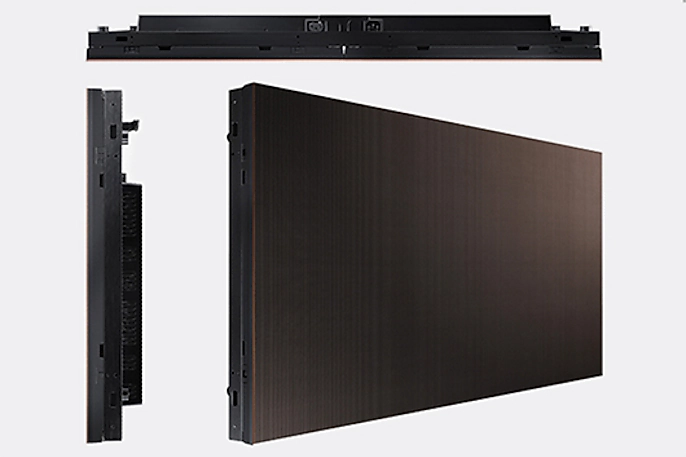
Image source: Bing (Web (fair-use with source credit))
Common Mistakes People Make When Comparing These
The most common mistake is confusing MicroLED with Mini-LED. Mini-LED is a backlighting technology used in LCD panels. It uses thousands of small LED zones for better local dimming.
It's an improvement over standard edge-lit LED backlighting, but it's still fundamentally an LCD with a backlight. MicroLED has no backlight whatsoever.
Another mistake is assuming QLED is a next-generation technology on par with OLED or MicroLED. QLED is an enhancement layer on top of existing LCD technology. It makes LCD better, but it doesn't change the fundamental architecture.
The quantum dot film improves color and brightness, but you still have a backlight, liquid crystals, and all the limitations that come with them.
Some buyers assume that MicroLED will completely replace LCD within a few years. The manufacturing challenges are significant enough that LCD will remain dominant in the desktop monitor market for the foreseeable future. MicroLED will likely enter the market first in large-format displays and gradually work its way down to smaller sizes as manufacturing improves.
There's also a tendency to compare the best MicroLED prototype against a mid-range QLED. That's not a fair comparison. Compare like for like in terms of price and intended use, and the picture becomes much clearer.
The Verdict: Which One Should You Actually Choose?
If you need a monitor today, buy QLED. It's available, it's proven, it's affordable, and it delivers excellent performance across every common use case. You won't regret it.
If you're planning a premium installation where budget allows and size matters, MicroLED is the best display technology available today. Nothing else matches its combination of perfect blacks, high brightness, and zero burn-in risk.
If you're trying to decide between these two for a standard desktop setup in 2026, the decision makes itself. QLED is the only realistic option at consumer price points. MicroLED remains a technology to watch, not a technology to buy, unless you have very specific needs and a very large budget.
The display industry moves fast, but some transitions take longer than headlines suggest. MicroLED will eventually reach the consumer monitor market. When it does, it will likely make QLED look as dated as plasma TVs look today.
But that day hasn't arrived yet.
Frequently Asked Questions
Is MicroLED better than QLED?
MicroLED is technically superior in several ways. It offers true blacks, wider viewing angles, and zero burn-in risk. However, it's not available as a consumer desktop monitor in 2026.
QLED is the better choice for most buyers today because of availability and price.
Can I buy a MicroLED desktop monitor in 2026?
No. MicroLED is available only in large-format modular systems priced for commercial and ultra-premium residential use. Consumer desktop MicroLED monitors are not expected before 2028 to 2029 at the earliest.
Does QLED have burn-in issues?
QLED LCD monitors do not suffer from burn-in. The liquid crystal and quantum dot layers don't degrade unevenly the way organic OLED materials do. QD-OLED variants do carry some burn-in risk, but standard QLED LCD is safe for static content.
What is the difference between MicroLED and Mini-LED?
MicroLED is an emissive technology where each pixel produces its own light. Mini-LED is a backlighting technology that uses thousands of small LED zones behind an LCD panel. Mini-LED improves LCD contrast but doesn't eliminate the backlight.
MicroLED eliminates the backlight entirely.
Is MicroLED worth waiting for?
For most desktop monitor buyers, no. The wait will be several years, and QLED already delivers excellent performance at a fraction of the cost. If you're building a premium home theater or have specific professional needs, MicroLED is worth considering now.
How long do QLED monitors last?
QLED monitors are rated for 50,000 to 60,000 hours of use before significant brightness degradation. That's roughly 15 to 20 years of typical daily use. The quantum dot layer itself is quite stable, and the LED backlight longevity is well-proven across millions of units in the field.

Similar Posts