Is Microled Monitor Good for Gaming
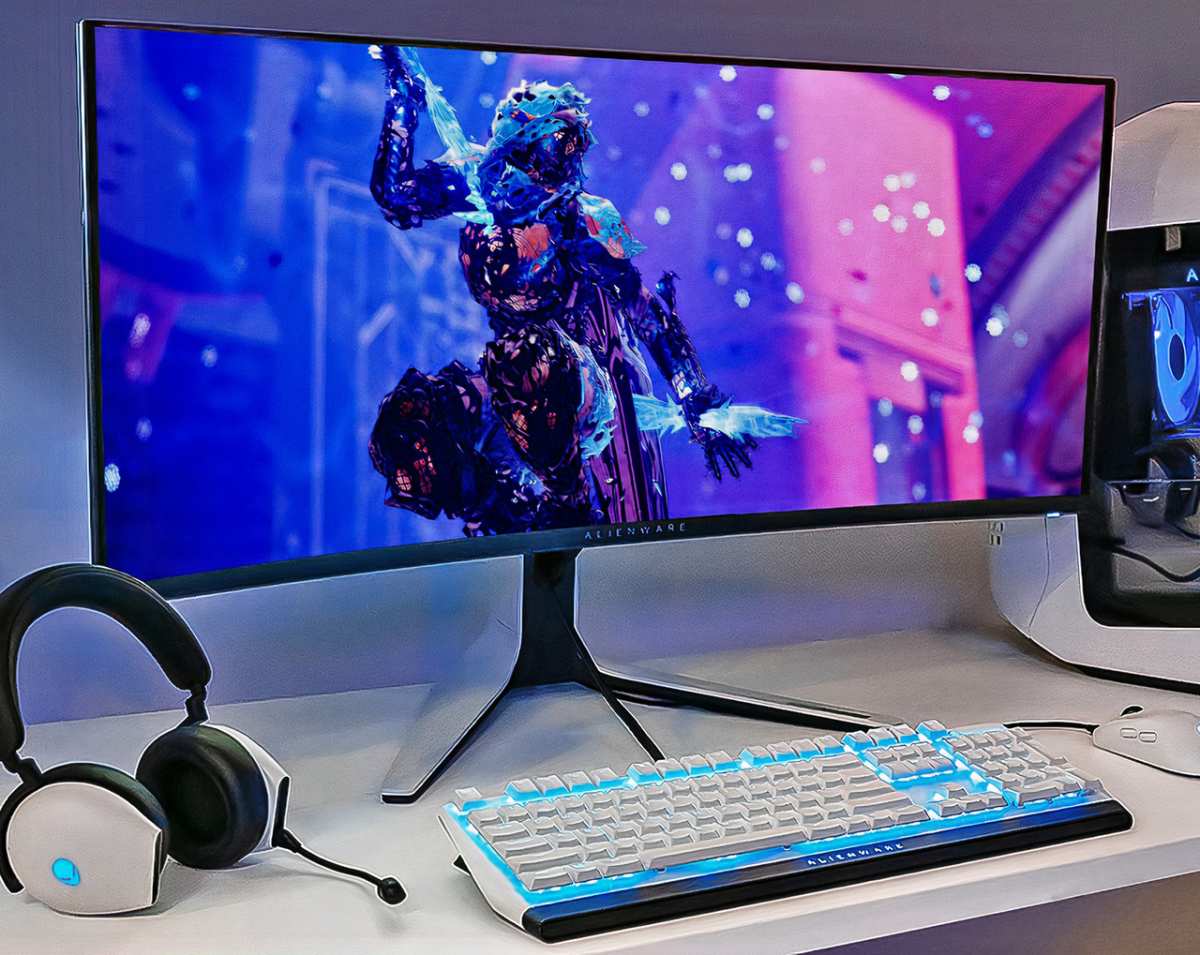

Image source: Wikimedia Commons / Santasgift (CC BY-SA)
Is microLED monitor good for gaming? The short answer is yes, the technology itself is excellent for gaming, but the practical reality in 2025 is far more complicated than the specs suggest. MicroLED delivers everything gamers claim to want: perfect blacks, extreme brightness, zero burn-in risk, and response times that rival the best panels on the market.
The problem is actually getting your hands on one.
As of 2025, true MicroLED gaming monitors for consumer desk setups essentially don't exist. What you'll find instead are massive commercial modular displays from Samsung and Sony, priced from $150,000 to over $500,000, designed for luxury home theaters and corporate installations. The technology is real and impressive.
The availability for average gamers is not.
Quick Answer
MicroLED technology is excellent for gaming on paper. It offers zero burn-in risk, extreme brightness, and fast response times. However, consumer gaming monitors don't exist yet.
Current MicroLED products are commercial displays costing six figures. For most gamers in 2025, OLED or high-end Mini-LED remain the practical premium choices.
What MicroLED Actually Is (And Isn't) in 2025
MicroLED is a self-emissive display technology, similar in concept to OLED but fundamentally different in materials. Each pixel is its own tiny inorganic LED made from gallium nitride (GaN), not organic compounds. This means every pixel produces its own light and can turn off completely for true black levels.
No backlight. No light bleed. Just per-pixel precision.
Here's where confusion creeps in. Marketing sometimes blurs the line between Mini-LED and MicroLED. Mini-LED uses a backlight with thousands of small LED zones behind an LCD panel.
MicroLED has no LCD layer at all. Each microscopic LED is the pixel itself. The distinction matters enormously for image quality and gaming performance.
The modular nature of current MicroLED products is key to understanding the market. Samsung's "The Wall" and Sony's "Crystal LED" systems build screens from individual tile-like panels that snap together. You're not buying a monitor off a shelf.
You're commissioning a display installation that requires professional calibration, structural mounting, and significant space.
Samsung's 110-inch The Wall model, for reference, weighs over 120 pounds without the mounting frame. This isn't something you put on a gaming desk with an arm mount. We're talking about a wall installation that needs an electrician and possibly a structural engineer.
MicroLED vs. OLED vs. Mini-LED: The Real Gaming Comparison
This is the comparison that actually matters for anyone shopping today. Let's break down the key gaming performance factors across the three competing technologies.
Response Time and Input Lag
MicroLED pixels can switch states extremely fast, with manufacturer specifications indicating sub-millisecond response times. In practice, the bottleneck isn't the panel itself but the processing electronics and video interface. Current commercial MicroLED systems prioritize video processing and color accuracy over the ultra-low input lag that competitive gamers demand.
OLED gaming monitors from LG and Samsung Display currently lead this category. Their WOLED and QD-OLED panels achieve real-world input lag under 3 milliseconds at high refresh rates. High-end Mini-LED IPS panels with overdrive optimization can match or come close to this.
The honest takeaway: MicroLED can be fast enough, but no manufacturer has optimized a MicroLED product specifically for competitive gaming input lag as of 2025.
Burn-In Risk and Longevity
This is MicroLED's strongest argument. OLED panels, despite improvements in mitigation, still carry some risk of burn-in with static HUD elements over thousands of hours. Mini-LED LCDs don't burn in at all since they're backlit.
MicroLED joins Mini-LED in the zero-burn-in camp because its inorganic LEDs don't degrade the way organic materials do.
Samsung's MicroLED panels are rated for approximately 100,000 hours to half-brightness. That's significantly longer than typical OLED lifespans. For gamers who leave displays on for hours daily and plan to keep them for a decade, this longevity advantage is genuinely meaningful.
Brightness and HDR Performance
MicroLED dominates sustained brightness. Where OLED panels hit around 1,000 nits peak in real-world gaming content and Mini-LED LCDs reach 1,500-2,000 nits, MicroLED systems can push substantially higher. Samsung's The Wall is rated for 2,000 nits sustained, with some configurations going higher.
For HDR gaming, this matters. Specular highlights in games like Cyberpunk 2077 or Alan Wake 2 look punchier and more realistic at higher peak brightness. MicroLED delivers this without the aggressive brightness limiting that OLED employs to manage heat and power.
Color and Viewing Angles
All three technologies cover wide color gamuts well. MicroLED and OLED both achieve near-full DCI-P3 and strong Rec. 2020 coverage. Mini-LED with quantum dot enhancement comes close.
Viewing angles favor the self-emissive technologies (MicroLED and OLED) over IPS-based Mini-LED, though VA-panel Mini-LEDs fall behind on this metric.
Here's a simplified comparison table for the key gaming factors:
| Factor | MicroLED | OLED (WOLED/QD-OLED) | Mini-LED IPS |
|---|---|---|---|
| Burn-in risk | None | Some risk | None |
| Peak brightness (nits) | 2,000+ | 1,000-1,500 | 1,500-2,000 |
| Response time | Sub-ms (theoretical) | ~0.1-3ms real-world | 1-4ms |
| Input lag optimization | Minimal (current products) | Excellent | Good to excellent |
| HDR impact | Excellent | Very good | Very good |
| Gaming monitor availability | None | Strong | Strong |
| Price (consumer tier) | $150K+ | $800-$1,500 | $400-$1,200 |
Image source: Bing (Web (fair-use with source credit))
The Availability Problem: Why You Probably Can't Buy One
Let's be blunt. You cannot walk into a store or browse Amazon and buy a MicroLED gaming monitor. The products that exist are commercial display systems sold through professional installation channels.
Samsung's The Wall and Sony's Crystal LED are the two primary options, and both target the commercial signage, luxury home theater, and corporate markets.
Samsung does offer The Wall in consumer-adjacent marketing, but the purchasing process involves consultation, custom configuration, professional installation, and prices that start around $150,000 for the 110-inch model. Larger configurations and premium options climb well past $300,000. Sony's Crystal LED system sits in a similar price range and requires professional integration.
The refresh rate situation is another hurdle. Most commercial MicroLED installations top out at 60Hz or 120Hz. For a display technology that costs six figures, 120Hz in 2025 feels underwhelming when $1,000 OLED monitors deliver 240Hz or even 360Hz.
The commercial focus on video walls and signage means gaming-specific features like adaptive sync (FreeSync, G-Sync) and high refresh rates aren't prioritized.
There are a few smaller companies exploring MicroLED for more accessible form factors, but nothing has materialized as a consumer gaming product. Apple's investment in MicroLED has been widely reported, but their current implementation in Apple Vision Pro uses tiny displays for AR, not monitor-scale panels.
The timeline for consumer MicroLED monitors is uncertain. Industry analysts have been predicting "within 2-3 years" for the better part of a decade. Manufacturing challenges around mass transfer (placing millions of microscopic LEDs onto substrates with near-perfect yield) continue to limit scalability and keep costs prohibitive.

Image source: Bing (Web (fair-use with source credit))
What MicroLED Monitors Actually Cost Right Now
The pricing gap between MicroLED and practical gaming monitors is so large it's almost absurd. Here's what the landscape looks like:
- Samsung The Wall (110"): Starting around $150,000, with larger sizes and premium configurations reaching $300,000-$500,000+
- Sony Crystal LED (110" equivalent): Similar pricing range, typically $150,000-$400,000 depending on configuration
- LG WOLED gaming monitors (27"-45"): $800-$1,500
- Samsung QD-OLED gaming monitors (27"-49"): $900-$1,300
- High-end Mini-LED IPS (27"-32"): $400-$1,200
The MicroLED cost per square inch runs roughly $150-$300. A 27-inch 4K OLED gaming monitor costs about $15-$25 per square inch. That's a 10x to 20x premium for technology advantages that, while real, don't translate to 10x or 20x better gaming experience in practice.
For context, $150,000 buys you a very nice gaming PC, a top-tier OLED monitor, a professional flight simulator setup, and still leaves money for games. The MicroLED value proposition only makes sense for a tiny audience with unlimited budgets and dedicated theater rooms.
Who Should Actually Consider MicroLED for Gaming
There's a small group for whom MicroLED makes sense right now. If you're building a dedicated home theater that doubles as a gaming room, have a budget that doesn't flinch at six figures, and want the absolute best image quality with zero burn-in concerns, a Samsung The Wall or Sony Crystal LED installation delivers an experience that no consumer monitor can match in sheer scale and presence.
The modular nature is genuinely impressive for this use case. You can configure a 130-inch, 150-inch, or even 220-inch display that fills your field of vision in a way that no single consumer panel can. For immersive single-player gaming at a desk or couch, the scale advantage is real.
Corporate gaming lounges, high-end esports hospitality venues, and luxury gaming suites in hotels or private estates are the other practical use cases. These buyers care about the "wow factor" and long-term reliability more than cost-per-inch or competitive input lag specs.
For everyone else, MicroLED is a technology to watch, not a technology to buy in 2025.
Who Should Stick With OLED or Mini-LED Instead
If you're a competitive or esports-focused gamer, OLED gaming monitors are the clear winner right now. The combination of near-instantaneous pixel response, excellent input lag optimization, and wide availability at 240Hz+ refresh rates makes QD-OLED and WOLED panels the best choice for serious competitive play. The burn-in risk is real but manageable with modern mitigation features and reasonable habits.
If you game in a bright room or play content with lots of static elements for extended sessions, a high-end Mini-LED IPS monitor gives you excellent HDR performance without any burn-in concerns. The local dimming on top-tier models like the Acer Predator X32 or ASUS ROG Swift PG32UQX is genuinely impressive, and you'll save hundreds to thousands compared to OLED.
If budget is a primary concern, Mini-LED offers the best performance-per-dollar in the premium segment. You get strong HDR, good response times, and no burn-in anxiety for $400-$800. That's a fraction of OLED pricing at larger sizes.
The honest recommendation for 99% of gamers reading this: buy a good OLED or Mini-LED monitor now, enjoy it for 3-5 years, and revisit MicroLED when consumer products actually arrive at accessible price points.
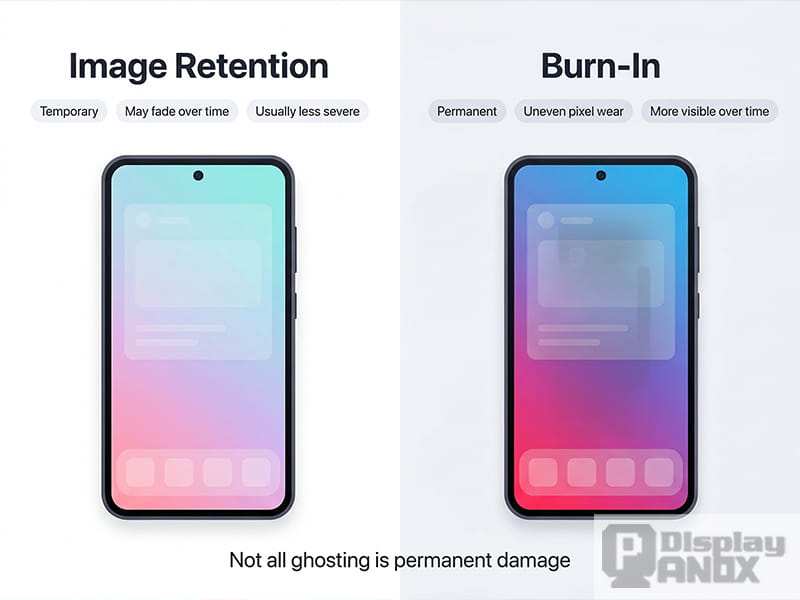
Image source: Bing (Web (fair-use with source credit))
Common Misconceptions About MicroLED Gaming
Several myths circulate in forums and YouTube comments that deserve correction.
"MicroLED is just a marketing name for Mini-LED." No. Mini-LED is a backlighting technology for LCD panels. MicroLED is a fully emissive technology with no LCD layer.
They're fundamentally different architectures.
"MicroLED will replace OLED within a few years." This prediction has been repeated since 2018. Manufacturing yield rates for large MicroLED panels remain challenging, and the mass transfer process for placing millions of microscopic LEDs with high precision is genuinely difficult. Progress is being made, but the timeline keeps extending.
"MicroLED has no downsides." Current products have limited refresh rates for gaming, minimal input lag optimization, no adaptive sync support in most configurations, and require professional installation. The technology has real advantages but also real limitations in its current form.
"You can buy a MicroLED monitor on Amazon." You cannot. Any listing claiming to sell a consumer MicroLED gaming monitor is either mislabeled Mini-LED or a scam. Legitimate MicroLED products are sold through Samsung and Sony's professional installation channels.
"MicroLED response times are always faster than OLED." In theory, yes. In practice, the electronics and processing pipeline matter as much as the pixel technology itself. Current MicroLED products aren't optimized for the processing speed that competitive gaming demands.
What to Watch For: The Future of MicroLED Gaming Displays
The trajectory is promising even if the timeline is uncertain. Several developments suggest consumer MicroLED gaming monitors will eventually arrive.
Apple's reported investments in MicroLED manufacturing could accelerate the ecosystem. Their work on smaller, high-density MicroLED panels for eventual AR and wearable applications drives down the cost and improves the yield rates that would benefit larger panels too.
Samsung has demonstrated smaller MicroLED prototypes at trade shows, including 75-inch and 50-inch configurations that suggest the technology can scale down from the massive commercial installations. Whether these reach consumer pricing is the real question.
The manufacturing bottleneck, mass transfer, is slowly improving. Current yield rates for placing millions of LED chips onto substrates are better than they were three years ago, but still not good enough for affordable large panels. Industry research from SID (Society for Information Display) suggests that yield improvements and alternative manufacturing approaches like inkjet-printed LEDs could eventually bring costs down.
My honest estimate based on current trends: consumer MicroLED monitors at "premium but accessible" price points ($2,000-$5,000) are unlikely before 2028-2030 at the earliest. Luxury home theater MicroLED at $50,000+ could arrive sooner, but that's still not a gaming monitor in any practical sense.
Frequently Asked Questions
Can I buy a MicroLED gaming monitor today?
Not in any practical consumer sense. Samsung's The Wall and Sony's Crystal LED are available through professional installation channels, but they're priced from $150,000 and designed for large-scale installations, not desk-based gaming setups.
Is MicroLED better than OLED for gaming?
On pure specs, MicroLED matches or exceeds OLED in brightness, longevity, and burn-in resistance. However, current OLED gaming monitors have better input lag optimization, higher refresh rates, and are actually available to buy at consumer prices.
Will MicroLED monitors replace OLED?
Eventually, possibly. But "eventually" has been the prediction for over seven years now. Manufacturing challenges keep pushing the timeline out.
OLED and Mini-LED will dominate the gaming monitor market for the foreseeable future.
Does MicroLED have burn-in?
No. Because MicroLED uses inorganic gallium nitride LEDs rather than organic compounds, it doesn't suffer from the material degradation that causes OLED burn-in. This is one of MicroLED's genuine, proven advantages.
What's the difference between MicroLED and Mini-LED?
Mini-LED is a backlighting system for LCD panels with thousands of small LED dimming zones. MicroLED has no LCD layer at all. Each MicroLED pixel emits its own light directly.
They're completely different technologies despite the similar names.
How long do MicroLED displays last?
Samsung rates their MicroLED panels for approximately 100,000 hours to half-brightness. That's roughly 11 years of continuous use or 20+ years of typical gaming use. This significantly exceeds typical OLED lifespan ratings.
Final Verdict: Should You Buy a MicroLED Monitor for Gaming?
Here's the bottom line. MicroLED is genuinely excellent display technology with real advantages for gaming. Zero burn-in risk, extreme brightness, perfect blacks, and long-term durability make it theoretically ideal for gamers who want the best and plan to keep their display for years.
But "theoretically ideal" doesn't help you when the product doesn't exist in a form you can actually buy, install at a desk, or use for competitive gaming without compromise. As of 2025, MicroLED gaming monitors are a promise, not a product.
If you're a gamer with a $150,000+ budget building a dedicated home theater gaming room, Samsung's The Wall delivers an experience that no consumer monitor can match in scale and presence. For everyone else, a good QD-OLED or WOLED gaming monitor gives you the best real-world gaming performance available today, with Mini-LED as a strong alternative if burn-in concerns or room brightness are priorities.
The smart move is to buy the best monitor you can afford now, enjoy it, and keep an eye on MicroLED's progress. When consumer products actually arrive at reasonable prices, the technology will be worth revisiting. Until then, it's a fascinating technology to read about and a frustrating one to actually shop for.
Frequently Asked Questions
Can I buy a MicroLED gaming monitor today?
Not in any practical consumer sense. Samsung's The Wall and Sony's Crystal LED are available through professional installation channels, but they're priced from $150,000 and designed for large-scale installations, not desk-based gaming setups.
Is MicroLED better than OLED for gaming?
On pure specs, MicroLED matches or exceeds OLED in brightness, longevity, and burn-in resistance. However, current OLED gaming monitors have better input lag optimization, higher refresh rates, and are actually available to buy at consumer prices.
Will MicroLED monitors replace OLED?
Eventually, possibly. But "eventually" has been the prediction for over seven years now. Manufacturing challenges keep pushing the timeline out.
OLED and Mini-LED will dominate the gaming monitor market for the foreseeable future.
Does MicroLED have burn-in?
No. Because MicroLED uses inorganic gallium nitride LEDs rather than organic compounds, it doesn't suffer from the material degradation that causes OLED burn-in. This is one of MicroLED's genuine, proven advantages.
What's the difference between MicroLED and Mini-LED?
Mini-LED is a backlighting system for LCD panels with thousands of small LED dimming zones. MicroLED has no LCD layer at all. Each MicroLED pixel emits its own light directly.
They're completely different technologies despite the similar names.
How long do MicroLED displays last?
Samsung rates their MicroLED panels for approximately 100,000 hours to half-brightness. That's roughly 11 years of continuous use or 20+ years of typical gaming use. This significantly exceeds typical OLED lifespan ratings.
Final Verdict: Should You Buy a MicroLED Monitor for Gaming?
Here's the bottom line. MicroLED is genuinely excellent display technology with real advantages for gaming. Zero burn-in risk, extreme brightness, perfect blacks, and long-term durability make it theoretically ideal for gamers who want the best and plan to keep their display for years.
But "theoretically ideal" doesn't help you when the product doesn't exist in a form you can actually buy, install at a desk, or use for competitive gaming without compromise. As of 2025, MicroLED gaming monitors are a promise, not a product.
If you're a gamer with a $150,000+ budget building a dedicated home theater gaming room, Samsung's The Wall delivers an experience that no consumer monitor can match in scale and presence. For everyone else, a good QD-OLED or WOLED gaming monitor gives you the best real-world gaming performance available today, with Mini-LED as a strong alternative if burn-in concerns or room brightness are priorities.
The smart move is to buy the best monitor you can afford now, enjoy it, and keep an eye on MicroLED's progress. When consumer products actually arrive at reasonable prices, the technology will be worth revisiting. Until then, it's a fascinating technology to read about and a frustrating one to actually shop for.

Similar Posts