Can Microled Monitors Support 8K Resolution
If you've been eyeing MicroLED technology and wondering whether it can push 8K resolution, you're asking the right question at the right time. The short answer is yes, but with some big caveats that change what "MicroLED monitor" actually means in practice.
As of 2026, no consumer-grade desktop MicroLED monitor ships at 8K. What does exist are massive modular MicroLED displays, like Samsung's The Wall, that can be configured to show 8K content across tiled panels. The technology absolutely supports it.
The real question is whether it makes sense for your use case, your space, and your wallet.

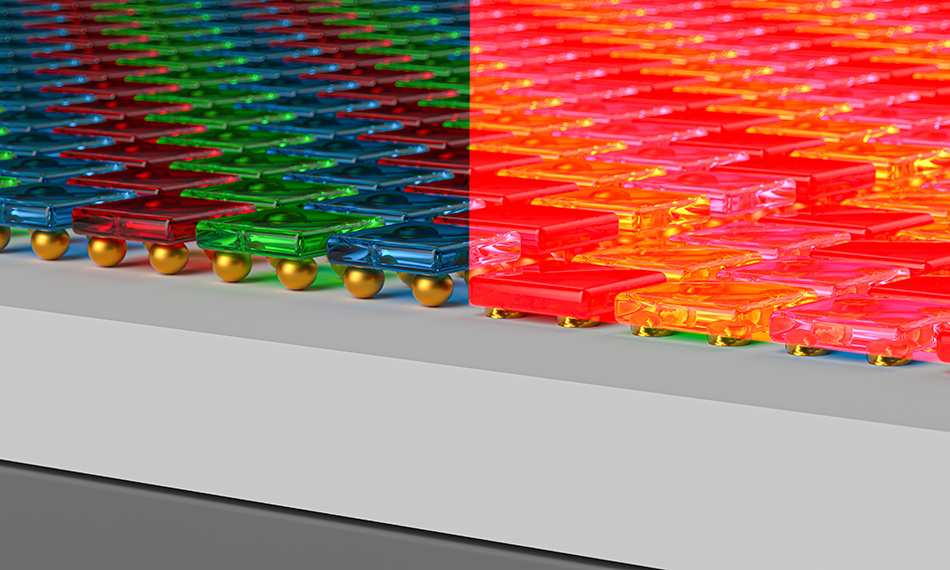
Image source: Wikimedia Commons / Santasgift (CC BY-SA)
Quick Answer
MicroLED technology can display 8K resolution. Modular MicroLED systems like Samsung's The Wall achieve this through tiled panels. No consumer desktop MicroLED monitor currently ships at 8K.
The technology exists but remains limited to professional and luxury installations.
What MicroLED Actually Is (And Why It Matters for 8K)
MicroLED is an emissive display technology. Each pixel uses its own tiny red, green, and blue LEDs. There's no backlight, no liquid crystal layer, and no organic material.
That means perfect blacks, insane brightness, and no burn-in risk.
This matters for 8K because pushing 33.2 million pixels requires serious engineering. Traditional LCD panels struggle with light bleed at that density. OLED panels can hit 8K but face longevity and brightness limitations.
MicroLED sidesteps both problems entirely.
Here's the catch. A true "MicroLED monitor" in the desktop sense, something you'd put on a desk like a 32-inch 4K display, doesn't exist at 8K. The manufacturing challenges of placing millions of microscopic LED chips onto a small substrate at consumer price points are still unsolved.
What we call MicroLED in 2026 is almost entirely modular, large-format systems.
These systems use individual cabinet-sized panels that tile together seamlessly. Each module might be 960×540mm with a pixel pitch between 0.4mm and 1.5mm. When you tile enough of them, you hit 8K or even beyond.
Samsung's The Wall can scale up to 16K horizontally. Sony's Crystal LED system works the same way.
The pixel pitch determines your minimum viewing distance. A P0.9 panel looks sharp from about 6 to 10 feet. A P1.5 panel needs 12 feet or more.
For a desktop monitor viewed at 2 to 3 feet, you'd need a pixel pitch below 0.3mm. That's still in the R&D phase for mass production.
Image source: Bing (Web (fair-use with source credit))
How Current MicroLED Products Handle 8K
Let's look at what's actually available right now. The two biggest players are Samsung and Sony, and both take the modular approach.
Samsung The Wall: Modular 8K Configurations
Samsung's The Wall is the most well-known MicroLED product on the market. It ships in modular panels that snap together. For 8K, you need enough modules to cover 7680 × 4320 pixels total.
In a typical configuration, The Wall uses P0.9 or P1.2 pitch modules. At P0.9, a single 4K module is roughly 40 inches diagonally. You'd need four of those in a 2×2 grid for 8K.
The resulting display is around 80 inches diagonal. That's not a monitor. That's a wall.
Samsung advertises The Wall as supporting up to 4K natively per module, with the full system scaling to 8K or higher through tiling. The processor handles the upscaling and pixel mapping across modules. Input-wise, it accepts HDMI 2.1 and can handle 8K/60Hz with Display Stream Compression.
The price for a full 8K The Wall installation typically starts around $100,000 and climbs fast depending on size and pixel pitch. This is firmly in the luxury and commercial territory.
Sony Crystal LED (CLEDIS): Large-Format 8K+ Potential
Sony's Crystal LED system, also known as CLEDIS, takes a similar modular approach. It uses individual LED modules that tile together with virtually invisible seams.
Sony has demonstrated configurations exceeding 8K. At trade shows like CES and ISE, they've shown massive displays running at 16K horizontally. The system uses proprietary surface-mounted LED technology with very fine pixel pitches.
Like Samsung, Sony targets commercial installations, broadcast studios, and luxury residential. The pricing is comparable or higher. There's no consumer product line.
Why There's No True Consumer 8K MicroLED Monitor
The manufacturing bottleneck comes down to mass transfer. To build a 32-inch 8K MicroLED panel, you need to place roughly 100 million individual LED chips onto a substrate with near-perfect accuracy. Current yield rates make this prohibitively expensive at small form factors.
Research from the Society for Information Display indicates that mass transfer technology is improving but won't reach consumer monitor price points until late in this decade. Companies like Apple, BOE, and several Chinese manufacturers are investing heavily, but nothing has hit the market yet.
For now, if you want 8K on a desktop, you're looking at LCD or OLED. MicroLED at 8K remains a wall-sized proposition.
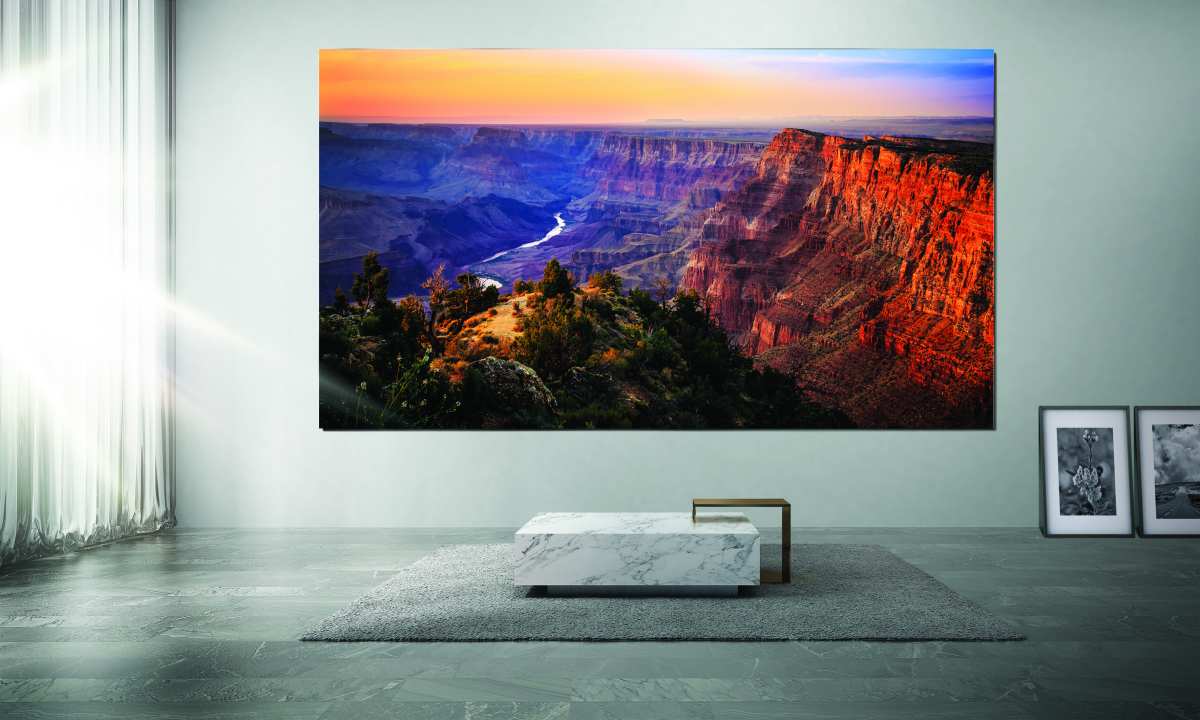
Image source: Bing (Web (fair-use with source credit))
MicroLED vs. OLED vs. Mini-LED at 8K: Side-by-Side
If you're trying to figure out which display technology actually makes sense for 8K, here's how the three main contenders stack up.
| Factor | MicroLED | OLED | Mini-LED LCD |
|---|---|---|---|
| 8K Availability | Modular/large format only | Consumer monitors exist (87" TVs, limited monitors) | Consumer monitors exist (Dell UP3218K, etc.) |
| Peak Brightness | 1,000 to 2,000+ nits | 800 to 1,500 nits (ABL limited) | 1,000 to 2,000+ nits |
| Black Levels | Perfect (emissive) | Perfect (emissive) | Very good (local dimming) |
| Burn-In Risk | None | Present over time | None |
| Color Gamut | 98%+ Rec. 2020 | 95%+ DCI-P3 | 95%+ DCI-P3 |
| Response Time | Sub-microsecond | Sub-microsecond | 1 to 4ms |
| Price at 8K | $100,000+ (large format) | $3,000 to $30,000 | $2,500 to $5,000 |
| Desktop Form Factor | Not available | Limited (no 8K desktop OLED as of 2026) | Available (32" 8K LCDs) |
| Lifespan | 100,000+ hours | 30,000 to 60,000 hours | 50,000+ hours |
| Power Draw | High at large scale | Moderate | Moderate to high |
MicroLED wins on almost every technical metric. It's brighter, lasts longer, has no burn-in, and delivers better color. The problem is entirely about form factor and cost.
OLED at 8K exists in TV sizes. LG and Samsung (QD-OLED) have 8K TVs. But desktop 8K OLED monitors don't exist yet.
The panel sizes are too large for desk use, and the burn-in risk with static UI elements makes it a tough sell for productivity.
Mini-LED LCD is the practical choice right now. The Dell UP3218K has been available for years. It's a 32-inch 8K LCD with local dimming zones.
It's not perfect. There's some haloing around bright objects on dark backgrounds. But it works, it sits on a desk, and it costs under $5,000.
If you need 8K today for professional work, Mini-LED LCD is your realistic option. If you want the best possible image quality and have a dedicated room, a modular MicroLED wall is unmatched. OLED sits in between for TV-sized 8K but hasn't cracked the desktop market.
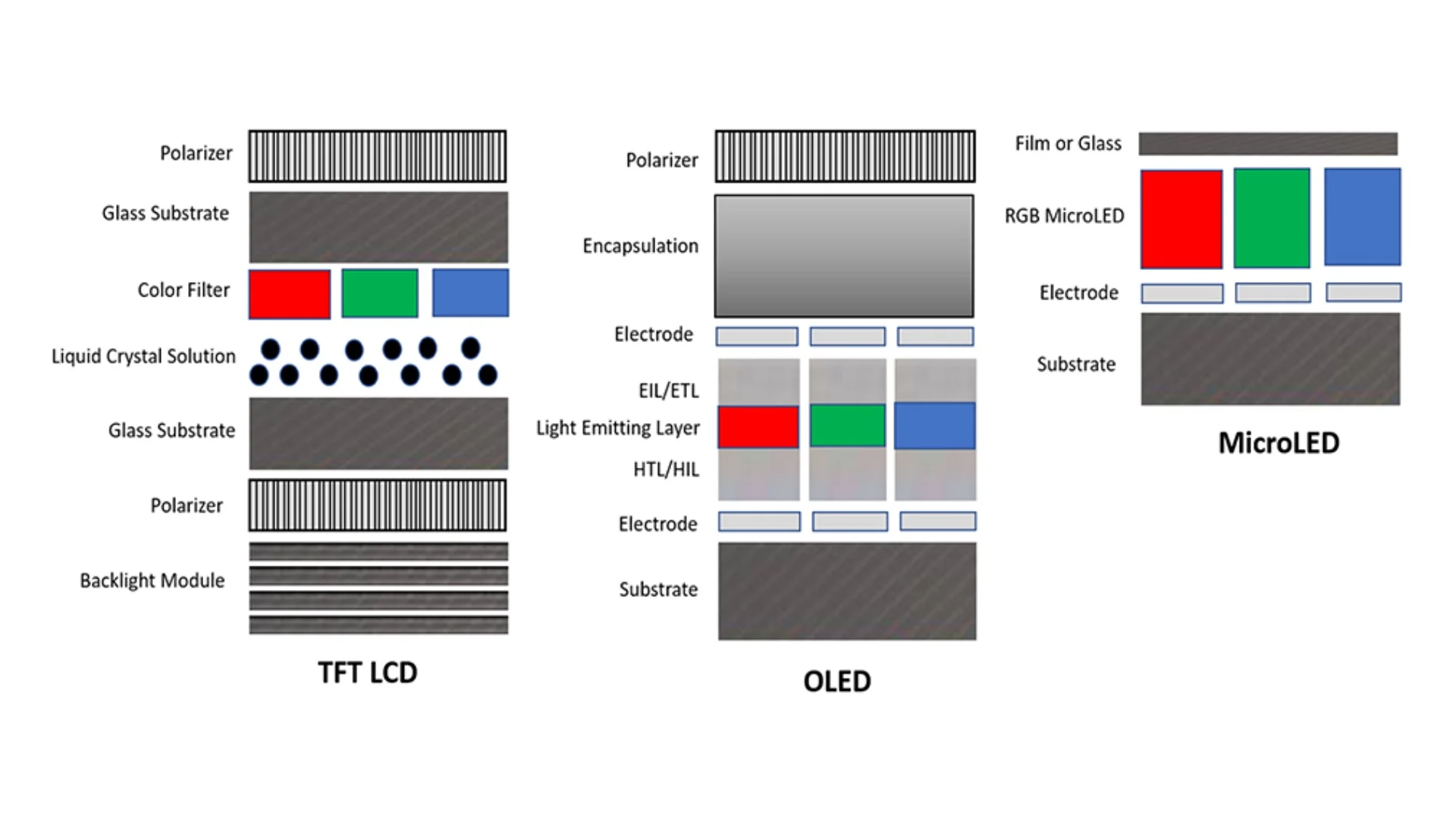
Image source: Bing (Web (fair-use with source credit))
What It Actually Takes to Run 8K on MicroLED
Let's say you're serious about a MicroLED 8K setup. Here's what you need to know about the practical requirements.
Bandwidth and Connectivity Requirements
8K at 60Hz with 10-bit color requires roughly 48 Gbps of bandwidth. HDMI 2.1 tops out at 48 Gbps, which technically handles it but leaves no headroom. DisplayPort 2.1, which supports up to 80 Gbps, is the better choice for uncompressed 8K.
Most MicroLED systems use internal processors that accept multiple HDMI 2.1 inputs and handle the scaling across modules. You're not plugging a single DisplayPort cable into a MicroLED panel. You're feeding a video processor that distributes the signal across the tiled array.
For 8K at 120Hz, you'll need DisplayPort 2.1 with DSC or dual-cable configurations. This is still emerging territory. Very few sources output 8K/120Hz natively.
Pixel Pitch and Physical Size Tradeoffs
The pixel pitch directly determines how large your 8K display will be. Here's the math.
| Pixel Pitch | Pixel Density (PPI) | 8K Display Size (approx.) | Viewing Distance |
|---|---|---|---|
| P0.4 | ~64 PPI | ~120 inches | 5 to 8 feet |
| P0.9 | ~28 PPI | ~270 inches | 10 to 15 feet |
| P1.2 | ~21 PPI | ~360 inches | 14 to 20 feet |
| P1.5 | ~17 PPI | ~450 inches | 18 to 25 feet |
For reference, a typical desktop monitor is 27 to 32 inches viewed at 2 to 3 feet. To get that size at 8K with MicroLED, you'd need a pixel pitch around 0.2mm or finer. That's not in mass production yet.
This is why MicroLED 8K is a wall technology, not a desk technology. The physics of pixel pitch and viewing distance make it physically impractical at small sizes with current manufacturing.
Power, Heat, and Installation Realities
A MicroLED wall running at 8K draws serious power. Expect 300 to 600 watts per square meter depending on content brightness. A 120-inch 8K MicroLED display might pull 1,500 to 2,500 watts at peak brightness.
Heat management is critical. Each module generates heat that needs to be dissipated. Professional installations include rear ventilation channels and sometimes active cooling.
You can't just mount this on a drywall without planning.
Installation requires professional AV integrators. The modules need precise alignment, calibration for color uniformity across tiles, and structural mounting that can support the weight. A 120-inch MicroLED wall weighs several hundred pounds.
The signal chain also matters. You need a source capable of outputting 8K, a processor to map it across modules, and cabling that can handle the bandwidth. This isn't a plug-and-play setup.

Similar Posts