Do Microled Monitors Suffer from Burn In
If you've been eyeing MicroLED monitors and wondering whether burn-in is something you need to worry about, you're asking exactly the right question. Do microled monitors suffer from burn in? The short answer is that MicroLED technology is fundamentally resistant to the kind of permanent burn-in that plagues OLED displays, but the full picture deserves a closer look. Let's break down what's actually happening at the pixel level, what the real risks are, and what you should know before investing in this emerging display technology.

Image source: Wikimedia Commons / Santasgift (CC BY-SA)
As of 2026, the consumer MicroLED monitor market is still in its early stages, with Samsung's The Wall and Sony's Crystal LED representing the most visible commercial options. Manufacturer specifications from Samsung Display indicate peak brightness levels reaching 2,000 nits with a theoretical panel lifespan exceeding 100,000 hours. That said, independent long-term reliability data at consumer scale simply doesn't exist yet, which is an important caveat we'll address throughout this article.
Quick Answer
MicroLED monitors do not suffer from permanent burn-in the way OLED displays do. The inorganic gallium nitride (GaN) LEDs used in MicroLED panels don't degrade the same way organic compounds do. No consumer MicroLED burn-in cases have been documented as of 2026.
Temporary image retention is theoretically possible but extremely unlikely under normal use. The technology is still too new for definitive long-term claims beyond 10 years.
Why Getting This Wrong Actually Matters With MicroLED
Here's the thing. MicroLED monitors are not a casual purchase. We're talking about display configurations that start well into five figures, with Samsung's The Wall installations and Sony's Crystal LED commercial systems representing the current market.
If you're spending that kind of money, you need to know exactly what you're getting into.
Getting the burn-in question wrong cuts both ways. On one hand, someone might avoid MicroLED entirely out of unfounded fear, missing out on genuinely superior display technology. On the other hand, someone might assume MicroLED is completely invulnerable and run static content 24/7 without any precautions, potentially encountering issues that nobody has documented yet because the technology hasn't been in consumer hands long enough.
The stakes are also professional. Medical imaging displays, control room monitoring, color grading suites, and digital signage installations all rely on pixel-perfect accuracy over time. A radiologist reading scans or a broadcast engineer matching colors can't afford unexpected display behavior.
That's why the distinction between "burn-in resistant" and "burn-in proof" matters enormously.
There's also the naming confusion problem. MicroLED sounds similar to mini-LED, but they're fundamentally different technologies. Mini-LED is just an LCD backlighting technique with more dimming zones.
MicroLED is a completely self-emissive technology built on inorganic semiconductors. Mixing them up could lead someone to buy the wrong display for their needs, or to apply the wrong care practices to a panel that requires different handling.
How MicroLED Actually Works (And Why It's Different From Everything Else)
Understanding why MicroLED resists burn-in starts with understanding what it's actually made of and how it produces an image. This isn't a minor technical detail. It's the entire reason the burn-in question has a different answer for MicroLED than it does for every other self-emissive display technology.
The Inorganic vs Organic Divide
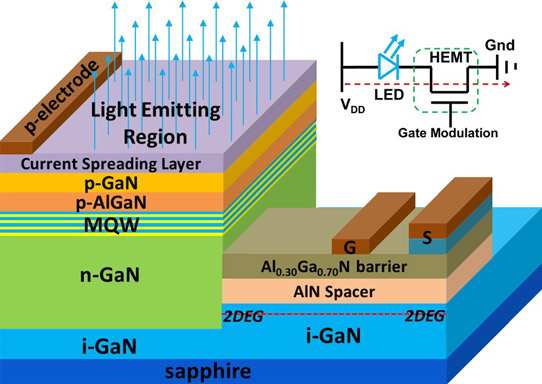
Every pixel in a MicroLED display is its own tiny inorganic light-emitting diode built on gallium nitride (GaN) semiconductor material. That's the critical distinction. OLED pixels use organic carbon-based compounds that degrade every time they emit light.
The organic materials literally break down over time, and they degrade unevenly depending on which pixels work harder. Blue sub-pixels degrade fastest, which is why OLED burn-in often shows up as a color shift before it becomes a visible ghost image.
MicroLED pixels don't have organic compounds. They're essentially the same type of LED you'd find in a high-end commercial lighting fixture, just shrunk down to sub-millimeter size and packed onto a display substrate. Inorganic semiconductors degrade far more slowly and far more evenly than organic compounds.
The degradation curve is so flat that under normal use conditions, the panel should reach its end of useful life before any perceptible unevenness develops.
This isn't just marketing spin. It's basic materials science. GaN LEDs have been used in automotive, aerospace, and industrial applications for decades precisely because of their extraordinary longevity and stability.
The Society for Information Display (SID) has published research confirming that inorganic LED degradation rates are orders of magnitude lower than organic LED degradation rates under equivalent operating conditions.
Self-Emissive Pixels Without the Degradation Problem
Like OLED, MicroLED is self-emissive. Each pixel produces its own light independently. There's no backlight, no liquid crystal layer, and no color filter array eating photons on the way out.
This gives MicroLED the same perfect blacks and infinite contrast ratio that OLED is famous for, but without tying longevity to organic material stability.
Per-pixel luminance control means that when a pixel needs to display black, it simply turns off. There's no backlight bleed, no haloing around bright objects on dark backgrounds, and no light leakage at the edges. This is the same advantage OLED has over LCD, but built on a foundation that doesn't carry the same degradation risk.
Peak brightness on current MicroLED panels reaches approximately 2,000 nits in commercial configurations from Samsung Display. That's roughly double what most consumer OLED panels can sustain and about four times what a high-end mini-LED LCD can manage. And critically, pushing MicroLED pixels to high brightness doesn't accelerate degradation the way it does with OLED.
High brightness on OLED means faster organic breakdown. High brightness on MicroLED means more power draw and more heat, but the semiconductor itself holds up.
Image source: Bing (Web (fair-use with source credit))
Where the "Burn-In Proof" Marketing Gets Sloppy
Here's where we need to pump the brakes on some of the more enthusiastic marketing language floating around. You'll see MicroLED described as "burn-in proof" or "burn-in free" in promotional materials and press coverage. That's not technically accurate, and it matters.
"Burn-in proof" implies absolute immunity under all conditions forever. No display technology can honestly make that claim, especially one that hasn't been in consumer hands long enough to accumulate a decade of real-world usage data. What MicroLED actually offers is extreme resistance to the mechanism that causes OLED burn-in.
That's a meaningful and real advantage, but it's not the same as invulnerability.
Manufacturers like Samsung and Sony tend to use more careful language in their technical documentation, describing their MicroLED panels as resistant to image retention rather than immune to it. The marketing materials sometimes get looser. If you're evaluating a MicroLED purchase, pay attention to what the warranty actually covers regarding image retention and burn-in.
That'll tell you more than any spec sheet.
The other sloppy claim you'll encounter is that MicroLED lasts "forever." The inorganic LEDs in a MicroLED panel have a theoretical lifespan of 100,000 hours or more before reaching half-brightness. That sounds incredible, and it is. But the panel is more than just LEDs.
It includes driver circuitry, power delivery systems, and bonding materials that may have their own failure modes. The LEDs outlasting everything else doesn't mean the display as a whole is immortal.
The Real Risks Nobody Talks About
Now that we've covered why MicroLED is fundamentally resistant to burn-in, let's talk about the risks that actually exist. They're different from OLED burn-in, but pretending there are zero concerns would be doing you a disservice.
Manufacturing Defects That Mimic Burn-In
The most likely way you'll encounter something that looks like burn-in on a MicroLED display isn't degradation at all. It's a manufacturing defect. MicroLED manufacturing is still incredibly challenging, particularly the mass transfer process where millions of microscopic LED chips are picked and placed onto the substrate.
If even a small batch of LEDs from one region of the wafer ends up with slightly different characteristics than another batch, you could see uneven brightness or color uniformity right out of the box. This isn't burn-in. It's a defect.
But to a user who doesn't know the difference, it looks the same.
Current manufacturing yields for large-format MicroLED displays are lower than mature technologies like LCD and OLED. That's improving rapidly, but it means early adopters have a higher chance of encountering panel uniformity issues. Samsung's modular panel approach helps here because individual modules can be replaced if a defect appears, but it's still an inconvenience and a potential concern for anyone investing significant money.
Uneven Pixel Aging — Theoretical but Not Zero
Let's be direct about this. Inorganic LEDs do degrade over time. They just do so incredibly slowly and evenly compared to OLED organic compounds.
Under absolutely normal use conditions, with varied content and reasonable brightness levels, the degradation should remain imperceptible for the practical life of the display.
But "normal use" is doing a lot of heavy lifting in that sentence. If you run a MicroLED display at maximum brightness, showing the same static image for 12 hours a day, every day, you are creating conditions that no consumer testing has validated. The degradation would still be far slower than OLED under the same conditions, but it wouldn't be zero.
The key variable is heat. GaN LEDs are sensitive to temperature, and sustained high brightness generates heat. In a well-designed display with proper thermal management, this isn't a problem.
But if thermal design is compromised in pursuit of thinner form factors or lower manufacturing costs, localized hot spots could theoretically accelerate degradation in specific screen regions.
This is speculative because nobody has run a controlled 10-year test on consumer MicroLED displays. The technology hasn't existed in consumer form that long. But it's worth understanding that "inorganic" doesn't mean "indestructible." It means "vastly more durable under conditions we can reasonably predict."
The Mini-LED Confusion That Trips Everyone Up
This one causes more problems than it should. MicroLED and mini-LED sound like they're related. They're not.
Not even close.
Mini-LED is an LCD backlighting technology. It uses conventional LEDs (hundreds or thousands of them) behind a liquid crystal display panel to create local dimming zones. Mini-LED displays have no burn-in risk because they're fundamentally LCD technology.
But they also don't have per-pixel luminance control, so they can exhibit blooming and haloing that neither MicroLED nor OLED suffers from.
MicroLED is a self-emissive display technology where each pixel is its own individual inorganic LED. It's closer to OLED in how it produces images, but closer to traditional LED lighting in what it's made of.
When someone asks "does MicroLED have burn-in" and gets an answer that's actually about mini-LED, they're being misled. The naming convention is genuinely confusing, and the display industry hasn't done anyone any favors by keeping the terms so similar. If you're researching this topic and find conflicting information, check whether the source is actually talking about MicroLED or mini-LED.
It makes all the difference.
Static Content: Still a Bad Idea, Even on MicroLED
Even though MicroLED is highly resistant to permanent burn-in, running static content for extended periods isn't a great idea for any display. Temporary image retention, while extremely unlikely on MicroLED, isn't the only concern. Power consumption, heat buildup, and general wear on the display electronics all increase with sustained static imagery.
If you're using a MicroLED display in a professional environment where static UI elements are unavoidable (think taskbars, channel logos, HUD elements in broadcast monitoring), you should still implement basic good practices. Use screen savers during idle periods. Enable any built-in pixel shifting features.
Vary content when possible. These aren't burn-in prevention measures so much as general display longevity habits.
The difference is that with OLED, these practices are genuinely urgent because the organic materials are actively degrading with every hour of static content. With MicroLED, they're more like changing the oil in your car. Good practice, extends life, but you're not going to blow up the engine if you skip an oil change.
MicroLED vs OLED vs Mini-LED: Burn-In Comparison
This is where things get practical. If you're trying to decide between display technologies and burn-in is a factor in your decision, here's how the three main options stack up.
| Factor | MicroLED | OLED | Mini-LED (LCD) |
|---|---|---|---|
| Burn-in mechanism | Inorganic semiconductor degradation (extremely slow) | Organic compound degradation (documented, measurable) | No burn-in risk (LED backlight doesn't degrade visibly) |
| Real-world burn-in cases | None documented at consumer scale | Well-documented after 500–2,000 hours of static content | None |
| Image retention risk | Negligible permanent, minimal temporary | Moderate to high depending on content patterns | None permanent, negligible temporary |
| Long-term reliability data | Almost none (technology too new) | Extensive (decades of consumer use) | Extensive (LCD is mature technology) |
| Peak brightness | ~2,000 nits (current commercial panels) | ~1,000–1,500 nits (consumer panels) | ~1,000–2,000 nits (with local dimming) |
| Contrast ratio | Effectively infinite (per-pixel off) | Effectively infinite (per-pixel off) | Very high but limited by dimming zones |
| Current consumer availability | Extremely limited, very high cost | Widely available at various price points | Widely available at various price points |
| Warranty burn-in coverage | Varies, check manufacturer terms | Some manufacturers exclude burn-in | Typically not applicable |
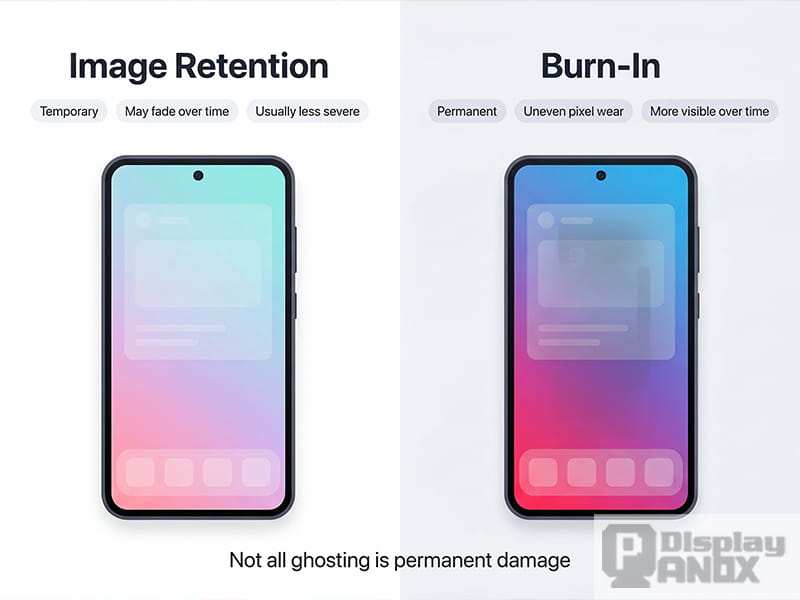
Image source: Bing (Web (fair-use with source credit))
The table tells a clear story. OLED has the most documented burn-in risk, mini-LED has essentially none, and MicroLED sits in a theoretical sweet spot where the mechanism for burn-in exists but operates so slowly that it shouldn't manifest under normal use. The problem is that "theoretical" and "normal use" are doing a lot of work in that sentence.
If you need a display today and burn-in is your primary concern, mini-LED LCD is the safest bet with proven long-term data. If you want the best image quality and are willing to accept some uncertainty about long-term durability, OLED remains excellent with good burn-in mitigation features built into modern panels. MicroLED is the premium future-proof option, but you're paying a significant premium for technology that hasn't been validated over a full consumer lifecycle yet.
Who Actually Needs to Worry About This
Not everyone buying a high-end display needs to lose sleep over burn-in. But certain use cases make this question genuinely important.
Professional Users: Color Grading, Medical, Control Rooms
If you're working in medical imaging, broadcast color grading, or mission-critical control room environments, display consistency isn't optional. A radiologist reading CT scans needs to know that what they see today is identical to what they saw six months ago. A colorist matching footage for a feature film can't have subtle brightness shifts creeping into their reference display.
For these users, MicroLED's resistance to burn-in is genuinely valuable. But the lack of long-term reliability data is also a real concern. Most professional environments expect displays to perform consistently for 5 to 10 years.
Nobody has a decade of MicroLED data to point to. If you're making a professional purchasing decision, factor in the uncertainty and check warranty terms carefully.
Gamers With Static HUDs and Overlays
Modern games love their static HUD elements. Health bars, minimaps, ammo counters, and status indicators all sit in the same screen position for hours on end. Gamers who play one title obsessively for months could theoretically accumulate significant static content exposure.
For MicroLED gaming monitors, this is a non-issue in practical terms. The inorganic pixels aren't going to retain a ghost of your health bar after a few hundred hours of gameplay. But gamers should still be aware that MicroLED gaming monitors barely exist as a consumer product category as of 2026.
The technology is currently aimed at commercial and ultra-premium home theater applications, not the gaming market.
Digital Signage and Commercial Installations
Digital signage is one of the primary current markets for MicroLED, and it's also one of the highest-risk environments for burn-in. Static logos, menu boards, and information displays run for 12 to 24 hours a day, often for years without content changes.
MicroLED is actually well-suited to this environment precisely because of its burn-in resistance. But commercial users should still implement content rotation schedules and take advantage of built-in pixel management features. The modular nature of most commercial MicroLED systems also means that if a module does develop an issue, it can be replaced individually without swapping the entire display.
Home Theater Enthusiasts Running Static UI
Home theater enthusiasts who use their MicroLED display for streaming apps with static interface elements, or who pause content and leave a static image on screen for extended periods, have very little to worry about. The risk is minimal. But basic good habits like using screen savers and turning off the display when not in use are still worth practicing.
What the Manufacturers Actually Say (And Don't Say)
Samsung's Claims vs Reality
Samsung's MicroLED products, primarily sold under The Wall brand name, are positioned as premium commercial and residential displays. Their marketing materials emphasize the inorganic nature of the LEDs and the resulting durability advantages. Samsung has been relatively careful not to claim absolute burn-in immunity, instead using language about resistance and longevity.
In their technical documentation, Samsung specifies pixel shifting and automatic brightness limiting as standard features on The Wall displays. These features exist as additional safeguards, not because the panel needs them the way OLED panels do. It's a belt-and-suspenders approach that's smart engineering.
What Samsung doesn't prominently disclose is the actual degradation rate of their MicroLED panels over time. They cite the 100,000-hour figure for LED lifespan, but that's a standard GaN LED rating that may not account for all the real-world variables in a display application. The warranty terms for burn-in coverage on Samsung MicroLED products should be reviewed carefully before purchase.
Sony's Crystal LED Positioning
Sony's Crystal LED system is squarely aimed at commercial and professional applications, with pricing and installation requirements that put it well outside the consumer market. Sony's approach has been to position Crystal LED as a reference-grade display system where image quality and consistency are paramount.
Sony's documentation acknowledges that while MicroLED technology significantly reduces burn-in risk compared to organic alternatives, they stop short of claiming zero risk. Their Crystal LED systems include automatic brightness adjustment and panel calibration features designed to maintain consistency over time. This is a more conservative and arguably more honest approach than some of the more enthusiastic marketing language found in the broader market.
The Warranty Fine Print on Burn-In Coverage
This is where you should focus your attention if you're seriously considering a MicroLED purchase. The warranty terms tell you what the manufacturer actually stands behind, as opposed to what their marketing department claims.
As of 2026, warranty coverage for burn-in and image retention varies significantly across MicroLED manufacturers. Some cover it under standard panel warranties. Others treat it as a separate category with different terms.
A few exclude it entirely, arguing that the technology's inherent resistance makes coverage unnecessary. Read the specific language. Ask the dealer directly.
Get it in writing.
For a display that costs as much as a luxury car, the warranty terms should be a significant factor in your purchasing decision. If a manufacturer won't stand behind their burn-in resistance claims with warranty coverage, that tells you something about how confident they actually are.
Practical Steps to Protect Your MicroLED Display
Even though MicroLED is highly resistant to burn-in, a few sensible practices will help ensure your display performs at its best for as long as possible.
Pixel Management Features to Enable
Most commercial MicroLED displays ship with built-in pixel management features. These typically include pixel shifting (which slightly moves the entire image periodically to distribute wear), automatic brightness limiting (which reduces peak brightness in high-temperature conditions), and static image detection (which can dim or alert when static content is detected).
Enable all of these features. They're not there because the display is fragile. They're there because good engineering accounts for edge cases.
Pixel shifting on MicroLED is typically subtle enough that you won't notice it during normal viewing, but it provides an additional layer of protection against any uneven wear patterns.
Brightness and ABR Settings
Running your MicroLED display at maximum brightness all the time isn't necessary and will increase heat output without any visible benefit in most viewing conditions. Automatic Brightness Limiting (ABR) systems adjust peak brightness based on content and ambient conditions, and they should generally be left enabled.
For most viewing environments, a brightness level of 400 to 800 nits provides an excellent experience. MicroLED's high peak brightness capability is most useful for HDR content and bright room conditions. Sustained maximum brightness is where you'd start pushing into territory that, while still safe, offers diminishing returns.
Content Rotation and Screen Saver Habits
If your use case involves static content (digital signage, monitoring displays, etc.), implement a content rotation schedule. Even though MicroLED handles static content far better than OLED, varying what's displayed is simply good practice for any screen.
Set screen savers to activate during idle periods. Turn off the display when it's not needed. These habits cost nothing and add another layer of protection.
They also reduce power consumption and heat buildup, which benefits the entire display system.
When to Run Pixel Refreshing or Calibration
Some MicroLED systems include manual pixel refresh or calibration routines. These are typically designed to address minor uniformity issues rather than actual burn-in. If you notice any slight brightness or color uniformity variations, running a calibration routine can often correct them.
For most users, this won't be necessary. But if you're in a professional environment where color accuracy is critical, periodic calibration is standard practice regardless of display technology. It's not about fixing burn-in.
It's about maintaining the reference-level accuracy that professional work demands.
The Honest Truth About Long-Term Reliability Data
This is the section that matters most if you're making a purchasing decision based on burn-in resistance. The uncomfortable truth is that we simply don't have enough data yet.
Why 100,000-Hour Lifespan Claims Are Theoretical
The 100,000-hour figure you'll see cited for MicroLED lifespan comes from standardized testing of GaN LEDs under controlled laboratory conditions. It represents the point at which the LED reaches half of its original brightness output. That's a useful benchmark for comparing LED technologies, but it doesn't directly translate to real-world display performance.
In an actual display, factors like thermal cycling, drive current variations, manufacturing tolerances, and module-level interactions all affect longevity in ways that a simple LED aging test doesn't capture. The 100,000-hour figure is a reasonable estimate based on the underlying technology, but it's not a guarantee of display-level performance over that timeframe.
To put it in perspective, 100,000 hours of continuous operation is over 11 years. If you run the display 8 hours a day, that's over 34 years. The display will almost certainly be obsolete long before the LEDs wear out.
But "the LEDs will last forever" and "the display will last forever" are not the same statement.
What Accelerated Aging Tests Actually Show
Manufacturers do run accelerated aging tests on MicroLED panels. These tests typically involve elevated temperatures, high brightness levels, and continuous operation to simulate years of use in a compressed timeframe. The results have been encouraging, showing minimal degradation under conditions that would cause visible OLED burn-in within weeks.
But accelerated aging tests have limitations. They can't perfectly simulate the thermal cycling that occurs when a display turns on and off daily. They don't account for the specific degradation patterns caused by real-world content.
And they're typically run on small samples, not the large-format panels used in actual products.
IEEE published research on GaN LED degradation confirms that inorganic LEDs are dramatically more stable than organic alternatives. The research supports the general claim that MicroLED should resist burn-in far better than OLED. But the research also notes that degradation mechanisms exist and become more significant at elevated temperatures and sustained high current levels.
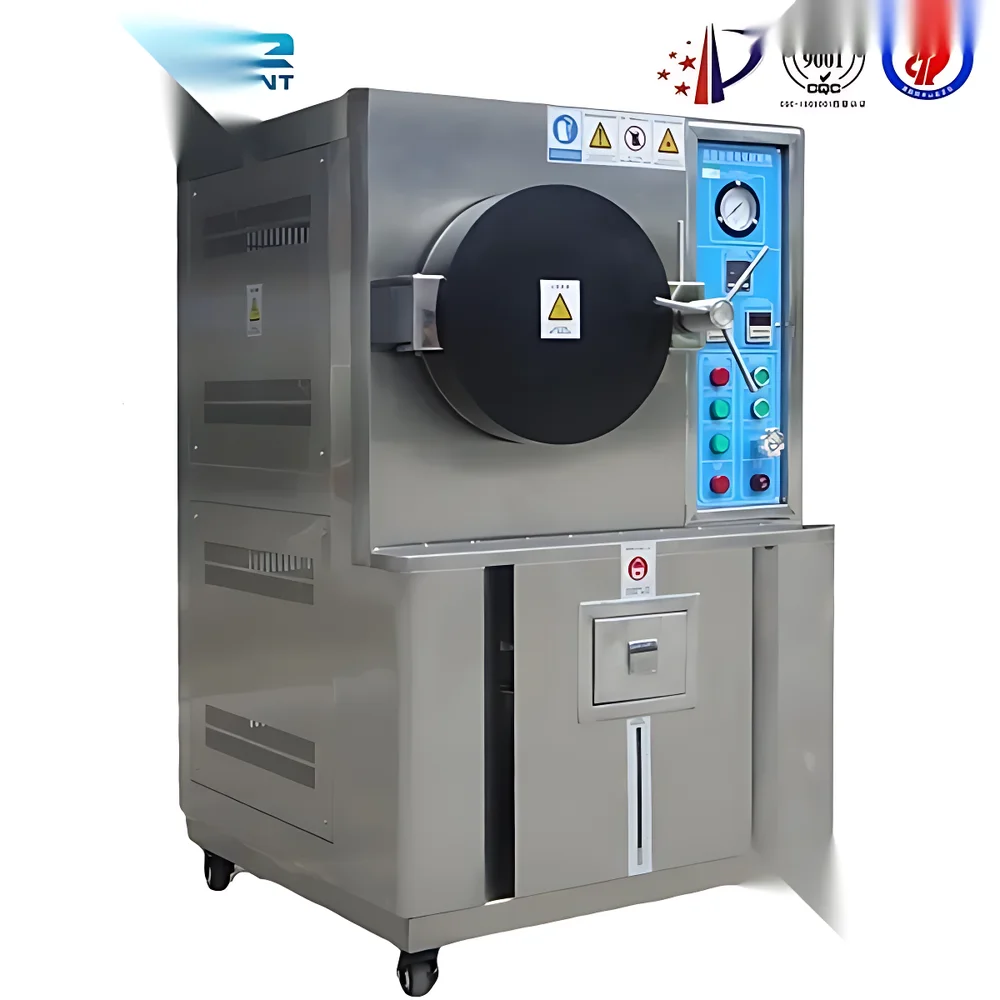
Image source: Bing (Web (fair-use with source credit))
What We Won't Know for Another 5–10 Years
The bottom line is this. We won't have definitive, real-world, decade-long reliability data on consumer MicroLED displays until consumer MicroLED displays have been in use for a decade. That's just how it works.
No amount of accelerated testing can fully substitute for actual years of consumer use.
This doesn't mean MicroLED is risky. The materials science is sound. The theoretical basis for burn-in resistance is well-established.
Early commercial installations have performed well. But if you're the kind of person who wants proven, long-term track records before making a major purchase, MicroLED doesn't have one yet. That's not a flaw in the technology.
It's just the reality of buying into something new.
Common Mistakes People Make When Evaluating MicroLED Burn-In Risk
Confusing Burn-In With Image Retention
Burn-in is permanent. Image retention is temporary. On OLED, the two are related because temporary image retention can become permanent burn-in if the same static content is displayed repeatedly.
On MicroLED, temporary image retention is extremely rare and permanent burn-in is essentially non-existent under normal use.
When someone says they "have burn-in" on their display, they're usually describing permanent damage to the pixel elements. On MicroLED, what you're far more likely to encounter is a temporary uniformity issue or a manufacturing defect, neither of which is burn-in. Understanding this distinction helps you evaluate whether an actual problem exists or whether you're seeing normal behavior.
Assuming "Inorganic" Means "Indestructible"
Inorganic LEDs are incredibly durable. They're not indestructible. Excessive heat, electrical surges, physical damage, and manufacturing defects can all cause individual pixels or modules to fail.
The inorganic nature of the LEDs protects against the gradual, uneven degradation that causes OLED burn-in. It doesn't protect against all possible failure modes.
Treat your MicroLED display as a precision electronic device, because that's what it is. It's more durable than OLED in the specific dimension of burn-in resistance. It's not a magic screen that can't be damaged.
Ignoring the Mini-LED Naming Trap
We've covered this already, but it bears repeating because it's such a common source of confusion. If you're reading an article or watching a video about "MicroLED burn-in" and the comments are full of people talking about their TV's local dimming zones, you're probably looking at content about mini-LED, not MicroLED.
The two technologies have almost nothing to do with each other. MicroLED is self-emissive. Mini-LED is a backlighting approach for LCD panels.
Their burn-in characteristics are completely different. Make sure you're getting information about the right technology before drawing conclusions.
Trusting Marketing Over Material Science
Marketing language like "burn-in proof" and "zero image retention" sounds great. It's also not strictly accurate. MicroLED is burn-in resistant to a degree that makes it a non-issue for virtually all real-world use cases.
That's the accurate statement. "Burn-in proof" is marketing shorthand that happens to be misleading.
When evaluating any claim about display longevity, look for the underlying technical explanation. If a source can't explain why MicroLED resists burn-in in terms of inorganic semiconductor physics, they're probably just repeating marketing copy. Good information explains the mechanism.
Bad information just asserts the conclusion.
Should You Buy a MicroLED Monitor or Play It Safe?
If Burn-In Is Your Primary Concern
If burn-in is the main thing keeping you up at night, you have two safe choices. Mini-LED LCD displays have essentially zero burn-in risk and a mature, well-documented track record. MicroLED offers the same zero practical burn-in risk with better image quality, but without the long-term consumer data to back it up.
For most people, a high-quality mini-LED display is the pragmatic answer to burn-in concerns in 2026. You get excellent image quality, no burn-in worry, and proven reliability. MicroLED is the answer if you also want perfect blacks, higher peak brightness, and the best possible contrast, and you're comfortable being an early adopter.
If You Need the Best Image Quality Available Right Now
If image quality is your top priority and budget isn't a constraint, MicroLED currently offers the best combination of brightness, contrast, color accuracy, and longevity available in a display technology. It matches or exceeds OLED in every image quality metric while eliminating the organic degradation that limits OLED lifespan.
The caveat is availability. Consumer MicroLED monitors are essentially non-existent as of 2026. What's available are commercial and ultra-premium residential systems from Samsung and Sony, priced accordingly.
If you're looking for a desk monitor, MicroLED isn't a realistic option yet. If you're building a premium home theater or commercial installation, it's worth serious consideration.
If You're Spending 0K+ and Need It to Last
For high-value commercial installations where display failure has real costs (broadcast facilities, medical suites, control rooms), MicroLED's burn-in resistance is a genuine advantage. The modular panel design also means that if a module does fail, it can be replaced without replacing the entire display.
But get the warranty terms in writing. Ask the manufacturer directly about burn-in coverage and expected maintenance schedules. Request any available reliability data, even if it's from accelerated testing rather than real-world deployment.
At this price point, you should be able to get straight answers from the manufacturer's engineering team, not just the sales department.
The Practical Recommendation for Most People in 2026
For the vast majority of people asking "do microled monitors suffer from burn in," the honest answer is: it's not the right question yet. MicroLED monitors aren't really available as a consumer product category. If you need a display now, choose between OLED (best image quality with manageable burn-in risk) or mini-LED LCD (excellent image quality with no burn-in risk).
MicroLED is coming to the consumer market eventually. Manufacturing costs are dropping, yields are improving, and multiple major manufacturers are investing heavily in the technology. But as of 2026, it's still early.
The burn-in resistance is real and based on solid materials science. The long-term consumer data doesn't exist yet. If you're an early adopter with the budget for it, MicroLED is a compelling technology.
If you want proven reliability, wait a few more years.
Frequently Asked Questions
Can MicroLED monitors get permanent burn-in?
No confirmed cases of permanent MicroLED burn-in exist as of 2026. The inorganic GaN LEDs degrade so slowly that burn-in shouldn't occur under any normal use conditions. The technology hasn't been in consumer hands long enough for definitive long-term claims, but the materials science strongly supports burn-in resistance.
Is MicroLED better than OLED for burn-in prevention?
Yes, significantly. OLED uses organic compounds that degrade with use, which is the root cause of OLED burn-in. MicroLED uses inorganic semiconductors that degrade far more slowly and evenly.
For static content and long display lifespans, MicroLED has a clear advantage.
How long do MicroLED displays last before degradation?
Manufacturer specifications cite 100,000+ hours for the LED elements themselves. That's theoretical based on GaN LED testing. Real-world display longevity depends on thermal management, usage patterns, and other factors beyond just the LEDs.
No consumer data exists beyond a few years of commercial deployment.
Should I worry about burn-in if I use MicroLED for gaming?
No. Even with static HUD elements displayed for extended gaming sessions, MicroLED's inorganic pixels won't develop burn-in the way OLED would. You can game without anxiety about permanent image retention.
Basic good habits like taking breaks and using screen savers during idle time are still sensible but not urgent.
What's the difference between MicroLED and mini-LED?
MicroLED is a self-emissive display where each pixel is its own inorganic LED. Mini-LED is an LCD backlighting technology using conventional LEDs behind a liquid crystal panel. They're completely different technologies despite the similar names.
Mini-LED has no burn-in risk because it's LCD. MicroLED has minimal burn-in risk because of its inorganic LEDs.
Will MicroLED monitors be affordable soon?
Not immediately. Current MicroLED products are priced for commercial and ultra-premium residential markets. Manufacturing costs are declining as yields improve, but consumer-grade MicroLED monitors are likely still several years away from mainstream pricing.
Keep an eye on Samsung, Sony, and emerging Chinese manufacturers for cost reduction progress.
Frequently Asked Questions
Can MicroLED monitors get permanent burn-in?
No confirmed cases of permanent MicroLED burn-in exist as of 2026. The inorganic GaN LEDs degrade so slowly that burn-in shouldn't occur under any normal use conditions. The technology hasn't been in consumer hands long enough for definitive long-term claims, but the materials science strongly supports burn-in resistance.
Is MicroLED better than OLED for burn-in prevention?
Yes, significantly. OLED uses organic compounds that degrade with use, which is the root cause of OLED burn-in. MicroLED uses inorganic semiconductors that degrade far more slowly and evenly.
For static content and long display lifespans, MicroLED has a clear advantage.
How long do MicroLED displays last before degradation?
Manufacturer specifications cite 100,000+ hours for the LED elements themselves. That's theoretical based on GaN LED testing. Real-world display longevity depends on thermal management, usage patterns, and other factors beyond just the LEDs.
No consumer data exists beyond a few years of commercial deployment.
Should I worry about burn-in if I use MicroLED for gaming?
No. Even with static HUD elements displayed for extended gaming sessions, MicroLED's inorganic pixels won't develop burn-in the way OLED would. You can game without anxiety about permanent image retention.
Basic good habits like taking breaks and using screen savers during idle time are still sensible but not urgent.
What's the difference between MicroLED and mini-LED?
MicroLED is a self-emissive display where each pixel is its own inorganic LED. Mini-LED is an LCD backlighting technology using conventional LEDs behind a liquid crystal panel. They're completely different technologies despite the similar names.
Mini-LED has no burn-in risk because it's LCD. MicroLED has minimal burn-in risk because of its inorganic LEDs.
Will MicroLED monitors be affordable soon?
Not immediately. Current MicroLED products are priced for commercial and ultra-premium residential markets. Manufacturing costs are declining as yields improve, but consumer-grade MicroLED monitors are likely still several years away from mainstream pricing.
Keep an eye on Samsung, Sony, and emerging Chinese manufacturers like BOE and CSOT for cost reduction progress.
Should You Buy a MicroLED Monitor or Play It Safe?
If Burn-In Is Your Primary Concern
If burn-in is the main thing keeping you up at night, you have two safe choices. Mini-LED LCD displays have essentially zero burn-in risk and a mature, well-documented track record. MicroLED offers the same zero practical burn-in risk with better image quality, but without the long-term consumer data to back it up.
For most people, a high-quality mini-LED display is the pragmatic answer to burn-in concerns in 2026. You get excellent image quality, no burn-in worry, and proven reliability. MicroLED is the answer if you also want perfect blacks, higher peak brightness, and the best possible contrast, and you're comfortable being an early adopter.
If You Need the Best Image Quality Available Right Now
If image quality is your top priority and budget isn't a constraint, MicroLED currently offers the best combination of brightness, contrast, color accuracy, and longevity available in a display technology. It matches or exceeds OLED in every image quality metric while eliminating the organic degradation that limits OLED lifespan.
The caveat is availability. Consumer MicroLED monitors are essentially non-existent as of 2026. What's available are commercial and ultra-premium residential systems from Samsung and Sony, priced accordingly.
If you're looking for a desk monitor, MicroLED isn't a realistic option yet. If you're building a premium home theater or commercial installation, it's worth serious consideration.
If You're Spending 0K+ and Need It to Last
For high-value commercial installations where display failure has real costs, MicroLED's burn-in resistance is a genuine advantage. The modular panel design also means that if a module does fail, it can be replaced without replacing the entire display.
But get the warranty terms in writing. Ask the manufacturer directly about burn-in coverage and expected maintenance schedules. Request any available reliability data, even if it's from accelerated testing rather than real-world deployment.
At this price point, you should be able to get straight answers from the manufacturer's engineering team, not just the sales department.
The Practical Recommendation for Most People in 2026
For the vast majority of people asking "do microled monitors suffer from burn in," the honest answer is: it's not the right question yet. MicroLED monitors aren't really available as a consumer product category. If you need a display now, choose between OLED (best image quality with manageable burn-in risk) or mini-LED LCD (excellent image quality with no burn-in risk).
MicroLED is coming to the consumer market eventually. Manufacturing costs are dropping, yields are improving, and multiple major manufacturers are investing heavily in the technology. But as of 2026, it's still early.
The burn-in resistance is real and based on solid materials science. The long-term consumer data doesn't exist yet. If you're an early adopter with the budget for it, MicroLED is a compelling technology.
If you want proven reliability, wait a few more years.

Similar Posts