Are Microled Monitors Available Yet
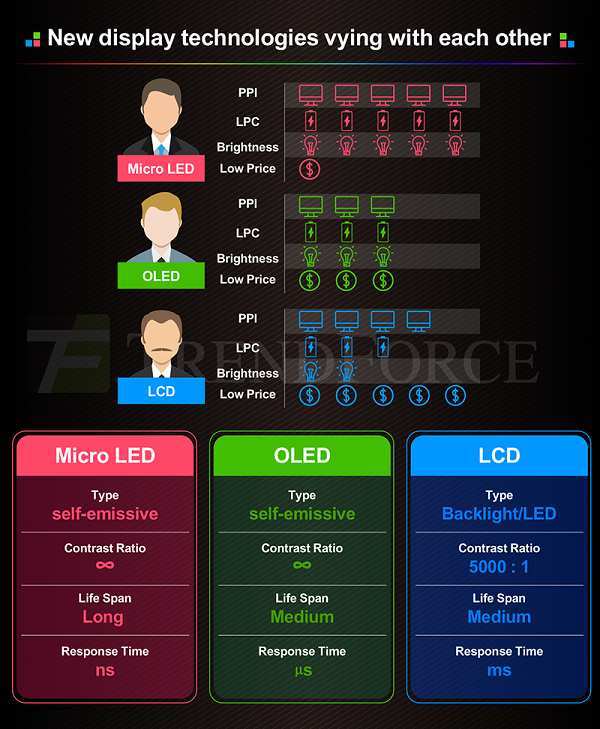

Image source: Wikimedia Commons / Santasgift (CC BY-SA)
Are microLED monitors available yet? The short answer is no, not in any form you'd recognize as a desktop monitor you'd put on your desk. As of 2026, every shipping microLED product is a large-format commercial or luxury residential display, think 76 inches and up, costing five figures minimum.
That doesn't mean the technology is vaporware. Samsung, LG, and Sony all ship modular microLED panels right now. But the manufacturing challenges that keep this technology out of monitor-sized panels are real, and they're not going away overnight.
Let's break down exactly what's available, what's coming, and what you should actually buy instead.
Quick Answer
No consumer microLED monitors exist yet. All shipping microLED displays are 76 inches or larger. Prices start around $100,000 for a complete installation.
Samsung showed a 57-inch prototype in 2025, but it's not widely available. The main barrier is manufacturing yield at small pixel pitches. Expect consumer monitors no earlier than 2028 to 2030, if then.
When You Can Actually Buy One
Here's where things get frustrating if you've been following microLED news for years. The technology has been "almost ready" since about 2018. Samsung's The Wall debuted at CES that year.
Sony's CLEDIS has been in broadcast studios since 2019. But a monitor you'd sit two feet from at a desk? That's still not a product category that exists.
The closest thing to a consumer desktop microLED is Samsung's 57-inch Odyssey MicroLED prototype, announced in early 2025. It uses a pixel pitch of roughly 0.8mm, which is tight enough for desk viewing. Samsung demonstrated it at trade shows.
But as of mid-2026, it hasn't hit any retail channel at a confirmed price. It may see limited release in select markets, but it's not something you can walk into a store and buy.
The commercial products that do ship are a different category entirely. Samsung's The Wall comes in configurations from 76 inches to 292 inches. LG's MAGNIT line offers 136-inch and 173-inch modules.
Sony's Crystal LED targets broadcast and virtual production studios. All of these are modular, tileable, and priced accordingly. A basic 110-inch The Wall installation runs about $150,000.
A large Sony CLEDIS setup for a virtual production stage can exceed $500,000.
So the honest answer to "are microLED monitors available yet" depends entirely on what you mean by "monitor." If you mean a large-format display for a luxury home theater or corporate lobby, yes, absolutely. If you mean a 27-inch or 32-inch panel for your desk, not even close.
What MicroLED Actually Is (And Isn't)
MicroLED is a self-emissive display technology. Each pixel is its own tiny inorganic LED made from gallium nitride (GaN). There's no backlight like LCD uses.
There's no organic material layer like OLED relies on. Each red, green, and blue subpixel produces its own light and turns completely off for true black.
This matters because it combines the best traits of LCD and OLED while sidestepping their biggest weaknesses. You get the pixel-level contrast of OLED with the sustained brightness of a high-end Mini-LED LCD, and none of the burn-in risk that comes with OLED's organic compounds.
The "micro" in microLED refers to the size of each individual LED chip. These chips are smaller than 100 micrometers across, often much smaller. For a 4K display at 27 inches, you'd need roughly 24 million of these microscopic chips placed with near-perfect accuracy.
That's the core engineering problem.
It's also worth clarifying what microLED is not. It's not Mini-LED, which is just a backlighting technology for LCD panels with smaller LED zones. It's not OLED, which uses organic compounds that degrade over time.
And it's not the same as the microLED microdisplays being developed for AR headsets, those use different chip architectures and are measured in micrometers, not millimeters.
The Current Reality: What's Shipping vs. What's Hyped
Commercial Products You Can Buy Today
If you have the budget and the space, these are real products you can order right now through authorized integrators:
Samsung The Wall (Modular MicroLED): Available in 76", 101", 110", 146", and 292" configurations. Uses GaN-based microLED chips with a pixel pitch ranging from 1.5mm (larger sizes) down to 0.8mm (smaller sizes). Peak brightness rated at 2,000 nits. Pricing starts around $150,000 for a 110" residential configuration through Samsung's custom installation program.
LG MAGNIT: Available in 136" and 173" modular panels. Uses COB (chip-on-board) packaging with a pixel pitch of approximately 1.2mm. Targets corporate signage, broadcast, and luxury residential. Pricing is comparable to Samsung, roughly $170,000 for the 136" module before installation.
Sony Crystal LED (CLEDIS): Available in custom configurations for broadcast studios, virtual production volumes, and high-end installations. Uses Sony's proprietary surface-mount microLED technology with pixel pitches as tight as 0.76mm. Pricing is not publicly listed but installations routinely exceed $500,000.
All three of these are B2B products. You don't buy them on Amazon. You work with an authorized integrator who handles calibration, mounting, and service.
They're designed for environments where a single panel might be viewed from 10 feet away, not 2 feet.
Consumer Monitors: The Honest Timeline
No manufacturer has announced a consumer desktop microLED monitor with a confirmed ship date and retail price. Samsung's 57-inch prototype is the closest thing, but it remains in demonstration limbo. LG has shown microLED concepts at trade shows but hasn't committed to a consumer product roadmap.
Sony's focus remains entirely on professional and broadcast applications.
The most realistic timeline from industry analysts and SID (Society for Information Display) presentations suggests that sub-40-inch microLED panels for desktop use won't reach meaningful production before 2028 at the earliest. Even then, initial pricing would likely be in the $10,000 to $20,000 range for a 32-inch panel, putting them in the ultra-premium tier before any mass-market adoption.
Some Chinese display manufacturers, including BOE and CSOT (a subsidiary of TCL), have shown microLED prototypes in monitor sizes at CES and Display Week. But showing a prototype and shipping a product are very different things. BOE's prototypes have been impressive, but the company hasn't announced any consumer release plans.
Samsung's Odyssey MicroLED Prototype (57")
Samsung's 57-inch microLED prototype is worth discussing separately because it's generated the most excitement among enthusiasts. It was shown at CES 2025 and a few subsequent trade events. The panel reportedly delivers 4K resolution, HDR with peak brightness exceeding 2,000 nits, and a pixel pitch around 0.8mm.
The 57-inch size is significant because it's the first microLED panel small enough for desktop use at normal viewing distances. At 0.8mm pixel pitch, you'd get roughly 326 PPI at 57 inches in 4K, which is comparable to a 4K 32-inch monitor. That's sharp enough for text, gaming, and content creation.
But here's the catch. Samsung hasn't confirmed a release date, price, or even a final product name. It may ship as a limited-edition product in select markets.
It may also remain a prototype indefinitely, serving as a technology demonstration rather than a real product. Until Samsung announces concrete availability, treat it as "coming eventually" rather than "coming soon."
MicroLED vs. What You'd Actually Buy Instead
If you're shopping for a high-end monitor right now, you're choosing between OLED and Mini-LED LCD. Here's how those compare to what microLED promises.
Image source: Bing (Web (fair-use with source credit))
The Technology Comparison Table
| Feature | MicroLED (Prototype) | OLED (QD-OLED/WOLED) | Mini-LED LCD |
|---|---|---|---|
| Peak Brightness | 2,000–5,000 nits | 1,000–1,500 nits | 1,500–2,000 nits |
| Black Level | True zero (per-pixel off) | True zero (per-pixel off) | Near-black (zone dimming) |
| Contrast Ratio | Effectively infinite | Effectively infinite | 100,000:1 to 1,000,000:1 |
| Burn-in Risk | None | Present (organic decay) | None |
| Response Time | Nanosecond range | ~0.1ms | 1–4ms |
| Color Gamut | 100%+ DCI-P3, wide Rec. 2020 | ~99% DCI-P3 | ~98% DCI-P3 |
| Lifespan (to half-brightness) | 100,000+ hours | 30,000–60,000 hours | 50,000–80,000 hours |
| Available Sizes (Monitor) | None (57" prototype) | 27"–49" | 27"–57" |
| Price Range | Unknown (est. $10K+) | $800–$3,000 | $400–$2,500 |
| Availability | Not shipping | Widely available | Widely available |
The honest takeaway is that OLED, particularly QD-OLED from Samsung Display and WOLED from LG Display, already delivers 90% of what microLED promises for monitor use cases. The advantages microLED holds, higher sustained brightness, zero burn-in risk, longer lifespan, are real but they're incremental for most users.
Where microLED would be genuinely transformative is in sustained HDR brightness without any burn-in concern. If you use your monitor for 8 hours a day with static UI elements, that's where OLED's organic degradation becomes a real concern over time. MicroLED would eliminate that entirely while running brighter.
Why Consumer MicroLED Monitors Don't Exist Yet
The barriers aren't theoretical. They're manufacturing realities that have persisted for years despite billions of dollars in R&D investment.
The Mass Transfer Problem
This is the single biggest obstacle. A 4K monitor has roughly 24 million individual microLED chips that need to be picked up from a wafer and placed onto a backplane with near-perfect accuracy. We're talking about chips that are 50 to 100 micrometers across, and every single one has to land in the right spot, make proper electrical contact, and function correctly.
The yield requirement is brutal. For a 4K panel, you need a transfer yield of 99.9999%, that's six nines. One in a million defective pixels is still 24 dead pixels on a 4K panel, which is unacceptable.
Current mass transfer techniques, including laser-assisted transfer, stamp-based pick-and-place, and fluidic self-assembly, are getting closer but haven't hit that six-nines threshold consistently at production scale.
Samsung, LG, and Sony have solved this for large-format displays where pixel pitches are 0.8mm or larger. At that scale, the chips are bigger, the tolerances are looser, and a few defective pixels can be managed with redundancy circuits. But shrinking to monitor-sized panels with pixel pitches below 0.5mm is a different challenge entirely.
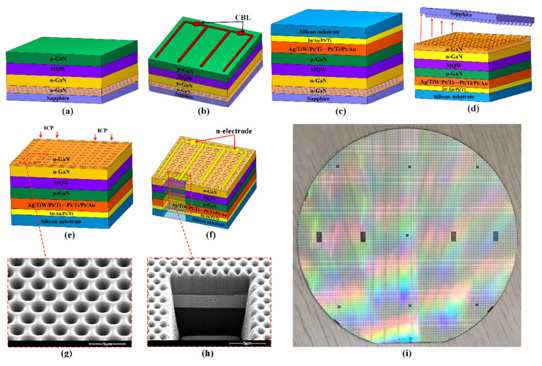
Image source: Bing (Web (fair-use with source credit))
Why Size and Pixel Pitch Matter for Desktop Monitors
For a monitor you view at 24 to 30 inches, you need a pixel pitch below 0.4mm to match the PPI of current high-end displays. A 32-inch 4K monitor has about 138 PPI. To match that with microLED, you'd need chips small enough and tightly packed enough to achieve that density.
Current commercial microLED products use pixel pitches of 0.76mm to 1.5mm. That's fine for a 110-inch display viewed from 10 feet away. It's completely inadequate for a 32-inch display viewed from 2 feet away.
At 1.0mm pitch, a 32-inch panel would only resolve around 80 PPI, you'd see individual pixels and text would look rough.
Shrinking the pixel pitch means smaller chips, tighter placement tolerances, and even more demanding yield requirements. It also means more heat density per square inch, which creates thermal management challenges that don't exist at larger pixel pitches.
The bottom line is that microLED manufacturing is optimized for large-format displays right now. Retooling for small, high-PPI panels requires solving problems that the industry hasn't cracked yet, despite significant investment from companies like Apple (which reportedly spent billions on microLED R&D before scaling back its efforts), Meta, and several Chinese manufacturers.
What You Should Buy Instead (Depending on Your Actual Use Case)
Since microLED monitors aren't available, here's what actually makes sense for different buyers right now.
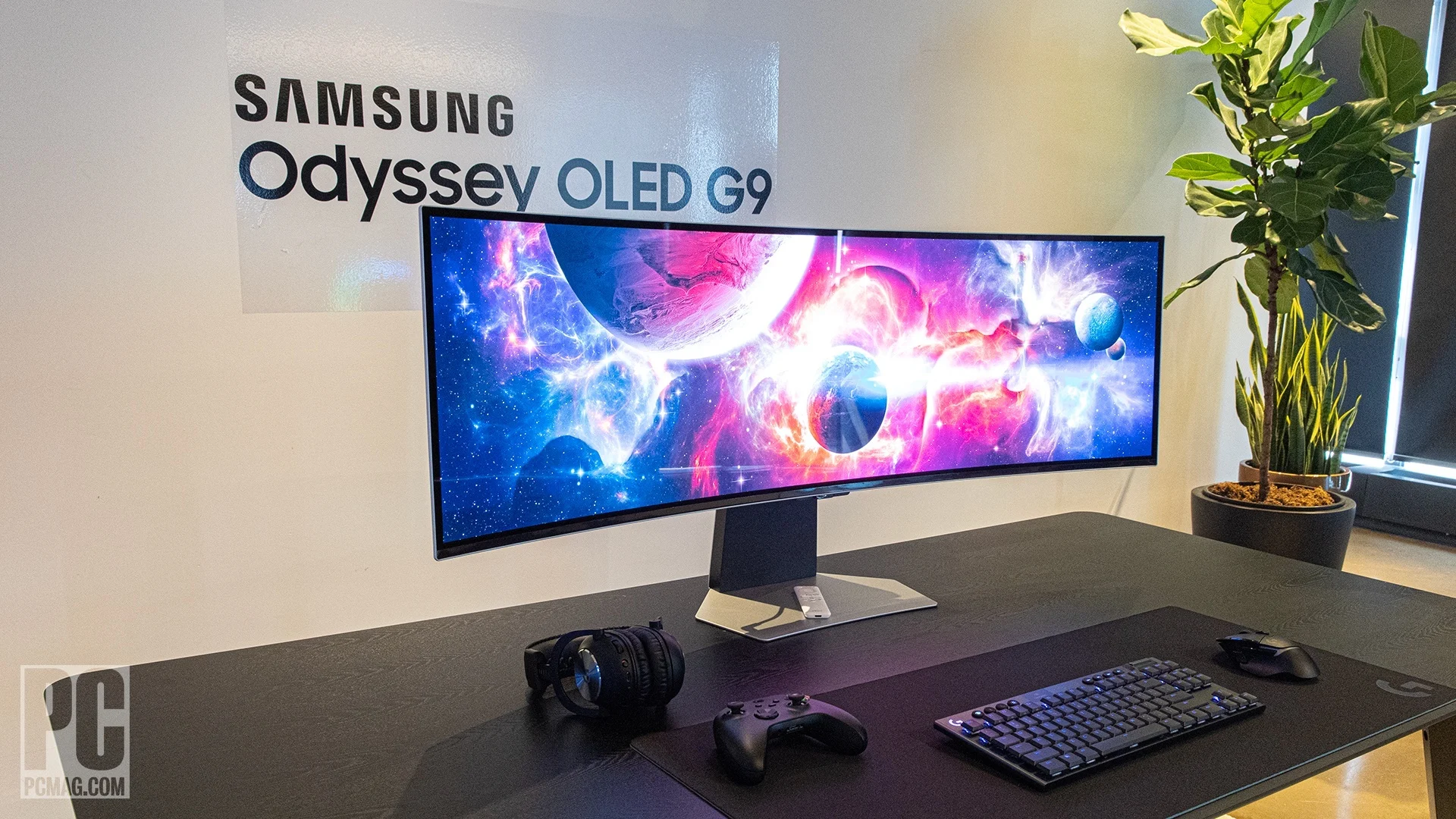
Image source: Bing (Web (fair-use with source credit))
You Want a Premium Gaming Monitor
Buy a QD-OLED. Samsung's Odyssey OLED G9 (57" DQHD, 240Hz) and the Alienware AW3225QF (32" 4K, 240Hz) are the current top picks. Samsung Display's QD-OLED panels deliver 99%+ DCI-PG coverage, near-instant pixel response, and peak brightness around 1,000 nits in HDR.
For competitive gaming, the 240Hz refresh rate and sub-0.1ms response time are excellent.
LG's WOLED panels are also strong, particularly in the 27-inch to 32-inch size range. The LG UltraGear 27GR95QE is a solid 27" 1440p 240Hz option. WOLED tends to be slightly less bright than QD-OLED but offers excellent text clarity due to its RGB subpixel layout.
The burn-in concern is real but often overstated for gaming. Manufacturer warranties on QD-OLED monitors from Samsung and LG now explicitly cover burn-in for three years. Aggregate user reviews suggest that with normal use, burn-in takes several years to become noticeable.
You Need Professional Color Accuracy
For color grading, photo editing, or video production, look at either an OLED monitor or a high-end Mini-LED. The ASUS ProArt PA32UCG (Mini-LED, 1,152 zones, 1,600 nits peak) is a strong choice for sustained brightness without burn-in risk. The Apple Pro Display XDR uses a similar Mini-LED approach with excellent factory calibration.
If you need true blacks for HDR mastering, QD-OLED is hard to beat. The Sony BVM-HX3110 reference monitor uses QD-OLED and is the gold standard for professional HDR work, though it costs around $40,000. For most professionals, a calibrated QD-OLED or a high-end Mini-LED will serve well.
You Want a Large Immersive Display for a Home Theater
If you're considering microLED for a home theater setup, a high-end OLED TV is the practical alternative. LG's G5 series (MLA WOLED) hits 3,000+ nits peak brightness in HDR and costs around $2,500 for 65 inches. Samsung's S95F QD-OLED is similarly priced and performs excellently in dark rooms.
For screens above 100 inches, projection remains the most cost-effective option. But if you want the microLED form factor, modular and bezel-free, Samsung's The Wall is the only real option. Just budget accordingly.
You're a Wealthy Early Adopter Who Wants the Coolest Setup
Contact Samsung's custom integration division about The Wall. The 110-inch residential configuration is the most accessible option. Expect to pay $150,000 to $200,000 including installation and calibration.
You'll get a display that no one else at your local LAN party has.
Alternatively, keep an eye on Samsung's 57-inch Odyssey MicroLED. If it ships in late 2026 or 2027, it would be the first microLED panel suitable for desk use. Pricing hasn't been confirmed, but industry estimates suggest it could land in the $5,000 to $10,000 range if it reaches limited production.
What to Watch For in 2025–2027
The next two to three years will be critical for microLED in monitor-sized form factors. Several developments could accelerate or delay the timeline.
Samsung's continued investment in microLED is the biggest signal. The company has publicly committed to scaling its microLED production and has filed numerous patents related to mass transfer techniques for smaller pixel pitches. If the 57-inch Odyssey ships, it would validate that the manufacturing challenges are solvable at monitor sizes.
BOE, China's largest display manufacturer, has been aggressively expanding its microLED R&D. The company showed a 27-inch microLED prototype at Display Week 2025 with a pixel pitch of approximately 0.3mm. That's close to what you'd need for a high-PPI desktop monitor.
BOE hasn't announced a product, but the prototype suggests Chinese manufacturers are pushing hard on this front.
Apple's microLED project was reportedly scaled back in 2024, with the company shifting focus to OLED for its Apple Watch Ultra and other products. However, Apple's early work contributed to the broader microLED supply chain, and many of its former microLED engineers have moved to other companies in the space.
Jade Bird Display (JBD) continues to push microLED microdisplays for AR applications, but their work on larger panels is also progressing. The company has demonstrated panels with pixel pitches below 0.3mm, which could eventually translate to monitor-sized products if demand materializes.
The key metric to watch is pixel pitch. Once a manufacturer demonstrates a sub-0.4mm pixel pitch at production scale with acceptable yields, monitor-sized microLED becomes viable. Until then, expect continued prototypes and limited releases.
Common Misconceptions That Waste People's Time
"MicroLED is just around the corner." It's been "around the corner" since 2018. The technology is real and shipping in large formats, but the jump to monitor-sized panels requires solving manufacturing problems that have persisted for years. Don't put your monitor purchase on hold waiting for it.
"Mini-LED is basically microLED." It's not. Mini-LED is a backlighting technology for LCD panels. It uses LEDs that are 100 to 300 micrometers in size, thousands of times larger than true microLED chips.
Mini-LED improves LCD contrast significantly, but it doesn't offer per-pixel dimming or the other advantages of emissive display technologies.
"MicroLED will replace OLED within a few years." Unlikely. OLED continues to improve rapidly, with MLA (Micro-Lens Array) technology pushing WOLED brightness to 3,000+ nits and QD-OLED improving longevity with each generation. By the time microLED monitors are affordable, OLED will have another five to ten years of cost optimization behind it.
"I saw a microLED monitor at CES, so it must be shipping." CES prototypes are not products. Manufacturers show non-functional mockups, early engineering samples, and technology demonstrators that may never reach the market. A trade show appearance tells you nothing about availability or pricing.
"Apple will release a microLED monitor." Apple's microLED efforts have been scaled back significantly. The company's current display roadmap focuses on OLED for its monitors and laptops. An Apple microLED monitor is not expected in the near term.
So Should You Wait or Buy Something Now?
If you need a monitor today, buy a monitor today. The best OLED and Mini-LED options available right now are genuinely excellent. They'll serve you well for years, and by the time microLED monitors are affordable, you'll be ready for an upgrade anyway.
If you're building a high-end home theater and have a flexible budget, Samsung's The Wall is available now through authorized integrators. It's the only way to get microLED in a residential setting today, but it comes at a significant cost premium.
If you're an enthusiast who wants to be first with new technology, keep Samsung's 57-inch Odyssey MicroLED on your radar. It's the most promising candidate for the first consumer microLED monitor, but treat it as a "maybe eventually" rather than a planned purchase.
The technology is coming. The manufacturing challenges are being solved. But the timeline for affordable, monitor-sized microLED is measured in years, not months.
Plan accordingly.
Frequently Asked Questions
When will microLED monitors be available?
No confirmed ship date exists for any consumer microLED desktop monitor. Samsung's 57-inch prototype is the closest candidate, but it hasn't been given a release date. Realistic estimates place consumer monitors no earlier than 2028, with meaningful affordability perhaps a few years beyond that.
How much will a microLED monitor cost?
Pricing is unknown for products that haven't shipped. Industry estimates for a hypothetical 32-inch microLED monitor suggest $5,000 to $15,000 at launch, assuming production scales successfully. For reference, Samsung's 110-inch The Wall costs around $150,000.
Is microLED better than OLED?
MicroLED matches OLED's contrast and response time while exceeding its brightness and eliminating burn-in risk. For most current use cases, the practical difference is small. MicroLED's advantages become more significant in high-brightness environments or applications with static UI elements displayed for long periods.
Can I buy Samsung The Wall for home use?
Yes. Samsung offers The Wall through its custom integration program for residential installations. You'll work with an authorized integrator for mounting, calibration, and setup.
It's a real product you can order today, but it's priced as a luxury item starting around $150,000.
Will microLED replace OLED in monitors?
Eventually, probably, but not soon. OLED continues to improve and drop in cost. MicroLED will likely enter the market at a premium and gradually become more affordable.
The transition will take many years, similar to how OLED gradually replaced LCD in the premium segment over the past decade.
What's the difference between microLED and Mini-LED?
MicroLED is a self-emissive technology where each pixel is its own tiny LED. Mini-LED is a backlighting system for LCD panels that uses thousands of small LED zones for dimming. They're fundamentally different technologies, despite the similar names.
Mini-LED improves LCD contrast but doesn't match the per-pixel control of microLED or OLED.

Similar Posts