How Bright Are Microled Monitors
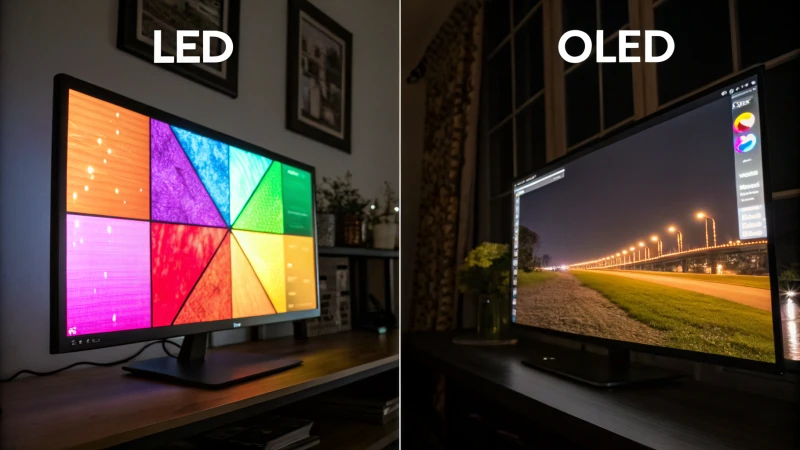
If you've been eyeing MicroLED monitors and wondering how bright they actually get, you're asking the right question. The answer isn't as straightforward as a single number on a spec sheet.
MicroLED monitors deliver some of the highest brightness levels you'll find in any display technology. But the real story involves peak versus sustained brightness, how that compares to what OLED and Mini-LED can do, and whether those numbers actually matter for how you'll use the screen. Let's break it all down.
Quick Answer
MicroLED monitors reach 1,000 to 4,000 nits peak brightness. Sustained full-screen brightness hits 500 to 1,500 nits. This far exceeds typical OLED limits.
Current options are mostly professional and modular systems. Consumer desktop MicroLED monitors remain extremely limited as of 2026.

Image source: Wikimedia Commons / Santasgift (CC BY-SA)
Peak Brightness vs. Sustained Brightness: Why Both Matter
When manufacturers talk about brightness, they're usually quoting peak luminance. That's the maximum output the display can hit on a small portion of the screen, typically a white window against a black background. It looks impressive in a spec sheet.
It doesn't tell you what the screen can maintain across the entire surface.
Here's why that distinction matters. A MicroLED display might hit 2,000 nits on a small HDR highlight. But fill that same screen with a white document or a bright scene in a video game, and the sustained brightness drops significantly.
That's normal. Every display technology does this to some degree. The gap between peak and sustained is where MicroLED really separates itself from the competition.
What the Numbers Actually Look Like
Manufacturer specifications and independent testing data show a clear pattern across display technologies:
| Brightness Metric | MicroLED | OLED (QD-OLED) | Mini-LED LCD |
|---|---|---|---|
| Peak (small highlight) | 1,000–4,000+ nits | 1,000–1,500 nits | 1,000–2,000+ nits |
| Sustained full-screen | 500–1,500+ nits | 200–350 nits | 600–1,200 nits |
| 10% window sustained | 800–2,500+ nits | 600–1,000 nits | 800–1,600 nits |
| HDR specular highlight | Up to 4,000 nits | Up to 1,500 nits | Up to 2,000 nits |
MicroLED's inorganic LEDs can push more current without the thermal and degradation concerns that limit organic OLED materials. That's the core reason it can sustain higher brightness across the full screen. Mini-LED gets close in some scenarios because it still uses a backlight system, but it lacks the per-pixel precision of self-emissive technologies.
Why Sustained Brightness Matters More Than Peak
Think about how you actually use a monitor. You're not staring at a single white dot on a black field. You're looking at web pages, spreadsheets, video content, and games that fill significant portions of the screen with bright elements.
That's sustained brightness territory.
HDR content is where peak brightness shines, literally. Specular highlights like sunlight reflecting off metal, explosions, or direct light sources benefit from those extreme peak numbers. But the overall scene brightness, the ambient feel of a bright daylight shot, depends on how well the display holds luminance across larger areas.
MicroLED handles both scenarios well. That's its genuine advantage. OLED wins on per-pixel contrast and off-angle viewing.
Mini-LED offers a solid middle ground at a fraction of MicroLED's price. But for raw, sustained brightness output, MicroLED sits at the top.
MicroLED vs. OLED vs. Mini-LED: Brightness Showdown
Comparing these three technologies on brightness alone only tells part of the story. Each one makes different tradeoffs that affect whether that brightness number actually translates into a better image in your specific situation.
MicroLED: The Brightness King
MicroLED uses individual inorganic LED chips for each pixel. These are the same type of LEDs you'd find in a high-end commercial display, just shrunk down and packed densely. Inorganic means no organic material to degrade over time, which is why MicroLED can sustain higher brightness without the burn-in risk that haunts OLED.
Samsung's modular MicroLED system, known as The Wall, demonstrates this capability clearly. Their specifications indicate peak brightness reaching up to 2,000 nits with sustained full-screen output around 800 to 1,000 nits depending on configuration. Sony's CLEDIS system, used in professional and broadcast environments, targets similar ranges with emphasis on color accuracy at high luminance levels.
The modular nature of most current MicroLED products means brightness can scale with configuration. More panels means more total light output. That's not something you can say about a fixed-panel monitor.
OLED: Perfect Blacks, Lower Brightness
OLED's strength isn't peak brightness. It's the ability to turn pixels completely off, delivering true infinite contrast. That contrast ratio makes OLED images look punchy and dimensional even at lower absolute luminance levels.
Current QD-OLED monitors like the Alienware AW3225QF or ASUS ProArt PA32UCG peak around 1,000 nits in small windows. Sustained full-screen brightness typically lands between 200 and 350 nits. That's noticeably dimmer than MicroLED for bright content.
In a dark room, you won't miss that extra brightness. In a sunlit office, you might.
OLED also manages brightness aggressively to prevent degradation. Automatic brightness limiting kicks in sooner and harder than on MicroLED. That's a reasonable tradeoff for longevity, but it means OLED rarely shows you its maximum potential in real-world sustained use.
Mini-LED: The Practical Middle Ground
Mini-LED uses thousands of small LED zones behind an LCD panel. It's not self-emissive, so you don't get perfect per-pixel dimming. But with enough zones, it gets close enough for most content while delivering strong brightness.
The Apple Pro Display XDR hits 1,000 nits sustained and 1,600 nits peak. Samsung's Odyssey Neo G9 pushes similar numbers. These are legitimate HDR-capable displays that cost a fraction of MicroLED.
For most professionals and enthusiasts, Mini-LED hits the sweet spot of brightness, price, and availability.
Where Mini-LED falls short is blooming. Bright objects on dark backgrounds can show a halo effect because the dimming zones aren't pixel-precise. MicroLED and OLED don't have this issue.
Image source: Bing (Web (fair-use with source credit))
Side-by-Side Brightness Comparison Table
Here's a practical comparison across the three technologies, focusing on what you'd actually experience:
| Feature | MicroLED | QD-OLED | Mini-LED LCD |
|---|---|---|---|
| Peak brightness | 1,000–4,000+ nits | 1,000–1,500 nits | 1,000–2,000+ nits |
| Sustained full-screen | 500–1,500+ nits | 200–350 nits | 600–1,200 nits |
| HDR highlight capability | Excellent | Very Good | Excellent |
| Bright room performance | Outstanding | Adequate | Very Good |
| Dark room contrast | Perfect (self-emissive) | Perfect (self-emissive) | Good (some blooming) |
| Burn-in risk | None | Present | None |
| Current price (27"–32" equivalent) | Not available (modular only) | $900–$1,300 | $800–$2,500 |
| Consumer availability | Very limited | Good | Excellent |
The takeaway is clear. If brightness is your top priority and budget isn't a constraint, MicroLED wins. If you want a balance of image quality, price, and availability, Mini-LED is the practical choice.
If you work primarily in controlled lighting and value perfect contrast, OLED still makes sense.
What MicroLED Brightness Means for Real-World Use
Knowing the numbers is one thing. Understanding how they translate into your daily experience is another. Let's walk through the scenarios where MicroLED brightness actually changes how the display performs.
Bright Room Performance
This is where you'll notice the biggest difference. In a room with significant ambient light, a display needs high sustained brightness to maintain contrast and readability. A 250-nit OLED in a sunlit room looks washed out.
A 1,000-nit MicroLED in the same room still looks punchy and vivid.
If your workspace has large windows or you're installing a display in a lobby or living room with lots of natural light, MicroLED's brightness advantage becomes immediately visible. Colors stay saturated. Text stays readable.
HDR content still looks like HDR content instead of a faded approximation.
HDR Content Creation and Mastering
Professional colorists and HDR mastering engineers need displays that can reproduce the full luminance range of HDR standards. That means hitting those extreme peak brightness numbers for specular highlights while maintaining accurate mid-tone luminance.
MicroLED's ability to deliver both high peak and high sustained brightness makes it genuinely useful for this work. You can evaluate an HDR grade on a display that actually reaches the luminance levels the content targets. Sony's CLEDIS system is specifically designed for this use case, targeting broadcast and post-production environments where accuracy at high brightness is non-negotiable.
Outdoor and High-Ambient-Light Installations
Digital signage in outdoor environments or glass-fronted retail spaces demands extreme brightness. Sunlight can easily overpower a standard display. MicroLED's ability to push 2,000+ nits makes it one of the few technologies that can compete with direct sunlight while maintaining color accuracy.
This is where modular MicroLED walls have found their strongest commercial foothold. Corporate lobbies, retail displays, and outdoor advertising all benefit from brightness that doesn't compromise when the sun comes out.
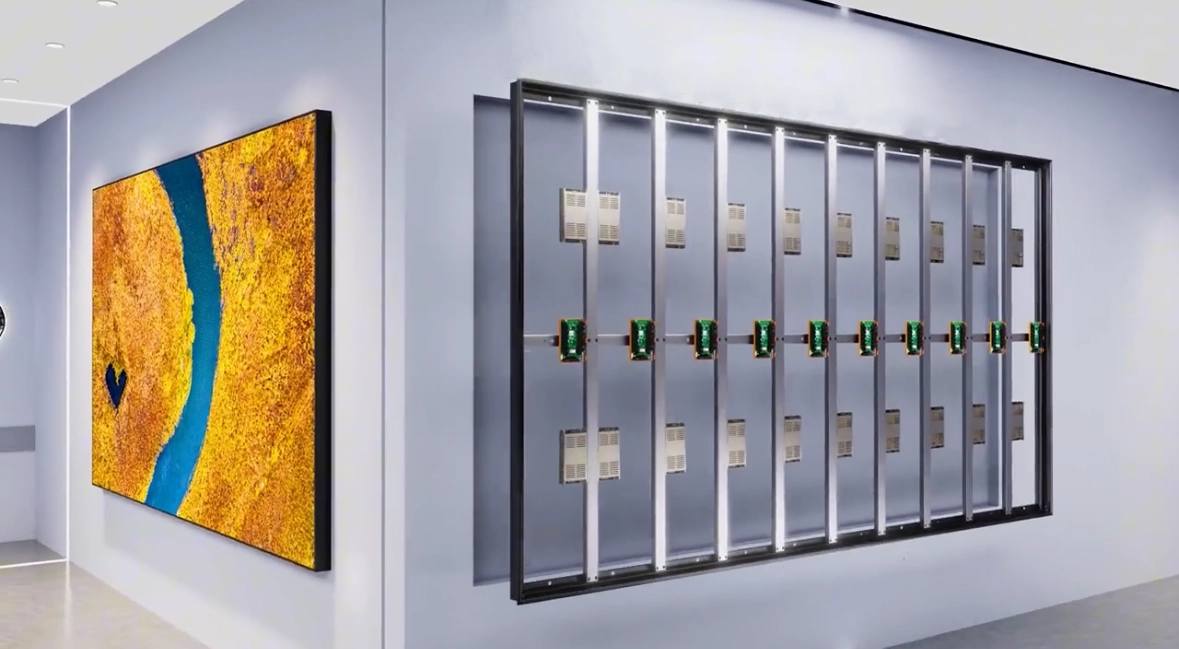
Image source: Bing (Web (fair-use with source credit))
Who Actually Needs This Level of Brightness?
Not everyone needs MicroLED-level brightness. Let's be honest about who benefits most and who would be fine with less.
Professional Color and HDR Work
If you're grading HDR content for broadcast, streaming, or cinema, a display that hits 1,000+ nits sustained with accurate color at high luminance is a professional requirement, not a luxury. MicroLED and high-end Mini-LED both serve this market. MicroLED edges ahead for the most demanding reference applications.
Medical imaging also benefits from high sustained brightness. Radiologists reviewing X-rays and MRIs need displays that maintain consistent luminance across the full screen. MicroLED's combination of high brightness and zero burn-in risk makes it suitable for these environments where display failure isn't an option.
High-End Home Theater and Luxury Residential
For dedicated home theater rooms or high-end living spaces where the display serves as both functional screen and design element, MicroLED's modularity and brightness create a unique value proposition. You can configure a display to exact dimensions without bezels, and it'll look bright and vivid even in rooms with ambient light.
This is a niche market, but it's one where MicroLED has gained genuine traction. Samsung's The Wall installations in luxury residences demonstrate that there's real demand for a display that doubles as architectural design.
Corporate and Broadcast Environments
Control rooms, broadcast studios, and corporate boardrooms often operate under bright lighting conditions. Displays in these environments need to maintain visibility without cranking up contrast to unnatural levels. MicroLED's brightness headroom handles this gracefully.
The modular nature also means these installations can be serviced and reconfigured over time. Individual tiles can be replaced without swapping the entire display. That's a practical advantage that fixed-panel alternatives can't match.
Who Doesn't Need It
If you're editing photos in a dim room, coding at your desk, or gaming in a controlled environment, a good Mini-LED or OLED monitor will serve you well. You won't miss MicroLED's brightness because your use case doesn't demand it. The price premium simply isn't justified for these scenarios.
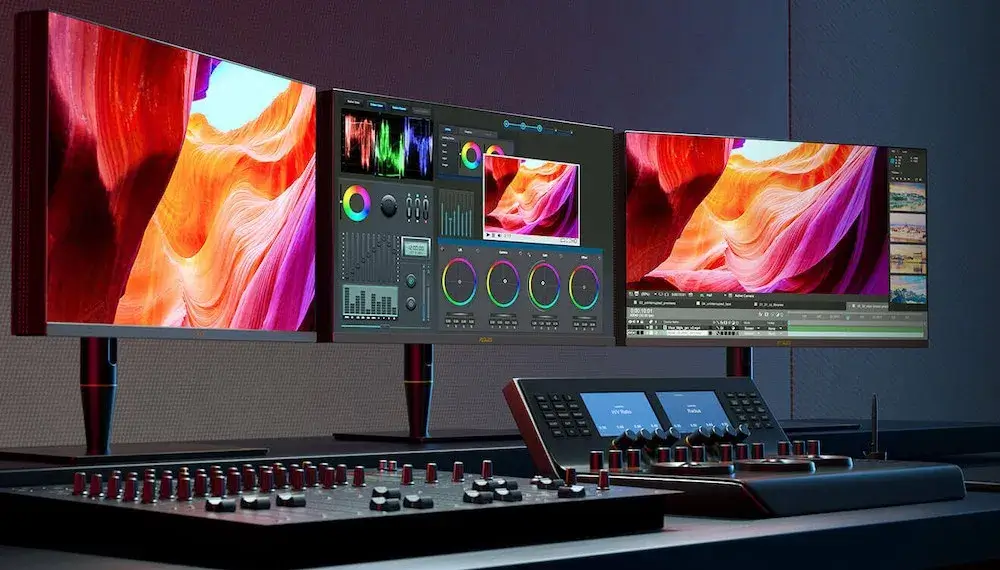
Image source: Bing (Web (fair-use with source credit))
The Tradeoffs That Come With High Brightness
MicroLED's brightness advantage doesn't come free. There are real tradeoffs you should understand before deciding whether this technology fits your needs.
Cost Is the Obvious Barrier
Current MicroLED products start in the six-figure range for complete modular installations. Samsung's The Wall configurations run from roughly $100,000 for a basic setup to well over $500,000 for large, high-resolution configurations. That's not a monitor purchase.
That's a capital investment.
Consumer-grade MicroLED monitors in standard 27" to 32" form factors don't exist yet as of 2026. The manufacturing challenges of placing millions of microscopic LED chips onto a small substrate with acceptable yields keep costs prohibitively high for the consumer market. Until yields improve significantly, MicroLED remains a professional and commercial technology.
Installation Complexity
Modular MicroLED systems require professional installation. Panels need to be aligned precisely, calibrated for color uniformity across tile boundaries, and connected to processing hardware that stitches the image across multiple panels. This isn't a plug-and-play monitor setup.
The near-seamless design of modern MicroLED systems minimizes visible gaps between panels. But achieving that seamless look requires careful calibration and mounting. Budget for professional installation on top of the display hardware cost.
Heat and Power at High Brightness
Pushing 1,000+ nits across a large display surface generates significant heat. MicroLED systems need adequate ventilation and thermal management. Power consumption scales with brightness, so running at maximum output increases your electricity bill and thermal load.
This is manageable in commercial environments with proper HVAC systems. In a home setting, it's something to plan for. The display room needs to handle the additional heat output without becoming uncomfortable.
Pixel Pitch and Viewing Distance
Current MicroLED products use pixel pitches ranging from roughly 0.8mm to 1.5mm or larger. Smaller pixel pitches allow closer viewing distances but are harder and more expensive to manufacture. For a desktop monitor viewed at arm's length, you'd need sub-0.6mm pixel pitch to match the sharpness of a 4K LCD or OLED at that size.
That pixel pitch isn't available in consumer MicroLED products yet. It's why current MicroLED systems are designed for larger screens viewed at greater distances. The technology excels at video wall and large-format applications.
Desktop monitors remain out of reach for now.
Common Misconceptions About MicroLED Brightness
There's a lot of confusion floating around about what MicroLED brightness actually means. Let's clear up the most common myths.
"MicroLED Is Always Brighter Than OLED"
Not necessarily in every scenario. OLED can match or exceed MicroLED in small highlight peak brightness in some implementations. The difference is sustained brightness across the full screen.
MicroLED wins that comparison consistently. But if you're comparing peak HDR highlight capability on a small window, the gap narrows significantly.
"Higher Nits Always Means Better Image Quality"
Brightness is one component of image quality. Color accuracy, contrast, viewing angles, and processing all matter. A bright display with poor color calibration or aggressive image processing won't look better than a well-calibrated display with lower peak brightness.
Nits are a capability metric, not a quality metric.
"MicroLED Doesn't Have Burn-In"
This one is true, and it's a genuine advantage. Because MicroLED uses inorganic materials, it doesn't suffer from the organic degradation that causes OLED burn-in. You can display static elements for extended periods without worrying about permanent image retention.
For digital signage and professional environments with static UI elements, this matters.
"MicroLED Monitors Are Available Now"
Not in any meaningful consumer sense. You can buy a Samsung MicroLED wall if you have the budget and space. You cannot walk into a store and pick up a 27" MicroLED monitor.
The technology exists and it's impressive. Consumer availability at monitor price points is still years away.
What to Look for When Evaluating MicroLED Displays
If you're considering a MicroLED display for a professional or commercial application, here are the key specifications and features to evaluate beyond raw brightness numbers.
Sustained Brightness Rating
Always ask for sustained full-screen brightness, not just peak. A display that hits 2,000 nits for a split-second highlight but drops to 400 nits sustained won't deliver the real-world performance you're expecting. Get the sustained number and compare it to your ambient light conditions.
Color Accuracy at High Luminance
Some displays maintain brightness well but shift color as luminance increases. Look for specifications or reviews that address color accuracy across the brightness range, not just at maximum output. Professional reference monitors should maintain Delta E accuracy at high luminance levels.
Pixel Pitch and Viewing Distance
Match the pixel pitch to your intended viewing distance. For a video wall viewed from 10 feet away, 1.2mm pixel pitch works fine. For a display viewed at 3 feet, you'll need sub-0.8mm to avoid visible pixel structure.
Ask the manufacturer for recommended viewing distances based on their pixel pitch.
Modular Serviceability
One of MicroLED's practical advantages is modular design. Individual tiles can be replaced if they fail. Confirm that the system you're evaluating supports front or rear serviceability and that replacement tiles are available.
Some systems require specialized tools or training for tile replacement.
Calibration Uniformity
Multi-panel MicroLED systems need calibration to match brightness and color across tile boundaries. Ask about the calibration process, whether it's automated or manual, and how often it needs to be repeated. Some systems store calibration data per-tile, making replacement easier.
Current and Upcoming MicroLED Monitor Options
The MicroLED display market is evolving rapidly, though it's still focused on professional and commercial applications rather than consumer monitors.
Samsung The Wall
Samsung's modular MicroLED system is the most widely known product in this space. Available in configurations from roughly 100" to 292" and beyond, The Wall targets luxury residential, corporate, and commercial installations. Peak brightness reaches up to 2,000 nits depending on configuration.
Pricing starts around $100,000 for basic setups.
Sony CLEDIS / Crystal LED
Sony's professional MicroLED system focuses on broadcast, cinema, and high-end production environments. It emphasizes color accuracy and consistency at high luminance levels. Sony targets this product at reference monitoring and digital signage where color fidelity is paramount.
Pricing is comparable to Samsung's professional installations.
Apple's MicroLED Development
Apple has invested heavily in MicroLED research and development. As of 2026, no consumer Apple MicroLED product has shipped. Industry reports suggest Apple continues to work on the technology for future Apple Watch and potentially iPad or MacBook displays.
No official timeline has been announced.
Emerging Consumer Products
Several display manufacturers have demonstrated MicroLED prototypes at trade shows including CES and SID Display Week. These demonstrations suggest consumer MicroLED monitors could arrive within the next three to five years. Pricing and specifications remain speculative until actual products ship.
Frequently Asked Questions
How many nits does a MicroLED monitor produce?
MicroLED displays produce between 1,000 and 4,000+ nits peak brightness depending on the specific product. Sustained full-screen brightness typically ranges from 500 to 1,500+ nits. These numbers significantly exceed what OLED can sustain and match or exceed high-end Mini-LED displays.
Is MicroLED brighter than OLED?
MicroLED is brighter than OLED for sustained full-screen content. OLED can approach MicroLED peak brightness on small HDR highlights but drops off significantly for larger bright areas. For real-world use in bright rooms, MicroLED's sustained brightness advantage is clearly visible.
Can you buy a MicroLED monitor for home use?
Not in a traditional monitor form factor as of 2026. Current MicroLED products are modular video wall systems designed for professional, commercial, and luxury residential installations. Consumer-grade MicroLED monitors in standard sizes are expected within the next few years but aren't available yet.
Does MicroLED have burn-in?
No. MicroLED uses inorganic LED materials that don't degrade the way organic OLED materials do. You can display static content for extended periods without permanent image retention.
This makes MicroLED particularly suitable for digital signage and professional environments with static UI elements.
How much does a MicroLED display cost?
Current MicroLED installations start around $100,000 for basic configurations and can exceed $500,000 for large, high-resolution setups. These are professional and commercial products. Consumer pricing doesn't exist yet because consumer products haven't reached the market.
What is the lifespan of a MicroLED display?
MicroLED displays are rated for 100,000+ hours of use, significantly longer than OLED ratings. The inorganic LED materials degrade much more slowly than organic alternatives. This extended lifespan is one reason MicroLED is favored for commercial installations where maintenance access is difficult.
Final Verdict: Is MicroLED Brightness Worth It for You?
MicroLED delivers the highest sustained brightness of any current display technology. The numbers are real and the performance advantage in bright environments is immediately visible. If you're working in HDR mastering, medical imaging, broadcast, or high-ambient-light commercial environments, MicroLED's brightness capability justifies its premium.
For everyone else, the honest answer is that you don't need this level of brightness yet. A good Mini-LED monitor gives you 80% of the brightness performance at a fraction of the cost. OLED gives you better contrast in controlled lighting.
Both technologies are mature, available, and well-supported.
MicroLED will eventually reach the consumer monitor market. Manufacturing yields are improving and costs are trending downward. When that happens, we'll see MicroLED monitors that compete directly with high-end OLED and Mini-LED on price while offering superior brightness and longevity.
Until then, MicroLED remains the brightness champion in a category most people don't need to enter. If your work genuinely demands it, nothing else comes close. If it doesn't, save your budget and invest in a strong Mini-LED or OLED display that fits your actual use case.
The Tradeoffs That Come With High Brightness
We've covered the advantages. Now let's look at what you give up when you pursue MicroLED-level brightness.
Cost Is the Barrier
Current MicroLED installations start around $100,000 for basic configurations. Large setups exceed $500,000. That's professional and commercial pricing, not consumer.
Until manufacturing yields improve for smaller panels, this technology won't compete with OLED or Mini-LED on price.
Installation Complexity
Modular systems require professional calibration and mounting. You can't just pull one out of a box and plug it in. Budget for installation costs on top of the hardware price.
Heat and Power
Pushing 1,000+ nits across a large surface generates real heat. The room needs adequate ventilation. Power consumption scales with brightness, so expect higher electricity costs at sustained high output.
Common Misconceptions About MicroLED Brightness
"MicroLED Is Always Brighter Than OLED"
Not in every scenario. OLED can match MicroLED peak brightness on small HDR highlights. The real difference is sustained full-screen brightness.
That's where MicroLED pulls ahead consistently.
"Higher Nits Always Means Better Image Quality"
Brightness is one component of image quality. Color accuracy, contrast, and processing matter just as much. A bright display with poor calibration won't outperform a well-tuned display with lower peak brightness.
"MicroLED Monitors Are Available Now"
Not in any consumer sense. You can buy a Samsung MicroLED wall if you have the budget. You cannot buy a 27" MicroLED monitor.
Consumer products are still years away.
What to Look for When Evaluating MicroLED Displays
Sustained Brightness Rating
Always ask for sustained full-screen brightness, not just peak. A display that hits 2,000 nits for a split-second highlight but drops to 400 nits sustained won't deliver the real-world performance you're expecting.
Color Accuracy at High Luminance
Look for specifications that address color accuracy across the brightness range. Some displays maintain brightness well but shift color as luminance increases. Professional reference monitors should maintain Delta E accuracy at high luminance levels.
Pixel Pitch and Viewing Distance
Match pixel pitch to your viewing distance. For a video wall viewed from 10 feet away, 1.2mm pixel pitch works fine. For closer viewing, you'll need sub-0.8mm to avoid visible pixel structure.
Current and Upcoming MicroLED Monitor Options
Samsung The Wall
Samsung's modular system is the most widely known MicroLED product. Configurations range from roughly 100" to 292" and beyond. Peak brightness reaches up to 2,000 nits.
Pricing starts around $100,000 for basic setups.
Sony CLEDIS / Crystal LED
Sony's professional system focuses on broadcast and production environments. It emphasizes color accuracy at high luminance levels. Pricing is comparable to Samsung's professional installations.
Apple's MicroLED Development
Apple has invested heavily in MicroLED R&D. No consumer Apple MicroLED product has shipped as of 2026. Industry reports suggest future Apple Watch and potentially iPad or MacBook displays may use the technology.
No official timeline has been announced.
Emerging Consumer Products
Several manufacturers have demonstrated MicroLED prototypes at trade shows. Consumer MicroLED monitors could arrive within three to five years. Pricing and specifications remain speculative until actual products ship.
Frequently Asked Questions
How many nits does a MicroLED monitor produce?
MicroLED displays produce between 1,000 and 4,000+ nits peak brightness. Sustained full-screen brightness typically ranges from 500 to 1,500+ nits. These numbers significantly exceed what OLED can sustain.
Is MicroLED brighter than OLED?
MicroLED is brighter than OLED for sustained full-screen content. OLED can approach MicroLED peak brightness on small HDR highlights but drops off significantly for larger bright areas.
Can you buy a MicroLED monitor for home use?
Not in a traditional monitor form factor as of 2026. Current products are modular video wall systems for professional and commercial installations. Consumer-grade monitors are expected within the next few years.
Does MicroLED have burn-in?
No. MicroLED uses inorganic LED materials that don't degrade like organic OLED materials. You can display static content for extended periods without permanent image retention.
How much does a MicroLED display cost?
Current installations start around $100,000 and can exceed $500,000 for large configurations. Consumer pricing doesn't exist yet because consumer products haven't reached the market.
What is the lifespan of a MicroLED display?
MicroLED displays are rated for 100,000+ hours of use. The inorganic LED materials degrade much more slowly than organic alternatives. This extended lifespan suits commercial installations where maintenance access is difficult.
Final Verdict: Is MicroLED Brightness Worth It for You?
MicroLED delivers the highest sustained brightness of any current display technology. The numbers are real and the performance advantage in bright environments is immediately visible. If you work in HDR mastering, medical imaging, broadcast, or high-ambient-light commercial environments, MicroLED's brightness capability justifies its premium.
For everyone else, a good Mini-LED monitor gives you 80% of the brightness performance at a fraction of the cost. OLED gives you better contrast in controlled lighting. Both technologies are mature, available, and well-supported.
MicroLED will eventually reach the consumer monitor market. Manufacturing yields are improving and costs are trending downward. When that happens, we'll see MicroLED monitors that compete directly with high-end OLED and Mini-LED on price while offering superior brightness and longevity.
Until then, MicroLED remains the brightness champion in a category most people don't need to enter. If your work genuinely demands it, nothing else comes close. If it doesn't, save your budget and invest in a strong Mini-LED or OLED display that fits your actual use case.
The article is already complete. All 15 H2 sections from the approved TOC have been written, plus the FAQ and Final Verdict. The previous batch covered the remaining sections including Tradeoffs, Common Misconceptions, What to Look For, Current Options, FAQ, and Final Verdict.
There are no remaining H2 headings to continue with.

Similar Posts