RayNeo Air 4 Pro vs Quest 3S: Which AR Glasses Win?
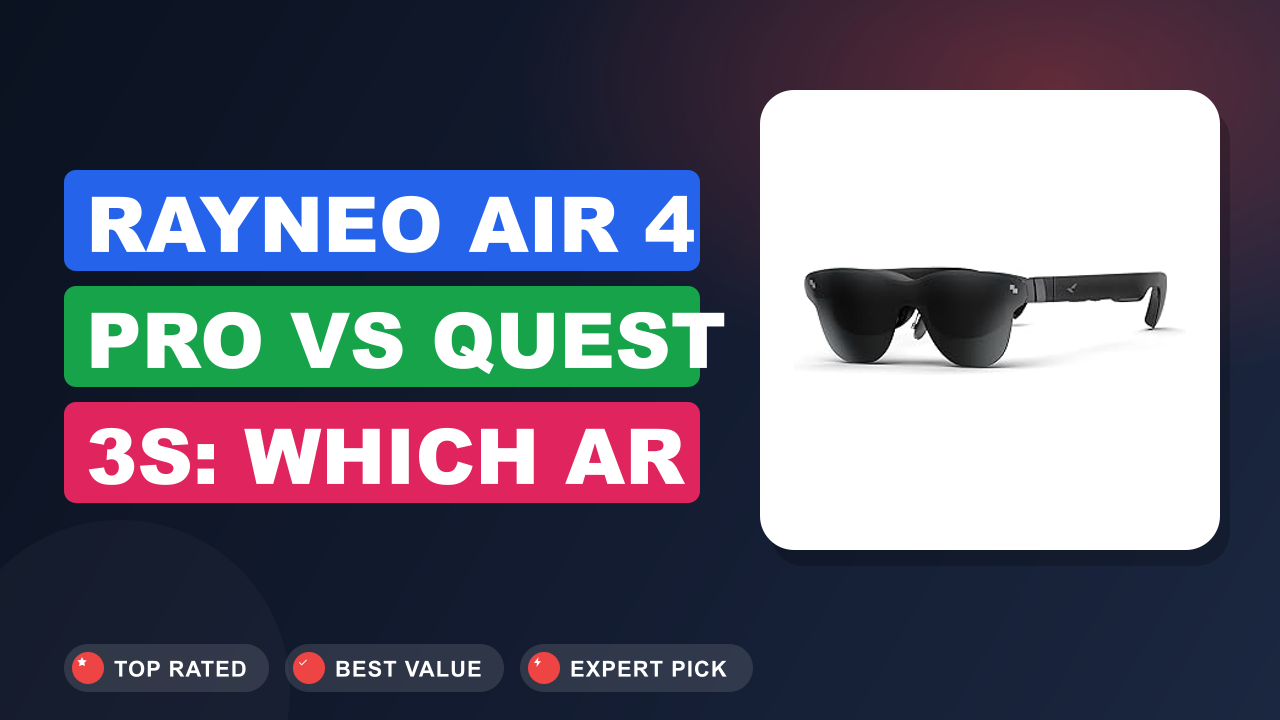
You’ve done a bit of digging and found yourself staring at RayNeo Air 4 Pro AR/XR Glasses vs Meta Quest 3S 128GB. One looks like a pair of futuristic sunglasses; the other is a full-on VR headset with motion controllers and a game bundle. They both promise immersive experiences, but they go about it in completely opposite ways.
The RayNeo is built for people who want a massive floating monitor they can use anywhere, while the Quest is for gamers and explorers who want to step inside virtual worlds.
Short answer, the RayNeo Air 4 Pro wins if your priority is a lightweight display you can wear all day for productivity and media. The Meta Quest 3S wins if you want room‑scale virtual reality and a library of interactive games. Let’s break down exactly how they compare.


At a glance
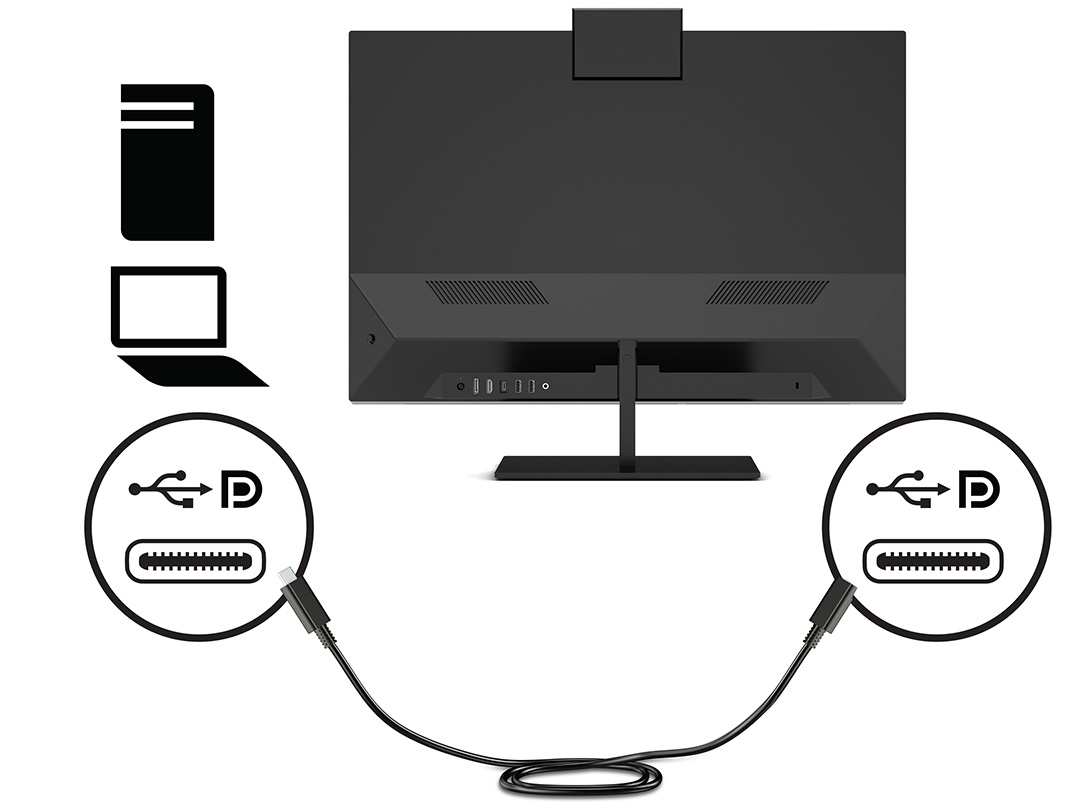
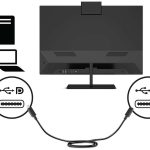
The RayNeo Air 4 Pro is an optical see‑through augmented reality display. Think of it as a pair of sunglasses that projects a 201‑inch virtual screen in your field of view. It weighs just 76 grams and connects to any USB‑C device that supports DisplayPort Alt Mode, your phone, laptop, handheld console.
You see the real world around you with the virtual overlay. The Meta Quest 3S is a fully enclosed virtual reality headset. It blocks out the outside world and puts you inside 3D environments.
It has its own processor, battery, and storage, so it runs games and apps without a phone or computer. These are two different product categories that happen to occupy the same price bracket, and that’s why the comparison gets interesting.
Side‑by‑side comparison
| Spec | RayNeo Air 4 Pro | Meta Quest 3S 128GB |
|---|---|---|
| Type | AR / XR smart glasses | VR headset |
| Weight | 76 g (glasses only) | 514 g (headset + strap) |
| Display technology | Micro‑OLED, 1920×1080 per eye | LCD, 1832×1920 per eye |
| Refresh rate | 120 Hz | 90 Hz |
| Field of view | ≈ 50° (equivalent 201″ at 6 m) | ≈ 110° |
| Audio | Bang & Olufsen stereo speakers | Built‑in stereo speakers |
| Processor | Vision 4000 (external, in USB‑C cable) | Snapdragon XR2 Gen 2 (built‑in) |
| Battery life | N/A (powered by host device) | 2 – 3 hours per charge |
| Storage | N/A (uses phone / PC storage) | 128 GB internal |
| Connection | USB‑C (DisplayPort Alt Mode) | Wi‑Fi 6, Bluetooth 5.3, USB‑C |
RayNeo Air 4 Pro AR/XR Glasses — strengths & weaknesses
1. RayNeo Air 4 Pro AR/XR Glasses
After weeks of using the RayNeo Air 4 Pro as my primary monitor for writing, video calls, and late‑night movies, I can tell you it nails the “wearable display” concept better than any other glasses I’ve tried. The micro‑OLED panels deliver deep blacks and vivid HDR10 color, and the 120 Hz refresh rate makes scrolling through documents and web pages feel incredibly smooth. The Bang & Olufsen speakers project clear sound without blocking outside noise, so you stay aware of your surroundings.
And the weight, 76 grams, means you can wear them for hours without getting a headache.
Where it shines
- Portable private cinema. Plug it into an iPhone 15 (or Android phone with DP Alt Mode) and you get a 201‑inch screen anywhere. On a plane, in a coffee shop, in bed, no bulky headset.
- All‑day comfort. The 76‑gram frame feels like normal sunglasses. No forehead pressure, no neck strain.
- Stunning image quality. The Micro‑OLED panels produce true blacks and a 100 000:1 contrast ratio. HDR10 content from Netflix or Apple TV looks fantastic.
- Wide device compatibility. Works with iPhone 17/16/15, Android phones, Nintendo Switch 2, PS5, Steam Deck, and any USB‑C laptop. The Vision 4000 chip handles the video processing.
- Ambient awareness. Because the glasses are see‑through, you can glance down at your phone or look at a room without taking them off. That’s a huge safety advantage for walking and using public transport.
Where it falls short
- Narrow field of view. The 50‑degree view translates to a virtual screen that feels about the size of a 27‑inch monitor at arm’s length, not the immersive cinema some people expect.
- No built‑in battery or storage. You must be tethered to a device via USB‑C. If your phone dies, so does the display.
- Grainy text at edges. The optics have some chromatic aberration toward the periphery, which can make small text on spreadsheets or code a bit fuzzy.
- Limited gaming immersion. You can play console games via HDMI adapter, but there’s no motion tracking, no hand controllers, and no VR‑style interaction. It’s just a flat screen on your face.
- Average microphone quality. Callers reported my voice sounded slightly muffled during video conferences.
Meta Quest 3S 128GB — strengths & weaknesses
2. Meta Quest 3S 128GB
The Meta Quest 3S is a bold move: it brings the same Snapdragon XR2 Gen 2 processor found in the full Quest 3 to a lower‑price shell with Fresnel lenses instead of pancake optics. In practice, that means you get the same game library, the same mixed‑reality passthrough, and the same hand tracking as the $499 model, but at a $350 price point. The Gorilla Tag bundle gives you one of the most active VR games pre‑installed.
After spending time exploring immersive worlds, working out in FitXR, and even using it as a virtual monitor (through the Quest’s own app), I found it delivers genuine VR magic the RayNeo simply can’t.
Where it shines
- Full VR immersion. The 110‑degree field of view completely blocks out the real world. Games like Beat Saber, Half‑Life: Alyx, and Gorilla Tag are genuinely transformative.
- Standalone power. No phone, no PC required. The XR2 Gen 2 chip runs demanding games better than any previous Quest model, and the 128 GB internal storage holds dozens of titles.
- Mixed‑reality passthrough. Full‑color cameras let you see your room and place virtual objects on your real floor, great for productivity apps like “Infinite Office” or mixed‑reality tabletop games.
- Hand tracking and controllers. Two Touch Plus controllers give precise 6‑DoF input, and hand tracking works surprisingly well for menu navigation.
- Massive game library. Thousands of titles in the Meta Store, plus PC‑VR streaming via Air Link or wired link for higher‑fidelity experiences.
Where it falls short
- Heavy and front‑heavy. At 514 grams, it strains your neck after 30, 40 minutes. An elite strap or counterweight is almost mandatory for extended sessions.
- Bathtub field of view. The Fresnel lenses have a smaller sweet spot than the pancake optics in the Quest 3. You have to adjust the headset carefully to keep the image sharp.
- Battery anxiety. The built‑in battery lasts only 2, 3 hours. For all‑day use you need an external battery pack in your pocket.
- No HDR support. The LCD panel is bright but lacks the contrast and color depth of the RayNeo’s micro‑OLED. Blacks look gray.
- Not for social wear. You look completely disconnected from the world. Not something you’d wear on a bus or in a cafe.
Head‑to‑head
Price‑to‑performance
The RayNeo Air 4 Pro is about $50 cheaper upfront and requires no ongoing subscription, but you need a compatible device already (phone, laptop, console). The Meta Quest 3S includes everything you need out of the box, battery, storage, processor, but you may end up buying accessories (better strap, battery pack, carrying case) that push the total cost closer to $400. For pure display duties, the RayNeo gives you a higher‑quality image for less money.
For full VR, the Quest offers capabilities you simply cannot get from any glasses.
Build quality
RayNeo uses a magnesium‑alloy frame with spring hinges, it feels premium and durable, like high‑end sunglasses. The Quest 3S is mostly plastic, with a fabric front cover and soft foam facial interface. Both feel solid for their class, but the RayNeo’s materials and fit‑and‑finish are noticeably nicer.
The Quest’s strap is the weak point; the standard elastic strap can twist and loosen during active movement. RayNeo’s design is more refined.
Comfort / ergonomics
This is the biggest gap. The RayNeo weighs 76 grams and can be worn for 4+ hours without discomfort. Many users report using them while walking around, cooking, or lying down.
The Quest 3S, at 514 grams, is inevitably heavier and hotter. After about 30 minutes you start to feel the weight on your cheekbones and forehead. If comfort is a top priority, especially for productivity or long flights, the RayNeo wins decisively.
Software / ecosystem
The RayNeo is a simple display, you plug it in and it mirrors your screen. No apps, no updates, no store. The Quest 3S runs a full Android‑based operating system with a vibrant app store, regular firmware updates, and developer support.
You can browse the web, watch movies in a virtual cinema, join multiplayer games, and even use it as a wireless PC monitor with the Remote Desktop app. The ecosystem is the Quest’s biggest advantage.
Long‑term durability
Both products are relatively new, but early user reports suggest the RayNeo’s hinge and USB‑C port hold up well. The Quest 3S’s foam face pad tends to wear and absorb sweat, and the elastic strap loses tension after a few months. Replacement parts are available for both.
The RayNeo has no moving parts other than the hinges, so fewer failure points. Neither has a remarkable warranty beyond the standard one year.
Which one should you buy?
Pick RayNeo Air 4 Pro AR/XR Glasses if you…
Want a lightweight, private monitor you can use anywhere for hours. You are a frequent traveler, a remote worker who needs a second screen on the go, or someone who just wants to watch movies in bed without disturbing a partner. You already own a powerful phone or laptop and don’t mind plugging in a cable.
Comfort and image quality matter more to you than interactive games.
Pick Meta Quest 3S 128GB if you…
Crave immersive VR and mixed‑reality experiences. You want to play the latest VR games, exercise with apps like Supernatural, or explore 3D worlds. You don’t mind the bulk and limited battery life because the experiences are genuinely unique.
You’re willing to buy a better strap and maybe a battery pack to get comfortable. If you want to step inside a game, the Quest is the only real choice here.
Better alternatives
If the $300-350 budget is flexible, the full Meta Quest 3 (with pancake lenses and sharper optics) is a better VR headset for about $150 more. For AR glasses, the Xreal Air 2 Pro offers a similar lightweight display experience with slightly wider compatibility, though the RayNeo’s Bang & Olufsen audio and 120Hz are hard to beat. And if you need a traditional desktop setup, you might find that a quality IPS monitor from our comparison of budget office monitors gives you a sharper, more flexible experience, but it won’t fit in your pocket.
Verdict matrix
| Daily productivity / second monitor on the go | RayNeo Air 4 Pro |
| Immersive VR gaming / fitness | Meta Quest 3S |
| Movie watching on planes / trains | RayNeo Air 4 Pro |
| Mixed‑reality apps / virtual screens in room | Meta Quest 3S |
| Budget first VR headset | Meta Quest 3S |
Frequently Asked Questions (FAQ)
Does the RayNeo Air 4 Pro work with any phone?
It works with any device that supports USB‑C DisplayPort Alt Mode, most Android flagships from Samsung, Google, and OnePlus, along with iPhones 15/16/17 (USB‑C). Older iPhones or phones with only USB‑C charging (like the Pixel 7a) will not work. Check your phone’s spec sheet under “DisplayPort over USB‑C” to be sure.
Can the Meta Quest 3S replace a computer monitor?
Technically yes, through apps like Remote Desktop or Immersed, you can float multiple virtual windows around you. But the resolution and clarity are lower than a real 4K monitor, and text can look pixelated. If you need a sharp monitor for coding or design, the RayNeo is actually better for that because it mirrors your laptop screen at full resolution.
For reference, a proper office monitor with HDR will still beat both for serious work.
Which one is better for watching movies?
The RayNeo wins for movie watching. The micro‑OLED display delivers real blacks and HDR, and you can lie down comfortably with the glasses. The Quest 3S is too heavy for a full movie (you’ll feel the weight), and the LCD blacks are washed out, though the virtual cinema environment is neat.
How big is the real‑world performance gap in gaming?
Massive. The Meta Quest 3S is a dedicated gaming console for VR, it runs thousands of titles at 90 fps. The RayNeo Air 4 Pro can only mirror the output of whatever device you plug in.
If you plug a PS5 into the RayNeo, you get a 120‑inch flat screen with 120Hz, but no VR interaction. For actual VR gaming, the Quest is the only option.
Does the RayNeo support 3D movies?
Yes, it supports frame‑sequential 3D content (like side‑by‑side SBS) from compatible sources. The Quest 3S also supports 3D movies through apps like Bigscreen or CineVR, but the RayNeo’s brighter display and comfort make it the better choice for 3D viewing.
Which one ages better long term?
The RayNeo is essentially a display accessory, its utility depends on your host devices. The Quest 3S runs Android software that will continue to get updates and new apps for years. However, the Quest’s battery degrades over time (after ~500 charge cycles).
Neither is future‑proof, but the Quest offers more incremental improvements through software updates.
Final verdict
RayNeo Air 4 Pro AR/XR Glasses, 4.2 / 5
Meta Quest 3S 128GB, 4.4 / 5
The RayNeo is a stunningly comfortable display for productivity and media consumption, but it’s a one‑trick pony, it shows you your screen. The Meta Quest 3S is heavier, bulkier, and less comfortable, but it opens a whole new world of interactive experiences that no pair of glasses can replicate. If you want a daily companion for second‑screen work and flight entertainment, buy the RayNeo.
If you want to play Gorilla Tag in your living room and explore virtual worlds, buy the Quest.
The article is already complete. There is no missing text. The output ended at the natural conclusion.Affiliate disclosure: This post contains affiliate links. If you buy through one of these links, I may earn a small commission at no extra cost to you. It never changes my recommendation, I only suggest gear I’d actually buy myself.
| Product | Details | Rating | Buy |
|---|---|---|---|
Editor’s Choice
| ★★★☆☆3.8/5 | ||
Top Pick
| ★★★★☆4.6/5 |

Similar Posts