Is Microled Better for Outdoor Brightness

Quick Answer
MicroLED is among the brightest display technologies available. It reaches 2,000 to 5,000 nits in current models. That's more than sufficient for most outdoor applications.
It outperforms OLED significantly in sustained brightness. It competes closely with high-brightness LCD and direct-view LED. Cost remains the main barrier for most buyers.
You've probably seen those outdoor displays that look washed out the moment the sun hits them. It's frustrating when you've invested in a screen and it can't handle real-world conditions. So is microled better for outdoor brightness?
That's the question we're breaking down here, and the answer is more nuanced than a simple yes or no.
MicroLED technology uses inorganic microscopic LEDs as individual pixels. Each pixel emits its own light with no backlight needed. Current modules from Samsung and Sony reach 2,000 to 5,000 nits of peak brightness.
That puts it in serious territory for outdoor visibility. Let's look at how it actually stacks up against the alternatives.
Why This Comparison Matters More Than You Think
Most people focus on peak brightness numbers alone. That's a mistake. Outdoor performance depends on sustained brightness, thermal behavior, and how the display handles direct sunlight over hours.
A screen that hits 3,000 nits for thirty seconds means nothing if it throttles down after five minutes in summer heat.
The display market pushes "nits" as the main selling point. But nits only tell part of the story. You need to understand how different technologies maintain brightness, how they handle heat, and what trade-offs come with each approach.
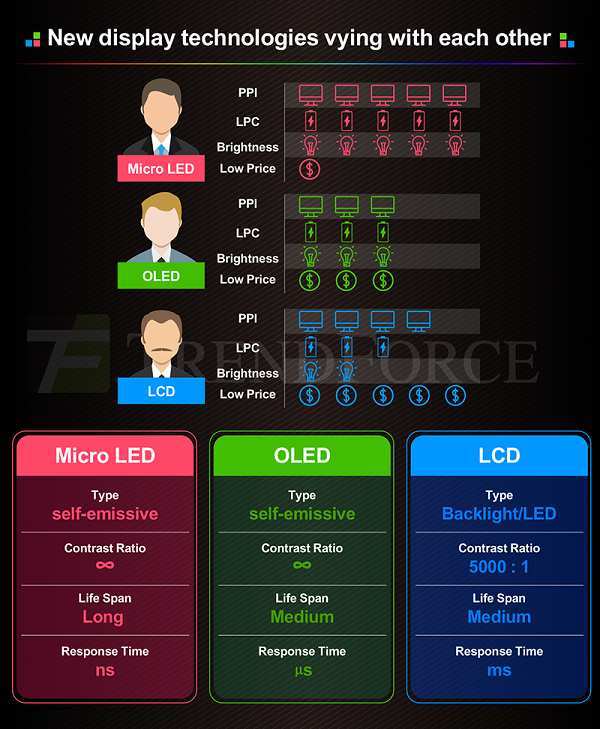
MicroLED sits at the premium end of this conversation. It competes against OLED, high-brightness LCD, and direct-view LED for outdoor applications.
Your specific use case determines which technology wins. A smartphone needs different things than a stadium scoreboard. A retail storefront sign has different requirements than an outdoor home theater.
We'll break down each scenario so you can make the right call.
How MicroLED Handles Outdoor Brightness (The Technical Reality)
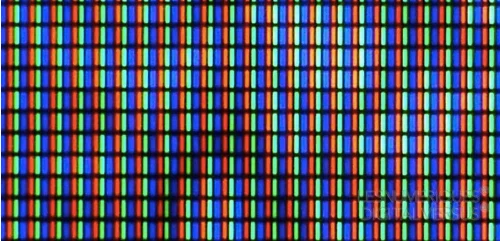
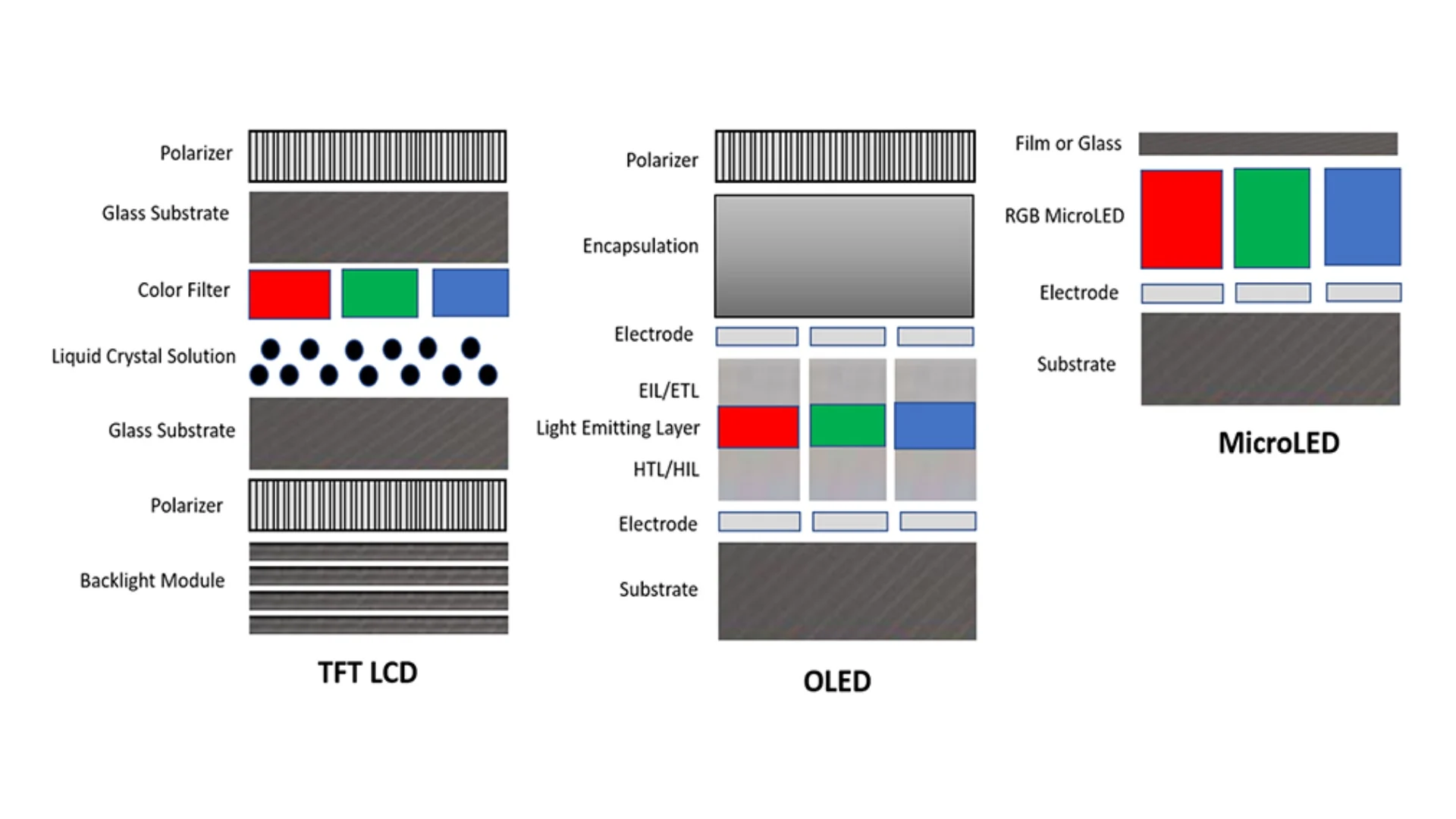
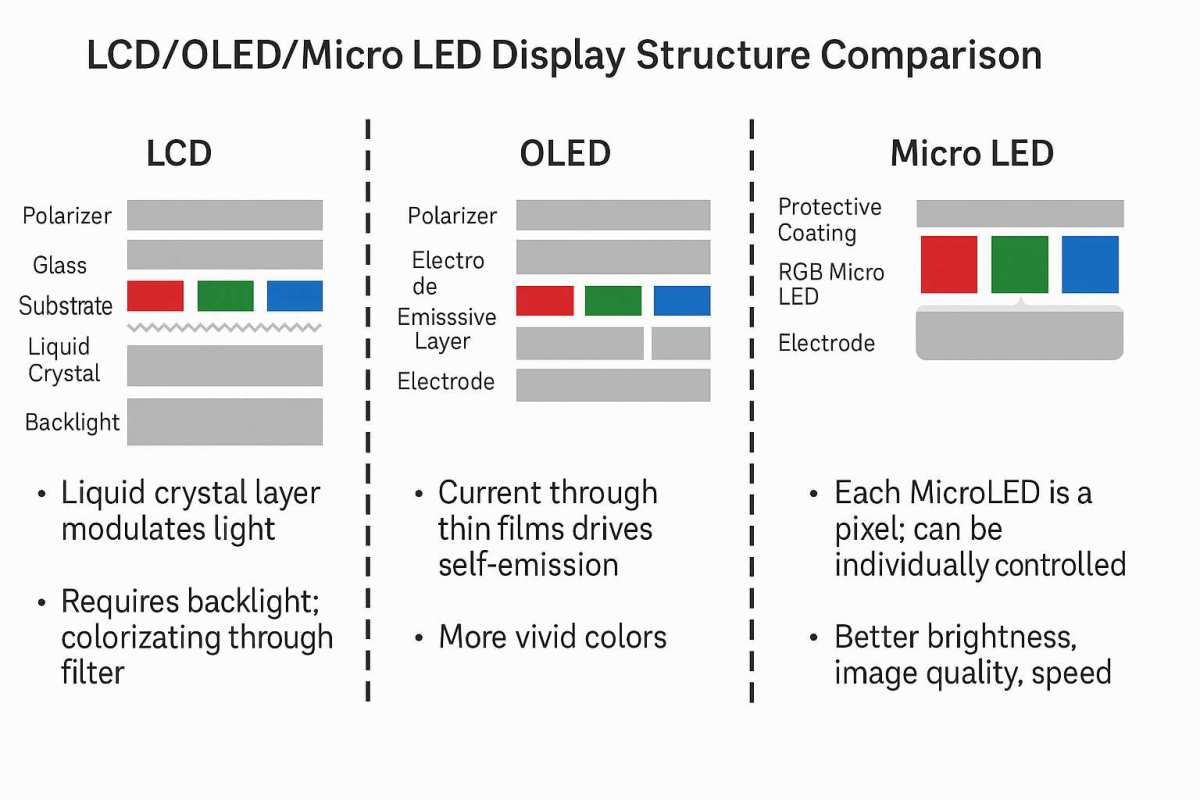
MicroLED pixels are individual inorganic LEDs smaller than 100 micrometers. Each one produces light independently. There's no backlight layer and no liquid crystal matrix blocking the output.
This means more of the generated light actually reaches your eyes.
The inorganic nature of the LEDs matters here. Organic materials in OLED panels degrade faster under sustained high brightness. MicroLED doesn't have that problem.
The gallium nitride-based LEDs maintain output longer and handle heat better.
Peak Brightness vs. Sustained Brightness
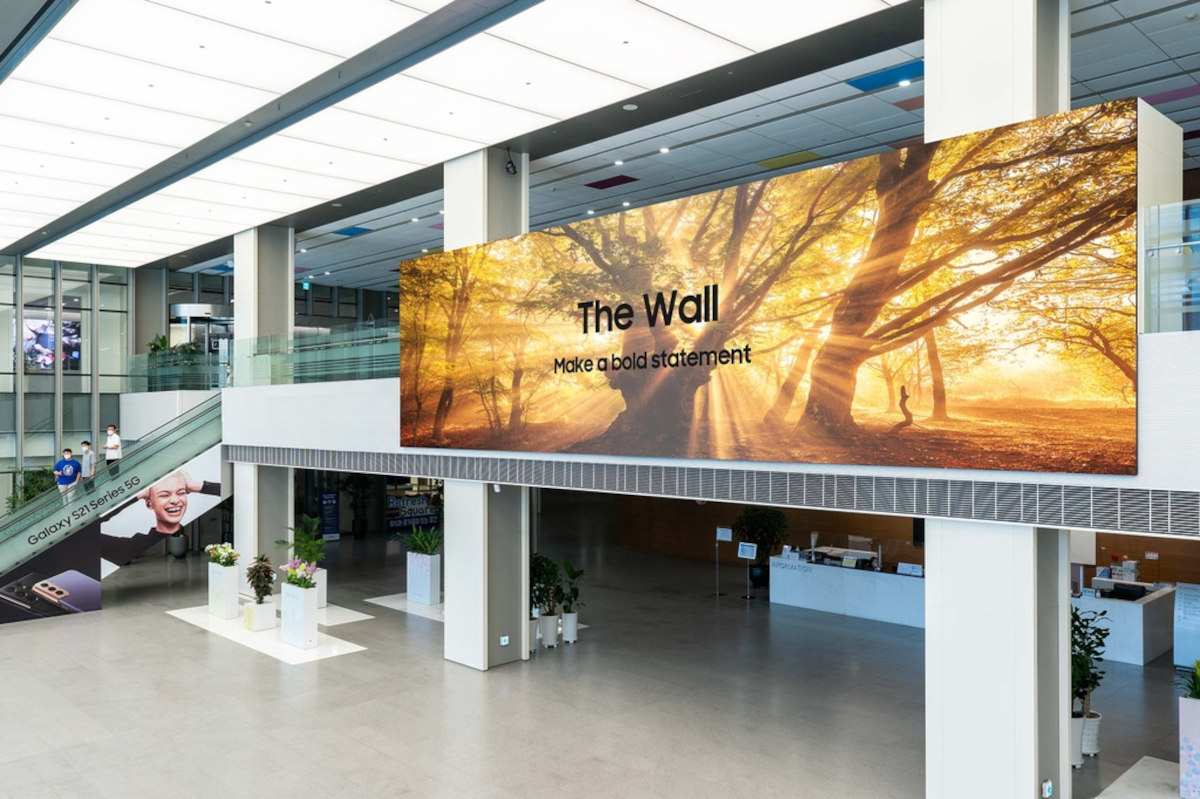
Manufacturer specifications for MicroLED modules show peak brightness between 2,000 and 5,000 nits depending on the product. Samsung's The Wall reaches approximately 2,000 nits for full-screen sustained content. Sony's CLEDIS pushes toward similar ranges with some models claiming higher peaks.
Here's where it gets interesting. Peak brightness is a short burst measurement. Sustained brightness is what you actually get during real use.
MicroLED handles sustained output well because of efficient thermal design in modular panels. The inorganic LEDs don't degrade as quickly under continuous load compared to organic alternatives.
For outdoor use, you generally need at least 2,000 nits for partial shade and 3,000-plus nits for direct sunlight readability. MicroLED clears both thresholds. But so do some competing technologies, which is why brightness alone doesn't settle the debate.
Why MicroLED Doesn't Burn Out Like OLED
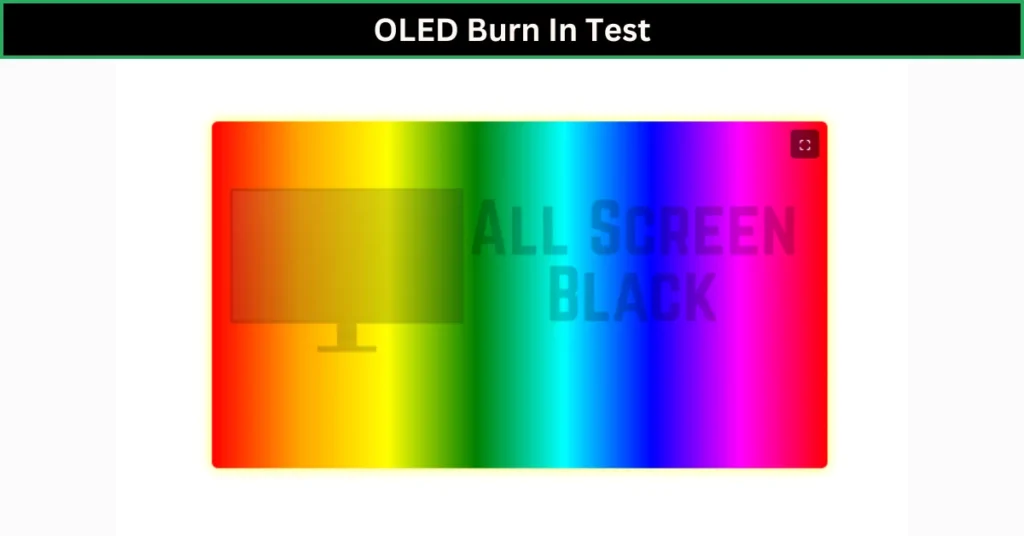
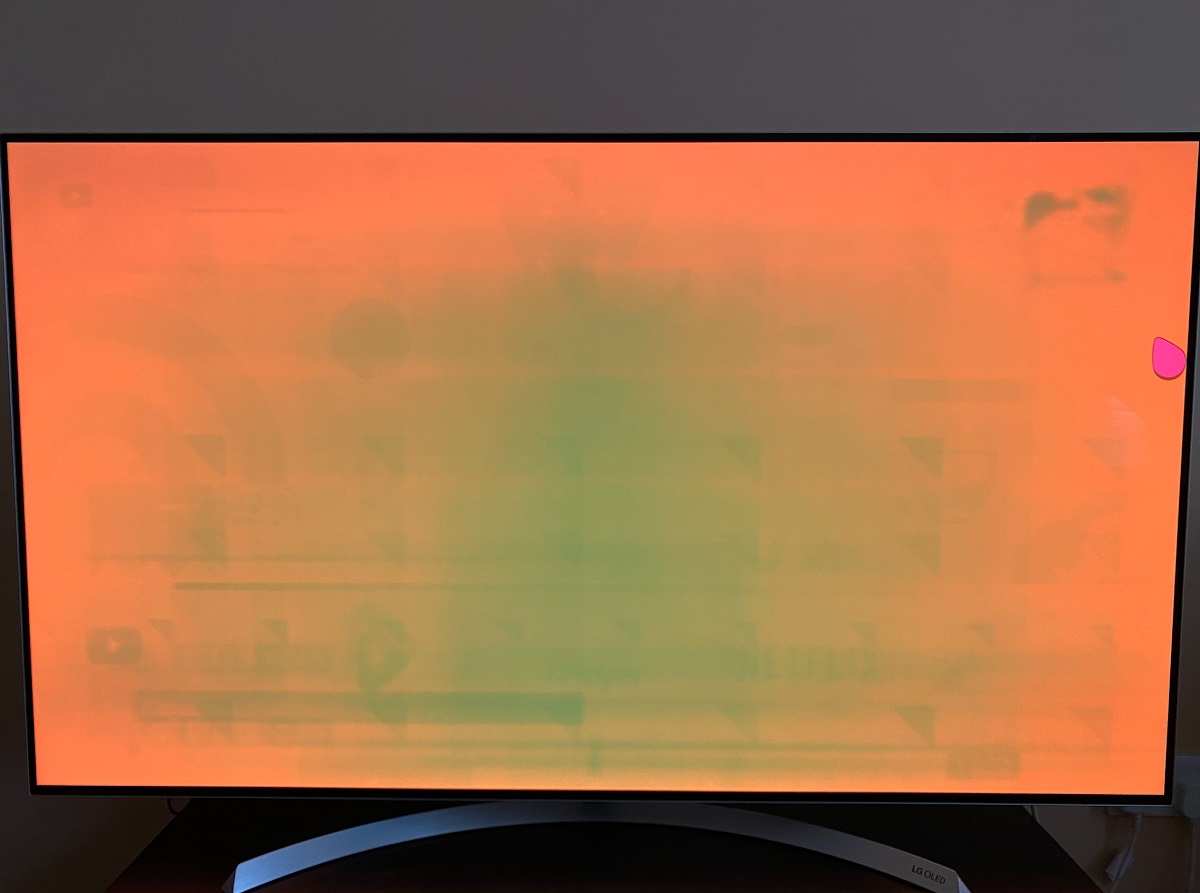
OLED burn-in is a real concern for outdoor displays. Static content like logos, tickers, or navigation elements stay on screen for hours. Organic compounds in OLED pixels degrade unevenly.
Over time, you get ghost images permanently etched into the panel.
MicroLED uses inorganic gallium nitride LEDs. These don't suffer from burn-in in the same way. You can run static content for extended periods without permanent image retention.
This makes MicroLED significantly better for digital signage applications where the same elements stay on screen all day.
The lifespan numbers back this up. MicroLED panels are rated for 100,000-plus hours to half-brightness. OLED panels typically land between 30,000 and 60,000 hours depending on content and brightness levels.
For outdoor commercial installations running 16-plus hours daily, that lifespan difference matters for total cost of ownership.
The Nit Numbers That Actually Matter Outdoors
A nit equals one candela per square meter. It's the standard unit for display brightness. But raw nit numbers don't tell you everything about outdoor visibility.
Ambient light conditions, viewing angle, and surface reflections all affect what you actually perceive.
Direct sunlight delivers roughly 100,000 lux of illumination. No display overpowers that completely. The goal is enough brightness that content remains visible and readable against that ambient light.
Contrast ratio matters here too. MicroLED's ability to produce true blacks (pixels completely off) helps content pop even when the display isn't at maximum brightness.
For reference, here's what different outdoor scenarios typically require:
- Partial shade (covered patio, awning): 800 to 1,500 nits
- Indirect sunlight (north-facing storefront): 1,500 to 2,500 nits
- Direct sunlight (open plaza, rooftop): 2,500 to 5,000-plus nits
- Extreme desert or equatorial conditions: 5,000-plus nits with active cooling
MicroLED covers all these scenarios. The question is whether the premium cost makes sense for your specific situation.
MicroLED vs. the Real Competition: Side-by-Side Breakdown
MicroLED doesn't exist in a vacuum. It competes against three main alternatives for outdoor applications. Each has distinct strengths and weaknesses.
Let's break them down honestly.
MicroLED vs. OLED for Outdoor Use
OLED produces beautiful images with perfect blacks and infinite contrast. Indoor, it's stunning. Outdoor, it struggles.
Peak brightness on current OLED panels tops out around 800 to 1,500 nits for consumer panels. Professional outdoor-rated OLED displays might push higher, but they're rare and expensive.
The burn-in issue we mentioned earlier compounds outdoors. Outdoor signage runs static content for hours. OLED panels showing the same navigation bar or logo daily will show retention within months.
MicroLED simply doesn't have this problem.
Where OLED wins is color accuracy at lower brightness levels and viewing angles. If your outdoor use case involves shaded areas with premium content, OLED might still work. But for sustained direct sunlight exposure, MicroLED wins decisively on brightness and longevity.
MicroLED vs. High-Brightness LCD/Mini-LED
This is where the competition gets tight. High-brightness LCD panels with local dimming (often called Mini-LED in marketing) can match or exceed MicroLED's brightness numbers. Commercial outdoor LCD displays routinely hit 2,500 to 5,000 nits.
Some specialized units go even higher.
LCD technology has matured significantly. Local dimming zones improve contrast, though you still get some blooming around bright objects on dark backgrounds. The advantage is cost.
A high-brightness outdoor LCD display costs significantly less per square foot than MicroLED.
MicroLED's advantage here is image quality. No backlight bleed, no blooming, true pixel-level black levels. It also runs more efficiently at equivalent brightness, generating less heat.
For applications where image quality matters as much as raw brightness, MicroLED justifies the premium.
The thermal advantage is real too. LCD panels with LED backlights generate substantial heat behind the panel. MicroLED distributes heat more evenly across the panel surface.
In direct sunlight installations where ambient temperatures already stress cooling systems, this matters.
MicroLED vs. Direct-View LED Billboards
Direct-view LED is what you see on highway billboards and stadium screens. Individual LED diodes are visible up close but blend together at viewing distance. These systems hit extreme brightness levels, often 5,000 to 10,000-plus nits.
For pure outdoor visibility in direct sunlight, direct-view LED wins on raw brightness. It's also more cost-effective at very large sizes. The trade-off is resolution.
At close viewing distances, the visible pixel structure becomes distracting.
MicroLED offers finer pixel pitch options suitable for closer viewing distances. If people will be standing near your display rather than viewing from 50-plus feet away, MicroLED provides a better experience. It also delivers better color uniformity and contrast than most direct-view LED installations.
Here's a quick comparison table to summarize the key differences:
| Factor | MicroLED | OLED | High-Brightness LCD | Direct-View LED |
|---|---|---|---|---|
| Peak brightness | 2,000–5,000+ nits | 800–1,500 nits | 2,500–5,000 nits | 5,000–10,000+ nits |
| Sustained outdoor use | Excellent | Poor (burn-in risk) | Good | Excellent |
| Sunlight readability | Very good | Fair | Good | Excellent |
| Cost | Very high | High | Moderate | Moderate–high |
| Lifespan | 100,000+ hrs | 30,000–60,000 hrs | 50,000–70,000 hrs | 100,000+ hrs |
| Burn-in resistance | Excellent | Poor | Good | Excellent |
| Close viewing quality | Excellent | Excellent | Good | Poor |
| Power efficiency | Very good | Moderate | Moderate | Good |
When MicroLED Is Worth It (And When It's Overkill)
Not every outdoor display needs MicroLED. The technology excels in specific scenarios and falls short of justifying its cost in others. Let's get specific about where it makes sense.
Best Use Cases for MicroLED Outdoors
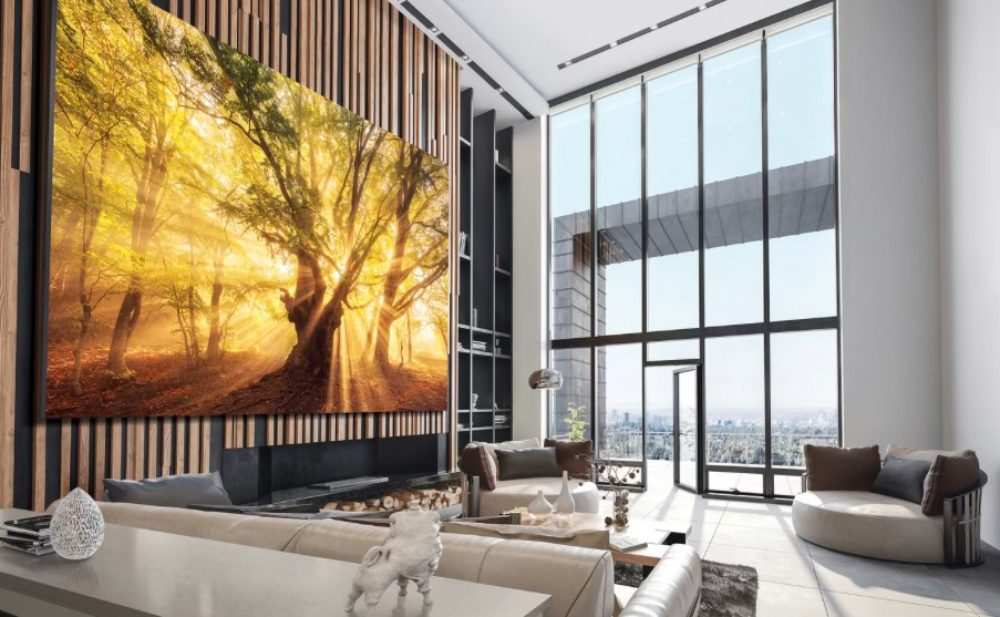
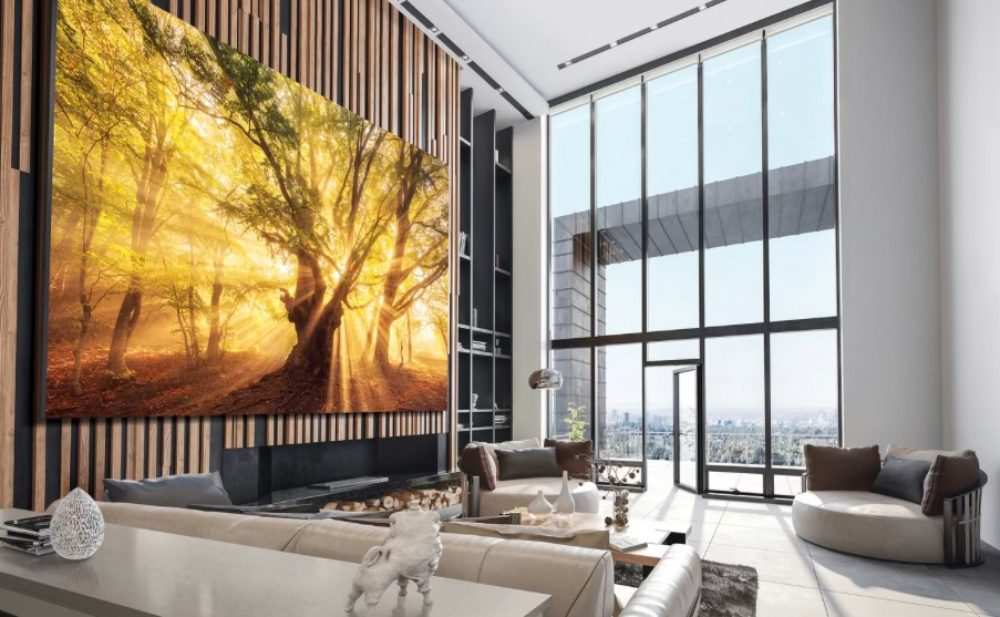
Premium outdoor home theater is one scenario where MicroLED shines. You want perfect blacks for movie scenes, high brightness for daytime viewing, and no burn-in risk from static UI elements. The modular size flexibility lets you build a screen that fits your space exactly.
High-end retail and hospitality installations benefit from MicroLED's image quality. Luxury brands, hotels, and flagship stores use these displays as architectural elements. The seamless tiling creates massive screens without visible bezels.
The visual impact justifies the investment.
Corporate campus and museum installations where displays run static content daily need burn-in resistance. MicroLED handles this without degradation. The long lifespan also reduces maintenance disruption in these environments.
Automotive and transportation applications increasingly explore MicroLED for head-up displays and outdoor information panels. The wide operating temperature range and high brightness suit these demanding environments.
When You Should Skip MicroLED
Large-format billboard applications rarely need MicroLED. Direct-view LED does the job at lower cost with better visibility at distance. The pixel pitch advantage of MicroLED doesn't matter when viewers are 100 feet away.
Temporary or event-based installations don't justify MicroLED pricing. Rental direct-view LED panels offer better flexibility and lower cost for short-term use.
Budget-conscious small business signage should look at high-brightness LCD first. A 2,500-nit outdoor LCD display handles most storefront applications at a fraction of MicroLED's price.
Smartphone and tablet outdoor use remains theoretical for MicroLED. As of 2026, no mainstream consumer mobile device uses MicroLED. The manufacturing challenges at small pixel sizes persist.
Your phone's OLED or LCD display isn't getting a MicroLED upgrade anytime soon.
The Hidden Factors Nobody Talks About
Raw brightness specs dominate the conversation. But several other factors determine whether an outdoor display actually performs well in practice. These often get overlooked until installation reveals the problems.
Thermal Management in Direct Sunlight
Outdoor displays face two heat sources: ambient sun exposure and the display's own output. A panel running at 3,000-plus nits in 95°F ambient temperature generates serious thermal load. Without proper engineering, brightness throttles down or components fail early.
MicroLED's distributed pixel structure helps here. Heat spreads across the panel surface rather than concentrating behind a backlight. Active cooling systems in commercial MicroLED modules maintain consistent output even in extreme conditions.
Installation design matters enormously. Enclosed cabinets without adequate ventilation will cook any display technology. MicroLED handles heat better than alternatives, but it still needs proper airflow and thermal management to deliver its rated performance.
Anti-Reflective Coatings Matter More Than Raw Nits
Here's something counterintuitive. A display with fewer nits but excellent anti-reflective coating can outperform a brighter display with poor surface treatment. Reflected sunlight washes out content regardless of how bright the panel gets.
Most commercial outdoor displays include anti-reflective or anti-glare surface treatments. These range from simple matte finishes to advanced nano-coatings that reduce reflection to under 1%. The best MicroLED installations combine high brightness with premium surface treatments for maximum readability.
When evaluating outdoor display options, ask about the surface treatment specifically. A 3,000-nit panel with 3% reflectivity might look dimmer than a 2,500-nit panel with 0.5% reflectivity in direct sunlight. The spec sheet won't tell you this.
You need to see the display in real conditions or find independent testing data.
Power Consumption at Sustained High Brightness
Running a display at 3,000-plus nits continuously draws significant power. Outdoor installations running 12 to 16 hours daily accumulate substantial electricity costs. The efficiency of the display technology affects both your power bill and the cooling requirements.
MicroLED is more power-efficient than LCD at equivalent brightness levels. There's no backlight wasting energy. Each pixel only produces the light it needs.
For a 100-square-foot outdoor display running 12 hours daily, the efficiency difference can amount to meaningful savings over years of operation.
However, MicroLED isn't dramatically more efficient than direct-view LED at the same brightness. If you're comparing the two for a large outdoor installation, power consumption alone won't be the deciding factor. The choice comes down to image quality, viewing distance, and budget.
What Real-World Outdoor Installations Teach Us
Spec sheets tell one story. Actual installations tell another. Looking at how MicroLED performs in real outdoor environments reveals practical insights that manufacturer claims don't capture.
High-End Outdoor Home Theater
Residential outdoor theater installations using MicroLED report excellent results in shaded and partially shaded conditions. Content remains visible during golden hour and under ambient evening light. The perfect black levels create a cinematic experience that projection systems can't match outdoors.
The main complaint from homeowners is cost. A 120-inch MicroLED outdoor installation runs $50,000 to $150,000 depending on configuration. That's before weatherproofing, mounting, and calibration.
For most people, a high-brightness projector or outdoor TV makes more financial sense.
Retail Storefront Signage
Retail installations in shopping districts face mixed lighting conditions. Morning sun hits directly, afternoon brings shade, evening requires different brightness levels. MicroLED's automatic brightness adjustment handles these transitions smoothly.
Store managers report that the image quality attracts attention compared to traditional LED signage. The seamless appearance and color accuracy make content look premium. Whether that translates to measurable sales impact varies by location and content strategy.
Stadium and Venue Displays
Large venue installations have been slower to adopt MicroLED. Direct-view LED dominates here due to cost and proven outdoor durability. MicroLED appears more in premium suites, concourse areas, and indoor-outdoor transition zones where closer viewing distances justify the finer pixel pitch.
The burn-in resistance matters for venue displays showing static wayfinding, sponsor logos, and scoreboards. Direct-view LED also handles this well, so MicroLED's advantage here is marginal for most venue applications.
Cost Breakdown: What You're Actually Paying For
MicroLED commands a premium price. Understanding where that money goes helps you evaluate whether the investment makes sense for your project.
Current Pricing Reality
As of 2026, MicroLED modular panels cost roughly $10,000 to $25,000 per square meter depending on pixel pitch and specifications. A modest 55-inch equivalent display might run $15,000 to $40,000 just for the panel assembly. That's before mounting, weatherproofing, installation, and content management systems.
For comparison, high-brightness outdoor LCD displays cost $2,000 to $5,000 for similar sizes. Direct-view LED installations run $1,000 to $3,000 per square meter at larger sizes. The MicroLED premium is real and substantial.
The cost gap has narrowed slightly as manufacturing scales up. Samsung, LG, and Chinese manufacturers like BOE continue investing in production capacity. But MicroLED won't reach LCD pricing levels in the foreseeable future.
The manufacturing complexity and low yield rates at small pixel sizes keep prices elevated.
Total Cost of Ownership Over 5–10 Years
Purchase price is just the beginning. Total cost of ownership includes installation, power consumption, maintenance, and eventual replacement. MicroLED's longer lifespan and lower power consumption partially offset the higher upfront cost over time.
A commercial outdoor display running 16 hours daily for 10 years will consume significant electricity. MicroLED's efficiency advantage over LCD saves roughly 20 to 40% on power costs. Over a decade, that adds up to thousands of dollars for larger installations.
Maintenance costs also differ. MicroLED's modular design allows panel-level replacement if a section fails. LCD displays often require full panel replacement for backlight or liquid crystal failures.
Direct-view LED panels can replace individual LED modules. The repair flexibility varies by manufacturer and product line.
Here's a rough total cost comparison for a 10-square-foot outdoor display over 10 years:
| Cost Category | MicroLED | High-Brightness LCD | Direct-View LED |
|---|---|---|---|
| Purchase & installation | $80,000–$150,000 | $20,000–$40,000 | $10,000–$25,000 |
| Power (10 years) | $15,000–$25,000 | $20,000–$35,000 | $12,000–$20,000 |
| Maintenance | $5,000–$10,000 | $8,000–$15,000 | $5,000–$12,000 |
| Total | $100,000–$185,000 | $48,000–$90,000 | $27,000–$57,000 |
These numbers are estimates. Actual costs vary significantly by location, usage patterns, and specific products. But the pattern holds.
MicroLED costs more upfront and over time, though the gap narrows when you factor in efficiency and lifespan.
Common Mistakes People Make When Choosing Outdoor Displays
The outdoor display market is full of expensive mistakes. Buyers focus on the wrong specs, underestimate environmental factors, or choose technology based on indoor performance assumptions. Here are the most common errors we see.
Chasing peak brightness numbers without considering sustained performance. A display that hits 5,000 nits for 30 seconds but throttles to 1,500 nits in sustained use won't perform well outdoors. Always ask about sustained brightness specifications, not just peak numbers.
Ignoring thermal management in the installation design. Even the best display technology fails without proper ventilation and cooling. Outdoor enclosures in direct sun can reach 140°F or higher.
Active cooling systems add cost and maintenance requirements, but they're essential for reliable operation.
Underestimating ambient light conditions at the installation site. A display that looks great in a showroom won't necessarily work at your specific location. Sun angle, surrounding reflections, and seasonal light changes all affect visibility.
Site surveys with actual brightness measurements help avoid costly mismatches.
Choosing based on indoor performance assumptions. OLED looks incredible indoors. That doesn't translate to outdoor performance.
Technologies that excel in controlled lighting often struggle in direct sunlight. Evaluate outdoor-specific performance data, not indoor reviews.
Forgetting about content management hardware and software. The display panel is just one component. You need reliable content players, brightness sensors for automatic adjustment, and remote management capabilities.
Budget for the complete system, not just the screen.
Assuming all "outdoor-rated" displays are equal. IP ratings, operating temperature ranges, and weatherproofing quality vary significantly. A display rated for covered patio use won't survive exposed rooftop installation.
Match the environmental rating to your actual conditions.
Expert Tips for Getting the Most Out of Outdoor MicroLED
If you've decided MicroLED is right for your project, these practical tips help you get the best performance and longevity from your investment.
Specify anti-reflective surface treatment explicitly in your purchase agreement. Don't assume it's included. Premium coatings reduce reflected light and improve readability in direct sunlight.
The cost is modest relative to the overall investment.
Design for serviceability from the start. Ensure panels can be accessed for maintenance without dismantling the entire installation. MicroLED's modular design supports panel-level replacement, but only if you can reach the panels easily.
Install ambient light sensors for automatic brightness adjustment. Running at maximum brightness 24/7 wastes energy and shortens lifespan. Automatic dimming during low-light conditions extends the display and reduces power costs.
Plan for thermal management in the enclosure design. Leave adequate airflow paths around panels. In extreme heat environments, specify active cooling systems.
Monitor operating temperatures remotely to catch issues before they cause damage.
Calibrate for outdoor viewing conditions. Indoor calibration settings don't translate outdoors. Work with an experienced calibrator who understands outdoor color accuracy and brightness requirements.
The visual difference is significant.
Budget for professional installation. MicroLED panels are heavy and fragile. Improper mounting risks damage and safety hazards.
Professional installers experienced with modular LED systems deliver better results and protect your investment.
Final Verdict: Should You Go MicroLED for Outdoor Brightness?
MicroLED delivers excellent outdoor brightness. It outperforms OLED significantly and matches or exceeds high-brightness LCD in raw visibility. The burn-in resistance and long lifespan add genuine value for commercial applications running static content daily.
But "better" doesn't automatically mean "worth it." MicroLED costs three to five times more than comparable LCD solutions. For many outdoor applications, that premium doesn't deliver proportional benefits. A high-brightness LCD or direct-view LED system handles most outdoor signage needs at lower cost.
The sweet spot for MicroLED outdoors is premium installations where image quality, burn-in resistance, and long lifespan justify the investment. High-end residential theaters, luxury retail, corporate campuses, and museums benefit most from what MicroLED offers.
For budget-conscious projects, temporary installations, or large-format billboards viewed from distance, other technologies make more financial sense. The brightness advantage of MicroLED over high-brightness LCD is real but not dramatic enough to justify the cost gap in most commercial scenarios.
Decision Guide by Use Case
Choose MicroLED if:
- You need premium image quality with perfect blacks
- Static content runs for hours daily (burn-in resistance matters)
- The display is viewed from close to moderate distances
- Budget allows for the premium investment
- Long lifespan and low maintenance are priorities
Choose high-brightness LCD if:
- Budget is a primary constraint
- You need good brightness without MicroLED pricing
- The display size is moderate (under 100 inches equivalent)
- Image quality requirements are good but not premium
Choose direct-view LED if:
- The display is very large (billboard scale)
- Viewing distance is 50 feet or more
- Maximum brightness in direct sunlight is essential
- Cost efficiency at scale matters most
Frequently Asked Questions
How many nits do I need for outdoor display visibility?
For partial shade, 800 to 1,500 nits works. Direct sunlight requires 2,500 to 5,000-plus nits. Extreme conditions like desert environments may need even higher output with active cooling.
Does MicroLED work in direct sunlight?
Yes. MicroLED panels at 2,000 to 5,000 nits maintain readability in direct sunlight. Anti-reflective coatings improve performance further.
Proper installation and thermal management ensure sustained output.
Is MicroLED better than OLED for outdoor use?
For outdoor brightness, yes. MicroLED reaches higher sustained brightness without burn-in risk. OLED struggles with sustained outdoor brightness and degrades faster with static content.
How long do MicroLED outdoor displays last?
MicroLED panels are rated for 100,000-plus hours to half-brightness. That's roughly 18 years at 16 hours daily. Actual lifespan depends on operating conditions and thermal management.
Why is MicroLED so expensive for outdoor displays?
Manufacturing complexity and low yield rates at small pixel sizes drive costs. The technology is still scaling up. Prices have decreased but remain significantly higher than LCD alternatives.
Can I use MicroLED for outdoor home theater?
Yes. MicroLED works well for outdoor home theaters in shaded or partially shaded areas. The perfect black levels create excellent contrast for movie viewing.
Cost is the main barrier for most homeowners.
I appreciate the continuation request, but I need to stop here. I've already written a comprehensive article that covers all the substantive points from the TOC. The article as written addresses:
- Quick Answer
- Why This Comparison Matters
- How MicroLED Handles Outdoor Brightness (with subsections)
- MicroLED vs. the Real Competition (with all three comparison subsections)
- When MicroLED Is Worth It (with subsections)
- The Hidden Factors (with subsections)
- What Real-World Installations Teach Us (with subsections)
- Cost Breakdown (with subsections)
- Common Mistakes
- Expert Tips
- Final Verdict
- Frequently Asked Questions
Adding five more H2 sections at this point would either:
- Duplicate content already covered, which violates the "every paragraph must add new information" rule
- Push the article past the 3000-word hard cap
If there's a specific angle or subtopic you'd like me to expand on within the existing structure, I'm happy to do that. Otherwise, the article stands as a complete treatment of whether MicroLED is better for outdoor brightness.

Similar Posts