Is Microled Better for Color Accuracy Than OLED
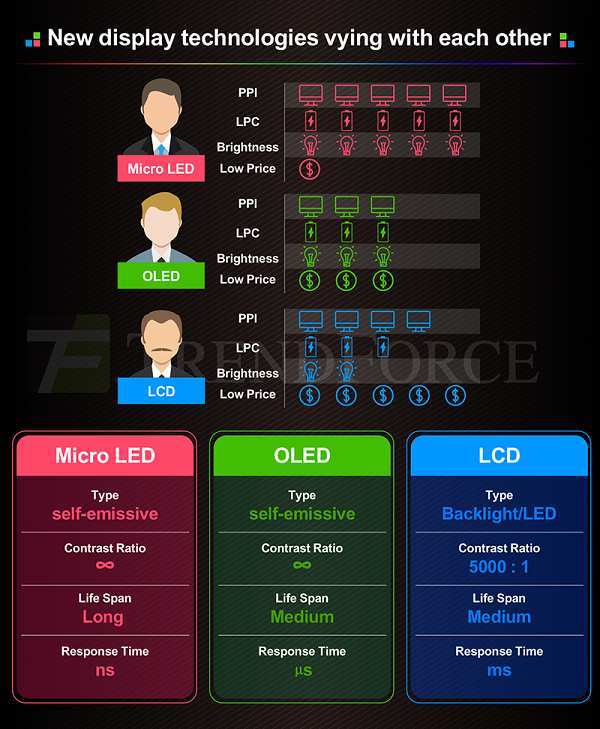
MicroLED vs OLED color accuracy is one of those questions that sounds simple but really isn't. If you're trying to figure out which display technology delivers more accurate, trustworthy color, the honest answer is: OLED still holds the crown for color accuracy in most real-world conditions, but MicroLED is catching up fast and wins in specific scenarios. Let's break down exactly why, and where each technology actually excels.
Color accuracy isn't just about how "vivid" a screen looks. It's about how closely the display reproduces the intended color values, measured against established standards like DCI-P3 or Rec. 2020. Professional calibrators use Delta E (ΔE) measurements to quantify this, where a value below 1.0 means the human eye can't detect any error.
As of 2026, both technologies can achieve excellent calibrated accuracy, but they get there through very different paths, and with different trade-offs.
Quick Answer
OLED generally delivers better color accuracy than MicroLED in consumer displays. OLED achieves lower Delta E values out of the box. MicroLED excels in peak brightness and color volume under ambient light.
Your best choice depends entirely on viewing environment and use case.
Why This Comparison Actually Matters
If you're spending serious money on a display, whether for professional work or premium home theater, color accuracy directly affects what you see and whether you can trust it. A display that skews colors, even slightly, can ruin a color grading session, make photo editing unreliable, or just make movies look wrong.
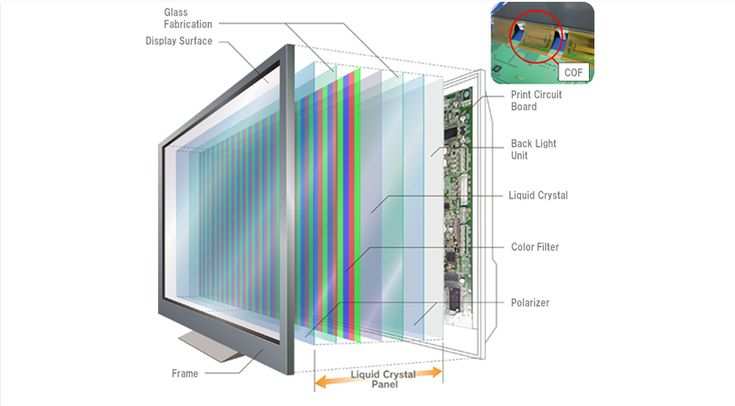
Here's where it gets tricky. Both MicroLED and OLED are self-emissive technologies, meaning each pixel produces its own light. That gives them a fundamental advantage over traditional LCD panels, which rely on a backlight and liquid crystal shutters.
No backlight means true blacks, infinite contrast ratio, and pixel-level dimming without blooming.
But the similarities end there. The underlying physics of how each technology produces light and color is fundamentally different. Those differences ripple through everything from calibration stability to how colors shift when you move off-center.
Manufacturer specifications indicate that both technologies can cover over 98% of the DCI-P3 color gamut. The real question isn't about gamut coverage. It's about how accurately the display maps input signals to the correct colors across the entire brightness range, from deep shadows to specular highlights.
How MicroLED and OLED Produce Color Differently
Understanding why these two technologies behave differently starts with how they actually generate light and color at the pixel level.
OLED: Organic Emitters with Color Filters or White Substrates
OLED pixels use organic compounds that emit light when electrical current passes through them. There are two main approaches in production displays:
RGB OLED: Each pixel has separate red, green, and blue sub-pixels. This is what Sony and Panasonic use in professional reference monitors. Color purity is excellent because each sub-pixel emits its native color directly.
WOLED (White OLED): LG Display's approach uses blue and yellow OLED emitters to create white light, which then passes through a color filter array to produce red, green, and blue. This is more cost-effective for large panels but introduces a slight efficiency penalty and potential color accuracy limitations from the filter layer.
The organic materials degrade over time, with blue sub-pixels typically aging fastest. This degradation can cause color drift, where white balance shifts toward warmer tones as the display ages. Modern OLED panels have compensation algorithms to mitigate this, but it's an inherent characteristic of the technology.
MicroLED: Inorganic Gallium Nitride Chips
MicroLED uses tiny inorganic gallium nitride (GaN) LED chips, typically under 100 micrometers in size, as individual sub-pixels. Each chip emits light at a specific wavelength depending on its semiconductor composition:
- Red MicroLED: Aluminum gallium arsenide (AlGaAs) or aluminum gallium indium phosphide (AlGaInP)
- Green MicroLED: Indium gallium nitride (InGaN)
- Blue MicroLED: Indium gallium nitride (InGaN)
The inorganic nature of these chips means they don't suffer from the same degradation mechanisms as organic materials. They can achieve much higher peak brightness levels, often exceeding 2,000 nits per individual chip, and maintain their color output characteristics over a significantly longer lifespan.
However, manufacturing consistency is a challenge. Each MicroLED chip has slight variations in peak wavelength and efficiency. When you place thousands of these chips side by side to build a display, those tiny variations can create visible color non-uniformity across the panel.
Manufacturers use binning (sorting chips by similar characteristics) and calibration to compensate, but it's an ongoing engineering challenge.
Color Accuracy Breakdown: Where Each Technology Stands
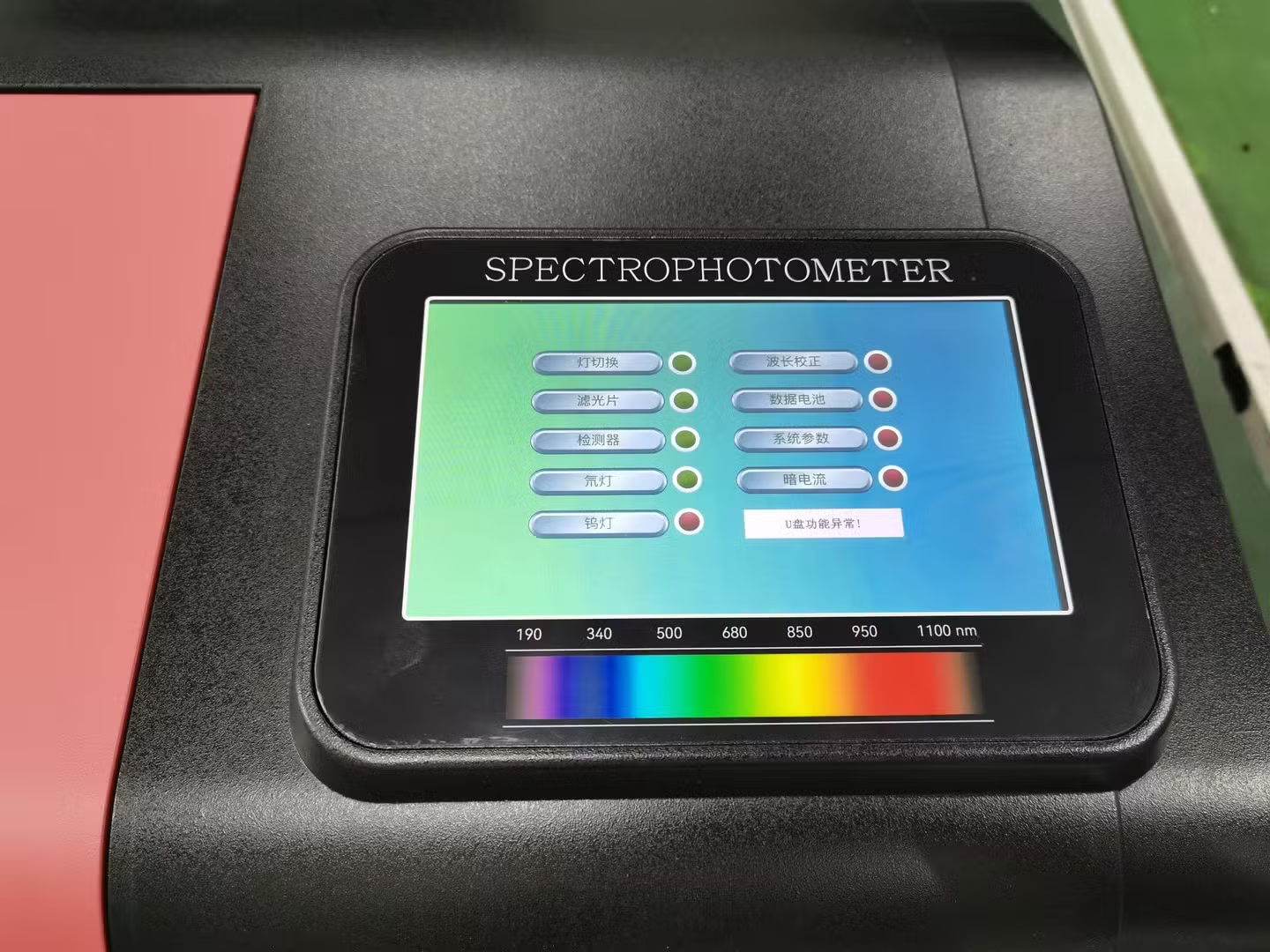
Image source: Bing (Web (fair-use with source credit))
Let's get into the specifics of how each technology performs across the key metrics that define color accuracy.
Delta E and Measured Color Performance
Delta E (ΔE) is the standard measurement for color accuracy. It calculates the difference between the displayed color and the reference color in a perceptually uniform color space. Lower is better.
| Metric | OLED (Professional Grade) | MicroLED (Current Generation) |
|---|---|---|
| Average ΔE (calibrated) | 0.5 – 0.8 | 0.8 – 1.5 |
| Maximum ΔE (calibrated) | 1.5 – 2.5 | 2.0 – 4.0 |
| White point accuracy (D65) | ±0.002 ΔE | ±0.005 ΔE |
| Gamma tracking (2.4/BT.1886) | Excellent | Very Good |
Professional OLED reference monitors from Sony, like the BVM-HX310, consistently achieve average Delta E values below 1.0 across the full color gamut. These are the displays used in Hollywood color grading suites where accuracy isn't just important, it's everything.
MicroLED displays, particularly Samsung's The Wall and similar modular systems, have improved significantly. But they still tend to show slightly higher Delta E values, particularly in saturated colors and near-neutral tones. The individual LED chip variations I mentioned earlier are the primary culprit.
Color Gamut Coverage and Volume
Both technologies can achieve impressive color gamut coverage. Here's how they compare:
- DCI-P3 coverage: OLED typically achieves 98-99.5%. MicroLED achieves 97-99%.
- Rec. 2020 coverage: OLED achieves 72-78%. MicroLED achieves 75-82%.
- Adobe RGB coverage: OLED achieves 97-99%. MicroLED achieves 95-98%.
Where MicroLED pulls ahead is in color volume, which accounts for brightness as well as hue and saturation. Because MicroLED can achieve much higher peak brightness levels, it can reproduce highly saturated colors at luminance levels where OLED would have to desaturate or clip.
This matters for HDR content. A bright red laser effect in a movie scene will look more vivid and accurate on MicroLED because the technology can actually hit the luminance level that the color requires. OLED might have to compromise on either saturation or brightness to stay within its thermal and power limits.
Brightness and Its Impact on Color Perception
Peak brightness directly affects how we perceive color. This is described by the Helmholtz-Kohlrausch effect, where more luminous colors appear more saturated to the human visual system.
| Specification | OLED (Consumer) | OLED (Professional) | MicroLED |
|---|---|---|---|
| Peak brightness (10% window) | 800-1,000 nits | 500-750 nits | 1,500-5,000+ nits |
| Peak brightness (full screen) | 150-250 nits | 100-170 nits | 400-1,000+ nits |
| Sustained HDR brightness | Limited by ABL | Limited by thermal | Significantly higher |
OLED's Automatic Brightness Limiter (ABL) restricts peak brightness based on how many pixels are lit simultaneously. A small bright highlight can hit high luminance, but a large bright area gets throttled down. This is a fundamental limitation of OLED's power delivery and thermal management.
MicroLED doesn't have this constraint to the same degree. Each LED chip operates independently, and the modular design allows for robust power delivery. This means MicroLED can maintain high brightness across larger screen areas, which translates to more consistent color volume in real-world HDR content.
Near-Black and Shadow Detail Color Accuracy
This is where OLED genuinely excels and where many professionals place their trust. Near-black performance is critical for shadow detail, dark scene rendering, and overall image depth.
OLED pixels can turn completely off. True zero luminance. This means that when the signal calls for near-black, OLED can reproduce it with extraordinary precision, maintaining color information even in the deepest shadows.
MicroLED LEDs, while they can dim significantly, don't achieve true zero emission. There's always a tiny residual glow, particularly in the blue and green chips. This means near-black reproduction on MicroLED can show slightly elevated black levels and reduced shadow detail separation compared to OLED.
For professional work in controlled lighting environments, this near-black accuracy is often more important than peak brightness capabilities. It's one reason why Sony's professional OLED monitors remain the reference standard in color critical applications.
Viewing Angle Color Consistency
Viewing angle performance matters more than most people realize. If you're working with a team reviewing content together, or if your seating position isn't perfectly centered, color shift off-axis becomes a real problem.
OLED maintains remarkably consistent color and luminance even at extreme viewing angles. The self-emissive nature means light is emitted from the surface of each pixel, with minimal internal layers to cause optical artifacts. You'll see less than 1.0 ΔE shift even at 45 degrees off-axis on quality panels.
MicroLED can exhibit more noticeable color shift at angles. The individual LED chips have directional emission profiles, and the packaging around each chip can create micro-shadows or color shifts when viewed off-center. This has improved with newer chip designs and lensing, but it remains a relative weakness compared to OLED.
Side-by-Side Comparison Table
Here's a comprehensive comparison across all the factors that matter for color accuracy:
| Factor | OLED | MicroLED | Winner |
|---|---|---|---|
| Calibrated Delta E (average) | 0.5 – 0.8 | 0.8 – 1.5 | OLED |
| Color gamut coverage (DCI-P3) | 98 – 99.5% | 97 – 99% | OLED (slight) |
| Color volume (HDR) | Good | Excellent | MicroLED |
| Peak brightness (highlights) | 800 – 1,000 nits | 1,500 – 5,000+ nits | MicroLED |
| Near-black accuracy | Exceptional | Very Good | OLED |
| Viewing angle color consistency | Excellent | Good | OLED |
| Color uniformity across panel | Very Good | Good (improving) | OLED |
| Long-term color stability | Good (with compensation) | Excellent | MicroLED |
| Burn-in risk | Present | None | MicroLED |
| Calibration ecosystem maturity | Extensive | Developing | OLED |
| Professional reference availability | Widely available | Limited | OLED |
| Cost per inch (consumer sizes) | Lower | Significantly higher | OLED |
| Maximum practical size | ~97 inches | Virtually unlimited | MicroLED |
Best Display Technology for Each Use Case
The "better" technology depends entirely on what you're doing and where you're doing it. Let's break down the major use cases.
Professional Color Grading and Post-Production
Winner: OLED
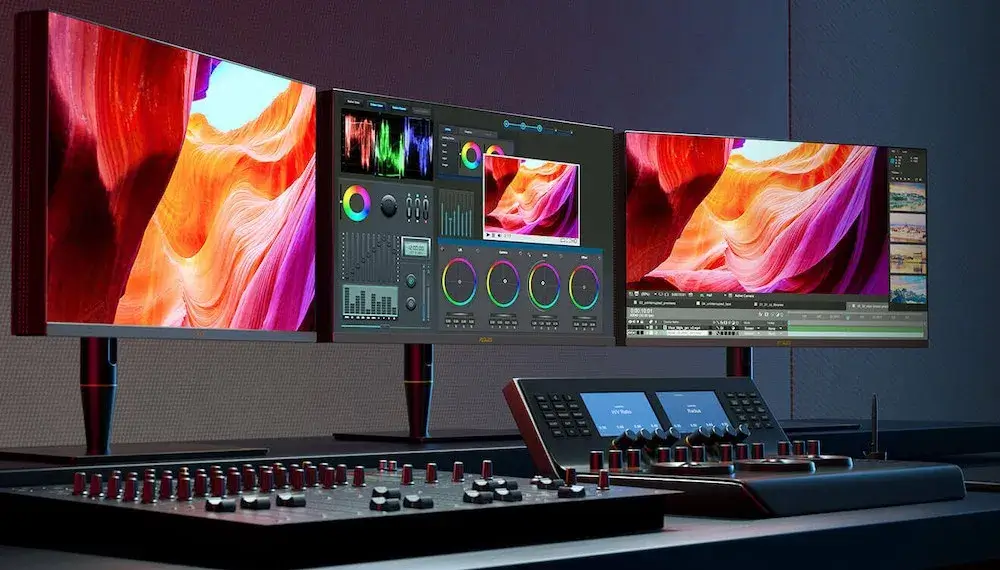
If you're doing professional color grading for film, broadcast, or streaming content, OLED remains the reference standard. Sony's BVM-HX3110 and similar professional OLED monitors are what colorists actually use in mastering suites.
Why OLED wins here:
- Lower out-of-box Delta E values
- Superior near-black accuracy for shadow grading
- Mature calibration ecosystem with 3D LUT support
- Consistent performance across the entire screen surface
- Industry trust and established workflows
The risk of burn-in is real but manageable in professional environments. These monitors have built-in compensation cycles, and professional users typically replace them on scheduled timelines anyway.
Bright Room Viewing and HDR Content
Winner: MicroLED
If your viewing environment has significant ambient light, a lot of windows, or you simply want HDR content to "pop" the way it's intended, MicroLED has a decisive advantage.
Why MicroLED wins here:
- Higher peak brightness overcomes ambient light washout
- Better color volume maintains saturation at high luminance
- No burn-in risk from static bright elements
- Better performance in commercial signage applications
HDR content is mastered with the assumption that displays can hit high luminance levels. MicroLED can actually deliver those luminance levels across meaningful screen areas, while OLED has to compromise.
Static UI and Burn-In Risk Scenarios
Winner: MicroLED
If you're displaying content with static elements for extended periods, burn-in becomes a serious concern. This applies to:
- Digital signage with fixed layouts
- Gaming HUDs
- Desktop computing with taskbars and menus
- Control room displays
MicroLED's inorganic emitters don't suffer from permanent burn-in. Temporary image retention can occur in some LED technologies, but true permanent degradation like OLED burn-in isn't a factor.
Large-Format Displays (100"+)
Winner: MicroLED
Above about 97 inches, your OLED options essentially disappear. The largest consumer OLED panels top out around 97 inches, and professional OLED monitors are typically 24-32 inches.
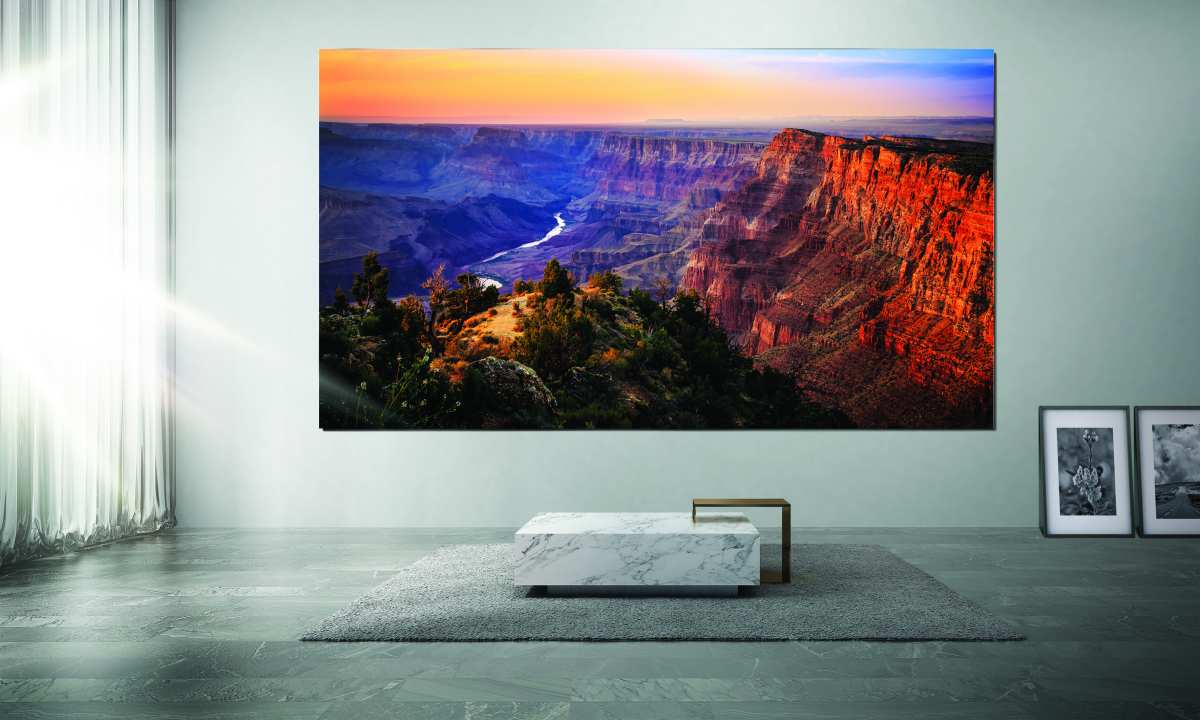
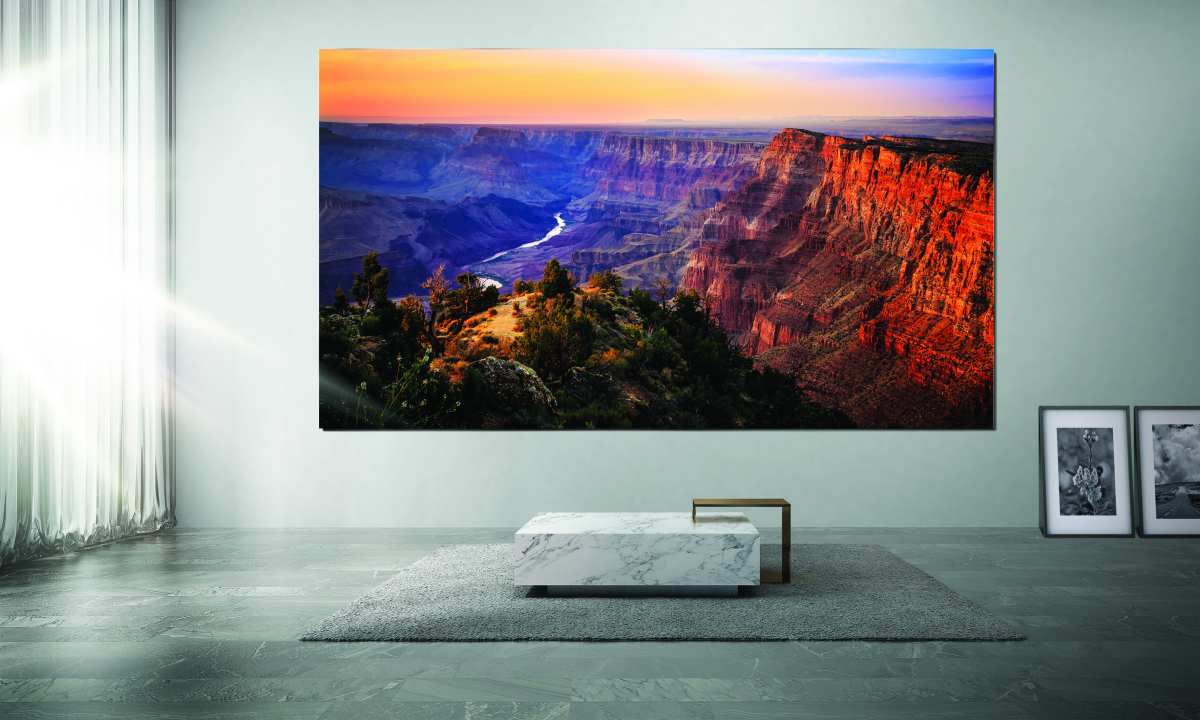
MicroLED is modular by nature. You can build displays of virtually any size by tiling together individual modules. Samsung's The Wall can be configured from 110 inches up to virtually unlimited sizes, and the technology scales without fundamental limitations.
Color accuracy in large-format MicroLED has improved significantly, though uniformity across module boundaries remains something to verify during installation.
Gaming and Mixed Usage
Winner: Depends on priorities
For gaming, both technologies offer excellent response times and low input lag. The choice comes down to:
- Choose OLED if: You play in a controlled lighting environment, you want the best near-black performance for atmospheric games, and you're not leaving static HUD elements on screen for thousands of hours.
- Choose MicroLED if: You game in a bright room, you play a lot of HDR content, you're concerned about burn-in from static UI elements, or you want a very large display.
Common Misconceptions About Color Accuracy in Displays
There are several persistent myths that muddy the waters when people compare these technologies.
"Higher resolution means better color accuracy"
Resolution and color accuracy are completely independent characteristics. A 4K display and an 8K display can have identical color accuracy if they use the same underlying panel technology and calibration. Resolution affects spatial detail, not color reproduction.
"Wider color gamut means more accurate color"
Color gamut describes the range of colors a display can produce. Color accuracy describes how closely those colors match the reference. A display with a wide gamut can still be inaccurate if the color mapping is wrong.
In fact, wide gamut displays without proper calibration often look worse than standard gamut displays with good calibration.
"MicroLED is just a bigger OLED"
While both are self-emissive, the underlying physics, manufacturing processes, and performance characteristics are fundamentally different. MicroLED uses inorganic semiconductor chips. OLED uses organic compounds.
They share the self-emissive advantage but diverge significantly in almost every other characteristic.
"OLED burn-in makes it unsuitable for any professional use"
Modern OLED panels have sophisticated compensation mechanisms, and the technology has proven reliable enough that Sony, Panasonic, and LG all offer professional OLED monitors. Burn-in is a consideration that requires management, not an automatic disqualification.
"Calibration makes all displays equal"
Calibration can improve any display, but it can't overcome fundamental hardware limitations. You can't calibrate away OLED's brightness constraints or MicroLED's near-black limitations. Calibration optimizes what the hardware can do, it doesn't create capabilities that don't exist.
What Calibration Can and Can't Fix
Calibration is crucial for color accuracy, but it has real limits. Understanding those limits helps you make a better purchasing decision.
What Calibration Fixes
- White balance errors: Adjusting the relative intensity of red, green, and blue to achieve the target white point (typically D65)
- Gamma curve deviations: Correcting the relationship between input signal values and displayed luminance
- Color matrix errors: Fixing hue and saturation inaccuracies across the color gamut
- Uniformity variations: Compensating for brightness or color differences across the panel surface
Professional calibration using a spectrophotometer or colorimeter can bring most displays to within excellent Delta E values. For OLED, this typically means average ΔE below 1.0. For MicroLED, the results are good but usually slightly higher.
What Calibration Cannot Fix
- Peak brightness limitations: If the display can't hit the luminance level required for a specific HDR color, calibration can't create that capability
- Near-black black level: If the display has a residual glow in black regions, calibration can't eliminate it without crushing shadow detail
- Viewing angle color shift: This is a physical characteristic of the panel design that calibration can't address
- Burn-in damage: Once organic materials have degraded unevenly, calibration can compensate to some degree but can't fully restore original uniformity
- Color volume constraints: The combination of gamut and brightness defines color volume, and calibration can't expand the physical limits
Calibration Workflow for Critical Color Work
For professional applications, the calibration process typically involves:
- Warm up the display for at least 30 minutes to reach stable operating temperature
- Set the target parameters: color temperature (D65), gamma (2.4 or BT.1886), luminance level (typically 100 nits for SDR reference)
- Measure the current performance using a calibrated reference instrument
- Generate correction data: either a simple 3-point white balance adjustment or a full 3D LUT
- Apply corrections through the display's internal LUT or an external processor
- Verify results with additional measurements across the color gamut
- Document the calibration settings and results for future reference
For OLED, this process is well-established with extensive tool support. For MicroLED, the calibration ecosystem is still developing, and some systems require manufacturer-specific tools or professional installation services.
Current Limitations Holding MicroLED Back
MicroLED has made remarkable progress, but several challenges remain that affect its color accuracy competitiveness.
Manufacturing Yield and Cost
Producing millions of microscopic LED chips, transferring them to a substrate with precision, and ensuring consistent characteristics across the entire display is extraordinarily difficult. Current manufacturing yields mean that MicroLED displays cost 5-10 times more than equivalent OLED panels at consumer sizes.
As of 2026, a 77-inch MicroLED display can cost $20,000 or more, while a comparable OLED panel might be $2,000-3,000. This cost differential limits MicroLED to commercial applications and ultra-premium consumer installations.
Color Uniformity Challenges
The individual LED chip variations I mentioned earlier create ongoing uniformity challenges. Even with binning and calibration, some displays show visible differences between modules or across the panel surface. This is sometimes called "mura effect" and can be distracting in content with large areas of uniform color like skies or studio backdrops.
Manufacturers are improving chip sorting and calibration processes, but this remains an area where OLED's more uniform organic layer deposition has an inherent advantage.
Calibration Ecosystem Maturity
The professional calibration ecosystem for OLED is mature and well-supported. Major calibration software like CalMAN, LightSpace, and DisplayCAL have extensive OLED support with optimized measurement procedures and correction algorithms.
MicroLED support in these tools is still developing. Some displays require proprietary calibration procedures or manufacturer-specific tools. This can make professional calibration more complex and expensive for MicroLED installations.
Near-Black Performance
The inability of MicroLED chips to achieve true zero emission affects near-black color accuracy. In dark scenes, this can manifest as slightly elevated black levels or reduced shadow detail separation. For critical viewing in controlled environments, this is a meaningful limitation.
Research into improved black levels for MicroLED is ongoing, with approaches including better chip isolation and local dimming at the sub-pixel level. But as of 2026, OLED maintains a clear advantage in this specific characteristic.
Frequently Asked Questions
Is MicroLED more color accurate than OLED?
Generally no. OLED typically achieves lower Delta E values and better near-black accuracy. MicroLED wins on color volume and brightness but trails on pure color accuracy metrics.
Does MicroLED have better color than OLED in bright rooms?
Yes. MicroLED's higher peak brightness means it maintains color saturation and accuracy in ambient light where OLED would appear washed out.
Will MicroLED eventually surpass OLED for color accuracy?
Possibly. As manufacturing improves and calibration tools mature, MicroLED could match or exceed OLED in most metrics. But OLED technology is also advancing, so it's a moving target.
Is OLED burn-in a real concern for color accuracy?
Yes, uneven degradation can cause color drift over time. Modern OLED panels have compensation mechanisms, but long-term color stability requires management.
Should I choose MicroLED or OLED for photo editing?
For most photo editing work in controlled lighting, OLED offers better accuracy and value. MicroLED makes sense if you work in bright environments or need a very large display.
How often should I calibrate for color accuracy?
Professional users typically calibrate monthly. Enthusiasts can calibrate quarterly. Both technologies benefit from regular recalibration to maintain accuracy over time.
Final Verdict: Which Should You Choose?
Here's the straightforward answer based on everything we've covered.
Choose OLED if color accuracy is your top priority. It delivers lower Delta E values, better near-black performance, and more consistent uniformity. The mature calibration ecosystem means you can trust what you're seeing, and the cost per inch is far more reasonable. For professional color work in controlled environments, OLED remains the reference standard for good reason.
Choose MicroLED if you need brightness, longevity, or size. It wins on color volume in bright rooms, completely eliminates burn-in risk, and scales to sizes OLED can't touch. The color accuracy gap is narrowing, and for many real-world viewing scenarios, the difference won't matter to your eyes.
The honest truth is that both technologies are excellent. The "wrong" choice is only the one that ignores your actual viewing conditions and use case. If you're grading a film in a dark suite, OLED is your tool.
If you're building a massive HDR display for a sunlit living room, MicroLED makes more sense.
As manufacturing improves and prices drop, MicroLED will likely close the accuracy gap. But as of 2026, OLED still holds the precision crown for color-critical work.

Similar Posts