Are Microled Monitors Necessary for Professionals
Here's the honest answer: for most professionals, MicroLED monitors aren't necessary right now. The technology is genuinely impressive, but the price, availability, and practical realities mean that for the vast majority of professional workflows, existing display technologies do the job well enough. That said, if your work demands absolute color accuracy at extreme HDR brightness, zero burn-in risk over years of 24/7 use, or seamless large-format display walls, MicroLED starts making a lot more sense.
The tricky part is that "professional" covers a huge range of work. A colorist finishing a Netflix series has completely different needs than a radiologist reviewing scans or a day trader staring at charts all day. So rather than give you a blanket yes or no, let's walk through this step by step so you can figure out where you actually fall.
Quick Answer
MicroLED monitors are not necessary for most professionals in 2026. OLED and Mini-LED displays handle the majority of professional workflows at a fraction of the cost. MicroLED makes sense only for specific high-end use cases like HDR mastering, medical imaging, and large-format display walls.
For general professional work, the premium is hard to justify.
How MicroLED Actually Works (And Why It Matters for Professional Work)
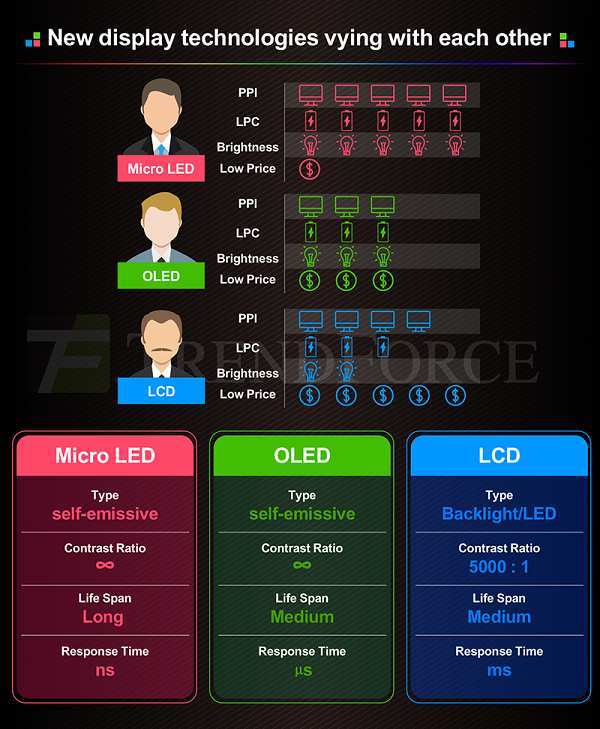
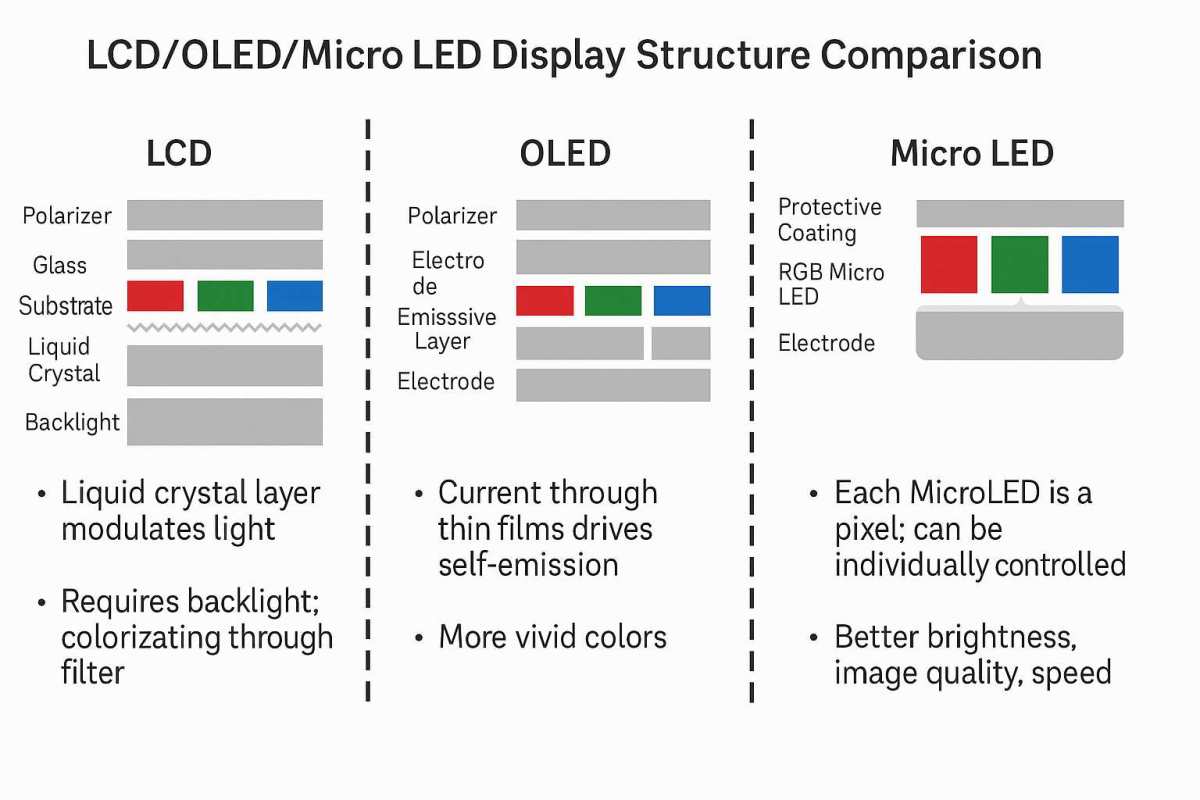
MicroLED is a self-emissive display technology, meaning each individual pixel produces its own light. If you've worked with OLED monitors before, that concept sounds familiar. The critical difference is the material.
OLED uses organic compounds that degrade over time. MicroLED uses inorganic gallium nitride (GaN) LEDs, the same basic technology you'd find in a high-end commercial LED sign, just shrunk down to microscopic pixel sizes.
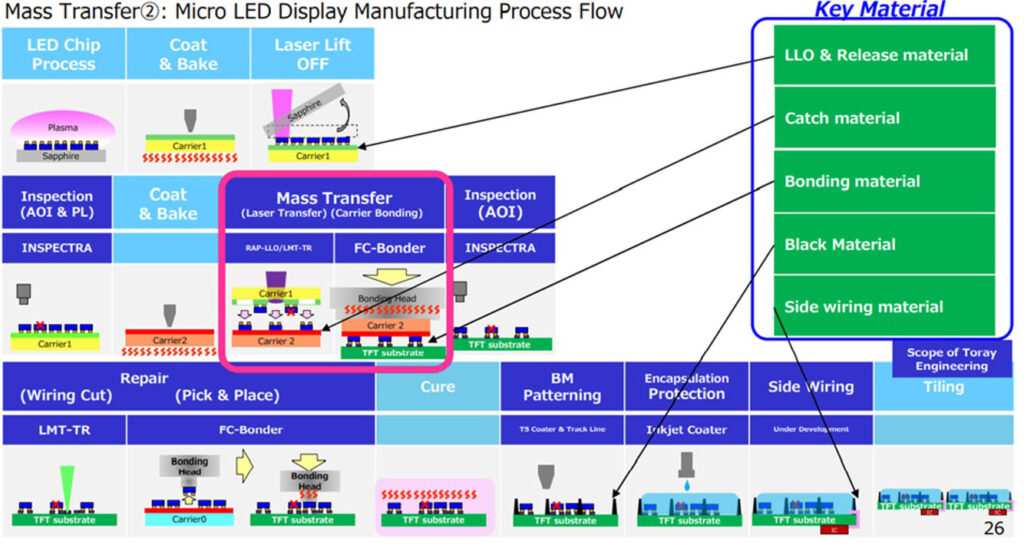
Each pixel contains red, green, and blue MicroLED chips, often smaller than 50 micrometers across. These sit directly on the display substrate with no backlight, no liquid crystal layer, and no organic material to break down. When a pixel needs to be black, it simply turns off completely.
When it needs to be bright, it pumps out light at levels that OLED physically can't sustain without risking accelerated degradation.
For professional work, this matters in a few concrete ways. You get true infinite contrast because black pixels emit zero light. You get sustained high brightness, often 1,000 to 2,000 nits, without the burn-in concerns that come with OLED.
And you get extremely fast pixel response times because LEDs switch at nanosecond speeds. Manufacturer specifications from Samsung Display and Sony's CLEDIS division confirm these performance characteristics across their professional product lines.
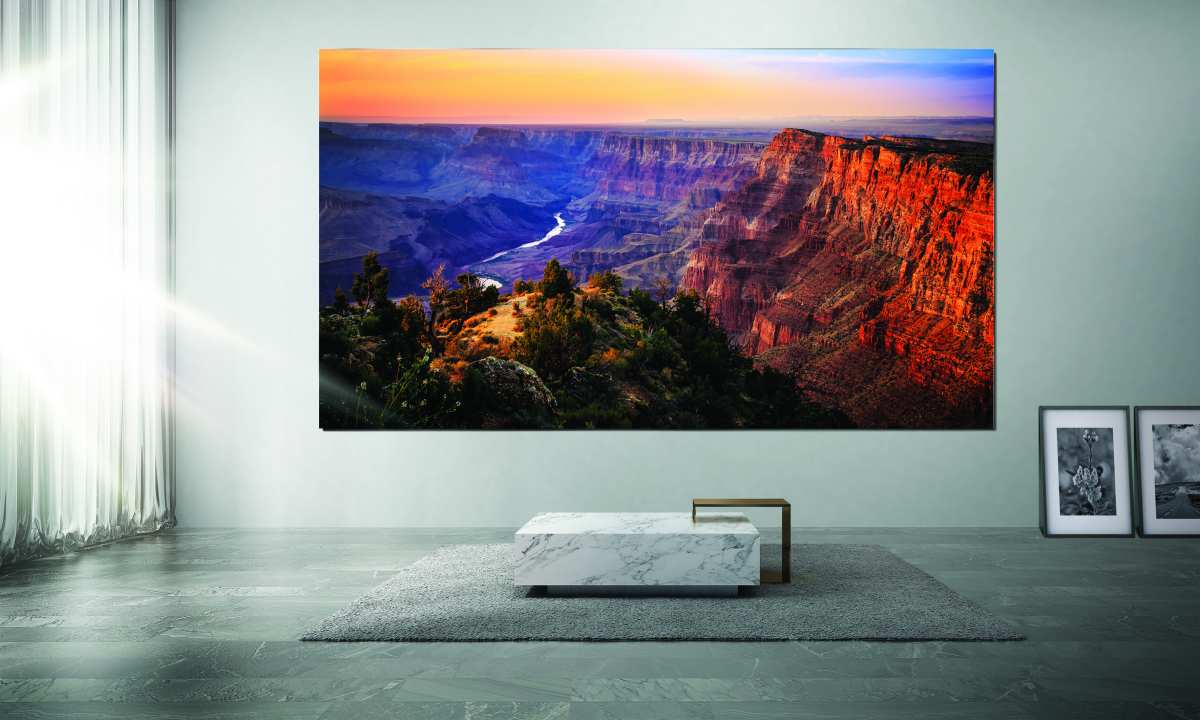
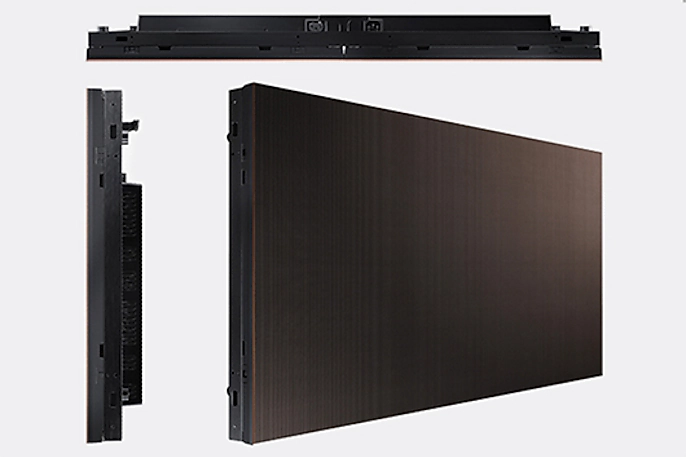
The modular nature is another key factor. MicroLED panels can be tiled together to create massive, near-seamless display walls. This isn't just a marketing feature.
Broadcast studios, control rooms, and corporate installations actively use this capability today. Samsung's The Wall and Sony's Crystal LED systems are shipping products, not prototypes.
What Gives MicroLED Its Edge
Let's break down the specific advantages that matter for professional users.
Zero burn-in risk. This is the big one for anyone running static UI elements all day. OLED panels can retain ghost images of taskbars, channel logos, or spreadsheet grids over time. MicroLED's inorganic LEDs don't suffer from this degradation mechanism.
For medical imaging, air traffic control, and broadcast monitoring, this isn't a luxury. It's a requirement.
Sustained peak brightness. Professional HDR mastering requires displays that can hit and hold high brightness levels across the panel. OLED can spike brightness on small highlights, but full-screen sustained brightness is limited by thermal and degradation concerns. MicroLED panels from Samsung's professional lineup are rated for 2,000 nits peak with significantly better thermal management at full-screen loads.
True infinite contrast. Because each pixel is independently emissive and can turn completely off, the contrast ratio is effectively infinite. There's no backlight bleed, no blooming around bright objects on dark backgrounds, and no halo effect. For color grading work in Dolby Vision or HDR10+, this pixel-level precision is exactly what mastering engineers need.
Modular scalability. You can tile MicroLED modules into virtually any size or aspect ratio. A 219-inch diagonal display wall isn't a single massive panel. It's a grid of smaller modules that align with minimal visible seams.
This makes installation in studio environments and control rooms far more practical than shipping a single enormous panel.
Wide color gamut coverage. Current MicroLED professional displays achieve over 99% DCI-P3 coverage, with Rec. 2020 coverage improving with each generation. As of 2026, this puts them at the top tier for color-critical work, alongside the best OLED and QD-OLED alternatives.
Long lifespan. Inorganic LED materials degrade far more slowly than organic compounds. Manufacturer estimates place MicroLED lifespan at 100,000 hours or more to half-brightness, compared to roughly 50,000 to 70,000 hours for typical OLED panels under professional use conditions.
Where MicroLED Falls Short for Professional Use
Now let's talk about why most professionals are better off looking elsewhere.
The price is staggering. A professional MicroLED display wall from Samsung or Sony starts around $100,000 for a modest configuration and can easily exceed $500,000 for a large, high-resolution installation. Even Samsung's consumer-facing MicroLED products, like the 110-inch The Wall, sit in the $80,000 to $150,000 range. Compare that to a top-tier professional OLED monitor like the Sony BVM-HX310 at around $45,000, or a high-end Mini-LED reference display for under $10,000.
Pixel pitch limits desktop practicality. Most MicroLED products are designed for large-format viewing at distance. The pixel pitch on current professional MicroLED modules ranges from about 0.7mm to 1.5mm. For a desktop monitor viewed at arm's length, you'd want sub-0.5mm pixel pitch for a sharp image at 4K resolution.
That density is improving but isn't widely available in professional-grade products yet.
Availability is extremely limited. You can't just order a MicroLED professional monitor from a catalog and have it next week. These are largely B2B products sold through professional AV integrators. Lead times, custom configuration, and installation requirements add weeks or months to any project.
Calibration ecosystem is immature. Professional color calibration tools from X-Rite and Calibrite work well with LCD and OLED displays. MicroLED's unique emission characteristics and modular construction create calibration challenges that the current toolset doesn't fully address. Uniformity correction across tiled modules, color shift at different brightness levels, and module-to-module variation all require specialized workflows.
Power consumption and heat. At sustained high brightness, MicroLED panels draw significant power and generate substantial heat. This isn't a problem in a properly designed studio installation with climate control. But it does add to operating costs and requires adequate ventilation planning.
The "good enough" problem. Here's the reality that's hard to ignore. A $5,000 Mini-LED monitor with 1,152 local dimming zones delivers 95% of the visual performance that most professionals need. A $15,000 QD-OLED monitor gets even closer.
The jump from those to MicroLED is real but incremental, not transformative for most workflows.
MicroLED vs. Your Actual Alternatives
This is where the decision gets practical. Let's compare MicroLED against the technologies you'd actually be choosing between.
MicroLED vs. OLED (The Burn-In Question)
OLED, including QD-OLED, is the most direct competitor for color-critical professional work. The latest generation of QD-OLED panels from LG Display and Samsung Display deliver exceptional color accuracy, near-instant pixel response, and excellent HDR performance.
Where OLED wins: Lower cost, mature calibration ecosystem, better pixel density for desktop-sized panels, wider product selection, and proven reliability in professional environments. The Sony BVM-HX310 and ASUS ProArt PA32UCG are established reference monitors with extensive professional reviews backing their performance.
Where MicroLED wins: Sustained brightness without burn-in risk, longer lifespan, and modular scalability. If your workflow involves static elements on screen for extended periods, or if you need a display that will run 12 to 16 hours a day for years without degradation concerns, MicroLED has a genuine advantage.
The honest assessment: For most video editors, photographers, and designers, a high-end QD-OLED monitor is the better buy in 2026. The burn-in risk is real but manageable with proper workflow habits. MicroLED's advantages only become decisive in specific high-duty-cycle scenarios.
MicroLED vs. Mini-LED (The Price-to-Performance Debate)
Mini-LED backlit LCD technology has improved dramatically. Displays like the Apple Pro Display XDR and ASUS ProArt PA32UCG use thousands of local dimming zones to achieve contrast ratios that were impossible with traditional LED backlights.
Where Mini-LED wins: Price, availability, pixel density, and professional calibration support. You can buy a professional Mini-LED reference monitor for $3,000 to $10,000 that covers 99%+ of DCI-P3 and delivers excellent HDR performance. The ecosystem of calibration tools, ICC profiles, and professional reviews is mature and well-documented.
Where MicroLED wins: True per-pixel dimming eliminates blooming and halo artifacts entirely. Sustained brightness is higher. And the modular form factor enables display sizes that Mini-LED can't practically achieve.
The honest assessment: Mini-LED is the sweet spot for most professionals. It delivers excellent performance at a reasonable price, with none of the availability or calibration challenges of MicroLED. Unless you specifically need the absolute best HDR performance or a large-format display wall, Mini-LED is likely the smarter investment.
Quick Comparison Table
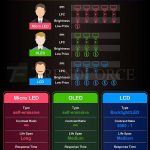
| Factor | MicroLED | QD-OLED | Mini-LED LCD |
|---|---|---|---|
| Price range | $80K–$500K+ | $3K–$45K | $2K–$15K |
| Burn-in risk | None | Moderate | None |
| Peak sustained brightness | 1,000–2,000+ nits | 700–1,000 nits | 600–1,600 nits |
| Contrast ratio | Infinite | Near-infinite | Very high (zone-dependent) |
| Color gamut (DCI-P3) | 99%+ | 99%+ | 98–99% |
| Pixel density (desktop) | Limited | Excellent | Excellent |
| Calibration ecosystem | Immature | Mature | Mature |
| Modular/scalable | Yes | No | No |
| Best for | Large walls, 24/7 use | Color-critical HDR | General professional |
The Professional Decision Framework
Rather than telling you what to buy, let's walk through a decision framework that accounts for your actual situation.
Step 1: What Type of Professional Work Do You Actually Do?
This is the most important question. Your workflow determines which display characteristics actually matter.
If you do HDR color grading for cinema or premium streaming: You need sustained high brightness, perfect blacks, and wide color gamut. MicroLED is genuinely excellent here, but so is QD-OLED. The deciding factor is whether you can tolerate OLED's burn-in risk over a 3-to-5-year display lifecycle.
If you do medical imaging or diagnostic review: You need consistent brightness, zero burn-in risk, and long-term reliability. MicroLED's inorganic longevity is a real advantage. Medical-grade displays also require specific certifications that not all MicroLED products carry, so verify compliance with relevant standards.
If you do photography, print design, or general video editing: You need accurate color, good contrast, and reasonable brightness. A high-end Mini-LED or QD-OLED monitor will serve you well. MicroLED offers marginal improvements that won't meaningfully change your output.
If you do software development, office work, or financial analysis: You need a comfortable, reliable display for long hours. Any modern professional monitor will do. MicroLED is massive overkill.
Step 2: What Are Your Display Pain Points Right Now?
Be honest about what's actually bothering you with your current setup.
If your current display can't get bright enough for HDR work: Mini-LED and MicroLED both solve this better than standard LCD. QD-OLED is improving but still lags in sustained full-screen brightness.
If you're seeing burn-in on your current OLED: MicroLED eliminates this entirely. It's the only current technology that matches OLED's per-pixel emissive quality without organic degradation.
If you need a display larger than 85 inches: MicroLED's modular design is the practical solution. No other technology scales to 150+ inches as cost-effectively or as installably.
If you're happy with your current display's image quality: You probably don't need MicroLED. The improvements are real but incremental for most workflows.
Step 3: What's Your Real Budget (Not Just for the Panel)?
The display panel is only part of the cost. Factor in the full picture.
MicroLED total cost of ownership includes:
- Display modules: $80,000 to $500,000+
- Professional installation and mounting: $5,000 to $50,000
- Calibration and configuration: $2,000 to $10,000
- Climate control considerations: Variable
- Maintenance and module replacement fund: Budget 5, 10% of initial cost annually
QD-OLED total cost of ownership includes:
- Display: $3,000 to $45,000
- Calibration tools: $200 to $2,000
- Replacement after 4, 6 years if burn-in becomes noticeable
Mini-LED total cost of ownership includes:
- Display: $2,000 to $15,000
- Calibration tools: $200 to $2,000
- Longer lifespan than OLED, typically 7, 10 years before significant degradation
Step 4: How Long Do You Need This Display to Last?
Display technology lifecycles matter for professional planning.
If you refresh your display every 2, 3 years: MicroLED's longevity advantage is irrelevant. Buy the best-performing display for your budget today, which likely means QD-OLED or Mini-LED.
If you need a 5+ year display with minimal degradation: MicroLED's inorganic materials give it a genuine edge. OLED will show measurable degradation over that timeframe under professional use conditions. Mini-LED LCD backlights also dim over time, though more slowly than OLED organic compounds.
If you run displays 12+ hours per day: The burn-in and degradation calculus shifts. MicroLED becomes more attractive for high-duty-cycle environments like broadcast studios, control rooms, and medical facilities.
Scenarios Where MicroLED Makes Sense for Professionals
Let's get specific about who should actually be looking at MicroLED in 2026.
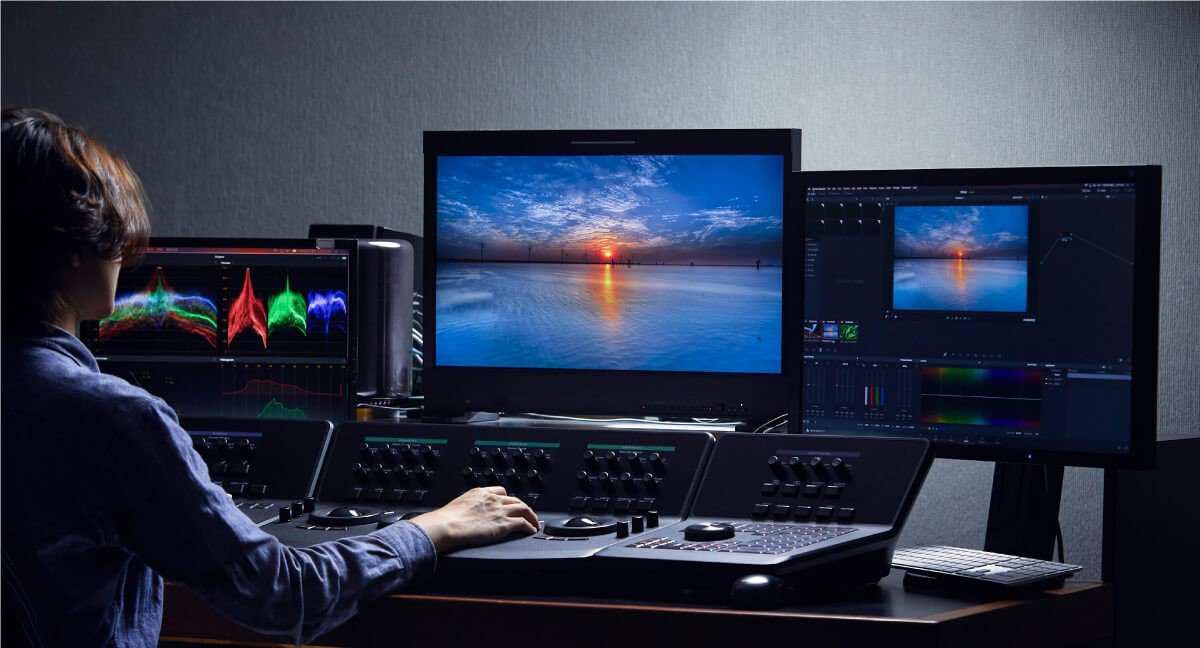
Scenario A: HDR Color Grading for Cinema or Premium Streaming
If you're finishing content for Netflix, Disney+, or theatrical release, you're working in HDR with strict delivery specifications. The content needs to be mastered on a display that can hit 1,000+ nits with accurate color across the entire brightness range. MicroLED delivers this without the burn-in concerns that come with running bright HDR content on OLED for hours every day.
Sony's Crystal LED systems are already in use in post-production facilities for exactly this reason.
Scenario B: Medical Imaging and Diagnostic Review
Radiologists and pathologists review medical images on displays that must maintain consistent brightness and color accuracy over years of daily use. Burn-in of UI elements or reference markers is unacceptable. MicroLED's zero burn-in risk and long lifespan make it technically ideal for this application.
The challenge is that medical displays require specific regulatory certifications, and the MicroLED product ecosystem for medical use is still developing.
Scenario C: Corporate Command Centers and Broadcast Studios
24/7 operations with static UI elements are where MicroLED's advantages are most compelling. Broadcast studios running news tickers, control rooms displaying fixed dashboards, and corporate operations centers all benefit from a display that won't retain ghost images over time. The modular design also allows for custom display configurations that match specific room layouts.
Scenario E: High-End Client Presentation Environments
If your work involves impressing clients in a dedicated screening room or presentation space, MicroLED's visual impact is undeniable. The seamless tiling, extreme brightness, and perfect blacks create a viewing experience that no other technology matches. This is less about technical necessity and more about the statement the technology makes.
Scenarios Where MicroLED Is Overkill
Now let's be honest about who doesn't need this technology.
Software Development and General Office Work
If your primary work involves writing code, reviewing documents, or managing projects, you need a comfortable, sharp display with good ergonomics. A $500 to $2,000 IPS or Mini-LED monitor will serve you perfectly. MicroLED offers nothing meaningful for text-based work that justifies its cost.
Photography and Standard Photo Editing
Photo editing requires accurate color and good contrast, but it doesn't demand the extreme HDR brightness or 24/7 durability that MicroLED provides. A calibrated QD-OLED or Mini-LED monitor covers the color spaces photographers work in (sRGB, Adobe RGB, DCI-P3) with excellent accuracy. The money you'd spend on MicroLED is better invested in lenses, lighting, or a better camera body.
Most Freelance Video Editing and Content Creation
If you're editing YouTube content, corporate videos, or independent films, your clients are viewing on standard displays. Your deliverables are typically SDR or basic HDR. A $3,000 to $5,000 professional monitor gives you everything you need for this work.
MicroLED's advantages only matter at the highest tiers of post-production for major studios and streaming platforms.
What MicroLED Monitors Actually Cost in Practice
Let's put real numbers on this so you can make an informed decision.
Samsung The Wall (Consumer MicroLED): The 110-inch model starts around $100,000. The 178-inch model pushes past $200,000. These are consumer products, not professional reference displays, but they give a sense of the pricing floor.
Sony Crystal LED (Professional MicroLED): Sony's CLEDIS systems are sold through professional AV integrators. A 16K display wall configuration can exceed $500,000. Smaller professional configurations start in the $150,000 to $200,000 range.
Professional AV Installation Costs: Beyond the display modules itself, expect to pay $10,000 to $50,000 for professional installation, mounting infrastructure, and initial calibration. This isn't a plug-and-play product. It requires specialized integrators.
Comparison for context: The Sony BVM-HX310, a 4K HDR reference monitor widely considered the gold standard for color-critical work, costs approximately $45,000. The Apple Pro Display XDR with nano-texture glass is $6,000. A high-end ASUS ProArt Mini-LED monitor is under $4,000.
The price gap is enormous. For most professionals, that $100,000+ difference is better spent elsewhere in their workflow.
Common Mistakes Professionals Make When Evaluating MicroLED
Mistake 1: Assuming newer technology is always better. MicroLED is impressive, but "better technology" doesn't automatically mean "better for your specific work." Evaluate based on your actual workflow requirements, not spec sheet appeal.
Mistake 2: Ignoring total cost of ownership. The display modules are just the beginning. Installation, calibration, maintenance, and climate control all add significant costs over the life of the product.
Mistake 3: Underestimating the calibration challenge. If you're used to calibrating LCD or OLED displays with standard tools, MicroLED's modular construction and unique emission characteristics will require additional expertise. Budget for professional calibration services, not just the hardware.
Mistake 4: Buying for the wrong reasons. If you're choosing MicroLED because it's the most impressive technology available rather than because your workflow demands its specific advantages, you're spending money for bragging rights, not practical benefit.
Mistake 5: Not considering the timeline. If you need a display solution next month, MicroLED's lead times and installation requirements may not work. Plan for 2 to 6 months from initial consultation to completed installation for a professional MicroLED system.
Will MicroLED Become the Standard? (And Should You Wait?)
MicroLED technology is on a clear improvement trajectory. Manufacturing costs are decreasing, pixel density is improving, and the calibration ecosystem is maturing. Industry analysts project that MicroLED costs could drop 50% or more over the next five to seven years as manufacturing scales and yields improve.
Several major technology companies, including Apple, Samsung, and LG, have invested heavily in MicroLED research and development. Apple has explored MicroLED for future devices, though its efforts have faced significant technical challenges. Samsung continues to expand its The Wall product line with each generation.
The technology's advantages are real and durable. Inorganic LEDs won't lose their fundamental benefits over organic alternatives. As manufacturing matures and costs decrease, MicroLED will likely become more accessible for professional use.
But here's the practical reality. Display technology is always improving. If you wait for MicroLED to become affordable, you'll be waiting while your current workflow suffers.
The best display for your professional work is the one that meets your needs today, at a price that makes sense for your budget.
If you're planning a major facility build-out in the next 3 to 5 years, it's worth including MicroLED in your technology roadmap. If you need a display for active work right now, the current generation of QD-OLED and Mini-LED monitors will serve you well.
Frequently Asked Questions
Is MicroLED better than OLED for professional video editing?
MicroLED offers higher sustained brightness and zero burn-in risk, which are genuine advantages for long editing sessions. However, QD-OLED matches or exceeds MicroLED in color accuracy and contrast for most editing workflows. For most video editors, QD-OLED is the better value unless burn-in is a specific concern.
How long do MicroLED monitors last compared to OLED?
MicroLED panels are rated for 100,000+ hours to half-brightness, roughly double the 50,000 to 70,000 hour lifespan of typical OLED panels under professional use conditions. This makes MicroLED more suitable for 24/7 operations where display replacement is costly or disruptive.
Can I use a MicroLED monitor for standard office work?
Technically yes, but it's extremely impractical. The cost is unjustifiable for office work, and current MicroLED products are optimized for large-format viewing rather than desktop use. A standard IPS or Mini-LED office monitor is the appropriate choice.
What's the cheapest MicroLED display available?
As of 2026, Samsung's The Wall consumer line starts around $80,000 for a 110-inch configuration. There are no budget MicroLED options. The technology remains firmly in the premium tier, with professional-grade systems costing significantly more.
Does MicroLED support professional color calibration standards?
MicroLED displays can be calibrated, but the ecosystem of tools and workflows is less mature than for LCD and OLED displays. Professional calibration requires specialized expertise, particularly for tiled modular installations where uniformity correction across modules adds complexity.
Should I wait for MicroLED prices to drop before buying a professional monitor?
If you need a display for active work today, buy the best option that meets your current needs. MicroLED prices will decrease over time, but waiting means working with inadequate equipment in the meantime. If you're planning a facility build-out several years away, factor MicroLED into your technology roadmap.
The Decision Tree
Here's a quick way to figure out where you land.
If your work involves HDR mastering for cinema or premium streaming, AND your budget exceeds $100,000, AND you need a display that runs 8+ hours daily without burn-in concerns: MicroLED is worth serious consideration. Look at Sony's Crystal LED or Samsung's The Wall Professional tier.
If you do color-critical work but your budget is under $50,000: A QD-OLED reference monitor like the Sony BVM-HX3110 or ASUS ProArt PA32UCG will serve you better. You'll get proven calibration support and excellent performance without the installation complexity.
If you need a display larger than 100 inches for a studio, control room, or presentation space: MicroLED is the only practical option. No other technology scales to that size with comparable image quality and installability.
If you're a photographer, video editor, designer, or general creative professional with a budget under $15,000: Invest in a high-end Mini-LED or QD-OLED monitor. Spend the savings on calibration tools, better lighting for your workspace, or other equipment that directly improves your output.
If you're doing software development, office work, or any task that's primarily text-based: Any modern professional monitor will do. Put your budget into ergonomic furniture and a good chair instead.
Final Verdict
MicroLED monitors are not necessary for most professionals in 2026. The technology delivers genuine advantages in specific high-end scenarios, but for the vast majority of professional workflows, QD-OLED and Mini-LED monitors provide excellent performance at a fraction of the cost.
If your work demands the absolute best HDR performance, zero burn-in risk over years of heavy use, or a large-format display wall, MicroLED is the right choice. For everyone else, the smart move is to invest in a proven professional monitor today and revisit MicroLED when prices drop and the ecosystem matures over the next five to seven years.
The best display is the one that meets your actual needs, not the one with the most impressive spec sheet.
The Decision Tree
Here's a quick way to figure out where you land.
If your work involves HDR mastering for cinema or premium streaming, AND your budget exceeds $100,000, AND you need a display that runs 8+ hours daily without burn-in concerns: MicroLED is worth serious consideration. Look at Sony's Crystal LED or Samsung's The Wall Professional tier.
If you do color-critical work but your budget is under $50,000: A QD-OLED reference monitor like the Sony BVM-HX3110 or ASUS ProArt PA32UCG will serve you better. You'll get proven calibration support and excellent performance without the installation complexity.
If you need a display larger than 100 inches for a studio, control room, or presentation space: MicroLED is the only practical option. No other technology scales to that size with comparable image quality and installability.
If you're a photographer, video editor, designer, or general creative professional with a budget under $15,000: Invest in a high-end Mini-LED or QD-OLED monitor. Spend the savings on calibration tools, better lighting for your workspace, or other equipment that directly improves your output.
If you're doing software development, office work, or any task that's primarily text-based: Any modern professional monitor will do. Put your budget into ergonomic furniture and a good chair instead.
Final Verdict
MicroLED monitors are not necessary for most professionals in 2026. The technology delivers genuine advantages in specific high-end scenarios, but for the vast majority of professional workflows, QD-OLED and Mini-LED monitors provide excellent performance at a fraction of the cost.
If your work demands the absolute best HDR performance, zero burn-in risk over years of heavy use, or a large-format display wall, MicroLED is the right choice. For everyone else, the smart move is to invest in a proven professional monitor today and revisit MicroLED when prices drop and the ecosystem matures over the next five to seven years.
The best display is the one that meets your actual needs, not the one with the most impressive spec sheet.

Similar Posts