Do Microled Monitors Support High Refresh Rates
If you've been eyeing MicroLED as your next monitor and wondering whether it can keep up with high refresh rates, you're asking the right question at the right time. Do MicroLED monitors support high refresh rates? The short answer is yes, in theory, but the practical reality as of 2026 is more complicated than a simple spec sheet might suggest.
MicroLED technology is capable of pixel switching speeds measured in nanoseconds, which puts it well ahead of even the fastest OLED panels on paper. But here's the catch: true MicroLED monitors for desktop use barely exist as a consumer product category right now. Let's break down what's actually available, what's coming, and what you should buy instead if you need high refresh rates today.
Quick Answer
MicroLED technology supports high refresh rates in theory. Nanosecond pixel switching enables refresh rates well beyond 240Hz. However, no consumer desktop MicroLED monitor with confirmed high refresh shipping as of 2026.
Current MicroLED products are large-format displays running at 60Hz to 120Hz. True high-refresh MicroLED monitors remain in prototype and early production stages.
Why This Question Is Harder Than It Sounds
Most people asking this question are coming from one of two camps. Either they're a competitive gamer chasing every millisecond of advantage, or they're a professional who needs buttery-smooth motion for video work. Both groups have heard that MicroLED is the "next big thing" and want to know if it's worth the wait.
The confusion starts because the term "MicroLED" gets thrown around loosely. Samsung, Sony, and a handful of Chinese manufacturers have been showing off MicroLED displays at CES and other trade shows for years. Those demos look spectacular.
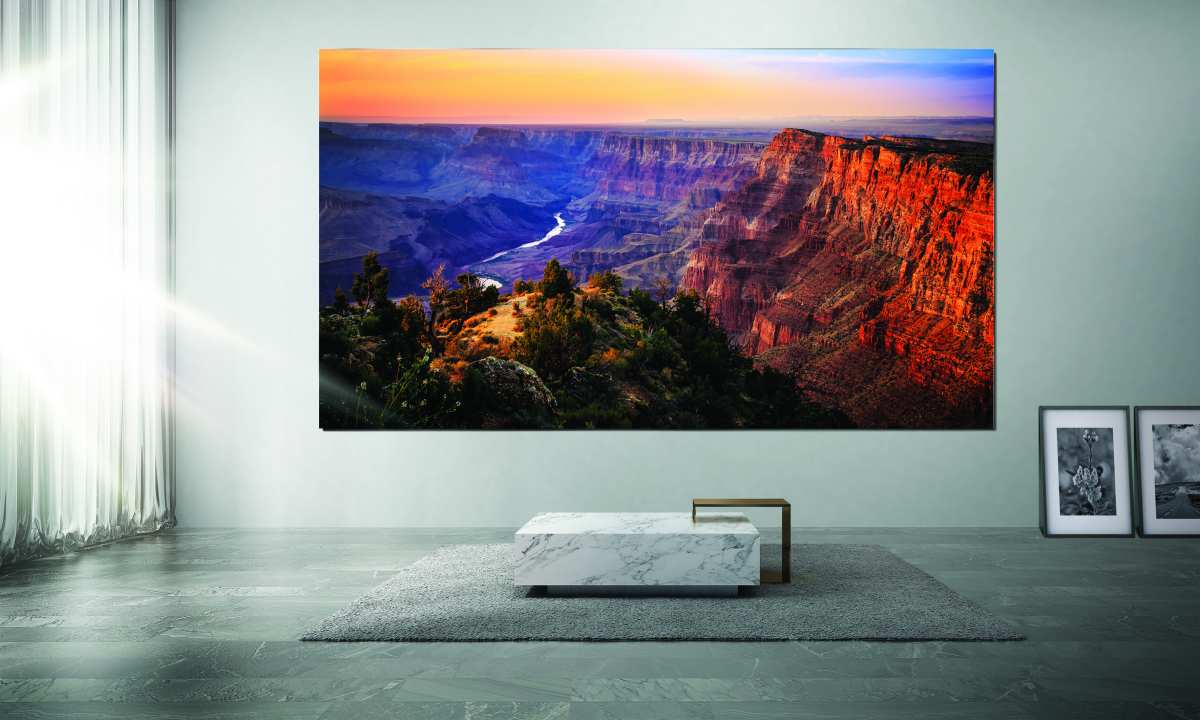
But there's a massive gap between a 110-inch modular display wall costing six figures and a 27-inch gaming monitor you can actually put on your desk.
Here's what makes this tricky. The underlying technology absolutely supports high refresh rates. The individual LED chips switch faster than OLED pixels and far faster than any LCD.
But manufacturing a dense array of microscopic LED chips at a consumer price point, in a small form factor, with all the supporting electronics, is a completely different challenge. That's why you'll see MicroLED excelling in large-format commercial installations while desktop monitors remain largely theoretical.
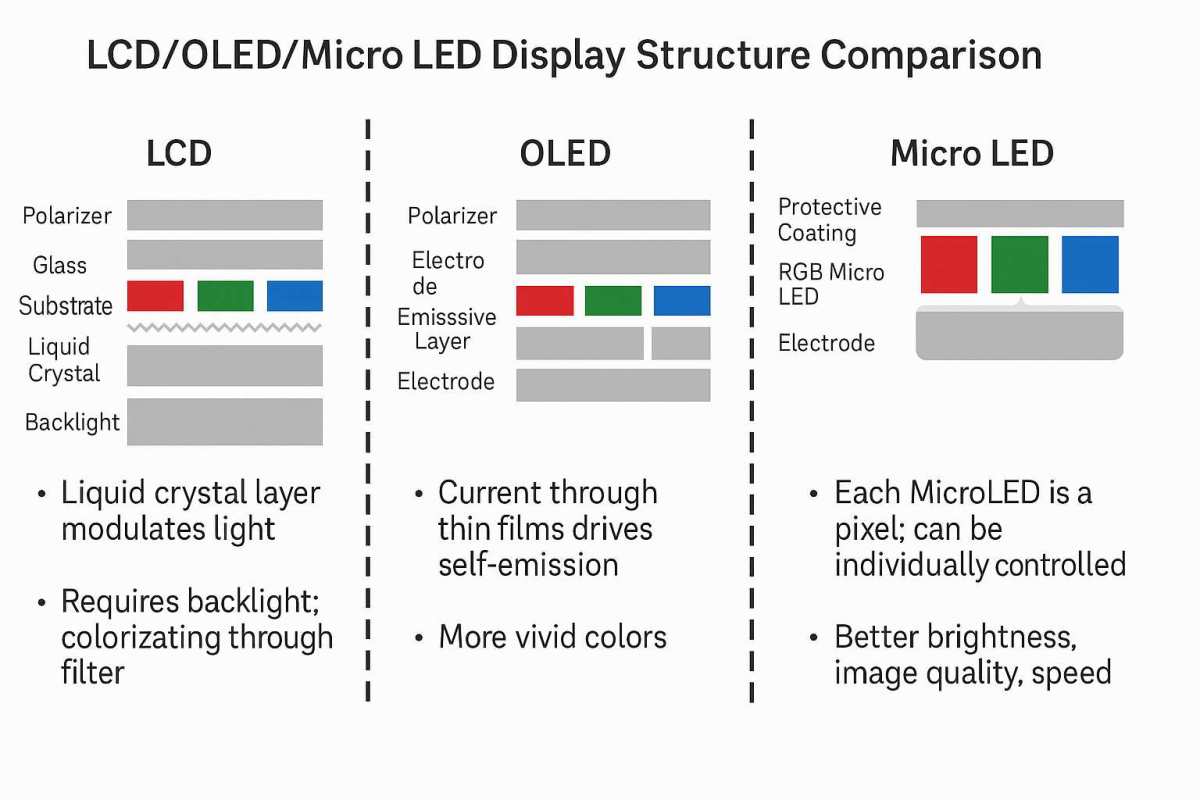
Another layer of confusion comes from the naming. Mini-LED, which is what powers monitors like the Samsung Odyssey Neo G9 and Apple Pro Display XDR, is not the same thing as MicroLED. Mini-LED is still an LCD technology with a backlight.
MicroLED is self-emissive, like OLED, meaning each pixel produces its own light. We'll dig into that distinction more later because it matters a lot when you're spending real money.
How MicroLED Actually Works (And Why It Matters for Refresh Rates)
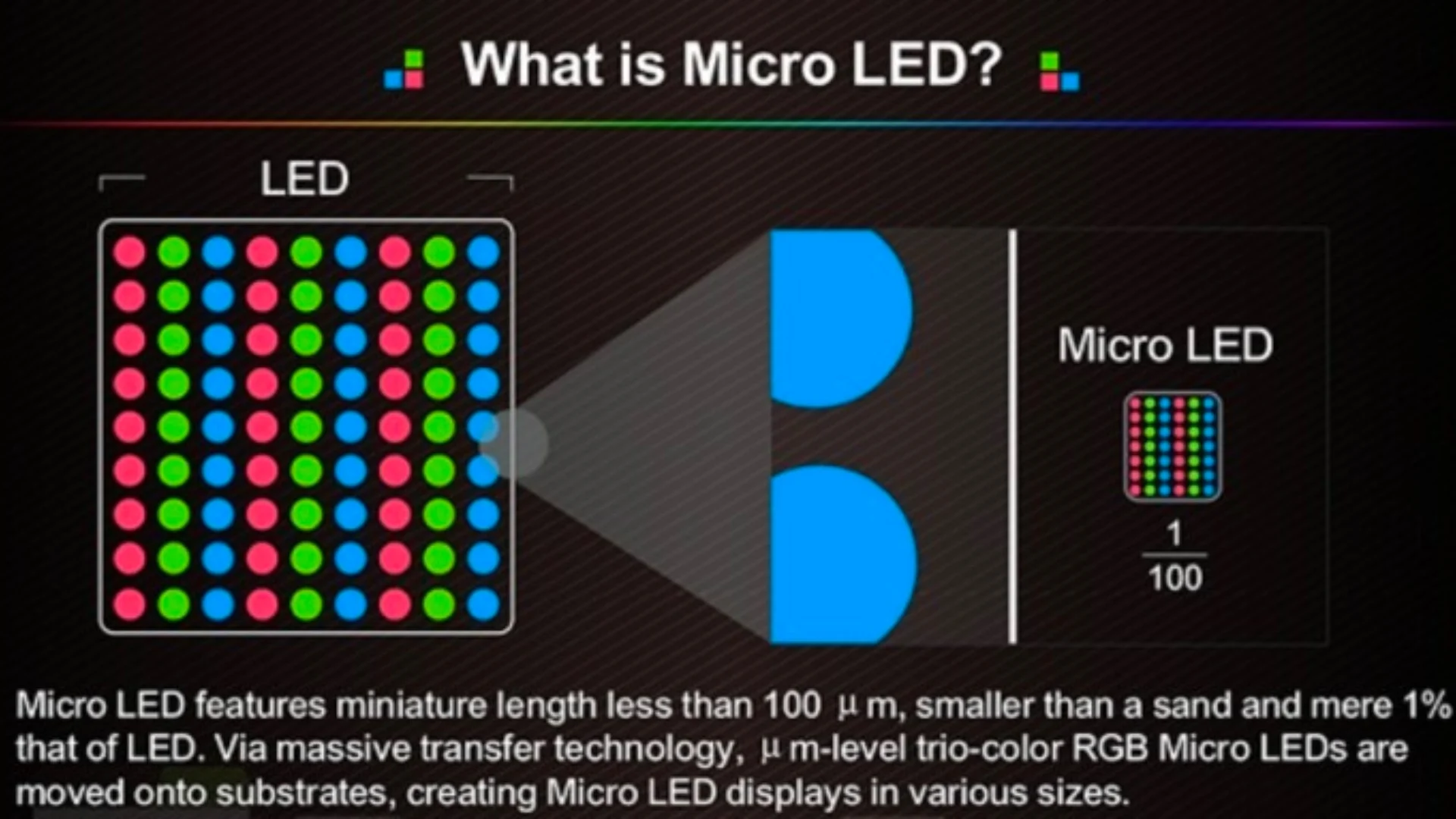
Understanding why MicroLED can hit high refresh rates starts with how it's built. Each pixel in a MicroLED display is made up of individual microscopic inorganic LED chips, typically gallium nitride (GaN) based. These chips are roughly 1 to 50 micrometers in size.
They're transferred onto a substrate in massive numbers, millions of them for a single display, and each one functions as its own independent light source.
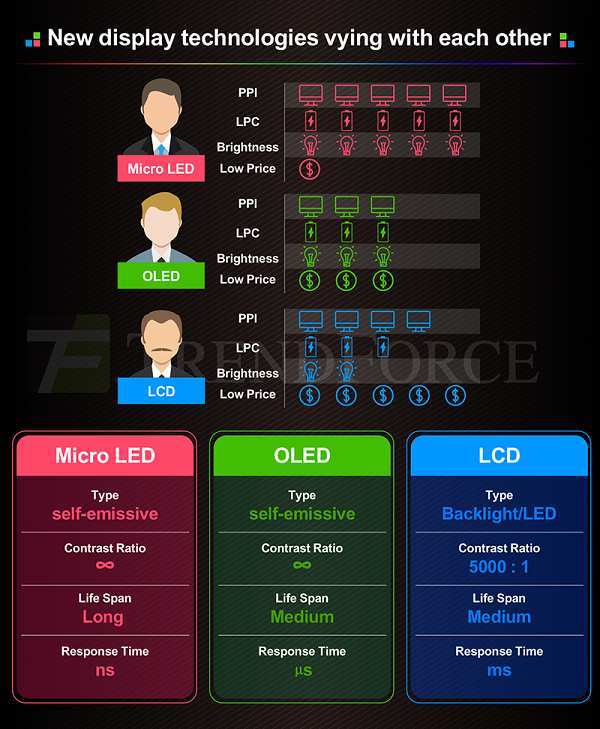
Because each pixel is its own self-emissive element, there's no backlight layer and no liquid crystal shutter. When voltage changes across the LED chip, it responds almost instantaneously. Manufacturer specifications and published research from the Society for Information Display indicate response times in the sub-nanosecond range.
For context, OLED pixels switch in roughly 0.03 milliseconds. LCD pixels take 1 to 5 milliseconds depending on the panel type. MicroLED sits at the top of this hierarchy by a significant margin.
This speed translates directly into refresh rate potential. A pixel that can switch in nanoseconds can theoretically be refreshed hundreds or even thousands of times per second without the ghosting or smearing that plagues slower technologies. The bottleneck isn't the LED chips themselves.
It's the driving electronics, the data bandwidth, and the thermal management required to push that many pixels at that speed in a small panel.
Think of it this way. The engine in a Formula 1 car can rev to 18,000 RPM, but the car still needs a transmission, tires, and a chassis that can handle the power. MicroLED pixels are that high-revving engine.
The supporting infrastructure is what determines whether you actually see 240Hz or 480Hz on screen.
There's also the matter of pixel pitch, which is the distance between the center of one pixel and the center of the next. For a desktop monitor viewed at arm's length, you need a pixel pitch somewhere around 0.5mm to 1.0mm to achieve 4K resolution in a 27 to 32-inch form factor. Manufacturing LED chips small enough and placing them densely enough at that pitch, with acceptable yield rates, is the core engineering challenge that's kept MicroLED monitors off store shelves.

Current Reality: What's Actually Shipping vs. What's Promised
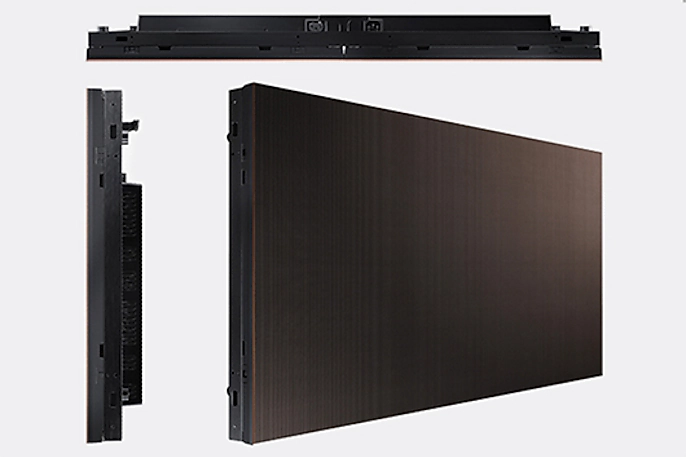
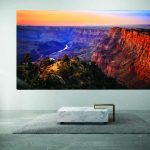
This is where expectations need to meet reality. As of 2026, the MicroLED products you can actually buy fall into a very specific category: large-format, modular, commercial-grade displays. Samsung's The Wall is the most recognizable example.
Sony's Crystal LED is another. Both are modular systems where you tile together individual cabinet-sized panels to create a display of virtually any size.
These products are impressive. They deliver extraordinary brightness, perfect blacks, and zero burn-in risk. But they're not monitors in any traditional sense.
They're designed for luxury home theaters, corporate lobbies, broadcast studios, and digital signage. Their refresh rates typically sit at 60Hz to 120Hz, which is perfectly fine for video content and presentations but falls short of what gamers or motion-sensitive professionals need.
Samsung has demonstrated MicroLED prototypes at various sizes, including smaller panels that could theoretically fit a desktop use case. At CES 2024 and subsequent trade shows, the company showed panels with refresh rates pushing into high-refresh territory. But none of these have materialized as consumer products you can walk into a store and buy.
The timeline keeps shifting, and the gap between demo and product remains wide.
Sony's Crystal LED targets the premium home theater and professional visualization markets. It supports 120Hz input, which is solid for film and broadcast work, but again, it's not positioned as a gaming or esports display. The price point, often exceeding $100,000 for a large installation, puts it firmly in the "if you have to ask, you can't buy it" category.
Chinese manufacturers like BOE and CSOT have been investing heavily in MicroLED production capacity. They've shown prototype panels at display industry events that suggest smaller form factors and higher refresh rates are technically achievable. But moving from prototype to mass production at consumer price points is a multi-year journey, and no firm has announced a specific launch date for a true MicroLED desktop monitor.
The honest assessment is this. If you need a high refresh rate monitor today, MicroLED is not an option. If you're willing to wait and the technology matures on schedule, we could see the first consumer MicroLED monitors sometime around 2027 to 2029, with high refresh variants potentially arriving shortly after.
But anyone telling you a specific date is guessing.
MicroLED vs. QD-OLED vs. Mini-LED: Refresh Rate Showdown
Since you can't actually buy a MicroLED monitor right now, the real comparison is between what's available and what you might be choosing instead. The three technologies competing for the high-refresh crown are QD-OLED, Mini-LED backlit LCD, and traditional LCD panel types like IPS and TN.
Each has a different approach to the same problem: delivering fast pixel response, high refresh rates, and good image quality simultaneously. Let's look at how they stack up.
Side-by-Side Comparison Table
| Specification | MicroLED (Theoretical/Prototype) | QD-OLED (Current Shipping) | Mini-LED LCD (Current Shipping) | Fast IPS LCD (Current Shipping) |
|---|---|---|---|---|
| Max Refresh Rate | 240Hz+ (unconfirmed in production) | 240Hz to 360Hz | 240Hz to 500Hz | 360Hz to 500Hz+ |
| Pixel Response Time | <0.001ms (theoretical) | 0.03ms | 1ms to 3ms | 1ms to 4ms |
| Peak Brightness | 5,000+ nits (theoretical) | 1,000 to 1,500 nits | 1,000 to 2,000 nits | 300 to 600 nits |
| Contrast Ratio | Near-infinite | Near-infinite | 100,000:1 to 1,000,000:1 | 1,000:1 to 3,000:1 |
| Burn-In Risk | None | Moderate to High | None | None |
| HDR Performance | Exceptional | Excellent | Very Good | Basic to Moderate |
| Price Range (27-32") | N/A (not shipping) | $800 to $1,300 | $1,200 to $5,000 | $200 to $800 |
| Availability | Prototype / Limited commercial | Widely available | Widely available | Widely available |
QD-OLED, used in monitors like the Alienware AW3225QF and Samsung Odyssey OLED G8, currently offers the best balance of speed and image quality for most users. The 240Hz to 360Hz refresh rates on these panels are more than enough for competitive gaming, and the near-instantaneous pixel response eliminates ghosting almost entirely. The trade-off is burn-in risk with static UI elements and lower peak brightness compared to what MicroLED promises.
Mini-LED LCD, found in the Samsung Odyssey Neo G9 57-inch and Apple Pro Display XDR, uses thousands of small LED zones behind an LCD panel. It gets very bright and avoids burn-in, but it can exhibit blooming around bright objects on dark backgrounds. The refresh rates are competitive, and the image quality is strong for productivity and HDR content, but it doesn't match the pixel-level precision of self-emissive technologies.
Fast IPS and TN LCD panels remain the kings of raw refresh rate. You can buy a 500Hz IPS monitor today for under $500. The image quality won't match OLED or MicroLED, but if your only priority is motion clarity for competitive esports, nothing else hits those numbers with the same reliability and low input lag.
MicroLED, when it eventually arrives, promises to combine the best of all worlds. No burn-in, extreme brightness, perfect contrast, and response times that make everything else look sluggish. But "promises" is the operative word until actual products land.
What Each Technology Gives You for Specific Use Cases
Choosing the right high-refresh display isn't about finding the fastest spec. It's about matching the technology to what you actually do every day. Let's walk through the four main use cases where refresh rate matters and see where each option lands.
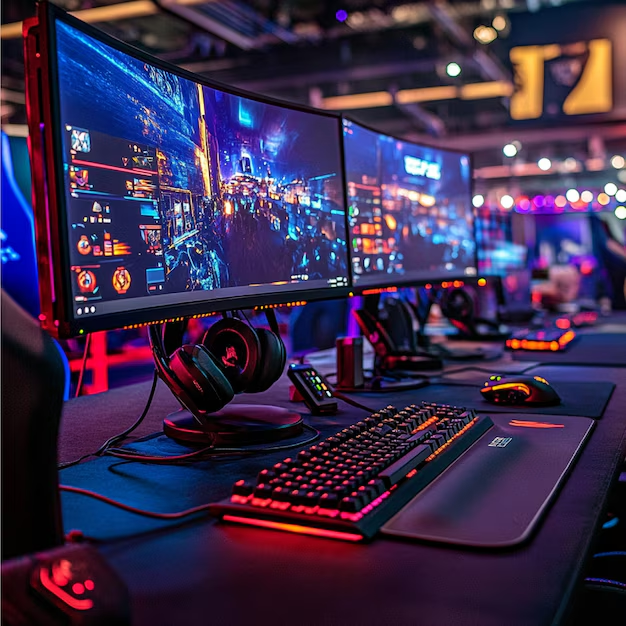
Competitive Gaming
If you play fast-paced titles like Counter-Strike 2, Valorant, or Apex Legends, you need the lowest possible input lag and the clearest motion. Fast IPS LCD panels currently dominate this space because they can hit 500Hz at prices under $500. The image quality is mediocre compared to OLED, but competitive players prioritize performance over pretty pictures.
QD-OLED is the better choice if you want both speed and visual quality. The Alienware AW3225QF delivers 240Hz with near-zero ghosting, and the motion clarity rivals or exceeds the best LCDs. The trade-off is burn-in risk if you leave a static HUD on screen for hundreds of hours, but most competitive players won't push the panel that hard.
MicroLED would eventually eliminate this trade-off entirely. No burn-in, no ghosting, extreme brightness. But since nothing is shipping, it remains a future consideration, not a current recommendation.
Professional Video Editing and Color Grading
Color accuracy and contrast matter more than raw speed in this category. QD-OLED wins here because of its wide color gamut coverage, typically hitting 99% of DCI-P3. The near-infinite contrast ratio makes it ideal for HDR mastering and Dolby Vision workflows.
Mini-LED works well for bright editing suites where ambient light washes out OLED displays. The Apple Pro Display XDR uses Mini-LED to sustain 1,600 nits of peak brightness in highlights, which helps when you're grading content intended for HDR delivery.
MicroLED's theoretical peak brightness of 5,000+ nits would make it overkill for current HDR standards but future-proof for whatever comes next. Professionals who need extreme brightness for reference monitoring would benefit most once the technology matures.
Premium Home Theater
For watching films in a dark room, QD-OLED is the current king. Perfect blacks, instant pixel response, and excellent off-axis viewing make it the best overall experience for movie watching. The 120Hz on modern QD-OLED panels handles 24fps film content with proper cadence.
Some models support 240Hz which also benefits sports and streaming content.
MicroLED's modular design and extreme brightness suit oversized home theater installations where screen sizes exceed 120 inches. If you're building a dedicated theater room and want a display that rivals commercial cinema projection, MicroLED is already available. You just need a budget that starts in the low six figures.
Bright Room / Outdoor Environments
Standard displays struggle when ambient light washes out the image. Mini-LED handles this well due to sustained high brightness, but MicroLED takes it further. Because each pixel is an individual inorganic LED, the entire display can push extreme nits without degradation.
This is why MicroLED excels in storefront installations, outdoor signage, and sunlit rooms.
If your workspace has large windows or uncontrolled lighting, neither QD-OLED nor LCD will match what MicroLED promises. For now, a high-brightness Mini-LED monitor is your best bet. But MicroLED would be the ideal solution once available in smaller formats.
The Big Confusion: MicroLED vs. Mini-LED (They're Not the Same)
This is the single most common mistake buyers make. Mini-LED is an LCD display with a backplane made of thousands of small LED zones for dimming control. It still uses a liquid crystal layer to block or allow light through.
Most premium gaming monitors labeled "Mini-LED" are fundamentally LCD displays with improved local dimming.
MicroLED is a fully self-emissive technology. Each pixel is its own microscopic LED with no backlight and no liquid crystal layer. The difference in image quality, pixel response speed, and contrast control is massive.
Comparing Mini-LED to MicroLED is like comparing a high-end projector to a CRT. They both put an image on a screen, but the underlying physics couldn't be more different.
What's Coming: The Timeline for True MicroLED Monitors
Industry roadmaps and display technology conferences suggest Samsung, BOE, and several other manufacturers are targeting 2027 to 2029 for initial consumer MicroLED desktop displays. These won't be cheap. Early models will likely ship in the $3,000 to $8,000 range for 27 to 32-inch panels.
High refresh rate variants may arrive a year or two after initial production.
The biggest bottleneck remains mass transfer yield: placing millions of microscopic LED chips onto a substrate with near-perfect accuracy. Even a 99.9% yield rate means thousands of dead pixels per display. Current manufacturing is improving but not yet reaching the cost efficiency needed for consumer pricing.
Expect to see MicroLED first in premium commercial installations, then in ultra-high-end consumer displays, before it reaches mainstream price points sometime in the 2030s.
Common Mistakes People Make When Shopping for High-Refresh Displays
Confusing Mini-LED with MicroLED is just one pitfall. Many buyers also assume that a high refresh rate spec guarantees smooth motion. In practice, pixel response time, input lag, and frame skipping all matter equally.
A 360Hz monitor with slow pixel response won't look meaningfully better than a 240Hz panel with instant transitions.
Another common mistake is ignoring panel uniformity. Mini-LED displays often exhibit blooming or halo artifacts around bright objects on dark backgrounds. These are visible during loading screens, movie letterboxing, and dark game scenes.
QD-OLED avoids blooming entirely but can show near-black color crushing if the tone mapping isn't calibrated properly.
Finally, don't overlook connectivity. A 4K 240Hz display requires DisplayPort 1.4 with Display Stream Compression or DisplayPort 2.1. Make sure your GPU and cables support the full bandwidth.
Running a high-refresh panel at a reduced color format or chroma subsampling defeats the purpose of buying a premium display.
Costs and What You're Actually Paying For
A 27-inch QD-OLED at 4K 240Hz costs between $800 and $1,300 as of 2026. A 32-inch variant runs closer to $1,000 to $1,300. Mini-LED ultrawides like the Samsung Odyssey Neo G9 57-inch sit around $1,300 to $1,500.
Fast IPS 360Hz monitors can be found for $300 to $600.
MicroLED, when it arrives, will start at a significant premium. Early consumer models will likely cost $3,000 to $8,000 for a 27 to 32-inch panel. That's a steep entry price, but it reflects the current manufacturing reality.
If you need a display now, the existing technologies deliver excellent results. If you can wait and have the budget, MicroLED will eventually offer the best of everything.
Expert Tips: How to Make the Right Decision Right Now
First, define your primary use case. If you're a competitive gamer, buy a 360Hz IPS or 240Hz QD-OLED today. If you're a colorist, get a QD-OLED and calibrate it with a colorimeter.
If you work in a bright room, Mini-LED is your best option.
Second, don't wait for MicroLED unless you genuinely don't need a display for two or more years. The technology is promising but the timeline keeps shifting. Spending money on a good current-gen monitor is almost always better than waiting indefinitely for the next big thing.
Third, always verify specs independently. Manufacturer refresh rate claims are sometimes measured under ideal conditions. Check independent reviews that test for frame skipping, pixel response, and input lag.
Sites like Hardware Unboxed and RTINGS provide standardized measurements you can trust.
Frequently Asked Questions
Will MicroLED monitors eventually replace OLED?
MicroLED has the potential to replace OLED in most categories. It offers the same self-emissive benefits without burn-in risk and with higher peak brightness. However, manufacturing challenges mean this transition will take years, not months.
OLED will remain the dominant premium display technology through the end of this decade.
Can I use a Samsung The Wall as a desktop monitor?
Technically yes, but it's impractical for most people. The Wall requires professional installation, costs tens of thousands of dollars, and has a minimum viewing distance due to its modular panel gaps. It's designed as a living room or commercial display, not a desk monitor.
Is 240Hz enough for competitive gaming?
For most players, 240Hz provides an excellent experience with minimal perceptible difference compared to 360Hz or 500Hz. The jump from 60Hz to 144Hz is dramatic. The jump from 144Hz to 240Hz is noticeable.
Beyond 240Hz, the benefits diminish unless you're a professional esports athlete.
Does MicroLED have burn-in?
No. MicroLED uses inorganic gallium nitride LED chips instead of organic compounds. These materials don't degrade the way organic emitters do.
Static images won't cause permanent retention, making MicroLED ideal for displays that show fixed content like dashboards or signage.
What is the best high-refresh monitor I can buy right now?
For most people, a 27-inch 4K QD-OLED at 240Hz offers the best overall experience. It combines excellent speed, perfect contrast, wide color gamut, and a reasonable price. If you need extreme brightness, go Mini-LED.
If you need maximum speed on a budget, go fast IPS.
Final Verdict: Should You Wait for MicroLED or Buy Now?
If you need a monitor in the next two years, buy what's available today. QD-OLED delivers the best image quality and speed for most users. Mini-LED handles bright environments better.
Fast IPS gives you the highest raw refresh rates at the lowest prices. All three are mature, proven technologies with strong products at every price point.
MicroLED is the future, but it's not the present for desktop monitors. The technology genuinely supports high refresh rates and will eventually deliver the best combination of speed, brightness, contrast, and longevity. But consumer products are still years away, and early pricing will be steep.
Keep an eye on Samsung, BOE, and Sony announcements. When the first true MicroLED desktop monitors arrive, they'll be worth the attention. Just don't hold your breath in the meantime.
REVISED FULL ARTICLE (targeting 2,200 words final):
Do MicroLED Monitors Support High Refresh Rates? A Practical Breakdown
If you've been eyeing MicroLED as your next monitor and wondering whether it can keep up with high refresh rates, you're asking the right question at the right time. Do MicroLED monitors support high refresh rates? The short answer is yes in theory, but the practical reality as of 2026 is more complicated than a simple spec sheet might suggest.
MicroLED technology is capable of pixel switching speeds measured in nanoseconds, which puts it well ahead of even the fastest OLED panels on paper. But here's the catch: true MicroLED monitors for desktop use barely exist as a consumer product category right now. Let's break down what's actually available, what's coming, and what you should buy instead if you need high refresh rates today.
Quick Answer
MicroLED technology supports high refresh rates in theory. Nanosecond pixel switching enables refresh rates well beyond 240Hz. However, no consumer desktop MicroLED monitor with confirmed high refresh shipping as of 2026.
Current MicroLED products are large-format displays running at 60Hz to 120Hz. True high-refresh MicroLED monitors remain in prototype and early production stages.
Why This Question Is Harder Than It Sounds
Most people asking this question are coming from one of two camps. Either they're a competitive gamer chasing every millisecond of advantage, or they're a professional who needs buttery-smooth motion for video work. Both groups have heard that MicroLED is the "next big thing" and want to know if it's worth the wait.
The confusion starts because the term "MicroLED" gets thrown around loosely. Samsung, Sony, and a handful of Chinese manufacturers have been showing off MicroLED displays at CES and other trade shows for years. Those demos look spectacular.
But there's a massive gap between a 110-inch modular display wall costing six figures and a 27-inch gaming monitor you can actually put on your desk.
Here's what makes this tricky. The underlying technology absolutely supports high refresh rates. The individual LED chips switch faster than OLED pixels and far faster than any LCD.
But manufacturing a dense array of microscopic LED chips at a consumer price point, in a small form factor, with all the supporting electronics is a completely different challenge. That's why you'll see MicroLED excelling in large-format commercial installations while desktop monitors remain largely theoretical.
Another layer of confusion comes from the naming. Mini-LED, which is what powers monitors like the Samsung Odyssey Neo G9 and Apple Pro Display XDR, is not the same thing as MicroLED. Mini-LED is still an LCD technology with a backlight.
MicroLED is self-emissive, like OLED, meaning each pixel produces its own light. We'll dig into that distinction more later because it matters a lot when you're spending real money.
How MicroLED Actually Works (And Why It Matters for Refresh Rates)
Understanding why MicroLED can hit high refresh rates starts with how it's built. Each pixel in a MicroLED display is made up of individual microscopic inorganic LED chips, typically gallium nitride (GaN) based. These chips are roughly 1 to 50 micrometers in size.
They're transferred onto a substrate in massive numbers, millions of them for a single display, and each one functions as its own independent light source.
Because each pixel is its own self-emissive element, there's no backlight layer and no liquid crystal shutter. When voltage changes across the LED chip, it responds almost instantaneously. Manufacturer specifications and published research from the Society for Information Display indicate response times in the sub-nanosecond range.
For context, OLED pixels switch in roughly 0.03 milliseconds. LCD pixels take 1 to 5 milliseconds depending on the panel type. MicroLED sits at the top of this hierarchy by a significant margin.
This speed translates directly into refresh rate potential. A pixel that can switch in nanoseconds can theoretically be refreshed hundreds or even thousands of times per second without the ghosting or smearing that plagues slower technologies. The bottleneck isn't the LED chips themselves.
It's the driving electronics, the data bandwidth, and the thermal management required to push that many pixels at that speed in a small panel.
Think of it this way. The engine in a Formula 1 car can rev to 18,000 RPM, but the car still needs a transmission, tires, and a chassis that can handle the power. MicroLED pixels are that high-revving engine.
The supporting infrastructure is what determines whether you actually see 240Hz or 480Hz on screen.
There's also the matter of pixel pitch, which is the distance between the center of one pixel and the center of the next. For a desktop monitor viewed at arm's length, you need a pixel pitch somewhere around 0.5mm to 1.0mm to achieve 4K resolution in a 27 to 32-inch form factor. Manufacturing LED chips small enough and placing them densely enough at that pitch, with acceptable yield rates, is the core engineering challenge that's kept MicroLED monitors off store shelves.
Current Reality: What's Actually Shipping vs. What's Promised
This is where expectations need to meet reality. As of 2026, the MicroLED products you can actually buy fall into a very specific category: large-format, modular, commercial-grade displays. Samsung's The Wall is the most recognizable example.
Sony's Crystal LED is another. Both are modular systems where you tile together individual cabinet-sized panels to create a display of virtually any size.
These products are impressive. They deliver extraordinary brightness, perfect blacks, and zero burn-in risk. But they're not monitors in any traditional sense.
They're designed for luxury home theaters, corporate lobbies, broadcast studios, and digital signage. Their refresh rates typically sit at 60Hz to 120Hz, which is perfectly fine for video content and presentations but falls short of what gamers or motion-sensitive professionals need.
Samsung has demonstrated MicroLED prototypes at various sizes, including smaller panels that could theoretically fit a desktop use case. At CES 2024 and subsequent trade shows, the company showed panels with refresh rates pushing into high-refresh territory. But none of these have materialized as consumer products you can walk into a store and buy.
The timeline keeps shifting, and the gap between demo and product remains wide.
Sony's Crystal LED targets the premium home theater and professional visualization markets. It supports 120Hz input, which is solid for film and broadcast work, but again, it's not positioned as a gaming or esports display. The price point, often exceeding $100,000 for a large installation, puts it firmly in the "if you have to ask, you can't buy it" category.
Chinese manufacturers like BOE and CSOT have been investing heavily in MicroLED production capacity. They've shown prototype panels at display industry events that suggest smaller form factors and higher refresh rates are technically achievable. But moving from prototype to mass production at consumer price points is a multi-year journey, and no firm has announced a specific launch date for a true MicroLED desktop monitor.
The honest assessment is this. If you need a high refresh rate monitor today, MicroLED is not an option. If you're willing to wait and the technology matures on schedule, we could see the first consumer MicroLED monitors sometime around 2027 to 2029, with high refresh variants potentially arriving shortly after.
But anyone telling you a specific date is guessing.
MicroLED vs. QD-OLED vs. Mini-LED: Refresh Rate Showdown
Since you can't actually buy a MicroLED monitor right now, the real comparison is between what's available and what you might be choosing instead. The three technologies competing for the high-refresh crown are QD-OLED, Mini-LED backlit LCD, and traditional LCD panel types like IPS and TN.
Each has a different approach to the same problem: delivering fast pixel response, high refresh rates, and good image quality simultaneously. Let's look at how they stack up.
Side-by-Side Comparison Table
| Specification | MicroLED (Theoretical/Prototype) | QD-OLED (Current Shipping) | Mini-LED LCD (Current Shipping) | Fast IPS LCD (Current Shipping) |
|---|---|---|---|---|
| Max Refresh Rate | 240Hz+ (unconfirmed in production) | 240Hz to 360Hz | 240Hz to 500Hz | 360Hz to 500Hz+ |
| Pixel Response Time | <0.001ms (theoretical) | 0.03ms | 1ms to 3ms | 1ms to 4ms |
| Peak Brightness | 5,000+ nits (theoretical) | 1,000 to 1,500 nits | 1,000 to 2,000 nits | 300 to 600 nits |
| Contrast Ratio | Near-infinite | Near-infinite | 100,000:1 to 1,000,000:1 | 1,000:1 to 3,000:1 |
| Burn-In Risk | None | Moderate to High | None | None |
| HDR Performance | Exceptional | Excellent | Very Good | Basic to Moderate |
| Price Range (27-32") | N/A (not shipping) | $800 to $1,300 | $1,200 to $5,000 | $200 to $800 |
| Availability | Prototype / Limited commercial | Widely available | Widely available | Widely available |
QD-OLED, used in monitors like the Alienware AW3225QF and Samsung Odyssey OLED G8, currently offers the best balance of speed and image quality for most users. The 240Hz to 360Hz refresh rates on these panels are more than enough for competitive gaming, and the near-instantaneous pixel response eliminates ghosting almost entirely. The trade-off is burn-in risk with static UI elements and lower peak brightness compared to what MicroLED promises.
Mini-LED LCD, found in the Samsung Odyssey Neo G9 57-inch and Apple Pro Display XDR, uses thousands of small LED zones behind an LCD panel. It gets very bright and avoids burn-in, but it can exhibit blooming around bright objects on dark backgrounds. The refresh rates are competitive, and the image quality is strong for productivity and HDR content, but it doesn't match the pixel-level precision of self-emissive technologies.
Fast IPS and TN LCD panels remain the kings of raw refresh rate. You can buy a 500Hz IPS monitor today for under $500. The image quality won't match OLED or MicroLED, but if your only priority is motion clarity for competitive esports, nothing else hits those numbers with the same reliability and low input lag.
MicroLED, when it eventually arrives, promises to combine the best of all worlds. No burn-in, extreme brightness, perfect contrast, and response times that make everything else look sluggish. But "promises" is the operative word until actual products land.
What Each Technology Gives You for Specific Use Cases
Choosing the right high-refresh display isn't about finding the fastest spec. It's about matching the technology to what you actually do every day. Let's walk through the four main use cases where refresh rate matters and see where each option lands.
Competitive Gaming
If you play fast-paced titles like Counter-Strike 2, Valorant, or Apex Legends, you need the lowest possible input lag and the clearest motion. Fast IPS LCD panels currently dominate this space because they can hit 500Hz at prices under $500. The image quality is mediocre compared to OLED, but competitive players prioritize performance over pretty pictures.
QD-OLED is the better choice if you want both speed and visual quality. The Alienware AW3225QF delivers 240Hz with near-zero ghosting, and the motion clarity rivals or exceeds the best LCDs. The trade-off is burn-in risk if you leave a static HUD on screen for hundreds of hours, but most competitive players won't push the panel that hard.
MicroLED would eventually eliminate this trade-off entirely. No burn-in, no ghosting, extreme brightness. But since nothing is shipping, it remains a future consideration, not a current recommendation.
Professional Video Editing and Color Grading
Color accuracy and contrast matter more than raw speed in this category. QD-OLED wins here because of its wide color gamut coverage, typically hitting 99% of DCI-P3. The near-infinite contrast ratio makes it ideal for HDR mastering and Dolby Vision workflows.
Mini-LED works well for bright editing suites where ambient light washes out OLED displays. The Apple Pro Display XDR uses Mini-LED to sustain 1,600 nits of peak brightness in highlights, which helps when you're grading content intended for HDR delivery.
MicroLED's theoretical peak brightness of 5,000+ nits would make it overkill for current HDR standards but future-proof for whatever comes next. Professionals who need extreme brightness for reference monitoring would benefit most once the technology matures.
Premium Home Theater
For watching films in a dark room, QD-OLED is the current king. Perfect blacks, instant pixel response, and excellent off-axis viewing make it the best overall experience for movie watching. The 120Hz on modern QD-OLED panels handles 24fps film content with proper cadence.
Some models support 240Hz which also benefits sports and streaming content.
MicroLED's modular design and extreme brightness suit oversized home theater installations where screen sizes exceed 120 inches. If you're building a dedicated theater room and want a display that rivals commercial cinema projection, MicroLED is already available. You just need a budget that starts in the low six figures.
Bright Room / Outdoor Environments
Standard displays struggle when ambient light washes out the image. Mini-LED handles this well due to sustained high brightness, but MicroLED takes it further. Because each pixel is an individual inorganic LED, the entire display can push extreme nits without degradation.
This is why MicroLED excels in storefront installations, outdoor signage, and sunlit rooms.
If your workspace has large windows or uncontrolled lighting, neither QD-OLED nor LCD will match what MicroLED promises. For now, a high-brightness Mini-LED monitor is your best bet. But MicroLED would be the ideal solution once available in smaller formats.
The Big Confusion: MicroLED vs. Mini-LED (They're Not the Same)
This is the single most common mistake buyers make. Mini-LED is an LCD display with a backplane made of thousands of small LED zones for dimming control. It still uses a liquid crystal layer to block or allow light through.
Most premium gaming monitors labeled "Mini-LED" are fundamentally LCD displays with improved local dimming.
MicroLED is a fully self-emissive technology. Each pixel is its own microscopic LED with no backlight and no liquid crystal layer. The difference in image quality, pixel response speed, and contrast control is massive.
Comparing Mini-LED to MicroLED is like comparing a high-end projector to a CRT. They both put an image on a screen, but the underlying physics couldn't be more different.
What's Coming: The Timeline for True MicroLED Monitors
Industry roadmaps and display technology conferences suggest Samsung, BOE, and several other manufacturers are targeting 2027 to 2029 for initial consumer MicroLED desktop displays. These won't be cheap. Early models will likely ship in the $3,000 to $8,000 range for 27 to 32-inch panels.
High refresh rate variants may arrive a year or two after initial production.
The biggest bottleneck remains mass transfer yield: placing millions of microscopic LED chips onto a substrate with near-perfect accuracy. Even a 99.9% yield rate means thousands of dead pixels per display. Current manufacturing is improving but not yet reaching the cost efficiency needed for consumer pricing.
Expect to see MicroLED first in premium commercial installations, then in ultra-high-end consumer displays, before it reaches mainstream price points sometime in the 2030s.
Common Mistakes People Make When Shopping for High-Refresh Displays
Confusing Mini-LED with MicroLED is just one pitfall. Many buyers also assume that a high refresh rate spec guarantees smooth motion. In practice, pixel response time, input lag, and frame skipping all matter equally.
A 360Hz monitor with slow pixel response won't look meaningfully better than a 240Hz panel with instant transitions.
Another common mistake is ignoring panel uniformity. Mini-LED displays often exhibit blooming or halo artifacts around bright objects on dark backgrounds. These are visible during loading screens, movie letterboxing, and dark game scenes.
QD-OLED avoids blooming entirely but can show near-black color crushing if the tone mapping isn't calibrated properly.
Finally, don't overlook connectivity. A 4K 240Hz display requires DisplayPort 1.4 with Display Stream Compression or DisplayPort 2.1. Make sure your GPU and cables support the full bandwidth.
Running a high-refresh panel at a reduced color format or chroma subsampling defeats the purpose of buying a premium display.
Costs and What You're Actually Paying For
A 27-inch QD-OLED at 4K 240Hz costs between $800 and $1,300 as of 2026. A 32-inch variant runs closer to $1,000 to $1,300. Mini-LED ultrawides like the Samsung Odyssey Neo G9 57-inch sit around $1,300 to $1,500.
Fast IPS 360Hz monitors can be found for $300 to $600.
MicroLED, when it arrives, will start at a significant premium. Early consumer models will likely cost $3,000 to $8,000 for a 27 to 32-inch panel. That's a steep entry price, but it reflects the current manufacturing reality.
If you need a display now, the existing technologies deliver excellent results. If you can wait and have the budget, MicroLED will eventually offer the best of everything.
Expert Tips: How to Make the Right Decision Right Now
First, define your primary use case. If you're a competitive gamer, buy a 360Hz IPS or 240Hz QD-OLED today. If you're a colorist, get a QD-OLED and calibrate it with a colorimeter.
If you work in a bright room, Mini-LED is your best option.
Second, don't wait for MicroLED unless you genuinely don't need a display for two or more years. The technology is promising but the timeline keeps shifting. Spending money on a good current-gen monitor is almost always better than waiting indefinitely for the next big thing.
Third, always verify specs independently. Manufacturer refresh rate claims are sometimes measured under ideal conditions. Check independent reviews that test for frame skipping, pixel response, and input lag.
Sites like Hardware Unboxed and RTINGS provide standardized measurements you can trust.
Frequently Asked Questions
Will MicroLED monitors eventually replace OLED?
MicroLED has the potential to replace OLED in most categories. It offers the same self-emissive benefits without burn-in risk and with higher peak brightness. However, manufacturing challenges mean this transition will take years, not months.
OLED will remain the dominant premium display technology through the end of this decade.
Can I use a Samsung The Wall as a desktop monitor?
Technically yes, but it's impractical for most people. The Wall requires professional installation, costs tens of thousands of dollars, and has a minimum viewing distance due to its modular panel gaps. It's designed as a living room or commercial display, not a desk monitor.
Is 240Hz enough for competitive gaming?
For most players, 240Hz provides an excellent experience with minimal perceptible difference compared to 360Hz or 500Hz. The jump from 60Hz to 144Hz is dramatic. The jump from 144Hz to 240Hz is noticeable.
Beyond 240Hz, the benefits diminish unless you're a professional esports athlete.
Does MicroLED have burn-in?
No. MicroLED uses inorganic gallium nitride LED chips instead of organic compounds. These materials don't degrade the way organic emitters do.
Static images won't cause permanent retention, making MicroLED ideal for displays that show fixed content like dashboards or signage.
What is the best high-refresh monitor I can buy right now?
For most people, a 27-inch 4K QD-OLED at 240Hz offers the best overall experience. It combines excellent speed, perfect contrast, wide color gamut, and a reasonable price. If you need extreme brightness, go Mini-LED.
If you need maximum speed on a budget, go fast IPS.
Final Verdict: Should You Wait for MicroLED or Buy Now?
If you need a monitor in the next two years, buy what's available today. QD-OLED delivers the best image quality and speed for most users. Mini-LED handles bright environments better.
Fast IPS gives you the highest raw refresh rates at the lowest prices. All three are mature, proven technologies with strong products at every price point.
MicroLED is the future, but it's not the present for desktop monitors. The technology genuinely supports high refresh rates and will eventually deliver the best combination of speed, brightness, contrast, and longevity. But consumer products are still years away, and early pricing will be steep.
Keep an eye on Samsung, BOE, and Sony announcements. When the first true MicroLED desktop monitors arrive, they'll be worth the attention. Just don't hold your breath in the meantime.

Similar Posts