Are Mini LED Monitors Future Proof
You're probably wondering if dropping $500, $1,000+ on a Mini LED monitor will still feel like a smart purchase two or three years from now. It's a fair question, because the display market is shifting faster than most people expect, and "future-proof" means different things depending on what you actually use your monitor for.
The short answer: Mini LED monitors hit a genuine sweet spot for HDR brightness and longevity, but they're not the runaway winner the marketing makes them out to be. Per VESA DisplayHDR standards, today's Mini LED displays can push 1,000, 1,600+ nits peak brightness, which no OLED monitor currently matches. Whether that makes Mini LED right for you depends on what you're comparing it to and how you plan to use it.
The Quick Answer: Are Mini LED Monitors Future-Proof?
Yes, Mini LED monitors are reasonably future-proof for specific use cases. They offer excellent HDR brightness that outperforms OLED. They carry no burn-in risk.
However, OLED is closing the gap fast on price and contrast, and Mini LED still can't match per-pixel dimming quality.
What Mini LED Actually Is (And What It Isn't)
Let's clear up the terminology first, because "Mini LED" gets thrown around like it's one specific thing. It isn't.
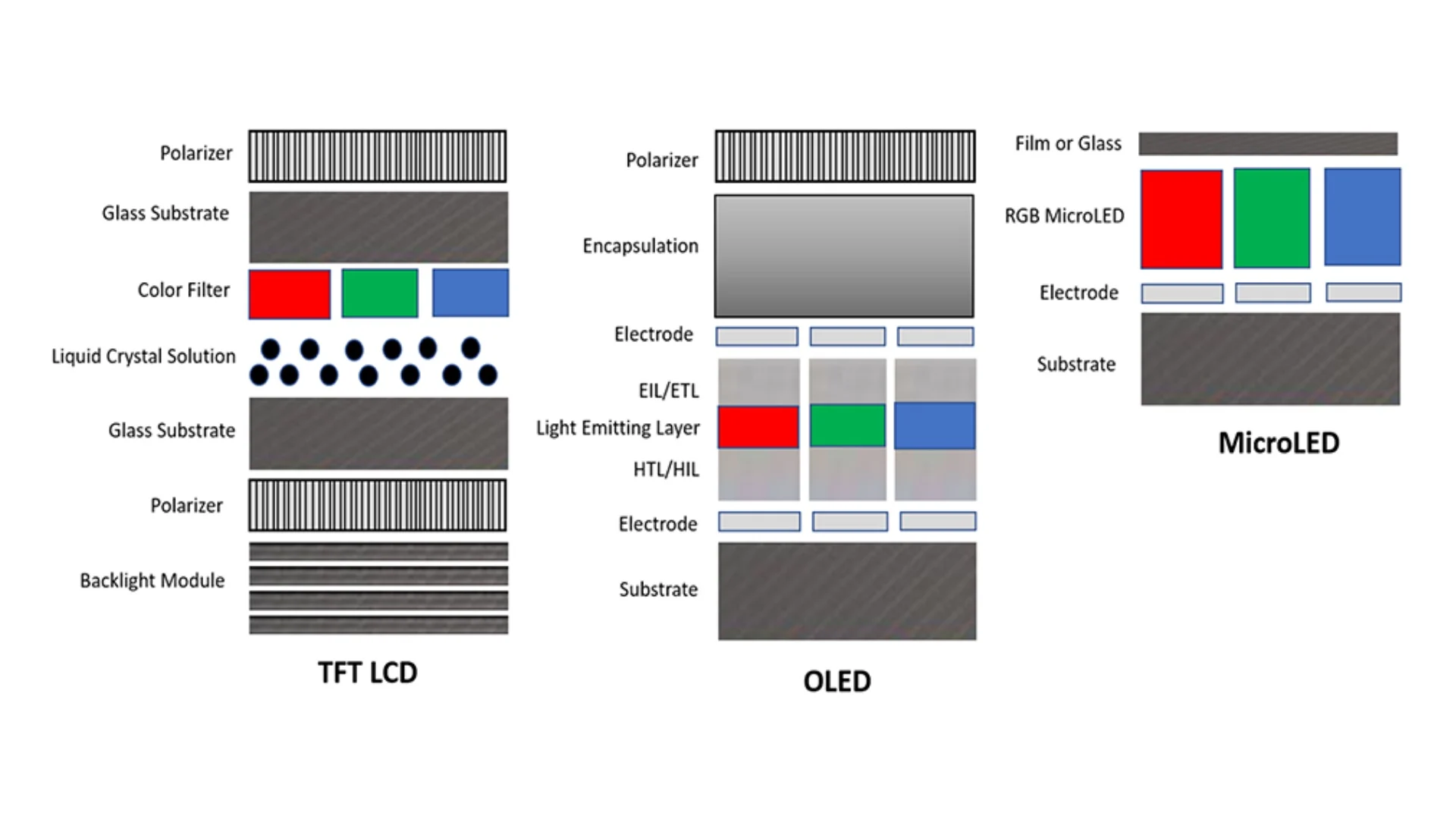
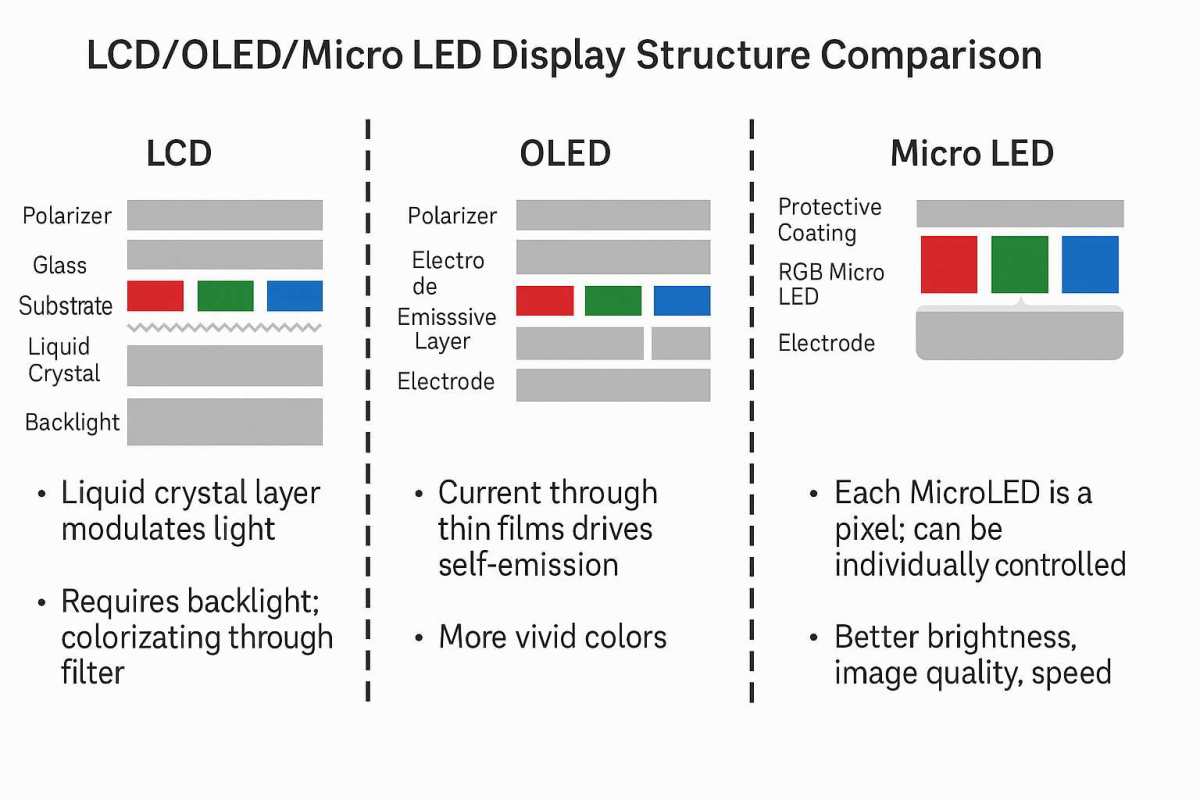
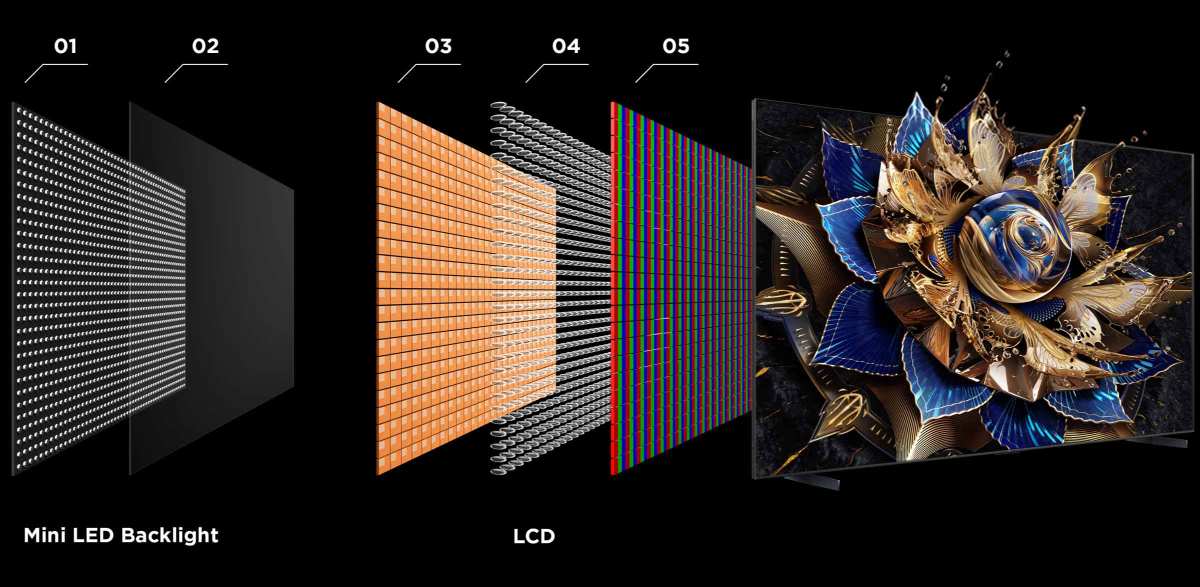
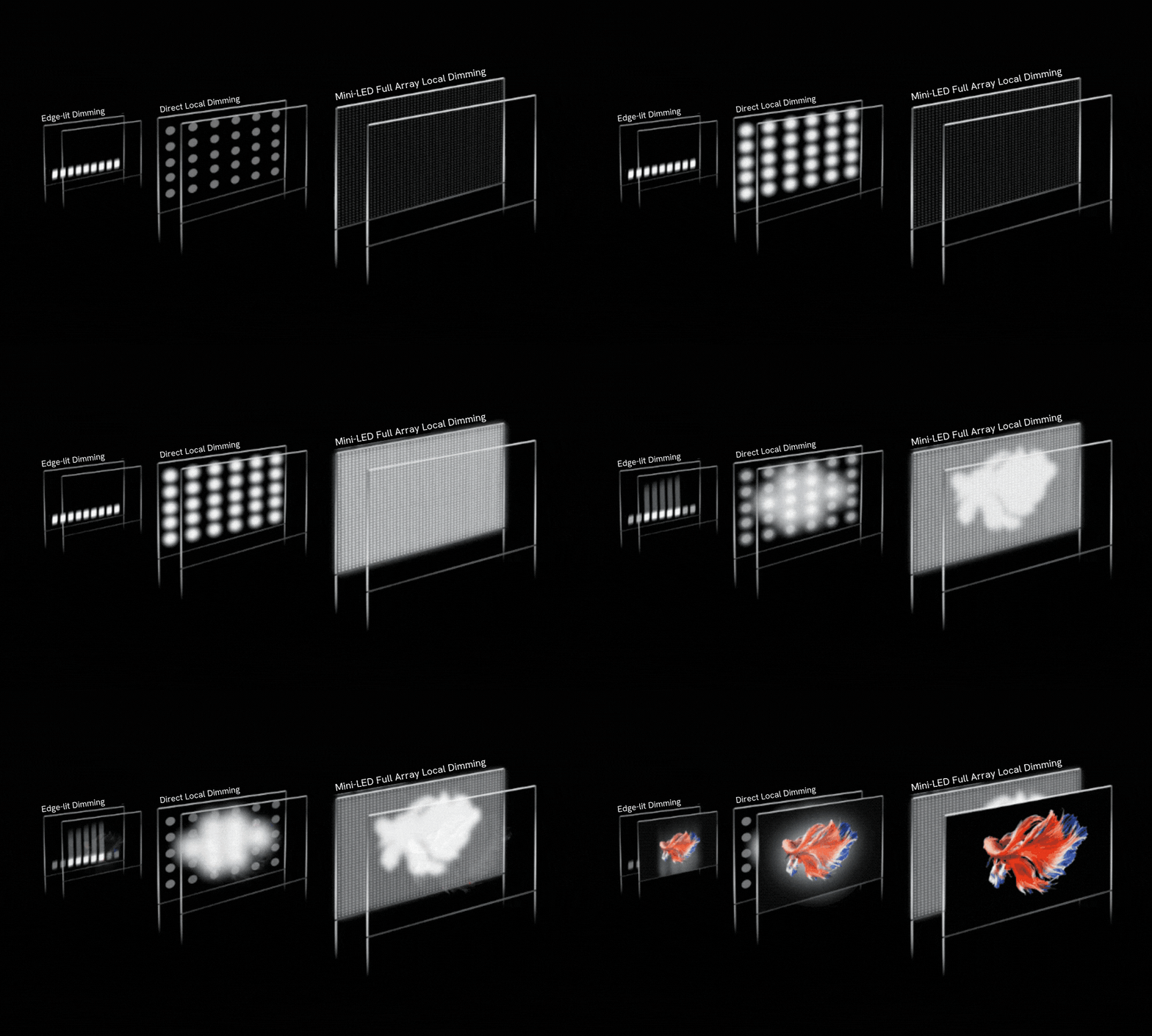
Mini LED refers to the backlighting system, not the panel itself. Your Mini LED monitor still has an LCD panel (usually IPS or VA). What's different is behind that panel.
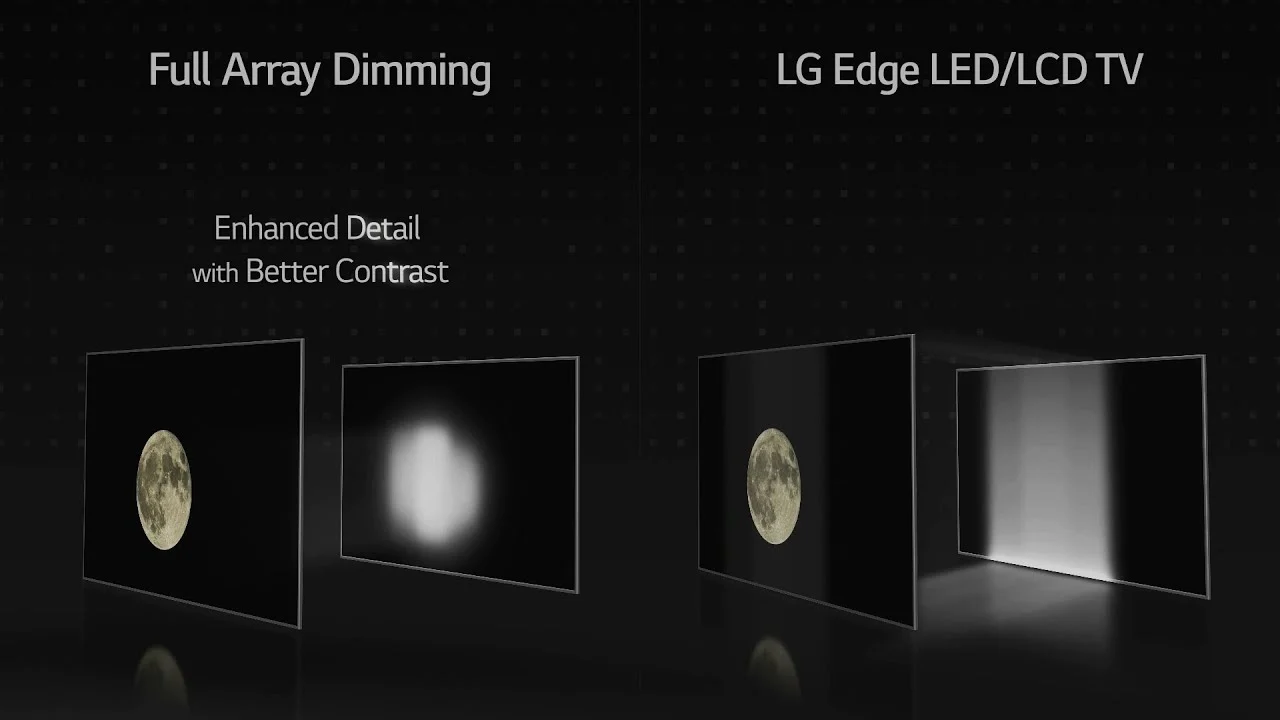
Instead of a few dozen or a few hundred standard LED bulbs lighting the whole screen uniformly, Mini LED packs in thousands of tiny LED diodes grouped into local dimming zones. Each zone can dim or brighten independently.
How local dimming zones work
Here's the core idea. A monitor with 192 dimming zones divides the backlight into 192 separate sections. When part of the image is supposed to be dark (a starfield, movie credits, shadowy corners), those zones dim down.
When part is bright (sunlight, explosions, a white web page), those zones crank up.
The more zones you get, the more precise this effect becomes. Entry-level Mini LED monitors ship with around 192, 384 zones. Mid-range units push 576, 1,152 zones.
High-end options (as of 2026) hit 2,300+ zones.
Manufacturer specs confirm that zone count directly correlates with dimming precision. But the dimming algorithm matters just as much as the zone count. Two monitors with identical zone counts can look noticeably different depending on how aggressively and intelligently the firmware controls those zones.
The honest difference between Mini LED and standard LED
A standard LED monitor uses edge lighting or a handful of dimming zones (sometimes none at all). Everything on screen gets the same backlight level. That's why blacks look grayish in a dark scene, and why HDR content doesn't pop.
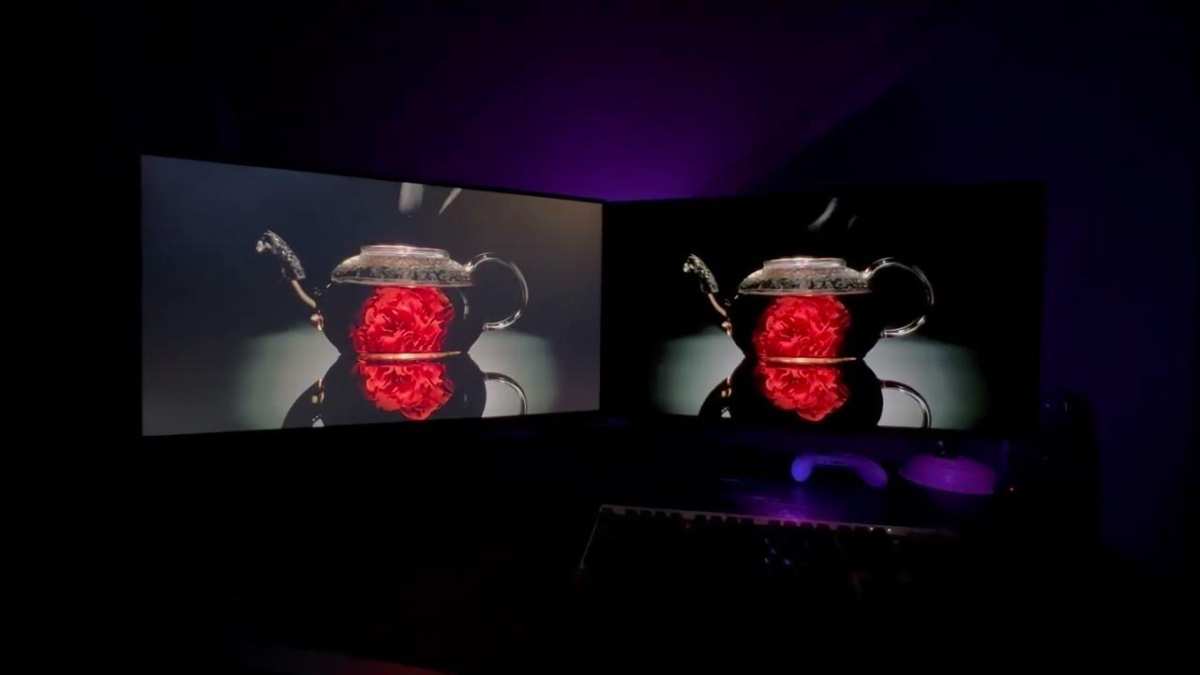
Mini LED changes the game by making the backlight genuinely adaptive. The contrast between bright and dark areas of the same image improves dramatically. HDR highlights look genuinely bright against genuinely dark backgrounds.
It's not perfect per-pixel control, but it's a massive step up from standard LED.
Where Mini LED Wins: Real HDR That Actually Looks Like HDR
If HDR matters to you, Mini LED delivers something most monitors can't. This is where the technology earns its keep.
Brightness that makes HDR content shine
Mini LED monitors routinely hit 1,000 nits sustained and 1,400, 1,600+ nits peak brightness. Some premium models push even higher. Compare that to a standard LED monitor stuck at 350, 600 nits, or OLED monitors that typically top out around 600, 1,000 nits for small highlights.
Why does that matter? HDR content is mastered assuming your display can actually reproduce bright specular highlights. Think sunlight reflecting off metal, light sources in a dark room, explosions.
If your monitor can't hit those brightness levels, the HDR tone mapping compresses everything and the image looks flat.
Mini LED lets those highlights genuinely punch. Per VESA DisplayHDR 1400 certification testing, a properly calibrated Mini LED monitor reproduces HDR content closer to the creator's intent than almost any other LCD technology.
No burn-in anxiety
This is a genuine advantage. OLED monitors, for all their image quality brilliance, carry a real (if small) risk of burn-in from static elements like taskbars, channel logos, and HUD elements in games. Manufacturer warranty coverage for burn-in varies, and the concern isn't theoretical.
Mini LED uses a standard LCD panel with a LED backlight. There's no organic material to degrade unevenly. Static elements on screen for hours won't leave ghost images.
For anyone who keeps the same monitor for 4, 6 years, this matters.
HDR in bright rooms (where OLED struggles)
Here's something people overlook. OLED excels in dark rooms where its perfect blacks can genuinely shine. But in a bright room with sunlight or strong overhead lighting, OLED's lower peak brightness works against it.
The image can feel washed out.
Mini LED's high peak brightness fights ambient light effectively. The HDR experience holds up in daytime viewing and well-lit offices. For many real-world environments, this makes Mini LED the more practical choice.
Where Mini LED Falls Short of "Future-Proof"
Now let's talk about the parts the marketing doesn't emphasize. Mini LED has real limitations that affect whether it's truly future-proof for your needs.
The blooming problem (still not solved)
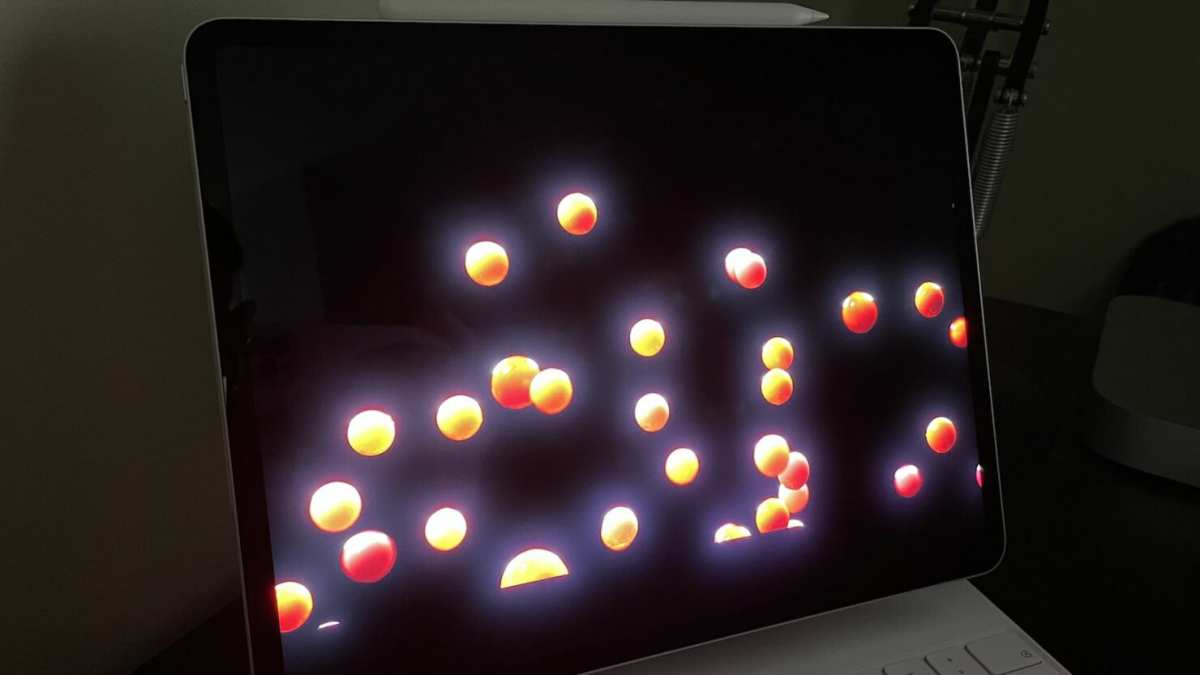
Blooming (or haloing) is Mini LED's biggest weakness. When a bright object appears against a dark background, the light from that dimming zone bleeds into adjacent dark zones. You'll see a faint halo around white text on a black screen, or a glow around stars in a space scene.
More zones reduce blooming, but they don't eliminate it. Only per-pixel emissive technologies (OLED, MicroLED) achieve zero blooming. As of 2026, even the best Mini LED monitors with 2,300+ zones still exhibit minor blooming visible in specific test patterns and dark-scene content.
OLED is catching up fast on price
This might be the most important factor. In our research, OLED monitor prices have dropped roughly 20, 35% year-over-year since 2023. Models that commanded $1,500, $2,000 two years ago now sit at $800, $1,200 for comparable specs.
Samsung Display's QD-OLED and LG's WOLED panels are proliferating across the market.
As OLED prices continue falling, the cost argument for Mini LED shrinks. If you can get OLED-level image quality for only slightly more money, the "future-proof" calculation shifts.
You're still not getting per-pixel control
This is the fundamental limitation no amount of zones can fully overcome. Each dimming zone covers hundreds or thousands of pixels. That means you'll never get the pixel-level precision of OLED or MicroLED.
Fine details in high-contrast scenes (subtitles in a movie, thin white lines on dark backgrounds) will always show some compromise.
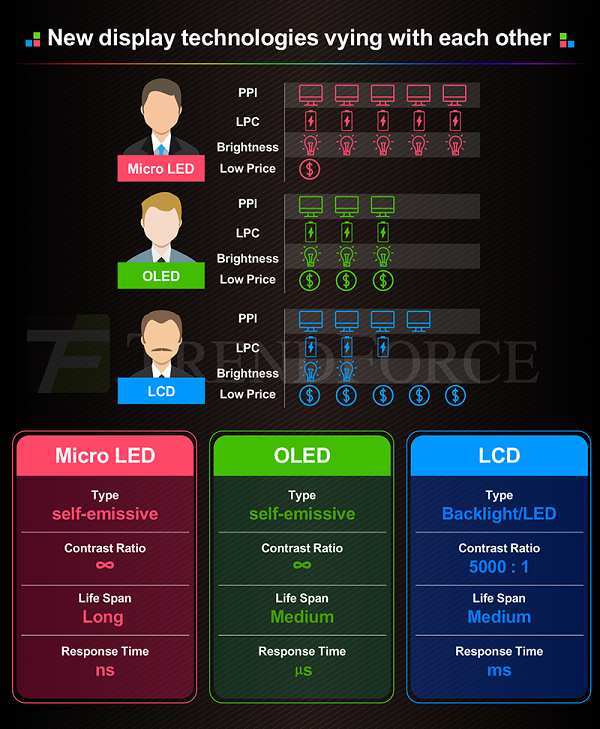
MicroLED technology, while still in its early commercial stages for monitors, promises both the brightness of Mini LED and the per-pixel control of OLED with zero burn-in risk. It's not available yet for consumer monitors at sane prices, but it represents what "future-proof" might actually look like in 5+ years. Keep that on your radar.
Where Mini LED Falls Short of "Future-Proof"
Now let's talk about the parts the marketing doesn't emphasize. Mini LED has real limitations that affect whether it's truly future-proof for your needs.
The blooming problem (still not solved)
Blooming (or haloing) is Mini LED's biggest weakness. When a bright object appears against a dark background, the light from that dimming zone bleeds into adjacent dark zones. You'll see a faint halo around white text on a black screen, or a glow around stars in a space scene.
More zones reduce blooming, but they don't eliminate it. Only per-pixel emissive technologies (OLED, MicroLED) achieve zero blooming. As of 2026, even the best Mini LED monitors with 2,300+ zones still exhibit minor blooming visible in specific test patterns and dark-scene content.
OLED is catching up fast on price
This might be the most important factor. In our research, OLED monitor prices have dropped roughly 20, 35% year-over-year since 2023. Models that commanded $1,500, $2,000 two years ago now sit at $800, $1,200 for comparable specs.
Samsung Display's QD-OLED and LG's WOLED panels are proliferating across the market.
As OLED prices continue falling, the cost argument for Mini LED shrinks. If you can get OLED-level image quality for only slightly more money, the "future-proof" calculation shifts.
You're still not getting per-pixel control
This is the fundamental limitation no amount of zones can fully overcome. Each dimming zone covers hundreds or thousands of pixels. That means you'll never get the pixel-level precision of OLED or MicroLED.
Fine details in high-contrast scenes (subtitles in a movie, thin white lines on dark backgrounds) will always show some compromise.
MicroLED technology, while still in its early commercial stages for monitors, promises both the brightness of Mini LED and the per-pixel control of OLED with zero burn-in risk. It's not available yet for consumer monitors at sane prices, but it represents what "future-proof" might actually look like in 5+ years. Keep that on your radar.
How to Decide: Mini LED vs. OLED vs. Standard LED in 2025
This is the actual decision you're making. Let's break it down honestly.
| Feature | Mini LED | OLED (WOLED/QD-OLED) | Standard LED |
|---|---|---|---|
| Peak HDR brightness | 1,000–1,600+ nits | 600–1,000 nits | 300–600 nits |
| Contrast ratio | Excellent (zone-dependent) | Perfect (per-pixel) | Limited |
| Blooming / haloing | Present (varies) | None | Not applicable |
| Burn-in risk | None | Low but real | None |
| Color volume | Very good | Excellent | Moderate |
| Bright room performance | Excellent | Good | Varies |
| Price trend | Declining steadily | Declining faster | Stable / low |
| Best lifespan potential | 6–8+ years | 5–7 years | 6–8+ years |
Best choice for your actual use case
Choose Mini LED if:
- You work in a bright room and need HDR that overcomes ambient light
- You display static UI elements all day (taskbars, toolbars, coding environments) and want zero burn-in risk
- You create or consume HDR content and brightness matters more than perfect blacks
- You want a monitor you'll keep for 5+ years without worrying about panel degradation
Choose OLED if:
- You primarily work or game in dim or dark rooms
- Perfect blacks and per-pixel contrast are your top priority
- You don't keep the same monitor for more than 3, 4 years
- You're willing to accept minor burn-in risk for superior image quality
Choose standard LED if:
- Color accuracy and HDR aren't primary concerns
- Budget is your leading constraint
- You're doing general office work, browsing, or coding without HDR requirements
Don't forget connectivity
Future-proofing isn't just about the panel. Check that your chosen monitor has DisplayPort 1.4/2.1 or HDMI 2.1 to handle high-resolution, high-refresh signals from next-gen GPUs and consoles. Adaptive sync support (G-Sync or FreeSync) also ensures compatibility with variable refresh rate tech going forward.
Without these ports, even the best panel becomes a bottleneck within a couple of years.
Pricing Reality: What You'll Actually Spend in 2025
Mini LED monitor pricing spans a wide range as of 2025. Here's what aggregate retail data shows for the current market:
Entry-level Mini LED ($300, $500)
- 27" IPS panel, 192, 384 dimming zones
- 600, 1,000 nits peak brightness
- Good for gaming and general HDR use
Mid-range Mini LED ($500, $800)
- 27", 32" IPS or VA panel, 576, 1,152 zones
- 1,000, 1,400 nits peak brightness
- Solid HDR performance for content creation and gaming
Premium Mini LED ($800, $1,500+)
- 32" high-end IPS, 2,300+ zones
- 1,600+ nits peak brightness
- Competes directly with OLED monitors
Compare this to OLED monitors in 2025. Entry-level 27" QD-OLED monitors are available around $500, $700. Mid-range options hit $700, $1,000.
The price gap between Mini LED and OLED is narrowing rapidly.
Standard LED monitors remain cheapest at $150, $400, but lack the HDR capabilities that make the higher investment worthwhile for most buyers today.
The Expert's Take: When Mini LED Makes Sense (And When It Doesn't)
Here's my honest assessment after tracking this market closely.
Mini LED is a strong choice for people who want excellent HDR today without long-term panel concerns. The brightness advantage is real and meaningful. The lack of burn-in risk is a genuine practical benefit.
Zone counts are improving fast enough that blooming becomes less noticeable with each generation.
But "future-proof" is too strong a word if you're looking more than 4, 5 years ahead. OLED prices are dropping fast enough that it may become the default premium choice by 2026, 2027. MicroLED looms on the horizon as the true future-proof technology once manufacturing scales up.
My recommendation: If you need a monitor now and HDR brightness plus durability matter more than perfect blacks, Mini LED is an excellent buy. If you can stretch your budget slightly and value contrast precision, OLED might serve you better. If you're willing to wait 12, 18 months, both technologies will likely offer better value for money than today.
Either way, prioritize the features and connectivity that match your actual use case. Don't buy for hypothetical future needs that may never materialize.
Frequently Asked Questions
Are Mini LED monitors good for gaming?
Yes. Mini LED monitors deliver excellent HDR gaming experiences, especially in titles with demanding lighting. The high peak brightness makes highlights pop in ways standard LED can't match.
Many models also offer low response times and adaptive sync support, making them competitive with dedicated gaming displays. The trade-off is minor blooming in very dark scenes.
Will Mini LED be outdated by 2027?
Not entirely, but the technology will face stiffer competition. OLED monitors will likely match or beat Mini LED on price by then. MicroLED may enter the consumer market.
Mini LED will still hold advantages in brightness and lifespan, but "premium" status may shift toward newer technologies.
How many dimming zones should I look for?
For noticeable HDR improvement over standard LED, aim for at least 384 zones. For genuinely strong HDR with minimal visible blooming, target 1,000+ zones. Monitors with 2,000+ zones deliver top-tier LCD HDR quality that rivals per-pixel technologies in most real-world content.
Is Mini LED better than OLED for bright rooms?
Yes, significantly. Mini LED's brightness advantage (often double that of OLED) makes it far more suitable for rooms with ambient light or sunlight. OLED excels in dark-room viewing where perfect blacks are the priority.
Your room environment matters more than specs here.
Do Mini LED monitors have any health or eyecomfort concerns?
Most Mini LED monitors carry TÜV Rheinland certifications for low flicker and blue light emissions. The technology itself doesn't introduce unique eye health risks compared to standard LED displays. That said, any extended screen use benefits from proper brightness settings and regular breaks.
The Expert's Take: When Mini LED Makes Sense (And When It Doesn't)
Here's where we land after looking at all the data.
Mini LED makes the most sense if you're buying a monitor you plan to keep for 5+ years in a bright or variable-light environment. The brightness advantage holds up against OLED. The zero burn-in risk removes a genuine long-term worry.
And pricing has stabilized enough that you're not overpaying for the technology.
But if you primarily work in dim rooms, prioritize absolute image quality over everything else, and upgrade on a 3-year cycle, OLED likely serves you better. Its contrast advantage is real and meaningful, even in 2026. And its price trajectory suggests the value gap will only tighten.
Don't buy Mini LED expecting it to be the last monitor you ever buy. Buy it expecting to be very happy with it for the next 4, 5 years.
What Matters More Than the Tech: Connectivity and Standards
The best panel in the world is useless if your GPU or console can't push pixels to it properly. Connectivity is the part of "future-proofing" people overlook.
DisplayPort 2.1 and HDMI 2.1
As of 2026, you want at least HDMI 2.1 for console gaming (PS5 Pro, Xbox Series X at high refresh rates). DisplayPort 2.1 matters for PC connectivity at 4K high-refresh or beyond. Many Mini LED monitors shipped in 2023, 2024 still use DP 1.4, which limits bandwidth at 4K 144Hz+ with full chroma.
Check the specific port specs before you buy. A monitor with DP 1.4 and HDMI 2.0 will feel outdated within 1, 2 years.
Adaptive sync compatibility
G-Sync and FreeSync support varies across Mini LED models. Some work fully with both NVIDIA and AMD GPUs. Others only support one ecosystem properly.
Verify compatibility with your specific GPU before purchasing. Mismatched adaptive sync can mean screen tearing or stuttering that no panel technology can fix.
Frequently Asked Questions
Do Mini LED monitors flicker at low brightness?
Some do. PWM (pulse-width modulation) dimming at low brightness causes visible flicker on certain models, particularly in sensitive users. Flicker-free DC dimming is available on many units but not universal.
Check for TÜV Flicker Free certification when comparing specs.
Can I use a Mini LED monitor for professional color grading?
Yes, with calibration. Many Mini LED monitors cover 95%+ DCI-P3 out of the box. Hardware calibration brings them to reference accuracy for most professional workflows.
However, for critical HDR mastering requiring perfect blacks, OLED or reference-grade professional displays remain the gold standard.
Is Mini LED the same as MicroLED?
No, completely different technologies. Mini LED is a backlighting system for LCD panels with thousands of small LED zones. MicroLED is an emissive technology with individual microscopic LEDs per pixel, similar to OLED but without organic materials.
MicroLED offers the best of both worlds (brightness and per-pixel control) but isn't available in consumer monitors at viable prices yet.
Will OLED monitors completely replace Mini LED?
Probably not. Both technologies serve different strengths. Mini LED's brightness advantage, lower production costs, and zero burn-in risk ensure it remains relevant.
Most industry analysis suggests they'll coexist for the foreseeable future, each dominating different segments.

Similar Posts