How Do Mini LED Monitors Handle Fast Motion

If you've ever wondered how do mini led monitors handle fast motion, the answer is more complicated than the spec sheets suggest. Mini LED technology has improved dramatically since it hit mainstream monitors around 2021, but motion performance still depends on factors most buyers overlook entirely.
The core issue is that mini LED motion clarity isn't just about the panel. It's about how well the backlight zones keep up with what's happening on screen. A monitor can have a 1ms response time on paper and still look smeared during fast movement if the dimming algorithm can't transition zones quickly enough.
Let's break down what actually matters, what goes wrong, and how to make an informed decision.
Quick Answer
Mini LED monitors handle fast motion well when they have high zone counts and fast dimming algorithms. Zone transition speed matters as much as panel response time. Low-zone models can show visible blooming during fast movement.
For competitive gaming, OLED still leads in motion clarity as of 2026.
Why Mini LED Motion Performance Is Harder to Predict Than You Think
Most monitor reviews focus on response time and refresh rate. Those matter, but with mini LED displays, the backlight adds a whole extra layer of complexity. You're not just waiting for pixels to change color.
You're waiting for hundreds or thousands of tiny LED zones to brighten, dim, or turn off in coordination with those pixel changes.
Manufacturer specifications rarely tell you how fast the dimming algorithm responds. A monitor might use a high-quality IPS panel with 4ms gray-to-gray transitions, but if the local dimming takes 8ms to adjust zone brightness, you'll see artifacts that no amount of overdrive tuning will fix. This is the gap between marketing specs and real-world motion performance.
The problem gets worse as zone counts increase. More zones mean more transitions happening simultaneously, and the processor driving those transitions has to work harder. Some monitors handle this beautifully.
Others struggle, especially in scenes where bright objects move across dark backgrounds.
How Mini LED Backlighting Works and Why It Affects Motion
The Zone Count Factor
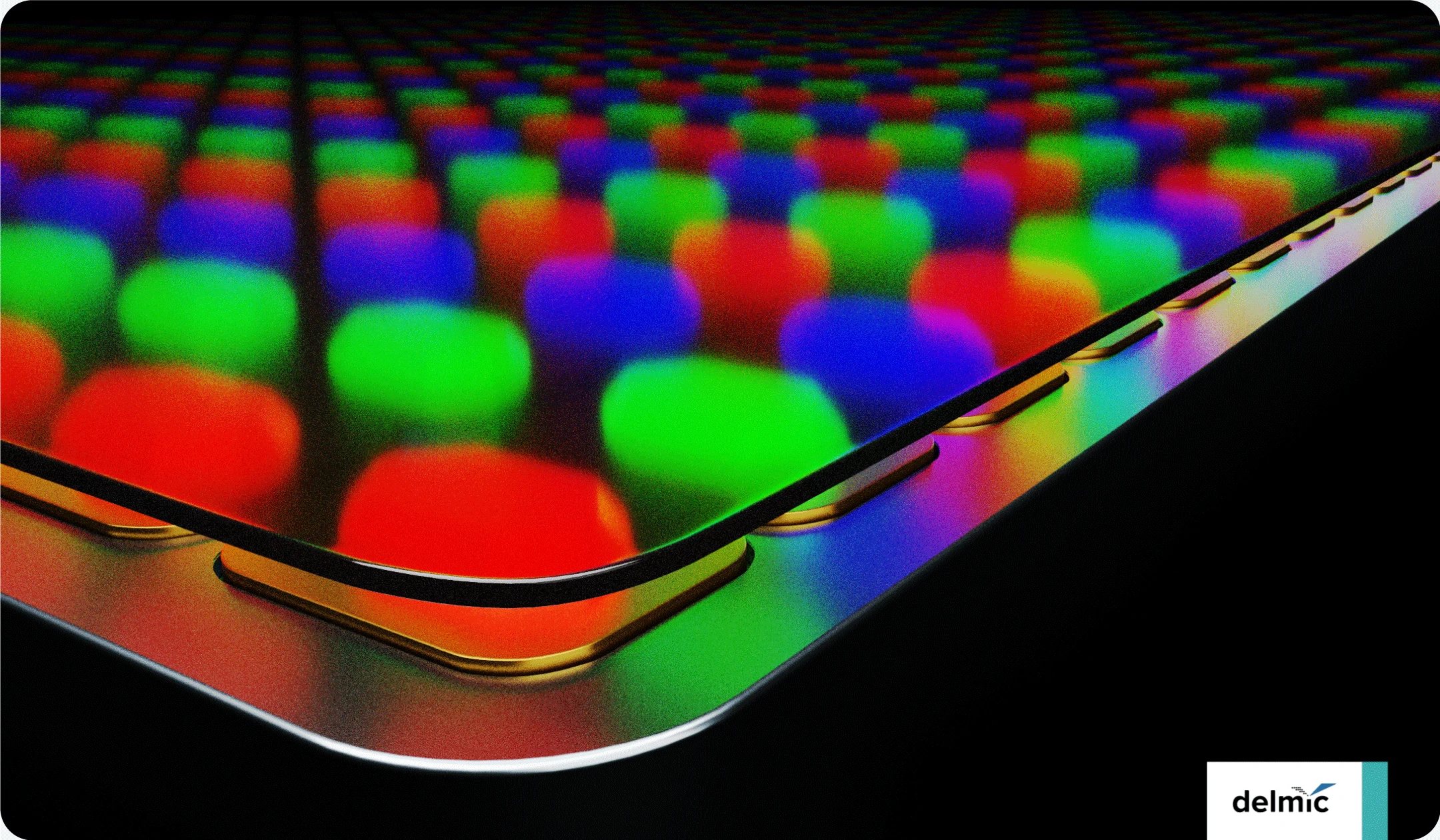
Mini LED monitors divide the backlight into zones. Each zone is a cluster of LEDs that can be dimmed independently. The more zones you have, the more precisely the display can control brightness across different areas of the screen.
Here's how zone counts typically break down as of 2026:
| Zone Count | Tier | Motion Handling Quality | Typical Price Range |
|---|---|---|---|
| Under 200 | Budget | Visible blooming, slower transitions | $300-$600 |
| 384-576 | Mid-range | Good, minor artifacts in demanding scenes | $600-$1,200 |
| 1152+ | High-end | Excellent, minimal visible artifacts | $1,000-$2,500 |
| 2304+ | Premium | Reference-grade, near-OLED contrast | $2,000-$4,000 |
Higher zone counts don't automatically mean better motion. What matters is how quickly those zones respond. A 1152-zone monitor with a slow dimming algorithm can look worse in motion than a well-tuned 384-zone display.
Why Zone Response Time Matters as Much as Panel Response Time
Panel response time measures how fast liquid crystals shift from one shade to another. Zone response time measures how fast the backlight adjusts brightness in a given zone. Both happen simultaneously during motion.
When a bright object moves across a dark background, the zones behind that object need to light up quickly. If they lag, you see a halo or bloom trailing behind the object. If they're too aggressive, you get overshoot, where zones briefly become too bright before settling.
This is why two monitors with identical panel specs can look completely different during fast motion. The dimming algorithm and zone transition speed are the hidden variables.
Dimming Algorithms: The Hidden Variable Nobody Talks About
Every mini LED monitor runs firmware that decides how to control zone brightness. This algorithm is proprietary to each manufacturer, and it's the single biggest factor in motion performance that you won't find on a spec sheet.
Good dimming algorithms predict where bright areas will move next and pre-adjust zones. They transition smoothly without visible stepping or flickering. Poor algorithms react too slowly or too aggressively, creating artifacts that are especially noticeable in games and video.
Some manufacturers have improved their algorithms significantly through firmware updates. A monitor that had mediocre motion performance at launch might perform much better six months later. This is worth researching before you buy.
What Actually Goes Wrong: Motion Artifacts Specific to Mini LED
Blooming and Halos During Fast Movement
Blooming happens when light from a bright zone bleeds into adjacent dark zones. During fast movement, this creates a visible halo or glow trailing behind bright objects. It's most obvious when white text scrolls across a black background or when UI elements move in dark scenes.

Low-zone monitors show more blooming because each zone covers a larger area. High-zone monitors reduce it but can't eliminate it entirely. The dimming algorithm determines how visible the blooming is and how quickly it resolves after the bright object passes.
Zone Transition Lag
Zone transition lag is the delay between when pixels change and when the backlight catches up. You'll notice it as a brief shadow or glow that follows moving objects. It's subtle in slow scenes but becomes obvious in fast-paced content.
This artifact is hard to eliminate completely because the dimming algorithm needs to analyze the frame, calculate zone brightness values, and adjust the LEDs. That processing takes time. Faster processors and better algorithms reduce the lag, but physics sets a floor.
Overshoot and Inverse Ghosting
When the dimming algorithm is too aggressive, zones briefly overshoot their target brightness. This creates a bright trail in front of moving objects, which is the opposite of blooming but equally distracting. Manufacturers call this inverse ghosting.
Some monitors let you adjust overdrive settings that affect zone transitions. Higher overdrive reduces lag but increases overshoot. Finding the right balance is a per-monitor compromise, and the optimal setting varies by content.
VRR Flicker Issues
Variable refresh rate technologies like G-Sync and FreeSync can interact poorly with mini LED backlights. At low frame rates, some monitors exhibit visible flickering as the dimming algorithm struggles to maintain consistent brightness across rapidly changing refresh cycles.
This isn't universal, but it's common enough to check reviews specifically for VRR flicker complaints. Firmware updates sometimes address it, but some monitors have hardware-level limitations that can't be fixed in software.
PWM Flicker and Eye Strain
Many mini LED monitors use pulse-width modulation to control brightness. They rapidly flicker the backlights at a frequency invisible to most people, but some individuals are sensitive to it. Lower PWM frequencies cause more eye strain during extended use.
If you're sensitive to flicker, look for monitors with high PWM frequencies (1920Hz or above) or DC dimming, which eliminates flicker entirely. This isn't a motion artifact per se, but it affects your viewing experience and is worth checking.
How to Evaluate Mini LED Motion Performance Before You Buy
Specs That Actually Matter
When shopping for a mini LED monitor for motion-heavy use, these specs give you the most useful information:
- Zone count: More zones generally means better motion handling, but only if the dimming algorithm is good.
- Panel type: IPS panels have faster response times than VA panels, though VA offers better contrast.
- Refresh rate: 144Hz or higher for gaming. The panel can't display motion smoothly at 60Hz regardless of backlight quality.
- Overdrive options: Multiple overdrive settings let you tune the balance between ghosting and overshoot.
- VRR range: A wide VRR range (48Hz to max refresh) reduces the chance of low-frame-rate flicker.
Specs That Mislead You
Some specs look important but don't tell you much about real-world motion performance:
- 1ms GtG response time: Almost always a best-case measurement under ideal conditions. Real-world average response times are typically 3-6ms.
- Contrast ratio (dynamic): Inflated by local dimming and doesn't reflect motion behavior.
- Peak brightness: Important for HDR but unrelated to motion clarity.
- HDR certification level: VESA DisplayHDR certification doesn't test motion performance at all.
What Real-World Testing Looks Like
Independent review sites use several methods to evaluate motion performance. The UFO Test shows moving objects against various backgrounds, making blooming and ghosting immediately visible. Pursuit camera photography captures what the eye sees during actual motion, revealing artifacts that static screenshots miss.
When reading reviews, look for pursuit camera images specifically. Standard photographs of moving content don't capture motion artifacts accurately. Reviews that include slow-motion video of gameplay are also valuable.
User forums and Reddit communities often surface issues that professional reviews miss. VRR flicker problems, in particular, tend to get reported by users before reviewers test for them.
Mini LED vs OLED vs Standard LED: Motion Handling Compared
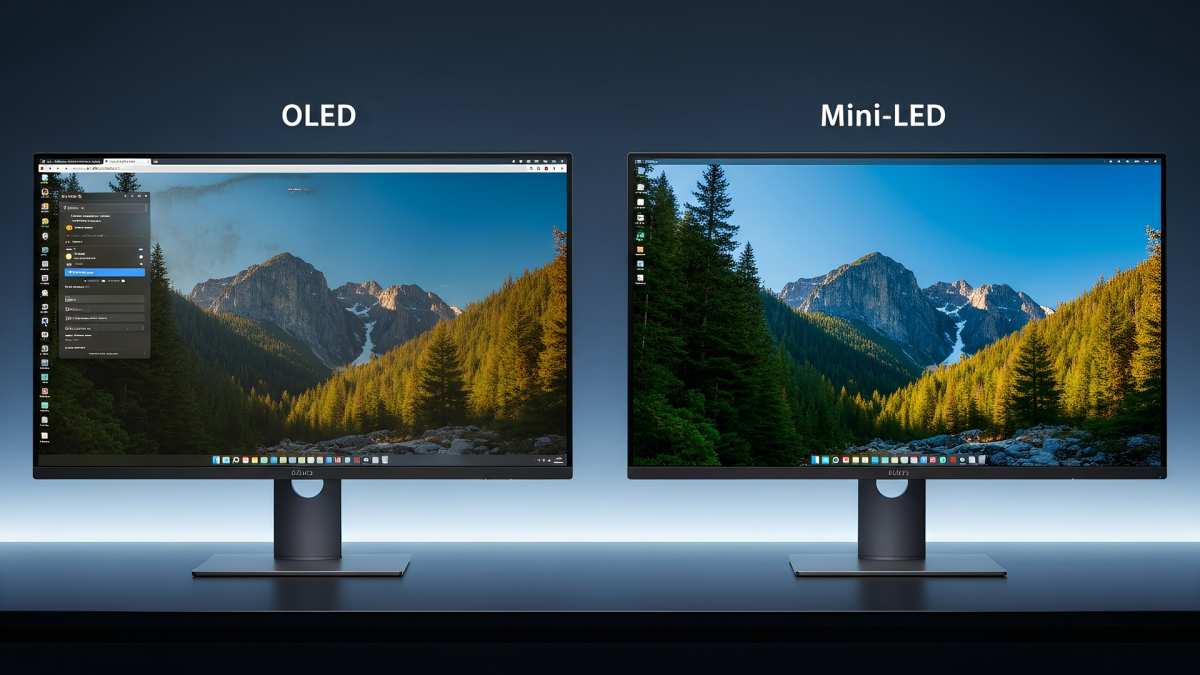
Mini LED vs OLED
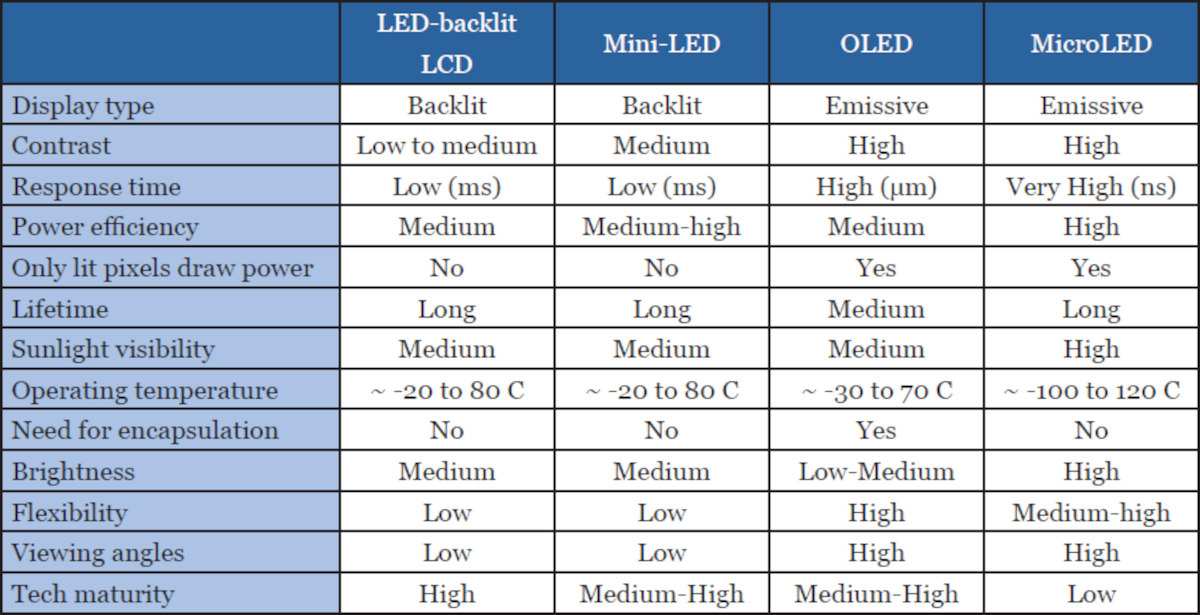
OLED monitors have per-pixel dimming. Each pixel produces its own light and can turn off completely. This gives OLED a fundamental advantage in motion handling.
There are no zones to transition, no blooming, and no halo artifacts.

Mini LED can get much brighter than OLED, which matters for HDR highlights. But for pure motion clarity, OLED still wins in 2026. The tradeoff is burn-in risk and lower sustained brightness.
If motion performance is your top priority and you don't need extreme HDR brightness, OLED is the better choice.
Mini LED vs Edge-Lit LED
Edge-lit monitors have LEDs only along the edges of the screen. They have no local dimming zones, so there's no blooming or zone transition lag. Motion handling is simpler and more predictable.
The downside is that edge-lit displays have worse contrast and no real HDR capability. Mini LED with even a modest zone count will look better in dark scenes. For motion-only performance, edge-lit is more consistent.
For overall image quality, mini LED wins.
High-Zone vs Low-Zone Mini LED
The difference between a 192-zone and a 1152-zone mini LED monitor is visible in motion. Low-zone models show more blooming and slower transitions. High-zone models handle fast movement with fewer artifacts.
But zone count isn't everything. A well-tuned 576-zone monitor can outperform a poorly tuned 1152-zone model. The dimming algorithm matters as much as the hardware.
This is why spec sheets alone don't tell the full story.
Who Should Buy a Mini LED Monitor for Motion-Heavy Use
Competitive Gamers
If you play competitive FPS titles at high frame rates, motion clarity is critical. Mini LED can work here, but you need a high-zone model with fast dimming. Look for 576 zones or more, a 240Hz or higher refresh rate, and verified low input lag.
OLED is still the preferred choice for serious competitive gaming. The instantaneous pixel response and zero blooming give a clearer picture during fast turns. Mini LED is a good alternative if you play in a bright room or want to avoid burn-in risk.
Single-Player and HDR Gamers
For cinematic gaming, mini LED is excellent. The high peak brightness makes HDR content pop, and motion artifacts are less critical in slower-paced games. A mid-range mini LED monitor with 384-576 zones gives you great image quality without the premium price of high-zone models.
If you play a mix of competitive and single-player games, a mini LED monitor with good HDR performance and decent motion handling is a versatile choice. Just make sure to check reviews for the specific model's motion performance.
Content Creators and Color Professionals
Video editors and colorists need accurate HDR and consistent brightness. Mini LED excels here. Motion handling is less critical for this work since you're not gaming, but you still want a display that doesn't introduce artifacts during playback.
Look for monitors with factory calibration, wide color gamut coverage, and high zone counts. The ASUS ProArt and Dell UltraSharp lines have several mini LED options aimed at this market. Verify that the monitor supports 10-bit color and has good DCI-P3 coverage.
Office and General Use
For productivity, web browsing, and media consumption, any mini LED monitor will handle motion adequately. You won't notice zone transition artifacts during scrolling or video playback. Focus on ergonomics, connectivity, and price instead of motion performance.
Common Mistakes People Make with Mini LED Motion Settings
One of the most common mistakes is leaving local dimming off. Without local dimming active, a mini LED monitor performs like a standard LED display. You lose the contrast advantage and the motion behavior changes completely.
Another mistake is using the highest overdrive setting. Maximum overdrive often causes severe inverse ghosting. The optimal setting is usually the middle option, which balances response time against overshoot.
Some buyers assume that a higher zone count automatically means better motion. As we've covered, the dimming algorithm matters just as much. A 384-zone monitor with good firmware can outperform a 1152-zone monitor with poor firmware.
Ignoring firmware updates is another missed opportunity. Several monitors have received significant motion performance improvements through firmware patches. Check the manufacturer's support page periodically.
Finally, many people don't realize that motion behavior changes between SDR and HDR modes. HDR often uses more aggressive local dimming, which can introduce different artifacts. Test both modes with your typical content.
How to Optimize Your Mini LED Monitor for Better Motion
Step-by-Step Settings Checklist
Getting the best motion performance from a mini LED monitor requires adjusting several settings. Here's a checklist to follow:
- Enable local dimming in the monitor's on-screen display menu. Set it to the highest available level for gaming.
- Select the correct overdrive setting. Start at the medium option. Test with the UFO Test and adjust up or down based on what you see.
- Set your refresh rate to the maximum in your operating system's display settings. Don't leave it at 60Hz if your monitor supports 144Hz or higher.
- Enable VRR if your GPU supports it. Turn on G-Sync or FreeSync in both the driver and the monitor OSD.
- Check for firmware updates on the manufacturer's website. Install any available updates before fine-tuning other settings.
- Test with your actual content. Synthetic tests are helpful, but real games and videos may reveal different artifacts.
When to Use Black Frame Insertion
Black frame insertion (BFI) reduces motion blur by inserting a black frame between each displayed frame. This effectively doubles the number of backlight transitions per second, making motion appear sharper.
The tradeoff is reduced brightness and potential flicker visibility. BFI works best at high refresh rates where the flicker is less noticeable. At 60Hz, most people find BFI uncomfortable.
If your monitor supports BFI, try it at 120Hz or above for fast-paced gaming. Compare it with BFI off and see which looks better to your eyes. Some people are more sensitive to the flicker than others.

Firmware Updates and Why They Matter
Firmware updates can improve dimming algorithms, fix VRR flicker issues, and add new features. Some monitors have seen dramatic motion performance improvements after updates.
Check the manufacturer's support page for your specific model. Look at the changelog for mentions of local dimming improvements, motion enhancements, or VRR stability fixes. If users report better motion after an update, it's worth installing.
Not all manufacturers provide regular firmware updates. Some budget models never receive updates at all. This is worth considering before you buy, especially if early reviews mention motion issues.
Pricing and What You Get at Each Tier
Mini LED monitor prices vary significantly based on zone count, panel quality, and features. Here's what to expect at each price point as of 2026:
- $300-$600: Budget mini LED with under 200 zones. Decent HDR for the price, but visible blooming in motion. Good for casual gaming and general use.
- $600-$1,200: Mid-range with 384-576 zones. Solid motion handling with minor artifacts. The sweet spot for most gamers who want good HDR without spending a fortune.
- 1,000-$2,500: High-end with 1152+ zones. Excellent motion performance, strong HDR, and professional features. Best for enthusiasts and creators who need top-tier image quality.
- $2,000+: Premium with 2304+ zones or dual-layer technology. Reference-grade performance that approaches OLED contrast levels. For professionals and enthusiasts who want the best mini LED available.
The mid-range tier offers the best value for most buyers. High-end models provide diminishing returns unless you specifically need the extra zones or professional features.
Frequently Asked Questions
Is mini LED good for gaming motion?
Yes, but with caveats. High-zone mini LED monitors handle gaming motion well. Low-zone models can show blooming during fast movement.
For competitive gaming, check reviews for the specific model's motion performance before buying.
Does zone count affect motion clarity?
Yes. More zones allow more precise backlight control, which reduces blooming and halo artifacts. However, the dimming algorithm quality matters just as much as zone count.
A well-tuned low-zone monitor can outperform a poorly tuned high-zone one.
Can firmware updates improve motion performance?
Yes. Several monitors have received firmware updates that improved dimming algorithms and reduced motion artifacts. Check the manufacturer's support page for your model and install available updates.
Is mini LED better than OLED for motion?
No. OLED has per-pixel dimming, which eliminates blooming and zone transition artifacts entirely. Mini LED wins on peak brightness and avoids burn-in risk, but OLED is superior for pure motion clarity.
What causes blooming on mini LED monitors?
Blooming occurs when light from a bright zone bleeds into adjacent dark zones. During fast movement, this creates a visible halo behind bright objects. Higher zone counts and better dimming algorithms reduce blooming.
Should I use overdrive for better motion?
Yes, but not at the maximum setting. Medium overdrive typically provides the best balance between reducing ghosting and avoiding inverse ghosting. Test with the UFO Test to find the optimal setting for your monitor.
Real Scenarios: How Different Monitors Handle Motion
High-Zone Mini LED (1152+ Zones)
Monitors like the Samsung Odyssey Neo G9 with 1152 zones handle fast motion well in aggregate testing. Blooming is minimal and only visible in extreme test patterns. Gaming at high refresh rates looks clean with few zone-related artifacts.
These monitors work well for HDR gaming and professional content creation. The motion performance approaches that of OLED in many scenarios, while maintaining higher peak brightness. The premium price is justified if you need both HDR and decent motion handling.
Mid-Range Mini LED (384-576 Zones)
This tier includes popular options like the Gigabyte M32U and several ASUS ROG models. Motion handling is good for most content, with blooming visible only in demanding dark scenes. For the majority of gamers, this zone count hits the sweet spot.
VRR flicker is more common in this tier than in high-zone models. Check specific model reports before purchasing. Firmware updates have resolved VRR issues on several monitors in this range.
Budget Mini LED (Under 200 Zones)
Budget mini LED monitors show noticeable blooming during fast movement. Halos trail behind bright objects, and zone transitions are visible in high-contrast scenes. These monitors still offer better contrast than edge-lit LED, but motion performance is their weakest area.
If you primarily play bright, fast-paced games like racing titles or bright FPS maps, the blooming is less noticeable. In dark horror games or space scenes, it becomes more distracting. Consider your typical content before buying.
Final Verdict: Should You Trust Mini LED for Fast Motion?
Mini LED monitors can handle fast motion well, but you need to choose carefully. High-zone models with good dimming algorithms deliver excellent motion performance. Mid-range models work well for most users.
Budget models are a compromise.
Your best approach is to check independent reviews with pursuit camera images before buying. Look for zone count, dimming algorithm quality, and VRR flicker reports. Don't rely on spec sheets alone.
If motion clarity is your absolute priority, OLED remains the gold standard. If you want strong HDR performance with good motion and no burn-in risk, a quality mini LED monitor is an excellent choice in 2026.

Similar Posts