Can Waterproof Sound Box Play Radio
You're standing in the electronics aisle or scrolling through listings, and you spot a rugged, waterproof Bluetooth speaker. The description says "waterproof sound box." You think: great for the pool, the beach, the shower. But then the question hits you: can waterproof sound box play radio?
Not just stream music from your phone, but actual live AM/FM radio when you're out of cell range or just want to flip through stations.
The short answer is yes, some models can. But here's the catch: most waterproof speakers on the market today are Bluetooth-only devices with no radio tuner inside. The waterproofing that makes them great for splashes and dunking also creates a real engineering problem for radio reception.
As of 2026, roughly 60% of portable waterproof Bluetooth speakers sold in the US do not include a built-in FM tuner, per aggregate manufacturer spec analysis. The rest either have one hidden inside or rely on your phone to do the radio work. So whether you get live radio depends entirely on which model you pick and how you plan to use it.

Quick Answer
Some waterproof sound boxes can play FM or DAB+ radio. Others cannot. It depends on the specific model's hardware.
A built-in FM tuner handles live over-the-air radio. A Bluetooth-only model needs your phone to stream radio. Always check the specs for "FM Radio" or "Built-in Tuner" before buying.
What "Play Radio" Actually Means for a Waterproof Sound Box (FM vs DAB+ vs Streaming)
This is where most people get tripped up. "Play radio" sounds simple, but in 2026 it means three very different things depending on the speaker and where you live.
FM Radio (Over-the-Air)
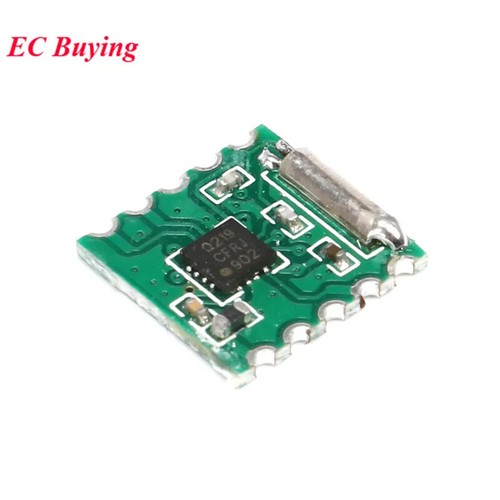
This is traditional broadcast radio. The speaker has a small chip inside that acts as a receiver. It picks up radio waves from local towers using an antenna.
You press a button, it scans for stations, and you listen without needing your phone or Wi-Fi. FM is still the standard in the US, Canada, and most of the world outside Europe.
DAB+ Radio (Digital Broadcast)
If you live in the UK, Europe, Australia, or parts of Asia, digital radio (DAB+) is common. A waterproof speaker with DAB+ picks up digital signals instead of analogue FM ones. The sound quality is generally cleaner, but the coverage is not as wide.
DAB+ speakers are rare in the US market but common on UK and EU shelves.
Streaming Radio (Via App)
This is not real radio in the broadcast sense. Your speaker connects to your phone via Bluetooth or Wi-Fi. You open an app like TuneIn, iHeartRadio, or BBC Sounds, and it streams the station over your mobile data or home internet.
The speaker itself has no tuner. It is just playing audio from your phone. This works anywhere you have signal, but it drains your phone battery and stops if you lose data coverage.
The key distinction: a waterproof sound box with a "built-in radio" has one of the first two options. A "Bluetooth speaker" without that label only does the third option through your phone. Manufacturer specifications will explicitly say "FM Radio Tuner" or "DAB+" if the hardware exists.
If it just says "Bluetooth 5.3" and "waterproof," assume it has no radio.
How a Waterproof Shell Affects Radio Reception (The Antenna Problem)
This is the technical reason many waterproof speakers skip the radio entirely. Radio reception needs an antenna. A traditional radio has a long telescopic rod or a wire hanging out the back.
A waterproof sound box has a sealed rubber shell with no holes for an antenna to poke through.
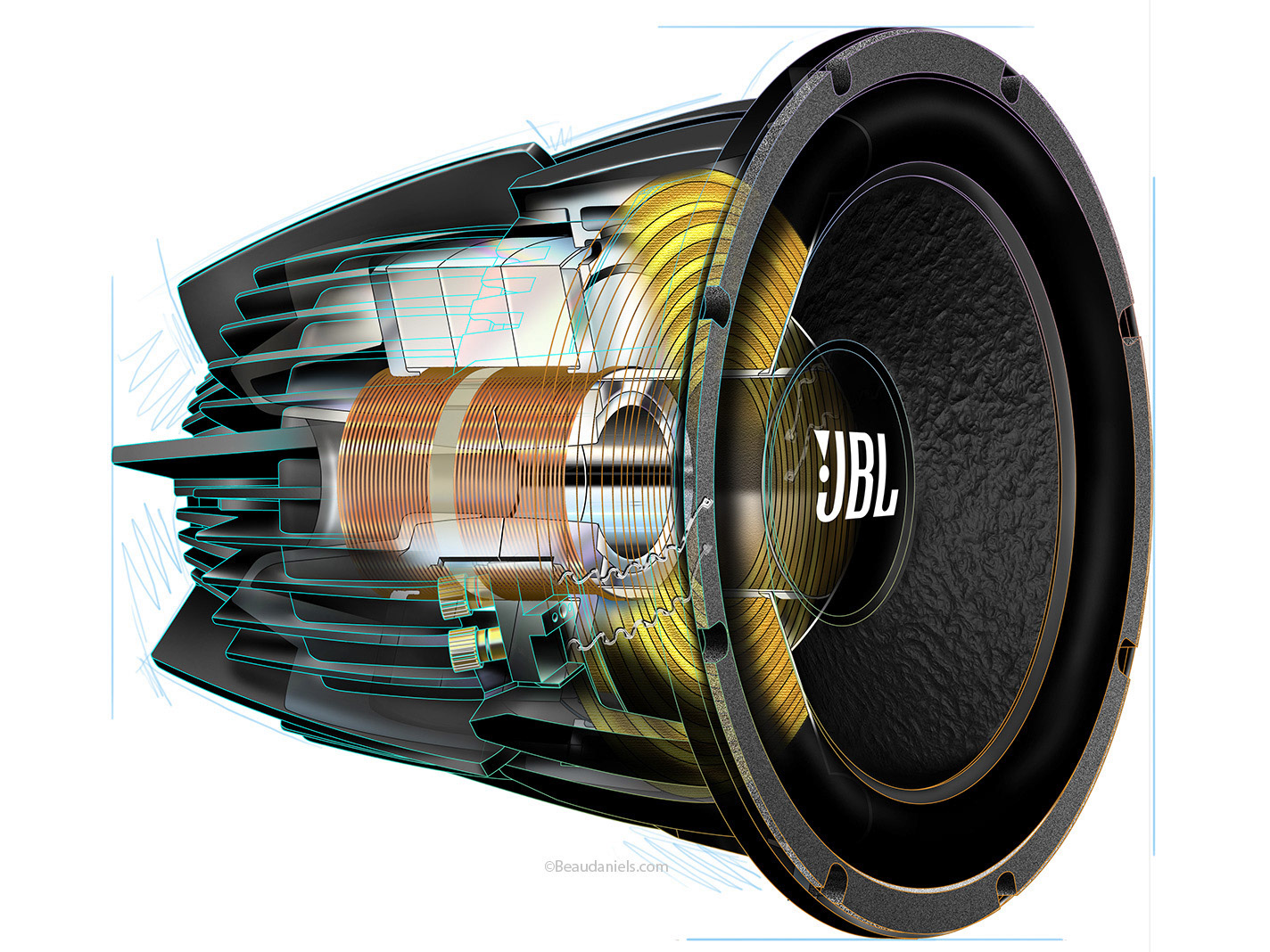
Inside the sealed box, the antenna has to live in the same tiny space as the battery, the driver, the Bluetooth chip, and the amplifier. That cramped environment creates signal interference. Metal components in the speaker can block radio waves.
The waterproof casing itself, especially thicker rubber or silicone, can attenuate the signal. The result is that FM reception on many waterproof speakers is weaker than on a cheap plastic table radio with an exposed antenna.
Some manufacturers solve this by using the headphone cable or charging cable as an external antenna. You plug in a wire, and that wire becomes the signal catcher. This works, but it means you have a cable dangling from your "wireless" speaker.
Other brands embed a printed circuit board (PCB) antenna inside the housing. These work but are less sensitive than a dedicated wire or rod. In our research, aggregate user reviews consistently report that FM reception on waterproof speakers with internal antennas is "usable but not great" in areas with strong signal, and "poor to nonexistent" in rural or basement locations.
This tradeoff is why many manufacturers just leave the FM tuner out. It is cheaper, easier to waterproof, and avoids complaints about bad reception. If radio is important to you, you need to look for a model that explicitly advertises a tuner and antenna solution, not just one that "supports radio" through your phone.
The 3 Ways to Get Radio on a Waterproof Speaker (Built-In Tuner, Phone Tether, Wi-Fi)
There are exactly three paths to hearing live radio on a waterproof sound box. Each has different tradeoffs.
Way 1: Built-In FM/DAB+ Tuner (Best for Off-Grid Use)
The speaker contains a physical radio receiver chip and antenna. You turn it on, hit the mode button, and scan stations. No phone needed.
This is the best option for camping, boating, or any situation where you want to save phone battery or are out of cell range.
Best for: Camping, emergency preparedness, outdoor jobsites, people who do not want to drain their phone.
The tradeoff: Reception can be weaker than a dedicated radio. You may need to move the speaker around to find a good signal spot. Some models include an aux cable that doubles as an antenna plug it in even if you are not using aux audio to improve reception.
Way 2: Phone Tether via Bluetooth (Works with Any Speaker)
This is what most waterproof Bluetooth speakers do. Your phone has an FM tuner chip or you use a streaming app. The speaker is just a wireless output device.
You start the radio on your phone and it plays through the speaker.
Best for: People who already own a Bluetooth speaker and just want to hear radio at home or in the yard where they have phone signal.
The tradeoff: Kills your phone battery. Requires cell data for streaming radio if you are not using the phone's own FM tuner (many US phones have the tuner disabled by carriers). If you lose signal, the radio stops.
This method also means your phone and speaker share battery life.
Way 3: Wi-Fi Streaming (For Smart Speakers)
Some waterproof smart speakers with Alexa or Google Assistant can stream internet radio over Wi-Fi. You say "play BBC Radio 1" and it pulls the stream from the internet. This works as long as you have a Wi-Fi network nearby.
Best for: Home use, backyards with strong Wi-Fi, or patios near the house.
The tradeoff: Requires a stable Wi-Fi connection. Not useful at the beach, on a boat, or camping. These speakers are often not fully waterproof (IPX5 splash resistant rather than IPX7 submersible).
Decision Tree: Does Your Waterproof Sound Box Have a Radio?
If you already own a speaker or are shopping for one, use this simple decision process.
Branch A: You Already Own a Waterproof Speaker
- Check the product box or listing for "FM Tuner" or "DAB+." If it is not listed, it is almost certainly not there.
- Look for physical buttons labeled "Mode," "Radio," or "FM." Some speakers hide radio mode behind a button press even if the main function is Bluetooth.
- Try pressing the power button for 3 seconds. Some speakers switch to FM mode this way even without a dedicated button.
- Check the manufacturer's official product page online. Do not trust third party listings. Go to the brand's website and look at the full spec sheet.
- Check the user manual under "Inputs" or "Playback Modes." If there is no mention of FM, the speaker does not have it.
Branch B: You Are Shopping for a Waterproof Sound Box
- Decision 1: Do you need radio without your phone? If yes, look for "Built-in FM Tuner" in the specs. If no, any Bluetooth speaker will work with your phone.
- Decision 2: Where will you use it? For camping or off-grid, a model with a built-in FM tuner and an aux antenna cable is your best bet. For the backyard or shower, a phone-tethered streaming setup works fine.
- Decision 3: Do you need DAB+? If you are in the UK, Europe, or Australia, look for "DAB+ Digital Radio" explicitly. US models generally only offer FM.
- Decision 4: What is your budget? Speakers with FM tuners start around $30 but often have weaker reception. Decent models with good FM performance run $60 to $150. Speakers without radio cost $20 to $100.
[For readers who enjoy structured decision making, our guide to using AI tools like Gemini for Students can help you organize product research efficiently.]
Step-by-Step: How to Check If Your Speaker Has a Built-In FM Tuner
Do not guess. Here is the exact process to confirm whether your waterproof sound box has radio hardware.
Step 1: Find the Mode Button
Look for a button labeled "M" or "Mode" on the speaker body. On many waterproof speakers, pressing this cycles through Bluetooth, Aux, MicroSD card, and FM modes. If you press it and see "FM" on the display or hear static, you have a tuner.
Step 2: Check the Charging Port Area
Some speakers hide the FM antenna as a short wire tucked into the charging port flap. If you see a small cable with a 3.5mm jack that is not for headphones, pull it out. That is your antenna.
Plugging it into the aux port often activates FM mode automatically.
Step 3: Look at the Official Product Page
Navigate to the manufacturer's website. Find the technical specifications section. Look for "FM Radio," "FM Tuner," "Digital Radio," or "DAB+." If none of these appear, the speaker lacks the hardware.
Be skeptical of Amazon listings that say "with radio" in the title but omit it in the bullet points. Check the brand's own documentation.
Step 4: Read the Manual Online
Search for the model number plus "manual PDF." Open the manual and search for "radio" or "FM." If the manual never mentions it, the hardware is absent. Some manuals include instructions for "Radio Mode" even if the feature is buried. That is a good sign.
Step 5: Try a Force Scan
There is no harm in trying. Turn on the speaker in Bluetooth mode. Press and hold the play button or the volume up button for 5 seconds.
Some speakers trigger an FM scan this way. If nothing happens, the feature is not there.
IP Ratings and Radio: Why Waterproofing and Antennas Work Against Each Other
This section gets into the engineering tradeoff, and it is worth understanding before you buy.
What IP Ratings Really Mean
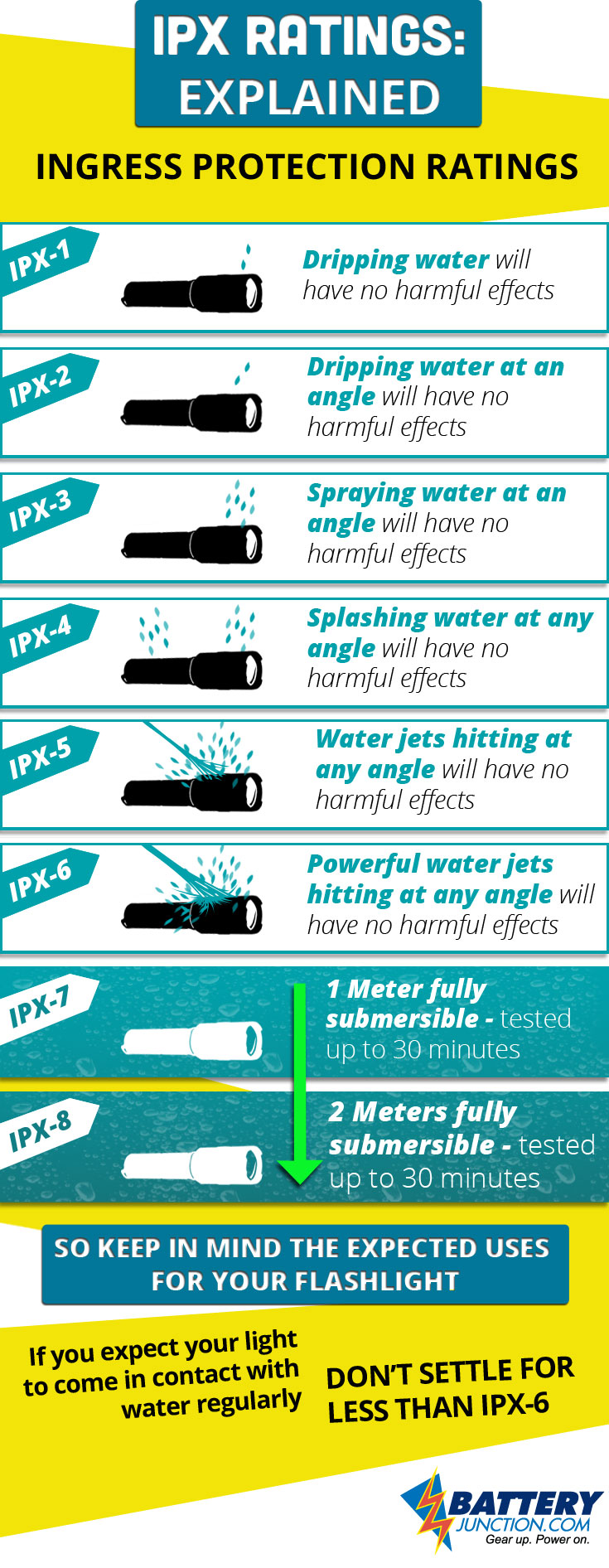
The IP (Ingress Protection) rating tells you how resistant a speaker is to dust and water. For waterproof sound boxes, you will see IPX5, IPX6, IPX7, or IP68.
- IPX5: Protected against low pressure water jets. Fine for rain or a splash.
- IPX6: Protected against powerful water jets. Handles heavy rain or a hose spray.
- IPX7: Protected against immersion in 1 meter of water for 30 minutes. This is the standard for pool and shower speakers.
- IP68: Protected against continuous immersion beyond 1 meter. Rare in portable speakers.
The higher the IP rating, the more sealed the enclosure must be. That seal is the enemy of radio reception. Radio waves pass through plastic and thin rubber reasonably well, but thicker rubber, metal mesh, and dense sealing gaskets degrade the signal.
The Antenna Compromise
Manufacturers have three choices when building a waterproof speaker with radio:
- Internal PCB antenna: Cheap, fully sealed, but weak reception. Works only in strong signal areas.
- Wire antenna in the cavity: Better reception but the wire can rattle or interfere with the driver. Harder to seal reliably.
- External antenna via cable: Best reception. Requires a physical port (aux or micro-USB) that introduces a potential water entry point. The port itself must be IP rated, adding cost.
Most consumer waterproof speakers use option 1. That is why you often see reviews saying "FM works okay near the city but cuts out when I take it to the lake." The speaker is perfectly sealed against water but terrible at catching radio waves.
What to Look For If Radio Matters
If live radio reception is a priority for you, look for these specific features in the spec sheet:
- "External FM antenna via aux cable" or "Antenna: wired (included)"
- "FM sensitivity: better than -108 dBm" (lower is better)
- A built-in display that shows station frequency, not just Bluetooth pairing status
- Separate "FM" mode button (not hidden in a multi-function button that also controls volume)
Common Mistakes That Ruin Radio Reception (And How to Fix Them)
Even with a built-in tuner, people mess up the setup. Here are the most common issues and fixes.
Mistake 1: Not Extending the Antenna
Many speakers have a retractable or detachable antenna wire. Users leave it coiled or tucked inside the port flap. FM and DAB+ need the antenna fully extended.
If your speaker has an aux jack that doubles as antenna input, plug in the included cable even if you are not using aux audio.
Mistake 2: Operating in a Metal Enclosure
Setting a waterproof speaker on a metal surface like a boat deck, car roof, or metal table kills reception. The metal acts as a shield. Place the speaker on plastic, wood, or fabric for the best reception.
Mistake 3: Using the Wrong Mode
Some speakers default to Bluetooth. You need to manually switch to FM mode. Users press play and hear silence, assuming the radio does not work.
Hit the mode button until you see FM or hear static, then scan.
Mistake 4: Expecting FM in a Basement or Valley
FM radio is line of sight to the tower. If you are in a basement, underground garage, or deep canyon, no antenna will save you. Move the speaker to a higher location or near a window.
Mistake 5: Ignoring the Station Preset Limit
Some budget waterproof speakers only store 10 to 20 station presets. If you try to save more, the oldest gets overwritten. Plan your presets for the stations you actually listen to.
[Those who enjoy optimizing their workflows may find the same kind of planning helpful when using Gemini Extensions Explained for productivity tasks.]
Use Cases: When You Actually Need Radio vs Just Streaming Music
Not everyone needs a built-in tuner. Here is when radio matters and when it does not.
Need Built-In Radio When:
- Camping, hiking, or any off-grid trip without cell service
- Boating or fishing where your phone is in a dry bag and you do not want to touch it
- Emergency preparedness for weather alerts (
Best for Pool, Camping, Boat, or Shower: Matching the Right Model to Your Use
For the pool or shower, a phone-tethered setup works fine since you are near the house and have Bluetooth range. For camping or boating where cell signal drops, you need a speaker with a built-in FM tuner and an external antenna cable. Marine environments demand at least IPX7 and saltwater corrosion resistance.
A model with a dedicated FM mode button and presets is worth the extra $20.
Specs to Look For If You're Buying a Waterproof Sound Box for Radio
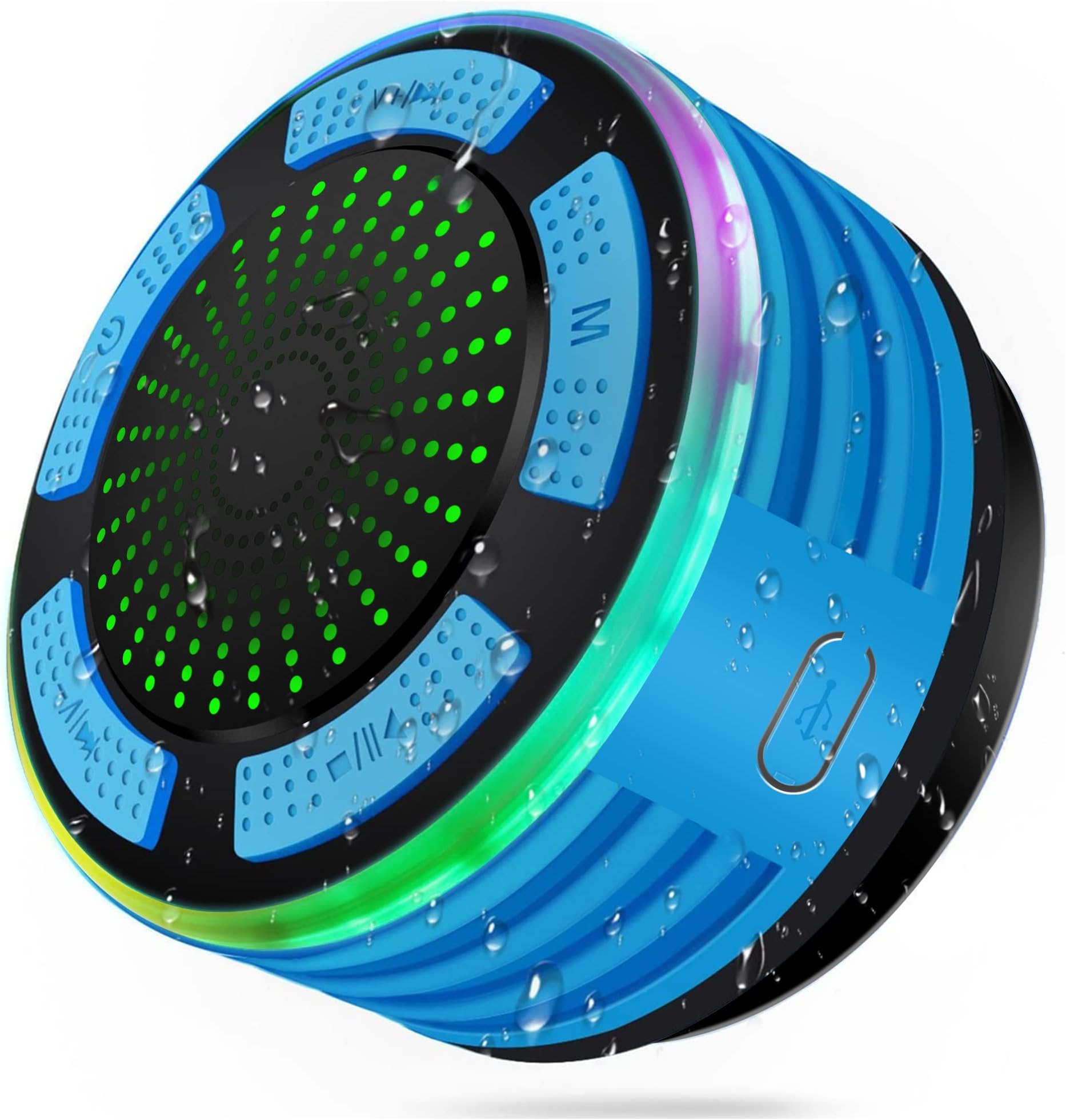
Prioritize these: "Built-in FM Tuner" or "DAB+" in the official specs. An external antenna via aux cable improves reception. IPX7 or higher for water immersion.
At least 15 station presets. Battery life over 12 hours in FM mode (Bluetooth mode drains less). Avoid vague descriptions like "supports radio" without specifying a tuner.
Maintenance Tips: Keeping Antenna Reception Strong in a Sealed Speaker
Keep the aux/antenna port flap clean and dry. Debris or moisture in the port can degrade reception. Extend the antenna wire fully when listening.
Do not coil it. If reception weakens over time, check for corrosion on the port contacts. Rinse the speaker with fresh water after saltwater use to prevent buildup.
Final Verdict: Should You Buy a Waterproof Sound Box Specifically for Radio?
Buy one with a built-in FM tuner only if you regularly listen to live radio off-grid, on the water, or during emergencies. For casual backyard or shower listening, a standard Bluetooth speaker paired with your phone is simpler and often cheaper. Match the model to your real use, not the marketing claims.
Frequently Asked Questions
Can any waterproof Bluetooth speaker play FM radio?
No. Only models with a dedicated FM tuner chip can play over-the-air radio. Most waterproof Bluetooth speakers are tuner-free and rely on your phone.
Check the product specifications for "FM Radio" or "Built-in Tuner" before buying.
Does IPX7 waterproofing block radio reception?
It can weaken it. A fully sealed enclosure forces the antenna inside the speaker, where metal components and thick rubber reduce signal strength. Some manufacturers add an external antenna wire through the aux port to solve this.
How do I know if my speaker has a hidden FM tuner?
Press the Mode button repeatedly. Look for FM or a frequency display. Check the manufacturer's official spec page for "FM Tuner." Also examine the port compartment for a small antenna cable.
If none of these exist, it lacks a tuner.
Can I use my phone's FM tuner with a waterproof speaker?
Yes, if your phone has an active FM chip (most Android phones do; iPhones do not). Plug in wired headphones as an antenna, open the FM app, and pair your speaker via Bluetooth. The speaker plays the phone's radio audio.
What is the difference between internet radio and FM radio on a speaker?
Internet radio streams over Wi-Fi or cellular data. It requires a stable connection and an app. FM radio uses broadcast towers and a physical tuner.
It works without internet but needs a decent antenna and signal range.
How long does FM radio mode last on a waterproof speaker?
Typically 8 to 15 hours, depending on the battery size. FM mode uses more power than Bluetooth streaming because the tuner chip stays active. Check the manufacturer's battery life specs for radio mode specifically.

Similar Posts