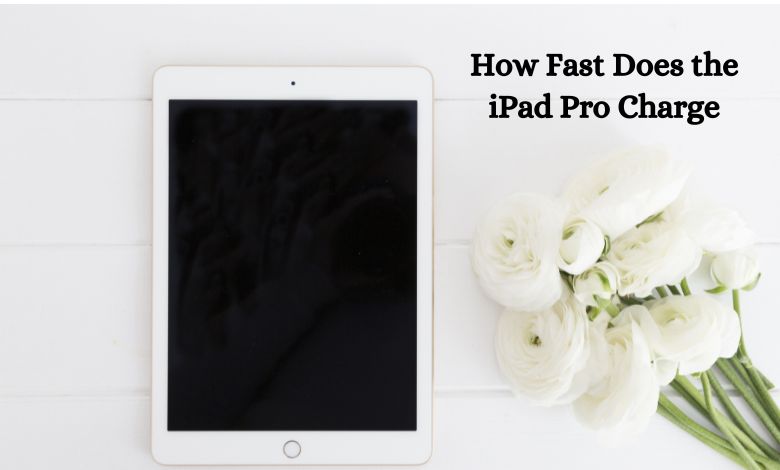
How Fast Does the iPad Pro Charge?
The iPad Pro is a productivity powerhouse, but its real-world usefulness depends heavily on how quickly you can refuel the battery. Whether you’re editing 4K video, sketching with the Apple Pencil, or using it as a portable workstation, understanding charging speeds can eliminate guesswork and keep you moving. In this article we break down the exact charging times for every iPad Pro model, explain the technology behind the numbers, and share practical tips to get the fastest possible charge.
The Charging Technology Behind the iPad Pro
Every modern iPad Pro relies on USB‑C Power Delivery (PD) — a universal high‑speed standard that handles far more power than the old Lightning connector. USB‑C PD lets the tablet and the charger negotiate the optimal voltage and current, delivering up to 30 W (or more) to compatible devices. This means the iPad Pro can draw as much power as a compact laptop, dramatically shortening charge cycles.
The iPad Pro’s internal battery management system also plays a role. It dynamically adjusts the charging rate based on temperature, battery health, and current charge level. Apple’s Optimized Battery Charging feature, first introduced in iOS, learns your daily routine and waits to finish charging past 80 % until you’re about to unplug — a deliberate move to extend battery lifespan without you noticing a slowdown.
Because USB‑C PD is an open standard, you aren’t locked into Apple’s own adapters. Any quality GaN (Gallium Nitride) charger with PD support can deliver the same high‑speed charge, often in a smaller, cooler form factor.
Charging Speeds of Every iPad Pro Model
Apple has steadily improved the iPad Pro’s charging capability over the years. The table below captures the fastest charging performance you can expect from each generation when using the right adapter and cable.
| iPad Pro Model | Included Adapter | Max Charging Power | 0–50 % Time | 0–100 % Time (approx.) |
|---|---|---|---|---|
| 11‑inch (1st gen, 2018) | 18 W USB‑C | 18 W | 30 min | 1 h 45 min |
| 12.9‑inch (3rd gen, 2018) | 18 W USB‑C | 18 W | 30 min | 2 h |
| 11‑inch (2nd gen, 2020) | 18 W USB‑C | 18 W | 30 min | 1 h 45 min |
| 12.9‑inch (4th gen, 2020) | 18 W USB‑C | 18 W | 30 min | 2 h |
| 11‑inch (3rd gen, 2021) | 20 W USB‑C | 20 W | 30 min | 2 h 15 min |
| 12.9‑inch (5th gen, 2021) | 20 W USB‑C | 20 W | 30 min | 2 h 30 min |
| 11‑inch (4th gen, 2022) | 20 W USB‑C | 20 W | 30 min | 2 h 15 min |
| 12.9‑inch (6th gen, 2022) | 20 W USB‑C | 20 W | 30 min | 2 h 30 min |
| 11‑inch (M4, 2024) | 20 W USB‑C (sold separately) | up to 30 W | ~30 min | 1 h 45 min |
| 13‑inch (M4, 2024) | 20 W USB‑C (sold separately) | up to 30 W | ~30 min | 2 h |
Note: Times are estimated using a compatible USB‑C PD charger delivering the maximum wattage the device can accept. Charging to 100 % slows down after 80 % to protect the battery.
The M4 models introduce a higher ceiling of around 30 W, so even though the included 20 W adapter is perfectly adequate, pairing them with a 30 W or higher PD charger can shave valuable minutes off a full charge — especially noticeable when you need a quick top‑up before heading out.
Factors That Affect Charging Speed
Even with the right hardware, several variables can make the difference between a blazing‑fast charge and a sluggish one.
Power Adapter and Cable Quality
The charger and cable are the two most critical components. The iPad Pro supports USB‑C PD, but the cable must also be rated for high‑speed power delivery. A cable that lacks the required e‑marker chip or is only rated for USB 2.0 data may limit charging to 5 W – 12 W, regardless of the adapter’s capability. Always use a USB‑C to USB‑C cable that explicitly supports PD (60 W or higher is a safe bet). Similarly, the adapter’s wattage matters: a 20 W adapter will deliver full speed to most models, but the M4 iPad Pro can take advantage of a 30 W adapter for a slight edge.
Battery Level and Charging Curve
Lithium‑ion batteries charge fastest when they are nearly empty. Up to about 50 %, the iPad Pro can pull maximum power. Beyond 80 %, the charging rate tapers off dramatically to reduce heat and prevent over‑stress. So if you’re staring at a timer and need a quick boost, plugging in at 10 % will give you far more usable battery in the first 30 minutes than if you start at 60 %.
Background Activity and Screen Usage
When you use the iPad Pro while it’s charging, the processor and display consume power that would otherwise go to the battery. Heavy tasks like gaming, video editing, or augmented reality apps can slow charging to a crawl. For the fastest results, close unnecessary apps, turn off the screen, or enable Airplane Mode. Even better, place the iPad on a flat surface where it can stay cool.
Ambient Temperature
Apple recommends charging the iPad Pro in environments between 0° and 35° C (32° to 95° F). Extreme heat triggers the battery management system to throttle charging speed to prevent damage. If your iPad feels warm — especially during a fast charge — move it to a cooler spot, remove any case, and keep it out of direct sunlight.
Battery Health and Optimized Charging
As the battery ages, its maximum charge rate can decline slightly. iPadOS’s Optimized Battery Charging feature also delays the final 20 % of charging based on your usage patterns. If you need a full 100 % immediately, you can disable this feature temporarily in Settings > Battery > Battery Health, but leaving it on is better for long‑term battery longevity.
How to Get the Absolute Fastest Charge
To squeeze every minute out of your charging session, follow these simple steps:
- Use a 30 W or higher USB‑C PD charger. The 30 W Apple adapter or a compact GaN charger from Anker, Ugreen, or Spigen delivers the maximum power the M4 iPad Pro can handle, and it still charges older models at full speed.
- Pair it with a high‑quality PD cable. Look for a USB‑IF certified cable that supports 60 W or 100 W. Avoid cheap, unbranded cables that may only support data transfer.
- Plug directly into a wall outlet. Avoid charging through a multi‑port hub or a computer’s USB‑C port, as those often limit power delivery to 7.5 W or 15 W.
- Enable Airplane Mode. This disables Wi‑Fi, Bluetooth, and cellular, reducing the background drain and allowing the full charge to go to the battery.
- Turn off the display. If you’re not actively using the iPad, press the sleep button. The screen is one of the biggest power consumers, and keeping it off can speed up the charge noticeably.
- Remove the case. Some thick or insulated cases trap heat. Take the iPad out of the case during fast charging to keep temperatures in check.
Optimizing Your Workflow While Charging
For content creators who rely on the iPad Pro as their primary camera‑to‑cloud tool, a fast recharge means less downtime between shoots. While you wait for the battery to top up, you can perfect your setup by adjusting your lighting rig and choosing the right microphone to capture high‑quality audio. We’ve also covered techniques for reducing unwanted background noise so your recordings are crisp from the start.
If you use the iPad Pro for coding or development, you might also be leveraging AI tools to speed up your tasks. Our guide on integrating AI into your development workflow and our breakdown of organizing AI‑driven projects can help you get more done while your device charges.
Frequently Asked Questions
Can I use a higher wattage charger to charge my iPad Pro faster?
Absolutely. While the iPad Pro’s internal circuitry caps the power draw at the model’s maximum rating (18 W, 20 W, or 30 W depending on the generation), using a 45 W, 61 W, or even 96 W MacBook charger is safe. The iPad will only pull what it can handle, so you won’t damage the battery. For M4 models, a 30 W or 45 W adapter unlocks the fastest possible speeds.
Does the iPad Pro support wireless charging or MagSafe?
No. The iPad Pro lacks the internal wireless charging coil found in iPhones. You can use third‑party magnetic connector cables that attach to the USB‑C port, but these are not Apple’s MagSafe and do not increase charging speed. Some desk stands offer a magnetic charging puck that clips onto the iPad’s back, but those are niche accessories and not officially supported.
Can I fast‑charge the iPad Pro while using a USB‑C hub?
Usually not. Hubs that pass through power often limit the USB‑C PD negotiation, capping the output at 15 W or even 7.5 W. For maximum speed, connect the charger directly to the iPad. If you must use a hub, check that it explicitly supports USB‑C PD passthrough at the wattage your iPad expects.
Does the iPad Pro charge faster when turned off?
Yes, but only marginally. When the iPad is completely shut down, the system consumes no power, so all the incoming energy goes to the battery. In Sleep mode, the difference is negligible. If you’re in a hurry, simply turning off the screen and enabling Airplane Mode gives you nearly the same benefit without the boot‑up time.
How long does it take to fully charge the iPad Pro from 0 %?
With the correct adapter, the latest M4 11‑inch model reaches 100 % in roughly 1 hour 45 minutes, while the 13‑inch M4 takes about 2 hours. Older generations with larger batteries can take up to 2 hours 30 minutes. The key is that the first 50 % arrives in only 30 minutes, giving you enough juice for several hours of work.
Can I charge my iPad Pro with a power bank?
Yes, provided the power bank supports USB‑C Power Delivery at the wattage your iPad model requires. A 20 W or 30 W PD power bank will charge the iPad Pro at full speed, making it a great travel companion for long days away from a wall outlet.
Conclusion
The iPad Pro’s charging speed is not just a spec sheet number — it’s a practical advantage that keeps you productive, creative, and connected. With USB‑C PD, even a quick 30‑minute charge can bring the battery to 50 %, and the latest M4 models can hit a full charge in under two hours. By pairing the right adapter, using a quality cable, and managing a few simple settings, you can dramatically shorten your wait time.
As you integrate the iPad Pro deeper into your workflow, you might also find yourself comparing different AI assistants to handle research, drafting, or coding tasks alongside your creative projects. Whatever you do, the charging speed you unlock today means more time spent creating and less time tethered to a cable.

Similar Posts