How iPad Pro Can Replace a Laptop?
The question isn’t whether the iPad Pro is powerful enough—it’s whether it fits your workflow. Apple’s latest iPad Pro models blur the line between tablet and notebook with desktop-class silicon, a refined operating system, and an accessory ecosystem that can turn it into a genuine laptop replacement. For students, creators, writers, and many professionals, the iPad Pro already handles daily tasks as well as a traditional laptop, often with better portability and battery life.
This deep dive examines the hardware, software, accessories, and real-world use cases that make the iPad Pro a viable laptop alternative—and where it still falls short.
Hardware That Rivals Ultrabooks
The iPad Pro doesn’t run on a scaled-up phone chip. The M2 (and previously M1) system-on-a-chip delivers performance that beats many Intel and AMD thin-and-light laptops. Geekbench 6 multi-core scores for the 12.9-inch iPad Pro (M2) hover around 9,600, putting it ahead of the 13-inch MacBook Air with M2 and many Windows ultrabooks in the same price bracket. Graphics performance is equally impressive, thanks to the 10-core GPU, which handles 4K video editing and complex 3D rendering without stuttering.
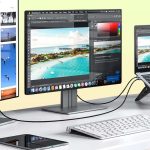
Storage options scale from 128GB to 2TB, and the 1TB and 2TB models double the RAM to 16GB—more than enough for pro apps like DaVinci Resolve or large Photoshop files. The Thunderbolt / USB 4 port supports up to a 6K external display, so you can dock the iPad Pro into a full desktop setup with a monitor, keyboard, and mouse. If you pair it with a high-refresh-rate display, dialing in the correct refresh rate ensures you get the smoothest visual experience.
| Feature | iPad Pro 12.9" (M2) | Typical Ultrabook (e.g., Dell XPS 13) |
|---|---|---|
| Processor | Apple M2 (8‑core CPU, 10‑core GPU) | Intel Core i7-1360P / AMD Ryzen 7 |
| Geekbench 6 Multi‑Core | ~9,600 | ~8,200–9,500 |
| Weight | 682 g (Wi‑Fi) | 1.17 kg |
| Battery Life (web) | Up to 10 hours | 8–12 hours |
| Storage | 128GB–2TB | 256GB–1TB |
| External Display | Up to 6K @ 60Hz | 4K @ 60Hz (varies) |
What you don’t get with any laptop is the iPad Pro’s mini-LED Liquid Retina XDR display with 1,000 nits full-screen brightness and a 120Hz ProMotion refresh rate—ideal for HDR content creation and consumption.
iPadOS and Multitasking: A Genuine Desktop-Class Experience
Early iPad multitasking felt cramped, but Stage Manager (introduced in iPadOS 16 and refined in iPadOS 17) changed the game. You can now run up to four apps on the iPad screen and another four on an external display, with overlapping windows you can resize and arrange freely. The traditional Split View and Slide Over remain for quick two‑app setups, but Stage Manager delivers the flexible windowing that power users expect from a laptop.
Full external display support means you’re not stuck mirroring the iPad screen. Plug in a monitor and you get a separate desktop space where you can drag and drop files, resize windows independently, and use the iPad’s built‑in screen for reference or secondary tools. Apple’s Magic Keyboard and third‑party Bluetooth mice are fully supported, and the cursor intelligently morphs to highlight buttons and text fields—it’s a far cry from the early days of “assistive touch” as a mouse substitute.
Universal Control lets you use a single keyboard and trackpad across a nearby Mac and iPad, seamlessly moving the cursor between devices and even dragging files. That integration alone makes the iPad Pro a natural extension of a Mac workflow, not a replacement only for those who cut the cord completely.
The App Ecosystem: From Office to Creative Pro
The notion that the iPad Pro can’t run “real” software is outdated. Microsoft Office and Google Workspace offer full-featured iPad versions, and the Affinity suite (Photo, Designer, Publisher) rivals Adobe’s desktop counterparts. Adobe itself has ported Photoshop, Illustrator, and Lightroom to iPad, with feature parity growing every year. Final Cut Pro and Logic Pro for iPad bring professional video and audio editing with touch-optimized interfaces, while DaVinci Resolve delivers Hollywood‑grade color grading on the same hardware.
For coders, the iPad Pro is no longer off‑limits. Swift Playgrounds teaches and builds real apps, while Pythonista, Codea, and cloud‑based IDEs like GitHub Codespaces turn the iPad into a development machine. AI assistants can further bridge the gap—leveraging AI for coding on an iPad can help you write, debug, and refactor code directly in the browser. And when you need to draft reports, proposals, or social content, generating and refining content with AI can speed up your workflow without leaving the tablet.
That said, some niche desktop applications (full AutoCAD, certain enterprise tools, or advanced 3D modeling suites) still lack iPad equivalents. For most mainstream professional tasks, however, the app gap has narrowed to the point of irrelevance for the average user.
Content Creation on the Go: Accessories That Make It a Studio
An iPad Pro alone won’t record a podcast or shoot a YouTube video—but with the right accessories, it becomes a mobile production studio. The Apple Pencil (2nd generation) is pressure‑sensitive and latency‑free, ideal for sketching, annotating, and photo retouching. The Magic Keyboard adds a backlit keyboard and trackpad, turning the iPad into a laptop form factor in seconds.
For video and audio work, quality gear makes all the difference. Picking the right microphone ensures your voice comes through crisp and professional, while a well‑lit scene can elevate your production value instantly—how to set one up correctly is just as important as the camera. Even with a perfect setup, unwanted background noise can ruin a recording; simple techniques can help you avoid that without expensive soundproofing.
Connectivity is generous: the USB‑C port works with USB‑C hubs, external SSDs, SD card readers, and audio interfaces. iPadOS supports external drives with the Files app, so you can manage large media libraries directly on a portable SSD.
Portability, Battery Life, and Connectivity
The 12.9‑inch iPad Pro weighs just 682 grams (Wi‑Fi model) and is 6.4 mm thin—lighter than almost any laptop with a comparable screen. The 11‑inch model is even more compact. That makes it effortless to carry in a small bag or even a large folio case.
Apple promises up to 10 hours of web browsing or video playback on Wi‑Fi, and real‑world tests often land between 9 and 11 hours with mixed use. You can leave the charger at home for a full workday, which is more than many Windows laptops can claim. Optional 5G cellular models keep you connected without hunting for Wi‑Fi, a feature still rare in laptops.
Wi‑Fi 6E and Bluetooth 5.3 give you fast wireless connections and instant pairing with accessories. The iPad Pro also supports the latest Apple Pencil hover feature, which senses the pencil tip up to 12 mm above the display, providing a preview of your mark before you touch the screen—a boon for illustrators and designers.
Security and Privacy: No Compromises
Face ID on the iPad Pro is fast, works in any orientation, and uses the same TrueDepth camera system as the iPhone. The Secure Enclave stores biometric data and encryption keys on a dedicated hardware component, isolated from the main processor. iPadOS also enforces strict app sandboxing, and all files are encrypted by default.
For professionals handling sensitive client data, the iPad Pro meets the same security standards as modern laptops, with the added benefit of a locked‑down operating system that’s far less susceptible to malware. Automatic updates and the curated App Store further reduce the risk of security breaches.
Real-World Use Cases
Many organizations have already adopted the iPad Pro as their primary computing device:
- Architecture & Design: Foster + Partners uses the iPad Pro with Apple Pencil for sketching and annotating blueprints, replacing paper entirely. Apps like Morpholio Trace and Procreate let designers collaborate in real time.
- Education: Universities like UCLA include the iPad Pro in student technology bundles, enabling digital note-taking, interactive textbooks, and collaborative projects without the need for a separate laptop.
- Business & Travel: Consultants and sales teams often carry only an iPad Pro with a keyboard case. It handles presentations, CRM updates, and email, while the instant‑on cellular connection keeps them productive between meetings.
- Creative Freelancers: Video editors, illustrators, and musicians use the iPad Pro as their main machine, relying on apps like Final Cut Pro, Procreate, and Logic Pro to deliver client work.
FAQ
Can the iPad Pro run professional software?
Yes. Many industry-standard apps have full iPad versions, including Microsoft Office, Google Workspace, Adobe Photoshop, Illustrator, Lightroom, DaVinci Resolve, Final Cut Pro, Logic Pro, and the Affinity suite. Some features may differ from the desktop versions, but for most workflows the iPad Pro is fully capable.
Can the iPad Pro replace a laptop for coding?
It depends on your stack. For web development, Python, and cloud-based work, the iPad Pro paired with a code editor like Codea, Pythonista, or a browser-based IDE works well. Native Xcode is not available, so full‑time iOS/macOS developers will still need a Mac. AI coding assistants can fill some gaps, and many developers use the iPad Pro as a secondary or remote coding terminal.
What are the main limitations compared to a laptop?
- Operating system: iPadOS is not a full desktop OS, so some advanced multitasking, file management, and system-level customizations are restricted.
- External monitors: Although Stage Manager supports one external display up to 6K, you can’t natively run dual external monitors in extended mode.
- Software compatibility: A few pro apps (e.g., full AutoCAD, certain 3D rendering suites) and legacy Windows-only software have no iPad equivalent.
- Peripheral support: While USB‑C hubs work well, driver support for some specialized hardware (printers, scanners, etc.) can be hit or miss.
Is the iPad Pro suitable for gaming?
Absolutely. Apple Arcade offers a growing library of titles, and the App Store has many AAA games optimized for the M‑series chip. The iPad Pro supports Xbox and PlayStation wireless controllers, and the 120Hz display makes fast‑paced games feel smooth. Cloud gaming services like Xbox Cloud Gaming and GeForce Now also work via the browser.
Does the iPad Pro support a mouse and keyboard?
Yes, fully. Bluetooth mice, trackpads, and keyboards are supported, and the Magic Keyboard case includes a built‑in trackpad that feels nearly identical to a MacBook’s. The cursor adapts to the interface, and you can customize pointer size, tracking speed, and button assignments.
What about file management?
The Files app has matured significantly. It supports local storage, iCloud, and third‑party cloud services like Dropbox and Google Drive. You can connect external drives, SD cards, and USB sticks, and drag and drop files between apps. While it’s not as flexible as Finder, it covers the vast majority of file‑management needs.
Conclusion
The iPad Pro can replace a laptop for a surprisingly large number of people. Its M‑series chip delivers performance that rivals ultrabooks, iPadOS has evolved into a genuine multitasking environment, and the accessory ecosystem turns it into a laptop, drawing tablet, and mobile studio all in one. For students, writers, creatives, and business travelers, the iPad Pro often proves more versatile and enjoyable than a traditional notebook.
However, it’s not a one‑size‑fits‑all solution. If your work requires niche desktop software, multiple external monitors, or a full Unix terminal, a Mac or PC may still be necessary. But for the millions of users whose daily tasks revolve around the web, content creation, communication, and light development, the iPad Pro is not just a laptop replacement—it’s a better laptop.

Similar Posts