Can You Get Curved Budget Monitors
Yes, you absolutely can get curved budget monitors, and the options in 2025 are better than they've ever been. The market has shifted hard in the last couple of years, and what used to be a premium feature has trickled down aggressively into the sub-$200 range. As of 2026, you're no longer making huge compromises just to get that immersive curved screen without spending a fortune.
The catch? Not all budget curved monitors are created equal. Some are excellent value, and some cut corners that'll bother you within a week.
Let me walk you through exactly what's out there, what to watch for, and how to get the right one for your setup.

Quick Answer
Yes. Curved monitors are widely available under $300. Solid options exist between $130 and $280.
Most budget curved panels use VA technology. Expect better immersion than flat screens. Match the curvature to your viewing distance.
What "Budget Curved" Actually Gets You at Each Price Point
Here's where it helps to think in tiers. The budget curved monitor space breaks down pretty cleanly into three price brackets, and each one delivers a noticeably different experience. Let me lay it out so you know exactly what your money buys.
The $130 to $180 Tier: 1080p Curved Gaming Basics
This is the entry point. At this price, you're typically looking at a 24-inch or 27-inch VA panel with 1080p resolution and a 144Hz or 165Hz refresh rate. The curvature is usually 1500R or 1800R, which you'll actually notice at this screen size since you're sitting close.
You won't get great color accuracy for creative work. You probably won't get HDR worth mentioning. But for casual gaming, movies, and general use, this tier punches above its weight.
Brands like AOC (CQ24G2), KTC, and some MSI models compete hard here.
The $200 to $280 Tier: Where Budget Curved Gets Interesting
This is the sweet spot for most people. You can find 27-inch 1440p curved monitors with 144Hz or 165Hz refresh rates in this range, often with IPS panels instead of VA. The step up from 1080p to 1440p on a 27-inch screen is genuinely noticeable.
Text looks sharper, games look better, and you have more screen real estate for multitasking.
Models like the AOC CQ27G2SE, MSI G2712, and Samsung Odyssey G5 frequently land in this bracket during sales. Some budget ultrawide 34-inch options also start appearing around $250 to $280, though you'll want to check the panel quality carefully at that price.
The $280 to $350 Tier: Budget Ultrawide Curved Territory
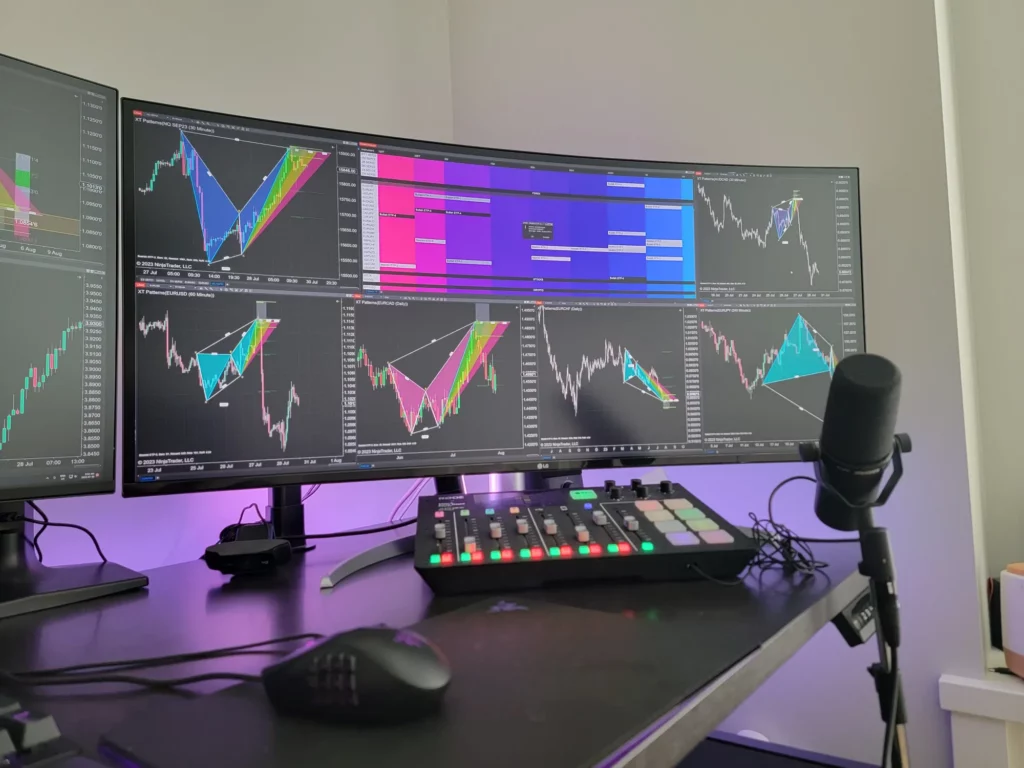
If immersion is your main goal, this is where ultrawide curved monitors enter the picture. You're looking at 34-inch 3440×1440 panels, often 144Hz or 1500R curvature. These replace a dual-monitor setup with one seamless curved display, and the productivity boost is real for spreadsheets, coding, and workflow tasks.
Samsung's Odyssey G5 ultrawide and Dell's S3422DWG are popular picks here. Just be aware that some budget ultrawides use lower pixel density panels, so text clarity can suffer if you're coming from a sharper display.
| Tier | Size | Resolution | Panel | Refresh | Curvature | Example Models |
|---|---|---|---|---|---|---|
| $130–$180 | 24"–27" | 1080p | VA | 144Hz–165Hz | 1500R–1800R | AOC CQ24G2, KTC H24T09P |
| $200–$280 | 27"–32" | 1440p | VA or IPS | 144Hz–165Hz | 1500R–1800R | MSI G2712, Samsung Odyssey G5 |
| $280–$350 | 34" UW | 3440×1440 | VA or IPS | 100Hz–144Hz | 1500R–1800R | Dell S3422DWG, Samsung G55C UW |
Curved VA vs Curved IPS at Budget Prices — The Real Tradeoff
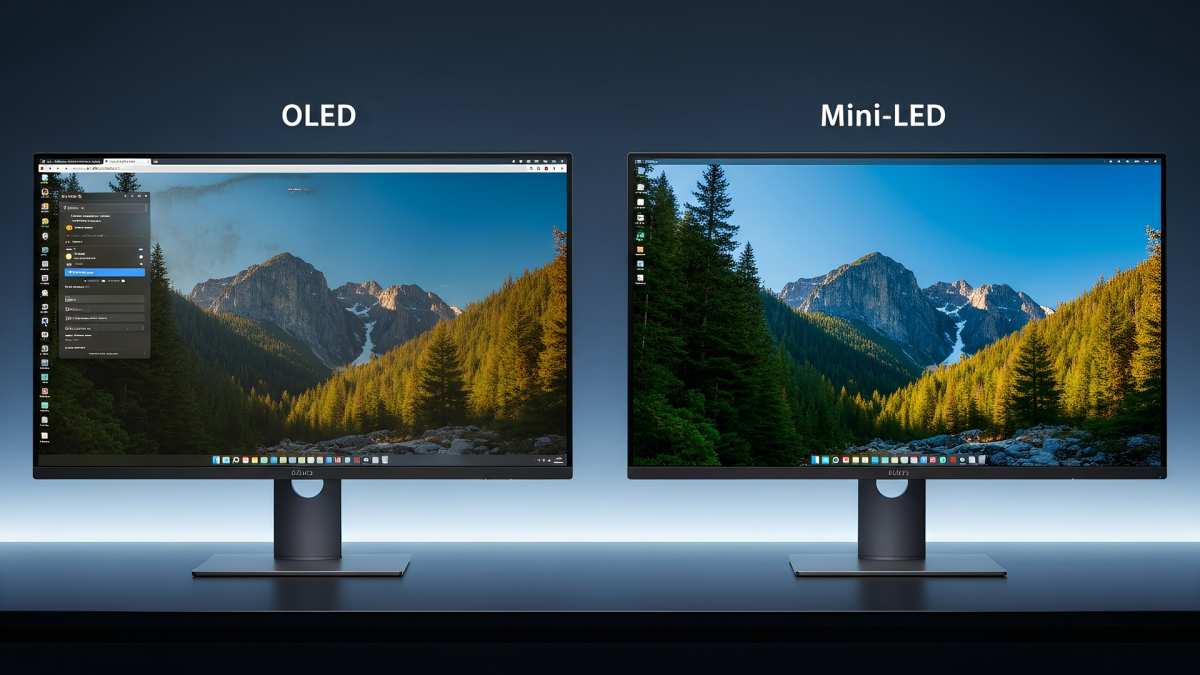
This is the single biggest decision you'll face buying a budget curved monitor, and it matters more than most reviewers let on. The panel type fundamentally changes what the monitor does well and where it falls short.
Why VA Dominates the Budget Curved Space
VA panels are the default choice for budget curved monitors because they offer something curved screens amplify beautifully: deep contrast. A typical VA panel delivers around 3000:1 native contrast ratio, compared to roughly 1000:1 on IPS. On a curved display, that deeper black level makes immersion feel more pronounced because the screen wraps around your field of view.
VA panels also tend to be cheaper to manufacture at larger sizes, which is why most affordable ultrawide curved monitors use them. The downside is slower pixel response times, usually in the 4ms to 8ms GtG range on budget models. That can produce visible ghosting or smearing in fast-paced games, especially dark-scene transitions.
For RPGs, strategy games, movies, and general productivity, a budget VA curved monitor is a genuinely solid choice. Just don't expect esports-grade motion clarity.
When Curved IPS Is Worth the Extra Money
IPS panels respond faster, usually hitting 1ms to 5ms GtG on budget models. They also maintain color accuracy better across viewing angles, which matters when the screen is curved and your eyes hit the edges from a different angle than the center.
The problem at budget prices is that IPS glow becomes more noticeable on a curved panel. That slight brightening at the edges that you'd barely see on a flat screen gets amplified when the edges curve toward you. Some people don't notice it at all.
Others find it distracting, especially in dark rooms watching letterbox movies.
If you primarily play fast shooters or competitive games, spending the extra $30 to $50 for a curved IPS panel like the MSI G2712 or Gigabyte G27QC is worth it. For everything else, VA handles the job fine.
Curved vs Flat at the Same Price: Which Should You Actually Buy?
This is the question most people actually want answered, so let's be direct about it. At the same price point, a flat monitor will almost always give you better raw performance. You'll get faster response times, better color uniformity, and often a higher resolution.
The curve isn't about specs. It's about how the screen feels to use.
When Curved Wins
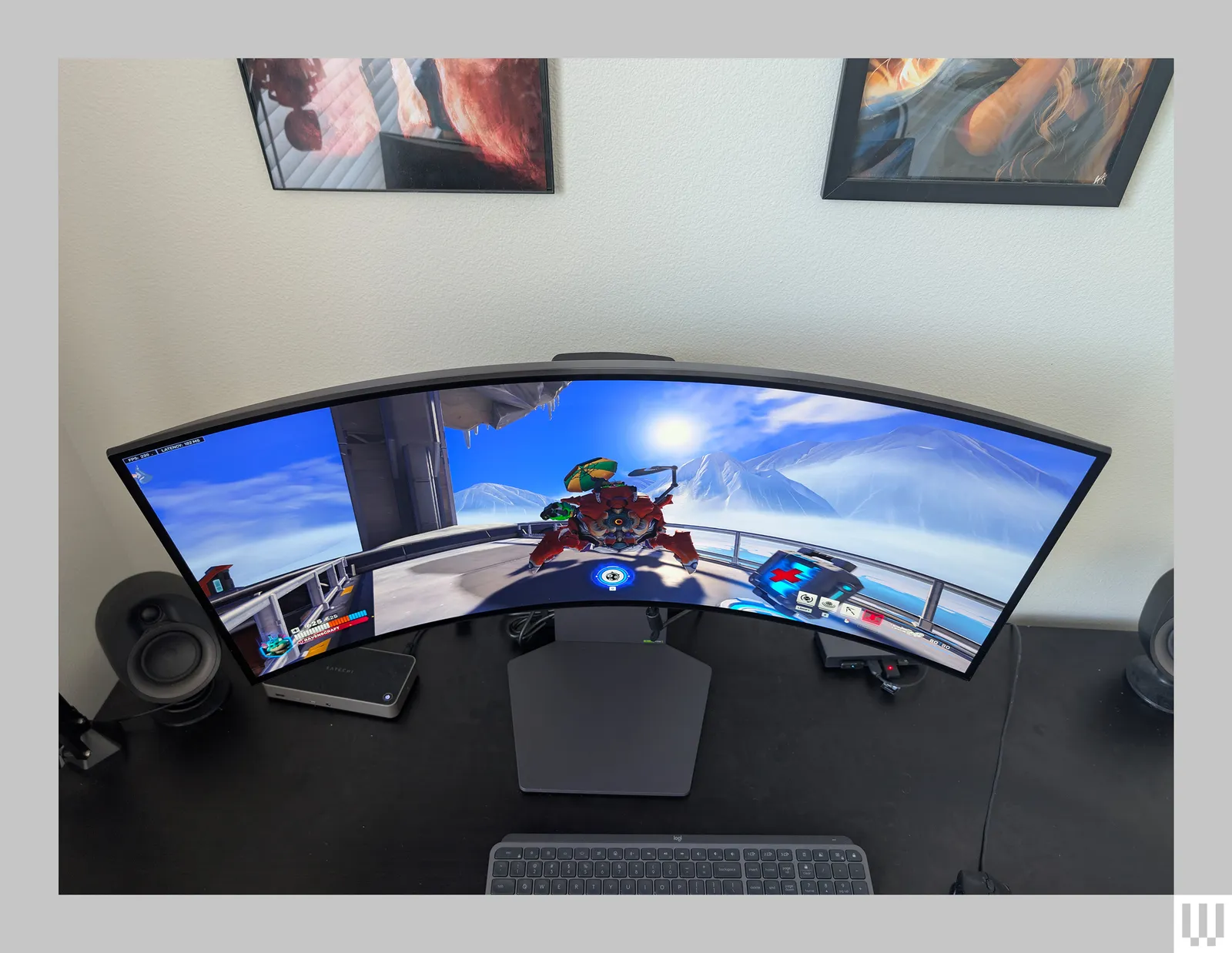
- Immersion in games and movies. A curved display fills more of your peripheral vision. That sounds like marketing fluff until you sit in front of one for a week and then go back to flat. The difference is immediate.
- Single ultrawide replacing a dual setup. If you'd otherwise buy two budget monitors, one curved ultrawide gives you the same workspace without a bezel gap in the middle.
- Close sitting distances. If you sit 2 to 3 feet from a 27-inch or larger screen, the curve keeps edges at a more consistent focal distance. This can reduce eye strain for some people.
- Sim racing and flight games. The curve mimics how a cockpit wraps around you. It's not subtle in these genres.

When Flat Wins
- Color-critical work. Photo editing, graphic design, and video grading all suffer on curved panels because geometry distorts straight lines and color uniformity becomes harder to maintain, especially on VA.
- Multi-monitor arrays. Curved screens don't tile well together unless you're running a single ultrawide.
- Wall mounting. Curved monitors sit away from the wall, creating a protrusion that looks awkward and limits placement options.
- Pure specs per dollar. A flat 27-inch 1440p 165Hz IPS monitor at $220 will outperform a curved VA at the same price on almost every measurable metric except contrast.
The honest take is this. If immersion and comfort matter more to you than raw specs, curved is the better experience at budget prices. If you prioritize performance metrics and color fidelity, flat wins every time.
Best Curved Budget Monitors by Use Case
Rather than giving you a generic top five list, let's match specific monitors to what you'll actually use them for. This is far more useful than ranking panels in a vacuum.
Best for Gaming on a Budget
The KTC H24T09P and AOC CQ24G2 lead the sub-$180 pack. Both are 24 to 25-inch 1080p VA panels with 165Hz refresh and 1500R curvature. Response times are adequate for non-competitive gaming, and the aggressive curve at this size creates genuine immersion.
Step up to the $250 range and the MSI G2712 gives you 27-inch 1440p at 170Hz on an IPS panel with 1500R curvature. That's arguably the best value curved gaming monitor available in 2025.
Best for Productivity and Work
The Dell S2722DGM is worth watching. It's a 27-inch 1440p VA curved panel with solid build quality, a better-than-average stand with height and tilt adjustment, and strong text clarity for office work. It frequently drops below $230.
For ultrawide productivity, the Dell S3422DWG at around $300 to $330 gives you 34 inches of 3440×1440 curved VA workspace. It handles multi-window workflows beautifully.
Best for Console Gaming (PS5 / Xbox)
Here's where most budget curved monitors fall short. The PS5 and Xbox Series X demand HDMI 2.1 for 4K 120Hz output, and most budget curved monitors max out at HDMI 2.0. You need to shop carefully.
The Gigabyte G27QC-A frequently hits around $250 and supports console-friendly features through its DisplayPort and HDMI 2.0 combination, though you'll be limited to 1440p 120Hz output from current consoles. Pure 4K console gaming requires a different class of monitor entirely, so consider whether resolution or refresh rate matters more for your play style.

Best Budget Ultrawide Curved
The Samsung Odyssey G5 S32C550G and Dell S3422DWG are the two heavy hitters. The Dell offers better color accuracy and an IPS option, while Samsung typically posts a lower price and includes a 144Hz refresh rate. Pick Dell if you do any color-sensitive work alongside your gaming.
Pick Samsung if you only care about smoothness and budget.
What Curvature Rating Actually Means for Your Desk
You'll see numbers like 1000R, 1500R, 1800R, and 3000R on monitor specs. The R stands for radius in millimeters. The number tells you the radius of the imaginary circle that the screen would form if it continued around completely.
Lower number equals tighter curve equals more aggressive wrap. 1000R means a very pronounced curve that only makes sense if you're sitting about one meter away. 3000R is barely perceptible, almost flat.
For most budget curved monitors at 27 inches, 1500R is the goldilocks zone. You'll notice the curve at normal desk sitting distance without it distorting the image. 1800R works fine too but feels subtle on smaller screens. 1000R shows up on premium ultrawides and feels almost too aggressive for casual use at first, though you adapt quickly.
On a 24-inch budget monitor, 1500R to 1800R is all you'll find, and that's appropriate. On a 34-inch ultrawide, 1500R to 1800R matches typical viewing distances perfectly.
| Curvature | Distance from Screen | Feel | Best Screen Size |
|---|---|---|---|
| 1000R | ~3.3 ft | Very aggressive, immersive | 34"+ ultrawide |
| 1500R | ~4.9 ft | Noticeable, comfortable | 27" to 34" |
| 1800R | ~5.9 ft | Subtle, gentle wrap | 24" to 27" |
| 3000R | ~9.8 ft | Nearly flat | 24" and under |

Common Mistakes People Make Buying Budget Curved Monitors
I've seen the same mistakes repeat across hundreds of forum posts and buyer reviews. Here they are so you don't have to learn them the hard way.
- Ignoring the panel type. Assuming all curved monitors are the same because they look similar. VA and IPS curved panels perform very differently. Always check which technology you're buying.
- Expecting real HDR. Budget curved monitors with "HDR10 support" usually lack the brightness and local dimming to deliver actual HDR. That label just means they accept an HDR signal. It does not mean they display it well.
- Buying curvature you don't need. A 24-inch 3000R monitor is barely curved. You're paying for a feature you won't perceive. At smaller sizes, look for 1500R or tighter to actually notice the difference.
- Skipping the dead pixel policy check. Off-brand curved monitors from Chinese manufacturers sometimes have lenient dead pixel policies requiring three or more bright pixels before they'll replace the panel. Read the warranty before clicking buy.
- Forgetting about the stand. Many budget curved monitors ship with fixed stands that offer zero height adjustment, no tilt, and no swivel. If your desk setup requires ergonomic positioning, budget another $30 for a VESA mount and a decent monitor arm.
- Overlooking port limitations. Some budget curved monitors at $150 only have one HDMI 1.4 port and no DisplayPort. If you plan to connect a PC and a console simultaneously, check the port selection carefully.
- Assuming ultrawide equals better. A cheap 34-inch ultrawide with low PPI looks worse for text than a quality 27-inch 1440p panel. Resolution density matters more than raw size.
Expert Tips Before You Pull the Trigger
A few things I'd want a friend to know before buying a budget curved monitor in 2025.
- Wait for sales. The budget curved market is extremely deal-driven. A $250 monitor regularly drops to $190 during sales events. If you're not in a rush, set a price alert and wait. The savings add up fast.
- Check the OSD joystick budget. A bad on-screen display control makes adjusting settings painful every single time. Look for models with a rear joystick rather than tiny bottom-edge buttons. This sounds minor until you're adjusting brightness for the third time.
- Consider buying last year's mid-range. A discounted 2024 Samsung Odyssey G5 or Dell S-series curved monitor often outperforms a brand-new budget model. Previous-year mid-range panels have better quality control and more mature firmware.
- Don't ignore KTC. KTC is a Chinese brand that has rapidly improved their panel quality and offers aggressive pricing, often under $200 for 27-inch 1440p curved models. Reviews consistently show their recent panels competing with AOC and MSI at lower price points.
- Test for VA ghosting before committing. If buying VA, look up model-specific ghosting tests online. Some budget VA panels have overdrive modes that inverse ghost worse than the base response. Finding the right overdrive setting matters more than the spec sheet suggests.
- Use adaptive sync correctly. FreeSync on budget curved monitors doesn't always play nice with G-Sync Compatible mode on Nvidia GPUs. Check whether your specific model has known compatibility issues before assuming it'll work flawlessly.
Final Verdict: Should You Buy a Curved Budget Monitor?
If you sit close to your screen, you game casually or watch movies, and you find a solid 1500R panel at $200 or less, yes, a curved budget monitor is an excellent buy. The immersion factor per dollar is genuinely hard to beat.
If you need color accuracy, you do competitive esports, or you're comparing a curved budget option against a similarly priced flat panel purely on specs, save your money and go flat. The curve is a feel advantage, not a performance advantage.
The honest answer is that budget curved monitors in 2025 are no longer a compromise category. They're a legitimate option that's right for specific use cases. Just match the panel type, curvature, and price tier to what you'll actually do at your desk, and you'll be happy with what you get.
Frequently Asked Questions
Is a curved monitor better for gaming than a flat one at the same price?
Not better, more immersive. A flat monitor at the same price delivers better raw specs. A curved monitor fills more of your peripheral vision, making games feel more enveloping.
It comes down to whether you prefer immersion or measurable performance.
Can you use a curved monitor for office work and spreadsheets?
You can, and it works well for general productivity. Straight lines at the slight curve do look slightly bent, which bothers some people. If your work demands precise visual geometry, a flat panel remains the safer choice.
What is the cheapest curved monitor worth buying in 2025?
Around $130 to $150 for a 24-inch 1080p 144Hz VA curved model. The KTC H24T09P and AOC CQ24G2 are both solid at that price. Anything cheaper tends to have unacceptable quality control issues, poor stand design, and almost no warranty support.
Do curved monitors work well for photo editing and design work?
Curved monitors are not ideal for color-critical or geometry-sensitive work. The physical distortion makes straight lines appear curved on screen, and color uniformity across a curved surface is harder to maintain, especially on budget VA panels. Use a flat IPS display for creative work.
Is 1440p on a 27-inch curved monitor noticeably sharper than 1080p?
The difference is immediately visible. A 27-inch 1440p panel renders text much sharper and more readable than 1080p at the same size. Most buyers who switch say they cannot go back.
If your GPU can handle it, 1440p curved is the sweet spot for budget gaming as of 2025.
Best Curved Budget Monitors by Use Case
Best for Gaming on a Budget
The KTC H24T09P and AOC CQ24G2 lead the sub-$180 pack. Both are 24 to 25-inch 1080p VA panels with 165Hz refresh and 1500R curvature. Response times are adequate for non-competitive gaming, and the aggressive curve at this size creates genuine immersion.
Step up to the $250 range and the MSI G2712 gives you 27-inch 1440p at 170Hz on an IPS panel with 1500R curvature. That's arguably the best value curved gaming monitor available in 2025.
Best for Productivity and Work
The Dell S2722DGM is worth watching. It's a 27-inch 1440p VA curved panel with solid build quality, a better-than-average stand with height and tilt adjustment, and strong text clarity for office work. It frequently drops below $230.
For ultrawide productivity, the Dell S3422DWG at around $300 to $330 gives you 34 inches of 3440×1440 curved VA workspace. It handles multi-window workflows beautifully.
Best for Console Gaming (PS5 / Xbox)
Here's where most budget curved monitors fall short. The PS5 and Xbox Series X demand HDMI 2.1 for 4K 120Hz output, and most budget curved monitors max out at HDMI 2.0. You need to shop carefully.
The Gigabyte G27QC-A frequently hits around $250 and supports console-friendly features through its DisplayPort and HDMI 2.0 combination, though you'll be limited to 1440p 120Hz output from current consoles. Pure 4K console gaming requires a different class of monitor entirely, so consider whether resolution or refresh rate matters more for your play style.
Best Budget Ultrawide Curved
The Samsung Odyssey G5 S32C550G and Dell S3422DWG are the two heavy hitters. The Dell offers better color accuracy and an IPS option, while Samsung typically posts a lower price and includes a 144Hz refresh rate. Pick Dell if you do any color-sensitive work alongside your gaming.
Pick Samsung if you only care about smoothness and budget.
What Curvature Rating Actually Means for Your Desk
You'll see numbers like 1000R, 1500R, 1800R, and 3000R on monitor specs. The R stands for radius in millimeters. The number tells you the radius of the imaginary circle that the screen would form if it continued around completely.
Lower number equals tighter curve equals more aggressive wrap. 1000R means a very pronounced curve that only makes sense if you're sitting about one meter away. 3000R is barely perceptible, almost flat.
For most budget curved monitors at 27 inches, 1500R is the goldilocks zone. You'll notice the curve at normal desk sitting distance without it distorting the image. 1800R works fine too but feels subtle on smaller screens. 1000R shows up on premium ultrawides and feels almost too aggressive for casual use at first, though you adapt quickly.
On a 24-inch budget monitor, 1500R to 1800R is all you'll find, and that's appropriate. On a 34-inch ultrawide, 1500R to 1800R matches typical viewing distances perfectly.
| Curvature | Distance from Screen | Feel | Best Screen Size |
|---|---|---|---|
| 1000R | ~3.3 ft | Very aggressive, immersive | 34"+ ultrawide |
| 1500R | ~4.9 ft | Noticeable, comfortable | 27" to 34" |
| 1800R | ~5.9 ft | Subtle, gentle wrap | 24" to 27" |
| 3000R | ~9.8 ft | Nearly flat | 24" and under |
Common Mistakes People Make Buying Budget Curved Monitors
I've seen the same mistakes repeat across hundreds of forum posts and buyer reviews. Here they are so you don't have to learn them the hard way.
- Ignoring the panel type. Assuming all curved monitors are the same because they look similar. VA and IPS curved panels perform very differently. Always check which technology you're buying.
- Expecting real HDR. Budget curved monitors with "HDR10 support" usually lack the brightness and local dimming to deliver actual HDR. That label just means they accept an HDR signal. It does not mean they display it well.
- Buying curvature you don't need. A 24-inch 3000R monitor is barely curved. You're paying for a feature you won't perceive. At smaller sizes, look for 1500R or tighter to actually notice the difference.
- Skipping the dead pixel policy check. Off-brand curved monitors from Chinese manufacturers sometimes have lenient dead pixel policies requiring three or more bright pixels before they'll replace the panel. Read the warranty before clicking buy.
- Forgetting about the stand. Many budget curved monitors ship with fixed stands that offer zero height adjustment, no tilt, and no swivel. If your desk setup requires ergonomic positioning, budget another $30 for a VESA mount and a decent monitor arm.
- Overlooking port limitations. Some budget curved monitors at $150 only have one HDMI 1.4 port and no DisplayPort. If you plan to connect a PC and a console simultaneously, check the port selection carefully.
- Assuming ultrawide equals better. A cheap 34-inch ultrawide with low PPI looks worse for text than a quality 27-inch 1440p panel. Resolution density matters more than raw size.
Expert Tips Before You Pull the Trigger
A few things I'd want a friend to know before buying a budget curved monitor in 2025.
- Wait for sales. The budget curved market is extremely deal-driven. A $250 monitor regularly drops to $190 during sales events. If you're not in a rush, set a price alert and wait. The savings add up fast.
- Check the OSD joystick budget. A bad on-screen display control makes adjusting settings painful every single time. Look for models with a rear joystick rather than tiny bottom-edge buttons. This sounds minor until you're adjusting brightness for the third time.
- Consider buying last year's mid-range. A discounted 2024 Samsung Odyssey G5 or Dell S-series curved monitor often outperforms a brand-new budget model. Previous-year mid-range panels have better quality control and more mature firmware.
- Don't ignore KTC. KTC is a Chinese brand that has rapidly improved their panel quality and offers aggressive pricing, often under $200 for 27-inch 1440p curved models. Reviews consistently show their recent panels competing with AOC and MSI at lower price points.
- Test for VA ghosting before committing. If buying VA, look up model-specific ghosting tests online. Some budget VA panels have overdrive modes that inverse ghost worse than the base response. Finding the right overdrive setting matters more than the spec sheet suggests.
- Use adaptive sync correctly. FreeSync on budget curved monitors doesn't always play nice with G-Sync Compatible mode on Nvidia GPUs. Check whether your specific model has known compatibility issues before assuming it'll work flawlessly.
Final Verdict: Should You Buy a Curved Budget Monitor?
If you sit close to your screen, you game casually or watch movies, and you find a solid 1500R panel at $200 or less, yes, a curved budget monitor is an excellent buy. The immersion factor per dollar is genuinely hard to beat.
If you need color accuracy, you do competitive esports, or you're comparing a curved budget option against a similarly priced flat panel purely on specs, save your money and go flat. The curve is a feel advantage, not a performance advantage.
The honest answer is that budget curved monitors in 2025 are no longer a compromise category. They're a legitimate option that's right for specific use cases. Just match the panel type, curvature, and price tier to what you'll actually do at your desk, and you'll be happy with what you get.
Frequently Asked Questions
Is a curved monitor better for gaming than a flat one at the same price?
Not better, more immersive. A flat monitor at the same price delivers better raw specs. A curved monitor fills more of your peripheral vision, making games feel more enveloping.
It comes down to whether you prefer immersion or measurable performance.
Can you use a curved monitor for office work and spreadsheets?
You can, and it works well for general productivity. Straight lines at the slight curve do look slightly bent, which bothers some people. If your work demands precise visual geometry, a flat panel remains the safer choice.
What is the cheapest curved monitor worth buying in 2025?
Around $130 to $150 for a 24-inch 1080p 144Hz VA curved model. The KTC H24T09P and AOC CQ24G2 are both solid at that price. Anything cheaper tends to have unacceptable quality control issues, poor stand design, and almost no warranty support.
Do curved monitors work well for photo editing and design work?
Curved monitors are not ideal for color-critical or geometry-sensitive work. The physical distortion makes straight lines appear curved on screen, and color uniformity across a curved surface is harder to maintain, especially on budget VA panels. Use a flat IPS display for creative work.
Is 1440p on a 27-inch curved monitor noticeably sharper than 1080p?
The difference is immediately visible. A 27-inch 1440p panel renders text much sharper and more readable than 1080p at the same size. Most buyers who switch say they cannot go back.
If your GPU can handle it, 1440p curved is the sweet spot for budget gaming as of 2025.

Similar Posts