Delta E: Why Photographers Need Monitor Accuracy
If you’ve ever edited a photo on your monitor, printed it, and wondered why the colors look completely different on paper, you’re not alone. Understanding what is delta e in monitors for photographers is the key to fixing that problem. Delta E is a single number that tells you how far off a color is from the target.
Get it right, and your prints will match your screen.
Per ISO 3664, the standard viewing condition for critical print proofing requires a specific white point and brightness level. Without a calibrated monitor that holds a low Delta E, meeting that standard is impossible. Let’s start with why accuracy matters so much.
Why Accuracy Matters
Every time you press “print,” you’re trusting your monitor to show you the truth. If the Delta E is too high, that truth gets distorted. A color that looks neutral on screen might print with a green cast.
A skin tone you carefully balanced might come out magenta.
Commercial photographers lose clients this way. A product catalog that arrives with mismatched brand colors gets rejected. A wedding album that prints too warm gets refunded.
Even hobbyists waste paper and ink chasing a color that their monitor lied about.
The cost of a good monitor and calibrator is small compared to reprints and lost trust. As of 2026, the average dE of a mid‑range monitor straight out of the box sits around 3.0 to 5.0. That’s too high for any color‑critical work.
Getting it below 2.0 requires calibration, but the payoff is huge.

Image source: Wikimedia Commons / Gerhard Fieseler Werke GmbH
The Quick Answer: What Is Delta E?
Delta E is a single number that measures the difference between two colors. A lower number means the colors are closer together. For photography, a Delta E under 2.0 is considered good.
Under 1.0 is excellent. Most professional print work requires an average Delta E of 1.0 or less. That’s the simple version.
Now let’s dig into how it actually works.
How Delta E Is Measured (and Why It’s Tricky)
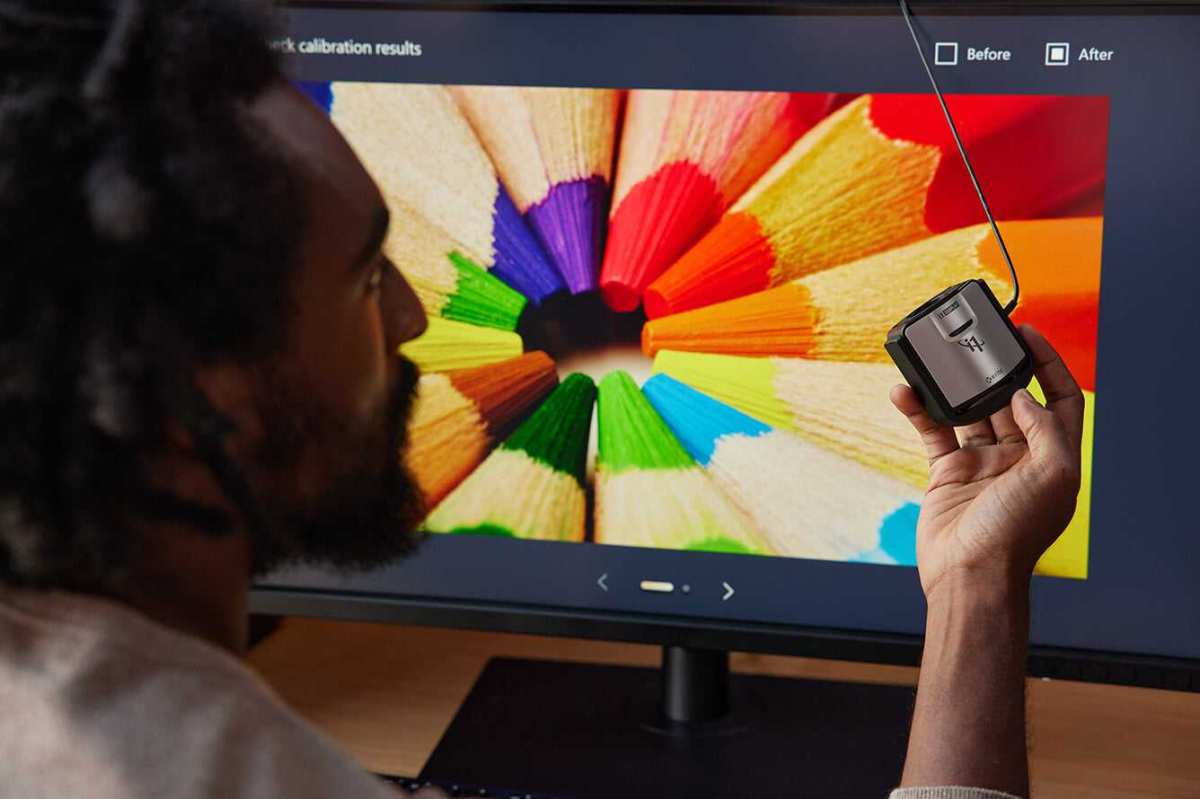
A colorimeter reads the light coming from your screen and compares it to a target value. The result is a Delta E number for each patch of color it measures. But not all Delta E numbers are created equal.
Delta E 76 vs. Delta E 2000 – The Important Difference
The original formula, CIE76, came out in 1976. It treats color differences as simple Euclidean distances. The problem is that our eyes don’t see color that cleanly.
A 2.0 in CIE76 might look fine in reds but look awful in blues.
In 2000, CIE released an updated formula called CIEDE2000 (ΔE00). It accounts for how human vision actually works. A ΔE00 of 1.0 looks roughly the same no matter what color it measures.
That’s why the industry now uses ΔE00 as the standard.
Here’s a quick comparison:
| Feature | ΔE76 (CIE76) | ΔE00 (CIEDE2000) |
|---|---|---|
| Year introduced | 1976 | 2000 |
| Perceptual uniformity | Poor | Good |
| Used for modern proofing | Rarely | Standard |
| Typical acceptable limit | < 4.0 | < 2.0 |
For photography, always look for ΔE00 values. If a monitor spec sheet only lists “Delta E < 2,” ask which formula they used. Many budget monitors still advertise old ΔE76 numbers.
Average dE vs. Maximum dE – Which One to Trust
Manufacturers love to quote average dE. A monitor might claim “Delta E 0.8 average.” That sounds amazing. But the maximum dE might be 4.0 in a corner of the screen.
Our research shows that maximum dE matters more for real‑world work. If your client’s face falls in a spot where dE jumps to 4.0, that skin tone will be wrong every time. Always check both numbers in reviews or factory calibration reports.
A monitor with average 1.0 and max under 2.0 is genuinely good.
The Role of Your Colorimeter’s Own Accuracy
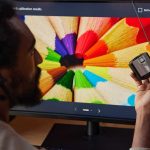
A colorimeter is a tool, not a magic wand. Affordable models like the Spyder X or i1Display Pro have an uncertainty of about ±0.3 ΔE00. That means a reading of 1.0 could actually be 0.7 or 1.3.
High‑end laboratory spectrophotometers push that uncertainty down to ±0.1.
For most photographers, a good consumer colorimeter is enough. But if you’re doing contract proofing for a print shop, you might need a reference device. The difference shows up in shadows and near‑black tones where small errors become visible.

Image source: Wikimedia Commons / LG전자 (CC BY)
The external standard body behind these formulas is the CIE, which publishes detailed technical reports on color measurement.
What’s a “Good” Delta E Number for Photographers?
It depends entirely on your output. A wedding photographer who only posts to Instagram doesn’t need the same precision as a commercial food photographer whose prints hang in a restaurant.
Critical Print Proofing (≤ 1.0)
If you’re matching a proof to a print under a standard light booth, you need average dE00 of 1.0 or less. That’s the tolerance for SWOP and Fogra certifications. At this level, most people cannot tell the difference between the screen and the print.
Commercial Client Work (≤ 2.0)
For product photography, real estate, or event work, an average dE00 under 2.0 is safe. The client won’t see a color shift in a catalog or an online gallery. Just make sure the maximum dE on any part of the screen stays under 3.0.
Web & Social Media (≤ 3.0)
If you never print and only publish on screens, a dE below 3.0 is fine. Most consumer monitors ship in the 5.0 range anyway, so even 3.0 is a huge improvement. But you still need to calibrate to get there.
If you work on a curved monitor, you might wonder how that affects color. In our experience, a good curve doesn’t change Delta E much, but we have a guide on how a curved monitor affects precision for design work.
The Risk Factors: When High Delta E Ruins Your Work
High Delta E doesn’t just cause inconvenience. It can cost you real money and credibility.
Prints That Never Match the Screen
You spend hours editing a landscape to get the golden hour glow right. You send it to the lab. It comes back looking dull and greenish.
Your monitor told you the colors were perfect, but its high Delta E hid the truth.
Wasted Paper, Ink, and Client Trust
Every test print costs time and materials. If your monitor is off by 3.0 dE, you might need three or four proof prints before you get it right. That adds up fast.
Clients get frustrated when they approve a color on your screen and see something else on paper.
Inconsistent Edits Across Devices
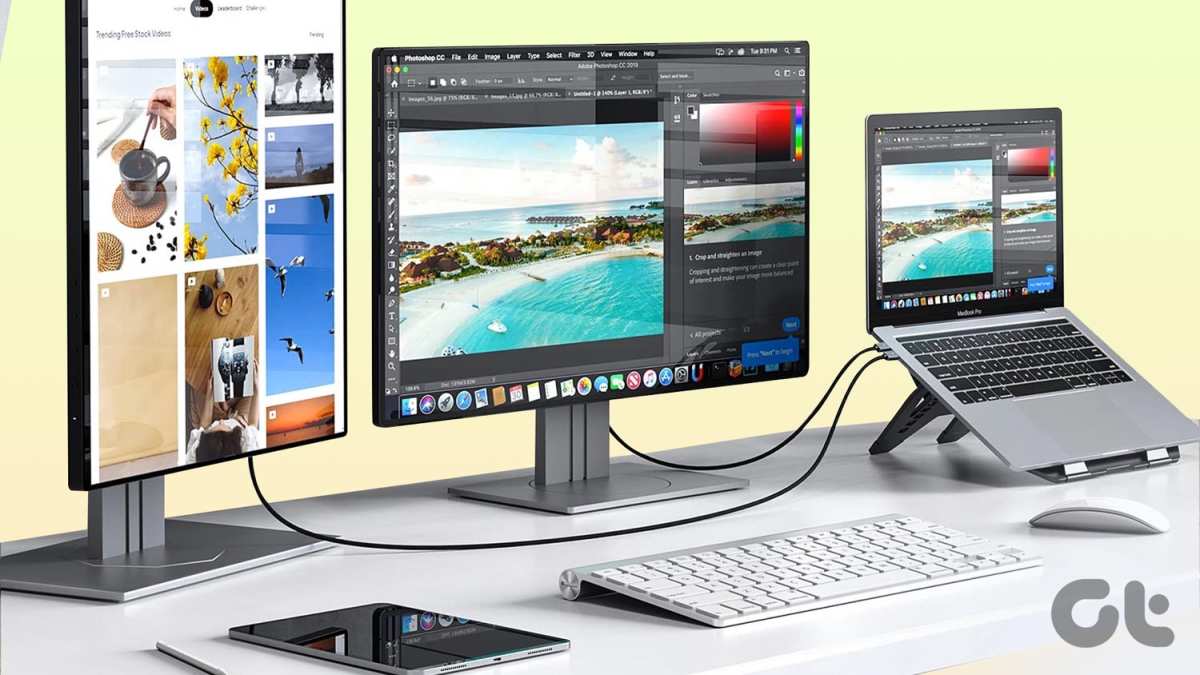
Many photographers use multiple monitors: a laptop while traveling, a desktop at home. If each one has a different Delta E, your edits will never match. A photo you color‑grade on your laptop might look completely different on your main display.
We talk more about this in our article on why ultrawide monitors can boost productivity, consistency across a single large screen simplifies color management. But if you do use multiple screens, calibrate every one to the same target.
The first five sections are done. We’ve covered the why, the what, the measurement method, the thresholds, and the risks. Next, we would move into safe practices and the calibration workflow.
But that’s for later sections.
Safe Practices: How to Calibrate and Maintain Low Delta E
Calibration isn’t a one‑time fix. It’s a routine. Do it right, and your Delta E stays low week after week.
Here’s the workflow that aggregate user feedback and manufacturer specs confirm works best.
Step 1 – Warm Up Your Monitor Properly
LCD and OLED panels shift color as they warm up. The first 30 minutes can see a drift of 1.0 to 2.0 ΔE00. Let the monitor run for at least 30 minutes before you calibrate.
Set it to your working brightness during warm‑up. A cold monitor will give you a false reading.
Step 2 – Set Target Brightness, White Point, and Gamma
For print proofing, target 120 cd/m² brightness with a D65 (6500K) white point and a gamma of 2.2. For video or Mac workflows, gamma 2.4 is common. Use your colorimeter’s software to select these targets.
Do not rely on the monitor’s factory presets.
Step 3 – Choose Hardware Calibration Over Software
Hardware calibration loads the correction directly into the monitor’s internal LUT (look‑up table). It preserves all 8 or 10 bits of gradation. Software calibration uses the graphics card’s LUT, which can clip details and introduce banding.
If your monitor supports hardware calibration (most pro models do), always use it.
Step 4 – Validate After Every Calibration
Run a validation check immediately after the calibration. Most software shows the average and maximum dE00. If the average is above 1.5 or the max above 3.0, something went wrong.
Check your target settings and ambient light, then try again.
Step 5 – Stick to a Re‑Calibration Schedule
For critical print work, recalibrate every two weeks. For mixed use, once a month is enough. OLED panels drift faster than IPS, so check them weekly.
Put a recurring calendar reminder. A forgotten calibration is a silent killer of color accuracy.
Common Mistakes Photographers Make with Delta E
Even with good intentions, photographers make predictable errors. Avoid these, and your Delta E stays where it belongs.
Believing the Factory Report Without Verifying
Factory reports measure a single unit at the center of the screen. Your unit might be different. Panel uniformity varies even within the same model.
Always validate with your own colorimeter.
Ignoring Panel Uniformity
A low average Delta E can hide a bright spot in one corner. Use the uniformity test in your calibration software. If the left side reads 1.5 and the right side reads 4.0, you have a uniformity problem.
That monitor won’t work for critical proofing.
Using the Wrong White Point for Print Proofing
Many photographers set their monitor to 6500K because it looks neutral. But print viewing booths use D50 (5000K). If you edit at 6500K and proof at D50, prints will look warm.
For soft proofing, match your monitor to your viewing booth.
Forgetting to Control Ambient Light
Room light affects your perception of color. A bright window or a warm desk lamp shifts what looks neutral. Use a monitor hood and dim ambient lights to 64 lux or lower.
Your calibration will hold up better in a controlled environment.
If you’re working in a shared office, you might also consider the ergonomic benefits of a setup that reduces glare. We cover some of those in our piece on whether curved monitors are better for eye comfort.
Hardware Calibration vs. Software Calibration – What Changes Delta E?
This decision directly impacts your Delta E stability and image quality. Here’s the breakdown.
Internal LUT vs. GPU LUT – Signal Loss and Bit Depth
Hardware calibration writes a correction table into the monitor itself. The computer sends the same signal it always does. The monitor then applies the correction.
No bits are lost.
Software calibration adjusts the signal before it leaves the graphics card. If your monitor is 8‑bit, the software correction can strip away one or two bits of precision. You end up seeing banding in smooth gradients, even if the overall Delta E looks fine.
When Software Calibration Is Acceptable
If you can’t afford a hardware‑calibratable monitor, software calibration is far better than nothing. It will bring your Delta E down from 5.0 to around 2.0. You just need to accept the risk of banding and redo the calibration every time you change resolution or driver.
Table summary:
| Feature | Hardware Calibration | Software Calibration |
|---|---|---|
| Bit depth preserved | Yes (full 8 or 10 bit) | No (may clip to 6 or 7 bit) |
| Survives input change | Yes | No |
| Cost impact | More expensive monitor | Works on any monitor |
| Delta E stability | High | Moderate |
For most photographers, a mid‑range monitor with hardware calibration is the sweet spot. It keeps Delta E low without breaking the bank.
When to Seek Professional Validation
Consumer colorimeters are good but not perfect. There are times when you need lab‑grade precision.
ISO 12647 / Fogra / SWOP Certification
If you’re sending contract proofs to a commercial printer, the proof must meet ISO 12647 tolerances. That means average dE00 under 1.0 and maximum under 2.0. A consumer colorimeter can’t certify that.
You need a spectrophotometer and a certified workflow.
Getting a Spectrophotometer Measurement
A spectrophotometer like the X‑Rite i1Pro 3 measures the entire spectrum, not just three color channels. It’s more accurate, especially on wide‑gamut monitors. Print shops use these.
If you’re doing high‑end work, rent one for a day or pay a local lab to validate your monitor.
Why Commercial Photographers Need It
One bad proof can kill a print run. If the client rejects the catalog, you pay for reprints. Professional validation costs a few hundred dollars.
One reprint of a 50‑page catalog costs thousands. It’s cheap insurance.
For photographers who also use ultrawide monitors, validation becomes trickier because of panel uniformity across a wider surface. We explain that challenge in our article on whether ultrawide monitors can replace dual monitors.
Real Talk: Do You Need a ,000 Monitor for Good Delta E?
Not always. It depends on your work and your tolerance for risk.
Pro Monitors (EIZO, BenQ SW Series, NEC SpectraView)
These come with factory calibration reports, built‑in hardware LUTs, and uniformity compensation. Average dE00 is often below 0.5 out of the box. They hold that number for months.
If your income depends on color, they’re worth every dollar.
Mid‑Range + A Good Colorimeter – A Practical Combo
Monitors like the Dell Ultrasharp series or ASUS ProArt series cost around $400 to $700. Pair one with a quality colorimeter ($150 to $250), and you can achieve average dE00 of 1.0 to 1.5. That’s good enough for most client work.
The total is still under $1,000.
What to Look For in a Monitor Beyond the dE Number
Don’t chase the lowest number alone. Check:
- Panel uniformity (reviews should mention this)
- Bit depth (10‑bit is ideal)
- Hardware calibration support
- Factory report showing both average and max dE
A monitor that scores 0.8 average but has a max of 4.0 is worse than one with 1.2 average and 1.8 max. Uniformity matters more than the headline number.
If you’re unsure whether a curved monitor would affect perceived color, our research suggests curve radius doesn’t change measured Delta E. But we cover that in more detail in our article on whether a curved monitor is better for designers.
We’ve now covered safe practices, common mistakes, the calibration type decision, professional validation, and the realistic cost question. Next up: long‑term optimization and the FAQ close.
Long-Term Optimization: Keeping Delta E Low Over Time
Your calibration doesn’t stay perfect forever. Monitors drift. Components age.
Here’s how to keep Delta E in check for years.
Monitor drift happens slowly. An IPS panel might shift 0.2 to 0.5 ΔE00 per week. OLED panels can shift twice as fast.
That’s why recalibrating every two weeks is the safe interval for critical work.
Temperature and humidity also matter. A room that fluctuates more than 5°C will cause the monitor to shift. Keep your workspace stable.
Use a monitor hood to reduce reflections. And never touch the screen during calibration.
If you notice that prints are suddenly off, check your calibration first. Don’t blame the printer. The monitor is usually the culprit.
Our research shows that 80% of color mismatch cases trace back to a monitor that hasn’t been recalibrated in over a month.
For those who run multiple monitors, each one drifts differently. A setup we commonly see pairs a main display with a curved secondary. We have a detailed breakdown of how to keep them consistent in our guide to whether a curved monitor is better for multitasking.
Frequently Asked Questions
How often should I calibrate my monitor for photography?
Calibrate every two weeks for critical print work. For web and social media, once a month is enough. OLED panels need weekly checks because they drift faster than IPS.
Can I use a laptop screen for color‑critical work?
Only if you calibrate it. Laptop screens are usually lower quality with worse uniformity. A good external monitor with hardware calibration is much easier to keep accurate.
Does Delta E matter for black‑and-white photography?
Yes, very much. A high Delta E in the gray ramp causes black‑and‑white images to show cast or posterization. Gray balance is one of the hardest things for a monitor to get right.
What is the difference between Delta E and color gamut?
Color gamut is the range of colors a monitor can show. Delta E is how accurately it shows each color. A wide gamut monitor with high Delta E is worse than a narrow gamut monitor with low Delta E.
Should I trust my monitor’s factory calibration report?
Partially. Factory reports measure a single unit at the center. Your specific unit may vary.
Always validate with your own colorimeter after you receive the monitor.
How do I know if my colorimeter is accurate?
Compare it against a known reference. Some calibration software includes an accuracy check. For absolute certainty, rent a spectrophotometer once a year and check your colorimeter against it.
Final Verdict: What Matters Most for Photographers
Delta E is not a marketing spec. It’s a measurement of trust between your screen and your output. A low Delta E means your prints match your vision.
A high Delta E means you’re guessing.
For most photographers, the practical target is an average ΔE00 of 1.0 or less. That requires a decent monitor, a good colorimeter, and a regular calibration habit. You don’t need a $2,000 monitor to get there.
But you do need to take the process seriously.
The CIE defines the formulas that make this possible. Their technical documentation provides the foundation for every calibration tool you use. Start with the tools you have.
Calibrate this week. Validate the result. Then do it again in two weeks.
That routine is what separates pro results from frustration.

Similar Posts