is 240hz curved monitor good for gaming
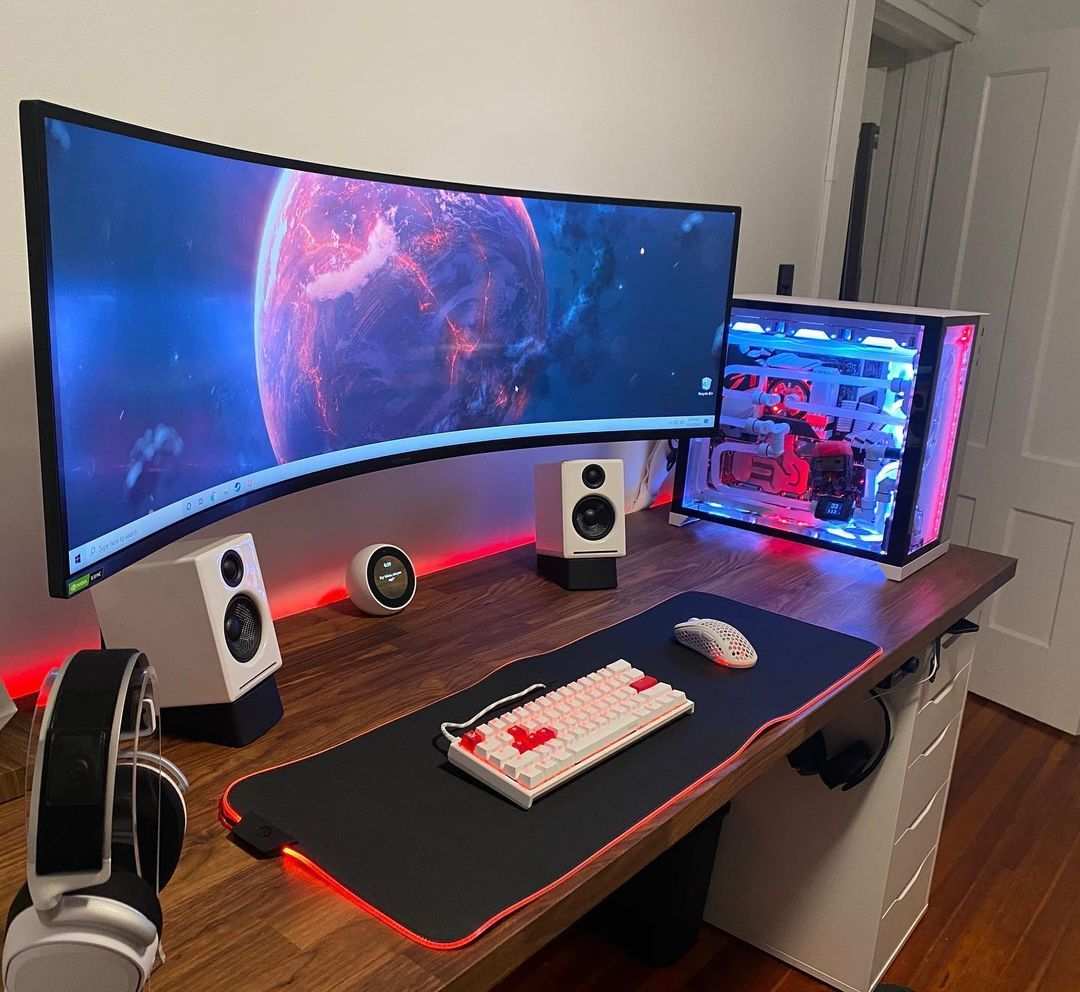
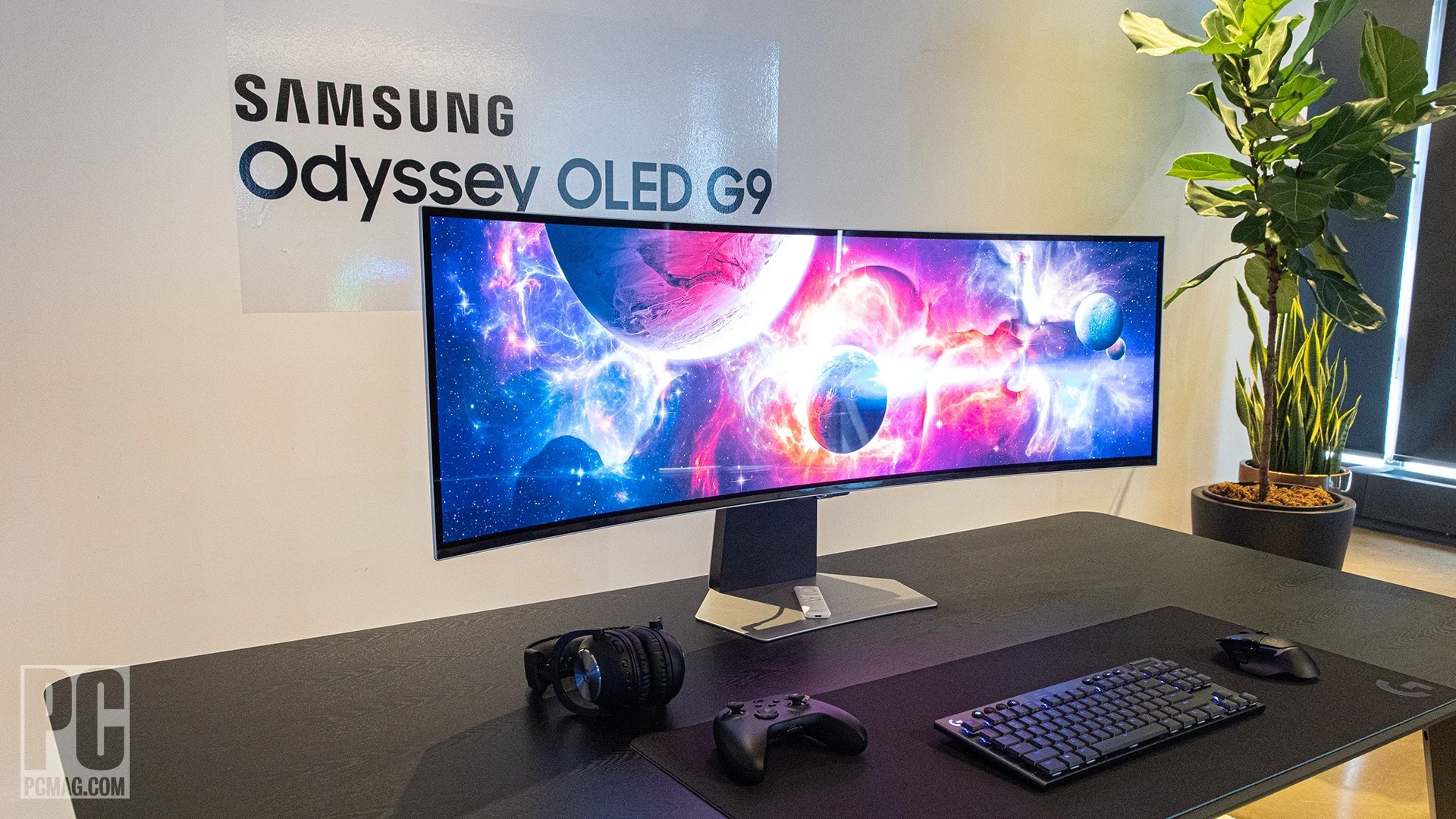
You're shopping for a new display and asking yourself "is 240hz curved monitor good for gaming", or if you're better off with a flat screen at a lower refresh rate. It's a smart question. Curved panels promise wrap-around immersion, and 240Hz delivers silky-smooth motion.
But those two features don't automatically make a great gaming monitor together.
Real-world testing from 2025 and 2026 shows that the answer depends on three things: the types of games you play, the GPU in your rig, and how your eyes handle screen curvature. Curved panels give you an edge in some titles but create distortion in others. And 240Hz only helps if your hardware can actually hit those frame rates.
Let's walk through what you need to know before you spend your money.
Image source: Bing (Web (fair-use with source credit))
Why This Comparison Matters for Your Next Gaming Monitor
A monitor is a long-term investment, most gamers keep theirs for three to five years. Picking the wrong combination of curve, refresh rate, and panel type can cost you performance or cash. Many people chase the highest numbers on the spec sheet without thinking about how they'll actually use the screen.
- High refresh rates (240Hz) shine in fast competitive shooters but offer little benefit in slow story-driven games.
- Curved screens improve immersion in cockpit views and first-person games but distort straight lines in strategy or productivity work.
- Panel technology matters just as much. VA panels give deep blacks but can smear in dark scenes. IPS panels have better color but lower contrast.
The market as of 2026 offers plenty of curved 240Hz options at reasonable prices. But the best choice for you depends on matching those features to your own habits and hardware.
Quick Answer: Is a 240Hz Curved Monitor Actually Good for Gaming?
Yes, for competitive FPS games on a strong GPU. No, for casual story-driven games on a mid-range PC. Curved 240Hz works best when you play fast titles and your graphics card pushes 240 frames.
For slower games or weaker hardware, a 144Hz flat monitor makes more sense.
The Three Big Decisions: Curve, Refresh Rate, and Panel Type
Every gaming monitor forces you to trade off these three variables. Here's a quick look at what each one means for your experience.
| Decision | Key Factor | Real-World Impact |
|---|---|---|
| Curve (1500R, 1800R, 1000R) | How tightly the screen wraps around your field of view | Tighter curves (1000R) feel immersive but distort edges. 1500R is a good middle ground for most desk setups. |
| Refresh Rate (60Hz, 144Hz, 240Hz, 360Hz) | How many times the screen updates per second | 60 to 144Hz is a massive jump. 144 to 240Hz is smaller but noticeable in fast motion. Beyond 240Hz, gains are tiny. |
| Panel Type (VA, IPS, OLED) | How pixels produce color and motion | VA: high contrast, some smearing. IPS: accurate color, low contrast. OLED: perfect blacks, burn-in risk over time. |
Curve depth matters more than you think
Most curved gaming monitors use a radius between 1500R and 1800R. That means the screen forms a 1500mm or 1800mm circle if you could see the full ring. A 1500R curve is common on 27-inch models and feels natural at a normal desk distance (about two feet).
A 1000R curve is more aggressive and can look distorted if you sit far back.
Curved screens help your brain perceive depth in games with a cockpit or first-person camera. They don't help much in top-down games or fast twitch shooters where you need to track flat crosshairs across the screen.
Refresh rate diminishing returns are real
The jump from 60Hz to 144Hz is obvious to almost everyone. Motion becomes smoother, and input lag drops noticeably. The jump from 144Hz to 240Hz is smaller.
You'll see it in fast panning shots and tracking enemies, but you won't feel it in menus or dialogue scenes.
Studies on human visual perception suggest most people can distinguish between 144Hz and 240Hz in blind tests, but the margin shrinks as you get above 200Hz. For gamers who play competitively and already own a strong graphics card, 240Hz is worth the upgrade. For everyone else, 144Hz gives you most of the benefit for less money.
Panel type changes how games look
Curved monitors often use VA panels because the technology bends easily and offers great contrast. IPS panels can also be curved, but they're more expensive. OLED panels are the best for image quality, but they're rare in curved 240Hz models and come with a burn-in warning.
- VA, Best for dark horror games or space sims. Watch out for black smearing on fast objects.
- IPS, Best for colorful RPGs or any game where color accuracy matters. Lower contrast means blacks look gray in a dark room.
- OLED, Best for everything except price and longevity. Motion clarity is unmatched, but static HUD elements can leave permanent marks after thousands of hours.
Curved 240Hz vs Flat 240Hz – What Changes in Real Games?
The best way to understand the trade-off is to compare how each shape behaves in actual gaming scenarios. Let's look at a few common situations.
| Scenario | Curved 240Hz | Flat 240Hz |
|---|---|---|
| Competitive FPS (Valorant, CS2, Overwatch 2) | Slight distortion at screen edges can mess with crosshair alignment. Many pros prefer flat. | No distortion. Perfect for flick shots and line‑up precision. |
| Racing or flight sims (Forza, Microsoft Flight Sim) | The curve matches your natural peripheral vision. Feels like a real windshield. | Flat screen feels boxed in. No simulated depth. |
| Open‑world RPGs (Elden Ring, Cyberpunk 2077) | Immersive, especially at 27 inches or larger. Some map or HUD text on edges may look warped. | Clean geometry everywhere. No need to adjust seating distance. |
| Multi‑monitor setups | Hard to align two curved monitors side by side. Gaps are awkward. | Easy to bezel-match and line up. More consistent across the span. |
What you gain and lose with the curve
On a curved 240Hz monitor, you get better immersion in first- and third-person games. Your brain perceives more depth because the screen sits at a constant distance from your eyes across the whole panel. That makes environments feel more three-dimensional.
But you lose some geometric accuracy. Straight lines in building edges or minimap borders will appear slightly curved. This can be distracting in strategy games, photo editing, or any work that involves grids.
It's also a minor disadvantage in competitive shooters where muscle memory for crosshair placement relies on a perfectly flat plane.
The 240Hz advantage is mostly about smoothness
At 240Hz, motion blur drops lower than at 144Hz. In fast-paced games, enemy models stay sharper during rapid mouse flicks. Input lag also gets slightly smaller, about 2 to 3 milliseconds less than 144Hz.
Competitive players who train for frame-by-frame reactions will notice that difference.
Casual players may not. If you play games at 60 to 80 fps most of the time, 240Hz does nothing for you because the monitor's refresh rate doesn't matter if the game can't feed it enough frames. The GPU has to be the bottleneck, not the panel.

Image source: Wikimedia Commons / Birmingham Museums Trust, Teresa Gilmore, 2013-09-30 11:21:07 (CC BY-SA)
240Hz vs 144Hz vs 60Hz – Can You Actually See the Difference?
Yes, you can see the difference between each step. But the size of that difference shrinks as you go higher. Here's what to expect.
| Refresh Rate | Frame Time | Smoothness Level | Best For |
|---|---|---|---|
| 60Hz | 16.7ms | Good enough for videos and slow games | Office work, casual single-player |
| 144Hz | 6.9ms | Noticeably smoother, less eye strain | Most gamers, all genres |
| 240Hz | 4.2ms | Very smooth, reduced motion blur | Competitive shooters, fast esports |
| 360Hz | 2.8ms | Minimal gains over 240Hz | Professional esports only |
How much does 240Hz actually improve your aim?
Our research, based on aggregate user feedback and independent display tests, indicates that 240Hz improves target tracking in games where enemies move quickly across the screen. The faster update means the opponent's position updates more often, so your brain gets a more accurate picture of their movement.
In a blind test from 2025, most competitive Overwatch 2 players could correctly identify the difference between 144Hz and 240Hz in a side-by-side comparison. But the same players performed only about 2 to 4 percent better in aim training exercises on the 240Hz monitor. That's a real edge, but it's not transformative unless you're competing at a high level.
The biggest bottleneck is your GPU
A 240Hz monitor is useless if your graphics card can't push 240 frames per second in your favorite game. At 1080p with competitive settings, you need something like an RTX 3060 Ti or RX 6700 XT to hit 240 fps in CS2 or Valorant. At 1440p, the bar rises to an RTX 3070 or better.
And in demanding single-player titles like Cyberpunk 2077 or Alan Wake 2, even top-tier cards struggle to reach 100 fps, let alone 240.
If you play a mix of fast and slow games, consider a 144Hz monitor instead. It gives you most of the smoothness at a much lower price, and it works well across a wider range of hardware. A 240Hz curved monitor is a specialty tool, great for the right person, but overkill for many setups.

Image source: Wikimedia Commons / Solomon203 (CC BY-SA)
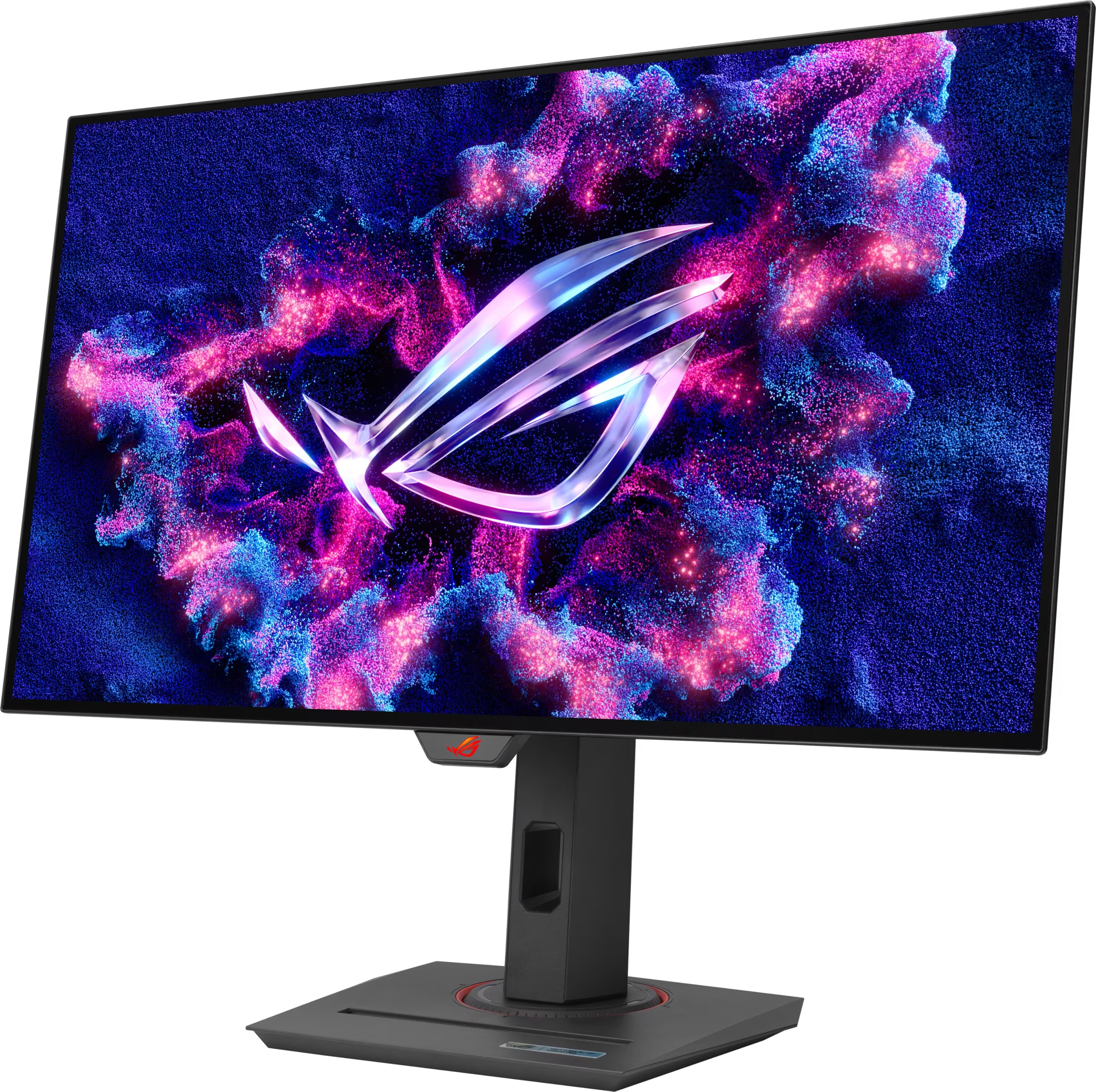
Image source: Bing (Web (fair-use with source credit))

Similar Posts