Do I Need an iPad Pro for Procreate?
You’ve seen the jaw‑dropping digital paintings on social media and heard that Procreate is the app behind them. Then you start shopping and wonder: do I need an iPad Pro for Procreate, or can a less expensive iPad handle everything you throw at it? The short answer is no, you do not need an iPad Pro — but whether you want one depends entirely on how you draw, the size of your canvases, and your appetite for the latest creative features. In this guide we’ll walk through what each iPad model actually delivers inside Procreate, break down the real‑world benefits of the Pro tier, and help you choose the right device for your art — and your budget.
What Makes the iPad Pro Stand Out for Procreate?
Procreate runs on any iPad that supports iPadOS 16.4 or later and an Apple Pencil, so the app itself doesn’t demand a Pro. The Pro models simply remove technical bottlenecks that can hold back ambitious artists. Once you understand which of these bottlenecks you’re likely to hit, the decision becomes much clearer.
A canvas you can spread out on
The iPad Pro comes in 11‑inch and 13‑inch sizes (the latest M4 versions offer an even larger 13‑inch display with Ultra Retina XDR). That extra real estate lets you keep toolbars, reference images, and your canvas all visible without constant pinch‑to‑zoom. For character designers who need a full‑body figure and a detailed face on the same screen, or comic artists laying out multiple panels, the bigger workspace genuinely speeds up the workflow. Screen quality matters too: the Pro’s P3 wide color and extreme brightness mean more accurate color grading, while the fully laminated display eliminates that tiny air gap you feel on the entry‑level iPad.
Smooth, responsive strokes with ProMotion
The 120Hz ProMotion refresh rate is the feature Pro‑model artists rave about most. Every Apple Pencil stroke generates a digital ink trail that updates up to 120 times per second, cutting input latency to roughly 9 milliseconds on the newest models. The result feels almost exactly like a real pen on paper — zero perceptible lag during fast gestural drawing, cross‑hatching, or calligraphy. Artists who’ve experienced just how fluid, tear‑free visuals transform a real‑time input quickly find it difficult to work on a 60Hz screen again. The difference between 60Hz and 120Hz is more than a spec number; it’s the difference between seeing your line form a fraction behind your hand and seeing it appear instantly.
Apple Pencil features that push precision further
All recent iPads support an Apple Pencil, but the Pro models (starting with the M2 iPad Pro) unlock Apple Pencil hover, which shows a brush‑size preview and cursor shadow before you even touch the screen. The newest iPad Pro M4 and iPad Air M2 also work with Apple Pencil Pro, which introduces squeeze gestures, barrel rotation sensing, and haptic feedback. These are genuinely productive tools for digital painters swapping brush sizes rapidly or sculpting custom brush shapes — but they are not essential for sketching, inking, or basic painting. If your style revolves around traditional mark‑making with a single favourite brush, you may never miss them.
Raw power that handles monster canvases
An iPad’s chip and RAM determine how many layers you can stack at a given canvas size. The M4 in the newest iPad Pro, paired with 8 GB or 16 GB of RAM, can push a 6000×4000 px canvas past 200 layers without breaking a sweat. On an older iPad 9th generation with the A13 and 3 GB RAM, the same canvas might limit you to 15–20 layers — enough for a simple sketch, but nowhere near enough for a complex illustration with separate layers for line art, flats, shadows, highlights, and special effects. If you regularly build up paintings with dozens of blend‑mode layers, the headroom of an M‑series Pro (or even an M‑series Air) directly dictates how complex your composition can become.
Storage that grows with your gallery
Procreate files, especially those containing 4K time‑lapse recordings, swell quickly. A single working file might be 500 MB, and a finished project collection easily passes 10 GB. The iPad Pro is available up to 2 TB, while the standard iPad tops out at 256 GB. If you also store reference boards, video exports, and other creative apps — or you’re a professional who never wants to cloud‑archive an active project — that extra headroom prevents constant storage gymnastics.
Thunderbolt for a desktop‑class studio
The Pro’s Thunderbolt / USB 4 port doesn’t just charge faster; it lets you plug in a high‑resolution external monitor, a fast external SSD, or an SD card reader and transfer files at blazing speeds. Working with a secondary reference monitor while drawing on the iPad is a habit many pros adopt, and the Pro handles it without compression artefacts or lag.
Why You Might Not Need an iPad Pro
For the vast majority of Procreate users — hobbyists, students, professional illustrators working on modest canvas sizes — the current iPad Air or even a recent standard iPad is more than capable. Before you stretch your budget, consider what you genuinely give up.
iPad Air (M2, 2024): the sweet spot
The iPad Air now runs on the same M2 chip that powered the previous‑generation iPad Pro. It handles the same brush engines, the same canvas sizes, and the same Apple Pencil Pro features, including hover. What you lose is ProMotion. The Air’s 60Hz screen feels perfectly usable — thousands of artists create stunning work on it daily — but if you’ve ever drawn on a 120Hz display you may notice the slight delay. The Air lacks the Pro’s peak brightness and mini‑LED/OLED contrast, which matters mainly for HDR grading, not typical illustration. For a fraction of the Pro’s price, you get a large‑canvas, high‑layer‑count machine that only falls short in refresh rate.
iPad (10th generation): the budget workhorse
The 10th‑gen iPad uses the A14 Bionic chip, a fully laminated display (no air gap), and works with the USB‑C Apple Pencil or the first‑gen Pencil with an adapter. Procreate runs smoothly here for canvases up to about 4000×3000 px with a modest but usable layer stack. You won’t get ProMotion, hover, or the latest Pencil Pro tricks, but if you’re learning, doodling, or creating flat‑vector‑style art with a handful of layers, this iPad keeps hundreds of dollars in your pocket.
iPad mini (6th generation): the sketchbook you pocket
With an 8.3‑inch screen and A15 Bionic, the mini is a portable powerhouse. It supports the second‑generation Apple Pencil (magnetically attaching and charging) and runs Procreate without stutter. The screen is too cramped for detailed multi‑hour paintings, but for quick concept sketches, storyboards, or couch‑based creativity, it’s an artist’s favourite. Some pros even keep a mini as a dedicated companion to a larger tablet.
Older refurbished iPad Pro models
A 2018 or 2020 iPad Pro with an A12Z chip still tears through Procreate, supports a laminated 120Hz display, and works with the second‑gen Apple Pencil. These models often sell for less than a new iPad Air and deliver every core Procreate advantage at a lower price — a smart move if hover and Pencil Pro aren’t on your wish list.
Beyond the Canvas: Optimizing Your Creative Workflow
Procreate is just one part of many modern artists’ routines. If you also record time‑lapses, upload tutorials, or stream your drawing sessions, the gear surrounding your iPad starts to matter as much as the tablet itself.
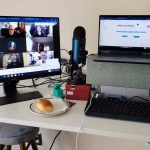
Even the crispest artwork videos lose their appeal if the lighting is uneven. The right lighting setup flatters your working space, eliminates screen reflections, and keeps colours true across the footage. Audio matters too — viewers will forgive a little camera grain before they tolerate muffled narration. Capturing clear voiceovers ensures your commentary stays easy to follow, while reducing unwanted background noise removes the hum of fans, traffic, or a creaky chair. Together, these small investments turn an iPad‑only setup into a professional content‑creation studio.
For the drawing experience itself, display fluidity isn’t limited to iPads. Many digital artists find that a high‑refresh monitor is a noticeable upgrade when using an external screen as a reference or preview display, much as gamers notice the difference in fast‑paced titles. While colour accuracy typically takes priority for art, the responsiveness of a 120Hz+ panel can make panning and zooming across a large reference board feel effortlessly smooth.
Feature Comparison: Which iPad Fits Your Procreate Workflow?
| Feature | iPad Pro 13″ (M4) | iPad Pro 11″ (M4) | iPad Air 13″ (M2) | iPad Air 11″ (M2) | iPad (10th gen) | iPad mini (6th gen) |
|---|---|---|---|---|---|---|
| Screen size | 13″ | 11″ | 13″ | 10.9″ | 10.9″ | 8.3″ |
| ProMotion (120Hz) | Yes | Yes | No | No | No | No |
| Apple Pencil support | Pencil Pro, Pencil (USB‑C) | Pencil Pro, Pencil (USB‑C) | Pencil Pro, Pencil (USB‑C) | Pencil Pro, Pencil (USB‑C) | Pencil (USB‑C), Pencil (1st gen) | Pencil (2nd gen), Pencil (USB‑C) |
| Hover & advanced Pencil features | Yes | Yes | Yes | Yes | No | No |
| Chip / RAM | M4, 8/16 GB | M4, 8/16 GB | M2, 8 GB | M2, 8 GB | A14, 4 GB | A15, 4 GB |
| Example max layers* | 200+ (16GB model) | 200+ (16GB model) | 100+ | 100+ | 25–40 | 25–40 |
| Storage options | 256GB – 2TB | 256GB – 2TB | 128GB – 1TB | 128GB – 1TB | 64GB, 256GB | 64GB, 256GB |
| Best for | Professionals who push canvas/layer limits daily, HDR work, and all‑day drawing comfort | Same as 13″ in a compact body | Creators wanting Pro‑level chip & Pencil Pro without ProMotion | Hobbyists, students, pros on a mid‑budget | Beginners, casual drawing, note‑taking | Portable sketching, travel companion |
Layer count varies by canvas dimensions; examples given for a typical 4000×3000 px canvas with standard blending modes.
Frequently Asked Questions
Can I use Procreate on a regular iPad without an Apple Pencil?
Yes, Procreate works with touch alone or with a capacitive stylus, but you lose pressure sensitivity and tilt recognition. For any kind of expressive line work — from soft shading to dynamic inking — an Apple Pencil (any generation) is strongly recommended.
Which iPad gives the most layers in Procreate?
Layer limits are tied directly to RAM and canvas size. The 1 TB and 2 TB iPad Pro models (M4 or previous M2) pack 16 GB of RAM, delivering the highest possible layer count. A 13″ iPad Pro with 16 GB can handle 250+ layers on a 4000×3000 px canvas, while a 4 GB iPad mini might manage 20–30.
Is Procreate free on iPad?
No. Procreate is a one‑time purchase (typically around $12.99 USD in the App Store) with no subscription. Once you buy it, all future updates, brushes, and features are included at no extra cost.
Does the iPad Air feel slow for large Procreate files?
Not in practice. The M2 chip inside the current iPad Air is identical to the chip in the previous iPad Pro and breezes through large canvases and complex brushes. The only speed‑related missing piece is the 120Hz display, but the chip itself won’t bottleneck you.
Will my old iPad Pro 2018 still run the latest Procreate?
Yes. Procreate supports the 2018 iPad Pro, and it runs smoothly thanks to the 120Hz screen and A12X chip. You won’t get hover or Apple Pencil Pro features, and layer limits will be lower than on newer models, but for most illustration work it remains a powerful device.
Do I need an iPad Pro to do professional client work?
No. Plenty of working illustrators and designers use an iPad Air or even a standard iPad. Clients care about the final artwork, not your device model. That said, if you regularly deliver massive print‑resolution files with dozens of layered components, the Pro’s RAM and storage can save hours of frustration.
Can I connect the iPad Pro to an external monitor while working in Procreate?
Yes. With a USB‑C iPad you can mirror the screen to a monitor or use Stage Manager to extend your workspace. Procreate’s canvas mirroring shows the full artboard on the external display while keeping tools on the iPad, which is excellent for presentations or referencing a large image.
Conclusion: Choosing the Right iPad for Your Procreate Journey
An iPad Pro is not a prerequisite for creating stunning art in Procreate. It is a premium tool that removes friction: larger screens, a buttery‑smooth 120Hz refresh rate, higher layer counts, and the latest Pencil innovations. If those advantages align with your daily workflow — say you’re a full‑time freelance illustrator who works on high‑resolution multi‑layer pieces for hours every day — the Pro pays for itself in comfort and speed.
If, however, you are learning, sketching, or creating beautiful work on moderate canvases, the iPad Air M2 gives you nearly identical internal power at a much kinder price. The standard iPad remains a fantastic entry point, and a refurbished older Pro can deliver 120Hz goodness without the current‑gen price tag. Assess your canvas sizes, layer demands, and tolerance for screen latency honestly, and you’ll find the right iPad without overspending. Pair that device with the accessories that elevate your creative workflow — good lighting, a decent microphone, and an awareness of your studio’s acoustics — and you’ll be equipped to produce artwork that stands on its own, regardless of the model name on the back.

Similar Posts