Do I Need an Apple Pencil for iPad Pro? A Comprehensive?
The iPad Pro is a creative powerhouse — a tablet that can replace a laptop for many artists, designers, note-takers, and students. But to unlock its full potential, one accessory sparks a constant debate: the Apple Pencil. It’s sleek, precise, and expensive. So the question echoes across forums and coffee shops: do you really need one? This guide dives deep into what the Apple Pencil does, who benefits most, and where it might be overkill, so you can make a smart decision without second-guessing.
What Exactly Is the Apple Pencil?
The Apple Pencil isn’t just a stylus. It’s a pressure-sensitive, low-latency drawing tool built explicitly for iPad. The second-generation model (2018 onward) attaches magnetically to the side of compatible iPad Pro models for pairing and wireless charging. It supports tilt detection, palm rejection, and — on M2 iPad Pros — a hover feature that previews your mark before the tip touches the glass.
A single tap or double-tap gesture on the flat side lets you switch tools in apps like Procreate. The tip and body feel like a real pencil, but beneath the surface there’s a sophisticated sensor array. The result? Lines that taper, brushes that blend, and a writing experience so fluid it’s often indistinguishable from paper.
If you’re using an older iPad Pro (2015 or 2017) with a Lightning port, you’d need the first-generation Apple Pencil, which charges via a Lightning connector. The second-generation model works with iPad Pro 11-inch (all generations), iPad Pro 12.9-inch (3rd generation and later), and recent iPad Air and mini models. Our focus here remains firmly on the iPad Pro ecosystem.
How the Apple Pencil Transforms Your iPad Pro Experience
Unmatched Precision and Fluid Drawing
Traditional finger painting feels mushy. The Apple Pencil, with its 240 Hz touch scanning (on ProMotion displays), reacts in milliseconds. Pressure sensitivity lets you shade gently or lay down a heavy stroke simply by pressing harder — something no cheap stylus emulates convincingly. Tilt the Pencil to the side and it behaves like a charcoal stick, perfect for broad strokes.
A 2019 Adobe survey of creative professionals found that 71% said the Apple Pencil improved their workflow and productivity. Illustrators in particular praise the pen’s ability to handle thousands of brush variants in apps like Procreate, Adobe Fresco, and Clip Studio Paint. Photographers retouch with pixel-level control in Lightroom and Photoshop for iPad, tasks nearly impossible with a fingertip.
A Digital Notebook That Feels Like Paper
Students and knowledge workers adore the Apple Pencil for handwritten notes. With Scribble, iPadOS converts your handwriting into typed text across any text field — no keyboard needed. Apps like GoodNotes 6, Notability, and Apple Notes let you organize, search, and annotate. The psychological boost is real: a 2018 Evernote survey showed 84% of users felt more productive and organized when using a stylus for notes.
Jot down math formulas, sketch wireframes during a meeting, or mark up a contract PDF. The Pencil makes on-screen writing feel natural, and the matte screen protectors available today can add a paper-like texture to reduce glare and drag.
Designing with Tilt, Shading, and Hover
Beyond line thickness, tilt recognition unlocks shading techniques that mimic real pencils, markers, and brushes. Layering translucent strokes is intuitive. The hover feature on M2 iPad Pros previews the exact spot where a line will land, which is invaluable for precise work like UI design or calligraphy.
A survey by Procreate (among its user base of over 30 million) reported that 92% of professional artists considered the Apple Pencil their primary tool for digital art creation. The integration with pro-level apps — Affinity Designer, Concepts, AutoCAD mobile — turns the iPad Pro into a drafting table that fits in your backpack.
Extend Your Creative Canvas with External Displays
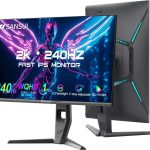
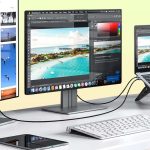
When you’re doing serious illustration or 3D modeling, the iPad Pro’s screen might feel cramped. Many artists connect an external monitor via USB‑C to mirror or extend their workspace. Having a large, crisp display where you can see the whole canvas is a game-changer. But to keep the experience fluid, you’ll want a display that doesn’t introduce lag. Understanding the benefits of a smoother refresh rate helps you appreciate why artists often prefer high‑refresh‑rate screens that match the iPad Pro’s ProMotion fluidity.
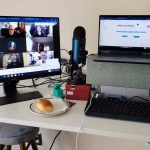
If you’re recording your creative process for YouTube or social media, the quality of your entire production matters. Getting your lighting right for video content eliminates harsh shadows on your desk, while picking a quality microphone ensures your voiceovers sound clean and professional. And nothing ruins a tutorial faster than a constant hum — reducing background hum in your workspace is straightforward once you identify the culprits. These small investments turn an iPad Pro setup into a capable mini studio.
When you do connect that external monitor, make sure you’re not stuck at a sluggish refresh rate. Many creators run into an issue where their high‑refresh panel is locked at 60 Hz, which introduces visible stutter when you’re stroking with the Pencil. Ensuring your monitor operates at its full potential is often just a settings tweak, and it keeps your expanded canvas feeling as responsive as the iPad itself. For anyone wondering if the extra fluidity justifies the cost, the math changes when every frame matters during precise line art or animation scrubbing. Finally, plugging in an external high‑refresh display correctly — with the right cables and adapters — avoids a chain of troubleshooting down the line.
The Real Limitations to Consider
The Price Tag
The second‑generation Apple Pencil retails for $129 (US). It’s rarely bundled, so it’s an out‑of‑pocket addition. Compare that to a Logitech Crayon ($70) or no‑name capacitive styluses under $20. The gap is large — and if you aren’t drawing daily, that $129 might be better spent on a keyboard case or software subscriptions.
Niche Everyday Utility
If your iPad Pro is primarily a Netflix machine, email client, and social media hub, you simply don’t need an Apple Pencil. Your finger navigates the interface perfectly well, and the Pencil’s strengths lie in creation, not consumption. Apple’s own gestures and the on‑screen keyboard handle text input efficiently for casual users.
Battery and Charging Habits
The magnetic wireless charging is elegant, but when the Pencil is attached to the iPad, it draws a small amount of power even when idle. Over a day, this might drain your iPad’s battery slightly faster. The pencil itself charges quickly, but you’ll need to keep an eye on it if you’re away from a charger for extended periods.
Compatibility Pitfalls
Not every iPad Pro works with every Pencil. A 2017 iPad Pro (2nd gen) requires the first‑generation Apple Pencil and uses a Lightning port plug for charging — an awkward setup. All 2018 and later iPad Pro models use the second‑generation Pencil with magnetic attachment. Before buying, double‑check the exact model year under Settings > General > About to avoid a costly mismatch.
Apple Pencil vs. Third‑Party Styluses
| Feature | Apple Pencil (2nd gen) | Logitech Crayon | Generic Capacitive Stylus |
|---|---|---|---|
| Pressure sensitivity | Yes | No | No |
| Tilt support | Yes | Yes (limited) | No |
| Magnetic charging & pairing | Yes | No | No |
| Palm rejection | Apple‑level seamless | Good | Inconsistent |
| Hover preview (M2) | Yes | No | No |
| Price | $129 | $70 | $10–$30 |
| Best for | Artists, note‑takers | Students, general use | Casual, occasional input |
The Logitech Crayon is a solid middle ground for students who want palm rejection and a decent writing experience without the fine pressure nuance. But for any digital art, sketching, or shading work, the Apple Pencil is in a different league entirely.
A Decision Framework: When You Absolutely Need It — and When You Don’t
The Apple Pencil Is a Must If…
- You create digital art, illustrations, or graphic designs as a hobby or profession.
- You take handwritten notes daily and want to search, organize, and back them up.
- You regularly mark up PDFs, blueprints, or design documents requiring precision.
- You do 3D sculpting or modeling in apps like Nomad Sculpt or Shapr3D.
- You teach online, using a whiteboard app like Explain Everything — the pen makes equations and diagrams effortless.
In these scenarios, the Pencil pays for itself in productivity gains and creative freedom.
You Can Safely Skip It If…
- Your iPad use is limited to streaming, web browsing, reading, and light email.
- You occasionally doodle but wouldn’t miss pressure sensitivity or tilt.
- You prefer typing over handwriting and rarely need to annotate.
- Your budget is tight and you’re already saving for a keyboard or other accessories.
The Self‑Assessment Checklist
- Do I want to draw or paint digitally on a regular basis?
- Will I handwrite notes that I need to search later?
- Do projects require me to mark up PDFs or images with precision?
- Am I willing to invest $129 to unlock these capabilities?
If you answered yes to at least two of the above, the Apple Pencil will likely transform how you use your iPad Pro. If not, you can hold off and still enjoy an exceptional tablet.
Frequently Asked Questions (FAQ)
Can I use the Apple Pencil with all iPad Pros?
No. The second‑generation Apple Pencil works with 2018 and later iPad Pro models (11‑inch and 12.9‑inch). The first‑generation Apple Pencil works with 2015 and 2017 iPad Pro models. Recent iPad Air (4th gen and later) and iPad mini (6th gen) also support the second‑generation Pencil.
Is the Apple Pencil suitable for note‑taking?
Absolutely. The pressure sensitivity, palm rejection, and Scribble handwriting recognition make it one of the best note‑taking tools on any tablet. Many students and professionals replace physical notebooks with it entirely.
Does the Apple Pencil require charging?
Yes. The second‑gen model charges wirelessly when magnetically attached to the side of the iPad Pro. The first‑gen model charges via the Lightning connector or an included adapter.
Can I use third‑party styluses instead?
Yes, but they lack pressure sensitivity and the deep system integration the Apple Pencil provides. The Logitech Crayon is a popular alternative for basic writing and drawing, but artists will miss the nuance.
How long does an Apple Pencil tip last?
Under heavy daily use, a tip lasts roughly 6–12 months before it wears down. Replacement tips are readily available from Apple (pack of 4 for $19).
Final Verdict
The Apple Pencil is not a mandatory accessory for every iPad Pro owner, but for anyone who leans into creativity, note‑taking, or design work, it’s a transformative tool that turns a powerful tablet into a genuine professional instrument. It bridges the gap between analog artistry and digital efficiency in a way that other styli can’t match.
If your use case sits firmly in the “consumption” column — video, books, casual apps — you’ll never miss what you don’t have. But the moment you sketch your first idea or mark up your first document with pixel‑perfect control, you’ll understand why so many creators consider the Apple Pencil an essential partner to their iPad Pro. Your needs, your budget, and your creative ambitions will guide the final choice.

Similar Posts