Why Are Curved Monitors Popular Now
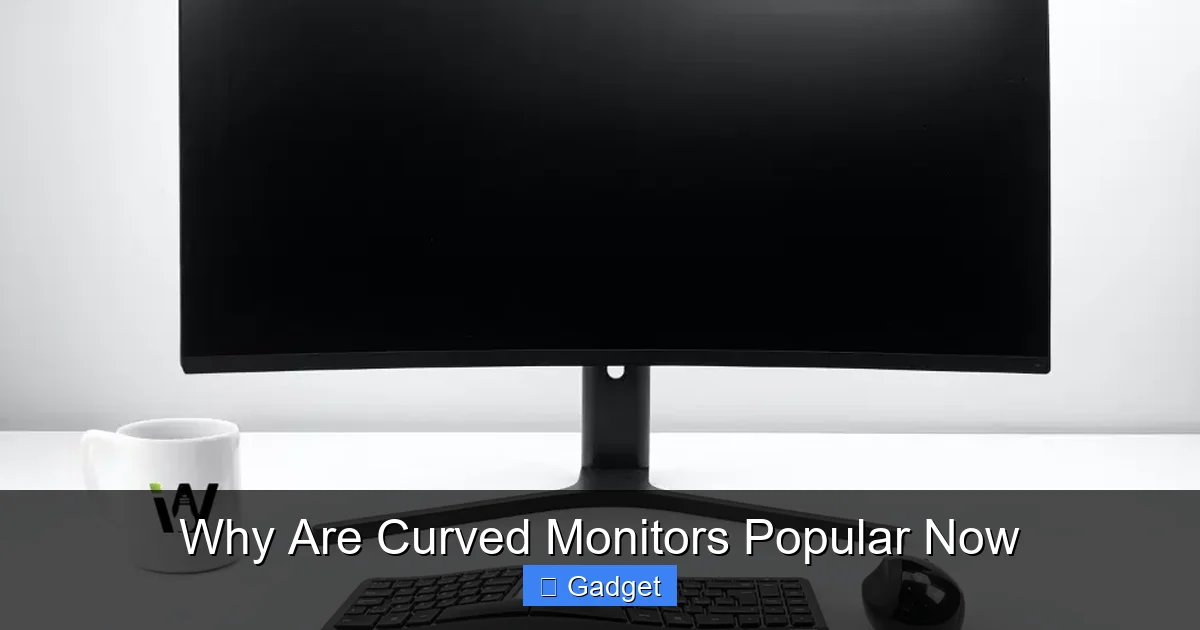
Curved monitors are surging in popularity due to their ability to enhance immersion and reduce eye strain, offering a more comfortable and engaging visual experience. This guide explores the science and practical benefits behind this trend, from gaming to everyday productivity, explaining why a curved display might be your next essential upgrade.  The fundamental reason for a curved monitor’s appeal lies in how our eyes perceive images. Our vision isn’t flat; it’s naturally curved. Think about it: when you look straight ahead, your peripheral vision is still engaged. A flat screen, especially a larger one, presents a challenge because the edges are further away from your eyes than the center. This forces your eyes to constantly adjust their focus, leading to strain and a less immersive experience.
 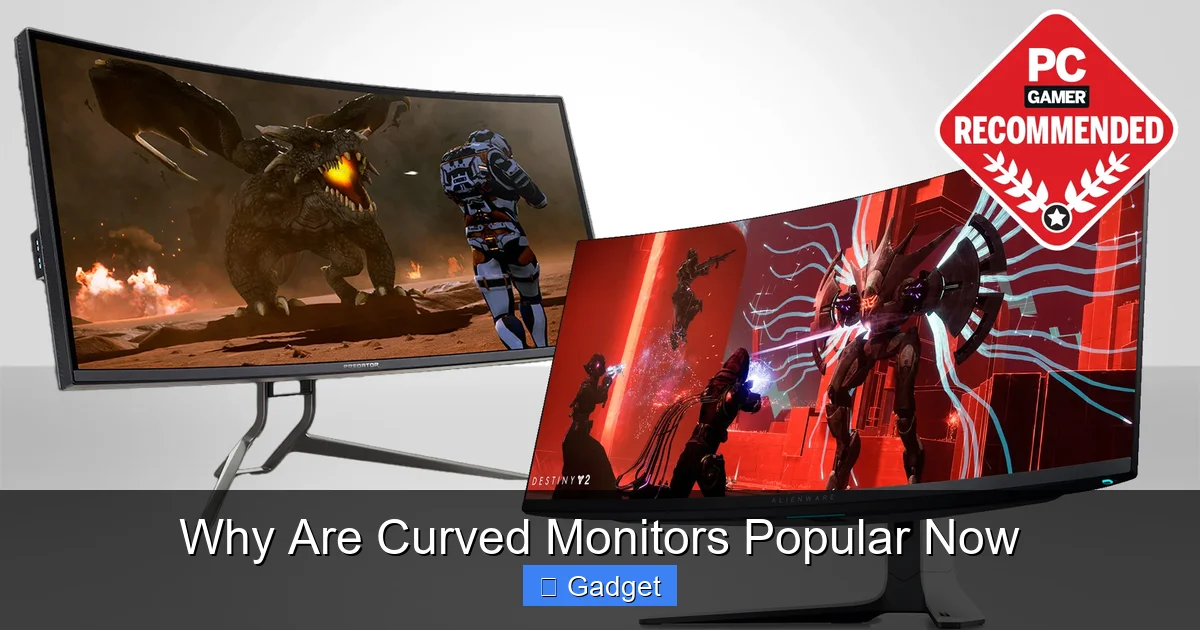 Beyond the science, the advantages of curved monitors translate into tangible benefits for users across various activities. Let’s break them down.
  While the popularity of curved monitors is undeniable, not all curves are created equal, and they might not be for everyone. Here are a few things to consider when looking at curved displays:
Key Takeaways
- Enhanced Immersion: Curved monitors wrap the display around your field of vision, creating a more captivating and engaging experience, especially for gaming and cinematic content.
- Reduced Eye Strain: The curvature allows your eyes to see the entire screen at a more consistent distance, minimizing the need for constant refocusing and reducing fatigue.
- Wider Field of View: For ultrawide curved monitors, the bend effectively brings the edges closer to you, simulating a panoramic view and making multitasking more efficient.
- Improved Ergonomics: By naturally aligning with your peripheral vision, curved displays can promote better posture and reduce neck strain as you don’t have to turn your head as much.
- Aesthetic Appeal: Many users find the sleek, modern design of curved monitors to be a visually appealing addition to their workspace or entertainment setup.
- Better Color Uniformity: On larger displays, the curve can help maintain consistent brightness and color across the entire screen by reducing distortion at the edges.
Why Are Curved Monitors Popular Now? A Deep Dive into the Curve
For years, the flat screen has been the undisputed king of displays. But lately, a new contender has been steadily gaining ground: the curved monitor. You’ve likely seen them on gaming streams, in tech reviews, and perhaps even at a friend’s desk. But what’s the big deal? Why are curved monitors suddenly so popular? This guide will unravel the mystery, explaining the science and the practical advantages that are making curved displays the hot new gadget. We’ll explore how the subtle bend in a screen can dramatically change your viewing experience, from making games feel more alive to making long work sessions easier on your eyes. By the end of this guide, you’ll understand the core reasons behind their rising popularity and be able to determine if a curved monitor is the right choice for your needs.The Science Behind the Curve: Why Bending Matters
Visual guide about Why Are Curved Monitors Popular Now
Image source: swirlingovercoffee.com
Mimicking Natural Vision
A curved monitor attempts to bridge this gap by mimicking the natural curve of our vision. By gently bending the display inwards, it brings the edges of the screen closer to your eyes, creating a more uniform viewing distance across the entire panel.Reduced Distortion
This uniform distance helps reduce geometric distortion, especially noticeable on very wide or ultrawide displays. On a flat ultrawide monitor, the extreme edges can appear stretched or distorted to your peripheral vision. The curve counteracts this, ensuring that lines and images appear more natural and accurate from edge to edge.Enhanced Perceived Depth
The inward curve can also create a subtle sense of depth. By wrapping around your field of view, the display can feel like it’s enveloping you, making the on-screen content appear more three-dimensional and engaging. This is particularly beneficial for immersive content like movies and video games.The Practical Benefits: What’s In It For You?
Visual guide about Why Are Curved Monitors Popular Now
Image source: cdn.mos.cms.futurecdn.net
1. Unparalleled Immersion: Step Into the Action
Perhaps the most significant draw of curved monitors is their ability to deliver an incredibly immersive experience. This is especially true for gaming and watching movies.For Gamers
When you’re deep in a game, especially one with a vast open world or intense action, a curved screen pulls you in. The display extends into your peripheral vision, making the game world feel larger and more enveloping. You’re not just looking at a screen; you’re feeling like you’re part of the environment. This can lead to:- A more realistic sense of scale.
- Easier tracking of fast-moving objects.
- Reduced distraction from the outside world.
For Movie Buffs
Watching a movie on a curved ultrawide monitor can feel like sitting in a private cinema. The wider aspect ratio, common on curved displays, combined with the wrap-around effect, creates a more cinematic viewing experience. The black bars, often seen on flat screens with widescreen content, are minimized, and the picture fills your entire field of view, drawing you deeper into the narrative.2. Reduced Eye Strain: A Gentler Experience for Your Eyes
One of the most frequently cited benefits of curved monitors is their ability to reduce eye strain. This is a crucial advantage for anyone who spends significant time in front of a screen, whether for work or leisure.Consistent Focus Distance
On a large flat monitor, the center is closer to you than the edges. This means your eye muscles have to work harder to constantly adjust focus as your gaze moves across the screen. A curved monitor, by its very nature, brings the edges closer, keeping the entire screen within a more consistent focal distance. This reduces the constant refocusing your eyes would otherwise do.Less Peripheral Glare
The inward curve can also help minimize peripheral glare from ambient light sources. By angling the edges slightly away from direct side light, you can experience fewer distracting reflections on the sides of your screen.Benefits for Long Work Sessions
For professionals who spend eight or more hours a day at their computer, this reduction in eye strain can be a game-changer. It can lead to:- Less fatigue by the end of the day.
- Fewer headaches.
- Improved concentration and productivity.
3. Enhanced Productivity: Multitasking Made Easier
While immersion is a big draw, curved monitors also offer significant advantages for productivity, especially with ultrawide models.Wider Field of View for Multitasking
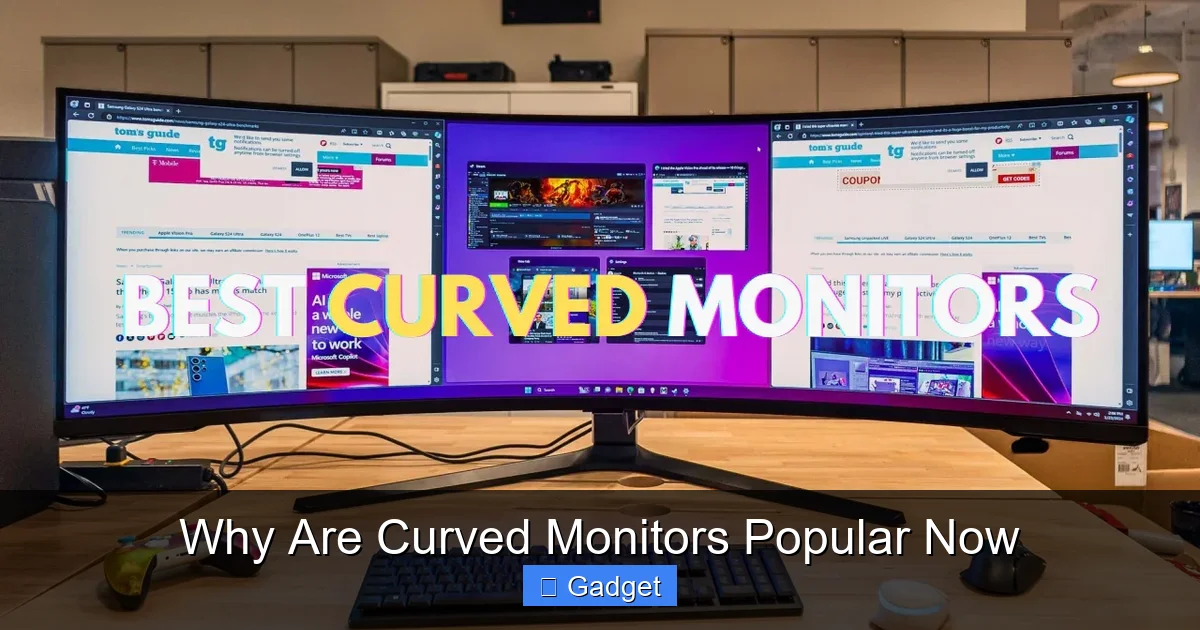
Ultrawide curved monitors (typically 34 inches and above) provide an expansive horizontal workspace. The curve helps bring those far-left and far-right edges into your immediate view, making it easier to have multiple windows open side-by-side without feeling like you’re constantly craning your neck.- Imagine having your email on one side, a spreadsheet in the middle, and a web browser on the other – all visible at a glance.
- This reduces the need to constantly switch between applications, saving time and mental energy.
Improved Ergonomics and Posture
The natural curvature of the display can also contribute to better ergonomics. When you’re looking at a curved screen, your head and neck are in a more relaxed position. You don’t need to twist your head as much to see the edges. This can lead to:- Reduced neck and shoulder strain.
- Encouraging a more upright posture.
4. Superior Color and Brightness Uniformity
On larger displays, maintaining consistent brightness and color across the entire panel can be a challenge for manufacturers. The inward curve of a monitor can help address this.Minimizing Light Falloff
For very wide flat panels, the light emitted from the edges can sometimes appear dimmer than the center due to the angle. The curve helps ensure that the light is directed more consistently towards the viewer, resulting in a more uniform brightness across the screen.More Consistent Color Reproduction
Similarly, the angle at which light pixels are viewed can affect color perception. The curve helps maintain a more consistent viewing angle for all pixels, leading to more uniform color reproduction and preventing slight color shifts at the edges.5. Aesthetic Appeal: A Modern Workspace
Let’s not overlook the visual aspect. Curved monitors often boast a sleek, modern design that can significantly enhance the look of a desk setup.Sleek and Futuristic Look
The subtle curve, combined with slim bezels and often elegant stands, gives curved monitors a premium and futuristic feel. They can make a workspace or entertainment center look more sophisticated and high-tech.A Statement Piece
For many, a curved monitor isn’t just a tool; it’s a statement piece. It signals a commitment to cutting-edge technology and a desire for a visually appealing environment.Choosing the Right Curve: What to Consider
Visual guide about Why Are Curved Monitors Popular Now
Image source: arzopa.com
Screen Size and Resolution
Curved monitors often come in larger sizes and higher resolutions (like 1440p or 4K). A curve is generally more beneficial on larger screens (27 inches and above) where the difference in viewing distance between the center and edges is more pronounced. For smaller monitors, the benefit of the curve is less noticeable.Curvature Radius (e.g., 1800R, 1500R, 1000R)
You’ll often see numbers like “1800R” or “1000R” associated with curved monitors. This number indicates the radius of the circle (in millimeters) that the curve forms.- 1800R: A gentler curve, good for general use and those new to curved displays.
- 1500R: A more noticeable curve, offering increased immersion.
- 1000R: The most aggressive curve, designed for maximum immersion, closely matching the human field of view.
Intended Use
If your primary use is gaming or watching movies, a more aggressive curve (like 1000R or 1500R) might be more appealing for the immersion factor. For productivity tasks, a gentler curve (1800R) might offer a good balance of immersion and practicality without feeling too overwhelming.Potential Downsides to Consider
- Reflections: While the curve can help with peripheral glare, it can also create interesting reflections. If you have bright lights directly above or in front of your monitor, the curve might bend that light in unusual ways.
- Desk Space: Ultrawide curved monitors, especially, can take up a significant amount of desk real estate.
- Color-Critical Work: For professionals who require absolute color accuracy for tasks like graphic design or video editing, some argue that flat panels might offer slightly more predictable color consistency, though this is becoming less of an issue with modern curved displays.
The Verdict: Is a Curved Monitor Right for You?
The surge in popularity of curved monitors isn’t a fleeting trend; it’s a reflection of a desire for more engaging, comfortable, and efficient visual experiences. Whether you’re a gamer seeking to dive deeper into virtual worlds, a professional looking to boost productivity, or simply someone who spends hours in front of a screen, the benefits of a curved display are compelling. The science behind the curve, which aims to align with our natural vision, translates into real-world advantages like reduced eye strain, enhanced immersion, and improved ergonomics. While they might not be for every single user or every single task, their growing presence in the market is well-deserved. If you’re considering an upgrade, especially to a larger or ultrawide display, exploring the world of curved monitors is definitely worthwhile. You might find that embracing the curve is the best way to enhance your digital life. If you’re a gamer wondering whether a curved monitor will truly improve your gameplay, it’s also worth considering other key specs like response time and refresh rate. For instance, understanding whether monitor response time matters for gaming can help you make a more informed decision. Additionally, since curved monitors often come in larger sizes, you may want to check out our guide on what is the best monitor size for gaming to ensure you’re getting the ideal setup for your playstyle. Finally, if you’re leaning toward an ultrawide curved monitor for immersive racing or open-world games, you might be interested in learning whether an ultrawide monitor is better for racing games.
Similar Posts