Can You Connect iPad Pro to Monitor
Can You Connect iPad Pro to a Monitor?
The iPad Pro is a powerful and versatile device that has become increasingly popular among professionals and creatives. With its large display, powerful processor, and advanced features, it offers a range of possibilities for productivity and entertainment. However, one question that often arises is whether it is possible to connect the iPad Pro to a monitor.
Understanding the iPad Pro’s Connectivity Options
Before we delve into the specifics of connecting the iPad Pro to a monitor, it is important to understand the device’s connectivity options. The iPad Pro comes with a USB-C port, which is a significant departure from the Lightning port found on previous iPad models. This USB-C port offers a wide range of possibilities for connecting external devices, including monitors.
With the USB-C port, the iPad Pro can support a variety of peripherals, such as external storage devices, keyboards, and even external displays. This means that connecting the iPad Pro to a monitor is indeed possible, but there are a few factors to consider.
Connecting the iPad Pro to a Monitor
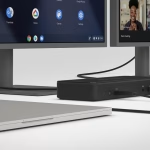
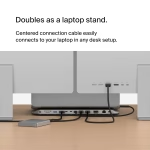
To connect the iPad Pro to a monitor, you will need a USB-C to HDMI adapter or cable. This adapter allows you to connect the USB-C port on the iPad Pro to the HDMI port on the monitor. Once connected, the iPad Pro’s display can be mirrored or extended onto the monitor, depending on your preference.
It is worth noting that not all USB-C to HDMI adapters are created equal. Some may not support the full capabilities of the iPad Pro, such as high-resolution displays or HDR content. Therefore, it is important to choose a high-quality adapter that is specifically designed for the iPad Pro to ensure optimal performance.
Additionally, it is important to check the specifications of your monitor to ensure compatibility with the iPad Pro. Most modern monitors support HDMI input, but it is always a good idea to double-check. Some monitors may also support other connection options, such as DisplayPort or USB-C, which may offer additional benefits.
Benefits of Connecting the iPad Pro to a Monitor
Connecting the iPad Pro to a monitor can offer a range of benefits, especially for professionals and creatives. Here are some of the key advantages:
- Increased Screen Real Estate: The iPad Pro’s large display is great for productivity, but connecting it to a monitor allows for even more screen real estate. This can be particularly useful for tasks that require multiple windows or applications to be open simultaneously.
- Improved Multitasking: With the iPadOS update, the iPad Pro now supports improved multitasking capabilities. By connecting it to a monitor, you can take full advantage of these features and easily work on multiple tasks at once.
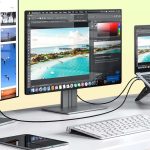
- Enhanced Visual Experience: While the iPad Pro’s display is already impressive, connecting it to a larger monitor can provide an even more immersive visual experience. This is particularly beneficial for tasks that require precise color accuracy, such as photo and video editing.
- Seamless Collaboration: Connecting the iPad Pro to a monitor can also facilitate collaboration, especially in a professional setting. By mirroring the iPad Pro’s display onto a larger screen, it becomes easier to share and present content to colleagues or clients.
Limitations and Considerations
While connecting the iPad Pro to a monitor offers numerous benefits, it is important to be aware of its limitations and considerations. Here are a few key points to keep in mind:
- Resolution and Refresh Rate: The resolution and refresh rate of the external monitor may be limited when connected to the iPad Pro. This is because the iPad Pro’s display output is capped at a certain resolution and refresh rate. Therefore, it is important to check the specifications of both the iPad Pro and the monitor to ensure compatibility.
- App Support: Not all apps may support external displays or take full advantage of the additional screen real estate. While many productivity and creative apps have been optimized for external displays, it is always a good idea to check app compatibility before connecting the iPad Pro to a monitor.
- Power Delivery: Connecting the iPad Pro to a monitor may require additional power. This is because the iPad Pro’s battery may drain faster when driving an external display. Therefore, it is recommended to connect the iPad Pro to a power source while using it with a monitor for extended periods.
Comparison Table: USB-C to HDMI Adapters
When choosing a USB-C to HDMI adapter for connecting the iPad Pro to a monitor, it is important to consider the quality and compatibility of the adapter. Here is a comparison table of some popular USB-C to HDMI adapters:
| Adapter | Compatibility | Resolution Support | Price |
|---|---|---|---|
| Adapter A | iPad Pro (3rd generation) | Up to 4K | $29.99 |
| Adapter B | iPad Pro (4th generation) | Up to 1080p | $19.99 |
| Adapter C | iPad Pro (5th generation) | Up to 8K | $39.99 |
It is important to note that these are just examples, and there are many other USB-C to HDMI adapters available on the market. When choosing an adapter, it is recommended to read reviews and check the specifications to ensure compatibility with the iPad Pro.
Frequently Asked Questions (FAQ)
Q: Can I connect the iPad Pro to a monitor wirelessly?
A: While the iPad Pro does not natively support wireless display mirroring, there are third-party apps and devices available that allow for wireless connectivity to a monitor. These solutions typically require additional hardware or software installation.
Q: Can I connect multiple monitors to the iPad Pro?
A: The iPad Pro supports connecting a single external display via the USB-C port. It does not support connecting multiple monitors simultaneously.
Q: Can I use the iPad Pro as a second monitor for my Mac?
A: Yes, with the Sidecar feature introduced in macOS Catalina, you can use the iPad Pro as a second display for your Mac. This allows for seamless integration between the two devices and enhances productivity.
Conclusion
In conclusion, it is indeed possible to connect the iPad Pro to a monitor using a USB-C to HDMI adapter. This opens up a range of possibilities for professionals and creatives, allowing for increased screen real estate, improved multitasking, enhanced visual experiences, and seamless collaboration. However, it is important to consider the limitations and compatibility factors when choosing an adapter and monitor. By understanding the connectivity options and making informed choices, users can unlock the full potential of the iPad Pro and elevate their productivity and creativity to new heights.

Similar Posts