How to Check eSIM Support on Android: A Comprehensive Guide
Switching to an eSIM can simplify travel, free up space in your phone, and let you juggle personal and work lines without carrying two devices. But before you scan a QR code or download a carrier profile, you need a clear answer: does your Android phone actually support eSIM? While many modern Android handsets now include an embedded SIM, the feature isn’t universal — it depends on your model, region, carrier, and even the software version. This guide will walk you through every reliable method to check eSIM support on your Android device, whether you’re holding a Samsung, Pixel, or a less common brand. You’ll also learn how to interpret the results, troubleshoot missing menus, and plan your next steps.
What Is eSIM and Why It’s Changing Mobile Connectivity
An eSIM (embedded Subscriber Identity Module) is a tiny chip soldered directly onto your device’s motherboard during manufacturing. Unlike a physical SIM card that you insert into a tray, an eSIM is rewritable and can store multiple carrier profiles simultaneously. This digital approach eliminates the need for tiny plastic cards and lets you activate a cellular plan by scanning a QR code or downloading a carrier app. For more on this, see our guide on how to get android tv operator tier.
For Android users, the benefits go far beyond convenience. You can keep your primary number on a physical SIM while using an eSIM for a secondary line, such as a local data plan when you’re abroad. Switching carriers takes minutes instead of a trip to a store, and the design saves internal space that manufacturers can use for larger batteries or better cooling. It’s also a more secure option — nobody can physically steal your SIM to hijack your number. As more carriers worldwide adopt eSIM, understanding whether your device is ready becomes the first step toward a simpler, more flexible mobile experience.
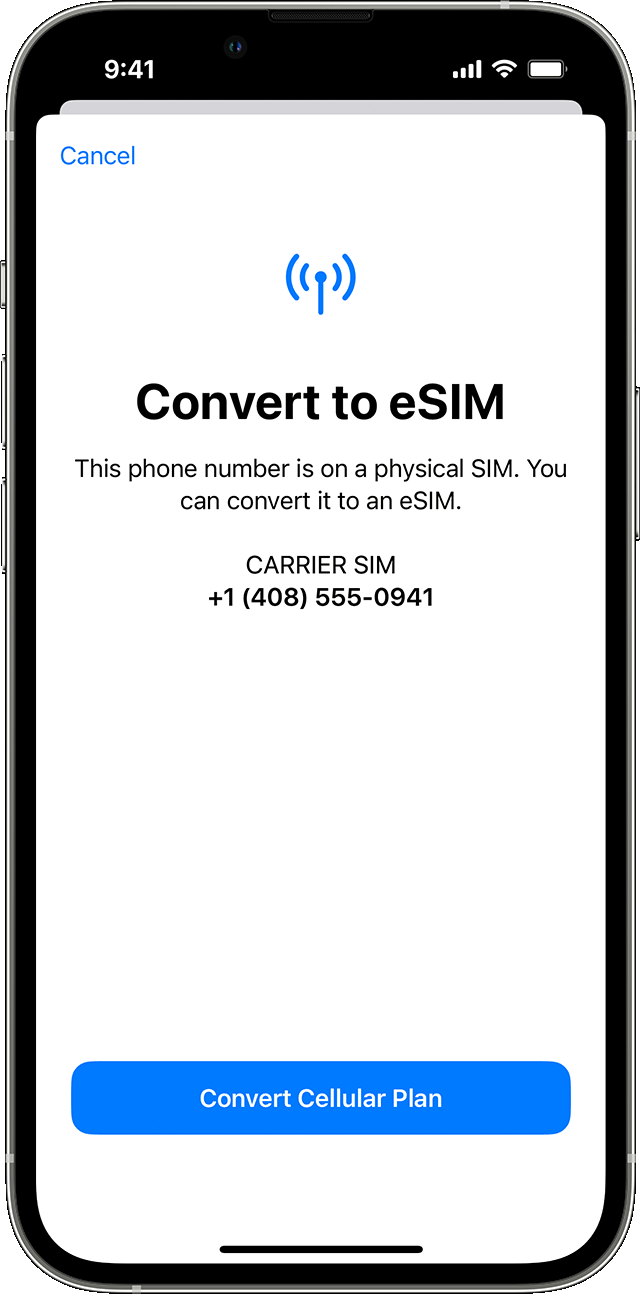
Credit: support.apple.com
How to Know If Your Android Phone Supports eSIM: The Quick Methods
You don’t need to be a tech expert to find out if your phone has eSIM capability. Start with the built-in Android settings, then move to manufacturer specs, and finally use a few other verification tricks if the menus aren’t clear. I’ll cover each method in detail so you can confidently check compatibility in under five minutes. For more on this, see our guide on do 144hz monitors support freesync 2.
Method 1: Check the Android Settings Menu
The settings path varies slightly by manufacturer, but the core idea is the same: look for any mention of eSIM, digital SIM, or the ability to add a carrier plan without a physical card.
On a stock Android device (like a Google Pixel), open Settings > Network & internet. Tap SIMs or Mobile network. If you see an option called Add a SIM or Download a SIM instead, your phone supports eSIM. On a Samsung Galaxy phone running One UI, go to Settings > Connections > SIM card manager. There, an Add eSIM or Add mobile plan button indicates compatibility. Some Samsung models may also show eSIM as a separate entry under About phone. For more on this, see our guide on how to get android auto on id6 bmw.
For other brands like OnePlus, Motorola, or Xiaomi, the labels can be slightly different. Check Settings > Wi‑Fi & Network > SIM & network or Mobile network > Advanced. If you spot any reference to eSIM, embedded SIM, or digital SIM, you’re in luck. If the menu only shows physical SIM slots or asks you to insert a SIM card, your device probably doesn’t support eSIM — or the feature is disabled by your carrier.
Method 2: Dial a USSD Code to Reveal eSIM Hardware
Some Android devices expose eSIM hardware information through a diagnostic code. Open the Phone app and dial *#06#. This usually displays your phone’s IMEI numbers. On many eSIM‑capable devices, you’ll see two IMEIs — one for the physical SIM slot and one for the eSIM. If only one IMEI appears, it doesn’t automatically rule out eSIM support, but when two are listed it’s a strong indicator that an embedded SIM is present.
You can also try *#*#4636#*#* to enter the Testing menu, although this shows network information rather than eSIM capability directly. Still, under Phone information you might see metrics that hint at a dual‑SIM configuration, including an eSIM.
Method 3: Look Up Device Specifications
The manufacturer’s official website is the ultimate source of truth. Search for your exact model number (found in Settings > About phone) and locate the Specifications or Tech Specs section. Look for keywords like eSIM, embedded SIM, or Dual SIM (eSIM + physical SIM). For example, Google’s Pixel support page clearly states that the Pixel 3 and later support eSIM, while Samsung’s Galaxy S20 series and newer list eSIM support for most variants.
Don’t rely solely on a spec sheet from a retailer, as regional variants often differ. A Galaxy S20 sold in the US may have eSIM enabled, while the same model in some Latin American markets might not. Always cross‑reference the exact model number with the manufacturer’s own support portal.
Method 4: Use a Third‑Party App (With Caution)
Apps like eSIM Check or SIM Card Info can read your device’s hardware configuration and tell you if eSIM is present. While these can be helpful, they often require many permissions and may not be 100% accurate on all devices. Think of them as a supplementary check, not the final word. Once you’ve installed a reputable app, open it and look for an entry labeled eSIM or Embedded SIM. If the app reports “Not supported” while the settings menu shows an eSIM option, trust the settings menu.
Method 5: Contact Your Carrier
Your mobile network operator knows which devices they’ve provisioned for eSIM. Call or chat with customer support and ask, “Does my specific phone model support eSIM on your network?” Have your device’s IMEI ready. Many carriers also maintain a compatibility checker on their website where you can enter your IMEI to see if eSIM activation is allowed. This method is especially useful when the phone hardware supports eSIM but the carrier has deliberately locked it — a common practice with some prepaid or budget plans.
Step‑by‑Step: Checking eSIM Support in Settings on Popular Android Brands
Menus differ, so here’s a quick brand‑specific roadmap for the most common Android skins.
Google Pixel (stock Android 12+)
Settings > Network & internet > SIMs → tap the + button or Download a SIM instead. If the option is there, you can add an eSIM.
Also check Settings > About phone and look for eSIM under the status or SIM status.Samsung Galaxy (One UI 5/6)
Settings > Connections > SIM card manager → look for Add eSIM or Add mobile plan.
On some carrier‑locked models, this button may be missing. In that case, check Settings > About phone > Status information — an eSIM IMEI indicates hardware support even if the software is blocked.OnePlus (OxygenOS 13+)
Settings > Wi‑Fi & Network > SIM & network → tap eSIM or Mobile network and see if you can add a digital SIM. OnePlus 9 and later models typically support it.Motorola
Settings > Network & internet > Mobile network → look for an eSIM option. Moto Razr 5G and later models are eSIM‑ready.Xiaomi / Redmi / POCO (MIUI 14+)
eSIM support is less common, but some flagship models like Xiaomi 13 series include it. Navigate to Settings > SIM cards & mobile networks and check for an eSIM tab. If you don’t see it, the device likely doesn’t support it.
Credit: support.apple.com
Android Devices That Support eSIM (2024–2025 Snapshots)
Hardware compatibility is just the start; you also need carrier support. The list below highlights phones that have the eSIM chip built in. Always verify the specific model number and your carrier’s terms.
| Brand | Supported Models (with eSIM hardware) |
|---|---|
| Google Pixel | Pixel 3, 3a, 4, 4a, 5, 5a, 6, 6a, 7, 7a, 8, 8a, Fold, and newer |
| Samsung Galaxy | S20, S20+, S20 Ultra, S21, S21+, S21 Ultra, S22, S22+, S22 Ultra, S23, S23+, S23 Ultra, S24 series, Note 20, Note 20 Ultra, Z Fold 2 and later, Z Flip 3 and later |
| OnePlus | OnePlus 9, 9 Pro, 10 Pro, 11, 12, Nord series (some models) |
| Motorola | Moto Razr 5G, Razr 2022, Edge 40, Edge 50 series |
| Xiaomi | 13, 13 Pro, 13 Ultra, 14 series (select global variants) |
| Huawei | P40, P40 Pro, Mate 40 Pro (limited global models) |
| Oppo | Find X3 Pro, Find X5, Reno 10 series (some regions) |
Carrier-locked or budget carrier-branded versions of these phones may have eSIM entirely disabled. If you bought your device from a specific network operator, check their eSIM support page before assuming it will work.
How to Verify eSIM Functionality After Checking Support
Seeing an eSIM menu item is promising, but it doesn’t guarantee everything works. Take a few extra steps to confirm that profiles can actually be added and activated.
- Try adding a test plan – Many carriers offer free trial eSIMs (e.g., T‑Mobile Network Pass, Verizon Free Trial). Attempt to download one; if the process goes through and you can see the network name, the eSIM is functioning.
- Scan a QR code – If you have a valid eSIM activation QR code from your carrier, scan it in the eSIM menu. The system should recognize it and ask if you want to add the plan.
- Check the IMEI in your carrier’s app – Log into your carrier’s account app and look for device details. A compatible device will often show an eSIM IMEI and a physical SIM IMEI.
- Install the latest OS update – Sometimes eSIM support is added through a firmware update. Head to Settings > System > System update and install any pending updates. If you prefer to manage your update schedule yourself, you can learn about controlling your update settings to avoid unexpected data usage.
Troubleshooting: When eSIM Isn’t Showing Up
You’ve checked the specs, and the phone should support eSIM, but the menu is missing. Here’s what to try:
- Restart your phone – A simple reboot can force the eSIM menu to appear after a software update.
- Check for carrier restrictions – Some carriers deliberately hide the eSIM option. Insert a SIM from a different provider and check again; the menu may magically reappear.
- Look for a management app – Carriers like AT&T or Verizon sometimes require their own app to enable eSIM. Download the official carrier app and see if it offers an eSIM activation flow.
- Confirm the region – An international model may have eSIM enabled while the same model sold in your country doesn’t. Search online forums for your exact model number and region code.
- Factory reset – As a last resort, back up your data and perform a factory reset. On rare occasions, a corrupted configuration can hide the eSIM menu.
If you’re also dealing with unwanted subscription charges on your phone, you might find it useful to know how to streamline managing app subscriptions on your device, especially if you’re trying to clean up your monthly bills.
Frequently Asked Questions
How can I tell if my unlocked Android phone supports eSIM without a SIM card inserted?
Even without a SIM, you can check the settings menu. Go to Settings > Network & internet > Mobile network or SIM cards. If an eSIM option appears, the hardware is present. You can also dial *#06# to see the IMEI list; if two IMEIs appear, one is likely for the eSIM. Finally, visit the manufacturer’s website, enter your model number, and look for “eSIM” in the connectivity specifications.
Does eSIM work on all Android 12 and later devices?
No, Android 12 and later support eSIM at the software level, but the hardware must also include an embedded SIM chip. Many budget Android phones, even those running Android 14, lack the physical eSIM module. The operating system version alone is not a guarantee — you need to check the specific device’s hardware.
Can I use a physical SIM and an eSIM at the same time on Android?
Yes, most eSIM‑capable Android phones support dual SIM dual standby (DSDS), allowing you to use one physical SIM and one eSIM simultaneously. Some even support two eSIMs. You can assign different functions (calls, texts, data) to each SIM, and switch between them from the quick settings tile. The exact behavior depends on the manufacturer’s implementation.
Why does my phone’s spec sheet say eSIM is supported but my carrier says it isn’t?
Carriers can block eSIM on certain models through firmware customizations, especially on phones sold directly by the carrier. For example, a Galaxy S21 bought from a carrier that doesn’t offer eSIM might have the feature disabled in software. In such cases, flashing the unlocked firmware (if available and safe) can sometimes re-enable eSIM, but this voids warranties and is not recommended for most users.
Is there a universal dialer code to check eSIM support on any Android phone?
No single code works for all devices. *#06# is the most universal and will show IMEI numbers that can hint at eSIM. Some Samsung phones respond to *#0011# to enter service mode, where you can see SIM card status. However, these codes are not consistent across brands, so the settings menu remains the most reliable method.
Conclusion
Checking eSIM support on an Android device is straightforward once you know where to look. Start with the settings menu, confirm with a dialer code, and verify with your carrier’s compatibility tool. The shift to embedded SIMs is accelerating, and taking a few minutes to check your phone’s readiness can save you from headaches when you’re trying to activate a new plan. Whether you’re a frequent traveler, a dual‑SIM user, or someone who simply wants a cleaner phone setup, eSIM opens up a world of flexibility — and now you know exactly how to unlock it.

Similar Posts