Does iPad Pro Replace MacBook

Does iPad Pro Replace MacBook?
With the rapid advancement of technology, the line between tablets and laptops has become increasingly blurred. Apple’s iPad Pro, with its powerful hardware and versatile features, has often been touted as a potential replacement for the MacBook. However, the question remains: can the iPad Pro truly replace the MacBook as a primary computing device? In this article, we will delve into the capabilities of both devices, examining their strengths and weaknesses to determine whether the iPad Pro can indeed serve as a viable alternative to the MacBook.
The Power of the iPad Pro
The iPad Pro, equipped with Apple’s custom-designed M1 chip, boasts impressive performance capabilities. With its desktop-class CPU and GPU, the iPad Pro is capable of handling demanding tasks such as video editing, graphic design, and 3D modeling. The device’s high-resolution Liquid Retina display, combined with ProMotion technology, offers a stunning visual experience that rivals that of many laptops.
Furthermore, the iPad Pro’s portability and long battery life make it an attractive option for users who are constantly on the go. Its slim and lightweight design, coupled with the ability to connect to cellular networks, allows for seamless productivity even when away from Wi-Fi networks. Additionally, the iPad Pro supports the Apple Pencil and Magic Keyboard, providing users with a range of input options for different tasks.
The Versatility of the MacBook
On the other hand, the MacBook has long been regarded as a workhorse in the world of laptops. Its macOS operating system offers a wide range of productivity tools and software applications that are not available on iOS, making it a preferred choice for professionals in fields such as software development, video editing, and music production.
The MacBook’s keyboard and trackpad also provide a more traditional and tactile typing experience, which some users may find more comfortable and efficient for long periods of work. Additionally, the MacBook offers a variety of ports, including USB-A, Thunderbolt, and HDMI, allowing for easy connectivity with external devices such as monitors, printers, and storage drives.
Comparing Performance
When it comes to raw performance, the iPad Pro’s M1 chip rivals that of many laptops, including some MacBook models. In benchmark tests, the iPad Pro has demonstrated impressive results, outperforming even some Intel-based MacBook models in certain tasks. However, it is important to note that the iPad Pro’s performance is still limited by its mobile operating system, iOS.
While iOS offers a streamlined and user-friendly interface, it lacks the full functionality and flexibility of macOS. This means that certain software applications and workflows that are essential for professional users may not be available or may be limited on the iPad Pro. Additionally, the iPad Pro’s multitasking capabilities, while improved in recent updates, still fall short of the seamless multitasking experience offered by macOS.
Software and App Availability
One of the key considerations when determining whether the iPad Pro can replace the MacBook is the availability of software and apps. While the iPad Pro supports a wide range of apps from the App Store, including productivity tools, creative software, and entertainment apps, it is important to note that not all apps are optimized for the iPad Pro’s larger display and advanced hardware.
Furthermore, certain software applications that are essential for professional users, such as Adobe Photoshop, Final Cut Pro, and AutoCAD, have limited functionality or are not available on the iPad Pro. This can be a significant drawback for users who rely on these applications for their work. While there are alternative apps available on the App Store, they may not offer the same level of functionality and compatibility as their desktop counterparts.
Connectivity and Storage
Another factor to consider when comparing the iPad Pro and the MacBook is connectivity and storage options. The MacBook offers a range of ports, including USB-A, Thunderbolt, and HDMI, allowing for easy connection to external devices and peripherals. This can be particularly important for professionals who require the use of specialized equipment or who need to connect to external displays for presentations or video editing.
On the other hand, the iPad Pro relies primarily on wireless connectivity and USB-C ports. While USB-C offers versatility and compatibility with a wide range of devices, it may not be sufficient for users who require a greater variety of ports. Additionally, the iPad Pro’s storage options are limited compared to the MacBook, with the maximum available storage currently capped at 2TB. This can be a significant limitation for users who work with large files or require extensive local storage.
FAQ
Can the iPad Pro run desktop software?
No, the iPad Pro runs on iOS, which is a mobile operating system. While it can run a wide range of apps from the App Store, it does not support traditional desktop software applications.
Can the iPad Pro replace a MacBook for professional work?
While the iPad Pro offers impressive performance and versatility, it may not be able to fully replace a MacBook for professional work. The limitations of iOS, including the lack of certain software applications and limited multitasking capabilities, can hinder the productivity of professional users.
Is the iPad Pro more portable than a MacBook?
Yes, the iPad Pro is generally more portable than a MacBook. Its slim and lightweight design, combined with long battery life and cellular connectivity options, make it an ideal choice for users who are frequently on the go.
Can the iPad Pro be used with external displays?
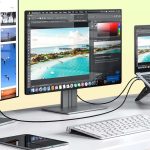
Yes, the iPad Pro can be connected to external displays using USB-C or wirelessly through AirPlay. However, it is important to note that the iPad Pro’s display mirroring capabilities may be limited, and not all apps may support external display functionality.
Conclusion
While the iPad Pro offers impressive performance and versatility, it may not be able to fully replace the MacBook for professional users. The limitations of iOS, including the lack of certain software applications and limited multitasking capabilities, can hinder the productivity of professional users who rely on specific workflows and software tools.
However, for users who prioritize portability, versatility, and a touch-based interface, the iPad Pro can be a powerful and capable device. Its powerful hardware, stunning display, and support for accessories such as the Apple Pencil and Magic Keyboard make it a compelling choice for creative professionals, students, and casual users.
In the end, the decision between the iPad Pro and the MacBook ultimately depends on the specific needs and preferences of the user. Both devices offer unique features and capabilities, and it is important to carefully consider these factors before making a decision. Whether it’s the power and flexibility of the MacBook or the portability and versatility of the iPad Pro, Apple provides options that cater to a wide range of users and use cases.

Similar Posts