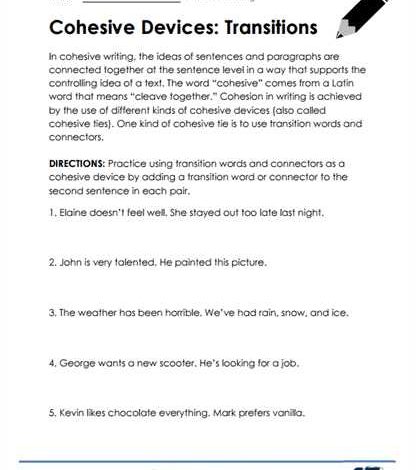
Practice makes perfect! To improve your use of transitions and connectors, immerse yourself in writing exercises, analyze well-written texts, and actively incorporate linking words into your drafts. Consistent practice and mindful revision will strengthen your ability to create smooth, coherent ideas.
Getting comfortable with transitions and connectors in writing is essential for guiding your readers seamlessly through your ideas. Start by reading diverse materials like essays, articles, and stories, paying close attention to how authors connect their sentences and paragraphs. Practice by rewriting your own sentences, experimenting with different connectors, and seeking feedback to refine your skills. Remember, mastering these links takes time and conscious effort, but with persistent practice, you’ll find your writing becoming more fluid and natural. Whether you’re preparing for exams or aiming to write clearer essays, honing your connector skills will significantly elevate your writing quality.

How to get practice on transitions and connectors in writing
Practicing transitions and connectors is essential for making your writing clear and easy to follow. These words and phrases help connect ideas smoothly and guide the reader from one sentence or paragraph to the next. The more you practice, the better you will become at using them naturally in your writing.
Understanding the role of transitions and connectors
Transitions are words or phrases that link different parts of your writing. They show relationships such as cause and effect, contrast, or addition. Connectors serve a similar purpose by making your writing flow seamlessly. Using them correctly helps your ideas connect logically, making your message clearer.
Types of transition words and their uses
There are many types of transitions. Here’s a quick overview to help you understand their functions:
| Type of Transition | Purpose | Examples |
|---|---|---|
| Adding information | To add more ideas | and, also, in addition, furthermore |
| Showing contrast | To show differences | but, however, on the other hand, yet |
| Giving examples | To give specific examples | for example, for instance, such as |
| Showing cause and effect | To show reasons or results | because, therefore, as a result, so |
| Sequencing ideas | To show order or time | first, then, next, finally, after, before |
Strategies to practice using transitions and connectors
Practicing these words takes deliberate effort. Here are some proven strategies:
1. Read and analyze good writing
Read articles, stories, and essays that use transitions well. Highlight or underline the connectors. Notice how they link ideas and help the writing flow. Analyzing good examples shows you how and when to use them.
2. Rewrite sentences with different connectors
- Take a simple sentence like “She was tired.” and rewrite it with a connector: “She was tired, so she decided to rest.”
- Practice replacing the connector with different ones to see how the meaning changes.
3. Use fill-in-the-blank exercises
Create sentences with missing transition words. Fill in the blanks with appropriate connectors. This helps you think critically about which words fit best in context.
4. Write paragraphs with transitions
Practice writing paragraphs on your favorite topics. Focus on using a variety of transitions to connect your sentences. Review your work and check if the ideas flow smoothly.
5. Make transition flashcards
Create flashcards with different transition words on one side and their meanings or examples on the other. Review them regularly to build your vocabulary of connectors.
Using practice worksheets and online resources
Many websites offer free worksheets and exercises focused on transitions and connectors. Using these tools regularly improves your skills and increases your confidence. Look for resources that include multiple-choice questions, sentence rewrites, and paragraph writing tasks.
Incorporating transitions into daily writing practice
Making a habit of including transitions in your daily writing helps solidify your skills. Try journaling, writing stories, or summarizing your day, all while paying attention to how you connect your ideas. Review your writing and ask yourself if the transitions help ideas flow logically.
The importance of feedback and peer review
Getting feedback from teachers, friends, or family can help you identify where your transitions work well and where they need improvement. Sharing your work allows you to see different ways to connect ideas more effectively. Regular review and feedback are key to becoming more skilled in using connectors naturally.
Practicing with real-world writing tasks
Apply your transition and connector skills to actual writing tasks like essays, reports, or stories. Focus on making each paragraph flow smoothly to the next. Over time, this practice boosts your ability to write clearly and cohesively without much effort.
Creating a personal practice plan
Design a simple plan to practice transitions each week. For example, dedicate one day to rewriting sentences with different connectors or writing short paragraphs using various transition words. Consistent practice helps your skills develop naturally over time.
Tracking your progress
Keep a journal or checklist of your practice activities. Recording your improvements motivates you to keep practicing and shows how much your writing has improved. Celebrate small successes to stay motivated.
Related topics to explore
- Effective writing tips for students
- How to write clear and concise sentences
- Using descriptive words to enhance your writing
- Building vocabulary for better writing
- The role of grammar in smooth writing
Consistent practice with these strategies will help you become more comfortable using transitions and connectors. Over time, your writing will flow more naturally and make your ideas easier for others to understand. Remember, the key is to practice regularly and be patient with your progress.
Writing: Transitions – in addition, moreover, furthermore, another
Frequently Asked Questions
What are some effective ways to practice using transitions in my writing?
You can improve your use of transitions by rewriting existing paragraphs to incorporate different linking words and phrases. Practice combining simple sentences with appropriate transition words like “however,” “moreover,” or “therefore” to see how they connect ideas smoothly. Additionally, reading high-quality essays and noting how experienced writers connect ideas can give you practical examples to imitate. Regularly editing your own work to add clear transitions also helps reinforce this skill.
How can I develop a better sense of which connectors fit different situations?
Develop your judgment by studying various types of connectors and their purposes. Create a list categorizing connectors such as contrast, addition, cause and effect, and sequence. Practice applying these connectors in different contexts and seek feedback from teachers or peers to see if the connections sound natural. Over time, you’ll instinctively choose the most appropriate connector based on the relationship between ideas.
What exercises can I do to strengthen my ability to use connectors effectively?
Engage in exercises like rewriting paragraphs to insert suitable transition words or phrases, ensuring they improve clarity and flow. You can also write short essays on different topics, deliberately focusing on connecting ideas seamlessly. For variation, try filling in the gaps of incomplete sentences with appropriate connectors. Review your work or ask others to identify areas where transitions could enhance the coherence of your writing.
Are there specific tools or resources that can help me practice connectors more efficiently?
Yes, there are many helpful resources including online grammar and writing exercises that focus on transitions and connectors. Use style guides or connector lists to familiarize yourself with different types and their proper use. Flashcards can also help memorize common connectors. Reading and analyzing sample texts or using writing software that provides feedback on flow and transitions can further support your practice efforts.
How frequently should I practice using transitions to see noticeable improvements?
Consistent practice is key. Aim to incorporate focused exercises into your writing routine at least a few times each week. Integrate small revision tasks where you add or improve transitions in your existing work. Over time, regular practice will help you use connectors more naturally and effectively, making your writing clearer and more cohesive.
Final Thoughts
How to get practice on transitions and connectors in writing is essential for creating cohesive essays. Regularly review and practice different transition words in context to see how they link ideas smoothly. Writing exercises focused on incorporating connectors can help you become more confident. Consistent practice will make using transitions natural, improving the overall flow of your writing.


