

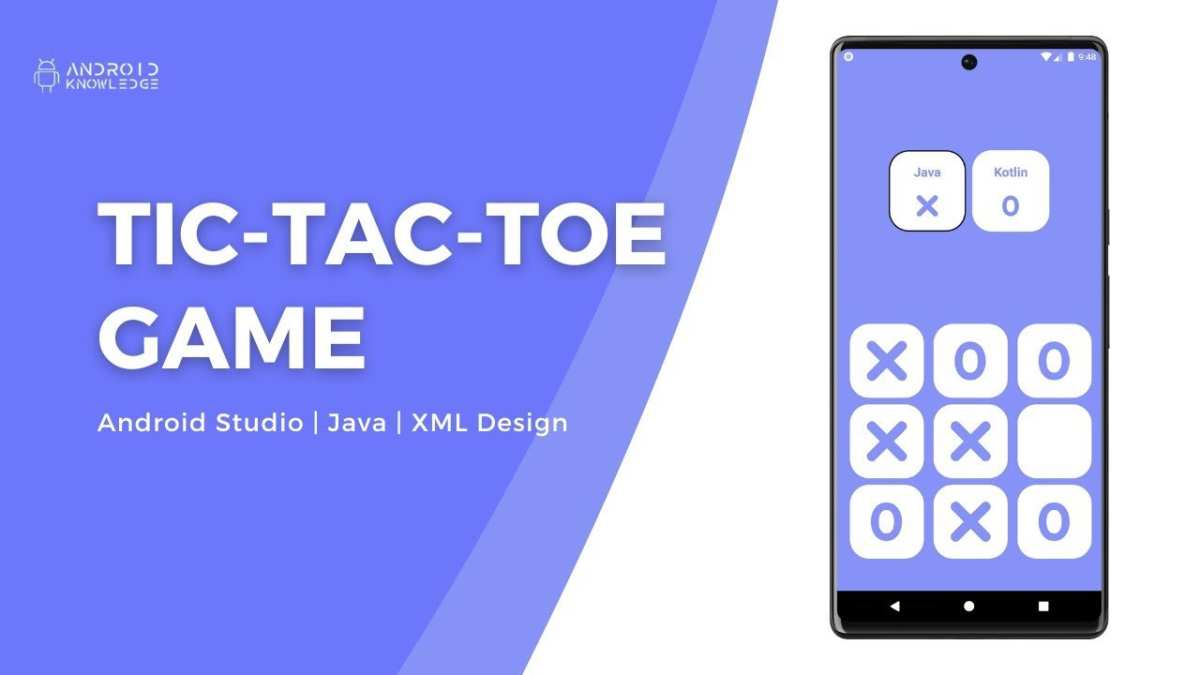
To create a simple tic tac toe game in Android Studio, start by setting up your project and designing the game grid. **You need to create buttons for each cell and handle click events to update the game state.** If you want to know how to make tic tac toe in Android Studio, focus on building the layout and managing user interactions effectively. This process involves coding the game logic and displaying results dynamically. Follow these steps, and you’ll have your game running smoothly in no time.

How to Make Tic Tac Toe in Android Studio
Creating a Tic Tac Toe game in Android Studio is an excellent project for beginners who want to learn how to develop Android apps. It helps you understand fundamental concepts like layouts, user interaction, game logic, and updating the user interface dynamically. In this guide, we will go step-by-step through the entire process, explaining the thought process behind each part, and provide tips to make your game fun and engaging for users.
Understanding the Basics of Tic Tac Toe
Before diving into coding, it’s important to understand what makes Tic Tac Toe such a popular and simple game.
- It’s a two-player game where each player takes turns marking Xs and Os in a grid.
- The goal is to get three of your marks in a row—horizontally, vertically, or diagonally.
- If all nine spots are filled without any player winning, the game ends in a tie.
Knowing these rules will help us design the game logic effectively.
Setting Up Your Android Studio Project
Start by creating a new project in Android Studio. Follow these steps:
- Open Android Studio and click on “Start a new Android Studio project.”
- Select an Empty Activity template.
- Name your project (for example, “TicTacToeGame”).
- Choose the language as Java or Kotlin (we’ll focus on Java here).
- Set the minimum SDK to a version compatible with most devices (API 21 or higher recommended).
- Click Finish and wait for Android Studio to set up your project.
Once your project opens, you’ll see basic files like `MainActivity.java` and `activity_main.xml`.
Designing the Game Layout
The layout is crucial because it determines how players will interact with your game. For Tic Tac Toe, a simple 3×3 grid works best.
Creating the Grid
Use a `
“`xml
“`
Create a style for the buttons to give them a consistent look:
“`xml
“`
This setup ensures all buttons are evenly sized and look nice.
Adding a Reset Button and Status Text
Besides the grid, you may want to include a Button to restart the game and a TextView to show game status (whose turn, winner, etc.):
“`xml
“`
Implementing the Game Logic
The core of your Tic Tac Toe game lies in how you handle the game state — which spots are occupied and by whom.
Creating Variables to Track Game State
In your `MainActivity.java`, declare variables such as:
“`java
private Button[] buttons = new Button[9];
private boolean playerXTurn = true;
private int moveCount = 0;
private String[] gameBoard = new String[9]; // To hold “X”, “O”, or “” for each cell
“`
Initialize these in your `onCreate()` method.
Setting Button Click Listeners
Attach click listeners to each button to handle user input:
“`java
for (int i = 0; i < buttons.length; i++) {
final int index = i;
buttons[i].setOnClickListener(new View.OnClickListener() {
@Override
public void onClick(View v) {
onButtonClick(index);
}
});
}
```
Define the `onButtonClick()` method to handle each move:
```java
private void onButtonClick(int index) {
if (!gameBoard[index].isEmpty()) {
return; // Ignore if cell is already filled
}
gameBoard[index] = playerXTurn ? "X" : "O";
buttons[index].setText(gameBoard[index]);
moveCount++;
if (checkWinner()) {
showResult("Player " + gameBoard[index] + " wins!");
disableButtons();
return;
}
if (moveCount == 9) {
showResult("It's a tie!");
return;
}
playerXTurn = !playerXTurn;
updateStatus();
}
```
This code updates the game board, displays the move, and checks for a winner or a tie.
Checking for a Winner
Implement a method to evaluate if any player has three in a row:
“`java
private boolean checkWinner() {
int[][] winningPositions = {
{0, 1, 2},
{3, 4, 5},
{6, 7, 8},
{0, 3, 6},
{1, 4, 7},
{2, 5, 8},
{0, 4, 8},
{2, 4, 6}
};
for (int[] positions : winningPositions) {
if (!gameBoard[positions[0]].isEmpty() &&
gameBoard[positions[0]].equals(gameBoard[positions[1]]) &&
gameBoard[positions[1]].equals(gameBoard[positions[2]])) {
return true;
}
}
return false;
}
“`
This function checks all possible winning combinations.
Handling Game End
When a player wins or the game ties, update the UI:
“`java
private void showResult(String message) {
TextView statusText = findViewById(R.id.statusText);
statusText.setText(message);
}
private void disableButtons() {
for (Button button : buttons) {
button.setEnabled(false);
}
}
“`
Reset the game when the Reset button is clicked:
“`java
Button resetButton = findViewById(R.id.resetButton);
resetButton.setOnClickListener(new View.OnClickListener() {
@Override
public void onClick(View v) {
resetGame();
}
});
“`
And define `resetGame()`:
“`java
private void resetGame() {
for (int i = 0; i < gameBoard.length; i++) {
gameBoard[i] = "";
buttons[i].setText("");
buttons[i].setEnabled(true);
}
moveCount = 0;
playerXTurn = true;
updateStatus();
}
private void updateStatus() {
TextView statusText = findViewById(R.id.statusText);
statusText.setText(playerXTurn ? "Player X's turn" : "Player O's turn");
}
```
Enhancing Your Game for Better Experience
To make your Tic Tac Toe game more engaging, you can add features like:
- Highlighting the winning combination.
- Adding sound effects when a move is made or game ends.
- Saving game scores with SharedPreferences.
- Providing different difficulty levels for single-player mode (extra complexity).
The most important part is making your game fun and easy to play!
Testing and Debugging Your App
After coding your game, run it on an emulator or physical device:
- Tap all buttons to ensure moves register correctly.
- Test winning scenarios and ties.
- Use the Reset button to verify game resets properly.
- Watch out for crashes or UI issues and fix bugs as needed.
Debugging tools in Android Studio can help locate errors quickly.
Final Tips for Building Your Tic Tac Toe Game
– Keep your code organized by separating game logic from UI updates.
– Use clear, descriptive variable names.
– Comment your code so others understand your logic.
– Experiment with styles and layouts to make your game attractive.
– Don’t forget to optimize for different screen sizes and orientations.
By following these detailed steps, you’ll be able to create a fun and functional Tic Tac Toe game in Android Studio. This project will boost your understanding of app development basics and prepare you for more complex projects ahead. Keep practicing, and don’t hesitate to customize the game to your liking!
Frequently Asked Questions
What are the essential components needed to create a Tic Tac Toe game in Android Studio?
To develop a Tic Tac Toe game, you need a grid layout to represent the game board, buttons or ImageViews for each cell, and logic to handle user interactions. Additionally, you’ll require variables to keep track of player turns, game state, and winner detection. Setting up these components in your activity layout and linking them with code allows for smooth gameplay.
How can I implement the game logic to detect a win or a draw in my Tic Tac Toe app?
Create a method that checks all possible winning combinations of the game board after each move. This involves verifying whether any row, column, or diagonal has the same symbol. If a winning condition isn’t met and all cells are filled, declare the game a draw. Updating the UI to show the result enhances user experience and clarity.
What approach should I use to handle user input in a Tic Tac Toe game built with Android Studio?
Attach click listeners to each cell in the game grid. When a user taps a cell, determine if the cell is empty and then assign the current player’s symbol. After updating the cell’s display, switch the turn to the other player and check for a game-ending condition. This process ensures a responsive and interactive gameplay experience.
How can I improve the visual design of my Tic Tac Toe game in Android Studio?
You can enhance the visual appeal by customizing the layout with appropriate colors, fonts, and images. Use styles and themes to maintain consistency, and consider adding animations or sound effects for moves and game results. Clear visual indicators for the current player’s turn also help players stay engaged.
What are some best practices for maintaining code quality in a Tic Tac Toe Android application?
Write modular code by separating logic into different methods or classes, such as one for game logic, UI updates, and input handling. Use descriptive variable names and comments for clarity. Regularly test each component, handle edge cases, and ensure the app responds correctly to various user actions. Following these practices results in a more maintainable and reliable app.
Final Thoughts
In summary, to make tic tac toe in android studio, start by setting up your project and designing the game layout. Implement the game logic using Kotlin or Java, handling user inputs and game states effectively. Test the app thoroughly to ensure smooth gameplay and fix any bugs. Following these steps will help you create a functional tic tac toe game efficiently.
