

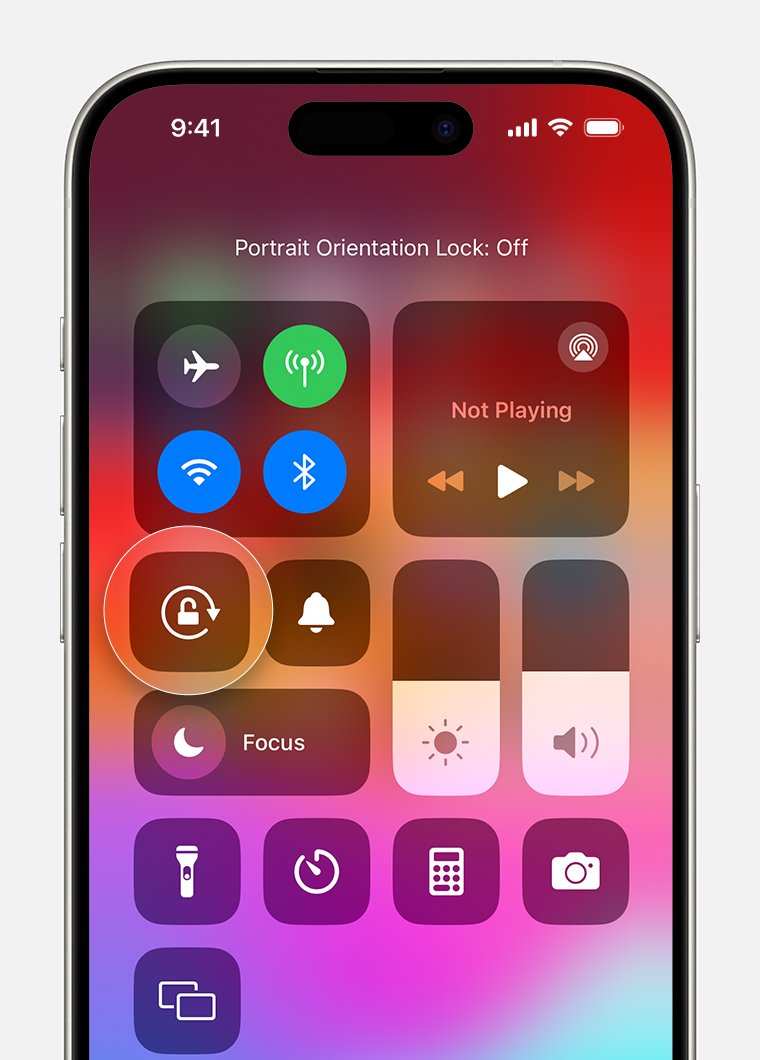
To adjust your iPhone to rotate the screen automatically, simply enable the rotation lock in Control Center. If you want your display to switch between portrait and landscape modes freely, ensure that the ‘iPhone setting to rotate screen’ is turned on. Sometimes, auto-rotation may not work due to settings or app limitations. Checking the rotation lock toggle is a quick fix to resolve this. With these simple steps, you can easily control how your iPhone screen behaves.

iPhone Setting to Rotate Screen
When you use your iPhone, you probably want the screen to rotate smoothly whenever you turn your device. But sometimes, the screen stays fixed or doesn’t rotate as you expect. This can be frustrating, especially if you’re trying to view something in landscape mode or share your screen during a video call. Don’t worry! You can easily adjust your iPhone’s settings to control how and when your screen rotates. In this guide, we’ll explore everything you need to know about the iPhone setting to rotate screen, making sure you can set up your device just how you like it.
Understanding Screen Rotation on iPhone
Before jumping into settings, it’s helpful to understand how screen rotation works on your iPhone. When you turn your device, the screen should automatically change orientation from portrait (vertical) to landscape (horizontal). This feature lets you see more information or enjoy a better viewing experience for videos and games.
However, several factors influence whether your screen rotates:
- Orientation Lock: A setting that keeps your screen fixed in either portrait or landscape mode.
- Auto-Rorate Feature: The default feature that allows the screen to change orientation based on how you hold your device.
- App Restrictions: Some apps may disable rotation or lock their orientation for specific functions.
- Hardware Issues: Occasionally, sensors responsible for detecting device orientation may malfunction or need calibration.
Understanding these points helps you troubleshoot or adjust your settings effectively.
How to Enable or Disable Auto-Rotate Screen on iPhone
The most common way to control screen rotation involves toggling the auto-rotate feature. Here’s a step-by-step guide:
Using Control Center
The easiest way to toggle auto-rotate is through the Control Center:
- Swipe down from the top-right corner of your iPhone screen (for iPhone X and newer). For older models, swipe up from the bottom to access the Control Center.
- Look for the rotation lock icon, which resembles a padlock with a circular arrow around it.
- If the icon is highlighted, auto-rotate is off—your screen won’t rotate. Tap it once to turn it off and enable auto-rotate.
- If the icon isn’t highlighted, tap it to lock the screen in portrait mode, preventing rotation.
Using Settings Menu
Alternatively, you can manage rotation lock through the Settings app:
- Open the Settings app on your iPhone.
- Scroll down and tap Display & Brightness.
- Find the Lock Rotation option and toggle the switch on or off.
Note: On most iPhones, especially newer models, the primary method is via the Control Center. The Settings menu for rotation lock is often used for enabling or disabling auto-rotation by default.
Adjusting Screen Rotation for Specific Apps
While auto-rotate generally works seamlessly, some apps might restrict rotation. For example, certain games or reading apps might lock the screen in portrait mode for better usability.
How to Check App Rotation Settings
Some apps have their own rotation options:
- Open the app and look for settings related to display or orientation. Some apps offer internal controls to lock or unlock rotation.
- Adjust these settings if available, based on your preference.
Force Rotation Using Accessibility Features
If your app doesn’t support rotation as you’d like, you can also try enabling Accessibility features:
- Go to Settings > Accessibility.
- Select Display & Text Size.
- Look for options like AssistiveTouch or other display controls that may assist in device management.
While these features don’t directly force rotation, they help manage how orientation changes are handled.
Resolving Common Screen Rotation Issues
Sometimes, your iPhone might not rotate when you turn it. Common issues include:
- Auto-rotation is disabled.
- Sensor issues or calibration problems.
- Software glitches.
Here’s how to troubleshoot these problems:
Check if Rotation Lock Is Enabled
– Open the Control Center and verify that the rotation lock icon isn’t highlighted. If it is, tap to disable it.
Restart Your iPhone
– A simple restart can fix temporary software glitches. Hold the power button and slide to power off, then turn your device back on.
Update Your iPhone Software
– Ensure your device has the latest iOS updates. Go to Settings > General > Software Update and install any available updates.
Calibrate Your Gyroscope
– If rotation still doesn’t work, try recalibrating your device’s sensors by resetting settings or performing a factory reset (after backing up your data).
Advanced Tips for Managing iPhone Screen Rotation
For power users or those wanting more control, here are some advanced tips:
Use Third-party Apps
– Some apps available on the App Store offer enhanced orientation controls, especially for specialized tasks like reading or navigation.
Accessibility Shortcuts for Rotation
– Set up accessibility shortcuts for quick control of rotation lock:
- Go to Settings > Accessibility > Accessibility Shortcut.
- Select AssistiveTouch or other options.
- Use the shortcut to toggle rotation lock quickly.
Customize Orientation Settings with Shortcuts
– Use the Shortcuts app to create automation that locks or unlocks rotation based on location, time, or app usage.
Best Practices for Using the iPhone Screen Rotation Feature
To get the most out of your iPhone’s rotation capabilities, consider these tips:
- Keep your device’s sensors clean and free of dirt or debris.
- Regularly update iOS to benefit from bug fixes related to sensors and display features.
- Use a case that doesn’t obstruct the proximity or gyroscope sensors.
- If you share your device, educate other users about rotation lock and auto-rotate settings.
Summary of Key Settings to Manage Screen Rotation
| Setting | Purpose | How to Access |
|—|—|—|
| Control Center Rotation Lock | Enable or disable auto-rotation | Swipe down or up to open Control Center, tap rotation lock icon |
| Display & Brightness Settings | Manage default auto-rotation behavior | Settings > Display & Brightness > Lock Rotation |
| App-specific Settings | Restrict app orientation | Inside app settings or within app itself |
| Accessibility Shortcuts | Quick toggle of rotation lock | Settings > Accessibility > Accessibility Shortcut |
In conclusion, managing your iPhone’s screen rotation settings is straightforward once you understand where and how to make adjustments. Whether you prefer to keep the screen fixed or enjoy flexible orientation changes, these options make it simple to tailor your device to your needs. Remember to regularly check your sensor health and update your software for the best experience, ensuring your device responds smoothly whenever you turn it.
Frequently Asked Questions
How do I enable the auto-rotation feature on my iPhone?
To turn on auto-rotation, swipe down from the top-right corner of your screen to open the Control Center. Look for the rotation lock icon, which resembles a lock with a circular arrow around it. If the icon is highlighted, auto-rotation is enabled. Tap it to activate auto-rotation if it’s currently disabled. Once enabled, your screen will automatically rotate when you turn your device horizontally or vertically.
What should I do if my iPhone screen doesn’t rotate even with auto-rotation enabled?
First, ensure that the rotation lock isn’t active. Open the Control Center to check if the rotation lock icon is highlighted; if it is, tap it to disable the lock. Also, verify that your device isn’t in a specific app that restricts rotation. Restart your iPhone, as this can resolve temporary glitches. If the problem persists, update your iPhone to the latest iOS version or reset your settings to restore default configurations.
Can I manually control the screen orientation on my iPhone?
Yes, you can manually control the screen orientation by turning off auto-rotation and using the built-in rotation lock. When auto-rotation is disabled via the Control Center, your screen remains fixed in either portrait or landscape mode, depending on how you last positioned your device. For specific apps that support orientation changes, you can lock or unlock rotation as needed to suit your preferences.
Where is the rotation lock located on iPhone, and how do I access it?
The rotation lock is accessible through the Control Center. To open it, swipe down from the top-right corner of your screen (on iPhone X or later) or swipe up from the bottom (on earlier models). Look for the lock icon with a circular arrow around it. Tap this icon to toggle the rotation lock on or off. When it’s active, your screen stays in the current orientation regardless of how you rotate the device.
Final Thoughts
In summary, adjusting your iPhone setting to rotate screen is simple and quick. Ensure the Orientation Lock is off in Control Center for seamless rotation. This setup allows your screen to automatically adapt to how you hold your device. Making these small changes enhances your user experience and convenience.
